
BoroughBox seeks investment to scale up artisan food distribution service
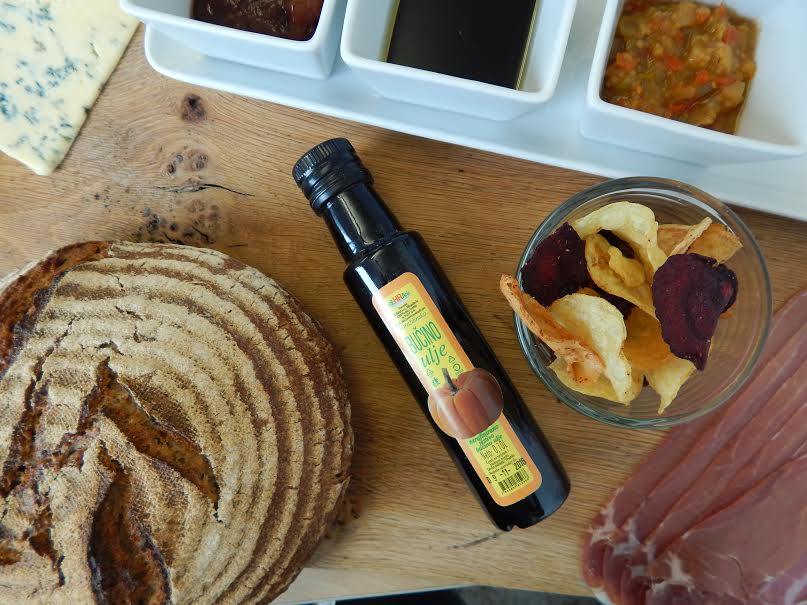
BoroughBox, the curated distributor of artisanal produce born from Borough Market, are looking for investment to take the business to the next level.
Founded by Andrew Lawson in 2014, the company offer distribution services for award winning, specialist, artisan food and drink producers to sell their products throughout the UK. BoroughBox use a recurring subscription service, corporate sales and an online e-commerce platform to market and distribute products across the country.
Formerly a trader at the world famous foodie mecca Borough Market, Lawson was inspired to start the business after spotting an opportunity to connection regional producers with increasingly discerning foodie consumers. Over 120 merchants already use the BoroughBox platform marketplace, including Soffles Pitta Chips and Serious Pig; Lawson and BoroughBox are passionate about helping small and local artisanal food producers and foodie fans to one another.
The business has just launched a crowdfunding campaign on Crowd2Fund.com, and is aiming to raise £120,000 to invest in sales, marketing and technology, in return for a 15 percent stake in the business. BoroughBox are also offering a number of investor rewards including lifetime discounts, alongside Truffle Prosecco boxes and Pine gift hampers.
Lawson says, “Now that have laid some solid foundations for the business and proven the brand and concept works, we want to push on with aggressive growth and customer acquisition. Having smart investors for the journey makes perfect sense. The business is on trend and working with the genuine investor crowd can be great for new brand ambassadors.”
The SEIS qualifying business is planning to build multimillion pound revenues within the next three years, and to then subsequently become acquire by a larger company. Lawson added, “With the landscape rapidly changing in food itself and the way we consume, we could prick the interest of any big specialist food or subscription company, or thanks to the marketplace perhaps one of the bigger online marketplace platforms seeking a fast and direct route into the artist and specialist food sector.”
For more information, visit their campaign page here.
Morning Round-Up: IFS warning, oil hits 2016 highs, small business confidence falls

Growth to slow, warns IFS
Growth in wages and living standards may slow, according to the Institute for Fiscal Studies, after the 2016 Budget showed a weaker than expected economic outlook.
The think tank warned that “we should all be worried”, adding that:
“This will lead to lower wages and living standards, not just lower tax revenues for the Treasury.”
Oil hits 2016 highs
Oil has hit its highest level of 2016, with sentiment continuing to rise on the hopes of a production output meeting.
Both Brent Crude and WTI Crude were up over $40 a barrel this morning, at $40.20 and $41.54 respectively (0955GMT).
Oil prices have surged over 50 percent from their rock bottom prices since major producers have tried to convene a meeting to curb output, despite the lack of participation from Iran.
UK small business confidence drops
Britain’s small businesses have declining confidence in the face of an economic slowdown, according to a survey by the Federation of Small Businesses. Northern Irish and Scottish businesses were the most affected, showing the least confidence in the UK’s economy, with the FSB’s survey showing the first decline in job creation by small firms nationwide since mid-2013. The Small Business Index, an alternative index measuring business prospects over the coming three months, fell to 8.6 in the first quarter from 28.7 a year ago.18/03/2016
Bank of England unanimous on rate stick at 0.5 percent
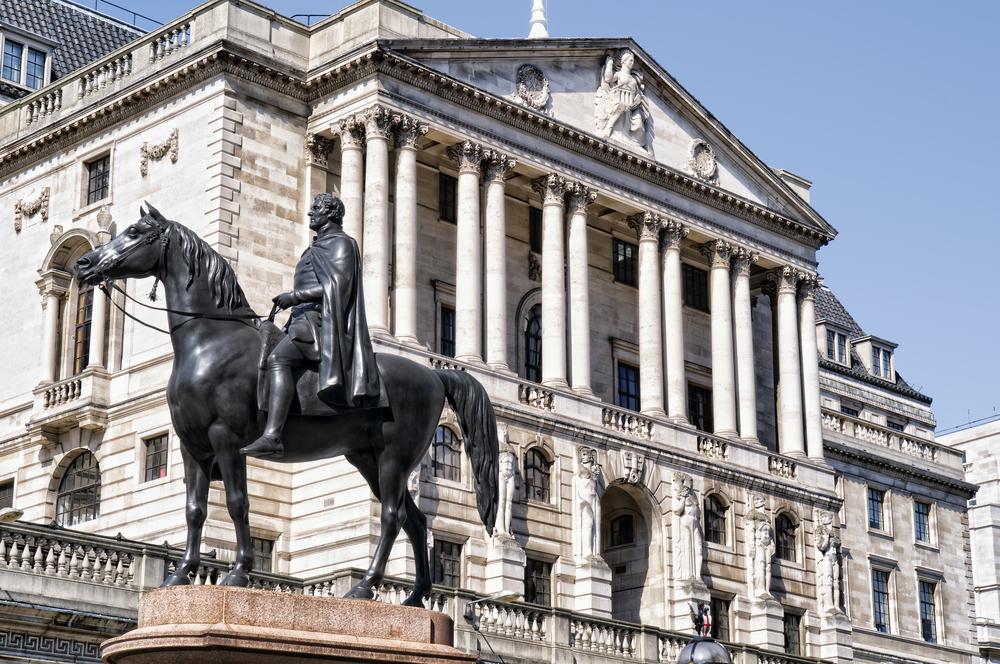
The Bank of England have voted to keep interest rates at their current record low of 0.5 percent.
All nine members of the Monetary Policy Committee voted to freeze rates, going for the safe option as the upcoming EU referendum threatens market volatility.
In a statement, the committee reasoned:
“There appears to be increased uncertainty surrounding the forthcoming referendum. That uncertainty is likely to have been a significant driver of the decline in sterling.
“It may also delay some spending decisions and depress growth of aggregate demand in the near term.”
Governor Mark Carney neglected to give an official Bank of England position on the UK referendum.
17/03/2016
Should I open a Lifetime ISA?

A major announcement in Chancellor George Osborne’s 2016 budget yesterday was the introduction of a Lifetime ISA, designed to help young people save for the future.
What is the Lifetime ISA?
ISAs already exist in several forms, and is essentially a tax free savings allowance. However, as part of Osborne’s plan to “put the next generation first”, those under 40 in April 2017 will be able to open a Lifetime ISA, save up to £4000 a year and receive a 25 percent top up from the government. So for every £4 you save, the government will add an extra £1.
Sounds good. Should I open one?
Whilst it sounds like a win-win situation, there are several conditions attached. Many of these are restrictions on how the money can be spent, which are limited to buying a first home (up to £450,000), accessed from the age of 60 as a pension, or other ‘life events’, such as a terminal illness.
Essentially, unless you want to save your money for a house or your pension, the Lifetime ISA isn’t for you; if you access the funds for anything else, you will not qualify for the bonus and have to pay a 5 percent fee on top.
Should I use the Lifetime ISA to save for a pension?
The announcement of the Lifetime ISA has raised eyebrows due to its similarity to a pension scheme, raising the question – when saving for retirement, is it better to save through a traditional employer pension scheme, or with the Lifetime ISA?
Tax is paid on both a some point – money going into a Lifetime ISA is tax-paid but free to take out, and with the employer pension scheme its not-taxed going in, but tax is paid when it is taken out.
It is slightly more flexible than a pension fund, but operates in a similar way. However, The Treasury is keen to stress that this account is not a pension and can run alongside other long-term savings – you can still pay into a pension and get tax relief on your contributions and benefit from the lifetime ISA bonus at the same time.
What other changes were made to ISAs in the budget?
From April 2017 the tax-free savings limit will rise to £20,000 a year, up from the £15,240 currently.
The Help to Buy Isa scheme, which is currently in place to help first-time buyers, is due to end in November 2019. However, the new ISA scheme offers slightly more for your money.
Miranda Wadham on 17/03/2016
Morning Round-Up: Oil and Asia up, Glaxo CEO Witty to step down

Oil up again on positive sentiment
Oil rose again on Thursday, continuing gains made on Wednesday after plans were solidified between major exporters to agree an output freeze.
The world’s biggest producers – currently excluding Iran – are in support of holding a meeting to keep production at current levels – perhaps creating the first global supply deal in 15 years. Sinking oil prices and a lack of demand has caused producers to take action.
Sentiment has risen on the back of this possibility, with US crude CLc1 up 77 cents at $39.23 a barrel before 0800GMT, following on from Wednesday’s gains.
GlaxoSmithKline CEO Witty to step down
GlaxoSmithKline veteran CEO Andrew Witty has announced his intention to step down in 2017, after 10 years at the helm of the company.
Starting as a management trainee and remaining with the company for 32 years, felt now was the time to leave: “By next year, I will have been CEO for nearly 10 years and I believe this will be the right time for a new leader to take over”, Witty said. His departure will no doubt leave a period of uncertainty for the group, with has been hit by flagging sales and calls for the breaking up of the company into smaller units. A minority of shareholders have backed this plan, including UK fund manager Neil Woodford, but Witty has always argued that it is not something to consider in the short term. Last month, GSK saw sales rise 2 percent to £6.29 billion for the three months to December, but disclosed a pre-tax loss of £416 million. Shares in the group rose at open this morning, but have since fallen to -0.28 percent at 1408.00 (0927GMT). Asian shares up Asian shares had a strong day on Thursday, with most indexes closing positive after an increase in investor sentiment and the falling of the dollar. MSCI’s broadest index of Asia-Pacific shares outside Japan .MIAPJ0000PUS climbed to a two-month high and was last up 1.9 percent. The Hang Seng was up 1.21 percent, the Shanghai Composite up 1.20 percent and South Korea’s Kospi rose 0.9 percent.17/03/2016
LIVE: Budget 2016
Today’s budget market George Osborne’s eighth budget in his role. Join us at 12.30pm for live updates.
13.35
Osborne: “Aim to let working people keep more of the money they earn.”
Tax free personal allowance to £11,500
Increase high rate tax threshold to £45,000
13.30
Tampon tax money to go towards women’s charities.
Fuel duty frozen for sixth year in a row, saving £75 a year to the average driver.
Tobacco tax continues to rise.
Beer duty frozen in support of local pubs.
Enterprise:
Cutting capital gains tax to 20 percent, and cutting basic rate from 18 percent to 10 percent.
Increase ISA limit from £15,000 to £20,000
New scheme called ‘Lifetime ISA’ saving up to £4000 each year – for every £1 saved, the government will put in £1.
13.20
Education:
Extra funding provided so that every primary and secondary school in England will be an academy.
Focus on the North where performance is weaker.
Teaching maths to 18 for all pupils
Introduction of fair national funding formula.
Dealing with obesity
Introducing a sugar levy on the soft drinks industry. Levied on the companies and introduced in two years time. Assessed on the volume of imports and will have time to change recipes.
Money from levy will be used to double funding for primary school support. Libor funds will also be used towards children’s hospital services to improve health.
13.15
£150 million package support to reduce homelessness.
HS3 between Manchester and Leeds given the go-ahead.
Cross Rail 2 commissioned by the same company as Cross Rail 1.
Further investment in flood defences by increasing standard rate of insurance premium tax, committing all money raised to flood defences.
13.10
Commitments to National Infrastructure
Inviting bids to help develop modular reactors.
Abolishing petroleum tax offering support to oil and gas industry.
13.00
Fundamental reform of business tax system:
Low tax regime attracting businesses, but ensuring that they pay taxes in the UK. Will restrict interest reductability or the largest companies at 30 percent of UK earnings.
Allow firms to use losses more flexibly, helping 70,000 British companies, and restrict amount of losses that can be offset by 50 percent.
“Will help create a modern tax code raising extra money for the Exchequer.”
Reduce the rate of corporate tax from 20 percent to 17 percent in April 2020.
Introducing 2 new tax-free allowances up to £10,000 a year for those making money online, renting out homes etc.
Small business rate relief threshold raised to £15,000 as well as the higher threshold. 600,000 small businesses will see business rates cut or abolished entirely, supporting smaller businesses.
Commercial stamp duty reduced. 2 percent rate for high value leases above £5 million. Comes into force from midnight tonight. Raising £500 million per year.
Tax evasion: further action will be taken to prevent tax evasion, on top of those measures already taken. Public sector will have a duty to ensure that employees pay their tax. Tax evasion measures will raise £12 billion.
12.55
Debt will fall to 86 percent and end up at 77.2 percent in 2020.
Deficit will fall to 2.9 percent, in 2017-18 1.9 percent, 2018-19 1 percent.
Borrowing this year lower than forecast in Autumn Statement – has fallen to 55.5billion in 2016.
12.50
Welfare: Support for disabilities better targeted. Will still rise by more than £1 billion.
Public sector pensions: Reform saved over £400 billion in the long term. have revalued Pensions and Public Sector employers contributions will rise.
12.40
Economic forecast:
Osborne begins by accepting all the recommendations of Sir Charlie Bean’s report.
The OBR economic forecast for world economy has been revised down, with outlook weaker. The most significant change is the decision to revise down potential UK productivity growth – OBR acknowledge that this revision is a “highly uncertain call.”
IMF warns that economy faces growing risks of derailment – but says Britain is the best prepared. Osborne attributes this to his long term economic plan.
However, forecast on UK remaining in the EU – vote to leave could result in period of uncertainty and volatility. GDP will grow by 2 percent this year and 2.2 percent next.
Osborne reiterates he believes the UK is better off within a reformed EU.
Forecast for labour market
Businesses created 150,000 more jobs than expected. Forecasting a million more jobs in this parliament.
12.35
George Osborne called to speak. Reporting on “labour market delivering highest employment in history and deficit falling each year, on course for budget surplus.”
British economy “resilient” and has withheld headwinds.
Warns “markets are turbulent” and “outlook for global economy is weak”, bur Britain “well prepared to handle it.”
Reiterates that budget will be focused on the long term, with “sound public finances delivering security”. Mentions importance of investment in homes, school and social mobility, as well as helping working people save.
UK wage growth rose in January, alongside optimism for year ahead

British wage growth rose in the three months to January, possibly signalling an end to the unusually slow wage growth plaguing Britain throughout 2015.
According to official data released on Wednesday, the total earnings of workers, including bonuses, rose 2.1 percent on the year in the three months to January, up from 1.9 percent. January alone saw the biggest wage growth jump since August at 2.5 percent.
Unemployment figures remained steady at 5.1 percent, a ten-year low, for the third month in a row; however, analysts have been puzzled by wage growth remaining so low, despite this decrease in unemployment. With the upcoming EU referendum causing uncertainty and volatility for the UK, it looks unlikely to rise in the near future.
Low inflation benefits UK households
New figures released by Markit today suggest that the UK’s low inflation has been beneficial to British households since 2015, despite the slow-down in wage growth and a drop in take-home pay.
Markit’s Household Finance Index for March was weakened by the first drop in income from employment since December 2014, but overall showed optimism for the year ahead.
Markit economist Philip Leake said:
“With fresh public spending cuts expected in today’s budget announcement, headwinds to household confidence are likely to persist in coming months.”
16/03/2016
Morning Round-Up: Budget 2016, LSE-Deutsche Boerse merger, oil up
Osborne prepares to deliver budget
George Osborne is readying himself to present his latest budget to MPs later today, which is expected to include an extra £4 billion in spending cuts and announce further investment into UK infrastructure.
It will also include a £1.5 billion plan to convert England’s state schools into academies, as well as allowing them to choose their own opening hours. He is also expected to warn that the “storm clouds are gathering again”.
Join us at 1230GMT as we live tweet George Osborne’s budget announcement. LSE-Duetsche Boerse merger agreed Deutsche Boerse and the London Stock Exchange have agreed a merger that could see cost savings of 450 million euros, and create one of the largest exchange groups in the world. The merged firm will be domiciled in Britain and have headquarters in both Germany and the UK. LSE shareholders will own 45.6 percent of the new holding company, while Deutsche Boerse shareholders will own 54.4 percent. In a statement on Wednesday, Deutsche Boerse said: “The combination will offer significant value creation potential.” Oil up on output meeting Oil prices rose again on Wednesday after falling over 2 percent in the last session, on hopes that an agreement may be reached at the upcoming meeting in Qatar. According to Reuters, a meeting of producers will take place on April 17th, led by Saudi Arabia and Russia and with the aim of cutting output. This is expected to go ahead without the participation of Iran.16/03/2016
RBS to cut 448 UK jobs
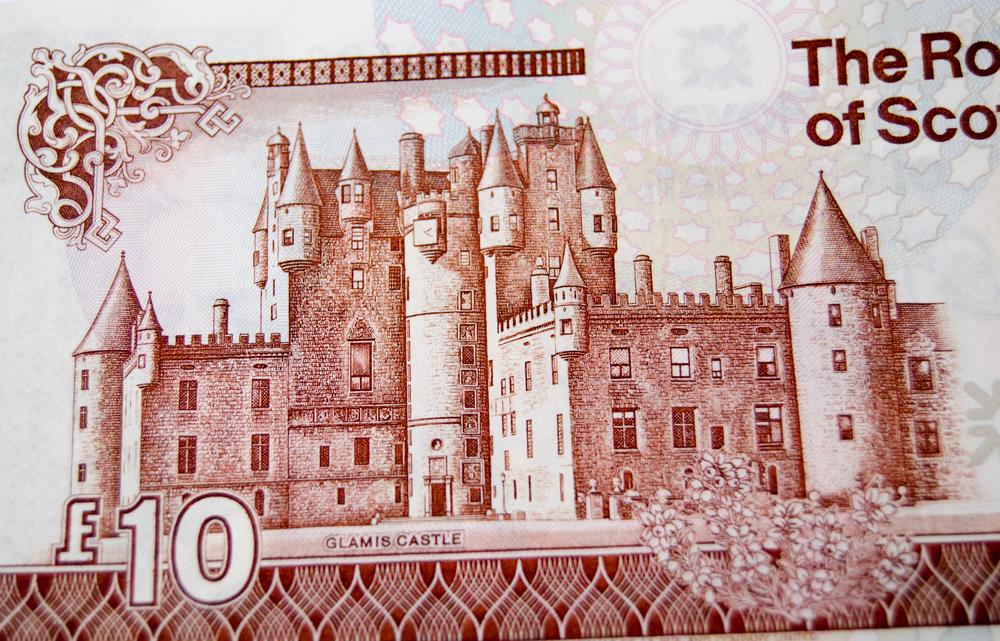
As part of an effort to cut costs following its eighth successive annual loss in February, the Royal Bank of Scotland has announced its plans to eliminate an estimated 448 jobs, whilst at the same time creating 300 similar roles in India.
The proposed plans involve replacing investment advisers with “robo-advisers”. The bank said in a statement:
“The demand for face-to-face investment advice is changing. Our customers increasingly want to bank with us using digital technology. As a result, we are scaling back our face-to-face advisers and significantly investing in an online investing platform that enables us to help a new group of customers with as little as £500 to invest.”
After a seven month study, the Financial Conduct Authority concluded that this new technology could “play a major role in driving down costs”.
RBS have stated that they hope to make further savings of £800 million over the course of the next year.
15/03/2016