New Zealand crowdfunding campaign buys NZ$2.3 million beach

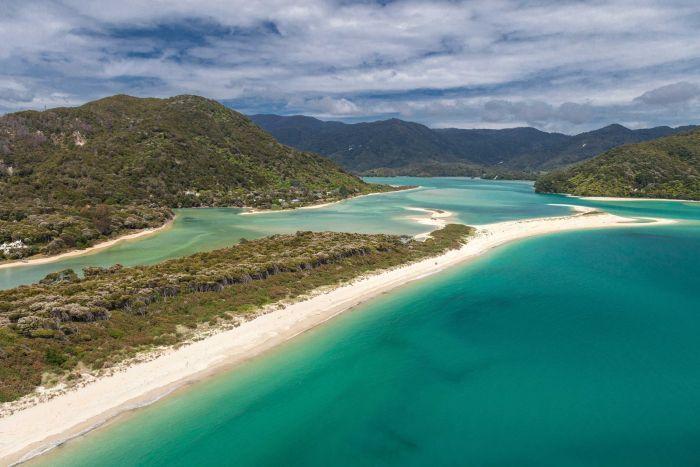
A New Zealand crowdfunding campaign to buy a beach has had its offer accepted, after 40,000 people donated around NZ$2.3 million.

The Awaroa beach in the Abel Tasman National Park, on the north coast of South Island, went on sale last year. A group of friends then launched the campaign in order to secure the beach for public use – a campaign that was contributed to by the government, businesses and schools from New Zealand and Australia.

It’s current owner, businessman Michael Spackman, conducted four days of negotiations with the group before agreeing to sell them the beach, according to local website Stuff. Campaigner Duane Major said: “We’ve been through the wringer to get it and that’s a shared experience that forms friendships. Now we hope people have shared experiences of this beautiful piece of pristine serene NZ beach and bush.” New Zealand Conservation Minister Maggie Barry backed the campaign, telling New Zealand TV the generosity of the public during the tender process was “inspirational”.
26/02/2016

Can we all learn something from Donald Trump’s investment portfolio?

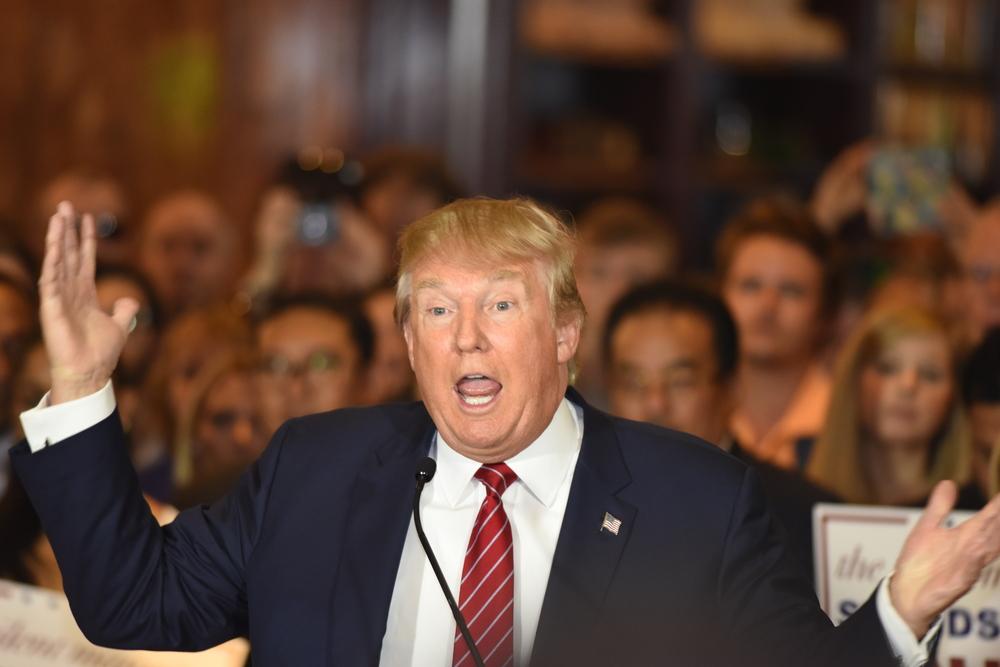
As part of the preliminary disclosure required of all presidential candidates, Donald Trump provided an interesting show of his investment portfolio. A look at Trump’s portfolio reveals he is worth somewhere in the region of $10 billion, with most of his stock picks based in America – particularly the Dow 30. So how good is America’s least favourite presidential candidate at playing the markets? He is posting impressive returns Trump reported selling 45 stocks throughout January 2014, and amazingly he lost money on just five of them. What’s more, just look at his top five performing stocks, ranked based on total percentage gains: 1.) Facebook 199% gain, $3.9 million profit 2.) Bank of America 135% gain, $6.7 million profit 3.) Best Buy 113% gain, $2.2 million profit 4.) Boeing 80% gain, $4 million profit 5.) Morgan Stanley 75% gain, $750,000 profit …but he isn’t infallible Despite this run of great investments, Trump still experiences the occasional lapse of judgment with his choices. Trump posted a loss of 20% after selling his shares in D.R. Horton (DHI), and he also lost money on Pepsi (PEP), Occidental Petroleum (OXY), Coca-Cola (KO) and Enbridge (ENB). Nevertheless, his portfolio as a whole still boasts envious returns, with his net worth totalling around $10 billion. In fact, his mistake with D.R. Horton (DHI) led to a loss of just over $200,000; a meagre amount when we consider his total gains. Trump claims that his equity investments generated around $27 million in returns, so he probably isn’t likely to complain about a few losses here or there. Unsurprisingly, he prefers American… American stocks fared well during the recent bull market, but it is still surprising to see that only three of Trump’s picks were non-U.S. Noble (NBL) from the UK, Volkswagen (VLKAF) from Germany, and Canadian Enbridge (ENB) were the only stock picks from outside the United States. With the S&P 500 flattening out in the first half of 2015 it will be interesting to see if Trump changes his tune on American stocks. Though with the VW scandal, he might choose to stay investing close to home. Trump favours the Dow A whopping 16 of Trump’s stock picks form part of the Dow 30. Choices such as McDonald’s (MCD), Intel (INTC, Tech30), and General Electric (GE) are all part of the Dow 30, with Trump possessing an obvious preference for bigger multinationals. Despite stocks such as these doing well throughout the bull market, those with a large amount of exposure internationally have suffered with the growing strength of the Dollar. There is certainly something to be said for Donald Trump’s stock picking abilities, so perhaps we can all stand to learn a thing or two from his habitual pro-United States, Dow-heavy choices.
26/02/2016
This post is sponsored by www.easymarkets.com. Risk warning: Forward Rate Agreements, Options and CFDs (OTC Trading) are leveraged products that carry a substantial risk of loss up to your invested capital and may not be suitable for everyone. Please ensure that you understand fully the risks involved and do not invest money you cannot afford to lose. Our group of companies through its subsidiaries is licensed by the Cyprus Securities & Exchange Commission (Easy Forex Trading Ltd- CySEC, License Number 079/07), which has been passported in the European Union through the MiFID Directive and in Australia by ASIC (Easy Markets Pty Ltd -AFS license No. 246566).

RBS make billion pound loss – but CEO paid record salary

0
The UK state-backed Royal Bank of Scotland (LON:RBS) announced a full-year loss on Friday for the eighth year running, as restructuring and litigation costs continue to hit. The total loss stood at £1.97 billion, an improvement on last years £3.47 billion. RBS, who the government bailed out during the financial crisis in 2008 and still holds a substantial stake in, is undergoing a restructuring costing around £2.9 billion. However, its chief executive was still paid a total figure of £3.8 million for 2015, the highest for someone of that position since 2008, with 121 other staff being paid over £800,000 base salary. In its report, published on Friday, the bank also warned of the uncertainties in the markets created by the upcoming EU referendum. RBS shares dropped 10 percent in early trading after the report was released, and are currently trading down 9.08 percent at 221.80 (0959GMT).
26/02/2016

RSA chief warns of Brexit danger as shares soar

The CEO of insurance company RSA (LON:RSA) has spoken out against a British exit from the European Union, warning that it could have a negative impact on business and investment returns. After his comments, Stephen Hester became the latest in a string of influential figures in British business is highlight concerns over the impact of a Brexit, and was one of 36 CEOs of FTSE 100 companies to sign an open letter arguing that leaving the EU would put the UK’s economy at risk. “Half of our market value comes from our European businesses, and in all of our markets, some of our major competitors are European,” Hester told Reuters. “A level playing field between European competitors and ourselves is valuable to us in the long run.” If a Brexit does impact on business, RSA has a lot to lose – its most recent set of results, released on Thursday, saw a 43 percent rise in operating profit to £523 million, sending shares up over 10 percent. Underwriting profit was up by 437 percent, with the final dividend up 250 percent. Hester took on the job as CEO two years ago with the intention of turning the company around, after an aborted takeover by Swiss insurance giant Zurich. Hester said: “2015 was a year of major achievement for RSA. As a result, the turnaround phase of our Action Plan is largely complete and we have good prospects of substantial further performance improvement.” Shares are currently up 12.85 percent at 445.20 (1257GMT).
25/02/2016

Foxconn win bid for Japanese giant Sharp

Japanese electronic giant Sharp has accepted a takeover bid from Taiwanese Foxconn, in what will become one of the largest ever acquisitions of a Japanese company by a foreign entity.

The bid, which has been accepted at $4.3 billion, was one in a series of bids made by Foxconn, who have had their eye on struggling company Sharp for a couple of years. Sharp, one of Japan’s oldest companies and once a leader in the technology field, have recently been weighed down with heavy debts and intense competition.

Foxconn, who assemble most of the world’s iPhones, will take control of 65.9 percent of Sharp after beating competition from a Japanese government funded opposing big. Foxconn are mainly interested in Sharp’s liquid display technology, which will be a key asset for the company and start competition with Samsung to provide displays for future iPhones. Trading in Sharp was paused as the announcement took place, but later continued and tumbled as much as 20% at one point in Tokyo trade.  
25/02/2016

Artisan La Gelatiera exceeds crowdfunding target to scale up expansion in London

The healthy London based Artisan ice cream maker La Gelatiera, winner of two Golden Fork awards and four UK Top 50 Foods at Great Taste Awards, has raised £50,000 through issuing an innovative revenue loan product via Crowd2Fund.com. The gelateria was co-founded by Antonia Parisi and Stephene Leyvraz, who grew bored of working in the corporate world, and is based on creations by Parisi’s Italian grandfather who made gelato in his home country. All ice creams are produced daily, using 100% natural ingredients, including un-homogenised organic Jersey Cow milk from dairies in Somerset. The campaign started a few months ago, with the aim of raising £40,000 to launch a second shop in London – and was met with enormous enthusiasm from investors, successfully hitting the target and even going beyond. The funds raised will be used to launch and market the second London based shop, as well as increasing the size of the kitchen, and helping to scale up the business to serve growing demand business customers. The company chose to seek financing through the crowd as it provided an opportunity to reach and engage with their enthusiastic customer base. Parisi says, “Raising the funds we needed to grow our business through Crowd2Fund was a fantastic experience. It allowed us to reach out to both our existing, and a new customer base. We now have a small army of brand advocates who have a vested interest in the success of La Gelatiera. They have been incredibly supportive on social media. Our initial plans post funding will now be to speed up our search for a second retail site within the Olympic Village area.” La Gelatiera gelato is priced at £3.30 for a small cone, or £5.00 for a large. Alternatively, if you would like to take away more than just a delicious dessert, you can invest by visiting crowd2fund.com or calling 02037 355 690.
25/02/2016

McBride sees shares rise 10 percent on positive 2015

Household product manufacturer McBride (LON:MCB) saw shares jump over 10 percent on Wednesday after a stronger-than-expected half yearly report. Adjusted profit before tax rose 78.1 percent in the six months to December, reaching £13 million, with adjusted earnings per share up 52.9 percent to 5.2 pence. The company did see a 5.6 percent decrease in revenue from £364.7 million in the same period last year to £344.1 this, citing the impact of the euro on the translated results as a reason for this. CEO Rik De Vos commented: “We are pleased with our progress in the first half and the improved profitability following the launch of our strategic transformation plan. The commitment and focus of the McBride team on the execution and delivery of our objectives is very encouraging and a critical aspect for future success. The ongoing actions of our “Repair” phase, which in part will result in lower second half revenues, are nevertheless expected to provide further progress in profitability. As a consequence, the Board is now expecting full year results to be modestly ahead of its previous expectations.” The company, who are one of the UK’s largest manufacturers of private label household products, saw weak growth in the UK offset by increasing demand in Easter Europe and Asia. Shares in the company are currently up 9.22 percent at 168.75 (1254GMT).
24/02/2016
   

Weir Group profits halve as oil market hits

Scottish engineering company Weir Group (LON:WEIR) have taken a significant hit to profits, as the weak oil and gas market continues to bite. The company said in a statement released on Wednesday that pretax profit for the year nearly halved to a loss of £200 million, compared to a profit of £149 million the year before. Revenue fell 21 percent to £1.92 billion. Chief executive Keith Cochrane warned of the significant “market challenges” facing the sector, and said: “Given ongoing market conditions, 2016 will be another challenging year. As a result, we are planning for a further reduction in constant currency Group operating profits, driven primarily by lower activity levels in upstream oil and gas markets.” Rock bottom oil prices have hit all major companies within the industry and beyond, as many firms scrap projects and slash investment. Weir Group warned of the possible need to cut jobs in the future, saying that: “Power, oil and gas, and industrial markets are expected to remain subdued in 2016, with uncertainty across most process industries leading to customers delaying new investment decisions. Mid and downstream oil and gas markets will be affected the most, with existing projects subject to delays.” However, investors have reacted relatively well to the news, sending the Group’s share price up 6.82 percent at 963 pence per share (0818GMT).
24/02/2016
                

Is now the right time to make your fortune on the currency markets?

When economies are teetering on potential disaster, there are opportunities for investors betting that these economies will tank as well as their currencies. Several high-profile investors have made their fortune in this way – could recent economic volatility make this the right time for you? On September 16th, 1992 which was also known in England as Black Wednesday, George Soros did the improbable and broke the British pound. The British government lifted the pound from the European Exchange Rate Mechanism (ERM). In the process, George Soros on Black Wednesday made over a billion dollars by constructing a bet against the British pound. After the Second World War, European countries wanted to integrate their economies to prevent war and create a market place that could compete with the United States. The European nations began operating under the ‘European Exchange Rate mechanism’ (ERM), created in 1979. Many of the European countries were not ready to extinguish their nation’s currencies; however, they did agree to fix their exchange rates by letting markets set the rates. In 1990 England joined the ERM which was driven by the prodding of John Major, despite Margaret Thatcher’s opposition. Between 1990 and 1992, England repaed the benefits; inflation decreased considerably, interest rates eased and unemployment dropped below historical standards. However, in 1992 England was dragged into a massive global recession – and, in reaction, the British government wanted to cut interest rates. But by doing so the British government would have to push the pound below the agreed upon amount with the ERM, so they were trapped – and had no choice but to watch the recession continue until during the spring of 1992, only a year and one half prior to joining the ERM, England’s Treasury department realised that the pound was mispriced relative to the Deutschemark, posing a serious problem to England – and leading to the British pound tanking. George Soros led the Quantum Fund in 1992 which at the time was primarily involved in betting on macroeconomic trends. He realised that the markets no longer believed that England would be able to maintain at the time its exchange rate and during the summer of 1992, began building a $1.5 billion position to wager that the price of the pound would fall. Soros believed that the fall of the pound was inevitable and instead of taking a gradual approach of shorting the pound, thought that the Quantum Fund should go all in at once. When the Pound did inevitably fall, going all in netted Soros and the Quantum Fund over one billion dollars – and crashed the Bank of England. For experts in the markets, there are events taking place allowing the opportunity to take advantage of forex trading opportunities. More recently, Switzerland’s central bank incurred massive losses after the bank decided to get rid of the cap on the strength of the Swiss Franc. These actions caused the currency to appreciate dramatically which destroyed the value of the banks euro reserves. Investor Jim Rogers saw this opportunity before it happened – and in a similar way to George Soros, won a goldmine on the Bank’s decision. Clearly, there economic events that transpire from time to time that, if investors are able to see the ramifications before they take place, could reap substantial profits. In the current economic climate, this could be the right time.
24/02/2016
This post is sponsored by trading platform easyMarkets.com. Risk warning: Forward Rate Agreements, Options and CFDs (OTC Trading) are leveraged products that carry a substantial risk of loss up to your invested capital and may not be suitable for everyone. Please ensure that you understand fully the risks involved and do not invest money you cannot afford to lose. Our group of companies through its subsidiaries is licensed by the Cyprus Securities & Exchange Commission (Easy Forex Trading Ltd- CySEC, License Number 079/07), which has been passported in the European Union through the MiFID Directive and in Australia by ASIC (Easy Markets Pty Ltd -AFS license No. 246566).
Mark Carney in Parliament: “Will not make judgments on EU referendum”

0
Bank of England governor Mark Carney spoke in front of the Treasury Select Committee today on Tuesday, saying that the central bank would not make judgments on the outcome of Britain’s referendum on EU membership and will “assume the status quo continues.” On the subject of the sterlings recent plummet against other currencies, Carney drew a comparison with the Scottish referendum held last year, when the same thing happened. Carney also spoke for the first time about further steps to stimulate Britain’s economy, should the referendum jitters have an increasingly negative effect. He said: “If we were in a position where the economy needed additional stimulus … we could cut interest rates towards zero. We could engage in additional asset purchases, including a variety of assets. We could also provide a perspective where we could adjust our policy horizon – in other words we could shorten our policy horizon over which we wanted to return inflation to target.” Carney and several other Bank of England policymakers are answering questions from Parliament today on their projections for the future of the UK economy.
23/02/2016