
02/02/2016
Boris Johnson expresses concerns over ‘red card’ deal
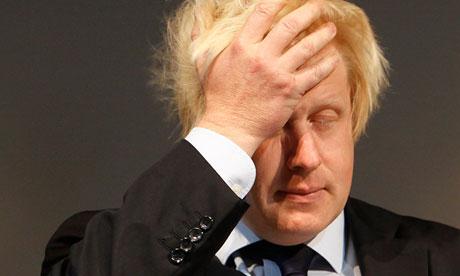
Boris Johnson, the London Mayor, said on Tuesday that he did not believe that the new proposals designed to keep Britain within the EU went far enough.
Commenting on ‘red card’ system, which will allow national parliaments to join forces to veto the new laws from Brussels.
Despite making it clear that he thinks David Cameron has “been doing a very, very good job of getting people to see things his way”, he went on to comment;
“I think there’s much, much more, however, that needs to be done.”
Nigel Farage, the leader of Ukip, has also commented on the ‘red card’ deal offered to Brtain saying;
“The idea we are being sold that a joint ‘red card’ is some sort of victory is frankly ludicrous.”
Sainsbury’s to takeover Argos in £1.3bn deal
Sainsbury’s said the takeover would boost earnings per share (EPS) in the first full year following completion, rising to over 10 percent in the third year.
The British Supermarket Sainsbury’s (SBRY.L) has agreed to buy Argos Home Retail (HOME.L) for £1.3bn, creating a group bigger than Britain’s biggest retailer, Tesco (TSCO.L).
Purchasing Argos will allow Sainsbury’s to widen its range of non-food products such as toys and electronics. Important in a market where the grocery sector is being hammered by the growth of discount groups such as Germany’ Aldi and Lidl.
Analysts have not been so optimistic, fearing that Sainsbury’s will focus too much on the merger, when the supermarket sector is already under pressure.
Head of equities research at Hargreaves Lansdown, Steve Clayton, has described the offer as “bold play”. He commented;
“It is looking to buy a struggling business when the supermarket itself is fighting strong headwinds,”
Sainsbury’s have said that the takeover will boost the earnings per share in the first year, which will then rise to over 10% by the third year.
EU to present proposals for negotiated British membership
The UK has reached a deal with the EU which allows member states to block unwanted European legislation, which may pave the way for Britain to stay in the EU with a renegotiated membership.
According to Reuters’ sources, the document is said to include a legally binding provision allowing a group of 55 percent or more member states to either stop EU legislation or demand changes, and may even include a clause allowing Britain to suspend benefit payments to migrants – one of David Cameron’s most controversial aims.
The European Council President Donald Tusk is due to present proposals later today that focus on keeping Britain in the EU, but altering its terms of participation. The deal reached on Monday covers just one of David Cameron’s aims for reform, and has been hailed a “breakthrough” negotiation. However, many are sceptical that Cameron’s aims will come to fruition, with Foreign Secretary Philip Hammond saying of the proposals due to be presented later:
“It may be that the document is so good that we say ‘brilliant’ – but I rather doubt it. I suspect that the document will be the basis of further work.”
02/02/2016
UK construction off to weak start in 2016, German unemployment falls

Britain’s construction sector grew at its slowest pace for nine months in January, according to the latest figures from financial data analysts Markit.
The UK Construction PMI figure fell from 57.8 in December to 55.0 in January, well below the 57.5 forecast by analysts. According to Markit, housebuilders were one of the biggest influences on the slowdown:
“UK construction firms struggled for momentum at the start of this year, with heightened economic uncertainty acting as a brake on new orders”, said Markit economist Tim Moore.
The index showed falling optimism amongst construction companies, to its lowest since December 2014, indicating that construction companies are heading for a relatively weak first quarter in 2015.
German unemployment falls to record low
German unemployment saw a larger-than-expected drop in Janary, signalling a positive start to 2016 in Europe’s biggest economy and providing hope for many.
According to Germany’s Federal Labour Office, seasonally adjusted unemployment declined by 20,000 to 2.732 million, compared to a 7000 drop forecast by analysts.
02/02/2016
Disastrous results see BP shares slide

Oil giant BP has reported its worst annual loss in 20 years and announced that a further 3000 jobs will be cut, as decreasing oil prices continue to weigh heavily on the company.
Their annual loss for 2015 totalled $6.5 billion, after the company put aside another $440 million to cover costs from the Deepwater Horizon oil spill, which happened six years ago in the US Gulf. The 3000 job cuts will be on top of the 4000 already announced and amount to around 9 percent of their workforce. Fourth quarter underlying replacement cost profit, seen as BP’s net income figure, fell to $196 million – well below analysts expectations of around $730 million.
Oil prices have fallen significantly over the last 15 months, down around 70 percent, with Brent Crude trading at an average of $33 a barrel so far in 2016. BP have blamed falling oil prices for the results, with Chief Executive Bob Dudley saying that BP are currently trying to “adapt and rebalance” to cope with the changing environment.
Shares in BP have taken a hit on the news, trading down over 7 percent already this morning. They are currently down 7.64 at 338.9 (0946GMT).
02/02/2016
January is over: it’s time for the markets to rise

Royal Bank of Scotland warned of a “cataclysmic” year for the global economy, whilst Chancellor George Osborne made it clear that 2016 will not be easy for the UK. So far, these predictions have been largely accurate; markets had the worst start to the year on record and January has been plagued with releases of worrying economic data. But it is really all doom and gloom?
Chris Williamson, chief economist at financial data provider Markit, says that if scare-mongering talk like this continues we risk a “self-fulfilling prophecy”; investors will start to panic sell and both households and businesses will start to save, instead of the spending that is needed.
After all, things in the near future may not be so bad – the U.S. has raised interest rates for the first time in over a decade, showing that policymakers in the world’s biggest economy have faith that the future is looking bright. December’s US jobs data beat all expectations, with unemployment falling to a low unseen in months. And whilst oil’s lows are a still a blight on the landscape, combined with low wages and interest rates there is room for businesses and entrepreneurs to use this to their advantage.
Issues in China and Russia may be harder to make positive – growth in China has fallen from 12 percent in 2010 to 6.9 percent in 2015, an undoubtedly worrying fall. Similarly, low oil prices have caused Russia’s GDP to fall sharply, as it depends heavily on oil exports. However, Russia is starting to appreciate that butting heads with the EU and the U.S. will only exacerbate economic difficulties, and better global relations may well solve some of Russia’s problems. As for China, it remains important not to over exaggerate the country’s significance – as of 2014, the U.S., Japan and the Eurozone accounted for nearly half of the world’s global economy. A slowdown in China does not necessarily need to impact on the world’s economic health.
So whilst January may have been a bleak month for the markets, perhaps it is time to concentrate on the future. Dwelling too much on weak growth figures risks dampening investor sentiment and creating problems ourselves, and overall market forecasts have been better than 2015 – the IMF, for example, forecast growth of 3.6 percent this year, up 0.5 percent on the year before.
Ryanair on target despite 6 percent fare decrease for 2016

Budget airline Ryanair have announced that it will hit its annual profit target, despite falling ticket prices and the impact of terrorism threats on passenger numbers.
Ryanar expects fares to fall 6 percent this quarter, an upwards revision from 4 percent..However, net profits for the last three months of 2015 doubled year on year to €103 million, leading the company to maintain its profit forecast for the full year.
The company was one of many in the travel industry to be hit by a fall in passengers after the Paris attacks, forcing fares to be lowered 1 percent in order to sell seats. This, and the drop of 6 percent heading into 2016, has been offset by a fall in oil prices, which have led to Ryanair’s costs to fall by 5 percent in the last quarter of 2015.
In a statement, Chief Executive Michael O’Leary said that he expects “the lower fare environment to continue for the foreseeable future.” Last year, Ryanair became the first airline in the world to carry 100 million international passengers.
Shares in Ryanair (LON:RYA) are trading up 2.98 percent on the news, at 14.16 per share (0946GMT).
01/02/2016
Good time for BT as revenue growth soars on EE deal
Telecoms group BT posted its best revenue growth in seven years on Monday, just days after the completion of a takeover deal which renders it’s the UK’s largest telecoms provider.
BT announced that it would undergo a restructuring to incorporate EE, creating a new division to serve businesses and the public sector. BT’s share price rose again today on the news, and is currently up 2.54 percent (0924GMT).
Chief Executive Gavin Patterson called it an “exciting time” for the group, saying that it had had a “stand out quarter, increasing its overall line base for the first time in well over a decade”.
BT’s share price also climbed on Friday after the announcement that it’s takeover of EE, the mobile service provider, had been completed. The deal was uncertain for a while after several other large telecoms groups expressed competition concerns. Whilst some predict the demise of the EE brand, for the time being BT are insistent that it will remain.
the BT group will now serve around 10 million households, providing a mixture of broadband, telephone, TV and mobile services under a variety of brands.
01/02/2016
US economy sees large slowdown in fourth quarter

The US economy saw a sharp slowdown in the fourth quarter, with GDP growth slowing significantly alongside weak export figures.
Gross domestic oroduct grew 0.7 percent in the fourth quarter, a significant decline from the 2 percent growth in the third quarter. Consumer spending also slowed, affected by an unseasonably warm winter, with a strong dollar and lack of demand having an impact on US exports.
The U.S. Federal Reserve, who recently took the decision to raise interest rates for the first time in a decade, acknowledged that growth had slowed, but insisted that “labour market conditions” improved. Though the Fed’s original plans was to continue raising rates slowly, recent market volatility is likely to weigh in on the decision.
29/01/2016
Japan slashes interest rates into sub-zero territory

The Bank of Japan shocked markets on Friday by lowering the benchmark interest rate into negative territory, as part of their effort to stimulate their faltering economy.
Governor of the Bank of japan Haruhiko Kuroda told a news conference: “What’s important is to show people that the BOJ is strongly committed to achieving 2 percent inflation and that it will do whatever it takes to achieve it.”
Japan has long been battling deflation and economic difficulties, which are likely to be worsened by China’s downhill slide. However, Kuroda confirmed that the country was well on its way to recovery, and that the sub-zero internet rate move was the next logical step.
Markets around the world jumped upon hearing the news, the first positive piece on information for a while. The FTSEurofirst 300 was up 1.2 percent, after a 1.7 percent fall yesterday, and the MSCI index rose 0.5 percent. However, the yen fell on the news, with the dollar up 0.4 percent.