
BHP Billiton posts worst profit in a decade

BHP Billiton (LON:BLT) are up 6 percent this morning after releasing final year results, despite disclosing their worst underlying profit in a decade.
Falling commodities prices and trouble in the Chinese markets have affected the company’s performance. Their underlying attributable profit fell to $6.42bn for the year to June from $13.26bn a year earlier, a drop of 86 percent.
The company has pledged not to cut its dividend to shareholders and has reduced their capital spending to $8.5 billion in 2016 to meet that goal.
BHP Billiton Chief Executive Officer, Andrew Mackenzie, confirmed that volatility in China had affected the company’s outlook:
“In the short term we expect ongoing economic reforms in China to contribute to periods of market volatility. And, while we remain confident in the long-term outlook for commodities demand as emerging economies continue to urbanise and industrialise, we have lowered our forecast of peak Chinese steel demand to between 935 million tonnes and 985 million tonnes in the mid 2020’s.
“However, improved productivity can further stretch the capacity of our existing operations to increase volumes at very low cost.”
Chinese policy makers step back to watch Great Fall

As the ‘Great Fall of China’ continues, it appears that Chinese policy makers have begun to take a step back and let the markets run their course rather than intervene as they have done over the past few weeks.
Perhaps authorities have recognized that the recent measures designed to prop up the market appear to have done little, and been left with little choice but to instigate a more laissex-faire approach and watch the drama unfold.
The Shanghai Composite Index tumbled another 7.6 percent to 2,964.97 at the close, sinking below the 3,000 level for the first time in eight months.
However the FTSE bucked the trend and rallied this morning. Germany’s DAX index did the same, up 2.8% after a steep plunge yesterday, suggesting that investors may be resisting the urge to panic.
Whilst the Chinese stock market is taking a hit, growth for the world’s biggest economy is still on track at 7% for the year – still an impressive rate for any country. Australian Prime Minister Tony Abbott spoke out against panicking over the problems in China:
“I think it’s important that people don’t hyperventilate about these type of things.
“It is not unusual to see stock market corrections. It is not unusual to see bubbles burst in particular markets and for there to be some flow-on effect in other stock markets, but the fundamentals are sound.”
Osborne announces further Lloyds sell off
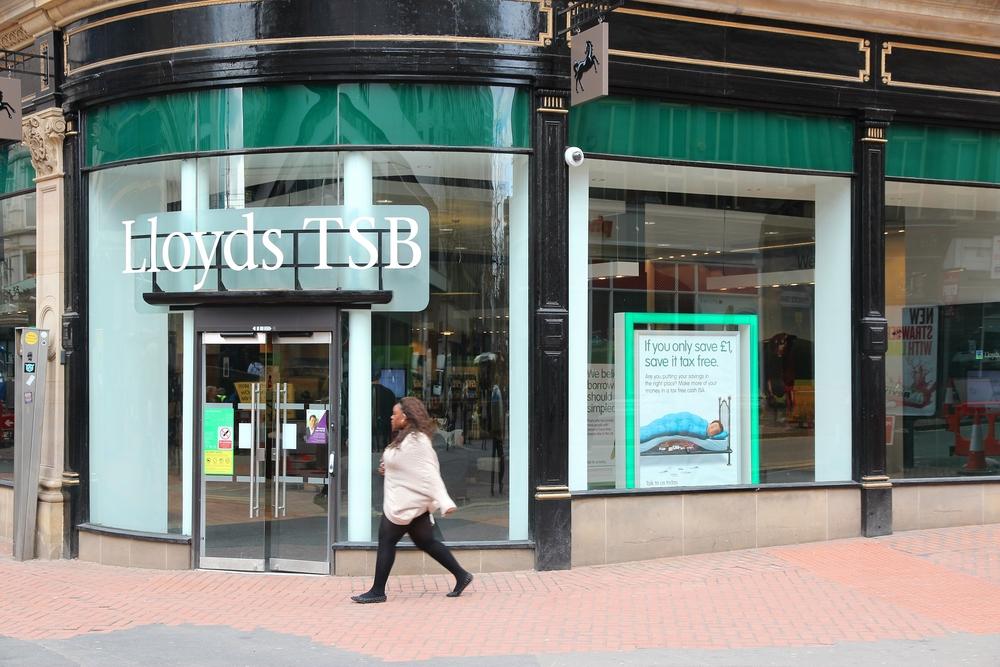
Chancellor George Osborne announced plans to sell off more of the government’s share in Lloyds (LON:LLOY) bank.
UK Financial Investments, the company that holds the goverment’s stakes in both Lloyds and RBS, has reduced it’s holding to 12.97%.
George Osborne was quoted as saying that he hopes the sale of the UK government’s shares in Lloyds Banking Group will soon be completed.
“My view is that we want the government out of the banking system in the UK,” Reuters agency reported him as saying. “I hope that [Lloyds] will be complete within the year.”. The government began selling off the 43% stake in September 2013, after the government bailed the bank out with £20.5bn after the financial crisis. The banking group is currently trading down 2.73 percent at 73.78 pence per share.House of MoLi launches campaign on Crowd2Fund
Corporate accommodation provider House of MoLi is about to begin a crowdfunding round on Crowd2Fund, to raise money to expand their portfolio.
House of MoLi – otherwise known as House of Modern Living – offers serviced apartments for mid to long term stays. They estimate to have reduced accommodation price for businesses by 30% compared to standard hotel rates.
Founded in 2008 by former investment banker Sid Narang, House of MoLi is growing fast. They have doubled the number of apartments on offer since January 2014, and currently manages over $150 million of real estate worldwide, with apartments in London, Paris and New York. The company have a turnover of nearly $4 million, with a £1,105,000 gross profit, and Narang hopes the business will reach revenue of $5 million by 2020. He says: “Consumers today are becoming more aware of their options and their expectations are constantly increasing. We want to make everything easier for the client. We are introducing an all-in-one account for clients so that they can manage their finances and bookings in one place.”
 Narang cites the importance of reaching the right kind of investor as a motive for choosing crowdfunding.
“Crowdfunding gives us an opportunity to reach out to investors who are involved in the latest tech and industry trends. We specifically chose to raise on Crowd2Fund due to them understnading our business and the start-up scene. Their approach is humane and personal.”
The business is aiming to raise a loan of between £250,000 and 500,000, over four years and with 6-15% APR. Larger investors will also receive perks including stays in the serviced apartments.
For more information on this opportunity, visit their campaign page here.
Narang cites the importance of reaching the right kind of investor as a motive for choosing crowdfunding.
“Crowdfunding gives us an opportunity to reach out to investors who are involved in the latest tech and industry trends. We specifically chose to raise on Crowd2Fund due to them understnading our business and the start-up scene. Their approach is humane and personal.”
The business is aiming to raise a loan of between £250,000 and 500,000, over four years and with 6-15% APR. Larger investors will also receive perks including stays in the serviced apartments.
For more information on this opportunity, visit their campaign page here.
DAX index drops nearly 4 percent; worst since 2007

Germany’s DAX index is heading for a bear market after tumbling 3.8 percent today.
The index has lost all of its gains for the year and entered negative territory. The Dax has fallen for the seventh consecutive day, with its biggest one day decline since 2007.
The Stoxx Europe 600 Index dropped, moving into its worst week in four years. Thirteen out of 18 western-European markets have fallen 10 percent or more from their high, and the volume of Stoxx 600 shares changing hands almost double the 30-day average on Monday.
£44 billion was wiped off the FTSE 100 this morning as share prices fell across the board.
Crowdbnk is the way forward for salami start-up Serious Pig
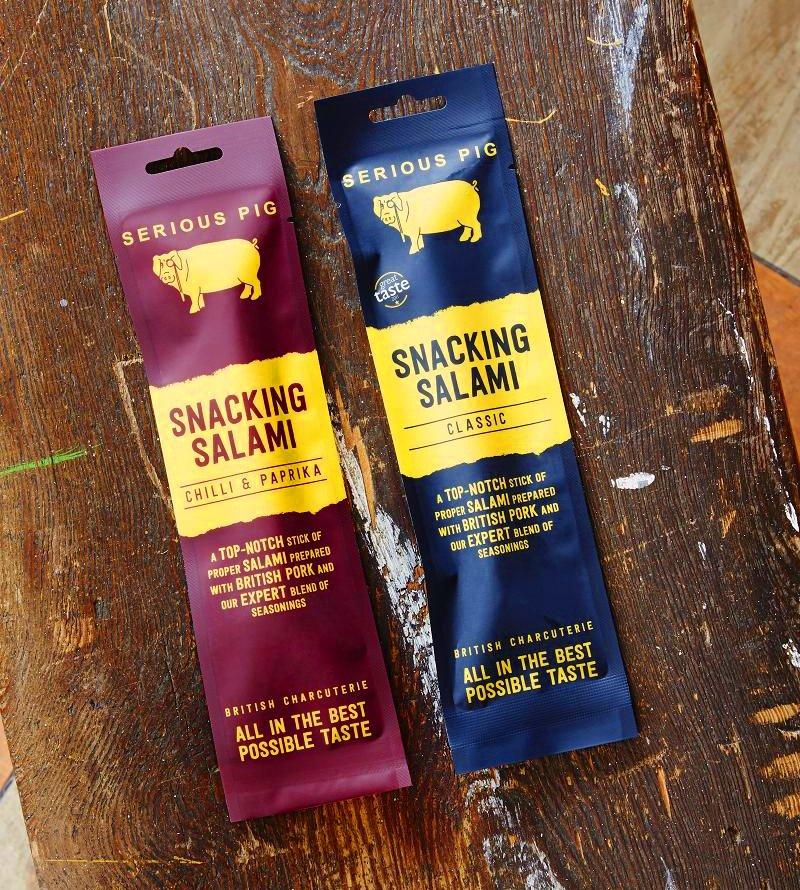
Salami company Serious Pig is the latest snacking sensation, started by co-founders George Rice and Jonny Bradshaw. From humble beginnings – the idea came to them whilst casually chatting about bar snacks over a pint in The Junction Tavern near Tufnell Park – the company has gone from strength to strength.
Since 2011, Serious Pig business has sold nearly 1 million Snacking Salamis. The founders wanted to create a bar snack that was a tastier, artisanal, authentic alternative to the traditional crisps-and-pork-scratchings offered by most pubs and by all accounts, they’ve succeeded; their products have won several Great Taste Awards and been personally approved by Heston Blumenthal. Jamie Oliver’s Recipease sites list Snacking Salami, as well as it being offered in Claridge’s Hotel, Conran Shop, Harvey Nichols Food Hall and Brew Dog Bars.
Unsurprisingly, the founders are pleased with the brand’s immediate success:
“We’ve created authentic salami using British pork and carefully selected ingredients. I’m thrilled that we now have the chance to expand our product range and bring the snacking industry some serious competition.”
In order to bolster its position in the UK Serious Pig recently underwent a funding round using Crowdbnk, successfully raising £126,000. When asked why the company chose to crowdfund rather than pursuing more traditional options such as a loan, Rice said:
“We’d seen crowdfunding emerging and thought this would work for us. It’s exciting because it engages with the consumer much more and gave us another way to engage with potential customers.”
With Crowdbnk just one of many online crowdfunding platforms, I was interested to find out what drove Serious Pig to choose Crowdbnk for their online campaign.
“Crowdbnk does all its due diligence up front and saves investors a lot of time. Crowdbnk also offered us more guidance than the others and were proactive in in introducing us to investors at the beginning which gave our funding round some momentum. They’re also a start up too so we can help others in a similar position to us.”
The money raised will be spent on a sales and marketing campaign, including the appointment of two talented and experienced individuals, a Senior Sales Manager and a Brand Manager, as well as a reserve fund to mitigate the risk of unforeseen challenges.
It’s 10am and just browsing the Serious Pig website enough to make any meat lover’s mouth water. Their “Snackingham” packets of pork salami nibbles are infused with a special blend of herbs and spices, cured and air-dried in the traditional way. The company’s founders say that their salami is the “perfect and most delicious snack to accompany the recently ordered pint of real ale”, and I’m tempted to give it a go – roll on five o’ clock!
For more information on Serious Pig, visit their website here.
Miranda Wadham on 24/08/2015
Veeqo CEO Matt Warren shares crowdfunding tips
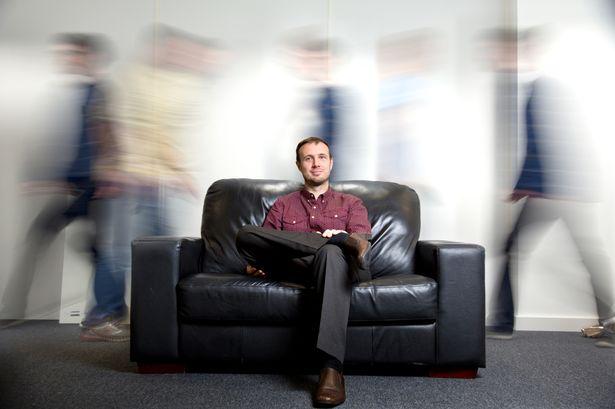
Veeqo is one of Wales’ most successful tech start-ups, and an online crowdfunding veteran. The company has completed several funding rounds on Seedrs, raising the target amount each time, and attracted many high profile investors in the process -including New Look founder Tom Singh.
Veeqo is a web based software for online retailers which allows them to sync their stock levels from their website to their POS, Amazon and eBay sales channels in real time. The software also integrates into courier systems, so retailers can bulk print shipping labels very quickly without having to copy and paste customer data into separate system.
In April, Veeqo completed it’s most recent Seedrs campaign, raising nearly £700,000 to fund an expansion to the US. With so many crowdfunding platforms around, it’s crucial to pick the one that will give your venture the biggest shot at raising its capital. Veeqo CEO Matt Warren found Seedrs the best option:
“For me, Seedrs had the best online presence. I liked how open it all was, you could instantly see who invested in your business, and how the investors could ask questions.
“I also liked how it wasn’t too intrusive in regards to future cash flow. Of course, having a business plan and being aware of your overheads is critical, however estimating what sales will be in year three was near on impossible.”
Undoubtedly, Seedrs has had plenty of positive press lately. With Andy Murray joining the board and raising its profile, the platform is one of the sectors biggest success stories.
However, Seedrs have several opportunities online at once – and with thousands of campaigns raising funds over different platforms, it can be difficult to get your project to stand out.
Having successfully met his target several times, Warren’s strategy seems to be working. According to him, spreading the word and creating traction is key:
“I researched the businesses that had failed to raise the cash they needed. They had rarely got above 2% funding and a lot of them even stayed at 0%. This amazed me. It begged the question why would some stranger invest in you, if you couldn’t find a few friends to put £10 in. So from this I decided to email everyone in my address book asking for their help, and a lot of people invested which I never thought would have.
“After we got 40% funded it was downhill, the speed of new investors increased rapidly. What I would advise is perhaps to get at least 10 people to confirm they will invest and get them registered in advance, before your proposal is live. Even if it’s just £10.”
As you might expect, creating a user-friendly, engaging profile is another way to ensure success. Warren’s advice is not to underestimate the value of a video:
“We were also encouraged to make a video of our product in the beginning. In hindsight, we should have invested in a short, 60 second professional explainer video. This would have gained us more investors as what we presented was homemade and as un-slick as you could have imagined”
Seedrs also offer support for entreprenuers as well, both with the legal side of the project, and attracting investors. According to Warren, this gives them the edge over other platforms:
“Seedrs organise regular events, so it’s worth asking if you can pitch at one of these events in front of their investors.”
For further information on Veeqo for your business, visit veeqo.com. Veeqo offer a 14 day free trial on their software.

Miranda Wadham on 20/08/2015
UTV shares rise after ITV sale talks
Shares in Northern Irish broadcaster UTV Media (LON:UTV), one of the only two remaining independent regional broadcasters in the ITV network, rose 10 percent in early trading after confirming it is in talks with ITV over the sale of its TV assets.
UTV said in a statement this morning that it was in discussions for a potential sale of its television assets:
“Discussions are ongoing and may or may not result in such a transaction being agreed.”
The company is due to report its results later this week, but has said that it expected to incur a loss of 11.5 million pounds, higher than the 6 million pounds it had forecast in March.
UTV Media is currently trading up 9.24 percent at 171.50 pence per share (1039GMT)
CBI suggests UK economy picking up

Britain’s economy may pick up faster than expected, according to the latest figures released by the Confederation of British Industry.
The CBI predicted “decent quarterly GDP growth”, and upgraded its forecast to growth of 2.6% this year and 2.5% in 2016.
Joh Cridland, CBI Director-General, said: “We’re encouraged by the twin engined-growth of household spending, spurred by stronger wage increases and low inflation, buttressed by business investment”.
The CBI also stated that, given these figures, it expected the Bank of England to announce its first rate rise in seven years in the first quarter of 2016.
Situation in China worsens, hitting euro shares and commodities
Global markets have been volatile in early trading, after Chinese shares dropped nearly 9 percent overnight to 3 year lows.
Investors are growing increasingly worried about trouble in the world’s second biggest economy. London’s FTSE 100 was down by 2.5 percent in early trade, while major markets in France and Germany also opened down by more than 3 percent.
This news was coupled with a sharp drop in the price of the dollar and major commodities.
Copper fell 2.5 percent, hitting a six-year low of $4,920 a tonne, and nickel slid 4.6 percent to its lowest since 2009 at $9,730 a tonne.
Takako Masai, head of research at Shinsei Bank in Tokyo told Reuters: “Markets are panicking. Things are starting look like the Asian financial crisis in the late 1990s. Speculators are selling assets that seem the most vulnerable”.
Oil prices have also slumped to six year lows, with U.S. crude was down 3 percent at $39.20 a barrel, while Brent lost 2.4 percent to $44.40 a barrel.
Beijing announced plans this morning to allow its main state pension fund to invest in the stock market, as part of a series of measures designed to stabilise the markets. Earlier this month China made a surprise move by devaluing the yuan to increase exports.
Over the past week, the Shanghai index fell 12%, adding up to a 30% drop since the middle of June.