Top stock picks for 2025 by investment trust fund managers

Leading investment trust fund managers have revealed their top stock selections for the coming year.

Ranging from a leading consumer healthcare business to Vietnam’s top technology company, investment trust managers share some of their best ideas for the new year with UK Investor Magazine readers.

Ian Lance, Fund Manager, Temple Bar Investment Trust

Find out more about the Temple Bar Investment Trust here.

Marks and Spencer (LON:MKS)

Marks & Spencer’s (M&S) has seen a few ups and downs over the last twenty years, but its most recent renaissance began in earnest in 2017 with the appointment of Archie Norman as chairman. Having previously turned around Asda, Norman set about overhauling half of senior management, modernising the store footprint and refreshing clothing lines to attract younger customers. In food, the company retained its premium appeal while expanding to cater for weekly shops. Meanwhile, a long-overdue digital strategy has transformed M&S into one of the UK’s leading online retailers. These changes, combined with £300 million in annual cost savings, have set the stage for success.

By 2023, M&S was gaining market share in food and clothing, with earnings exceeding expectations. The share price has surged from £1 in late 2022 to touch £4 in recent weeks, yet we see further upside, as the company’s long-term earnings potential remains undervalued.

IAG (LON:IAG)

IAG is one of Europe’s “big three” airline groups, with a strong presence across passenger, cargo, and loyalty businesses, and through its partnership with American Airlines, a particularly dominant position in the highly profitable transatlantic market.

With a high-quality management team and a strengthened balance sheet, we believe IAG’s shares are presently undervalued. The company has consistently delivered strong and growing profitability both before and after the Covid pandemic. Trading on just 6x earnings and offering a free cashflow yield of over 10%, the shares appear compellingly valued. Meanwhile, with the dividend reinstated at the company’s recent interim results, shareholders look set to be well rewarded in the years ahead.

Craig Martin, Chairman, Dynam Capital, the manager of the Vietnam Holding Investment Trust

Find out more about Vietnam Holding here.

FPT Corporation (FPT: HOSE)

FPT is a leading IT services provider in Vietnam, with a market capitalization of USD 7.6 billion as of August 30, 2024. Over the years, FPT has positioned itself as a key player in high-growth sectors, underpinned by its strong focus on technology, global expansion strategy, and diversified business model encompassing IT services, telecoms, and education. The company is also a well-known distributor and retailer of IT products and a key player in the education sector, with programs spanning multiple levels for 145,000 students nationwide.

In 2023, the company achieved a profit before tax (PBT) of USD 430 million and generated overseas IT service revenues of USD 1 billion. With a commitment to innovation and leveraging digital transformation trends, FPT continues to expand its global footprint, including notable success in the Japanese market. The company currently operates across more than 30 countries and territories. This extensive international network enables FPT to deliver diverse IT services and solutions globally, serving clients in sectors such as automotive, finance, and healthcare. The company has successfully transformed itself from an IT outsourcing service provider to an end to-end digital transformation partner.

FPT’s ability to combine on-the-job training with academic excellence, focus on innovation, and strategic investments in global markets positions it as a long-term growth story in Vietnam’s technology and education sectors.

Mobile World Investment Corporation (MWG: HOSE)

“Founded in 2004 as a single store selling mobile phones, MWG has grown to become Vietnam’s largest retailer by revenue and physical store count, now exceeding 5,000 locations. MWG operates under several brands, offering a wide range of merchandise, including consumer electronics, groceries, and pharmaceuticals. As of the end of 2023, the company employed over 60,000 people.

As a modern-trade consolidator, MWG has revolutionised the Vietnamese retail landscape by continuously expanding its footprint, exploring new formats, and diversifying product offerings to meet evolving consumer needs. MWG now commands over 50% market share in mobile phones and consumer electronics, while its grocery chain ‘Bach Hoa Xanh’ has recently become the market leader in terms of revenue. In addition to its core brick-and-mortar business, MWG has been enhancing its e-commerce capabilities to respond to the growing trend of online shopping in Vietnam. The company has invested significantly in its online platforms and logistics infrastructure to better serve customers and compete with other major e-commerce players in the market. Online revenue accounted for 14% of total revenue in 2023, with a transaction value of USD 700 million, positioning MWG among the top e-commerce players in Vietnam. The company’s omni-channel approach, supported by its extensive store network, fast delivery, and customer-centric culture, is a key competitive advantage.

MWG’s innovative approach to retailing, robust market position, and strategic diversification make it a compelling choice for investors seeking exposure to Vietnam’s retail sector. Its ability to adapt to consumer trends and capitalize on untapped opportunities underscores its potential for sustained value creation.”

Gervais Williams, Fund Manager, The Diverse Income Trust plc

AO World (LON:AO)

“Unfortunately, we are working on the assumption that 2025 will be an unsettled year, marked by rising unemployment due to the National Insurance increase, along with US tariffs that interrupt global trade. In a tough market, typically the strong become stronger, whilst the weak lose out. AO World is, in our view, a strong supplier of household electricals. Specifically, we believe AO.com’s Five Star Membership scheme could become the consumer route of choice when buying household electricals. Additional market share should help drive extra efficiencies, and hence support AO’s cash generation. Ultimately, it’s those generating extra surplus cash that hold all the aces in tough periods.”

TP ICAP (LON:TCAP)

“In our view, TP ICAP, is a leading provider of liquidity to the global credit markets, at a time when global markets are highly volatile. Furthermore, as it networks its Liquidnet platform with the global banks in 2025, we believe its market position should further improve. Alongside, they are looking to bring in a new investor into their Parameter data subsidiary. In short, we believe all this should help drive up their cash generation. Not at all bad for a company standing on a current dividend yield of 5.6%. As with AO, in our view, the strong companies should get stronger, and TP ICAP appears very well placed for 2025.”

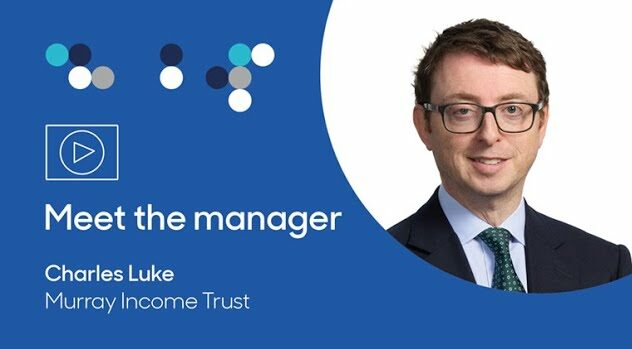
Charles Luke, Fund Manager, abrdn Murray Income Trust

Find out more about abrdn Murray Income Trust here

Haleon (LON:HLN)

“We believe that Haleon, a leading consumer healthcare business, is an attractive investment. The company has powerful market positions across five major consumer healthcare categories benefitting from strong and well-known brands.  These five categories are Oral Health (with brands including Sensodyne), Vitamins, Minerals and Supplements (Centrum), Pain Relief (Panadol), Respiratory (Flonase) and Digestive Health (Tums).  Revenues are globally diversified and around 30% of revenues derive from faster growing emerging markets. Attractive long-term drivers include ageing populations, a greater consumer focus on health and wellness and a sizeable unmet need (around 40% of adults suffer from gum disease but don’t use a specialist toothpaste like Sensodyne).  Other attractive characteristics of consumer healthcare include limited private label competition, a relatively low level of cyclicality and relative price insensitivity.  Haleon’s medium term financial guidance is to grow its revenues organically between 4-6% and to generate operating profit ahead of this which should lead to appealing dividend growth.”

Rotork (LON:ROR)

“Rotork is a leading global manufacturer of actuators. The company offers attractive growth potential from a variety of different drivers: methane reduction in upstream oil and gas; robust oil and gas capex budgets; and scope for growth in water and CPI (chemicals, process and industrial) specialist segments which should lead to revenue growth of at least 5-7% per annum. The company has strong quality characteristics with attractive margins, a high return on capital employed, market leading positions, high barriers to entry (for example its strong brand, high performance and reliability, the requirement for certification, and provision of field service) and a net cash balance sheet. The company has an appealing part to play in the energy transition helping to remove methane emissions and is well placed to enable the growth of hydrogen and carbon capture and storage. We don’t believe that the company’s strong competitive position and attractive growth potential is reflected in its valuation.”

Imran Sattar, Portfolio Manager, Edinburgh Investment Trust

London Stock Exchange Group (LON:LSEG)

“A significant position in the portfolio is London Stock Exchange Group. LSEG is significantly diversified beyond just owning the London Stock Exchange. It is a global financial markets infrastructure and data provider serving customers across financial markets. It has mostly recurring revenue and 50%-plus margins. Its capabilities include data, indices and analytics, trade execution, clearing and risk management products and services. Its customers include a wide range of financial market participants, and increasingly corporates, who use the data for decision-making. LSEG’s data set is deep, broad, exceptionally difficult to replicate, and a significant and enduring source of competitive advantage.”

RELX (LON:REL)

“Another position we have been building up over the year is RELX. This company provides information-based analytics and decision tools for professional and business customers in sectors including risk; scientific, technical and medical; legal; and exhibitions. For example, RELX owns Elsevier – a leading global scientific publisher which alongside publishing high impact journals such as The Lancet, also provides data analytics tools. RELX has delivered an improving trajectory of both revenue and earnings growth, as the business has shifted towards higher growth analytics and decision tools. The company’s approach is to price new and improved tools according to the value provided to customers. Its philosophy is to adopt a long-term approach, partnering with customers to deliver added value.”

FTSE 100 sinks after ‘hawkish’ interest rate cut, BoE provides reason to be optimistic

Global equities sank on Thursday after the US Federal Reserve delivered a ‘hawkish cut’ to interest rates, sending a wave of disappointment through financial markets.

The Bank of England helped stem the selling with hints of rate cuts in the new year, despite keeping rates on hold at 4.75%.

So much for a Santa rally.

The FTSE 100 shed 1% in early trade after the Federal Reserve cut rates by 25bps to 4.25% – 4.5%. After being accused of moving too slowly to make their first cut after the hiking cycle, the Federal Reserve has now slashed rates by 1% since September. 

Selling picked up as the session progressed before the Bank of England’s rate decision and accompanying commentary helped spark a small rally from the lows in the FTSE 100. The index was down 1.1% at the time of writing.

“European markets posted sharp losses in early trading,…tracking a global selloff sparked by the US Federal Reserve’s hawkish shift,” said Matt Britzman, senior equity analyst, Hargreaves Lansdown.

“While the Fed delivered a widely expected 25bps rate cut, its projection of just two cuts in 2025 – down from four in September – rattled investors around the globe.”

As we mentioned earlier in the week, traders would be unphased by the actual decision and would be more concerned about the Federal Reserve’s policy projections for next year.

Stubbornly high inflation and the surprising resilience of the US economy were behind the Fed’s revised borrowing cost projections, which now see fewer rate cuts next year.

“US markets played the part of Scrooge on Wednesday, tumbling as the Federal Reserve’s hawkish tone dampened holiday cheer, with the S&P 500 shedding 2.95%, the Nasdaq sliding 3.62%, and the Russell 2000 plunging 4.46%,” Britzman explained.

“The Fed’s latest 25bps rate cut was as expected, but policymakers signalled just two cuts for 2025 – half of what was anticipated last quarter. This shift sent the 10-year Treasury yield up 11 basis points to 4.51%, adding further pressure to equity markets. Wall Street’s reaction underscores the Fed’s delicate balancing act as it tightens its outlook on easing, forcing markets to recalibrate their rate expectations. Investors should see this as a healthy spot of profit-taking rather than an end to the party, after what’s been a fantastic run for markets since the US election.”

The Federal Reserve’s interest rate decision was followed by the Bank of England’s interest rate decision to keep rates on hold, voting 6-3 in favour of keeping rates on hold.

Bank of England

Governor Bailey provided little insight into when the Bank of England would cut again, but comments about wages and slow growth gave a dovish tone to accompanying commentary.

“It remains highly likely the Bank will continue to follow its data dependent path and cut rates in the New Year, perhaps as early as its first meeting in February, but we expect only a gradual withdrawal of more restrictive policy over the course of 2025,” said Rob Morgan, Chief Investment Analyst at Charles Stanley.

The BoE rate decision and insight provided some reprieve for UK stocks, but cyclical sectors, including miners, banks and financials, remained in the red.

Housebuilders spiked higher after the rate announcement, with Persimmon jumping 1.3% in seconds.

Intermediate Capital Group was the top faller, falling 4%, despite receiving a price target upgrade.

Although investors are clearly upset with the new trajectory for interest rates, the earnings picture for US stocks still looks strong. Today’s dip may prove to be a buying opportunity for US stock once the dust settles.

The UK’s outlook is slightly less clear, with questions being asked about government policy and sentiment on the floor. That said, uncertainty such as this can be a precursor for a rally.

AIM movers: Intelligent Ultrasound bid and Gfinity and Tribe Technology accounts delayed

0

Active Energy Group (LON: AEG) shares rose a further 37.1% to 0.24p. Zen Ventures provided a loan of £200,000 to enable the publication of 2023 accounts and the latest interims. Zen Ventures will appoint two directors. The plan is to commercialise the CoalSwitch technology.

Sabien Technology (LON: SNT) says Phoenix, Arizonia will be the place of the first deployment of its waste plastics to oil technology. Phase 1 of the project will involve two pilots, and this will last for five years. Sabien Technology’s non-consolidated associate company b.grn Group has signed a non-binding letter of intent for leasing land for the plant. The share price increased 24.4% to 12.75p.

Data and marketing services provider Jaywing (LON: JWNG) revealed interim revenues falling 15% to £9.45m. The loss increased to £2.54m. The main decline was in UK consulting. Cost savings and new business wins man that the second half should be much better. Cash is tight, but there should be an improvement in cash generation. The share price is 18.5% higher at 1.6p.

Surgical Science Sweden is bidding 13p/share to Intelligent Ultrasound (LON: IUG), which values the ultrasound simulation company at £45.2m. The bid is recommended by the board. Intelligent Ultrasound will benefit from becoming part of a larger group and it enables the bidder to obtain a UK operation. Intelligent Ultrasound was going to return cash to shareholders following the sale of its clinical AI business. There was cash of £39.6m in November, which covers most of the bid value. In November 2022, a placing and subscription raised £5.2m at 9.25p/share. The share price improved 13.5% to 12.625p.

PipeHawk (LON: PIP) has made a good start to the financial year and it should return to profit. All the continuing engineering and electronics businesses are doing better. Interim revenues of continuing operations will be significantly ahead of the £1.1m achieved last year and breakeven is expected. The share price is 12.5% ahead at 2.25p.

FALLERS

Yesterday, shareholders approved plans for Webis (LON: WEB) to lave AIM and this will happen on 3 January. The share price dipped by two-fifths to 0.075p.

Gfinity (LON: GFIN) says that it achieved monthly profitability in November. Accounts for the year to June 2024 have been delayed and will not be published by the end of 2024, so trading in the shares will be suspended on 2 January. The share price fell 25.8% to 0.0575p.

Tribe Technology (LON: TRYB) shares are 13.9% lower at 1.4p after revealing that its accounts will be delayed. The autonomous mining equipment developer is in talks with potential provider of finance, and it believes that leaving AIM will make it easier to raise money. Trading in the shares will be suspended on 2 January.

Orosur Mining (LON: OMI) has raised £1.25m at 6.6p/share and this will fund drilling at the Pepas gold project in Colombia. A further 1.9 million broker warrants exercisable at 6.6p/share. The company has identified a basement fault that provides a marker for the trend of the Pepas gold project. The share price slipped 10.2% to 7.9p.

A poor performance in the Falkland Islands hit interims from FIH Group (LON: FIH). This was mainly due to delays to a contract to build houses for the Falkland Islands government and he Ministry of Defence. The problems are set to continue in the second half. The Momart and Gosport ferry businesses were steady. FIH slumped into a loss of £5.9m. Net debt is £3.3m and there is a 1.25p/share interim dividend. The share price declined 8.33% to 220p.

Ex-dividends

MS International (LON: MSI) is paying an interim dividend of 5p/share and the share price is unchanged at 940p.

Delivering revenue growth and increasing dividends with Adsure Services’ Kevin Limn

The UK Investor Magazine was thrilled to welcome Kevin Limn, CEO of Adsure Services, to run through the business assurance specialists’ half-year report.

Please visit the Adsure Services investor hub here.

Adsure Services delivered stellar performance during the half-year period. Revenue grew 19%, driving gross profit 46% higher. The most important takeaway for investors was a 60% increase in the interim dividend.

We explore the factors driving higher sales and how Adsure Services delivers on its growth strategy.

Kevin finishes by highlighting what investors can look forward to in 2025.

Share Tip: Time Finance – £53m capitalised group to achieve record current year profits of £7.5m, shares now 58p, I see 80p, while broker TP is 112p  

Following this morning’s Trading Update, we now know that the AIM listed independent specialist finance provider Time Finance (LON:TIME) has been doing better than the market has been expecting in its six months to end-November. 
Following fourteen quarters of growth in its lending, the company has reported a record lending book, record first-half revenues and record Interim profits. 
The Business 
Time Finance helps UK businesses thrive and survive through the provision of flexible funding facilities.  
It offers a multi-product range for SMEs concentrating on Asset, ...

MicroSalt takes aim at $16bn french fry market

MicroSalt has filed a patent application with the United States Patent and Trademark Office covering unique methods and systems for transforming powdered salt formulations into granulated salt, specifically designed for use on fried foods including French fries and fish.

The new formulation represents a significant technological advancement in sodium reduction, offering consistent seasoning distribution and improved flowability while maintaining full flavor with approximately 50% less sodium. This innovation addresses a critical challenge in commercial food preparation, where uniform seasoning across different cooking stations and shifts has traditionally been difficult to achieve with reduced-sodium alternatives.

The global French fry market is projected to grow from US$16.6 billion to US$21.9 billion by 2030. With over 548,000 fast food restaurants worldwide, the majority of which serve French fries, the potential market for this technology is considerable.

“This patent filing marks an additional major milestone in our mission to reduce sodium consumption globally,” said Rick Guiney, CEO of MicroSalt.

“Our dedication to research and development has led to a breakthrough that enables us to bring the low-sodium benefits of MicroSalt to the entire foodservice sector. With this new formulation, we are addressing a critical need in the French fry industry, which continues to expand rapidly.”

The effectiveness of MicroSalt’s new formulation has been validated through its adoption by Carma Hospitality, a forward-thinking restaurant chain based in Montreal, Canada, which has successfully integrated the product into its daily operations.

How Central Bank Policies in Forex Markets Impact Global Investment Strategies

Central banks have a big impact on global markets, including currency markets. 

Their decisions directly impact how investors approach global markets and risk. 

In this article we’ll look at how central bank decisions impact investment strategies and why you should stay up to date with what they do. 

Central Banks and Financial Markets 

Central banks are responsible for the monetary system of the country.  

Their major targets include; rates of interest, inflation and the volume of money, particularly money in circulation. 

They influence expenditure by consumers, behavior of investors in the international markets among others. 

For instance if a central bank decides to increase interest rates it is expected that the currency of the country will appreciate because investors will want to get richer. 

When interest rates are lowered the currency too often depreciates to master trading basics, because there is less demand for the currency as an asset by overseas investors. 

Central Bank Decisions and Currency Moves 

Central bank action may lead to a large shift in the currency which in turn affects investment plan around the world. 

This shows that flows in currency can affect investment returns across borders. 

Currency Value 

This can use interest rates as one of its main tools. Usually, a central bank raises interest rates and the currency strengthens. 

That’s because foreign investors looking to get better returns will always be attracted to higher rates. 

U.S. Federal Reserve increased interest rate several times in 2022 and U.S. dollar strengthened for example. 

Demand for the dollar rose as investors hunt for higher returns in the U.S. 

Monetary Policy 

They set inflation targets also affects investment decisions. 

It may raise interest rates to slow the economy and their currency will strengthen if inflation is too high. 

When the central banks decide that the economy (and currency) need some boost, rates can be cut to stimulate the economy and the currency can weaken. 

Central banks right an economy, however, during high inflation they sometimes take action to economy, making it affect investments in international markets. 

Deciding to invest in international assets means that you need to factor in inflation. 

What Investors Do 

Investors watch central bank decisions because they know they impact their investments. Here’s what they do: 

  1. Rebalancing 
    Investors can move their investments based on central bank policies. For example if a central bank is tightening by raising rates, investors may move their investments into assets that benefit from higher rates like government bonds. 
  1. Diversification 
    Since central bank policies can affect currencies and markets differently, investors diversify their portfolios to reduce risk. For example if the US dollar is strong, investors with international investments may want to hedge against losses in other currencies. 
  1. Risk Assessment 
    The level of risk investors are willing to take changes based on the central bank’s stance. If a central bank is raising rates aggressively, some investors may see it as a sign of economic instability and reduce risk in their portfolios. 

Central Bank Coordination 

Sometimes central banks in different countries will coordinate with each other. This can make the global market more stable but can also cause changes in investment strategies. 

During Financial Crises 

During financial crises central banks may work together to calm the market. 

A classic example of this is the 2008 global financial crisis when central banks around the world cut rates and injected liquidity into the market to prevent a deeper recession. 

When central banks coordinate, it usually means less volatility and a more stable environment for investors. 

But these actions can have unintended consequences like inflation or asset bubbles which investors need to watch out for. 

Interest Rate Differentials Between Countries 

When central banks in different countries set rates at different levels, it creates a differential that can move investment flows. 

For example if the European Central Bank (ECB) sets rates lower than the Fed, it could mean a stronger dollar and weaker euro. 

This differential can impact global investment strategies as investors seek higher returns in countries with higher rates. 

Conclusion 

Investors should bear in mind that central bank policies are not laid down in set rules and regulations. 

Such disturbances are those movements of the policy rate or any other policy factor that is contrary to the market expectation. 

It is for this reason that the potential investor should follow central bank news and the state of the global economy in order to make proper investments. 

Thus, I believe that anyone who wants to succeed in today’s world must know something about central banks and global markets. 

Knowledge of these impacts enables learners to fine-tune their investors strategies in a way that prepares them for the shocks resulting from monetary-policy changes. 

FTSE 100 shakes off higher inflation, banks and retailers rise

UK CPI inflation rising to 2.6% has been taken remarkably well by traders on Wednesday, with banks, retailers and oil stocks helping the FTSE 100 higher.

Rising inflation will be a concern for investors hoping for lower interest rates, but the initial reaction to CPI rising to 2.6% – bang in line with estimates – suggests there was some relief the reading wasn’t higher. The composition of the increase in inflation suggests it could be transitory which helped soften the blow.

“Inflation is staying put for now, like an unwelcome Christmas party guest hogging the sofa into the small hours. The question is whether it can be shifted, or if it’s going to hang around to ruin our plans for months – eating us out of house and home and driving up the cost of everything again,” said Sarah Coles, head of personal finance, Hargreaves Lansdown.

“Transport helped drive inflation up, because petrol prices were higher. The oil price fluctuated throughout the month, partly on the back of geopolitical tensions, but also as a result of the market digesting the likely impact of a Trump presidency on supply and demand.”

Foreign exchange markets were the clearest indicator of relief the CPI reading wasn’t higher. The pound fell against the dollar which in turn provided support for the FTSE 100’s overseas earners.

“A weaker pound following the latest UK inflation figures gave a boost to the FTSE 100 and its bounty of dollar earners. The UK index rose… led by Shell and BP, with Ashtead among the big US-focused players giving support,” said Russ Mould, investment director at AJ Bell.

“UK inflation at an eight-month high sounds dramatic yet the annual 2.6% rate is bang in line with expectations and core inflation, which excludes food and energy, at 3.5% came in lower than the 3.6% consensus figure. As such, we haven’t had what the market would describe as an ‘inflation shock’. That explains why shares in interest rate-sensitive sectors like housebuilding haven’t retreated on the latest figures.”

Banks enjoyed higher inflation and the prospect of interest rates staying higher for longer. Lloyds rose 1.6% and NatWest added 1.2%.

Frasers Group ticked 1.8% higher on the news consumers’ discretionary spend wasn’t about to be slashed by the return of high levels of inflation.

IAG continued its march higher on Wednesday after Jefferies hiked its price target to 350p and was the FTSE 100 top riser.

AIM movers: Shoe Zone cost hike leads to store closures and Active Energy reanimated by Zen

1

Active Energy Group (LON: AEG) shares have returned from suspension following publication of interims. Shareholders voted against liquidating the company and Zen Ventures provided a loan of £200,000 to enable the publication of 2023 accounts earlier in December and the subsequent interims have been released. Zen Ventures will appoint two directors. The plan is to commercialise the CoalSwitch technology. The share price has soared 336.4% to 0.24p.

Specialist surface coatings company Hardide (LON: HDD) has signed a ten-year supply agreement with an Aerospace business to coat cargo door components. The customer will fund equipment modifications, and they should be completed by March. There will be initial production volumes generating at least £500,000 in the current financial year. Total revenues from the contract should be more than £6m. The share price jumped 29% to 6.125p.

Oil and gas producer Zephyr Energy (LON: ZPHR) has signed a farm-out agreement for the onshore US State 36-2 LNW-CC-R well in the Paradox Basin in exchange for $7.5m of funding f0r all expected drilling, completion and production test costs. Net revenues will be split 50/50 with a US industry wellbore investor from the start of production. Discussions continue with partners for the development of the rest of the Paradox Basin interests. The share price increased 12.7% to 3.1p.

Wind turbine monitoring technology developer Windar Photonics (LON: WPHO) has won a US order worth $2.5m to be delivered in the first half of 2025. This is the largest order the company has received. The share price improved 9.9% to 55.5p.

CRISM Therapeutics (LON: CRTX) has been granted a European patent for biodegradable chemotherapeutic drug implants comprising irinotecan. It covers the manufacturing process for the implant for treating brain tumours. A clinical trial is planned for 2025. The share price rose 8.33% to 13p.

FALLERS

Retailer Shoe Zone (LON: SHOE) says the recent National Insurance increase have increased costs, and it is closing stores are not considered viable. Consumer confidence is weak. The focus is bigger, more profitable stores. The company has halved its 2024-25 pre-tax profit guidance to net less than £5m. Although profit estimates for the year to September 2024 are unchanged at £9.5m there will be no final dividend. The share price slumped 42.2% to 80p, which is ten times forecast 2024-25 earnings.

In the year to June 2024, Botswana Diamonds (LON: BOD) reports a £417,000 cash outflow from operating activities and a near-halving of exploration spending to £70,000. Since June, £250,000 has been raised to replenish the bank balance. AI analysis of the company’s data bank has enabled the discovery of seven kimberlites and potentially found other minerals. According to chairman John Teeling the diamond industry is splitting into real and lab-grown diamonds sectors, but he is confident of the future of the real diamond. Restarting production at Thorny River depends on higher diamond prices. The share price declined 26.3% to 0.165p.

Provexis (LON: PXS) is purchasing a further batch of Fruitflow heart-health functional food ingredient inventory from dsm-firmnech to satisfy increasing demand for Fruitflow. The royalty based on gross profit will be paid to dsm-firmnech in shares. The total payment for inventory and royalty is 82.95 million shares at 0.68p each. DSM Venturing owns 10.9%. The share price fell 3.21% to 0.6775p.

FCA sets out plans for private company stock exchange

The FCA has unveiled consultation plans for the PISCES private company stock exchange in response to a dearth of UK IPOs and the trend of companies staying private for longer.

The plans, announced as a key initiative in the Chancellor’s recent Mansion House speech, will create a regulated marketplace where investors can trade private company shares more efficiently, similar to existing public market trading venues.

This initiative forms part of the UK’s broader market reforms to enhance competitiveness and improve an ailing pipeline of IPOs. These reforms include streamlining the prospectus regime to reduce fundraising costs, providing asset managers with greater flexibility in research payment arrangements, and establishing a Digital Securities Sandbox for testing innovative trading technologies.

The development of PISCES (Private Intermittent Securities and Capital Exchange System) responds to a global shift in investment patterns, with private markets playing an increasingly important role in company funding. The platform aims to create new opportunities for diversified returns while providing growing companies with better access to capital.

‘Next year we will ring the bell on a new private stock market that could transform how private companies access funds and grow. It will offer investors more access and a greater confidence to invest in private companies and could act as a stepping stone to public markets for those firms,” said Simon Walls, interim executive director of markets at the FCA.

The Financial Conduct Authority (FCA), working in partnership with the Treasury, is developing a comprehensive framework for the platform. Recognising the inherent risks of private market investment, the FCA is implementing specific risk warnings to ensure investors can make well-informed decisions. PISCES will not be available to all retail investors, only High Net Worth Individuals and Sophisticated Investors.

To help ensure its success, the FCA is collaborating with various stakeholders, including market participants, industry leaders, and trade bodies, to create a regulatory framework that balances growth and innovation with appropriate oversight.

The FCA will start taking applications for the operation of PISCES next year and said it is keen to promote competition by considering various PISCES business models.