Vodafone dispels merger rumours

Vodafone has revealed that it is in talks with Liberty Global over “selected asset swaps”, but are not discussing a full-blown merger. The FTSE 100 mobile giant issued a statement to the stock exchange this morning after reports surfaced overnight that it was in discussions with the cable operator. Rumours have long been rife about a possible merger between the two companies, as as fixed and mobile telecom markets and networks converge. The company confirmed in a statement that “ it is in the early stages of discussions with Liberty Global regarding a possible exchange of selected assets between the two companies.” Vodafone did not specify which parts of the company and the assets that would be involved, continuing: “There is no certainty that any transaction will be agreed, nor is there certainty with respect to which assets will ultimately be involved”. Vodafone’s shares were down 2 percent at 243 pence by 0800 GMT (9:00 a.m.) following the statement, having risen 2 percent in earlier trade following media reports that the two companies were looking at a merger. The stock is still trading up 7 percent since May 19 when renewed speculation about a combination began. by Miranda Wadham

Moneysupermarket and Zoopla fall on Ofgem investigation

A probe by the UK’s energy regulator has led shares in Moneysupermarket.com Group PLC (LON:MONY) and its rival Zoopla Property Group PLC (LON:ZPLA) becoming the worst performers in the FTSE All-Share index yesterday. Moneysupermarket said: “Ofgem has opened an investigation into whether two or more companies providing a supporting service for the energy industry have breached competition law…Ofgem is gathering this information to establish whether to include the company as a subject of its investigation.” Ofgem had asked it for information as part of its investigation into “whether two or more companies providing a support service for the energy industry have breached competition law”. Rival uSwitch, which has just been bought by online property website Zoopla in a deal worth up to £190 million, has received the same request. Ofgem’s probe comes amid wider efforts by lawmakers and regulators’ to make the energy market more competitive and bring down prices. Price comparison websites such as Moneysupermarket and uSwitch have faced criticism recently for making it easier for consumers to switch to options that earn the companies a commission. Moneysupermarket made the biggest drop on the on the mid-cap index, although Zoopla was not far behind, down 16p to 260p. By Miranda Wadham

Greece misses IMF payment

Greece has become the first country in over three decades to defer a payment to the IMF, the last country to miss a payment was Zambia in the 1980s. The Greeks have not technically defaulted and today’s event will not be classed as a credit event. The motive behind the non-payment remains unclear, Greece has the money to pay the bills as well as a number of subsequent repayments; it is not case of not being able to pay but a conscious decision not to release funds. One theory is that the indebted nation is attempting to broker a deal with creditors that will provide an alternative to economy shattering measures. “We are looking forward to getting a deal as soon as possible,” said economy minster Stathakis in a BBC interview. His apparent optimism maybe displaced as the Germans grow tired of Greek brinkmanship and point out the limited impact a ‘Grexit’ may have. Markets reacted negatively to the news, the FTSE 100 trades down 07% at 6812 and the German DAX down 0.9% at 11243 at 10:10am London time. Although markets were deep in the red, the fall was contained as investors stepped in, assured by the ECB’s bond buying package.

The rise of equity crowdfunding

The growth of Crowdfunding, an alternative source of funding for small businesses and startups, shows no sign of slowing down; according to a report from Cambridge university and Nesta, an innovation charity, it grew by 410% between 2012 and 2014.

Crowdfunding is essentially a process whereby which the public are given the opportunity to invest in an start up companies. There are now various online platforms that list these investment opportunities; the leaders include Crowdcube, SyndicateRoom and Seedrs.

Part of its attraction is that it makes investing more attainable – now, it is not just the so called ‘business angels’ who have the chance to put money in and profit from new ideas, but also the general public.

However, it’s not all ‘Dragon’s Den’ style moneymaking; it is important to note that most start-up companies fail, and therefore investors will lose their money. Investing money in start up businesses through crowdfunding is undoubtedly a risky option – especially for anyone without a knowledge of the industry. The UK’s financial watchdog gave a stark warning to anyone considering investing in equity crowdfunding that it is “very likely that you will lose all your money”, and most crowdfunding opportunities fall outside the Financial Services Compensation scheme. Furthermore, anyone investing must be prepared to be in it for the long haul. It generally takes between 3-7 years for a company to sink or swim, so it may be some years before an investor sees any significant returns.

Despite these pitfalls, crowdfunding can be a good option for people wishing to invest relatively small amounts of money – £10 is a common minimum stake. Similarly, it seems to attract people who are confused by traditional options and therefore have avoided it in the past – 62 per cent of investors interviewed by Nesta said they had no previous experience of investing.

The safest way to invest is a portfolio approach – putting £100 into 100 start ups rather than £100,000 in one spreads the risk and ensures a safer investment. Equally, it is an attractive route for businesses in need of money in difficult times when banks aren’t lending freely.

Whilst crowdfunding is not yet regulated by an authority, the Crowdfunding Association has set up a code of practice to which every platform must adhere to if it is a member, which goes some way to providing regulation and safety. Crowdfunding platforms that have signed up have the black UK Crowdfunding Association’s logo on their website.

Undoubtedly the biggest draw that crowdfunding has is the satisfaction of seeing an idea you believe in becoming real. Rather than having money sitting in the bank, people love the idea of investing in local businesses and ideas that they feel passionate about; it is this that is the driving force behind crowdfunding’s surging popularity.

According to Nesta, crowdfunding raised $1.5 billion for businesses in 2011, and in 2012 one project raised over $1 million; these figures look set to continue to growing. For more information on new crowdfunding investment opportunities, keep checking the crowdfunding page of our website.

By Miranda Wadham

Birmingham named sixth best city for investment in Europe

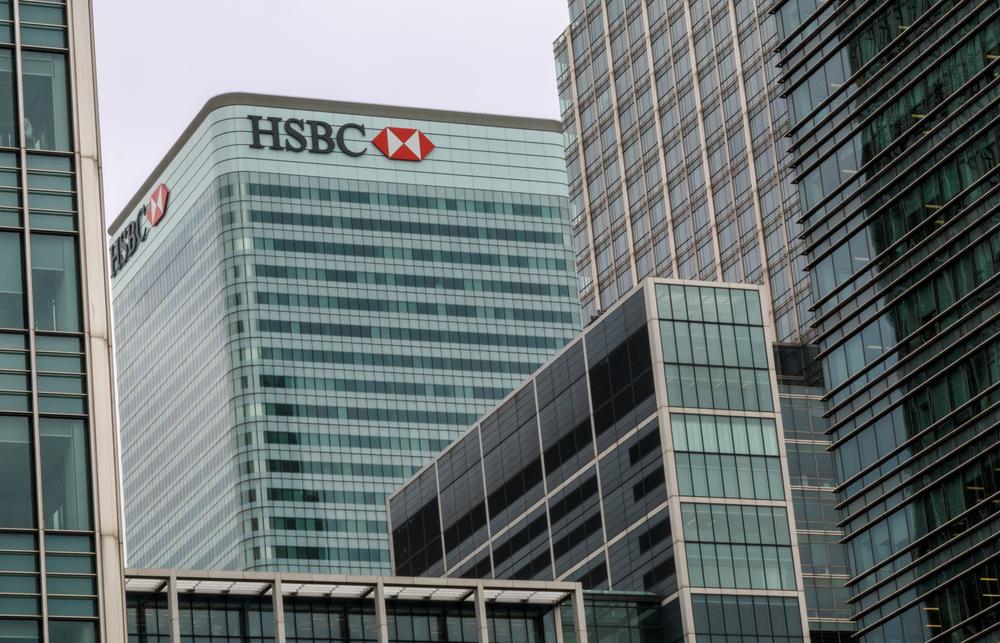
PwC has recently ranked Birmingham as the sixth-best city in Europe for investment — ahead of London. For most people, the UK’s second largest city is still associated with poor post-war planning, a declining industrial base and a huge concrete ring road; however, recent developments show that this could not be further from the truth. An influx of large businesses and commerce has boosted the economy; HSBC announced a few months ago that it is to move its head office for its retail and business lending operation, and 1,000 of its staff, from London to Birmingham. Deutsche Bank has also expanded its operations in Birmingham: it now has 1,500 people based there. The economy for the greater Birmingham sub-region grew by 2.5 per cent – the best of all the ten ‘core cities’. The Office for National Statistics (ONS) said in the latest sub-regional economic output figures for 2013 that the economy grew by 2.5 per cent, above the national figure of 1.6 per cent. It seems that businesses are beginning to realise the benefits of the once flagging city – including how close Birmingham is to the capital (100 miles) and how much cheaper it is to set up shop outside London. The train to the capital currently takes around 1 and a half hours; however, if HS2 goes ahead — and note that its headquarters is located in Birmingham — you will be able to travel from London to Birmingham in 49 minutes. The airport has been extended and now offers direct flights to China – the only ones outside London. Birmingham is perfectly situated for business – It is within two hours of most other major UK cities, including Oxford, Cambridge, Bristol, Manchester and Leeds and 90% of the UK’s population lies within a four-hour radius. The universities are working together to put a “strong sales pitch” to students and employers; and since 2010, Birmingham’s 20-year Big City Plan has produced a pretty good infrastructure programme. Birmingham also has a strong cultural and retail scene; since the Bull Ring was built in 2003, Birmingham was ranked third out of UK cities for retail after London and Glasgow. The City of Birmingham Symphony Orchestra (CBSO), and the renowned Birmingham Royal Ballet are based there, and several leading art galleries and theatres; it also has the Highest number of Michelin starred restaurants in England, after London. What was once a declining industrial town has undergone a transformation – and at a time when people and businesses are being priced out of London by spiralling prices, it appears to be one to watch. By Miranda Wadham

Shares in Horse Hill consortium suspended

Shares in the Horse Hill consortium including UK Oil & Gas Investments (LON:UKOG), Alba Mineral Resources PLC (LON:ALBA), Solo Oil PLC (LON:SOLO), Doriemus PLC (LON:DOR), Stellar Resources PLC (LON:STG) and Evocutis PLC (LON:EVO) remain suspending pending an announcement. UK Oil & Gas Investments owns 30% of the consortium which in turn holds a 65% stake in the Horse Hill project. The remainder of the well is owned by Denver based Magellan Petroleum Corporation. UK Oil & Gas Investments announced in April that the site could hold up to 100bn barrels of oil that triggered a sharp movement higher in shares. Although the discovery was significant, the difficult nature of extracting the oil means only 15% may be recoverable.

ECB lowers growth forecast

  Mario Draghi has today updated us on the ECB’s view of the economy and reassured the market that there will be no tapering of ECB stimulus in the near future. Draghi said bond market swings were here to stay and market participants should prepare for an extended period of volatility as the ECB conducts their QE programme. “There is a very strong belief that they are doing the right thing: that QE is absolutely necessary whatever the collateral effect on markets…That is something investors something have to understand and deal with,” says Franck Dixmier, chief investment officer for European fixed income at Allianz Global Investors. The ECB has decreased their growth expectations for 2017 to 2.0% and kept 2015 and 2016 unchanged at 1.5% and 1.9% respectively. Although the stimulus package is expected to boost growth in the long term, Draghi made it clear that liquidity injections alone were not enough. He pointed towards the governments of European nations to push through much needed structural reforms to support the ECB programme. In regards to the Greek crisis, Draghi said he had met with Angela Merkel and Francois Hollande but did not comment on the specifics of the meeting although he did say he would like Greece to remain in the Euro.

Key Greek payment dates

As the first of many Greek deadlines fast approaches and markets jerk from headline to headline it is worth noting the key dates over the next few months which will have traders and investors on the edge of their seats, if Greece isn’t bankrupt by then. Key Greek payment dates 5th June EUR 300m IMF loan redemption 12th June EUR 300m IMF loan redemption + EUR 3.6bn T-bill redemption 16th June EUR 600m IMF loan redemption 18th-19th June Eurogroup meetings in Brussels 19th June EUR 300m IMF loan redemption + EUR 1.6bn T-bill redemption 25th-26th June EU Summit 30th June Greek EFSF Extension ceases 10th July EUR 2bn T-bill redemption 13th July EUR 500m IMF loan redemption 16th July Governing Council monetary policy meeting of the ECB in Frankfurt 17th July EUR 1bn T-bill redemption 20th July EUR 4bn ECB held government bond redemption 1st August EUR 200m IMF interest payment 7th August EUR 1bn T-bill redemption 20th August EUR 3.5bn ECB held government bond redemption (Source: Reuters, Bloomberg, ECB)

India cuts interest rates by 0.25%

The Reserve Bank of India has cut rates for the third time this year. The move by the central bank was an attempt to further stimulate the Indian economy as investor expectations run ahead of the real economy. The key repo rate was cut by 25 basis points to 7.25%. Previous moves this year came in January and March where the rates were cut by a similar amounts. Indian stock markets have been strong over the last twelve months as investor’s price in stronger growth. The GDP growth rate has jumped but there are still concerns that this hasn’t yet filtered down into corporate earnings. The upcoming monsoon also adds to market participant’s worries and many had expected the rate cut by the central bank to provide some stability. “A repo rate cut of 25 bps was expected and already factored in by most of the market participants. It’s consistent with the RBI’s cautious stance, as it remains concerned about the monsoon outcome, geopolitical trends & U.S. Fed action. RBI’s future actions will be governed by not just the above stated points but also the government’s fiscal responses to adverse monsoon outcome and its efforts to push infrastructure growth.” Said Rupa Rege Nitsure, Chief Economist at L&T Financial Although growth in India hit 7.5% in the last quarter, weak manufacturing data in April gives early indications that the headline growth rate may drop going forward, further dampening the prospect of stronger corporate earnings investors long for.

Goodlord embarks on crowdfunding project to fund expansion

A former Foxtons agent is aiming to crowdfund £450,000 for a company that intends to revolutionize the property industry. Launched in February of this year, Goodlord describes itself as an online platform for managing the full tenancy process for lettings and estate agents. The company aims to “avoid tenancy paperwork, cut the deposit collection process from days to minutes, and collect rent on time every month”; an impressive target in an industry where paperwork is traditionally a main component. The company handles all paperwork and payments digitally and says that Goodlord can be fully integrated into existing back office systems. It enables tenancies to be processed from any location, on any connected device, creating excellent potential for international sales. There are currently only a few other companies that offer the same service, so it has certainly identified a gap in the market. Richard White, CEO and man behind the idea, says what sets them apart from the competition is fourfold: “Firstly, we are free (unless you go for the white label version – EG their own branding with a one off fee £299). Others charge a monthly fee. We are also white label product – powered by Goodlord, but with an agents own look and feel. Thirdly, Goodlord integrates with existing platforms; most agencies use a software package and it is a big problem for them is they need to run two systems and have to do double data entry. Lastly, we have paid extreme attention to the user experience and it has been made as simple as possible so anyone can use it. One said that “it’s so simple my grandparents who are 86 could use it!” Arguably, this idea represents a complete modernisation of the lettings process. It could be said that moving all paperwork online is a bit of a risk – it takes just one malfunction of the system to bring an agency to a standstill. There could also be some public mistrust surrounding e-signatures, an integral part of Goodlord’s system, particuarly concerning security and fraud. However, Richard White believes this won’t be a problem: “Arguably our method of signing is more secure than paper. We link peoples electronic signatures to an on rails process which includes ID checks, credit and logging devices, IPs and passwords meaning we know exactly who the signing party is”. The property market seems to share White’s enthusiasm; Goodlord is currently used by 35 offices around the UK with a waiting list of agencies they are waiting to bring onto the system, and they have so far processed more than £2m in tenancy transactions. Goodlord is hoping to raise £450,000 on crowdfunding platform crowdcube.com. By Miranda Wadham