
Miranda Wadham on 08/08/2015
EU Commissioner highlights importance of crowdfunding

EU Commissioner Jonathan Hill has spoken out in favour of ‘alternative’ sources of business finance, including crowdfunding and venture capital.
In an interview with CNBC, he cited the difficulties of SMEs being too reliant on traditional bank financing in the event of another global banking crisis. Hill, who is the Commissioner for Financial Services and Capital Markets, highlighted the need to diversity the sources of businesses finance to protect the EU’s economy.
“If you’ve got a system that’s very dependent on one source of funding, and you have a contraction in bank funding like we had, then that has a very real knock onto the economy,” Hill said on the side lines of the Ambrosetti Forum in Italy.
“If we can diversify and spread it, we can help also achieve a greater degree of financial stability,” he added.
Interestingly, it appears that many businesses are already aware of the difficulties; the use of crowdfunding has risen 167 percent globally since the last financial crisis as banks have refused to lend, and companies have been forced to explore other methods. Furthermore, the UK’s laissez-faire approach to regulation has encourage growth in the sector, with London becoming a world leader for new financial technology companies that often focus on alternative finance.
Japanese insurer agrees buyout deal with Amlin plc

Insurance company Amlin (LON:AML) is one of the biggest movers on the stock market this morning after announcing that it has agreed to an acquisition by Japanese insurers Mitsui Sumitomo.
The acquisition values the entire issued and to be issued share capital of Amlin at approximately £3,468 million. Amlin is currently trading up 32.5 percent on the news. (0945GMT)
This marks the fourth major international deal in as many months by Japanese insurers expanding overseas in a bid to diversity risk exposure geographically.
Charles Philipps, Chief Executive of Amlin, said in a statement:
“We believe that this combination is extremely compelling. We have always had a very high regard for MSI, our strategies and corporate values are closely aligned, and this transaction will now provide Amlin with the increased scale and financial muscle that will be required for long term success in our industry.
“I am confident that, with our combined skills and geographic coverage, we will continue to go from strength to strength.”
Chinese imports drop 14 percent

China’s imports in August fell 14.3% in yuan-denominated terms from a year ago due to weaker commodity prices globally, according to data released today.
After weeks of market volatility, China has recently revised its 2014 economic growth down from 7.4% to 7.3%, its lowest for nearly 25 years.
Exports also fell by 6.1%. China’s import surplus rose to $60.24bn.
However, despite weak export data fuelling fears that China is going through a deeper economic slowdown that initially thought, Asian stocks rose on Tuesday after a six-day losing streak and the dollar firmed against the safe-haven Japanese yen.
Betfair and Paddy Power agree £5 billion merger

Two of the biggest online gambling firms, Paddy Power and Betfair (LON:BET), have announced a £5 billion merger to create a new FTSE 100 industry giant.
The merged group will become the biggest in the UK with a share of 16 percent, according to industry data, passing a recently merged Ladbrokes Coral group at 14 percent. The group will be led by Betfair’s CEO Breon Corcoran as chief executive, with Paddy Power’s Andy McCue as COO.
“The sheer scale and capabilities of the group would mean that we’d be best-placed to compete internationally,” said Mr McCue.
Shareholders in Irish group Paddy Power will own 52 percent of the new company, with Betfair investors having just under 48 percent. Paddy Power shareholders will also receive an €80m (£59m) special dividend before the tie-up completes.
This is the latest in a string of deals announced in the betting industry recently, as companies attempt to band together to beat higher tax bills and tighter British regulation.
Betfair is currently trading up 0.26 percent on the news. (0920GMT).
Glencore announces debt reduction plans

Commodities giant Glencore (LON:GLEN) has announced plans to reduce its net debt of some £19.8 billion via a proposed equity issuance.
Together with other debt reduction measures, Glencore said it aimed to reduce its net debt “to the low $20 billions by the end of 2016”. The company have said the equity issuance would raise up to $2.5bn.
Glencore have had a difficult year, reporting a first-half loss of $676m in August. They have been hugely hit by falling commodity prices; both copper and coal, two of the company’s biggest products, have fallen to six year lows. Glencore’s market value has fallen more than 50% this year and the firm has been under mounting pressure to improve financial performance; last week ratings agency Standard & Poor’s said it would consider lowering Glencore’s credit rating if the giant did not reduce its debt.
Ivan Glasenberg, Chief Executive Officer, and Steven Kalmin, Chief Financial Officer, said in a statement:
“We remain very positive on the long-term outlook for our business and this is reinforced by senior management’s commitment to take up 22 per cent. of the proposed equity issuance.”
Glencore is currently trading up 8.24 percent on the news (0915GMT)
European shares up, further volatility in Asia

The FTSE 100 opened higher on Monday, recovering some of Friday’s losses and gaining 79.5 points or 1.32% to 6,122.42 just minutes after market open.
On Friday, the index fell 2.4% after US jobs figures fell short of analysts’ expectations. Non farm payrolls were at 173,000 last month, fewer than the 220,000 that economists polled by Reuters had expected, causing U.S. stocks to drop more than 1 percent on Friday. Asian stocks were subdued on Monday, resuming trading after a four day weekend to celebrate the end of WW2. Shares jumped from positive to negative, with Japan’s Nikkei ending down 0.1 percent after hitting a 7-month low. Shanghai shares initially rose as much as 1.8 percent, but the index was last down 0.8 percent.Tesco sells South Korean chain Homeplus for £4.2bn

British supermarket giant Tesco (LON:TSCO) has agreed to sell Homeplus, its South Korean unit, to private equity firm MBK Partners for £4.2 billion.
Tesco Chief Executive Dave Lewis commented: “This sale realises material value for shareholders and allows us to make significant progress on our strategic priority of protecting and strengthening our balance sheet.”
This sale is the first major move since the chain delivered a record pre-tax loss of £6.4bn for the year to February, compared with a profit of £2.26 billion the year before; one of the largest in the country’s corporate history.
Tesco is currently trading down 0.99 percent at 184.10 pence per share (0843GMT)
August non farm payroll figures lower than expected

Non farm payroll figures show that the US added 173,000 jobs in August, lower than the 220,000 expected by analysts.
The figures released by the Department of Labor on Friday are the last before September’s interest rate decision by the Federal Reserve and are the lowest since 2013. The disappointing numbers, alongside recent volatility in China, could indicate that a rate rise will be pushed back.
However, unemployment dropped to 5.1 percent, the lowest figure in seven and a half years. The price of gold steadied this morning ahead of the data, with spot gold at $1,123.26 an ounce at 1144 GMT. U.S. gold futures for December delivery were down $1.70 at $1,122.80.Crowdfunding Q&A: Stuart Black, BrainTrain UK and Nikolay Piriankov, Rare Pink

If you are a small business looking for investment, navigating the wild waters of start-up financing can be tricky. Last week we spoke to Simply Wall St, who chose angel funding as their option, as well as several small businesses who thought pension-led funding was the best route for them. With so many different forms of alternative finance, it can be hard to figure out which one to choose for your business.
This week, we’re focussing on the benefits of crowdfunding. Crowdfunding has expanded exponentially over the past three years, going from something relatively unknown and used by individuals to a very viable form of business financing. We have spoken to two very different businesses who have completed rounds on online platforms to raise the money needed; both had extremely successful campaigns, and used different platforms to do so.
Stuart Black is the Director of Cromwell Hospital in Kensington, and CEO of Brain Train UK. Brain Train UK uses applied neuroscience to resolve mental health disorders and, in the long term, essentially aims to ‘train’ the brain to work better.
Nikolay Piriankov is the founder and CEO of Rare Pink, an online retailer of bespoke engagement rings and fine diamond jewellery. Rare Pink is unique in that it offers a bespoke design service, offering over 100,000 ethically sourced diamonds and the ability for customers to design their own ring.
Why did you choose crowdfunding over other financing options?
Stuart: At the time I didn’t know much about crowdfunding, but banks wanted security or would be willing to finance capital investment secured against the investment, but I wanted to use this as working capital to make ‘softer’ investments such as marketing and further practitioners. The idea of democratising finance also appealed to me.
Nikolay: We chose crowd-funding for several reasons. Of course we first considered raising investment through the traditional routes taught at university – approach your bank, speak to angel investors, but in reality, these methods either don’t work anymore (with regards to banks for start-ups) and finding angel investors without previous investor contacts is not as easy when this is your first business.
Nikolay cites several benefits that crowdfunding has over other forms of finance, including the ability to reach out to customers and validate your business idea; if the crowd likes what you do and invests, then it is a good sign to continue and grow the business. He also noted the PR potential of crowdfunding:
“It is quite topical at the moment it is also a great source of PR, as we saw through features in the Guardian and other online publications.”
What made you pick the crowdfunding platform you used, rather than any of the others?
Stuart: Funding Circle attracted me because it was a loan model and not an equity sale; I didn’t want to dilute my equity at that stage. I preferred the arms-length relationship with lenders rather than the more intimate relationship with shareholders. Funding Circle also seemed straight forward to deal with that others.
Nikolay: We chose Seedrs over its biggest rival Crowdcube for a few reasons. They have a nominee structure which means that while we have 150 investors, Seedrs ensures we treat them as a single investor, which makes any future investment rounds or important decisions easy to make. We don’t have to consult with each and every single one – instead we just speak to Seedrs.
Interestingly, both Nikolay and Stuart had different methods of promoting the campaign once it went live. Whilst Stuart took a more laissez-faire approach, Nikolay’s was more targeted.
Why do you think your campaign was so successful? Do you have any ‘crowdfunding secrets’?
Stuart: My marketing strategy for the campaign was really no more than the way we described the business Funding Circle. I think that perhaps what we do – offering a drug-free approach to mental health issues and peak performance – interested people and ‘brain’ technologies seem to be in vogue at the moment. After the campaign went live, I nipped out for 20 minutes and when I returned 20 minutes later we had raised 33% of the request!
I also saw that you could load up an audio file to “sell” your proposition. I did a couple of takes on the audio file and by the time I was happy with it and uploaded it we were at 80%.
Nikolay: To be successful at crowd-funding, 80% of the work is done before the launch of the campaign. You need to create an inspiring video that sells the business and the team.
Also, and perhaps most importantly, any investment round needs a leader. A good investment leader commits between 25-50% of the investment round. This gives your valuation and proposition credibility and helps bring the smaller investors on board. This means, to have a successful crowd-funding round first it is important to first identify a few larger potential investors and only launch your campaign once they have committed to your round.
Curiously, whilst crowdfunding is seen a great way to promote the business and interest more customers, Stuart noted that whilst they had 626 people investing with them no new clients have yet mentioned a Funding Circle connection. However, Nikolay had a different experience: “50 investors is also 150 brand ambassadors. In our case we know our investors, large and small, proudly tell their friends they are shareholders in a diamond business and many have since purchased from us.”
Either way, both businesses are extremely pleased with the results from crowdfunding. Traditional routes such as bank loans are now seen as outdated – not to mention far more difficult to obtain – and using crowdfunding is a great way to use the internet and technology to reach out to a greater pool of potential investors.



Miranda Wadham on 03/09/2015
Retail sales fall in August, according to BDO
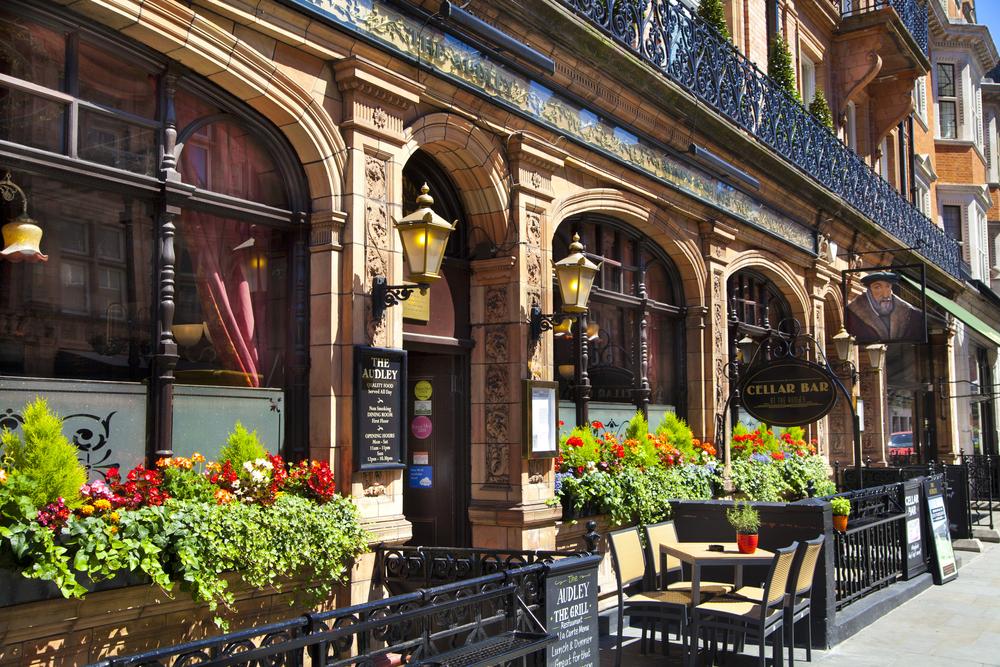
Retail sales fell 4.3 percent August, making it the worst month for high street shops since the global financial crisis of 2008.
According to a survey published this morning by accountancy firm BDO, sales have fallen every month since May for the first time since 2009, countering signs that Britain’s economy is improving.
The figures were compiled from data released by 85 medium-sized retailers, including Gap, French Connection and Hobbs, with around 10,000 outlets, and shows that all retail sectors including lifestyle, fashion and homewares recorded lower sales than last year.
This data echoes Thursday’s survey by Markit, showing that businesses in Britain’s services sector recorded their slowest growth in more than two years last month.