
Miranda Wadham on 18/08/2015
Bitcoin: the future of the unbanked?
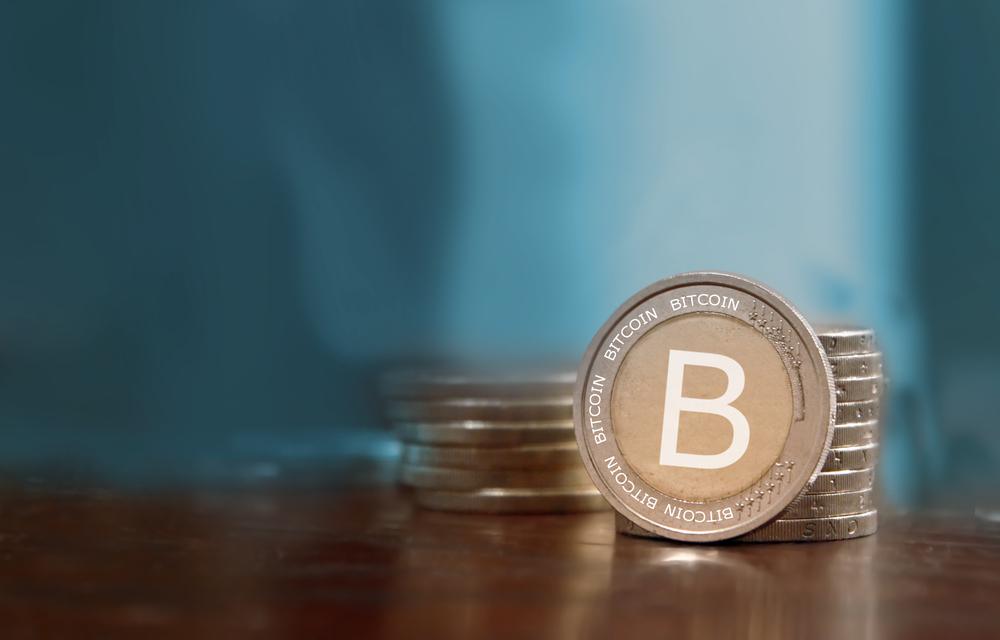
Bitcoin has long moved on from being seen as a shady currency used only for illegal purchases. There has been plenty of hype surrounding Bitcoin and other cryptocurrencies in recent months, especially with regard to start-up technology businesses and overseas transfers. However, it is becoming increasingly recognised that Bitcoin may have other, more ethical benefits.
According to the World Bank, more than two billion adults lack access to bank accounts and credit cards to save and borrow funds. McKinsey suggest 2.5 billion people have no credit score, meaning that they can’t buy a home or start a company; which is where Bitcoin comes in.
One of the biggest benefits of Bitcoin for the unbanked population is its cost – or lack of.
Bitcoin is the first Internetwide payment system where transactions either happen with no fees or very low fees. According to a research by ODI, Africa’s diaspora pays 12% to send $200 back home. And according to the same research, Western Union in Rwanda charges closer to 18–19%. With Bitcoin, currency transfer costs are far lower than banks or even companies such as Transferwise.
Similarly, the lower cost of international transfer could be a real boost to SMEs in emerging nations, where small businesses struggle to compete internationally due to costs associated with changing currencies and processing fees.
The second big benefit of Bitcoin is its independence. The system works without a central repository or single administrator, meaning it is a completely decentralised virtual currency. It is not subject to market control by one organisation.
This feature makes Bitcoin inherently useful, in that many countries with a large unbanked population are countries where corruption is high. With Bitcoin, there is no need to do not trust banks; wealth held in bitcoins can be securely stored free of transaction fees for an indefinite period, and cannot easily be expropriated by the state or limited in any meaningful way in their movement between jurisdictions by capital controls.
Similarly, for countries in economic difficulty, they cannot be devalued over time by inflationary monetary policies. With the recent trouble with Greece, Bitcoin became seen as a viable option for holding money should Greece exit the euro.
Venezuelan-born Meyer ‘Micky’ Malka is a director at the Bitcoin Foundation. He believes that what bitcoin can do is “embrace transparency in a country where there isn’t any”.
“It’s an asset for when you do not trust your government, which is a real aspect of what’s going on down there right now.”
Both its low cost and independence make Bitcoin an attractive way of storing and sending money cheaply for those with no bank account. Yes, cryptocurrencies are a relatively new phenomenon, and that comes with its own difficulties; as Malka says, “you cannot expect bitcoin at five years old to take all that responsibility and act like a grown-up. It is still a toddler.”
However, the figures cannot be ignored. With over two billion people not having access to simple financial services that allow them to save, invest or grow their businesses, there will always be a certain proportion of the population who have no hope of working their way up. The World Bank Group President Jim Yong Kim has said that access to financial services is “a bridge out of poverty”; if Bitcoin can help those developing countries get on the ladder, it is well worth investigating.
Twitter eyes up Asian expansion

After a difficult couple of months Twitter (NYSE:TWTR) has announced their intention to focus heavily on expansion in Asia and the Middle East, hoping to follow the success of Facebook in the region.
The company have appointed former head of public-private partnerships for Google Rishi Jaitly as new vice president of media for Asia Pacific and Middle East. In a statement, Twitter said that they aim to utilize partnerships with key Asian media companies to publicise the platform.
Whilst Facebook is currently blocked in China, Twitter hopes there will be no similar problems for them in the region; the state-owned Chinese publisher Xinhua is a big user of Twitter and publishes daily reviews of China’s news on the platform.
Over the last three months shares in Twitter have dropped dramatically, after problems with marketing and the departure of CEO Dick Costolo. Shares were trading at 52 pence per share in mid April, and at around 30 pence per share yesterday.
Chinese stocks break three day winning streak

Chinese stocks dropped again on Tuesday as the yuan weakened against the dollar, despite a stronger midpoint set by the People’s Bank of China.
The fall gave way to fears that the country may be aiming for further devaluation of the currency, despite insistence from the central bank that it will not happen.
The Shanghai Composite Index closed down 6.1 percent at 3,749.12 points in its biggest daily decline since July 27, after a three day winning streak, and the CSI300 index fell 6.2 percent at 3,825.41.
The central bank made its biggest injection of funds into the markets in more than six months earlier this morning, adding to worries that liquidity was tightening as investors moved more capital out of the country.
The People’s Bank of China made a surprise devaluation of the currency last week by nearly 2 percent, shocking the markets and prompting two days of further currency decline.
Wood Group profits hit by difficult oil market

Energy services company Wood Group (LON:WG) are trading down 3.5 percent this morning after announcing their half-yearly results.
The company have 5000 jobs this year in the UK, US and the Middle East after being hit by the challenging oil market. The price of Brent crude has dropped by more than 50% in the past 12 months to $48.60 a barrel.
Pre-tax profit for the first six months of this year was down $233.3 million from a year earlier, at $160.2 milion. Their total revenue was down almost 20% at $3.1 billion.
Wood Group’s CEO Bob Keiller said in a statement:
“Conditions in oil and gas markets remain very challenging.
“With little prospect of short term improvement in market conditions, we will focus on remaining competitive and protecting our capability, working with clients to reduce their overall costs, increase efficiency and safely improve performance.”
However, despite the fall in half-year profits, the company’s outlook for the full year remains unchanged. Wood Group are currently trading down 3.62 percent at 558.5 pence per share (1024GMT)
Nationwide hit by Budget banking tax
Nationwide has estimated that a new banking tax introduced in the July Budget may cost it £300 million, affecting their ability to lend.
Nationwide is Britain’s second biggest provider of home loans, providing more than a quarter of total net lending to the British housing market of the past year. The building society have announced that the changes could could the equivalent of £10 billion worth of consumer lending.
Chief Executive Graham Beale argues that the budget should have recognised the difference between building societies and banks. He said:
“This represents a missed opportunity to support diversity by acknowledging that building societies are different to banks and to recognise the contribution Nationwide and other mutuals make by lending to the UK economy, and the housing market in particular.”
Nationwide reported a 52 percent increase in first-quarter underlying profit to £400 million.UK inflation turns positive
Consumer Price inflation has risen to 0.1 percent in July, up from 0 percent in June.
The Consumer Price Index has remained flat for the last coupe of months, having turned negative in April for the first time since 1960.
The Retail Prices Index measure of inflation was unchanged at 1 percent.
“The slight (annual) increase is mainly due to clothing, with smaller price reductions in this year’s summer sales compared with a year ago,” said ONS statistician Richard Campbell told Reuters.
An underlying measure of inflation, which strips out increases in energy, food, alcohol and tobacco, rose to 1.2 percent in July, up from from 0.8 percent in June.
The pound is surging on the news, up 0.55 percent on the US dollar and 0.56 percent on the euro.
Morrisons to sell off local stores
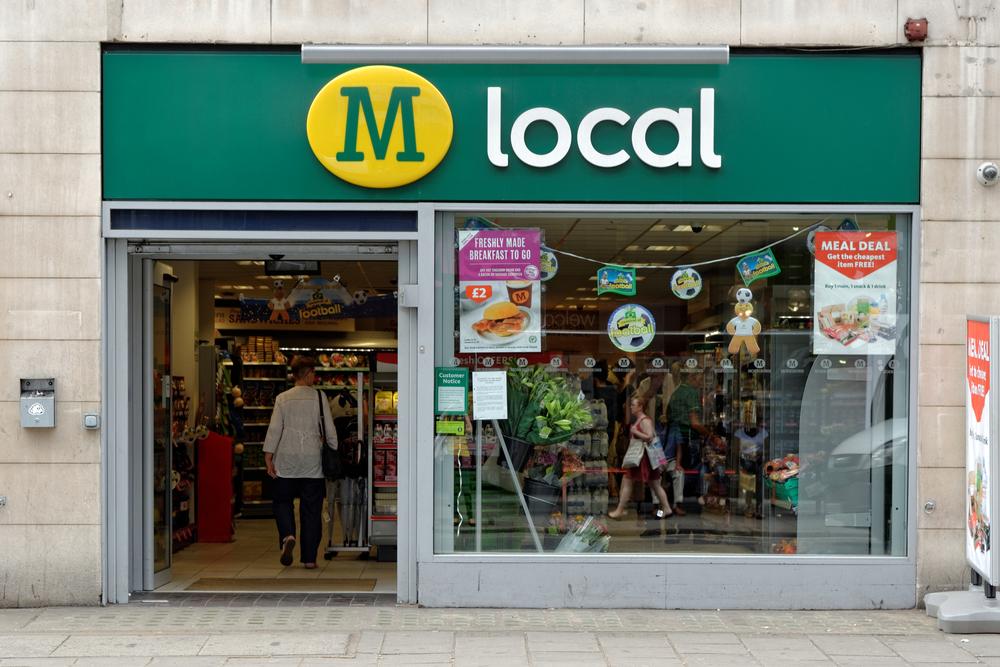
Morrisons (LON:MRW) is in talks to sell its convenience store branch of the company to the same investment firm that rescued Monarch Airlines, Greybull Capital.
The deal was first reported in The Telegraph yesterday. Chairman Andy Higginson admitted that more than 30% of its convenience stores had not worked, and confirmed plans earlier this year to close more than 20 M local stores.
Greybull Capital took over Monarch last year, investing £125 million into the company and setting it track to make a profit. The takeover of Morrisons local stores is rumoured to be worth tens of millions.
In February, David Potts took over as chief executive of the struggling chain, and has since turned the company around, making it one of the best performing supermarkets over the 2014 Christmas season. The sell-off of M local stores is the next in a series of structural changes he has made to the company.
Morrisons is currently trading down 0.88 percent, at 176.24 pence per share.
Liberty Interactive to acquire clothing site Zulily
Liberty Interactive Corp (NASDQ:QVCA) has announced its intention to acquire Zulily Inc (NASDAQ:ZU), in a deal valued at $2.4 billion.
Liberty Interactive hopes to take advantage of the online retailer’s younger clientele and its strong online presence.
Zulily, the women’s clothing website, counts Chinese giant e-commerce Alibaba as one of its shareholders. Liberty will be buying Zulily for $18.75 per share, or $9.375 in cash and 0.3098 newly issued share of Liberty Interactive for each Zulily share.
Zulily is trading up 45 percent on the news, with Liberty Interactive down 2 percent.
Government to sell stake in King’s Cross development
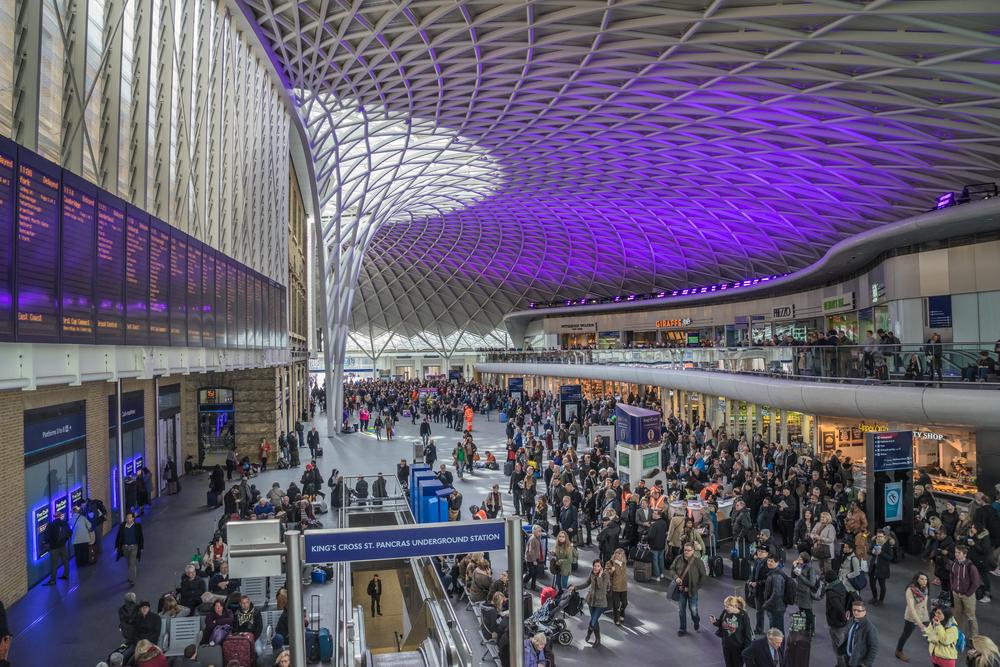
The government have announced plans to sell their 36.5 percent stake in the King’s Cross redevelopment, in order to boost their finances.
The 67-acre King’s Cross Central Limited Partnership site is currently being turned into offices and residential properties and is Europe’s biggest city centre development. The sale is rumoured to be worth £500 million.
In a statement, Transport Minister Robert Goodwill said:
“By selling the government’s shares in King’s Cross Central we are selling an asset we no longer need to keep and realising its value for the taxpayer. The sale will help reduce the deficit.”
The chancellor announced in his July budget that the government would be raising £3 billion through cutting their assets.
The sale is being managed by estate agent Savills and investment bank Lazard. Prospective investors have until September to register their interest.
FTSE CEOs earn 183x the average salary
The chief executives of FTSE 100 companies were paid almost 183 times more than the average U.K. worker last year, according to figures released today.
Data from the High Pay Centre says that the average FTSE 100 CEO earned around £4.96 million in 2014, in comparison to the £27,195 earned by the average full-time employee.
The High Pay Centre is a think tank set up to look at the widening income disparity at British companies. They highlighted the fact that the gap is much bigger than in 2010, when CEOs earned 160 times more than the average worker.
Deborah Hargreaves, the director of the High Pay Centre, said in a statement that:
“Pay packages of this size go far beyond what is sensible or necessary to reward and inspire top executives. It’s more likely that corporate governance structures in the U.K. are riddled with glaring weaknesses and conflicts of interest.”
Last year, investors at both Burberry and WPP urged FTSE CEOs to reduce the size of their pay packets. However, the High Pay Centre report noted that the average shareholder vote against pay awards across the FTSE-100 was just 6.4 percent.