
Actually, women ARE interested in tech – and they’re good at it, too
According to Milo Yiannopoulos in an article published last week, the “women in tech” movement is ‘tanking’. Apparently, trying to get more women involved in the technology sector makes us sound ‘shrill’. Women just aren’t interested in tech, they never will be and, to top it all off, their brains just aren’t as well suited to programming.
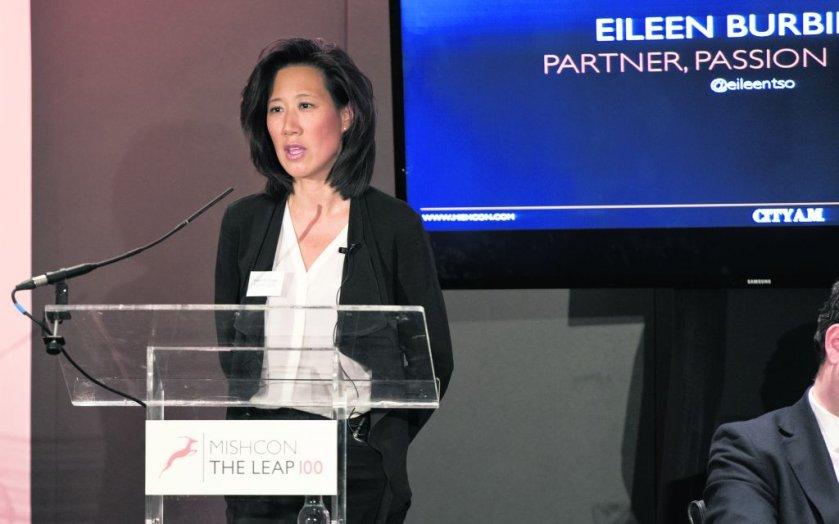
Hmm. Try telling that to Eileen Burbidge, who has just topped CityAM’s Fintech powerlist. Beginning her career as a software engineer, she cut her teeth in Silicon Valley working for some of the world’s most prestigious tech companies, including Apple, Yahoo and Sun Microsystems. She then moved to London in 2004, becoming one of Skype’s earliest employees, and has just been named as the goverment’s special envoy for Fintech. Not bad for someone whose ‘IQ tends to cluster towards mean on the scale’.
However, it is obvious that Burbidge is the exception to the rule; in general, women’s presence is lacking in the technology industry. According to a survey of Tech London Advocate members, a quarter companies within London tech community employ no women at board level. Burbage may have topped CityAM’s powerlist, but only three women feature in the top 10. In fact, only 12 per cent of angel funding and a mere four per cent of venture capital funding goes to women at all.
The figures speak for themselves; there aren’t a high proportion of women in tech. Baroness Lane Fox, founder of Lastminute.com, argues that we should start accepting the scale of this problem; even the House of Lords, with its dismal male-female ratio, has a greater proportion of women than British tech companies.
However I, unlike Yanniopoulos, don’t believe the poor numbers are due to women being ‘stroppy’, better suited to PR and marketing or simply uninterested. I think it’s far more likely that they are intimidated by a industry that has always been male dominated, and find it difficult to find the confidence and conviction to go up against boards full of men. Of course there are stereotypes in the tech industry – it’s been run almost solely by men since it began – and that’s why we need the “women in tech” movement.
I am inclined to agree with Lane-Fox when she says that “mobilising an underutilized pool of talent can only have huge benefits to the industry.” As high-profile female figures show, including Burbidge and Facebook COO Sheryl Sandberg, women are more than capable of bringing big things to the technology sector. There are movements to bring more women into politics, and several of the big city banks run schemes designed to encourage young girls into finance – so why on earth shouldn’t there by a group supporting women in technology?
What won’t help women are articles like the one written by Yanniopoulos; by denying that there is a problem, it discredits any movement that tries to solve it. I scrolled down to the comments at the bottom, hoping to find some with the same sense of disbelief as I felt when I read it; sadly, the majority of what I found were men in agreement, saying that female programmers are “mediocre at best”. When I posted the article on Twitter, I received a baffling amount of replies from trolls, blocking me and telling me to “order a sense of humour from Amazon” (Apparently, it’s free delivery.) I’m sure I shall receive the same backlash for publishing this.
Fortunately, there are plenty of groups out there that support and encourage women in tech. Girls in Tech is an international group, who aim to ‘raise the visibility of women in technology, entrepreneurship and innovation’, and GeekGirl Meetup provides support and advice for all “women and girls interested in all things tech, design, and startups”, as does Ladies in Tech London. Thankfully, the “women in tech” movement doesn’t seem to be ‘tanking’; if anything, it’s growing, and that can only be a good thing for the technology industry as a whole.
Miranda Wadham
FTSE 100 sheds 1% following poor results from Apple and BHP Billiton
The FTSE 100 was down over 1% in early trade after poor results from Apple hit tech stocks and lower commodity prices encouraged the selling of miners and oil and gas companies.
Arm Holdings was the biggest faller at 11.00 am in London, down 3.7%. The move lower followed big falls in Asian stocks that were reliant on the iPhone maker for the lion’s share of their revenue. Although Apple posted strong results, they didn’t live up to analysts’ expectations. Shares in the world’s biggest company are down 8% in the US premarket.
Commodity companies added to this week’s losses after BHP Billiton reported further impairment charges caused by low commodity prices.
The FTSE 350 Mining Sector is down 25% over the last year as diversified miners struggle to find a place to hide as commodities slump across the board.
“The beauty of diversification is that when one commodity is down, one of the others picks up the slack. That’s not happening right now,” said James Wilson, a mining analyst for Morgans Financial.
The FTSE 100 was at 6694, off 1.1% at 11.00am in London.
Jamaica gives the go-ahead to crowdfunding
Jamaica has become the latest country to jump on the crowdfunding bandwagon and give the idea the go ahead.
A panel of experts and policymakers at the Third International Conference in Ethiopia confirmed that expanding crowdfunding is something that Jamaica should be looking at. Jamaica’s Minister of Finance Dr Peter Phillips, co-chaired a side-event at the United Nations Financing for Development conference, and told the Jamaica Observer that crowdfunding could be a “genuinely exciting” way of “democratising finance”.
“Access to affordable financing is of central importance, especially if we are to satisfy the development goals which are the heart of this conference. There is the prospect of crowdfunding being a viable solution for helping Jamaica, and other countries, channel financing to small and medium enterprises to grow private sector investment,” the minister said.
In July of 2013, Jamaica’s first official crowdfunding site was launched by The Jamaica National Building Society, called https://www.isupportjamaica.com.
JNSBL general manager Philip Bernard said: “Our Jamaican landscape is lush with bright ideas that only require the necessary seed funding so that they can be explored and realised. Therefore, as a social organisation, JNSBL has developed this approach to broaden access for all our micro entrepreneurs, because this is a critical sector of the economy that will indeed play a major role in shaping the future of Jamaica.”
In 2014, the Jamaica bobsled team crowdfunded their way to the Sochi Winter Olympic Games in Russia. Despite getting a place, they didn’t have enough finance to fund the trip themselves, so turned to the internet. They needed $80,000.00 to cover their travel and equipment costs, and launched a campaign on both Crowdtilt and Indiegogo. Of course, after the successful film Cool Runnings, the Jamaica bobsled team already have a ready audience and a high profile; and within a few hours they were able to raise $115,000 with $30,000 being donated by users of digital currency Dogecoin.
Moves by the Jamaican government to promote and expand crowdfunding can only be good for entrepreneurs and the small business sector; access to funds will become easier and more business ideas will have the opportunity to flourish.
Monetary Policy Committee votes 9-0 to keep rates at 0.5%
Minutes of the Monetary Policy Committee’s July policy meeting published this morning show that, despite a vote to keep the interest rate steady for now, support for an impending rate increase is broadening.
Bank of England officials voted unanimously to keep the central bank’s benchmark interest rate steady, but their united front masks an increasingly lively debate over when to start raising borrowing costs.
All nine members of the panel voted to keep the BOE’s benchmark rate at its current low of 0.5% at the July policy meeting.
However, acccording to the minutes, for “a number” of officials the decision not to raise rates was a close call and it appeared that the debt crisis in Greece was “material factor” in voting to keep rates on hold.
Since the meeting, a third bailout agreement has been made with Greece which may go some way to offsetting fears of a crisis in Europe and pave the way for a small rate rise.
It is clear that both the Bank of England and the US Fed will be raising the rates soon; Janet Yellen has hinted that February may be the time for in increase in the US.
Water purification company MyCelx drops 64%

MyCelx Corp (AIM:MYX) is one of the biggest movers on the AIM market this morning, down 64.8% in the wake of a trading report released this morning.
The Company disclosed that, if the company continues as is without further large contract wins, it expects total revenue would be in the range of $15 – 16.5 million; a 10-20% improvement on FY2014. MyCelx noted the resilience of its business sales which amounted to $8.6m in H1 compared to $7.5m in the same period last year.
However, one of the major projects that it was previously pursuing has not come to fruition and is unlikely to go any further.
In order to keep afloat in the face of a difficult market, MyCelx has undertaken a cost reduction programme that is now on track to deliver 10% savings for the full year.
MyCelx is a clean water technology company listed on London’s AIM market, providing patented solutions for commercial industrial markets worldwide.
easyJet revenues better than expected
easyJet (LON:EZJ) has reported better-than-expected quarterly revenues, despite guidance issued in May that revenues may be down.
Total revenue fell 1% to £1.23m in the quarter but the number of passengers carried increased by 6.2% to 19.1 million.
“Our Q3 performance shows that Easyjet’s strategy continues to deliver, in particular with good performance in the UK and beach routes across Europe,” said Carolyn McCall, Easyjet’s chief executive.
easyJet cited a good holiday season as the reason for their stronger performance; an increased demand for flights to southern European resorts such as Malaga, Alicante and Faro from northern Europe led the results.
Before the results were published, easyJet shares had fallen 9 percent since their warning in mid-May. easyJet shares are currently trading up 4.24% (10.00)
Apple releases strong results, but share price falls

Apple released its quarterly results yesterday, beating Wall Street analysts predictions and disclosing a profit rise of 38% to $10.7bn.
Apple cited soaring demand for iPhones leading the figures; 47.5 million iPhones were sold in the quarter to 27 June, up 35% on a year ago. Mac computer sales also rose 9% to 4.8 million.
Chief executive Tim Cook called “an amazing quarter”.
However, lower revenue forecasts for the fourth quarter meant share price took a hit and despite the strong results, shares fell 6.7%, or $8.85, to $121.89 in after-market trading in New York.
The disappointment over the lack of iWatch results may also have caused the share price to drop; Apple refused to disclose sales from the iWatch in order to prevent competitors gaining inside information. However, chief executive Tim Cook suggested it was a $1bn business and said he believed the possibilities for the watch were “enormous”.
Apple said that revenue from “other products”- which includes the watch – came to $2.6bn – about $952m higher than the previous quarter.
Demand for its iPad tablets were down 18%, due to facing stiff competition from other brands.
Apple also did well in the China market, despite fears of cheaper competition and a saturated smartphone market.
Toshiba’s chief exec resigns over accounting scandal

Toshiba’s (6502.T) chief executive Hisao Tanaka resigned at close of trade today along with a string of other senior management figures, after the company suffered the country’s biggest accounting scandal in years.
Tanaka will be replaced by Toshiba’s chairman, Masashi Muromachi, until a new chief executive is found.
The 152 billion yen scandal involved Toshiba overstating its profits over several years, overseen by figures in top management positions. Tanaka denied falsifying the accounts, but accepted the need to take responsibility for the findings.
“I see this as the most damaging event for our brand in the company’s 140-year history,” Tanaka told a news conference.
“I don’t think these problems can be overcome overnight.”
The report found that Tanaka had put pressure on staff to make unattainable targets, and knew they were overstating profits and delaying the reporting of losses. The Japanese finance minister, Taro Aso, spoke out about the need to come down hard on companies who fiddle their books, in order to avoid losing the market’s trust. Japan has been trying to demonstrate improved corporate governance after it was found in 2011 that Olympus, another of the country’s biggest companies, had hidden $1.7bn of losses over 13 years.
Scottish-based crowdfunding site SquareKnot goes the extra mile
SquareKnot is the first Scottish crowdfunding equity platform, founded in September 2012. Like many other crowdfunding platforms, the founding team recognised a gap in the market after the financial crisis for a platform that brings together businesses that need cash, and individuals with cash who want to try and earn a sensible return.
However, unlike many other similar platforms SquareKnot assist with the provision of essential management support to businesses to help them grow and prosper, and offer the expertise of panel of independent specialists to businesses looking for investment on their site.
Not only do SquareKnot recognise the importance of a good idea, but also a good marketing campaign; without consumer awareness, a company is doomed to fail. SquareKnot helps pitching business with their PR – gaining attention for their campaigns and spreading the word about what they have on offer. They reguarly hold networking events, allowing pitching business to present their ideas to potential investors and also answer questions in small groups.
The guys behind the company make strong team, who cover all aspects of the business. Managing director Derek Bond is an is accountant with financial experience, and Brian Smilie is an experienced marketing professional, having previously owned his own agency. Ian Young covers the legal side, as a lawyer with specific experience with entrepreneurial corporate law. Tom Preston and Ian Webster both round up the management team with backgrounds in accountancy and corporate finance.
The site boasts a diverse portfolio of investments, from property to breweries. The Edinburgh-based Vikare Tuscan Property Fund offers prospective investors the opportunity to put money into a holiday apartment development in Florence, and MacGregor’s Bars offers 15% equity for a target investment of £150,000.
If investments in Scottish-based companies is what you’re looking for, SquareKnot will undoubtedly have something to offer. If you’re a business, consider listing with SquareKnot to benefit from the industry expertise and marketing support.
Meet Liberland, the world’s newest country
A brand new country with no official government, no tax, no public services and, as yet, no population. It sounds unbelievable – even a little ridiculous.
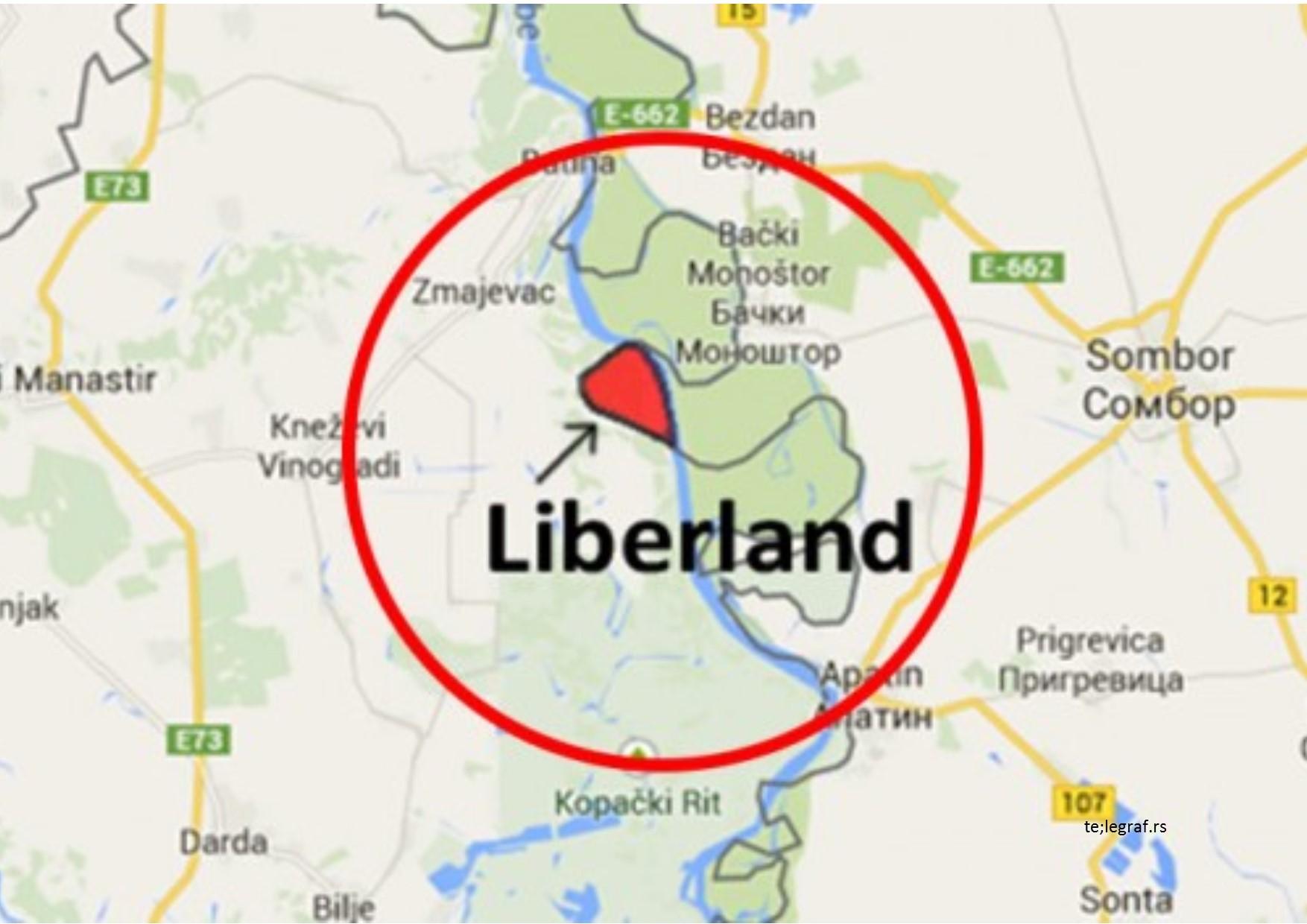
But it’s real. Liberland, or the Free Republic of Liberland to give it its full title, is a would-be sovereign state founded April 13 by Vit Jedlicka and two fellow libertarians. Liberland is a micronation – a nation not recognised by world organisations or governments, but with a formal claim of sovereignty to an area.
Liberland’s official website gives those interested a bit of background:
“Liberland came into existence due to a border dispute between Croatia and Serbia. This area along the west bank of the Danube river is not claimed by Croatia, Serbia or any other country. It was therefore terra nullius, a no man’s land, until Vít Jedlička seized the opportunity and on 13 April 2015 formed a new state in this territory – Liberland. The boundary was defined so as not to interfere with the territory of Croatia or Serbia. Its total area of approximately 7 km² is now the third smallest sovereign state, after the Vatican and Monaco.”
Jedlicka took over the area using the homestead principle, whereby unused and unclaimed land can be taken over by any group of people willing to develop it. Essentially, Jedlicka has taken advantage of a border dispute between Croatia and Serbria – and some experts believe that, in due course, it will be found to be owned by Serbia. Its total area of approximately seven square kilometers would make it the third smallest sovereign state in the world, after the Vatican and Monaco.
When developing his nation, Jedlicka and the other founders have no intention to follow any traditional political models. Jedlicka was elected as president – without formally running for the position – by his other founding father and his girlfriend. He wants to run the country on nationalistic principles, binding together those with a common focus: “We are a nation of people who are not happy with the recent status quo, with state interference and high taxation. And what really makes a nation if not a common feeling and approach to something?”
Speaking of taxation, Jedlicka plans to run the country without compulsory tax.
“Taxation will be optional and people will only finance specific development projects,” says Jedlicka. “We have to see how the foreign ministries react and we need to explain to them the kind of prosperity we can bring to the region. It will bring in money from all over the world: not only to Liberland, which would be a tax haven, but to the whole area.”
The nation’s public services will be private companies and – you guessed it – crowdfunding campaigns. On Liberland’s website, there is the option to donate money, either through bank transfer or bitcoin. Liberland’s government says it has already raised over $45,000 through crowdfunding, which has paid for government offices in Praque and Serbia and a personal assistant.
Jedlicka has already had thousands of applications to live within the country. On the website, Liberland advertises for a population much like an employer might advertise a job:
“Liberland currently needs people who:
- have respect for other people and respect the opinions of others, regardless of their race, ethnicity, orientation, or religion
- have respect for private ownership which is untouchable
- do not have communist, nazi or other extremist past
- were not punished for past criminal offences”