



Aquis weekly movers: Invinity Energy Systems partner reserves capacity

Sameer Prasad has increased his stake in Investment Evolution Credit (LON: IEC) from 6.99% to 7.37%. The share price recovered 12.5% to 4.5p.
Wishbone Gold (LON: WSBN) has completed the reorganisation of the Western Australia subsidiary. Liabilities have been paid, and this is a step to taking full control of the Red Setter and Cottesloe projects. Geologist Edward Mead has been appointed a director, and he has experience in the Pilbara region of Western Australia. The share price rose 8% to 0.135p.
Invinity Energy Systems (LON: IES) says its partner Frontier Power has signed a Long Duration Energy Storage (LDES) joint development agreement with Ethos Green Energy, who will provide land for projects. This could support up to 20 GWh of storage projects and Frontier Power has reserved up to 2GWh of Invinity Energy Systems manufacturing capacity to support bids. The share price increased 6.52% to 12.25p.
Prize draws operator Good Life Plus (LON: GDLF) has raised £860,000 through shares issued at 2.15p/share, which is a premium to the market price, to Winforton Investments, which is associated with Sportingbet founder Mark Blandford. Another of his investment companies is converting £1m of convertible loan notes at the subscription price. The cash will finance attracting additional customers and media partnerships. Management wants to improve retention and average spending per user through the premium subscription product. The share price improved 2.63% to 1.95p.
FALLERS
Campus Investments, which is controlled by David Rowland, is subscribing £1m in VVV Resources (LON: VVV) at 1p/share assuming an agreement with his company R8 Capital Investments over money it is owed. Jonathan Rowland and Richard Morecroft will join the board, and the company will change its name to VVV Sports to reflect the move into sports services. The share price slumped 52.4% to 5p.
Shares in Ananda Pharma (LON: ANA) have started trading on the OTCQB market in the US. There was some significant trading after 2.30pm during the week, which was after the opening in the US. Ananda Pharma is on the Small Cap awards 2025 shortlist for Aquis company of the year. The share price dipped 5.56% to 0.425p.
Fibre optic cables materials manufacturer Unigel Group (LON: UNX) has declared an interim dividend of 2p/share. The ex-dividend date is 24 April. The share price fell 4.44% to 107.5p.
SulNOx Group (LON: SNOX) has been granted patents for its fuel emissions reduction additives in eight African countries. The share price slipped 2.7% to 90p. SulNOx Group is also on the Small Cap awards 2025 shortlist for Aquis company of the year. (The others are EDX Medical (LON: EDX), Oberon Investments (LON: OBE) and Valereum (LON: VLRM).
Jonathan Swaine is stepping down as managing director, pubs at Shepherd Neame (LON: SHEP). He will not be directly replaced. The share price declined 1% to 495p.
AIM weekly movers: Alba Mineral Resources rises despite gold coin no sale

Lung cancer diagnostics developer Lung Life AI (LON: LLAI) still plans to leave AIM following its US distribution deal, which requires shareholder approval. This will leave LungLife AI with the activities of running the LungLB test and collecting royalties. Circulogene will have exclusive rights to distribute and further development the LungLB lung cancer diagnostic in the US and the other countries it is involved in. It will also receive some of LungLife AI’s equipment. The royalty payment will be 20% of net revenues generated by the test in the first year, reducing to 15% in the second year. This is a two year agreement with potential for annual renewals. There is an option for Circulogene toacquire all the IP and licences for $6.2m less any payments already made. Circulogene is making an advanced payment of $375,000, which is returnable if the deal does not go ahead. There was $850,000 in cash at the end of March and costs are being reduced. An application has been submitted to a Medicare contractor for the technical assessment of LungLB. The share price soared 233% to 3p.
On Monday, Alba Mineral Resources (LON: ALBA) announced the second auction of a limited edition coin containing one ounce of Welsh gold. The first auction put a price of £20,000 on the coin, which was more than eight times the price of gold at the time. The estimate had been set at £20,000-£25,000. The second coin auction closed on 16 April and the share price jumped on the following day. According to the auction website the coin was not sold. The estimate was £22,500-£32,500, so the bidding probably did not reach that level. There is a third gold coin. Despite the fact the coin was not sold, the share price jumped 80% to 0.0315p.
Catenai (LON: CTAI) proposes a sub-division of capital because the share price is lower than the nominal value so no shares can be issued to raise money. The nominal value will be reduced from 0.2p to 0.01p. Catenai recently announced that it had raised £750,000 at 0.15p/share, including a £150,000 subscription by Sanderson Capital Partners. Director fees of £450,000 have been settle by the issue of 30 million shares. Catenai intends invest in Alludium, which has developed a platform for AI process automation. Subject to shareholder approval, £500,000 will be invested in Alludium and when cash is received from Klarian, or raised in a share issue, a further £450,000 may be invested. That would be a 13% stake in Alludium in total. The share price is 78.1% higher at 0.285p.
North Sea gas project developer Deltic Energy (LON: DELT) estimates gross 2C contingent resources of 174bcf at the Selene gas project – a one-third increase on the previous figure. Deltic Energy has a 25% interest in the Selene gas project and its share of post-tax NPV10 estimate is $83m net at 80p/therm. Modelling suggests enhanced production potential from the B-sand interval. A final investment decision could happen in early 2027. The share price improved 56.3% to 6.25p.
FALLERS
Jarvis Securities (LON: JIM) is selling its execution only broking business to Interactive Investor for £11m and winding down its clearing and settlement operations. Completion will happen when client agreements are transferred and that should happen in early July. The board believes that winding up the remaining operations and returning the remaining cash to investors is the best outcome. It will take 15 months to wind up the business. There are no plans to make an acquisition and shareholder approval will be sought for cancelling the AIM quotation. The share price slumped 70.2% to 12.5p, which is the lowest it has ever been. The market capitalisation is £5.6m.
Pantheon Resources (LON: PANR) says there were no signs of hydrocarbons at the first test zone of the Megrez well in Alaska. Pantheon Resources has tried to put a positive spin on the results by suggesting that higher hydrocarbon saturations and mobile oil in the shallower test zones. There will be a pause before the second test. The share price declined 29% to 37.05p.
Internet of Things investment company Tern (LON: TERN) is giving shareholders the chance to buy one share for every 16 held in an open offer at 1p/share that will raise £340,000. The open offer is underwritten and closes on 6 May. Disposals of investments are planned, and the cash will enable management to wait for the right time to sell. The share price slipped 22.4% to 1.125p.
Steel structures supplier Billington (LON: BILN) had an exceptionally good 2023, so it is not surprising that revenues fell from £132.5m to £113.1m in 2024. That meant that pre-tax profit fell from £13.4m to £10.8m. There was a special dividend of 13p/share last year, so the ongoing dividend was raised from 20p/share to 25p/share. Trading got tougher in the second half and management is focusing on contacts with sufficient margins rather than chasing sales. Even so, the order book remains strong. Trading will be second half weighted in 2025, and pre-tax profit is expected to dip to £7.3m, downgraded by 24% from the previous Cavendish estimate. Net cash is £21.7m and it should not fall significantly this year, even after higher capital expenditure, which should peak this year. NAV is 410p/share. The share price decreased 22.2% to 342.5p.
FTSE 100 drops after Powell growth warning
The FTSE 100 fell on Thursday as investors reacted to the Federal Reserve chair’s downbeat assessment of the US economy overnight.
London’s leading index was down 0.4% at the time of writing.
“Federal Reserve chair Jerome Powell gave a pretty gloomy assessment at an event in Chicago – warning of rising prices and unemployment which sounds very much like a warning of the dreaded stagflation,” said AJ Bell investment director Russ Mould.
Powell’s comment shouldn’t have come as a surprise to market participants, but they were an unwelcome reality check. The Chair pointed to higher inflation this year and hinted that the Fed was not in a position to cut rates at this point.
Although the Federal Reserve showed little sign of cutting rates, the European Central Bank, as the first major central bank to meet in the wake of Donald Trump’s tariffs, took the opportunity to cut rates on Thursday ahead of any economic fallout as a result of tariffs.
“Although Europe has secured a 90-day reprieve from Trump’s global tariff policies, uncertainty remains high and is expected to weigh on growth,” said Bryan Conway, Director at Centrus.
“The fallout from escalating global trade tensions—particularly the intensifying US-China trade war—poses additional risks. There is growing concern that diverted goods from China could flood European markets, further dampening the region’s economic outlook. Compounding these challenges is the euro’s sharp appreciation against the US dollar since the Liberation Day announcement, which has drawn increasing concern from ECB officials.”
The FTSE 100 perked up as the US session got underway on Thursday, but still traded in negative territory.
Sainsbury’s was among the top risers following the release of a robust set of results and fresh share buyback. There will be concerns about the outlook amid a price war with discounts, but the rise in shares on Thursday suggests recent declines for the stock after a similar update by Tesco priced in the worry about earnings over the coming year.
“When Asda fired the opening salvos in a UK supermarket price war in mid-March the markets immediately sat up and took notice and the latest updates from Tesco and now Sainsbury’s suggest this was the right call,” Russ Moudl said.
“Like Tesco, Sainsbury’s wants to equip itself to protect its competitive position, hence its guidance for flat profit in the coming year as it looks to offer customers value for money.
“The main winners in a price war would ultimately be shoppers, however, there were enough positive takeaways in the results to provide some cheer. The ‘food first’ strategy under Simon Roberts is clearly yielding real benefits with a healthy increase in the dividend providing shareholders with real sustenance.”
Fresnillo was the top faller as the company lost the rights to the latest ordinary dividend and a bumper special dividend.
AIM movers: Gelion fundraising following materials testing agreement and ex-dividends

Lung cancer diagnostics developer LungLife AI (LON: LLAI) still plans to leave AIM following its US distribution deal, which requires shareholder approval. This will leave LungLife AI with the activities of running the LungLB test and collecting royalties. Circulogene will have exclusive rights to distribute and further development the LungLB lung cancer diagnostic in the US and the other countries it is involved in. It will also receive some of LungLife AI’s equipment. The royalty payment will be 20% of net revenues generated by the test in the first year, reducing to 15% in the second year. This is a two year agreement with potential for annual renewals. There is an option for Circulogene toacquire all the IP and licences for $6.2m less any payments already made. Circulogene is making an advanced payment of $375,000, which is returnable if the deal does not go ahead. There was $850,000 in cash at the end of March and costs are being reduced. An application has been submitted to a Medicare contractor for the technical assessment of LungLB. The share price jumped 272.2% to 3.35p.
Existing shareholders and directors have subscribed £744,000 for shares in EnergyPathways (LON: EPP) at 5.54p each. The directors subscribed for more than 1.2 million shares, including Horacio Carvalho who did not hold any shares and bought 180,505 shares. The share price rose 11.6% to 7.2p.
Kodal Minerals (LON: KOD) says approval has been received for the transfer of the Foulaboula exploitation permit to its subsidiary. This is an important mining licence for the Bougouni lithium project in southern Mali. The share price improved 6.58% to 0.405p.
Battery technology developer Gelion (LON: GELN) says initial tests of its sulfur battery technology show robust capacity retention and the achievement of more than 1,000 charge/discharge cycles. This has led to a materials testing agreement with a tier-one battery manufacturer and this should start shortly. Gelion will also recognise £780,000 of revenues relating to the battery energy storage system delivered to Borg Group. A placing and subscription has raised £2m at 9p/share and a retail offer could raise up to £191,000. The cash will be used to fund business development, collaborations and the strategic partnership with the Max Planck Institute, which will accelerate the move towards commercialisation. The share price increased 2.44% to 10.5p.
FALLERS
Internet of Things investment company Tern (LON: TERN) is giving shareholders the chance to buy one share for every 16 held in an open offer at 1p/share that will raise £340,000. The open offer is underwritten and closes on 6 May. Disposals of investments are planned, and the cash will enable management to wait for the right time to sell. The fundraising knocked 22.4% off the share price leaving it at 1.125p.
Haydale Graphene (LON: HAYD) says the auction of its US assets has completed and Greenleaf Corporation offered $680,000. This is not likely to be enough for any payments to the holding company when the US company is liquidated. The US cash outflows will end. The share price slipped 11.1% to 0.12p.
Last night, Premier African Minerals (LON: PREM) said that Circum Minerals, which is owned by Vortex Ltd, where Premier African Minerals has a 13.1% interest valued at $501,000, has had its mining and licence agreement revoked in Ethiopia. Circum has declared a dispute, and this will go to arbitration. The Premier African Minerals share price fell 4.84% to 0.0295p.
Eurasia Mining (LON: EUA) says it has sufficient working capital until the second half of 2026. It is still trying to sell its Russian assets. Trading on the Astana International Exchange in Kazakhstan should commence during the second quarter of 2025. The court case continues over the rightful owners of the shares held by Queeld Ventures and Mispare. The share price dipped 3.47% to 4.175p, but it has nearly doubled this year.
Ex-dividends
Airea (LON: AIEA) is paying a final dividend of 0.6p/share and the share price is 0.5p lower at 26p.
Arbuthnot Banking (LON: ARBB) is paying a final dividend of 29p/share and the share price fell 10p to 922.5p.
M Winkworth (LON: WINK) is paying a dividend of 3.3p/share and the share price is unchanged at 205p.
Tekcapital’s Guident launches MiCa autonomous shuttle in West Palm Beach ahead of NASDAQ IPO
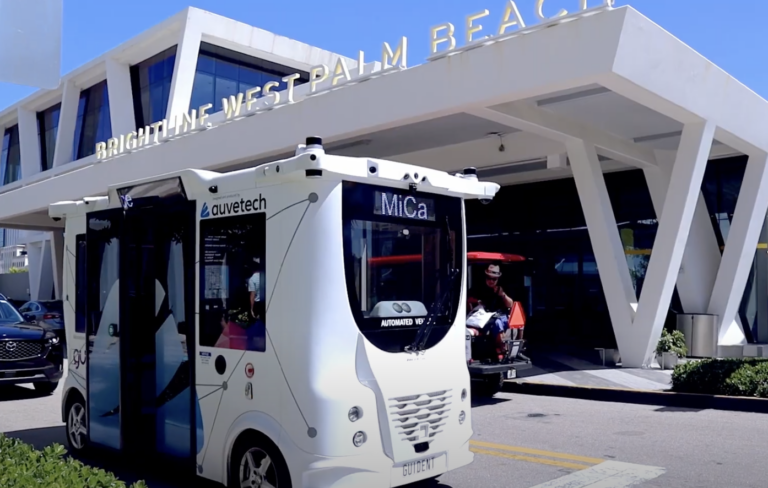
Tekcapital portfolio company Guident has unveiled an autonomous vehicle pilot programme in downtown West Palm Beach as the company gears up for its proposed NASDAQ IPO this year.
The autonomous shuttle initiative, developed in partnership with Related Ross, Circuit Transit and Auve Tech, covering a 0.9-mile route, is open to the public from 17th April.
Palm Beach County commuters benefit from complimentary Royale access, sponsored by the local transport authority.
The project features the MiCa, a Level 4 fully autonomous electric shuttle created by Estonian firm Auve Tech, marking its first deployment in the United States. Guident provides the human-in-the-loop safety features required by many US states for autonomous vehicles.
“Launching the MiCa pilot in West Palm Beach represents a significant leap forward in autonomous technology,” said Harald Braun, Chairman and CEO of Guident.
“Our collaboration with our esteemed partners underlines a shared vision: to create a safer, more efficient, and connected urban future.”
While the company hasn’t signalled further rollout across the US yet, one would expect the West Palm Beach launch to gain the attention of other cities across the country that are seeking to improve mobility services.
The West Palm Beach launch comes as Guident prepares for a NASDAQ IPO this year amid a boom in autonomous vehicle investment rounds.
London-listed Tekcapital has a 70% stake in Guident, which could be worth more than its entire market cap when Guident successfully lists.