
PZ Cussons shares jump after boosting profit guidance on broad-based growth

PZ Cussons shares jumped on Wednesday after the personal care and beauty product group increased its profit expectations for the year to 31 May, capping off a spell of strong and notably broad-based trading.
In a short trading statement, PZ Cussons said it expects like-for-like revenue growth of around 6%, with reported revenue of roughly £540m, helped by growth across all four of its lead markets.
Investors will be pleased to see this translate into higher profits, with adjusted operating profit now seen at or slightly above the top of the previously guided £53-57m range.
That’s a meaningful step up from the £48-53m pencilled in at the start of the year, and reflects both robust trading and a steadier Nigerian Naira.
After years of stuttering growth, PZ Cussons appears to be building momentum.
The group has also made progress on debt. Net debt is expected to come in below £30m, more than £80m lower than a year earlier, largely thanks to the sale of its 50% stake in the PZ Wilmar joint venture.
PZ Cussons shares were 6% higher at the time of writing on Wednesday, extending a 30% rally so far this year.
AO World posts record profits after bumper year

AO World, the electricals retailer, has delivered a record year, with profits rising faster than sales and the firm returning a fresh £20m back to shareholders.
Revenue grew 11.4% to £1.27bn for the year to 31 March, while the core B2C retail business was up 9.5% to £911m on the back of market share gains across all its key categories.
Adjusted pre-tax profit climbed 16.1% to a record £50.5m, lifting the margin towards 4% and edging the Group closer to its medium-term 5% goal. On a statutory basis, profit before tax more than doubled to £50.5m.
Cash generation was very strong. Free cash flow surged to £66.4m from £26.3m, helping AO swing to net funds of £16.4m from net debt of £35.9m a year earlier, and that’s after completing a £10m buyback in March.
AO’s Founder and Chief Executive, John Roberts, said: “These results represent an incredible team effort with revenue up 11% to £1.27 billion, profit up 16% to a record £50.5 million, and the strongest balance sheet in our history. And all delivered against a backdrop of rising costs.
“We’ve also become the first retailer in the world to exceed one million Trustpilot reviews at an overall rating of 4.9 out of 5. In a category as demanding as ours, that trust is hard-won and almost impossible to copy. It sits nowhere on our balance sheet, yet it’s among the most valuable things we own.”
Buoyed by the performance, the board now plans to return a further £20m, split evenly between a special dividend and a new buyback.
AO’s attention to its relationship with its customers appears to be the driving force behind its success. AO attracted more than 720,000 new customers, became the first retailer worldwide to reach a million Trustpilot reviews (as the CEO mentioned), and saw every membership metric improve.
Switch24 launched an iPhone deal exclusively for members, and the firm has begun trialling AO Mobile ahead of a full launch in early FY27. The post-pay mobile business is now profitable, and musicMagpie has reached run-rate profitability after restructuring and a tie-up with Timpson.
Looking ahead, AO mentioned geopolitical volatility and inflationary pressure, but pointed to the largely non-discretionary nature of its range, tight cost control and continued tech investment as grounds for confidence. Developments in the Middle East and the UK’s inflation reading this morning will go a long way to easing these pressures.
AO World expects FY27 pre-tax profit to be in line with market expectations and remains committed to the 5% margin target over the medium term.
UK inflation comes in below expectations, pound slips

The UK inflation reading for May has come in cooler than expected, providing a much-needed boost to business and consumers suffering from higher prices.
The pound dropped around 25 pips against the dollar in the immediate reaction, with traders eyeing this week’s Bank of England meeting for further insight into the trajectory for interest rates.
Energy prices remain high, but a general slowdown in the pace of price rises will be welcome to households that have faced months of erosion in their spending power due to the conflict in the Middle East.
Headline UK CPI for May remained at 2.8% year-on-year, below expectations of 3.0%, while the month-on-month reading dropped to 0.2% from 0.7% previously.
“UK inflation was flat during May, coming in below expectations despite higher energy prices continuing to weigh on UK households and businesses,” said Scott Gardner, investment strategist at J.P. Morgan Personal Investing.
“This reading will provide some hope that any rebound in UK inflation could be short-lived after the announcement of a framework deal earlier in the week between the White House and Iran to stop fighting.
“Under the surface, the energy price spike was most visible for motorists who saw petrol prices peaking during May. Food prices tailed off slightly while core inflation was softer than many expected. Services inflation moved higher while raw materials also increased, putting pressure on businesses to either absorb higher costs or pass these on to buyers.”
Brave Bison issues upbeat AGM statement

Brave Bison, the marketing and technology partner to global brands, has used its AGM statement to highlight a strong start to 2026, driven by a series of blue-chip client wins.
The firm has signed up Omnicom, ServiceNow, Nike and Campari, among others, providing a massive validation of its proposition. The wins are anchored by its MiniMBA offering, the standout performer, which delivered 18% organic year-on-year growth with its first 2026 cohort.
Brave Bison has announced several major contract wins this year, including the recent deal with Omnicom Oceania, which will see 1,000 people undertake MiniMBA.
Management calls the new relationships a powerful endorsement of MiniMBA’s position at the forefront of professional marketing education. The agreement they now have in place backs this up.
First-half net revenue rose by at least 92% to no less than £23m, with adjusted EBITDA in line with expectations. Strong cash generation, aided by Mark Ritson exercising his options, has accelerated debt repayment and left the Company with a substantial net cash pile. As usual, trading is weighted towards the second half.
The Consultancy & Marketing Services arm, now roughly half of divisional group profits, is adopting generative AI both to lift its own productivity and margins, and to help clients adapt as audiences increasingly discover and research brands through AI-powered platforms. Brave Bison reckons that shift is expanding its addressable market.
Brave Bison shares are up 40% so far this year, and this statement will go a long way to justifying that rally.
Delivering sustainable income and long-term capital growth with Aberdeen Equity Income
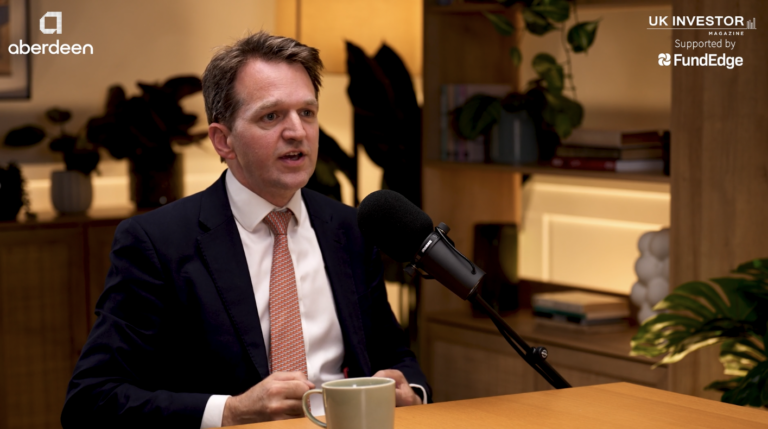
UK Investor Magazine is joined by Thomas Moore, Senior Investment Director at Aberdeen and Lead Portfolio Manager of Aberdeen Equity Income Trust plc, for a conversation with Jeremy Naylor.
Thomas discusses the recent merger of Aberdeen Equity Income Trust and Shires Income Trust, a combination that has created a larger and more cost-effective UK equity income vehicle. He explores the rationale behind the merger, the benefits for shareholders, and how the enlarged trust aims to deliver sustainable income and long-term capital growth.
AIM movers: Tatton Asset Management continues to beat expectations and Everyman Media wants to leave AIM

Audio visual services provider MediaZest (LON: MDZ) increased interim revenues from £1.91m to £2.67m and made a small underlying pre-tax profit. The reported pre-tax profit of £754,000 included a £546,000 gain on the write-off of interest on convertible loans and £198,000 gain on restructuring borrowings. Key projects are being rolled out. Full year revenues could reach £5m, up from £4.15m, and associated pre-tax profit of more than £250,000, compared with £103,000. The share price increased 14.3% to 0.12p.
Tatton Asset Management (LON:TAM) continues to beat expectations. Full year revenues were one-fifth higher at £54.4m and underlying pre-tax profit of £28.5m was slightly higher than the forecast that had already been upgraded. The full year dividend is 42% higher at 27p/share. Assets under management grew to £24.2bn and since March it has already risen to £26.5bn with net inflows of £600,000. Zeus has raised its 2026-27 pre-tax profit forecast by 8% to £34.5m. Zeus expects net asset inflows to continue at £246m/months. The share price gained 11.5% to 671p, which is still well below the high for the year.
Skin treatments developer SkinBioTherapeutics (LON:SBTX) has more than recovered the share price loss after it returned from suspension following the restated annual results and interim figures. Cash was £3.12m at the end of 2025. The share price rebounded 10.5% to 10.5p.
Gana Media Group (LON: GANA) is raising £750,000 at 0.2p/share, which is a premium to the market price. Mexican online gaming business Estadio Gana is building up trading momentum, and the World Cup should provide a further boost. The cash will help to generate further growth. The share price rose 8.82% to 0.185p.
Pri0R1Ty Intelligence (LON: PR1) shares are also recovering some of the loss after they returned from suspension. Subsidiary Halfspace has entered a partnership with Sport & Recreation Alliance as official AI partner. This opens up a market of 300 sporting organisations with 15,000 users. The deal lasts an initial 12 months. The share price recovered 8.33% to 1.3p.
Neonatal ventilators supplier Inspiration Healthcare (LON: IHC) increased full year revenues by 24% to £47.5m, helped by one-off exports. The company broke even following a loss of £3.1m in the previous year. The focus is own brand sales and the Mircel distribution contract is ending. That will hit revenues in 2026-27 along with expected lower exports after the one-off contract, and it means Inspiration Healthcare could return to loss. Underlying revenues should improve, though. Net debt could fall from £5.1m to £4.6m due to lower working capital. The share price improved 5.77% to 27.5p.
FALLERS
Cinemas operator Everyman Media (LON: EMAN) plans to leave AIM and shareholders will be asked to agree to the proposal at a general meeting. There is apparently backing from holders of two-thirds of the share capital. The board will initially hold discussions with key stakeholders before announcing the general meeting. Net debt was £22m at the end of 2025. There is no indication whether there will be a tender offer to shareholders who do not want to maintain their shareholding in a private company. Everyman Media has had a tough few years since Covid lockdowns, but there are signs of improvement. In the 21 weeks so far this year, revenues were 26.5% higher at £58.5m. The share price recovered some of its early loss to below 26p and is down 1.43% at 34.5p.
International Greetings (LON: IGR) returned to paying dividends and announced a share buyback programme, but the share price lost 6.82% to 82p, which is still three-fifths higher than at the start of the year. The latest figures have changed from US$ to pounds. Ongoing pre-tax profit fell from £14.9m to £8.6m. Net cash was £54.6m. The final dividend is 1p/share and the plan is to pay dividends at least three times covered by earnings.
Online retailer boohoo (LON: DEBS) reported full year results in line with expectations. Cost reductions are going well, and the loss was reduced to £23.9m. Panmure Liberum raised its 2026-27 forecast revenues by 8% to £877m but kept the pre-tax profit forecast of £21.2m unchanged. Capex will be halved this year, helping to improve cash generation and nearly halve net debt to £47m at the end of February 2027. That is before a potential sale of the Burnley warehouse. Despite this, the share price declined 5% to 23.75p.
FTSE 100 ticks higher after Wall Street closes at record high
The FTSE 100 was firmly higher on Tuesday as a sense of optimism crept into stock markets, with oil prices lower and US tech stocks surging higher.
London’s leading index was trading 0.6% higher at the time of writing.
“The FTSE 100 held firm as investors absorbed the latest news from the Middle East,” said Dan Coatsworth, head of markets at AJ Bell.
“Brent crude oil prices were steady at $82 per barrel, with a full retreat closer to pre-war levels unlikely to come until a concrete deal is in place and there is clear evidence shipping is flowing through the Strait of Hormuz. The reaction in government bond yields to the breakthrough between Washington and Tehran has been more muted than for equities.”
European stocks jumped on the tailcoats of US stocks on Tuesday after the NASDAQ closed 3% and the Dow Jones hit an all-time record high.
“Across the pond, Wall Street was in a much brighter mood, with new highs for some indices as investors cheered the combination of lower oil prices, less pressure on inflation and a reduced risk of further rate hikes following President Trump’s US-Iran deal,” explained Matt Britzman, senior equity analyst, Hargreaves Lansdown.
“Tech was the clear winner, as growth stocks benefited from a backdrop that suddenly looks a little less hostile, though the rally’s durability still depends on the deal holding together.”
In London, it was more of a benign session with little in the way of major FTSE 100 corporate updates to move the dial on a stock-specific basis.
Rolls-Royce, rising 2.8%, was back among the best performers as investors cheered the alleviation of aviation risks. BAE Systems rose 2.5% on similar sentiment.
Rentokil was the top faller, losing 1.8%.
Debenhams Group’s marketplace focus pays off
Debenhams Group, the former boohoo group, has capped a year of heavy restructuring with sharply higher profitability and, more importantly for the investment case, a return to growth in early FY27.
Adjusted EBITDA rose 34.6% to £53.3m for the year to 28 February 2026, with the margin widening to 5.8% from 3.3%.
That came despite headline revenue falling 24.7% to £917m, a telegraphed decline reflecting its pivot to a higher-margin marketplace model where only commission, not the full transaction value, is booked as revenue. Gross margin ticked up 40 basis points to 51.1%, the first improvement since FY22.
The standout was the Debenhams brand itself, now the largest in the group.
GMV grew 11.6% to £730m and adjusted EBITDA climbed 38.5% to £34.8m, accounting for roughly two-thirds of group profit.
The marketplace has scaled to more than 25,000 partner brands, and management sees a clear path to £1bn GMV and £50m-plus EBITDA within three years.
The slight step down in shares on Tuesday likely reflects the strong performance of shares going into results, and the 3.0% decline seems to be a bout of profit-taking rather than any major disappointment.
Aarin Chiekrie, equity analyst, Hargreaves Lansdown, said: “Boohoo has made great progress on its turnaround plan over the past year. While the headline revenue figure shows a sharp decline, this isn’t too worrying for now.
“The main driver is its shift to a marketplace model, in which third-party brands sell their goods on the group’s online platform. The group earns a commission on these sales, and only this portion is recognised as revenue. While that weighs on the top line, it’s higher margin, so profits are holding up better. The cost base has also been reset, helped by warehouse and tech platform consolidations, contract renegotiations, and debt refinancing, saving over £100mn in annual costs. As a result, all of the group’s brands are now profitable on an underlying cash basis (EBITDA).”