BRCK rejects takeover approach from Atlas Holdings, believes 65p bid undervalues company

BRCK Group has rebuffed a takeover approach from US private equity firm Atlas Holdings, saying the indicative 65 pence per share cash proposal put to the board in March fundamentally undervalues the business.

Atlas made its first unsolicited, non-binding approach in February, prompting BRCK’s board to engage under NDA to assess whether a recommendable offer might materialise. It didn’t.

When Atlas tabled its 65p proposal on 17 March, the board unanimously rejected it eight days later. BRCK is doing its best to fight off pressure from the US group, which clearly sees more value in building a products and services group than the UK market does.

BRCK has nonetheless left the door slightly ajar, agreeing to share limited further information with Atlas to see whether it is willing to improve its price.

The board has made clear, however, that it won’t be drawn into a full due diligence process unless Atlas comes back with something it would actually be prepared to recommend to shareholders.

GenIP keeps up rapid commercial pace as Asia emerges as its biggest market

GenIP has issued a bullish commercial update, pointing to continued order flow across the US, Asia and other key markets as it heads into 2026 on the back of around 330% revenue growth in FY25.

Asia has been a major strength for the group, growing by roughly 3,500% year on year and now accounting for the largest share of the company’s revenue.

Europe and Latin America also contributed meaningfully, up around 111% and 51% respectively, though from smaller bases.

There were no revenue figures in today’s update, but the announcement pointed towards growth in key offerings.

The technology commercialisation platform says client demand is shifting towards larger, multi-year engagements at the portfolio level rather than one-off technology evaluations. The company believes this trend should support both revenue visibility and deal sizes going forward.

Renewal conversations with FY25 clients are said to be progressing well, with several looking to expand their scope, consistent with the company’s reported 90% retention rate. This should see revenues grow again in the current financial year.

On the product side, GenIP said Invention Prioritizer is now in active use with several clients, including Brazil’s National Nuclear Energy Commission, while Invention Validator is completing its first deployment at a South African research university, carrying an expected 60% gross margin.

GenIP has also been building out its commercial team, bringing in a global enterprise sales lead to tap its previously largely unexplored corporate market, alongside a Latin America specialist with WIPO advisory credentials and a further Asia hire in the pipeline.

With its largest market still accelerating and a growing institutional pipeline at advanced stages across multiple regions, GenIP appears poised to build momentum as we move through 2026.

“GenIP is delivering strong progress across all of our strategic priorities. Asia’s exceptional growth, Europe’s accelerating momentum and the long-term potential we see in Latin America demonstrate the global demand for our platform and products,” said Melissa Cruz, Chief Executive Officer of GenIP.

“Clients are deepening their engagement with us, adopting our broader product suite and increasingly seeking portfolio-level insight. With a growing pipeline, strong renewal activity and a clear strategic focus, GenIP is well positioned for its next phase of growth.”

GenIP shares were hit last after the company conducted a heavily discounted placing. Since then, shares have built a base around 9p – 10p and now have a market cap of less than £2m.

FTSE 100 commodity shares drive outperformance as Middle East tensions persist

The FTSE 100’s commodity sectors helped drive outperformance on Monday as Donald Trump threatened to seize Iran’s key oil hub on Kharg Island.

London’s leading index was 0.9% higher, at 10,062, at the time of writing, as oil traded above $115 and metal prices rose. The German DAX was just 0.3% higher.

“Market nervousness around the situation in the Middle East continues to ratchet up as the Iran conflict enters a fifth week,” says AJ Bell head of financial analysis Danni Hewson.

“Comments from President Trump about seizing Iranian oil and the country’s Kharg Island export hub, a build-up of US troops and the involvement of Tehran-backed Houthis in the war all create the impression of a conflict that is escalating rather than drawing to a close.”

The FTSE 100 managed to shake off souring sentiment on Monday due to its heavy weighting in commodity companies. But it was not oil majors driving the index higher, rather metals companies such as Rio Tinto, Melten Energy & Metals, and Glencore.

Mining shares rose on Monday after strikes at aluminium facilities in the UAE and Bahrain threatened already-constrained supply and drove prices higher.

Rio Tinto was the top riser, adding 3.6%.

Oil prices at $115 per barrel served as another buying signal for the FTSE 100 oil majors, which have been trading steadily higher amid the war in the Middle East. Shell added 1.4%, and BP rose 1.6%. The pairs gains were measured, but their weighting within the FTSE 100 went a long way to lifting the index.

A 1.6% rally in AstraZeneca, the FTSE 100’s largest constituent by market cap, played a part in index-level gains on Monday.

Financials St James’s Place, Prudential, and M&G were among the worst performers on the session.

Since falling sharply after the US and Israel launched attacks on Iran at the beginning of March, the FTSE 100 has formed a range between 9,850 and 10,100 as the index trades headline to headline.

Traders will be aware that it will likely take a major escalation or de-escalation in the conflict for the FTSE 100 to break out. A break could be fast and dramatic.

Halo Minerals shares sink after raising £4m in AIM debut to advance Chilean copper tailings project

Halo Minerals shares sank on its AIM debut today, after raising £4 million at 18p per share to advance a copper extraction project targeting legacy mining waste in northern Chile.

The company began trading under the ticker HALO with a market cap of around £20 million before shares sank around 26% to trade at 13.25p,

The company’s core asset is the Playa Verde Project in the Atacama Region, comprising six mining concessions covering 13.57 square kilometres of copper-bearing tailings near the coastal town of Chañaral.

The project carries a JORC-compliant mineral resource of 53 million tonnes at 0.24% copper, with ore reserves of 32.2 million tonnes at 0.25% copper, containing around 79,000 tonnes of fine copper.

Based on those reserves, and using a copper price of $5.30 per pound, the project carries a post-tax NPV of $154 million and an IRR of 50.9%. These are attractive numbers, but not ones that have inspired confidence in the company as trading began on Monday.

The IPO is intended to take Playa Verde to a final investment decision or to a point at which alternative project funding can be secured.

Beyond Chile, Halo says it will also pursue additional growth opportunities in other jurisdictions. Investors in the IPO will hope the £4 million war chest can be put to work to progress these before long after the poor start to life on AIM.

Cairn Financial Advisers is acting as nominated adviser with Global Investment Strategy UK as broker.

AIM movers: Abingdon Health wins US contracts and Mirriad Advertising running out of cash

0

Pulsar Helium (LON: PLSR) executive chair Neil Herbert exercised nearly 1.6 million options at C$0.45 each, raising C$719,000 for the company. The share price increased 17.5% to 121p.

Abingdon Health (LON: ABDX) has won a series of contracts worth £4.8m with a US client. This covers the development of multiplex quantitative lateral flow assay systems for human testing which will be delivered over 27 months. This supports the decision to expand capacity in the US. There could be a subsequent manufacturing contract. The company is set to move to around breakeven in 2026-27. The share price gained 10.3% to 8p.

Monoclonal antibodies developer Bioventix (LON: BVXP) reported interim revenues 9% lower at £6.2m. China was a tough market and some products are maturing. Pre-tax profit was slightly lower at £4.9m. Cash was £5.1m at the end of 2025. The customer base is being broadened and there is longer-term potential for royalties from the company’s antibodies that are included in products. Full year pre-tax profit is set to fall from £10.2m to £9.6m. The full year dividend is set to be unchanged at 150p/share even though it is not going to be covered by earnings. The share price recovered 9.09% to £15.

Security printing and authentication services provider Spectra Systems (LON: SPSY) more than doubled pre-tax profit to $25.2m on revenues 31% ahead at $64.3m in 2025. This was boosted by a major contract. The dividend is 17% higher at 13.6p/share. Net cash is $11.1m. The closure of the business in France has been delayed. Zeus has upgraded its 2026 pre-tax profit forecast by 12.5% to $11.1m. The share price rose 8.73% to 137p.

FALLERS

In-game advertising technology developer Mirriad Advertising (LON: MIRI) says that the expected upturn in February and March did not happen because of the Middle East conflict. It did sign a services agreement with a UK media conglomerate. There is £675,000 in the bank, but more cash will be required before the 2025 accounts are published. The share price dived 63.6% to 0.002p.

Pri0r1ty Intelligence (LON: PR1) says auditors still have not completed the audit for the year to September 2025 and trading in the shares will be suspended on 1 April. The AI business undertook two acquisitions, including a reversal, last year which complicates the accounts. There is also an impairment review on intangible assets. The share price slipped by one-fifth to 1.6p.

Wound healing technology developer AOTI Inc (LON: AOTI) says 2025 revenues were $66.5m, up 15% on 2024. Underlying pre-tax profit was $3.1m, compared with a loss last year. Net debt reached $6.5m. There is a $1.7m provision on money owed by Arizona. Revenues could still rise this year even though AOTI is pulling out of Arizona due to difficulty in getting paid, but profit could decline to $1.2m before starting to grow again. Outstanding debt from Arizona may eventually be reclaimed. A CMS local coverage determination is still expected in the near-term and that will provide some positivity. The share price declined 13.65 to 28.5p.

Graphene technology developer Directa Plus (LON: DCTA) is in discussions with an institution that could provide funding of up to £2.5m. This would require shareholder approval. Talks with Nant Capital ended without agreement on a non-dilutive loan. Directa Plus has enough cash until May but needs more funds to continue trading after that. The sale of a property could raise €500,000 and the Sectar subsidiary could also be sold. The share price fell 11.8% to 7.5p.

Greatland Gold more than doubles Telfer resource to 8 million ounces

Greatland Resources has delivered a major upgrade to its Telfer gold-copper project in Western Australia, with the mineral resource growing 150% to 8.0 million ounces, adding 4.8 million ounces.

The update, based on around 134,000 metres of drilling completed during 2025, also saw the higher-confidence Measured and Indicated category surge 163% to 3.8 million ounces, a critical milestone as Greatland targets an updated Ore Reserve Estimate in the June 2026 quarter.

Much of the attention has been on Greatland’s Havieron project, but today’s resource upgrade puts Telfer on par with Havieron in terms of resource.

Combined with the unchanged Havieron resource, Greatland’s total gold-copper resource base now stands at 14.9 million ounces of gold and 645,000 tonnes of copper.

The West Dome Open Pit drove much of the growth, adding 2.8 million ounces to reach 4.9 million ounces, while the Main Dome Underground more than tripled to 2.2 million ounces.

A maiden resource of 0.6 million ounces was also declared for the West Dome Underground at an average grade of 2.30g/t, roughly three times the open-pit grade, highlighting the upside of greater underground utilisation.

Greatland has more than 100,000 metres of further drilling planned for the second half of its record FY26 programme, with a substantial campaign also lined up for FY27. The company said its focus is now shifting towards higher-grade opportunities, including the West Dome Underground and the Main Dome sub-level cave area.

The resource estimate uses conservative metal price assumptions of A$4,200 per ounce for gold and A$6.50 per pound for copper, against spot prices of roughly A$6,500 and A$8.00, respectively.

Greatland Gold shares were 6% higher at the time of writing in London.

“Telfer and Havieron’s combined resource of 550Mt @ 0.84g/t Au & 0.12% Cu for 14.9Moz Au & 645Kt Cu has the potential to underpin a multi-decade, world class mining hub. Our investment in significantly increased drilling has delivered substantial organic growth, with the overall Telfer resource growing by 150% to 8.0Moz, and the higher confidence Measured and Indicated component by 163% to 3.8Moz,” said Greatland Managing Director, Shaun Day.

“The growth includes a high-grade maiden resource at the West Dome Underground project, which shows significant potential for a new mining front at Telfer and remains the focus of ongoing drilling.

“This strong resource update has been delivered by Greatland’s dedicated technical team who have executed an accelerated and extensive Telfer drilling program since taking ownership in December 2024.

“The significant growth in Measured and Indicated Resources, particularly at the West Dome Open Pit, is very pleasing with this material being of adequate geological confidence to be evaluated as part of our upcoming Ore Reserve estimate, which remains targeted for the June 2026 quarter.

“The scale of Telfer’s resource demonstrates clear potential to fully utilise our low cost 20 million tonne per annum processing infrastructure well into the future. The technical team’s focus is now to advance our higher grade opportunities including the West Dome Underground and the potential to restart Main Dome Underground’s sub-level cave, which could augment our development of Havieron.”

Afentra to spud Angola exploration well as part of organic strategy

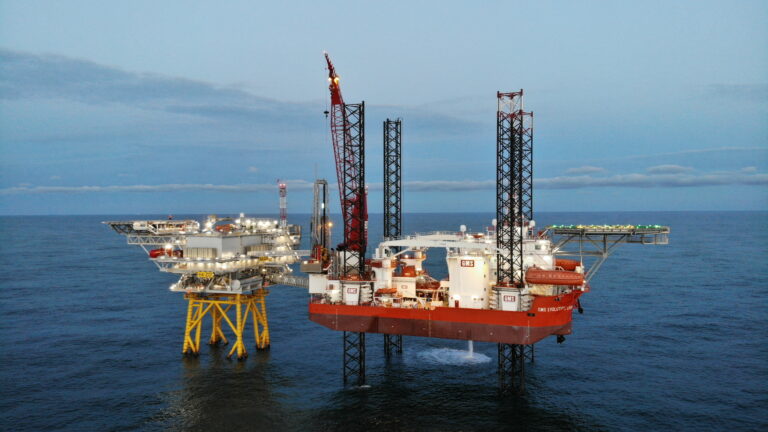
Afentra is on the verge of spudding its first well offshore Angola after securing access to a rig under contract to state oil company Sonangol, accelerating its planned 2026 drilling programme on Block 3/05.

The AIM-listed company has signed a commercial agreement with Sonangol to use the Borr Grid jackup rig, with the Pacassa SW exploration well expected to spud within days.

It marks a meaningful step change for Afentra as it pursues an organic growth strategy, after having been focused on acquiring mature African assets rather than drilling them.

“The ability to accelerate our drilling programme is a pivotal moment for Afentra, marking a clear transition to the execution phase of our organic growth strategy,” said Paul McDade, Chief Executive Officer of Afentra.

“This opportunity is a direct result of the strong, collaborative partnership we have with Sonangol and the Joint Venture. The funding structure agreed with Sonangol allows us to fast-track the unlocking of significant potential value from both the Pacassa SW area and the Impala field without impacting our 2026 cash capex. This programme is designed to efficiently convert resources into production, growing volumes through our existing infrastructure and delivering tangible value for our shareholders. Crucially, it will also provide invaluable data to de-risk and define future prospectivity across the wider Block 3/05 area, optimising our long-term development plan.”

The two-well programme targets a potential gross production uplift of around 9,000 barrels of oil per day. Pacassa SW is an undrilled fault block adjacent to the existing Pacassa field, with up to 210 million barrels of oil in place and recoverable resources estimated at up to 70 million barrels. The second well will either be a Pacassa SW injection well or the Impala-2 development well, depending on how the first comes in.

Boohoo exceeds previous guidance with £53m EBITDA as turnaround gains pace

Boohoo group, which is rebranding around the Debenhams name, has delivered adjusted EBITDA of £53 million for the year to 28 February 2026, comfortably ahead of the £50 million it had previously guided and up 36% on the prior year.

The improvement was driven largely by the second half, where adjusted EBITDA surged 76% year-on-year, as the group’s cost-cutting programme and pivot towards a stock-lite marketplace model began to bear fruit.

CEO Dan Finley said the business had reset its cost base, completed warehouse consolidation, delivered a tech re-platform, and rightsized its stock.

Dan Finley said in a statement: “Our multi-year turnaround strategy continues at pace. We are pleased with the 76% increase in H2 Adjusted EBITDA and £53m full year Adjusted EBITDA. Our pivot to the stock-lite, capital-lite, highly profitable marketplace is working.

“The cost base has been reset, the warehouse consolidation completed, the tech re-platform delivered, the stock base rightsized, most of the onerous costs exited and the brand management teams strengthened. This is significant progress, ahead of our plan, but there is still more to be delivered and we now focus on growth.”

Fixed costs have been cut to an exit rate of £119 million, £11 million better than the £130 million guided as recently as February, and the group is targeting £100 million in FY27. All brands are trading profitably on an adjusted EBITDA basis.

Net debt stood at £90 million at the end of February, under 2x adjusted EBITDA, helped by a £40 million fundraise during the month. The board expects that ratio to fall below 1x by the end of FY27.

In terms of the outlook, the group is guiding to double-digit adjusted EBITDA growth in the year to February 2027, with capex expected to halve to around £8 million and depreciation set to fall sharply from £59 million to around £20 million as the asset base shrinks post-transformation.

“Boohoo delivered positive news to investors’ doorsteps this morning as it continues to make headway in its turnaround strategy,” said Aarin Chiekrie, equity analyst, Hargreaves Lansdown.

“In a short trading update, the fast-fashion company revealed that full-year underlying cash profits (EBITDA) are set to jump by 36% to £53mn, edging past previous guidance of £50mn, thanks to a very strong second half.”

Director deals: Adam Kaye buys Everyman shares after Omniplex stake purchase

Everyman Media Group (LON: EMAN) executive director Adam Kaye bought 500,000 shares at 25.5p each via 50% owned Kropifko Properties on 26 March. This was the same day that it was announced that Ireland-based cinema operator Omniplex has taken a 5.35% stake in cinemas operator Everyman.
Two weeks before, Adam Kaye bought 500,000 shares at 25.5p each via Kropifko Properties. His total shareholding including related interests is 9.27%.
BGF reduced its shareholding from 3.29% to 1.97%. The largest shareholding remains 29.2%, with Gresham House Asset Management holding 9.56% and Samuel Kaye 6.93%.
...

Aquis weekly movers: Connecting Excellence increases net fee income

Vault Ventures (LON: VULT) has appointed Gordon Merrylees as strategic adviser to help with UK banking deployment of post-quantum strategy. The share price gained 10.6% to 1.3p.

Executive recruiter Connecting Excellence (LON: XCE) increased net fee income by one-fifth to £890,000 in the six months to December 2025. There was cash of £1.4m and Bitcoin holdings of £2.62m (40.36 Bitcoin). Net fee income in January was £250,000. The Bitcoin holding has increased to 52.42 Bitcoin. The share price increased 10% to 1.65p.

Mendell Helium (LON: MDH) says potential acquisition M3 Helium is entering an agreement with Ritchie Exploration which will re-complete the Schneweis Ventures 13A well in Kansas. The share price improved 5.26% to 5p.

Arbuthnot Banking (LON: ARBB) reported a dip in 2025 pre-tax profit from £35.1m to £24.2m. The total underlying dividend, excluding special dividend, was raised to 53p/share. Deposits increased by 11% to £4.57bn, although lending balances fell 6% to £2.25bn. Assets under management were 21% ahead at £2.68bn. Higher interest rates should be good for the bank. Chairman and chief executive Sir Henry Angest bought 300,000 ordinary shares at 860p each. He owns 59.9% of ordinary shares and 64.9% of the non-voting shares. The share price is 3.53% higher at 880p.

EDX Medical (LON: EDX) is the primary partner in the Scottish Prostate Cancer Initiative, which is set to improve early diagnosis. Up to 25,000 men will be tested. The share price rose 2.38% to 10.75p.

Delta Gold Technologies (LON: DGQ) says that Penn State University has been promoting the quantum computing research sponsorship and technology licence agreement with the company. The share price edged up 1.14% to 44.5p.

FALLERS

The WeShop share price on Nasdaq continues to decline and reached a new low of $5.81 at the end of the week compared with a high of $200. WeCap (LON: WCAP) is a significant shareholder and its share price dipped 27.8% to 0.325p.

Hamak Strategy has taken a 3.05% stake in Vaultz Capital (LON: V3TC) and the share price declined 6.38% to 2.2p.

Sulnox Group (LON: SNOX) has gained further patents for its Eco™ Fuel Conditioners in Chile, Peru and Israel. The share price slipped 4.26% to 45p.

VSA Capital (LON: VSA) chief executive has bought 100,000 shares at 2.75p each, taking his stake to 19.8%. The share price fell 3.7% to 3.25p.

Falconedge (LON: EDGE) has appointed ZynxBTC as a strategic adviser. The share price slid 0.5% to 0.995p.