AIM weekly movers: Xeros Technology shares continue to rebound

2

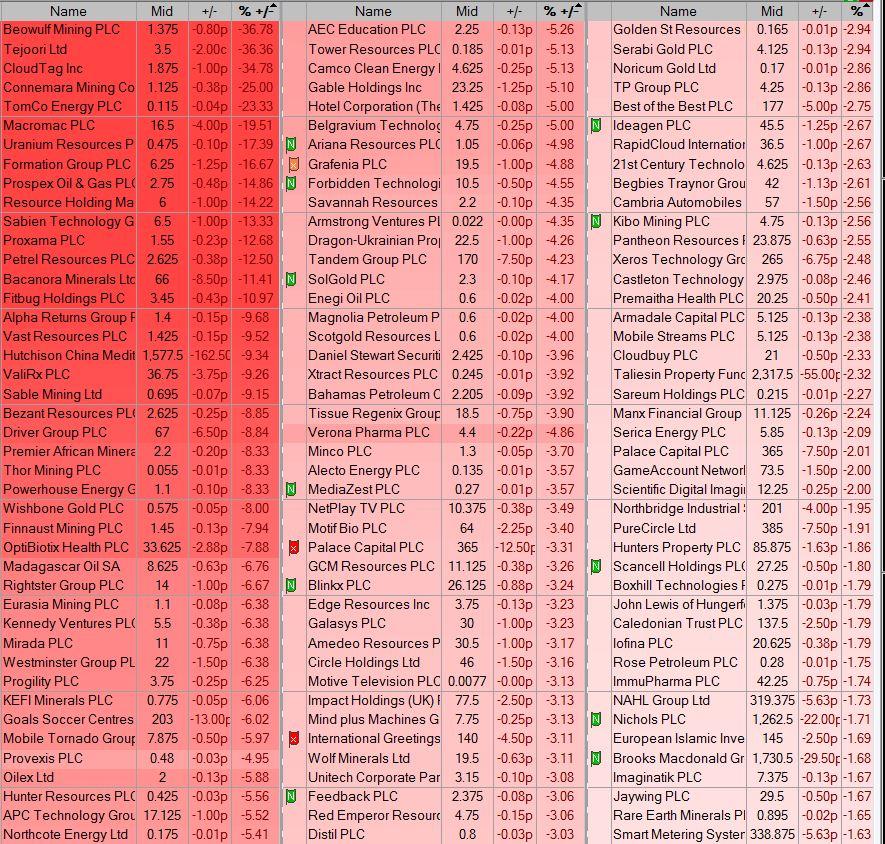
Sustainable laundry technology developer Xeros Technology (LON: XSG) is among the top AIM performers for a second week. Non-exec Klaas de Boer bought 3 million shares at 0.82p each and fellow non-exec David Armfield bought 2.6 million shares at 0.7602p each. Dowgate has increased its shareholding from 11.4% to 13.2%. The estate of William Black has cut its stake from 8.93% to 5.24%. Two weeks ago, Xeros Technology said that it is progressing with tech verification from four global washing machine manufacturers and two of those could move to substantial paid-for joint development agreements. Timing is uncertain, though. The share price recovered a further 73.3% to 1.3p – compared with 0.525p a fortnight ago.

Iron replacement treatment developer Shield Therapeutics (LON: STX) continued its share price recovery last week with a 35% gain to 4.05p, having been 2.8p two weeks ago. This follows the announcement that 2024 revenues were $32.2m as ACCRUFeR sales in the US build up. Management is optimistic that there is enough cash to get to cash flow positive by the end of 2025. Chief executive Anders Lundstrom bought 575,000 shares at 3.7p each, taking his stake to 585,000 shares.

Light Science Technologies (LON: LST) has signed an agreement with Gavita subsidiary Agrolux Nederland to distribute its horticulture lighting products. The deal initially covers the UK and Ireland. Agrolux will sell Light Science Technologies products through its distributor network. Daniel Holliday increased his stake from 10% to 11%. There will be a capital markets day on 26 February.  The share price improved 29.4% to 3.3p.

Serinus Energy (LON: SENX) has won a legal case against the Romanian tax authorities over VAT refunds. The company has been awarded a VAT refund of $1.73m for 2018 and 2019, as well as interest of $750,000. This has to be paid within 45 days. The Romanian operation is loss-making, but there are gas projects that could be developed. The 2024 results are due to be published in March and there should be news concerning how the money will be invested in the business. The share price is 18.7% higher at 2.85p, having been 3.25p earlier on Friday.

FALLERS

Immunodiagnostics developer Oncimmune (LON: ONC) increased revenues by 140% to £2.7m in the 12 months to August 2024. The loss was reduced from £3.9m to £3.2m. Cash was more than £1m at the end of January 2025 with £1.5m of debt outstanding. Strategic partnerships are being explored and additional finance will be sought. The share price slumped 56% to 4p.

Canaccord Genuity reduced its stake in online building products retailer CMO Group (LON: CMO) from 5.37% to 4.31%. The share price slid 55.8% to a new low of 4.25p.

Lord Ashcroft is trying to remove another of his companies from AIM. A general meeting has been requisitioned at wine maker Gusbourne (LON: GUS), where he owns 66.8%. Talks with potential acquirers have ended and the strategic review has been terminated. This follows Lord Ashcroft’s success in getting Merit Group and Jaywing to leave AIM. The share price dived 51.3% to 18.5p.

Drug mathematical modelling company Physiomics (LON: PYC) has raised £430,000 at 0.5p/share and could raise up to £70,000 more from a WRAP retail offer. The offer closes on 17 February. This will finance the expansion of a consulting service and market the biostatistics. It will also fund exploration of a deeper relationship with DoseMe to develop models for its platform. The share price slipped 38.2% to 0.525p.


Aquis weekly movers: All Things Considered for Main Market switch

Ormonde Mining (ORM) has secured three-year renewals for two gold exploration licences in Zamora Province in western Spain. Ormonde Mining plans to acquire the other 51.3% interest in the licences from AIM-quoted cyber security company Shearwater Group (SWG) for five million shares. That is a discount to the implied book value. The Ormonde Mining share price dipped 17.2% to 0.17p.

Music management and event promotion company All Things Considered (ATC) more than doubled 2024 revenues to £50m and EBITDA was £1.5m. Growth is coming from adding managers and new clients, plus acquisitions. Further acquisitions are planned. An agreement has been reached to take the stake in livestreaming platform Driift from 32.5% to 100%. All Things Considered is assessing a move to an unspecified London Stock Exchange market. The share price rebounded 7.69% to 105p.

EDX Medical (EDX) has appointed Martin Walton as deputy chair. He has worked for other life sciences companies, including former AIM company ReNeuron.  The share price rose 5.56% to 9.5p.

In the year to January 2025, EPE Special Opportunities (EO.P) NAV edged up to 328p/share. That includes cash of £11m. Trading was tough for all of the businesses in the portfolio. Investee company Whittard of Chelsea increased like-for-like sales by 6%. Pharmacy2U also grew organically and acquired a business in the pet care market. The share price improved 3.33% to 155p.

FALLERS

Inteliqo Ltd (LON: IQO) wants to cancel the admission to the Aquis Stock Exchange. Inteliqo has been developing and marketing the Langaroo app for a client. It wants to save the costs of the quotation. Trading could end on 14 March if shareholders agree at the general meeting on 27 February. The share price halved to 3p.

Cardiogeni (LON: CGNI) has signed a memorandum of understanding with the private office of Sheikh Al Qassimi for funding of clinical trials. A joint venture will be formed, and it will receive £20m over a period up to 2027 to complete research and clinical trials in the UAE. There will be an initial cash injection of £5m. The cash will fund phase 2b/3 clinical trials and commercialisation of Cardiogeni’s heart failure treatments. The deal could be signed by the end of March 2025. The share price slumped a further 44.4% to 25p.

Valereum (LON: VLRM) is not proceeding with the £2m option agreement with Blue Sky Ventures. Blue Sky was going to subscribe for shares at 10p each. It was previously announced that the option had been exercised. The proposed subscription may be taken on by another investor. The share price dropped 18.6% to 24p. Marula Mining (LON: MARU) has signed the first copper sales agreement for the Kinusi copper mine with a European commodity trader. The initial delivery is 250 tonnes of copper concentrate based on 20% copper grade. The income is linked to the LME copper price with additional payments for gold and silver content. The first revenues should be received in this quarter. After successfully delivery, there will be more each month that will total up to 1,000 tonnes. There are three other potential offtake agreements. Kinui has reached a milestone, so $200,000 of shares have been issued to Takela Mining Tanzania at 6p each. Marula Mining has also paid the final consideration of £625,000 for Northern Cape Lithium and Tungsten in the form of 20.83 million shares at 6p each. Modifications to the plant at the Kilifi processing plant in Kenya should be completed in the second quarter. As part of the drawdown agreement, AUO Commercial Brokerage has subscribed for £500,000 worth of shares at 3.75p/share. The share price slipped 18.4% to 5p/share.

AIM movers: Serinus Energy wins VAT award and Totally loses NHS 111 contract

7

Serinus Energy (LON: SENX) has won a legal case against the Romanian tax authorities over VAT refunds. The company has been awarded a VAT refund of $1.73m for 2018 and 2019, as well as interest of $750,000. This has to be paid within 45 days. The Romanian operation is loss-making, but there are gas projects that could be developed. The 2024 results are due to be published in March and there should be news concerning how the money will be invested in the business. The share price jumped 27.1% to 3.05p.

Transense Technologies (LON: TRT) has secured a new distribution agreement with Haltec Corporation, a US tyre valve company focused on mining, truck and aviation sectors. Translogik sensors will be integrated with Haltec Go software. This helps to under pin the forecast 26% growth in Translogik revenues to £1.4m in 2024-25 and 43% growth to £2m in 2025-26. The share price increased 5.08% to 155p.

Shield Therapeutics (LON: STX) chief executive Anders Lundstrom bought 575,000 shares at 3.7p each, taking his stake to 585,000 shares. The share price recovered 5.26% to 4p.

LBG Media (LON: LBG) non-executive director Carol Kane has acquired 46,844 shares at 106.5p each. She owns 0.4% of the digital media company. The share price improved 3.81% to 109p.

Mineral sands developer Capital Metals (LON: CMET) has renamed the Eastern Minerals project in Sri Lanka as the Taprobane minerals project. The Geological Survey and Mines Bureau will provide technical services for the latest resampling and drilling programme. This should increase the resource and help with designing the mine. A final investment decision is expected in the second quarter. Construction would then take up to 12 months. The share price edged up 3.45% to 1.5p.  

FALLERS

Healthcare services provider Totally (LON: TLY) has lost the NHS 111 Resilience support contract. The 12-month contract was worth around £13m and it ends on 15 February. This is due to the ending of national services for excess demand. Totally is still expected to make a pre-tax profit of £700,000 for the year to March 2025, but Canaccord Genuity has cut its 2025-26 forecast from £1.6m to £700,000. The 10-year government plan for the NHS should be published in the spring. The share price slumped 21.1% to 5.25p.

Proton Motor Power Systems (LON: PPS) leaves AIM on 17 February. The share price slipped 14.3% to 0.15p.

Fiinu (LON: BANK) has raised £1.25m at 10p/share. The company says that there was market demand for a share issue and cash will finance further development of the Plugin Overdraft as a white label product. The share price fell 14% to 10.75p.

Deutsche Bank has downgraded its Mortgage Advice Bureau (LON: MAB1) recommendation from buy to hold. The target share price is 900p. The share price is 2.56% lower at 875p.

FTSE 100 demonstates resilience amid tariff concerns

The FTSE 100 dipped marginally on Friday as corporate announcements again weighed on the index, and investors digested the latest developments from the White House.

London’s leading index was down 0.15% at the time of writing but remained within touching distance of all-time record highs.

Trump’s threat of ‘reciprocal tariffs’, which could target every trading partner based on existing tariffs on US imports and trade balances, gave investors something to think about on Friday with a potentially complex impact on global trade.

The president’s new plan risks a slowdown in activity as businesses cautiously move forward. Such a move by Trump also risks higher inflation.

Given the backdrop of uncertainty, UK investors with holdings in a selection of London’s leading shares should be content with this week’s performance as the FTSE 100 again displayed its defensive attributes and navigated a week of mixed corporate earnings and macro uncertainties.

However, a second straight day of disappointing corporate updates dragged on the index despite mining companies putting in a solid shift at the top of the leaderboard.

“Banking and pharma stocks pulled the market down, led by HSBC amid talk of more job cuts. Reducing staff numbers typically yields a positive reaction from the market as the business is saving money, yet investors might fear HSBC isn’t going hard enough with trimming its bloated headcount,” said Russ Mould, investment director at AJ Bell. 

“NatWest also weighed on the FTSE as its results were solid rather than spectacular. The bank has been doing well, yet the market has already priced in that success. Investors were upset there wasn’t enough in the forward guidance to warrant large upgrades to earnings forecasts, so there was an element of profit-taking on the results.”

NatWest shares were down 2% at the time of writing while HSBC dropped 1%.

Antofagasta and Glencore were the top two risers after metals, including copper, rallied again overnight. Copper prices are 11% higher over the past month and 20% higher year-to-date.

Supply@ME Capital shares soar after appointing new auditor

Supply@ME Capital shares soared on Friday after the inventory monetisation platform announced the appointment of a new auditor.

Supply@ME Capital has appointed Bright Grahame Murray as its new auditor for the 2024 financial year, effective immediately. The appointment follows the resignation of the previous auditor, Crowe U.K., in September 2024, who resigned citing ‘risks’ of carrying out an audit of the company.

Shareholders will vote on Bright Grahame Murray’s re-appointment at the next Annual General Meeting.

The resignation of an auditor is, of course, a major red flag, and shares reacted accordingly when the resignation was announced last year. That said, the 150% rally in Supply@ME shares on Friday took the price back to around the same level they were before Crowe resigned.

SYME operates a fintech platform that provides Inventory Monetisation solutions to manufacturing and trading companies, helping them improve cash flow management. Supply@ME Capital reduced its operating losses by nearly 40% in the first half of 2024, reporting a loss of £1.4 million compared to £2.3 million in the same period last year. The improved performance stemmed from cost-cutting measures implemented in late 2023 and reduced corporate activity.

Nonetheless, the company reported negligible revenue during the period despite claiming a strong business pipeline.

NatWest shares slip on uninspiring guidance

NatWest shares have followed Barclays’ playbook, declining despite the FTSE 100 bank reporting broadly positive Q4 and full-year 2024 results.

Fourth-quarter 2024 earnings were reasonably good, with total income and profit before tax slightly exceeding expectations and net interest margin meeting estimates.

However, shares fell 2% as investors looked to 2025 and booked gains in the stock that has rallied over 100% since lows in October 2023. NatWest’s guidance for the coming year was in line with expectations, leaving investors with little reason to build on existing positions.

NatWest reported a 2024FY profit of £4.5 billion and earnings per share of 53.5 pence, marking a 12% increase from the previous year. The banking group achieved a return on tangible equity of 17.5%, demonstrating robust profitability.

The bank’s total income, excluding notable items, grew by £0.3 billion to £14.6 billion, representing a 2.2% increase compared to 2023. This growth was primarily driven by expanded deposit margins and increased lending activity. The net interest margin remained relatively stable at 2.13%, slightly higher than the previous year.

Given the economic uncertainty towards the end of 2024, investors will be more than happy with the bank’s performance.

In terms of lending and deposits, NatWest saw significant growth in its core business areas. Net loans to customers increased by £12.9 billion to £368.5 billion, with notable growth in both retail banking and commercial sectors. Customer deposits also showed healthy growth, rising by £12.2 billion to reach £431.3 billion.

The bank has also announced a final dividend of 15.5 pence per share, bringing the total dividend for 2024 to 21.5 pence, representing a 26% increase compared to 2023. Total capital distributions for the year amounted to £4.0 billion, reflecting the bank’s strong capital position and commitment to shareholder returns.

“NatWest caps off a strong year with a good set of fourth-quarter numbers that saw a slight beat on the profit line driven by higher non-interest income and better impairments,” explained Matt Britzman, senior equity analyst, Hargreaves Lansdown.

“There’s been a seismic sentiment shift over 2024, as the NatWest has moved on from its troubles at the helm and the UK banking environment has played out much better than some had feared. The setup for 2025 is one of cautious optimism, with borrowers remaining resilient, inflation in a more manageable place, and a UK economy that’s trying its hardest to squeeze out some growth.

“2025 could be the year NatWest finally sheds its government ties, with plans to return to full private ownership. After the UK government’s failed attempt to sell its stake earlier in 2024, this news will be a welcome development for investors who have long been waiting for the bank to regain its full independence.”

Share Tip: McBride – up nearly 44% in five weeks, this group’s shares, now 151p, are still in the ascent 

In just eight ‘trading days’ time, namely Tuesday 24th February, McBride (LON:MCB) will be reporting its Interim Results for the six months to end-November 2024. 
Just two years ago, on 28th February 2023, I featured the business with its shares then at 24p, stating that the group’s profit recovery could well start to get its shares moving forward again. 
I returned to feature the group on 6th January this year, with its shares having more than quadrupled, and with good news expected from the private label ‘market leader’ with an Interim Trading Update being imminent. 
The share...

AJ Bell urges government to increase Lifetime ISA house price limit 

According to research by AJ Bell, the Lifetime ISA designed to help first-time buyers get on the property ladder is in danger of pricing buyers out of the market in 62 regions.

The wealth platform is urging the government to increase the limit on the price of a property a first-time buyer can use the ISA for from the current level of £450,000, which has remained in place since inception in 2027.

AJ Bell has calculated that to keep up with the increase in house prices, the limit for the Lifetime ISA should now be £575,000. By keeping the limit at £450,000, first-time buyers are at risk of the 25% penalty imposed for withdrawing cash from their Lifetime ISA.

Current rules also mean that if someone has used the ISA to invest in stocks, the government will also pocket 25% of the portfolio’s gains. AJ Bell also suggests that the penalty for withdrawing should be reduced to 20% from 25% to match the monetary value of the bonus provided by the product.

Rules mean that if someone placed £10,000 in the product and received the bonuses but then had to withdraw the cash, they would only be left with £9,375. The system is obviously broken.

It’s abundantly clear that the government needs to rethink rules around the product. The inaction and mismanagement of the product are punishing first-time buyers. If governed appropriately, a Lifetime ISA will support the lifeblood of the UK property market.

The government needs to drastically improve the UK investment landscape and encourage young investors to use products such as the Lifetime ISA, which is an obvious place to start. What the Labour Party does with the Lifetime ISA could be considered a barometer of their competency. It’s an easy fix that will have a big impact.

“It’s vital that Chancellor Rachel Reeves increases the maximum property value that people can buy using money held in a Lifetime ISA,” says Dan Coatsworth, investment analyst at AJ Bell.

“The government has frozen allowances on all types of ISAs until 2030. If the Lifetime ISA’s terms and conditions also remain frozen for another five years, flats in places like Ealing and Merton in outer London and terraced houses further afield in locations such as Winchester and Guildford will be deemed too expensive for first-time buyers to deploy funds from a Lifetime ISA without penalty because they are forecast to exceed the £450,000 limit. Even typical first-time buyer properties in the Cotswolds, South Oxfordshire and parts of Kent are projected to be in the penalty zone over the next five years.”

AIM movers: Gattaca cost cutting maintains profit and Thruvision contracts delayed

21

Specialist staffing provider Gattaca (LON: GATC) has offset a small decline in net fee income in the first half through cost control. This is a better performance than the sector. Interim net fee income is 3% lower at £18m following a 10% decline in permanent net fee income. There are signs of recovery in permanent net fee income. Interim pre-tax profit is likely to be flat at £800,000. The full year pre-tax profit forecast is £3m. The forecast dividend of 3.1p/share should be twice covered by earnings. The share price moved ahead 6.99% to 76.5p.

Empire Metals (LON: EEE) has achieved a 91% extraction rate of titanium dioxide at the Pitfield project in Western Australia. The test work results suggest that the processing method is straightforward. Development of the processing flowsheet is continuing, and further refining could increase recovery. The main titanium-bearing minerals are anatase and rutile. The share price improved 5.65% to 8.6p.

Later today, Concurrent Technologies (LON: CNC) shares will commence trading on the OTCQX Best Market in the US. The share price rose 3.16% to 196p.

Oracle Power (LON: RCP) will recommence drilling at the Northern Zone intrusive hosted gold project in Western Australia in March. This is designed to extend previously identified higher grade gold intercepts. The share price increased 2.86% to 0.018p.

FALLERS

Drug mathematical modelling company Physiomics (LON: PYC) has raised £430,000 at 0.5p/share and could raise up to £70,000 more from a WRAP retail offer. The offer closes on 17 February. This will finance the expansion of a consulting service and market the biostatistics. It will also fund exploration of a deeper relationship with DoseMe to develop models for its platform. The share price slumped 34.4% to 0.525p.

Surveillance technology developer Thruvision (LON: THRU) says potential contracts have been delayed. This means expected 2024-25 revenues will be between £5m and £6m. The previous expectation was £9m. Cash should last until May and talks have commenced with potential acquirers or providers of additional cash. The share price dived 27.8% to 3.25p.

Drug developer ImmuPharma (LON: IMM) has raised £1.03m at 3.75p/share and a further £1.875m from a subscription by Lanstead Capital Investors, which currently owns 6.5% through the issue of 50 million shares in a sharing agreement. This deal means that the shares are pledged by the company, and it will receive the proceeds over a seven-month period starting in May when the previous sharing agreement ends. This deal requires the share price to average at least 5p/share for ImmuPharma to receive the full £1.875m. Management believes that the cash should last until the end of 2026. It will be invested in the P140 lupus autoimmune therapy programme to accelerate results.  The share price declined 8.94% to 3.92p.

Dowgate Capital has raised its stake in sustainable laundry technology developer Xeros Technology (LON: XSG) from 11.4% to 13.2%. The estate of William Black has reduced its shareholding from 8.93% to 5.24%. The share price dipped 5.98% to 1.1p.

Ex-dividends

Knights Group Holdings (LON: KGH) is paying an interim dividend of 1.76p/share and the share price fell 1.25p to 124.25p.

Ramsdens Holdings (LON: RFX) is paying a final dividend of 7.6p/share and the share price is down 10p to 235p.

FTSE 100 tumbles as Barclays, Unilever and British American Tobacco earnings disappoint

The FTSE 100 was sharply lower on Thursday as corporate updates from Barclays, Unilever and British American Tobacco disappointed, sending the index deep into the red in early trade.

This week, London’s leading index had shown remarkable resilience as traders contended with Donald Trump’s foreign policies and hot US inflation.

US stocks stuttered yesterday after US CPI came in hotter than expected and poured cold water on interest rates hopes. US CPI rose 3% in the year to January, only slightly higher than the 2.9% forecast by economists. The initial market reaction to such a slightly higher reading demonstrates just how much the market is concerned about the trajectory of US interest rates in 2025.

While the Bank of England and European Central Bank are shaping for a series of rate cuts through 2025, the strength of the US economy and stubbornly high inflation have some economists predicting a US rate hike by the Federal Reserve in 2025.

The perceived diverging paths of the West’s major central banks meant the wobble in US stocks wasn’t felt in the FTSE 100 due to the prospect of the pound remaining weak against the dollar and supporting London’s overseas earners. Indeed, the FTSE 100 hit a record high yesterday.

It was a very different story on Thursday.

Corporate earnings took centre stage and were met with rebuke by the market. Barclays, Unilever and British American Tobacco all posted disappointing earnings updates, and investors took flight.

British American Tobacco shares sank 8% as traditional cigarette volumes fell and growth in new products such as vapes slowed. A £6.2bn hit due to a Canadian lawsuit can also be attributed to the drop in shares.

“British American Tobacco’s full-year results delivered single digit growth in underlying revenue and operating profit to £25.9bn and £11.9bn even as more smokers kick the habit or switch to new categories such as vapes and heated tobacco,” said Derren Nathan, head of equity research, Hargreaves Lansdown

“Traditional combustible volumes fell by 5.2% but BATS managed to offset this through strong pricing and product mix. Revenue from New Categories grew faster at 8.9% but that’s lagging the high-octane rates seen in recent years. It’s going to have to take up more of the slack in years to come too as the noose tightens around cigarette smoking.”

BATS was the FTSE 100’s top faller, serving as a reality check that a company whose products are responsible for millions of premature deaths was rightly seeing slowing demand.

Barclays’ 5% drop was more a case of profit-taking than any major concerns with earnings. Q4 results were largely better than expected, and the investment bank unit had a positive period. The bank also set out plans for £10bn in share buyback love the next two years. Guidance was fairly uninspiring, which may have spurred some to book recent gains.

“The £1bn buyback taps into its strong capital position, and with £10bn expected to be returned to shareholders between 2024 and 2026, there’s enough on offer to keep markets happy,” said Matt Britzman, senior equity analyst, Hargreaves Lansdown.

“The only minor downside was the lack of guidance upgrades, but overall, investors should be pleased, with the immediate price reaction likely a result of the strong run up coming into results.”

Unilever shares tumbled after the CEO said slow growth in 2024 would continue and ‘remain soft in the first half of 2025’. The company said it would push forward with a triple listing of its ice cream in the Netherlands, UK and US, but this wasn;t enough to stop shares sinking 7% on Thursday.

“The market environment for consumer goods companies is tough,” explained Charlie Huggins, Fund Manager at Wealth Club.

“China’s economy is weakening, local competition in emerging markets is fierce and the high level of inflation in recent years means the appeal of private label brands has arguably never been greater. As a result, Unilever is pointing to a slower start to 2025.”