Polar Capital Global Healthcare Trust’s track record and investment approach deserves your consideration

Whether you are a healthcare and pharmaceutical aficionado or not, the Polar Capital Global Healthcare Trust should be considered by all investment trust investors seeking a vehicle with a solid track record of strong performance that consistently beats the benchmark.

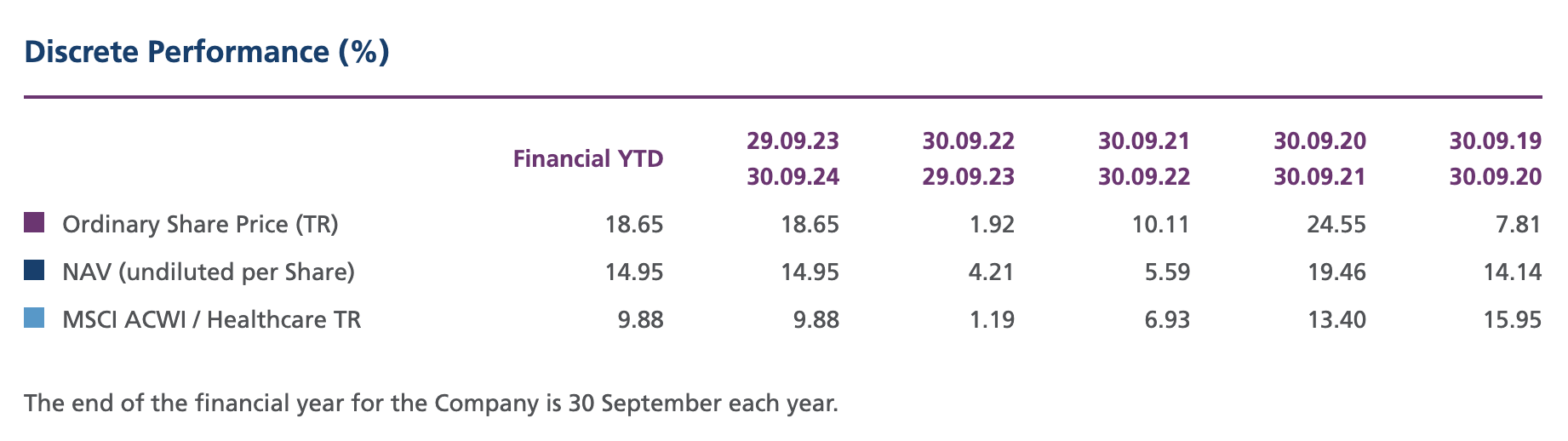
Over the three years to September 2024, this investment trust has produced a share price total return of 33.2% compared to the MSCI ACWI / Healthcare benchmark return of 18.9%.

The trust invests in leading healthcare and pharmaceutical companies with an attractive mix of mega caps and small caps to ensure investors are provided with a diverse portfolio of steady cashflows blended with some of the most exciting growth prospects in the sector.

The Polar Capital Global Healthcare Trust’s performance pays testament to a robust research process driven by Polar Capital’s healthcare team comprised of eight experts with deep experience in the sector.

Healthcare investing requires a high level of sector-specific expertise that other industries may not. The sector offers many exciting opportunities, but many companies offer potential without the intrinsic strengths to produce shareholder returns. By investing in this trust, investors secure a partner to help navigate the sector and filter down companies into a portfolio of 25-60 high-conviction ideas selected by managers with deep experience in the sector.

Polar Capital Global Healthcare Trust 3- year performance
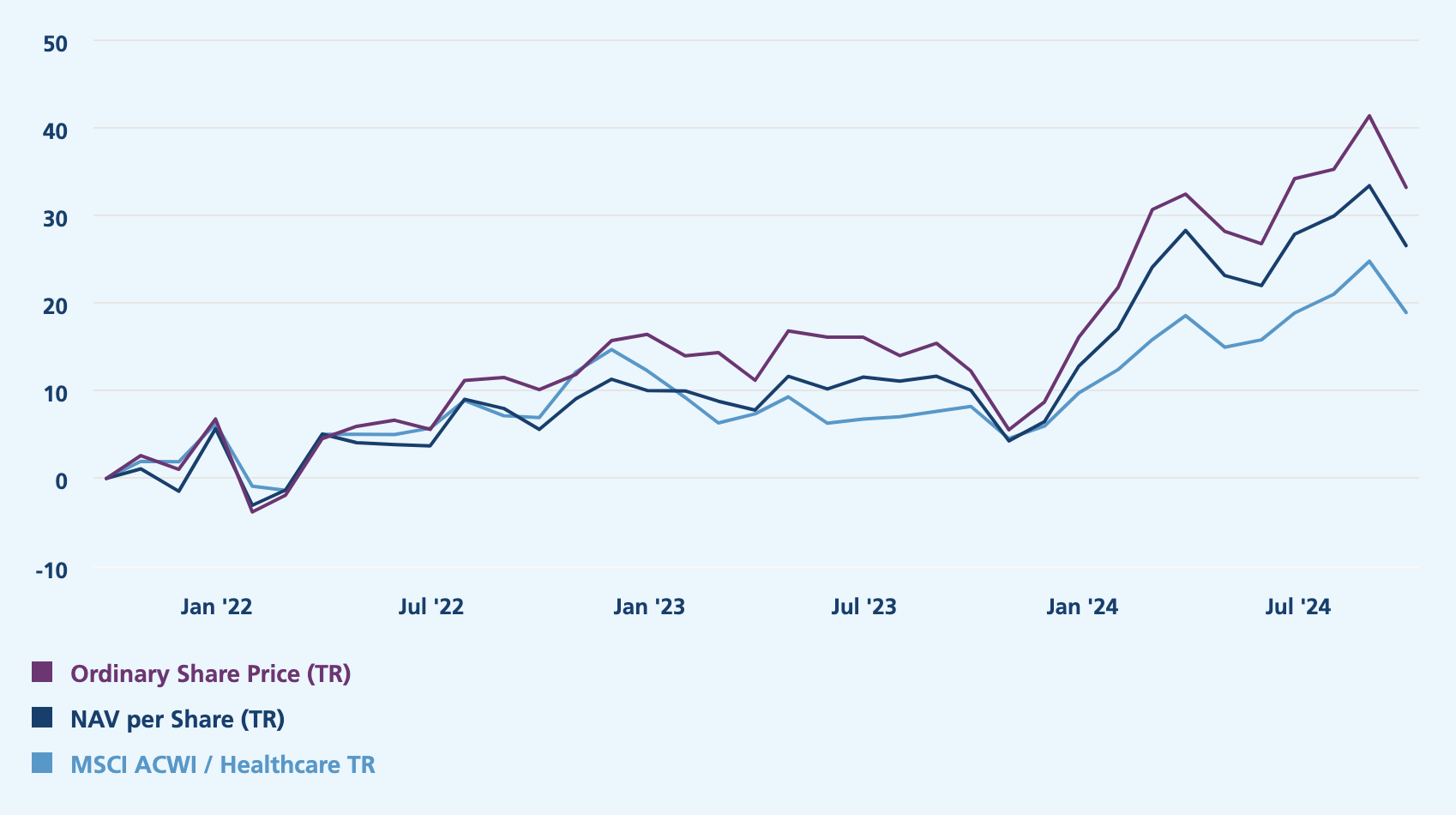
Source: Bloomberg & HSBC Securities Services (UK) Limited, percentage growth, Net of Fees in GBP terms. Past performance is not indicative or a guarantee of future results. The ordinary share price has been adjusted for dividends paid in the period in GBP and reinvested at the ex-dividend date. The NAV per share is adjusted to show dividends reinvested on the payment date in ordinary shares at their Net Asset Value; to remove the dilution of the exercise of the subscription rights and, to remove any effects from any issuance or repurchase of ordinary shares. This is the metric used by the Company when assessing the investment manager’s performance. Benchmark: MSCI All Country World Index / Healthcare (sterling) Launch Date: 15 June 2010. The Company was restructured on 20 June 2017.

The trust is underpinned by a healthcare industry poised for sustained, long-term growth. This trend is driven by an ageing global population observed in both developed and emerging nations. The trust highlights that as people live longer, there’s an increasing need for expanded healthcare services and infrastructure worldwide.

The portfolio is built around six core themes: Healthcare delivery disruption, Innovation, Consolidation, Emerging markets, Outsourcing, and Prevention.

The breadth of these core themes lends to the trust’s diversified holdings in established drug companies such as Eli Lilly & Co, UnitedHealth Group, Novo Nordisk, Roche, and AbbVie. These companies are responsible for a large proportion of the world’s pharmaceutical innovations and production and provide investors with reliable cash flows while securing exposure to the growth prospects of a pipeline of potentially blockbuster new drugs.

Innovation & Disruption

“Innovation is the lifeblood of the healthcare sector and it is flourishing,” says Gareth Powell, Head of Healthcare at Polar Capital.

Polar Capital Global Healthcare Trust’s recent performance has in part been driven by its focus on innovation and the availability of new drugs and therapies to improve patient outcomes.

The trust has identified developments in obesity, atrial fibrillation, respiratory diseases and Alzheimer’s. It has taken action to ensure the portfolio harnesses growth in these areas and the upcoming earnings cycles for the mega-cap pharmaceutical companies that have brought them to market.

These particular areas clearly excite the Polar Capital team, and the market shares this enthusiasm. Eli Lilly shares surged this year amid the launch of the Alzheimer’s drug Donanema and Novo Nordisk has benefited from new obesity drugs. As of 30 September, Eli Lilly was the trust’s top holding after gaining around 50% year-to-date.

These successes for Polar Capital Global Healthcare Trust’s shareholders represent the team’s approach to the healthcare sector, which balances securing exposure to earnings growth while ensuring an attractive valuation.

The recent initiation of Novo Nordisk demonstrated the trust’s measured approach. Novo Nordisk has blazed a trail with the launch of blockbuster weight loss drugs Wegovy and Ozempic, which helped send the stock to record highs earlier this year. It would have been tempting to jump in amid the hype in late 2023 and early 2024, but Polar waited until a pullback during volatility in August to add the stock to its portfolio.

Growth companies

While large-caps comprise the lion’s share of the portfolio, Polar Capital reserves 20% to invest in new and upcoming companies at the forefront of innovation.

One such area that will find its way into this section of the portfolio is the the introduction of AI and machine learning to healthcare that promise innovation in a wide range of settings including diagnostics and specific care settings.

Polar Capital believes this new round of innovation is the final ingredient to spark the next bull market in healthcare shares.

Healthcare is a broad church, and this is represented in the Polar Capital Global Healthcare Trust’s portfolio, which offers the excitement of new innovations underpinned by steady returns from the world’s largest drug companies, which make up a large proportion of the portfolio.
FTSE 100 flat as budget tensions rise, Lloyds sinks

Investors help off making big bets on UK equities on Friday, with the UK budget dominating the narrative amid fears of the introduction of a raft of measures that could stifle economic growth and dent confidence in UK stocks.

Despite a strong gain in US futures and mild gains in European equities, the FTSE 100 was dead flat at the time of writing after trading in a tight 20-point range for most of the session.

A strong session for NatWest following the release of Q3 helped to offset weakness in Lloyds and Smith & Nephew, resulting in no change in the index.

“The FTSE 100 is in a holding pattern at the end of the week, as the UK Budget looms and investors remain highly cautious. The index has opened lower, with little to ignite overall investor sentiment,” said Susannah Streeter, head of money and markets, Hargreaves Lansdown.

“However, buoyant results from NatWest, as it joined the banking results party, did provide some cheer with the stock more than 3% higher in early trade.

“As the guessing game continues about what Chancellor Rachel Reeves will include in her first Budget, it’s dented consumer confidence in the UK. A closely watched survey from GfK indicates that a despondent mood has taken hold ahead of revelation of the government’s tax and spending plans with concerns about the UK economy rising.”

Investors are concerned about a tax raid on their capital gains and savings, while businesses fear additional taxes that could curtail growth. The combination is doing the UK stock market no favours, and the market will look forward to certainty returning as the budget is delivered next week, although new measures may have damaging ramifications for UK equities.

Lloyds

Lloyds shares sank 4% after the UK Court of Appeal ruled against Lloyds and other financial institutions in motor financing appeals that could lead to billions in redress. Close Brothers was more heavily hit by the decision, with shares falling 15%.

Lloyds has already set aside £450m for potential redress, but there will be fears they are forced to make further provisions. Investors clearly have PPI litigation that cost banks billions fresh in their minds and decided to sell down holdings in banks ahead of further developments.

The investment case for implementing AI to improve UK consumer finance with Investment Evolution Credit (IEC)

The UK Investor Magazine was delighted to Marc Howells, CEO of Investment Evolution Credit (IEC), for a deep exploration of the UK consumer finance market and IEC’s growth plans.

We start with a run down of the UK consumer finance market and the material changes to regulations that have created a material opportunity to better serve millions of people in the UK loans that meet their financial futures.

Marc provides a comprehensive explanation of IEC’s AI-driven process and how the company is using the technology to improve outcomes for clients.

The company is already operating in the US and has ambitious plans to replicate its success in the UK.

AIM movers: Positive drilling news from Prospex Energy and Adams leaving AIM

0

Yulia Kirianova has stepped down from the board of oil and gas company Enwell Energy (LON: ENW). Interim chief executive Oleksiy Zayets has joined the board as appointee of Smart Energy (CY), which has a 6.95% stake. He has held the role of interim chief executive since March and has been with the company since 2018. The share price increased 13.1% to 26.75p.

Cyber security software supplier Intercede Group (LON: IGP) has launched a £1m share buyback programme. This has been prompted by the uncertainty around the tax incentives for AIM shares. The programme will last until the end of 2024 or when the money is spent.The share price rose 6.69% to 167.5p.

Prospex Energy (LON: PXEN) recently acquired a 7.2365% working interest in the onshore Spain Viura gas field, which recommenced production last week. The Viura 1B development well has encountered significant gas shows in the Utrillas-A reservoir and a new gas bearing reservoir interval below that. The well, which cost Prospex Energy €375,000, could contribute to production in November Flow testing results for the deeper reservoir will be available next year. There should be a significant upgrade to recoverable reserves. The European gas price is rising. The share price edged up 2.63% to 5.85p, having been above 6p earlier in the day.

Diagnostics company Oxford BioDynamics (LON: OBD) says that there has been a study published on the Covid Severity Test using its EpiSwitch platform. It shows a high positive predictive value for high-risk diseases outcomes, including two cases previously declared as mild. The share price improved 3.88% to 1.34p.

FALLERS

Adams (LON: ADA) is proposing the cancellation of the AIM quotation and sell off the company’s investments, many of which are also quoted on AIM, to return the cash to shareholders. Prior to this Adams will be buying back shares at 4p each. The estimated NAV is 3.72p/share. Liquidity is limited because Richard Griffiths owns 94% of Adams.  A general meeting will be held on 27 November and, if passed, the cancellation will be on 5 December. The share price dipped 10% to 4.5p.

Youth digital health services provider Kooth (LON: KOO) says that a newsletter has underestimated the uptake of its services in California. The report led to a fall in the share price. The service commenced in January and awareness and uptake is still building up. Expectations for 2024 and 2025 are unchanged. The share price still slipped 6.53% to 164.5p.

Kestrel Partners continues to build up its stake in IT managed services provider Redcentric (LON: RCN) and it has been buying shares at 120.73p/share. The stake is 20.7%. Oliver Scott represents Kestrel on the Redcentric board. The share price declined 5.81% to 109.5p.

Existing shareholders in management consultancy Elixirr International (LON: ELIX) have sold 3.85 million shares at 650p each. The sellers include all six directors and other employees of the company. The share price fell 6% to 658p.

NextEnergy Solar Fund is a specialist solar energy & energy storage investment company

NextEnergy Solar Fund is a specialist solar energy & energy storage investment company listed on the main market of the London Stock Exchange and is a constituent of the FTSE 250. 

NextEnergy Solar Fund invests primarily in utility scale solar assets, alongside complementary ancillary technologies, like energy storage.

Learn more about NESF through the video.

NatWest surges higher on encouraging outlook

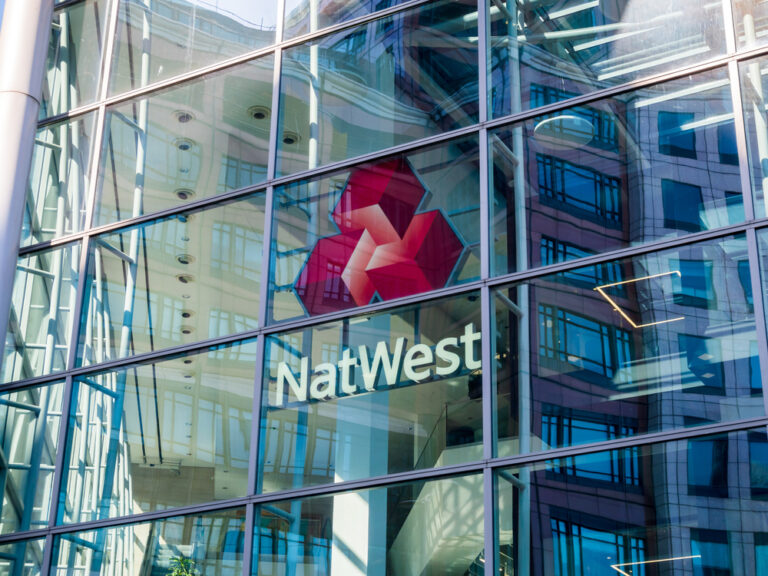
Since Lloyds kicked off the UK banking earnings season earlier this week, UK-focused FTSE 100 bank earnings have improved steadily. Today, NatWest took the crown in terms of share price reaction with a 4.8% jump.

Investors were delighted with NatWest’s 2.3% increase in income in Q3 compared to Q2 and an upbeat assessment of future earnings.

“NatWest marks the third major UK bank to report better than expected results this week, but this time it’s not driven by impairments. Better income and costs drove the beat today, offset by higher impairments than expected, which does buck the trend we saw from Lloyds and Barclays. That said, default levels remain low at NatWest and that bodes well for performance over the medium term,” said Matt Britzman, senior equity analyst, Hargreaves Lansdown.

The results took NatWest shares to the highest levels since 2015.

NatWest wraps up earnings from the three FTSE 100 banks most heavily associated with the UK economy: NatWest, Lloyds, and Barclays. Going into the run of results, there were a number of potential risks, namely falling interest rates and softening economic growth. However, shareholders will be more than satisfied with better-than-expected earnings across the board and the absence of any signs of stress among their core customer base.

“It has been a pretty decent earnings season all-round for the UK banking sector and the positive trend continued with NatWest’s numbers,” said AJ Bell investment director Russ Mould.

“Better-than-expected income and lower-than-expected costs provided the cocktail for upgrades and investors have responded accordingly. The company, and its peer group, have been helped here by slower-than-anticipated rate cuts.”

Frasers Group and the boohoo Group – Just What Will Be The Outcome As Biggest Shareholder Ashley Demands Action? 

The writing has been on the wall for some months now – boohoo Group (LON:BOO) has what could be terminal problems unless something really kicks its Board into proper remedial action. 

Just standing back and agreeing to some fairly stringent and expensive funding terms as it desperately attempts to straighten its balance sheet could give the group even more problems. 

The Business 

Set up in Manchester in 2006, boohoo group describes itself as a fashion forward, inclusive and innovative business.  

It believes that its brands are complementary, vibrant and scalable, delivering inspirational, on-trend fashion to group’s customers 24 hours a day, seven days a week.  

The group’s five diverse core brands – boohoo, boohooMAN, PrettyLittleThing, Karen Millen and Debenhams – enable it to serve a broad customer base, globally, with a primary focus on the UK and US markets.  

Since its acquisition in 2021, Debenhams has been transformed from a retailer into a digital marketplace, with a capital-light, low-risk operating model and a focus on fashion, beauty, as well as home. 

The Background 

We have all heard about the ‘ups’ of the fashion group, which have been well-publicised in almost every UK newspaper and investment website. 

Over the last few years, we have read about ‘slave labour’ production lines at various of the clothing group’s suppliers, there was even a Competition and Markets Authority investigation into whether the group had breached any consumer protection laws 

We have also seen tittle-tattle of various of the boohoo glitterati, flying here and there and everywhere on very expensive trips, of driving flashy cars, or enjoying multi-million pound family ceremonies – all this was happening as the online company’s profits were dwindling fast and while the luxury spending appeared to increase. 

Admittedly times have been very challenging over the last year or so, with the group dropping some 13% on its gross merchandise values to £1.81bn (£2.09bn) in the year to end February this year, while its statutory pre-tax loss increased to a minus £159.9m (loss £90.7m). 

In late May proposed option awards for three of the group’s main directors, over millions of shares, rapidly faced investor disapproval and were later withdrawn. 

During the summer the group put one of its office buildings up for sale, based right in Soho in London’s West End. 

Just last month the group declared, as part of its required cost-slashing measures, that it was changing its US operations, cutting out its distribution centre in Pennsylvania, and switching product delivery to its US customers directly from its Sheffield centre. 

A week ago, the company updated that it had signed a £222m debt refinancing package, together with the declared undertaking of ‘a review of options for each division to unlock and maximise shareholder value’, it also announced that its CEO was stepping down. 

Tally Ho The Frasers 

Then, yesterday morning, the group confirmed that it had received letters and accompanying notices from Frasers Group, the online fashion group’s largest shareholder with 27% of the equity, demanding that Mike Ashley be appointed CEO and that Mike Lennon also be appointed a Director. 

Just a day after Ashley and Frasers had stepped back from proceeding with the proposed £111m bid for the Mulberry Group, it published an Open Letter to the Board of the online retailer, detailing the Board Positions being sought. 

In that letter, Frasers did not hold back; it pulled no punches; Ashley called Boohoo’s trading performance “abysmal” and considered that there had been “long-term mismanagement.” 

It declared that the company’s recently announced debt refinancing was “wholly unsatisfactory” and created an “appalling outcome for shareholders“, which showed that the board “has lost its ability to manage boohoo’s business and investments“. 

Accordingly, Frasers is requisitioning a general meeting of Boohoo to appoint Mike Ashley as a director and CEO of Boohoo and Mike Lennon as a director of Boohoo, to take effect without delay.  

It stated that Frasers firmly believes that these appointments are in the best interests of boohoo, its shareholders and its stakeholders. 

While also claiming that the Board appointments proposed by Frasers are now the only way to set a new course for boohoo’s future.  

Market Reaction 

Yesterday the shares of boohoo Group, on the back of a tripled dealing volume at 9.9m shares traded, closed 4% higher at 28.50p, valuing the group at £362m. 

Frasers Group, valued at £3.61bn, saw its shares holding fairly steady at 800p. 

Response To Frasers 

This morning boohoo has responded to the Fraser’s Open Letter, by noting that Ashley is a 73% shareholder in Frasers; in addition, Frasers owns a 23.6% stake in ASOS, and that both Frasers and ASOS operate in similar markets to boohoo.  

It declared that Frasers’ characterisation of Boohoo’s recent debt refinancing is inaccurate and unfair, considering that the refinancing provides certainty for the company around its future requirements and is supported by its existing group of high street banks. 

The company stated that it will publish its interim results in November. 

Early prices show boohoo at 28.35p and Frasers down 8.5p to 791.50p. 

Exploring GenIP’s AI models and research organisation technology transfer with Melissa Cruz

The UK Investor Magazine was delighted to welcome Melissa Cruz, CEO of GenIP, back to the podcast to discuss the Generative AI analytics company’s technology and the real-world benefits of its services.

We start by discussing technology transfer from research organisations to commercialisation, highlighting leading companies such as Google and Paypal, which started life as university discoveries.

We explore the value created by technological discoveries and how GenIP is helping more innovations reach full commercialisation.

Melissa provides deep insight into GenIP’s AI models and what differentiates them from existing services like ChatGPT.

FTSE 100 jumps as Barclays and Unilever beat expectations

There was mild optimism in equities on Thursday after several days of soggy trade dragged on the FTSE 100 and major US equity indices as corporate updates took centre stage.

Getting the European session off to a good start, Tesla shares surged in the US premarket on strong growth in key lines that was felt in US futures overnight. This was built on Thursday morning by a string of upbeat releases from London-listed companies.

Strong earnings releases by the London Stock Exchange Group, Barclays, and Unilever and firmer oil prices helped London’s leading index increase 0.5% to 8,299.

“Higher oil prices and some good corporate results helped UK stocks to strong gains on Thursday morning,” said AJ Bell investment director Russ Mould.

“Oil was higher amid continuing tensions in the Middle East with observers wary of an impact on supply. This lifted heavyweight energy stocks BP and Shell and their significant weighting in the FTSE 100 meant the index slightly outperformed other European indices.”

Barclays

Barclays was among the top risers with a gain of 3% after following Lloyds in releasing better-than-expected earnings largely driven by lower provisions for bad debts.

Investors were rightly concerned going into the banking earnings season with lower interest rates threatening to erode profits. While lower interest rate have softened the top line, analysts seem to have overegged the negative impact of impairment charges, which has led to banks beating on earnings.

“Barclays has squeezed out a profit beat after better-than-expected impairments and a good grip on costs,” said HL’s Matt Britzman.

“We’re always treated to a different perspective when Barclays reports, with US credit card and investment banking performance differentiating it from more UK-focused peers. On the US card front, after a period of edging higher, default rates look to have stabilised at relatively low levels. 

“The slight disappointment comes from investment banking, where Barclays didn’t quite deliver the knockout performance that some might have hoped for in its trading division, especially after its US peers saw booming activity over the same period. The positive news is that investment banking profits were in line with expectations, and there was strong growth in fees & underwriting from the lulls of last year.”

“This should be taken as a decent set of results, but Barclays has had a material re-rating over the year so far. Much of that’s been justified, and the stock still looks to be trading at a discount to where it should be. However, the lack of visibility over the large investment banking division and how it meets medium-term growth targets is an anchor keeping things down”

Unilever shares enjoyed stronger-than-expected Q3 results, rising a little over 3%. Unilever announced a 4.5% increase in sales for its power brands, which account for more than 75% of group sales.

“A little over a year into the job and CEO Hein Schumacher has made genuine progress with the business. This is reflected in today’s slightly better-than-expected third-quarter sales,” Russ Mould said.

“This performance has been built on improved product innovation but also slowing down price increases. This helps explain why the company expects margin progression to slow overall in the second half of the year.

“Unilever faces a tricky balancing act between protecting its profitability and not alienating shoppers. This is a particular risk in developed markets where customers have the option of trading down to generic alternatives but less of an issue in emerging economies where these kinds of options are not readily available.”

Investors will hope the worst of Unilever’s troubles are behind them.

Alkemy Capital subsidiary on course to raise finance for lithium refinery project

0

Alkemy Capital Investments (LON: ALK) says that its 100%-owned subsidiary Tees Valley Lithium is engaging ABG Sundal Collier ASA for a proposed $25m convertible bond and equity linked financing. The share price of the fully listed company jumped 71.8% to 73p, having been above 80p at one point.

Tees Valley Lithium is developing a lithium refinery project in Teesside. Planning and environmental permissions have been obtained and feedstock has been secured. The client base will be European vehicle manufacturers. The Tees Valley Lithium facility could have the capacity to supply all forecast UK automotive battery requirements by 2030 and have 35% of production available for export.

International trader Wogen will supply up to 200,000 tonnes of technical grade lithium carbonate feedstock each year. This should be enough to produce around 24,000 tonnes of battery grade lithium hydroxide and lithium carbonate equivalent.

The financing may be undertaken in more than tranche. The convertible bond will have a mandatory conversion mechanism into ordinary shares in Tees Valley Lithium if there is a flotation or trade sale. The conversion will be at a discount. Alkemy Capital Investments is hoping to list Tees Valley Lithium in 2025.