FTSE 100 holds onto gains after Bank of England keeps rates on hold

The FTSE 100 surged higher on Thursday after the Federal Reserve cut rates by 0.5% overnight, sending US equities to record highs.

London’s leading index held onto gains despite the Bank of England deciding to leave rates unchanged, opting for the cautious approach after services inflation ticked slightly higher this week.

“As expected, the Bank of England kept interest rates unchanged, opting for a more cautious approach following a small rise in services inflation the day before,” said Isaac Stell, Investment Manager at Wealth Club

“The decision to leave rates unchanged comes despite falling inflation expectations and the Bank expecting slower economic growth in the second half of the year.”

Although the FTSE 100 dipped slightly after the Bank of England’s decision to keep interest rates at 5%, the index remained buoyant after Federal Reserve took the big step of cutting rates by 0.5%.

The 0.5% cut could have been interpreted in one of two ways. The negative interpretation is that the Fed is worried about the state of the US economy. However, markets chose to look on the bright side and welcome the benefits lower borrowing costs will have on the economy.

“The US Federal Reserve’s decision to cut interest rates by half a percentage point is generally winning praise for the signals it sends on the fight against inflation and the pre-emptive, pro-growth nature of the move but it just may be that the central bank has little option, owing to America’s ballooning budget deficit,” said AJ Bell investment director Russ Mould.

The US interest rate cut sparked a risk-on trade in markets on Thursday which was reflected in the FTSE 100’s many cyclical sector leading the index higher.

The mining sector – to some, the ultimate cyclical sector – was out in front, with Anglo-American, Glencore and Fresnillo all trading more than 4% higher at the time of writing.

JD Sports, who have big expansion plans for the US, gained with other retailers on hopes of a boost to consumer spending. Luxury names Diageo and Burberry also received the interest of investors as both rose around 3%.

UK banks were slightly higher after the Bank of England held rates with investors looking forward to higher rates providing support for interest margins for a little longer.

The risk-on trade was underscored by weakness in utility companies and other defensive names. National Grid was the top faller, with a 2% decline.

AIM movers: Phoenix Copper profit-taking and ex-dividends

0

Virtual reality technology developer Engage XR (LON: EXR) generated record interim revenues of €2.2m, but the full year loss is still expected to be flat at around €4m and net cash should be €3.7m. Management believes profitability can be achieved in late 2025. The share price recovered 15.4% to 0.75p.

Oil and gas explorer Petrel Resources (LON: PET) says some countries are talking about improving fiscal terms for explorers, but they remain sub-optimal for explorers. Petrel Resources has been assessing critical minerals projects, which can gain EU subsidies. Helium is the most advanced area of investigation. This perked up the share price 14.3% to 1p.

Jersey Oil and Gas (LON: JOG) recovered a small proportion of its share price loss following its interims. Delays to the Buchan field development mean that first oil will be after 2027. The timing will depend on decisions by the UK government. Jersey Oil and gas is halving annualised costs to £1.5m and it still has cash of £13m. The share price rebounded 4.03% to 64.5p.

Touchstone Exploration Inc (LON: TXP) says that it is no longer going to go ahead with its bid for rival Trinidad-based oil and gas producer Trinity Exploration and Production (LON: TRIN). During the summer, the target’s board recommended the rival 68.05p/share cash bid from Trinidad incorporated Lease Operators and withdrew the recommendation of the Touchstone bid. The Touchstone Exploration share price is unchanged at 32p, while Trinity Exploration and production is 4.17% higher at 62.5p.

FALLERS

Phoenix Copper (LON: PXC) has published the pre-feasibility study for the Empire open pit mine in Idaho. Discounted NPV at 7.5% discount is $87.9m and total cash costs are estimated at $2.44/copper equivalent pound. Over eight years the mine could generate net free cashflow of $153m. Further exploration planning is happening, and equipment is being purchased for the processing site. The share price lost some of its recent gains and is down 12.8% to 17p.

Telematics technology supplier Trakm8 (LON: TRAK) says fleet and optimisation revenues are well ahead of the same period last year. However, insurance revenues are still depressed as clients run down their stocks of equipment. Higher margins should offset increased costs, so that interim profit is maintained. The full year results remain uncertain. The share price slid 10.7% to 6.25p.

Secure payments technology company PCI-Pal (LON: PCIP) expects full year results to be published by 22 October. The audit process is taking longer than expected and more work is required. The company has reiterated guidance, so forecasts are unchanged. Annualised recurring revenues will be 23% ahead at £15.5m and this year has started well. Even so, the delay knocked 2.8% off the share price to 52p.  

Oil and gas company Sound Energy (LON: SOU), which at one point was one of the larger companies on AIM but has fallen back sharply, says the farm-out of Tendara should be completed in the coming weeks. There is a £146m impairment charge related to the farm-out. There was £2.1m in the bank at the end of June 2024, although £1.9m is in the subsidiary being sold as part of the farm-out, although that might be retained as part of working capital adjustments. There is a £1.5m bridge debt facility. Net debt could be £30m at the end of 2024 and rise to $39m next year. The share price declined 4.77% to 0.738p.

Ex-dividends

Brooks Macdonald (LON: BRK) is paying a final dividend of 49p/share and the share price increased 2.5p to 1842.5p.

Cavendish Financial (LON: CAV) is paying an interim dividend of 0.25p/share and the share price dipped 0.15p to 10.1p.

Diales (LON: DIAL) is paying an interim dividend of 0.75p/share and the share price is unchanged at 26p.

Eckoh (LON: ECK) is paying a final dividend of 0.82p/share and the share price is unchanged at 48.5p.

Eleco (LON: ELCO) is paying an interim dividend of 0.3p/share and the share price is unchanged at 133p.

Epwin (LON: EPWN) is paying an interim dividend of 2.1p/share and the share price is down 1p to 101p.

Gamma Communications (LON: GAMA) is paying an interim dividend of 6.5p/share and the share price fell 29p to 1677p.

Jet2 (LON: JET2) is paying a final dividend of 10.7p/share and the share price is 17.5p higher at 1426.5p.

Keystone Law (LON: KEYS) is paying an interim dividend of 6.2p/share and the share price rose 5p to 635p.

Lords Group Trading (LON: LORD) is paying an interim dividend of 0.32p/share and the share price fell 1p to 40.5p.

PHSC (LON: PHSC) is paying a final dividend of 1.25p/share and the share price slipped 1p to 31.5p.

Robinson (LON: RBN) is paying an interim dividend of 2.5p/share and the share price slid 2.5p to 107.5p.

Restore (LON: RST) is paying an interim dividend of 2p/share and the share price dipped 0.5p to 266.5p.

Somero Enterprises (LON: SOM) is paying an interim dividend of 8 cents/share and the share price declined 1p to 295p.

Property Franchise Group (LON: TPFG) is paying an interim dividend of 6p/share and the share price fell 1p to 445p.

Selecting neglected UK shares, takeovers, and a UK rerating with Temple Bar Investment Trust

The UK Investor Magazine was delighted to welcome Nick Purves, Fund Manager of the Temple Bar Investment Trust, for an insightful discussion about UK shares and the trust’s approach to value investing.

Explore the Temple Bar Investment Trust in the UK Investor Magazine Investment Trust Centre.

Temple Bar are value investors seeking out UK shares that trade at a discount to their intrinsic value, with an acceptable margin of error.

We discuss the trust’s strategy and several holdings, including Shell, Marks & Spencer, and NatWest.

We also look at the wider UK stock market, exploring the general environment for UK stocks and current valuations that are attracting takeover bids from overseas companies. Nick notes just how many of the Temple Bar’s portfolio’s holdings have been subject to takeover interest.

Nick outlines the positive impact of share buybacks, which are ‘driving enormous value creation for shareholders’. This is one potential catalyst Nick sees for a rating of UK stocks.

Next revenue growth defies gravity

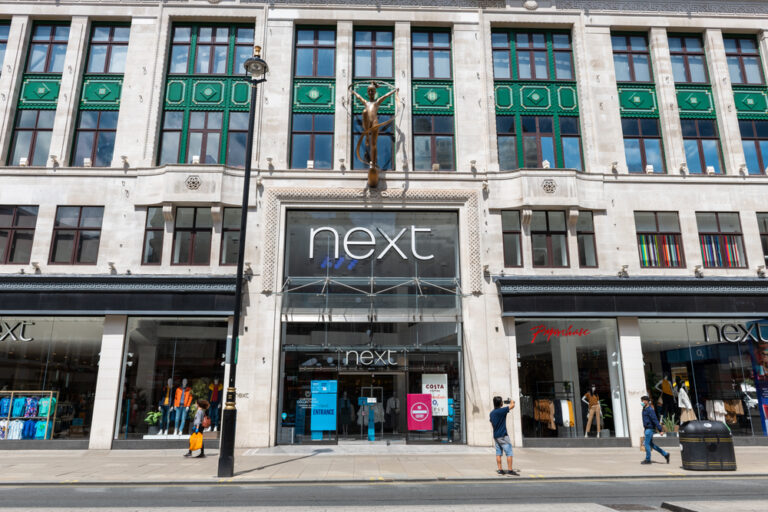
Next’s sales are defying gravity. Not only are the group fending off any concerns about the health of the consumer and the demise of the high street, they are set to produce record high sales in the 2024/2025 full year.

Strength in the group’s Next brand is being supplemented by growth in labels such as Reiss and Fatface, resulting in 8% group sales growth in Next’s first half to July 2024.

Next published what they called their most important report in years in March, outlining a detailed strategy for growth and identifying the strengths and opportunities for Next.

Steps included breaking down operating divisions to focus on areas of the business more granularly and focusing on the core of their business—fashion. The early results of this review were evident in today’s report with greater insight into how the different areas of the business are performing. And they’re all doing well.

Investors will be pleased to see Next is also expecting massive growth in its online business – an area it has struggled with in recent years.

“Next seems to be an unstoppable force this year, with shares up again this morning off the back of their latest update,” said Adam Vettese, market analyst at investment platform eToro.

“They have raised their guidance for the second time in as many months and projected profit for the year is just shy of £1billion. Given all of the inflation concerns the retail market has had to contend with, on top of the fact that out of the ordinary weather has affected clothing, the performance of Next is highly commendable.

“Investors will be hoping Next can keep up the momentum. Having already enjoyed a 25% gain this year alone, the question will be whether some profit taking kicks in. It seems as though this could have happened this morning with shares off their highs.”

Coral Products – From Their Current 9p These Shares Could Rapidly Rise As The Reorganisation Reaps Rewards 

On Tuesday of this week, 17th September, this £8m capitalised group announced an awful set of results for the year to end-April. 

Its shares, which were 13p at the beginning of this month, are now on their backside and looking friendless. 

However, I ask the question – are they too low not to be purchased? 

On the face of what I can see, at just 9p they look to be a cracking punt on the reorganisation, now underway, actually paying off in the next year or so. 

Coral Products (LON:CRU) is a Bulletin Board favourite and a ‘penny-stock’ to be followed. 

The Business 

The Wythenshawe, Manchester-based group has endured some real hassles over the last year or two, with not only its balance sheet being hit, but also its share price too. 

It now classes itself as a specialist plastic products design house, UK manufacturer and supplier of injection moulded plastic products.  

It provides customised, cost-efficient and sustainable solutions for the food packaging, personal care, household, transport and communications sectors. 

The 2024 Final Results reported group sales down to £31.0m (£35.2m), while adjusted pre-tax profits were slashed 65% to £0.8m (£2.3m), with basic earnings collapsing to 0.96p (2.60p) per share, and an interim dividend of 0.25p (1.1p) per share. 

Reorganisation 

The group appointed a new CEO, Lance Burn, at the start of this year, since when he has reorganised the group’s operations into two new divisions – Flexibles, and Rigids. 

It is hoped that these moves will progressively deliver performance and margin improvement through innovation, simplification and efficiency. 

It has also invested further in new machinery, re-tooling for future projects and re-configuring warehouse space to expand manufacturing capacity. 

Additionally, for £1.21m it has sold off some of its land and buildings in Runcorn, valued at £1.0m, and some properties in Haydock for £0.7m – with the overall purpose of reducing group borrowings. 

Latest Comments 

The group stated that its markets had continued to be challenging in the first four months of the year.  

Commenting that where there are pockets of recovery, they are in the lower margin channels leading to an overall negative margin mix. 

However, it declared that benefits from the investments made in new machinery in 2023 are expected to begin to flow into the business in the second half of this financial year. 

Chairman Jo Grimmond stated that: 

“These results reflect the more challenging trading environment which emerged in the second half of the financial year, which created caution amongst our customers and resulted in orders being deferred.  

In addition, we chose to divest of some £2.5m lower margin business lines as part of the overall reset of the Group.  

A key part of which has been to reorganise the business under two new Divisions, each business retaining a high degree of autonomy and entrepreneurialism and establishing our four strategic pillars of growth for the long-term. 

The current financial year continues with pockets of recovery in key markets, albeit leading to a less favourable product mix.  

The re-organisation has enabled more efficient use of the Group’s physical footprint, leading to recent asset sales which is adding to an already solid financial base, and this is reflected also in our decision to re-instate dividend payments.  

Being based in the UK and being adept at managing complexity well are key strengths for which Coral is known, and we are adding to this through technology.  

Last year, over £3m was invested in machinery and new manufacturing capabilities, the results of which are coming through and will help drive performance over the next 18 months.” 

Analyst View 

Edward Stacey at Cavendish Capital Markets has a Price Objective out on the group’s shares at 25.1p. 

He is estimating that the current year to end-April 2025 will show revenues of £33.0m (£31.0m), while adjusted pre-tax profits could rise by over 125% to £1.8m (£0.8m), more than doubling earnings to 1.7p (0.8p) per share, while maintain its 0.5p dividend. 

The analyst believes that the company has potential pathways to drive higher revenue growth and profitability in the medium-term.  

“We believe that the current share price does not reflect the medium-term upside potential for the business.” 

In My View 

With the shares on their backside, right now could be just the opportune moment to nip in and tuck some away and then wait patiently as the ‘magic’ of Lance Burns begins to show its magnificence. 

Getting in at 9p could quickly produce a uplift. 

Emerging markets: exploding the “risk” myth 

Gabriel Sacks, Co-Manager, abrdn Asia Focus plc 

Emerging markets (EMs) played a big part in my formative years. My mother is Brazilian. My father is South African. I was born in Brazil and raised in Rio de Janeiro and São Paulo. 

Later, when I began my investment career, South Africa was the first market for which I had responsibility for research coverage. Nowadays, further extending the theme, I invest in a region replete with EMs – Asia. 

Ask me to define an EM, though, and you might be disappointed by the vagueness of my response. To be honest, I doubt anyone could supply a truly comprehensive answer – less still a genuinely satisfactory one. 

The term “emerging market” was originally coined by the World Bank in the 1980s. It was offered as an alternative to its predecessor, “Third-World Equity Fund”, which was met with an understandably lukewarm reception. 

Today the World Bank no longer maintains an official list of EMs. Classification is instead the remit of the International Monetary Fund, a tiny number of academic institutions and, above all, several major index providers. 

The World Trade Organisation even lets its members self-identify as “developing” or “developed”. This merely adds to the confusion, as a result of which the question often becomes less a case of what an EM is and more a case of what it is not.  

For example, India is tipped to soon become the world’s third-largest economy, while China’s economic might is already second only to the US’s. So why do these countries remain categorised as EMs? 

One reason is that sizeable swaths of their populations still earn low incomes and have a poor standard of living. This means fully fledged status as a modern, industrial economy has yet to be achieved.  

There are many other considerations that might also be taken into account. They include quality of regulation and/or financial systems, market accessibility, rates of growth and even average life expectancy. 

Yet I wonder how many investors think the most significant characteristic of an EM is risk. Historically, investing in these economies has been seen as entailing more uncertainty than investing in developed markets (DMs). That being relatively less developed or industrialised, and sometimes with less stable governments, more volatile currencies and less established markets, always brings heightened investment risk. 

Does this view invariably hold true today? I would say not. The data from Asia strongly suggests investors should look beyond such clichés and recognise the potential benefits of diversification in all its forms. 

More performance, less volatility 

In identifying attractive businesses in Asia, we always search for quality. A company should have an effective operating model, a meaningful competitive edge, good management, a solid balance sheet and a firm grasp of sustainability and governance issues. 

It is wrong to suppose such businesses simply do not exist in EMs – or even that they are relatively scarce. They are there. The trick lies in finding them, which is why we believe it is extremely valuable to have a dedicated research team with an on-the-ground presence in the regions in which in invest. 

Many of the most promising companies lie towards the smaller end of the market-capitalisation spectrum. Again, though, this does not imply they are inherently riskier. 

It instead further underscores the value of having a team capable of unearthing hidden gems. It also highlights the importance of active management in supporting a positive trajectory over time. 

So how might a portfolio of such holdings perform? This is where the blurring of the lines between EMs and DMs – at least in investment terms – becomes strikingly apparent. 

Since 2000, according to Bloomberg data, Asian small-caps have comfortably outperformed DM large-caps. Specifically, the level of returns from the MSCI Asia ex Japan Small Cap Index during that period has been almost twice as high as that from the MSCI World Index. 

Of course, cynics might fall back on the time-honoured trope and say this difference can be ascribed to greater risk. Investors in Asian small-caps have just taken their chances and reaped the rewards, right? 

Not necessarily. Take, for instance, data that shows Asian small-caps have experienced notably less volatility than their DM counterparts over the past six years, with the MSCI Asia ex Japan Small Cap Index more settled than its UK, Europe and World peers. 

The fact is that every market involves risk – particularly in an era punctuated by geo-economic and geopolitical shocks. Look at the UK’s woes during the past few years. Remember the turmoil that surrounded Europe in the run-up to France’s recent snap election. Imagine what might have happened in the US if Donald Trump had not turned his head a split second before his would-be assassin opened fire.  

Ultimately, the key lesson for investors is that diversification across regions, market capitalisations, asset classes and individual stocks might be more prudent today than it has ever been. Diversification is how we spread and therefore aim to reduce risk. 

Debates over the deeply nuanced distinctions between EMs and DMs may continue to rage in perpetuity. But there should be precious little dispute – if any – about the likely advantages of locating opportunities right across the investment universe. 

Important information 

  • The value of investments, and the income from them, can go down as well as up and investors may get back less than the amount invested. 
  • Past performance is not a guide to future results. 
  • Emerging markets tend to be more volatile than mature markets and the value of your investment could move sharply up or down. 

Other important information: 

Issued by abrdn Fund Managers Limited, registered in England and Wales (740118) at 280 Bishopsgate, London EC2M 4AG. The company is authorised and regulated by the Financial Conduct Authority in the UK. 

Find out more at http://www.asia-focus.co.uk/en-gb or by registering for updates. You can also follow us on X and LinkedIn

Ocado Retail upgrades revenue guidance as sales jump

Ocado Retail has announced a significant upgrade to its revenue guidance for the fiscal year 2024 after a bumper period of trading for its joint venture with Marks & Spencer.

Ocado has revised its previous projection of mid-to-high single-digit revenue growth to a low double-digit percentage increase. This upward adjustment follows an impressive third-quarter performance, in which retail revenue surged by 15.5% to reach £658 million. Profit guidance remains unchanged.

The decision to raise revenue guidance is underpinned by Ocado’s remarkable streak as the UK’s fastest-growing grocer for seven consecutive months. Investors have dumped Ocado’s stock this year on concerns about the technology side of the business, but the retail run should be something to take some encouragement from.

Ocado’s pricing mix has helped support sales and grow average weekly orders. Total items sold increased 15.4% year-on-year, and average weekly orders rose 14.7%, reaching 437,000. Ocado’s active customer base expanded 10.3% year-on-year to 1.06 million.

Ocado has managed to maintain a broadly flat average basket value of £120.97.

“Our strategy remains focused on giving our customers unbeatable choice, unrivalled service and reassuringly good value. We’re seeing the momentum of this, with more customers shopping with us more often, getting even better service at better value,” said Hannah Gibson, Ocado Retail’s Chief Executive Officer.

“We know what our customers love, and we’re focused on our proposition every day. This includes our widest ever choice including more M&S food, more convenience with better availability of delivery slots and products, further improving our high perfect order rate and better value for money through our Ocado Price Promise and our latest Big Price Drop.

“We’re pleased with the progress we’re making and excited about how much more there is to deliver.”

AIM movers: Ingenta delays and Christie Group loses mandate

12

Arkle Resources (LON: ARK) says that sampling has started in the Makgadikgadi Salt Pans in Botswana. There is potential lithium bearing brine below the crust. Initial sampling will take two weeks. In Zimbabwe, Arkle Resources is seeking traces of spodumene or lepidolite rock. The share price rose 11.1% to 0.25p.

Sovereign Metals (LON: SVML) says a spiral concentrator plant has been installed at the Kasiya project in Malawi. This has a capacity of three tonnes per hour and will produce graphite. The main focus of the project is rutile. Both minerals are visible at surface. The share price improved 6.56% to 32.5p.

Global Petroleum (LON: GBP) has appointed Omar Alumad, who the company says has a record of identifying early opportunities, as chief executive and Hamza Choudhry as finance director. The share price increased 5.88% to 0.09p.

Ascent Resources (LON: AST) has raised £763,000 at 2.3p/share – the same as the April placing price. The share price is 5.88% higher at 1.8p, although it was 1.9p earlier. Investment vehicle CB Energy VI has subscribed for the shares. Substantial shareholder MBD Partners will receive an introducers fee of $25,000.

FALLERS

Publishing technology provider Ingenta (LON: ING) increased income from the content division, but the commercial division revenues were down by one-fifth due to customers taking longer to convert interest into sales. Overall revenues were 12% lower at £5.1m, while pre-tax profit halved. Cavendish forecasts revenues will be 7% lower than previously expected, despite two new content contracts, and the pre-tax profit forecast has been cut slightly more to £1.6m, which is below the levels in 2022 and 2023. The share price slumped 21.6% to 92.5p.

Jade Road Investments (LON: JADE) has constituted up to £1m of principal value convertible loan notes lasting 10 months. There is no interest charge, and the conversion price is a 30% discount to the lowest closing bid price in the 30 days prior to conversion. Jade Road Investments has issued £80,000 of convertibles to strategic partner MBM. The share price declined 15.4% to 0.55p.

Shore Capital has downgraded its full year expectations for Christie Group (LON: CTG) following a trading statement by the professional services company. Revenues will be near to previous expectations, but a pre-tax profit of £1.6m has been recalculated as a loss of £600,000 even after a lower estimate for incentivised pay. This is due to one major disposal mandate not going ahead. There was also weaker trading in other activities. The interims will be published on 30 September. The share price slipped 11.45 to 97.5p.

Delayed projects by aerospace clients due to supply issues have hit demand for Velocity Composites (LON: VEL). The Airbus A350 production has not accelerated as expected. These are all outside factors. The outsourced composite aerospace components supplier was expected to breakeven this year, but a loss of £1.5m is likely. Breakeven has been delayed until next year. The share price fell 7.95% to 40.5p.

FTSE 100 slips as interest rate concerns creep in

The FTSE 100 was in the red on Wednesday as interest rate concerns crept into markets ahead of the Federal Reserve’s interest rates decision tonight and the Bank of England’s tomorrow.

Markets seemed immune to interest rate worries earlier in the week, but a mixed UK inflation report released on Wednesday sparked a wave of selling in early trade.

“The optimism which had been simmering on financial markets is coming off the boil ahead of crunch interest rate decisions,” said Susannah Streeter, head of money and markets, Hargreaves Lansdown.

“While inflation in the UK is unchanged at 2.2%, a rise in services inflation mainly due to a big leap in airfare costs is likely to keep policymakers more reticent about reducing rates again on Thursday. The FTSE 100 has fallen back slightly in early trade as uncertainty surrounds central bank policy.”

Investors will also have one eye on the Fed and the extent they cut later today. The Federal Reserve is widely predicted to cut interest rates later. However, the big question is whether they cut by 25bps or 50bps and risk unnerving markets with a negative market assessment.

“Traders have priced in a 61% chance of the Fed cutting US rates by half a percentage point today,” said Russ Mould, investment director at AJ Bell.

“That feels like a step too far as the Fed might want to start the rate cut journey slow and steady, rather than going in headfirst with a big cut as that might send negative signals to the market that it is really worried about the state of the economy.”

Legal & General

Legal & General shares were under pressure on Wednesday after the group announced it was disposing of UK house builder CALA Group as part of their capital allocation plans. L&G’s capital allocation strategy didn’t go down well with investors when it was announced earlier this year, and its latest move hasn’t either. Shares were down 1.9%.

“Legal & General was among the top fallers on the FTSE 100 after announcing the sale of its housebuilding business, Cala. Investors might be disappointed that it isn’t getting the full £1.16 billion cash up front. Just over half the money will be paid over a five-year period,” Russ Mould said.

“Legal & General’s shares have been weak since its strategy update in June. Therefore, it’s not a surprise to see the company imply it might use some of the sale proceeds to fund share buybacks as it needs to deliver some more positive news to win back the market’s favour.”

An upgrade to ‘buy’ from Goldman Sachs analysts helped IHG to the top of the leaderboard with a 2% gain.

Tekcapital announces plans to IPO Generative AI pure play GenIP

Tekcapital shares gained on Wednesday after it announced plans to list its Generative AI portfolio company GenIP on AIM and provide UK-focused investors with the opportunity to gain exposure to a pure play in the rapidly expanding artificial intelligence market.

In a surprise announcement released on Wednesday, Tekcapital CEO Cliff Gross said, “We are excited to announce the forthcoming IPO of GenIP plc. A product of Tekcapital’s technology incubator, GenIP’s Invention Evaluator and Vortechs have been instrumental in commercialising numerous technological innovations, allowing them to develop from a clean piece of paper to operating companies and listed spinouts.”

Investors were evidently encouraged by the news, with Tekcapital shares jumping 10% in the early minutes of trade.

Tekcapital had previously announced plans to launch a Generative AI company. However, shareholders will note that with GenIP, Tekcapital has broken with its traditional model of forming technology companies as private entities and providing growth capital before listing them.

Tekcapital has decided the best approach is to offer GenIP to public markets as soon as possible and provide investors with the opportunity to take a stake in the company in the very early stage of it’s growth story.

Despite only launching its Generative AI services recently, GenIP has won over 40 orders for its AI-powered analytical assessments, which help research organisations judge the commercial viability of new technologies.

According to GenIP’s website, their clients include leading institutions such as Brazil’s National Nuclear Energy Commission CNEN, Fundación Copec UC, and the University of Huddersfield.

“We believe that GenIP’s unique business model offers investors a valuable opportunity to engage with the rapidly expanding Generative AI analytics market and the research institutions and technology companies that fuel much of the world’s innovation,” said Melissa Cruz, CEO of GenIP.

GenIP will be Tekcapital’s second IPO of 2024 after the company listed MicroSalt in February. MicroSalt shares tripled within six months of listing before falling back.