Persimmon shares rise on upbeat trading statement

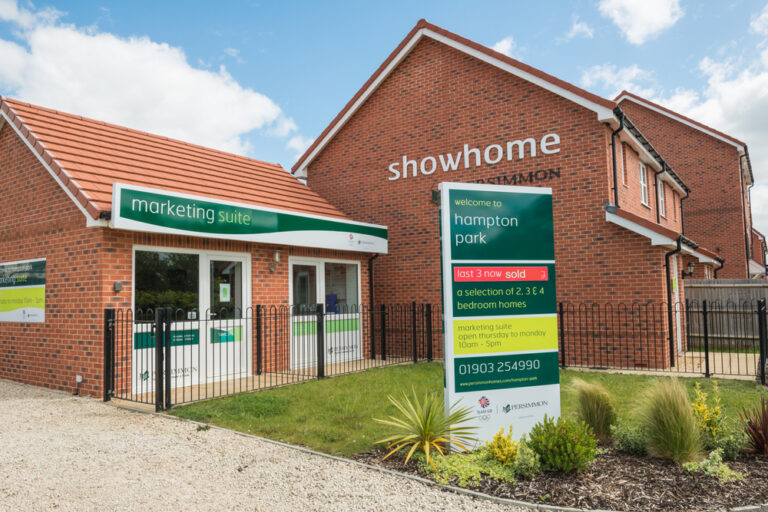
Persimmon has reported a solid start to 2026, with private forward sales up 7% to £1.80bn and an improved sales rate carrying momentum from a strong 2025 into the new year.

After a string of disappointing housebuilder updates in recent week, expectations would have been low going into Persimmon’s update. But shareholders have been pleasantly surprised.

Net private sales per outlet per week rose 3% to 0.76 (or 0.67 excluding bulk sales), while average outlets nudged up 2% to 273 as the housebuilder pushes towards its target of operating from at least 300.

Total forward sales, including year-to-date legal completions, climbed 5% to £2.46bn, with the private average selling price up 5% to around £306,900 and total incentives holding steady at 4-5%.

Chief Executive Dean Finch said the business had started the year well, supported by an improved private sales rate and rising prices.

The conflict in Iran has not had any material impact on trading to date, although management is keeping a close eye on consumer confidence and there are early signs of supply chain inflation, particularly from higher energy costs, which are likely to feed through in H2 2026 and into 2027.

Mark Crouch, market analyst for eToro, says: “Persimmon’s update suggests a housing market that, for now, is holding firm, but the bigger picture for UK housebuilders is rapidly darkening. Persimmon’s numbers look solid enough, forward sales up, pricing holding firm, and volumes broadly in line with expectations.”

“But scratch beneath the surface, and storm clouds are gathering quickly. The war in Iran has sent energy prices sharply higher, feeding directly into inflation and pushing mortgage rates back up just as hopes of rate cuts were building. When it rains, it pours, and housebuilders sit squarely in the crosshairs of rising costs and weakening affordability.”

Persimmon shares were 2% higher at the time of writing on Thursday.

Image Scan shares surge after swinging back to profit

Image Scan shares surged on Thursday after the imaging firm reported a swing to profit in its half-year period to March 2026.

The provider of portable X-ray systems for security reported a sharp turnaround in its half-year results to 31 March 2026, with revenue jumping to £1.32m from just £350k in the same period last year as trading conditions normalised and opportunities cultivated during FY25 converted into sales.

Gross profit more than tripled to £679k from £205k, although the percentage margin slipped on a change in product mix. Cost discipline kept operating expenses largely in check at £608k (down from £630k), driving a pre-tax profit of £75k, compared with a £422k loss a year earlier.

This was welcome news for investors, and shares jumped 35%.

The balance sheet is in noticeably better shape, with cash up 86% to £955k and no debt, while the order book grew 44% to £1.27m, providing a more solid platform heading into the second half.

If the moment continues, Image Scan’s current market cap of £3m could start to look cheap.

The period was not without setbacks. The UK defence programme subcontracted via NP Aerospace was terminated for convenience by the end customer in February, a disappointing development, although not performance-related. Stripping that out, the underlying order book and pipeline have continued to strengthen, with growing traction for higher-specification solutions in the ThreatScan AS range.

Rolls-Royce has strong start to 2026 with all three divisions firing

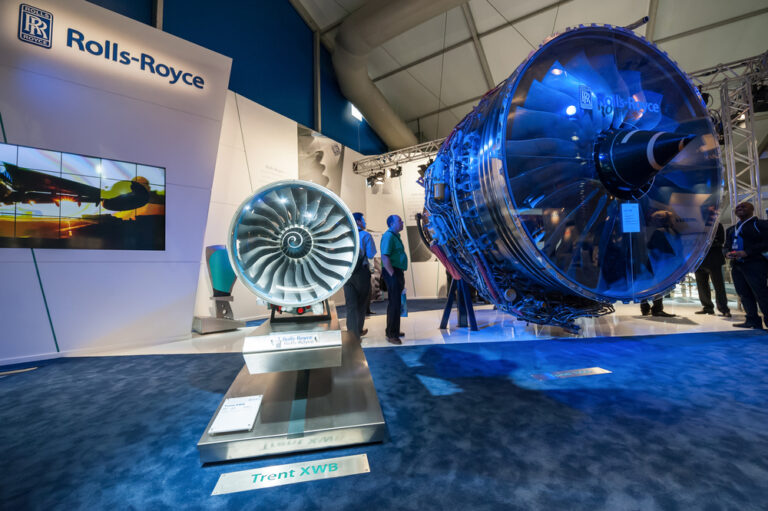
Rolls-Royce has reported a strong start to 2026 across all three divisions, reaffirming its guidance for £4.0bn-£4.2bn of underlying operating profit and £3.6bn-£3.8bn of free cash flow, despite headwinds from the Middle East conflict.

Given the disruption the Middle East conflict has caused to air travel and the global economy generally, investors should be happy with today’s update from Rolls-Royce.

“We have had a strong start to the year driven by our transformation and self-help, as we continue to further expand the earnings, cash, and growth potential of the business,” said Chief Executive, Tufan Erginbilgic.

In Civil Aerospace, large engine flying hours grew 5% to 115% of 2019 pre-pandemic levels in Q1, with the group sticking to its full-year range of 115%-120%.

Encouragingly, Trent XWB flying hours among Middle Eastern airlines have fully recovered to pre-conflict levels, while growth elsewhere remains robust as capacity gets reallocated and operational performance improves.

Large-engine deliveries jumped 18% in the quarter, and shop visits rose 12%, with the total-service model giving management visibility to keep the shop-visit profile steady through 2026 and 2027.

Defence also had a good start to the year, with deliveries up more than 20% year-on-year as governments worldwide continue to ramp up spending amid escalating global conflicts.

Recent wins included EJ200 engines for Türkiye’s 20 new Eurofighter Typhoons via the EUROJET consortium and the selection of the MT30 marine gas turbine for up to 11 Australian Navy frigates. The first flight of the U.S. Navy’s MQ-25 autonomous refueller, powered by Rolls’ AE 3007 engine, highlights the group’s position in next-generation propulsion.

But Power Systems is arguably the standout growth story, especially on a percentage basis and what it could mean for the business in the future.

Power generation order intake in gas and diesel engines was around 50% higher year-on-year, led by data centres and governmental demand, with March a record month for orders and the backlog standing at £7.3bn at the end of Q1.

The SMR business has also moved into the execution phase, with contracts signed for three small modular reactors at Anglesey in Wales and with ČEZ, for the first of up to six units at Temelin in the Czech Republic, commercial terms agreed.

Rolls-Royce shares were 3% higher at the time of writing.

Alphabet smashes Q1 expectations as Cloud accelerates and Search powers on

Google-owner Alphabet shares soared in the US premarket on Thursday after the company announced strong Q1 results, driven by AI cloud demand.

Alphabet has delivered a stellar first quarter, with consolidated revenues up 22% (or 19% in constant currency) to $109.9 billion, marking the group’s 11th consecutive quarter of double-digit growth and signalling broad-based momentum across the business.

Google Cloud was the standout, with revenues accelerating 63% to $20 billion as enterprise demand for AI Solutions, AI Infrastructure and core Google Cloud Platform services continues to gather pace.

The scale of that step-up will reinforce the bull case that Alphabet is carving out a credible position in the AI infrastructure race. As well as having one of the strongest LLM offerings with Gemini.

Google Services revenues climbed 16% to $89.6 billion, with Search & other up 19%, subscriptions, platforms and devices also up 19%, and YouTube ads adding a respectable 11%.

Strong showing across the core advertising engine and growing subscription stack suggests the AI shift is, so far, proving additive rather than disruptive.

“Alphabet looks every inch the market darling right now, and investors are rewarding a business that is delivering on both sides of the AI debate: cloud is accelerating hard, while Search is proving far more resilient than many feared,” said Matt Britzman, senior equity analyst, Hargreaves Lansdown.

“It is almost hard to believe that a year ago, Alphabet was being written off by parts of the market as an AI loser, because today it arguably wears the crown as the strongest full-stack AI option in mega-cap tech, with chips, models, cloud infrastructure, consumer reach and advertising all pulling in the same direction. The biggest fear was that AI would disrupt Google Search, but the proof is in the pudding. Search growth has stepped up meaningfully, and investors have flipped the script, from Search as the business most at risk from AI, to one of the clearest beneficiaries.”

AIM movers: ITM Power upgraded and Warpaint London expected to rebound this year

3

Morgan Stanley has raised its recommendation for ITM Power (LON: ITM) to overweight and has a target share price of 170p. The share price rose 13.25 to 146.75p.

Shares in Xeros Technology (LON: XSG) bounced back following yesterday’s results. The sustainable laundry technology developer expects a sharp rise in revenues this year, albeit from a low base. There is cash in the bank and that will last well into 2027. The royalty levels earned this year will depend on how well the launches of new washing machine filter products go. The share price rebounded 11.5% to 1.7p.

A first quarter update from Thor Energy (LON: THR) highlights the move to focus on hydrogen and helium in Australia. The results of a soil-air geochemistry survey will be reported in the next few weeks. A 2D seismic survey will help to target drilling. Cash is A$3.3m. The share price improved 8.33% to 0.65p.

Digital health company MedPal AI (LON: MPAL) has acquired the Remedi Solutions pharmacy facility in Runcorn from administrators for £310,000. Historical annualised turnover was previously around £10m. MedPal has been operating the pharmacy ahead of approval for the transfer of ownership to the company. The share price increased 4% to 2.6p.

FALLERS

Sexual dysfunction treatments developer Futura Medical (LON: FUM) is putting its new strategy into force by cutting costs and focusing on a more commercial approach. Female sexual dysfunction treatment WSD4000 has significant potential, and a phase 3 trial could start before the end of the year. Potential partners are in talks with the company. There was £3.4m in the bank at the end of 2025 and this should last until June. The previously highlighted milestone payment from Haleon for achieving the Eroxon patent in the US has still to be paid, but management is confident that it has been triggered. This cash should come in before June and would last until the end of the year. Alternative funding options are being assessed just in case the Haleon payment is not made before June. The share price slipped 32.85 to 0.874p.

Promotional retailer SpaceandPeople (LON: SAL) grew 2025 revenues one-fifth to £8m, while pre-tax profit improved from £225,000 to £491,000, which was in line with forecasts. Event driven retail promotions are doing well in a period of weak consumer confidence. Pre-tax profit is expected to rise to £750,000 this year and net cash should be maintained at around £1.6m. Even so, the share price declined 13.2% to 165p.

Compliance software provider Skillcast (LON: SKL) increased annualised recurring revenues by 19% to £13.8m last year. In 2025, revenues were 18% ahead at £15.3m, while pre-tax profit rose from £600,000 to £1.7m. A further rise to £2.2m is forecast for 2026. The share price continued its recent downward momentum and is 8.35% lower at 47.2p.

Cosmetics supplier Warpaint London (LON: W7L) was hit by US tariffs and weak consumer confidence in 2025 and this continued into early 2026. Full year revenues edged up from £101.6m to £105m, but it would have been lower without the brands acquired last year. Gross margin improved, but pre-tax profit dipped from £24.6m to £19.2m. It could rebound to more than £20m this year, but it is still early in the year. This year will be more second half weighted with a much larger Christmas order from Walmart. The share price fell 6.67% to 175p.

FTSE 100 falls ahead of Fed meeting with Brent at $114

The FTSE 100 fell on Wednesday as traders reduced their risk exposure ahead of a string of central bank meetings this week, as Brent oil prices rose to $114.

London’s leading index was trading down 0.6% at the time of writing. 

Although the FTSE 100 and global equities indices have generally displayed a degree of resilience in the face of inflationary pressures and possible interest rate cuts, cracks are starting to appear.

No one really wants to be long stocks if the Federal Reserve or the Bank of England make hawkish statements this week, and the declines in equities we’re seeing are traders reducing their exposure ahead of the key meetings.

The Federal Reserve will announce its rate decision, followed by a press conference this evening. It will be the turn of the Bank of England tomorrow. 

For now, rising oil prices are enough to unnerve investors worried about the extent of possible interest rate hikes.

“Despite a decent showing from Asian markets, Europe was on the back foot as yesterday’s dip in oil prices reversed, reminding investors that inflation risks are still elevated,” says Dan Coatsworth, head of markets at AJ Bell.

FTSE 100 movers

AstraZeneca dragged on the FTSE 100, falling 1.4% despite beating Q1 earnings estimates.

Adam Vettese, market analyst for eToro, explained: “AstraZeneca has delivered an impressive set of Q1 results this morning, comfortably beating expectations on revenue and core earnings while fully reaffirming its full year guidance. Group revenue rose 8% at constant exchange rates to $15.3 billion, with core EPS increasing 5% to $2.58.

Polar Capital Technology Trust was among the gainers on Wednesday after a strong couple of sessions for US tech shares. Polar Capital Technology Trust is arguably the premier large-cap option for UK investors seeking exposure to the AI story, with holdings in Nvidia, Alphabet, Broadcom, and TSMC. Shares in the investment trust were 1% higher on Wednesday and have added around 30% from March lows, with momentum firmly on its side.

Lloyds shares were down 1% after the bank reported a 33% increase in underlying profits, driven by higher net interest margins. Guidance was reiterated, leaving little reason for shares to move in either direction.

“There are still areas to watch, particularly impairments and the wider impact of a weaker UK consumer backdrop, but this was a solid update overall,” said Matt Britzman, senior equity analyst, Hargreaves Lansdown.

“Lloyds looks to be entering the rest of the year with momentum, a strong capital position, and profit metrics running ahead of its own targets.”

Next, Persimmon, Land Securities, and Burberry were among the fallers as interest rate-sensitive stocks were hit. 

It was a good day for DCC, gaining 15% after confirming an all-cash takeover offer from KKR. It will be another kick in the teeth for London if DCC is the next high-quality FTSE 100 company to be taken private by US private equity.

Cindrigo shares surge on £11m funding package and biomass JV

Cindrigo Holdings shares surged on Wednesday after announcing it has secured funding from a strategic investor group worth more than £11 million in combined investment and guarantees, alongside the launch of an integrated wood pellet joint venture that promises to broaden the group’s revenue base and tighten its vertical integration in Finland.

It’s been a long road for Cindrigo, but they finally look to be making some headway.

Investors will pump approximately £6.7 million of equity into Cindrigo at 12p per share, a notable premium to recent trading levels, and inject a further €3 million into newly formed Fuelwood Finland Oy.

The extent of the premium Cindrigo secured the investment has played a big part in shares surging 65% higher to 6.5p on Wednesday.

A further £2 million has been committed to provide additional capital if warrants aren’t exercised.

Fuelwood, which Cindrigo will initially own 20% of with the right to move to a majority position over time, will be jointly capitalised with around €4 million via three-year development loans at 9% interest.

That funding is sufficient to deliver an initial production capacity of 80,000 tonnes per annum by the end of 2026, with a long-term target of around 400,000 tpa, implying revenue potential of roughly €20 million in the near term and circa €100 million at full scale based on recent wood pellet prices.

Crucially for the group’s existing assets, Fuelwood is expected to become the primary customer of energy from Cindrigo’s Finnish heat-generating business, reducing reliance on a single third-party off-taker and unlocking operational, cost and commercial synergies across industrial heat, pellet and power sales.

Cindrigo will also pocket near-term income through a Management Services Agreement with the JV, generating €75,000 per month during 2026 and an estimated €1 million of revenue in the year.

Lars Guldstrand, CEO of Cindrigo, said: “This announcement marks the transition from strategic intent to execution of both a funding and strategic partnership to support the Group’s expansion. The combined investment into Cindrigo and the Fuelwood joint venture provides a strong foundation for the Company’s continued development and our integrated sustainable biomass platform. The funds will enable us to commence pellet production while supporting the ramp-up of our energy operations in Finland.

“Fuelwood is a key component of our biomass strategy, linking sustainable pellet production with heat, steam and power generation. This integrated structure provides an opportunity to broaden our market reach, diversifying revenue streams and increasing our ownership over time. The Management Services Agreement provides operating control and recurring service income, while allowing us to align production and energy demand from the outset.”

Lloyds posts 33% jump in pre-tax profit as income growth accelerates

Lloyds Banking Group has delivered a strong start to 2026, with statutory pre-tax profit surging 33% to £2.0bn in the first quarter as rising net interest income and growing fee revenues more than offset a cautious economic backdrop.

The higher-interest-rate environment and relatively stable economic backdrop are playing into Lloyds’ hands, boosting its earnings.

Underlying net interest income climbed 8% year-on-year to £3.6bn, driven by a banking net interest margin of 3.17%, up 14 basis points on the prior year and 7 basis points on the fourth quarter.

The improvement reflects the growing contribution from the structural hedge, where income rose to £1.6bn from £1.2bn a year earlier as balances were reinvested at higher rates.

The notional hedge balance now stands at £246bn, and management expects hedge earnings to exceed £7.0bn this year and £8.0bn in 2027.

Lending growth was broad-based and played a big part in profit growth. Underlying loans and advances rose 4% year-on-year to £486.2bn, with UK mortgages adding £1.6bn in the quarter despite significant maturities, credit cards up 11%, unsecured loans up 15% and Corporate and Institutional Banking growing 10%. Average interest-earning banking assets reached £473.5bn, up 4%.

“Lloyds’ first-quarter update had a lot for investors to like, with the bank beating profit expectations while keeping its full-year targets firmly intact. Performance was helped by the structural hedge and steady lending momentum, while costs are being kept under control, and credit quality still looks resilient,” said Matt Britzman, senior equity analyst, Hargreaves Lansdown.

Augmenting the impact of higher income, costs fell 3% to £2.5bn as savings programmes and lower severance expenses outweighed inflationary pressures and the addition of the wealth business.

Credit quality remained benign. The impairment charge of £295m equated to an asset quality ratio of 25 basis points, though within that sat a £151m hit from deteriorating economic scenarios linked to the Middle East conflict.

Return on tangible equity hit 17.0%, up from 12.6% a year ago, while tangible net assets per share rose to 57.9p. The CET1 ratio stood at 13.4% after the dividend accrual, with the group on track to pay down to its target of around 13.0% by year end.

Lloyds also reiterated its full 2026 guidance saying underlying net interest income now expected to be greater than £14.9bn, cost-to-income ratio below 50%, asset quality ratio of around 25 basis points, return on tangible equity above 16%, and capital generation exceeding 200 basis points.

Matt Britzman said: “The most important message is that guidance has been largely reiterated, with net interest income expectations nudged a touch higher. That suggests management still sees enough support from higher-for-longer rates to offset pressure elsewhere, including competitive mortgage pricing and a softer economic outlook.”

The share buyback announced in January is well underway, with roughly 600 million shares repurchased at a cost of £700m and an average price of 97.7p by the end of March.

The drop in Lloyds shares on Wednesday is likely a reflection of a broader market decline rather than any real disappointment with Lloyds’ update.

Döhler swoops on Treatt with recommended 305p cash offer

Treatt has agreed a recommended cash takeover by Germany’s Döhler Group SE, in a deal that values the natural extracts specialist at around £183 million.

Under the terms, Treatt shareholders will receive 305p in cash for each share, alongside the previously announced final dividend of 3p per share for the year ended 30 September 2025, payable on 13 May.

The offer represents a 48% premium to Treatt’s closing price of 206 pence on 28 April, the last business day before the announcement.

It also comes in 17% above Natara’s original September 2025 cash offer and 5% above Natara’s increased bid in October. Natara originally offered 260p in September, then bumped their bid to 290p.

But Natara’s final bid wasn’t quite enough and Treatt held out for today’s 305p approach.

Treatt shares have underperformed in recent years, and Döhler, already Treatt’s largest shareholder, argues that public markets are unlikely to support Treatt’s strategy, adding that private ownership would provide the company with the platform for growth.

The German group points to highly complementary portfolios, Treatt’s strategically attractive US production footprint, and immediate cross-selling opportunities across geographies and strategic accounts as the key prizes from a tie-up.

Sadly, Treatt is one in a long line of companies leaving London’s public markets, unable to support their valuations or growth ambitions.

Jet2 delivers in line with expectations as Gatwick launch adds growth runway

Jet2 expects to report operating profit of between £435m and £440m for the year to March 2026, in line with market expectations and only slightly below last year’s £446.5m.

This can be seen as a solid result given £11m of startup costs associated with the launch of its new London Gatwick base.

The Gatwick operation commenced on 26 March, taking Jet2 to the UK’s largest holiday airport for the first time and putting over 90% of the British public within a 90-minute drive of one of its now 14 UK bases.

The balance sheet remains strong. Total cash stood at £3.3bn at the year end, with net cash of £2.0bn and a further £500m available through an undrawn revolving credit facility. The group returned £363m to shareholders during the year.

Turning attention to the rest of this year, on-sale capacity for summer 2026 is 7.7% higher at 19.9 million seats, with booked passengers up 6.2% across both package holidays and flight-only.

However, customers have been waiting to book until just before departure since the onset of the Middle East conflict, and management said geopolitical uncertainty is limiting visibility into the peak summer season and beyond. Q1 load factor is currently tracking in line with the prior year.

Investors should be pleased to hear that Jet2 has locked in a strong hedged position, with 87% of its summer fuel requirement covered at an average swap price of $707 per metric tonne, providing a high degree of cost certainty.

Steve Heapy, Chief Executive Officer, said: “FY26 was another strong year for Jet2, topped off by the successful launch of operations at London Gatwick which is performing ahead of our initial expectations with over 0.4m passengers booked for the summer season. As ever, our focus on providing the very best Customer First service underpinned our performance in the year, and with that, I would like to thank every one of our Colleagues for their unwavering hard work and support.

“Our fully integrated, customer-focused and service-led business model enables growth and resilience, setting the business apart when it comes to earning customer loyalty and repeat bookings. This is supported by our growing fleet of more fuel efficient and quieter A321neo aircraft, with 31 in operation this summer.”