Next shares surge higher as Q2 sales smash estimates

Next shares soared on Thursday after the retailer revealed stronger-than-expected performance despite tough comparables after strong summer trading last year.

Next is the gift that keeps on giving to investors. The company reported a 3.2% increase in full price sales compared to the same period last year, surpassing its own forecast by £42 million.

“Next has a reputation for under-promising and over-delivering and it’s delivered the goods once again. The retailer had low expectations for summer 2024 as beating last year’s strong performance was always going to be a tough challenge,” said Russ Mould, investment director at AJ Bell.

“While the first half of 2024 has been truly miserable for the UK retail sector thanks to unfavourable weather, the end of June perked up and much of July has had glorious sunshine. That’s encouraged people to get out of the house and into the shops.

“Next has once again grabbed a slice of consumer spending, helping to make up for a challenging time earlier this year.”

Next shares were 8.28% higher at the time of writing.

For the first half of 2024, NEXT’s full price sales grew by 4.4%, significantly outperforming the company’s initial guidance of 2.5%. Total Group sales, which include markdown sales, subsidiaries, and investments, saw an even more robust increase of 8.0% in the same period.

In response to these positive results, NEXT has raised its full-year profit guidance by £20 million to £980 million, representing a 6.7% increase compared to the previous year.

The company’s online division performed particularly well, with overseas online sales showing impressive growth of 21.9% in the second quarter. However, retail sales experienced a decline of 4.7% in the same period, reflecting the ongoing shift in consumer shopping habits towards digital channels.

Next’s financial services arm also contributed positively, with finance interest income growing by 3.3% in the second quarter and 4.9% in the first half of the year.

For the full year 2024/25, Next forecasts total Group sales, including markdown, subsidiaries, and investments, to reach £6.2 billion, representing a 6.0% increase from the previous year. The company expects its pre-tax earnings per share to grow by 8.1% to 818.8p.

These projections reflect Next’s strategic acquisitions, including the purchase of 97% of FatFace in October 2023 and an increased stake in Reiss from 51% to 72% in September 2023. These moves have contributed to the company’s overall growth trajectory and diversified its portfolio.

Shell shares rise as profits soften, but cash generation improves

Shell has released its financial results for the second quarter of 2024, beating earnings estimates and announcing a fresh buyback.

The company reported lower income attributable to shareholders compared to the first quarter of 2024, primarily due to reduced LNG trading and optimisation margins, lower refining margins, and decreased margins from crude and oil products trading and optimisation.

However, earnings hit $6.3 billion, surpassing estimates of $5.9 billion.

Shell shares were 1.50% higher at the time of writing.

In terms of shareholder distributions, distributed a total of $6.1 billion to shareholders in the quarter, comprising $4.0 billion in share repurchases and $2.2 billion in cash dividends. Shell has announced a further share buyback programme of $3.5 billion, expected to be completed by the third quarter 2024 results announcement.

The company’s net debt position improved, decreasing to $38.3 billion at the end of the second quarter, down from $40.5 billion at the end of the first quarter. This reduction in debt contributed to a lower gearing ratio of 17.0%, compared to 17.7% in the previous quarter.

Although there may be concerns about mixed income and earnings compared to prior quarters, investors will be encouraged by the fact Shell remains a generating machine with free cash flow increasing to $10.1 billion.

“Shell’s earnings took a dive from the levels seen in the first quarter, but once again beat expectations. Lower margins in trading, refining and oil products compounded a small dip in production due to maintenance at its fields,” said Derren Nathan, head of equity research, Hargreaves Lansdown.

“But the lifeblood of the business, free cash flow, actually increased marginally to $10.2bn. That’s given management the confidence to plough another $3.5bn into buybacks, maintaining the quarterly run-rate. It’s also supporting investment into Liquified Natural Gas projects in Abu Dhabi and Trinidad and Tobago, and the Atapu-2 deepwater project in Brazil. Meanwhile, it’s taken another chunk out of net debt which now stands at $38.3bn.”

“Mentions of new investments in new energy were conspicuous by their absence which may disappoint investors looking at Shell’s future beyond fossil fuels. The pause on construction at its proposed biofuels facility in the Netherlands contributed to a $2bn impairment to the value of its assets. However, its carbon capture at the Scotford refinery in Canada may go some way to appease environmentalists. For now, financial returns are front and centre of Wael Sawan’s mind, but that does leave Shell well placed to invest in the transition projects that are financially viable.”

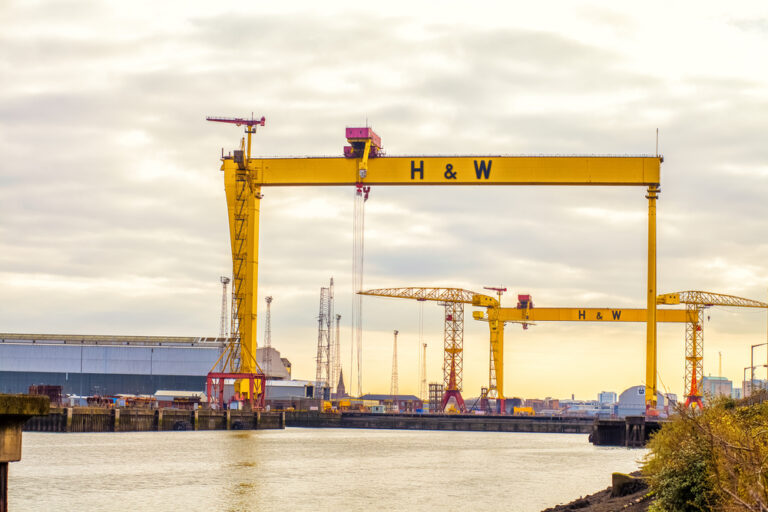
Harland & Wolff Group Holdings – Calling In Rothschild For Strategic Options After Gaining $25m Additional Facility

The financially troubled ‘strategic infrastructure projects’ group has announced that it has been awarded an additional $25m funding facility.

That now takes its total commitment up to $140m under that facility.

It has also taken a number of corporate decisions to help to stabilise its operations.

The group announced that it is immediately ceasing the operation of all of its passenger services between the Isles of Scilly and Penzance, reducing its services to those just based out of its Appledore, Arnish, Methil and Belfast delivery centres.

Additionally, the group will not be proceeding with its ‘fast ferry service’ with the fast ferry expected to be out for disposal.

Importantly, it is noted that the company has formally engaged Rothschild & Co as financial adviser to assess strategic options for the group.

Embattled Chairman Malcolm Groat stated that:

“We are grateful to our lenders in continuing their funding commitment to support Harland & Wolff Group’s ongoing stabilisation and long-term strategy objectives.

We also look forward to working with the very experienced team from Rothschild & Co to help us achieve that objective.

It is regrettable that we have taken the tough decision to terminate the fast ferry, but we need to focus our energies and resources in continuing to grow the core business across our four delivery centres.

This decision aligns with and brings us back to our fundamental five markets and six services strategy.

Our ferry service team will be working closely with passengers and other counterparties to ensure a smooth transition out of this business.”

The group’s shares are currently trading at around the 8p level, at which the group is capitalised at £14.7m.

Rolls Royce shareholder distributions to be reinstated as profits soar

British engineering giant Rolls-Royce has posted strong financial results for the first half of 2024, overcoming ongoing supply chain difficulties to significantly boost its profits and raise its full-year guidance.

Investors can now also look forward to distributions for the full year as the company reinstates payouts.

Underlying operating profit skyrocketed to £1.1 billion, a staggering 74% increase compared to the same period last year. Increased profitability saw underlying margin up by 4.4% to 14.0%. These figures reflect the early success of Rolls-Royce’s transformation programme and strategic initiatives designed to streamline the business.

Rolls Royce has been one of the best-performing FTSE 100 stocks since the pandemic, and today’s results are a validation of the sharp rally.

“Our transformation of Rolls-Royce into a high-performing, competitive, resilient, and growing business is proceeding with pace and intensity. We are expanding the earnings and cash potential of the business in a challenging supply chain environment, which we are proactively managing. We are on track to deliver our mid-term targets,” said Tufan Erginbilgic, CEO of Rolls Royce.

The Civil Aerospace division emerged as a standout performer, with its operating margin soaring to 18.0% from 12.4% in H1 2023. This leap was fuelled by a resurgence in large engine flying hours and a stronger showing in the business aviation sector. Defence and Power Systems divisions also reported significant margin improvements, contributing to the overall stellar performance.

Free cash flow more than tripled to £1.2 billion, driven by the surge in operating profit and continued growth in long-term service agreement (LTSA) balances. This financial strength has allowed Rolls-Royce to slash its net debt to a mere £0.8 billion – this progress shouldn’t be underestimated.

In light of these achievements, Rolls-Royce has raised its full-year guidance for 2024. The company now expects underlying operating profit to reach between £2.1 billion and £2.3 billion, up from the previous forecast of £1.7 billion to £2.0 billion. Free cash flow projections have also been revised upwards to £2.1 billion to £2.2 billion.

However, it’s not all smooth sailing. Rolls-Royce acknowledges the persistent challenges in the supply chain, which are expected to impact free cash flow by £150-200 million this year. The company anticipates these hurdles to continue for another 18-24 months but is actively working to mitigate their effects.

In a move that will surely please investors, Rolls-Royce has announced plans to reinstate shareholder distributions for the 2024 financial year. The company will start with a 30% pay-out ratio of underlying profit after tax, with the potential to increase this to 30-40% in subsequent years.

Narf Industries seeking ways to finance commercialisation of cybersecurity IP

0

Main Market listed cybersecurity company Narf Industries (LON: NARF) has continued to win contracts with US government organisations, but additional funding is likely to be required to take advantage of the opportunities in a total addressable market that is valued at $7.5bn.

US-focused Narf was founded in 2018 and is involved in vulnerability research, software hardening, which reduces the potential for software to be attacked, security protocol and algorithm design. The core technical staff have a wide knowledge of hacking and cyber security.

There is an important relationship with US government agency DARPA, which pays Narf to carry out research and development on specific topics and areas. Narf does not do any of its own speculative development, but software developed for DARPA can be commercialised via a Software-as-a-Service (SaaS) model.

In the 15 months to March 2024, revenues were $7.6m, which was treble the level for the previous twelve months. The reported loss was $1.44m, although that includes a share-based payment cost of £1.02m. A lower proportion of costs related to subcontractors. There was a cash inflow from operating activities of $173,000.

There was $654,000 of cash in the balance sheet. The chief executive has increased the facility made available to the company from $2m to $2.5m and this lasts until July 2025. At the end of March 2024, there was $1.55m drawn down.

Canaccord Genuity says that there could be a joint venture with a third-party investor that would bring in additional capital. Narf could inject its open source code protection IP into the joint venture, which would seek other commercial partners. Currently revenues come from contracted work.

There would be a reorganisation of activities that could hamper short-term progress. Narf has set a target of $20m of revenues in 2027 and this can still be achievable.

The share price fell 18.2% to 0.9p following the results. This reflects the short-term uncertainty. Narf has strong growth prospects, and it is worth keeping an eye on the company as it sets out its plans to take advantage of the potential cybersecurity market.    

AIM movers: Echo Energy funding Tesoro gold concession and Fadel Partners clients delay decision

1

Echo Energy (LON: ECHO) has raised £418,000 at 0.0025p each. The share price jumped 40.6% to 0.0045p/share. The convertible loan note deed has been terminated. The cash will fund initial production at the Tesoro gold concession and prepare for final investment decision on a tailings deposit project. Peterhouse is appointed as joint broker.  

Unusually high levels of share buying have pushed up the share price of Jaywing (LON: JWNG) by 35.7% to 1.9p. The digital marketing services company changed its management in June and increased its lending facility.

Digital marketing technology company Electric Guitar (LON: ELEG) is launching Marcomms.ai as a joint venture with Cyprus-based Exelia Technologies. The combination will benefit from Electric Guitar subsidiary 3radical’s data with the partner’s software expertise. The share price recovered 29.6% to 0.875p.

The National Institute for Health and Care Excellence has chosen the CYP2C19-ID Genedrive (LON: GDR) test as a preferred platform for point-of-care genotype testing for clopidogrel use after strokes. This medicine is used to reduce the risk of heart disease. The test uses a cheek swab. The share price rose 19.7% to 4.55p.

Oil and gas producer Arrow Exploration (LON: AXL) says that the second horizontal well on the 50%-owned Carrizales Norte field in Colombia is producing ahead of expectations. The two wells are boosting group production. The drilling rig has been moved to drill the third well and there will be another after that. There is cash of $11m and should be at a similar level at the end of 2024 as cash generated from production helps to finance the drilling. Zeus has a total risked NAV estimate of 48.8p/share. The share price is 11.3% higher at 32p.

FALLERS

Shareholders have voted in favour of Destiny Pharma (LON: DEST) leaving AIM. There were 87.8% of the votes in favour. The cancelation will happen on 13 August. The share price slipped a further 23.7% to 2.25p.

Content management platform operator Fadel Partners Inc (LON: FADL) has been held back by delayed conversion rates for new customers who are cautious about investing in new software. Cavendish has reduced its 2024 revenues forecast by 9% to $14.8m, up from $14.5m in 2023. Net cash should be better than previously expected because of a higher working capital inflow taking it to $2m. The share price declined 7% to 126p.

Kodal Minerals (LON: KOD) says there have been delays in the shipping of equipment and materials for the 49%-owned Bougouni lithium project in Mali. Blasting is expected to start in September. First production should be before the end of the year. The share price fell 6.19% to 0.53p.

Bushveld Minerals (LON: BMN) produced 838mt of vanadium, taking first half production to 1,700 tonnes of vanadium, which is slightly lower than the corresponding period last year. Lack of funding held back production. Cash costs rose from $26.60/kg to $27.9/kg. Production guidance for 2024 is 3,800-4,000 tonnes of vanadium, which includes Vanchem. The disposal of Vanchem could achieve regulatory approval in October. The share price is 4.17% lower at 0.575p.

HSBC shares jump after announcing bumper buybacks and better-than-expected profits

HSBC stormed higher on Wednesday after announcing a blowout $4.8bn share buyback programme amid rising profits.

The bank reported a profit before tax of $21.6 billion for the half-year period and Q2 profit before tax of $8.9 billion smashed expectations of $7.8 billion.

HSBC shares were 4.1% higher at the time of writing.

The bank’s revenue saw a modest increase of 1%, rising to $37.3 billion. This growth was partially attributed to gains from strategic transactions, including the disposal of its Canadian banking business, which resulted in a $4.8 billion gain. However, these positive results were somewhat offset by an impairment of $1.2 billion related to the classification of its Argentine business as held for sale.

The bank’s performance was bolstered by increased customer activity in Wealth products within its Wealth and Personal Banking division, as well as in Equities and Securities Financing in Global Banking and Markets.

“HSBC delivers a massive profit beat as Noel Quinn says goodbye. The beat was split evenly across strength in underlying profitability and lower impairments. Borrowers are clinging on, even improving in some places, despite interest rates that many haven’t had to handle for quite some year, or ever in the case of younger borrowers. The outlook on loan losses is decent too, with management signalling the worst of the Chinese commercial real estate drama now in the rear-view mirror,” said Matt Britzman, senior equity analyst, Hargreaves Lansdown.

“A greater focus on Wealth Management is bearing fruit and should allow HSBC to take advantage of the burgeoning middle class in regions like China. There’s also the added bonus of diversification away from interest rates, a key strategic priority over the past few years. With rate cuts expected around the globe, these actions should give Georges Elhedery a strong foundation to work from when he steps up to the CEO seat in September.”

HSBC’s net interest margin (NIM) decreased by 8 basis points to 1.62% compared to the first half of 2023, reflecting the higher cost of interest on liabilities which weren’t covered by interest income. This, however, was much better than analysts thought going into earnings.

HSBC expects banking net interest income to reach around $43 billion in 2024, although this guidance remains dependent on global interest rate trends.

CEO Noel Quinn is to step down but ensured he left with a bang by announcing a $4.8 billion share buyback programme.

“After delivering record profits in 2023, we had another strong profit performance in the first half of 2024, which is further evidence that our strategy is working.” said Noel Quinn Group Chief Executive.

“Our investment in Wealth is delivering higher, more diversified revenue and we continue to grow our core international and scale businesses, all of which helped us to provide $13.7bn of distributions in respect of the first half. We are confident that we have the right strategy and model to grow revenue, even in a lower interest rate environment, and are therefore providing new guidance of a mid-teens return on average tangible equity in 2025.

I have always been immensely proud of the heritage of this bank and the strategic role it plays in the world. My aim when I took this job was to deliver financial performance to match our standing. Working together, I believe we have done that and created a strong platform for growth.”

Vietnam’s Semiconductor Dreams 

Thanks in part to the demand for AI applications, semiconductor chips have become one of the most important tech products globally.  

Nvidia, the cutting-edge chip designer, has seen its market cap explode over the last year and is now one of the world’s most valuable companies. Taiwan Semiconductor Manufacturing Company (TSMC), the leading producer of high-end chips, has become a household name for many. 

Semiconductors are also at the center of the U.S.-China rivalry, with the former introducing ever-stricter export controls to prevent powerful chips from reaching the latter’s weapons systems, smartphones, and other tech.   

The Vietnamese government has correctly identified the semiconductor industry as a key sector for future growth. Vietnam is already a significant hub for chip testing and packaging, with companies such as Intel and Amkor operating large plants in the country. 

Our research shows that in 2021, semiconductors accounted for 19% of Vietnam’s tech exports by value, up from 11% in 2011. While still accounting for a modest global share, Vietnam posted the highest growth rate in semiconductor exports between 2011 and 2021, at 37.6% CAGR.  

In 2023, semiconductor device exports hit US$7.53 billion in value, with over half of that total going to the U.S., followed by China and Canada. However, testing and packaging make up a small fraction of the semiconductor value chain, meaning Vietnam isn’t yet enjoying the true windfall of this industry.  

For example, 80% of capex from chip companies goes toward wafer manufacturing, a process dominated by TSMC and Samsung, with a handful of other companies – none Vietnamese – taking up the rest of the global chip fabrication share.   

Semiconductor fabrication plants – called ‘fabs’ – are wildly expensive, with the most advanced costing many billions of dollars. The price tag on TSMC’s under-construction fab in Arizona is currently US$40 billion

Given those prohibitive costs, Vietnam aims to expand testing and packaging investments, while eventually targeting the lucrative design stage – i.e., where Nvidia makes its money. 

To that end, the government aims to train 50,000 engineers for the semiconductor industry by 2030, including 15,000 chip design engineers and 35,000 engineers across manufacturing, packaging, testing, and other fields. 

This hugely ambitious goal would address one of the biggest challenges facing the country’s chip industry: human resources. 

“A highly skilled workforce is the backbone of any successful semiconductor industry,” a representative from FPT Group said. “Despite having a young and talented IT talent pool, the shortage of high-skilled semiconductor personnel has always been a primary challenge for Vietnam.” 

FPT Group, meanwhile, hopes to be a domestic leader in this effort. With support from the government, FPT is focusing on talent development by investing in education and training programs that equip individuals with the necessary skills. In September 2023, FPT University partnered with FPT Semiconductor to set up a Department of Semiconductor and Microelectronics, aiming to develop a high-quality workforce and conduct research on microelectronics and semiconductors. 

FPT Group, and Vietnam more broadly, have their work cut out for them amid intense regional competition.  

Nvidia, Microsoft, and Google have each announced multi-billion dollar AI- and chip-related investments in Indonesia and Malaysia over the last year, while Vietnam hasn’t secured anything that large. 

Advanced economies like the U.S., which dominates the design market, are also trying to get a bigger share of the semiconductor pie, most notably through the 2022 CHIPS and Science Act that subsidizes chip fabrication.  

Amid that competition, the Ministry of Planning and Investment is drafting a decree for the to-be-launched Investment Support Fund, offering aid of up to 30% of the research and development (R&D) costs that businesses incur to attract more high-tech FDI. This will also include incentives related to corporate income tax, import-export tax, and land lease fees.  

While this initiative may take time to come online, Vietnam does have strengths, including a strong STEM-focused education system and lower labor costs. 

FPT, for their part, envisions a bright future: “We believe that Vietnamese engineers will be able to join the design process of modern semiconductor circuits, master packaging and testing technology, and work in semiconductor factories, thus gradually grasping technology in the production stage.  

We hope that as Vietnam continues to grow as a global hub for semiconductor talent, we will also see increased investment from global semiconductor corporations, leading to the expansion of facilities and further development of the supply chain.” 

FPT Semiconductor, which focuses on power management chip design, is a domestic pioneer in semiconductor design for commercial purposes. They are currently fulfilling orders for 70 million chips from Japan, South Korea, and Taiwan for medical equipment and microelectronics applications. 

Writing credit Michael Tatarski 

Join us for a Webinar hosted by Dynam Capital, the fund manager for VietNam Holding Limited (LSE: VNH) at 10 AM UK time, Thursday 8 August 2024, as we discuss the growing potential for Vietnam to participate in the global IT and semiconductor supply chain with FPT Corporation (HOSE: FPT) our largest portfolio holding.  

FPT is the most valuable technology brand in Vietnam. The company has transformed itself from an IT services company to an end-to-end digital transformation service provider and operates from 290 offices and branches across 29 countries and continues to expand its overseas presence.  

Register to watch the Webinar 

FTSE 100 within touching distance of all-time high as HSBC and miners lead the charge higher

The FTSE 100 surged higher on Wednesday as heavyweight HSBC and mining gave investors something to shout about. HSBC earnings significantly beat expectations, and miners jumped on the tailcoats of a commodities rally.

Today’s rally takes the FTSE 100 within touching distance of the all-time record high of 8,445 set in May this year.

While US technology shares have been under the spotlight after a rip-roaring rally left the sector with frothy valuations, the FTSE 100’s more defensive sectors have quietly held their own, giving cyclical mining and banking sectors the opportunity to rocket higher on Wednesday and take London’s leading index 8% higher year-to-date.

“Commodities came to the rescue, driving strong gains for the FTSE 100 and helping the UK stock market to buck the sell-off that gripped Wall Street yesterday,” said Russ Mould, investment director at AJ Bell.

“A 1.2% gain from the FTSE 100 was driven by Shell, BP and Glencore following a bounce in the oil price. Brent Crude jumped 2% to $79.61 per barrel, rebounding after declining for five days straight. 

“The index was also propelled by a positive reaction to HSBC’s latest share buyback news and a bounce-back from Diageo after yesterday’s troublesome financial results.”

HSBC added the most points to the FTSE 100’s gain on Wednesday after a massive profit and bumper share buyback beat fired-up investor demand for the global bank.

“HSBC delivers a massive profit beat as Noel Quinn says goodbye. The beat was split evenly across strength in underlying profitability and lower impairments. Borrowers are clinging on, even improving in some places, despite interest rates that many haven’t had to handle for quite some year, or ever in the case of younger borrowers. The outlook on loan losses is decent too, with management signalling the worst of the Chinese commercial real estate drama now in the rear-view mirror” said Matt Britzman, senior equity analyst at Hargreaves Lansdown.

“A greater focus on Wealth Management is bearing fruit and should allow HSBC to take advantage of the burgeoning middle class in regions like China. There’s also the added bonus of diversification away from interest rates, a key strategic priority over the past few years. With rate cuts expected around the globe, these actions should give Georges Elhedery a strong foundation to work from when he steps up to the CEO seat in September.”

GSK

Long a disappointing investment for shareholders, GSK has shown signs of life in recent quarters. A 13% increase in underlying revenue in Q2 and increased guidance threatened to signal momentum for the pharmaceutical giant on Wednesday. However, investors were unimpressed with the better-than-expected results, and GSK shares were down 2% at the time of writing.

Taylor Wimpey

Taylor Wimpey was also among the better performers on Wednesday after revenue and completions fell less than expected in the first half of the year.

“Despite interest and mortgage rates remaining high, Taylor Wimpey’s had a solid first half. Operating profit landed 12% ahead of market forecasts, although this figure benefitted from increased land sales versus the prior year,” expalined Aarin Chiekrie, equity analyst, Hargreaves Lansdown

“The net private sales rate moved slightly higher too, indicating a small improvement in consumer confidence and their ability to commit to big purchases. 4,728 new homes were completed in the period, with the full-year total now expected to come in at the top end of the group’s prior 9,500-10,000 range. That’s given management the confidence to issue full-year operating profit guidance, which is now expected to be in line with current market expectations of around £416mn, or only a decline of around 10% year-over-year.”

Taylor Wimpey shares were 1.2% higher at the time of writing.

Greatland Gold – Determined To Get Total Control Of Havieron Gold-Copper Project By Buying Out Newmont 

In this morning’s June Quarter Update from Greatland Gold (LON:GGP) the group is determined to get total control of its Havieron gold-copper project. 

The £377m-capitalised Greatland is a mining development and exploration company focused primarily on precious and base metals, its flagship asset is the world-class Havieron gold-copper project in the Paterson Province of Western Australia. 

It was discovered by Greatland and is presently under development in joint venture with world gold major, Newmont Corporation which has stated that it considered its 70% interest in Havieron and ownership of the nearby Telfer gold-copper mine as non-core assets which it intends to divest.   

Under the Havieron joint venture agreement, Greatland holds a right of last refusal in respect of a sale by Newmont of its joint venture interest in Havieron to a third party.   

Greatland continues to consider itself strongly positioned should there be an opportunity to consolidate ownership of Havieron on accretive terms for Greatland’s shareholders. 

The Telfer Gold Mine 

Havieron is located some 45km east of Newcrest’s existing Telfer gold mine.  

The box cut and decline to the Havieron orebody commenced in February 2021.  

By the end of June the total development had exceeded 3,060m including over 2,110m of advance in the main access decline.   

Subject to a positive feasibility study and Decision to Mine, Havieron is intended to leverage the existing Telfer infrastructure and processing plant.   

Importantly, the group has stated that access to Telfer would de-risk the development and would reduce capital expenditure. 

Managing Director Shaun Day stated that: 

“At Havieron, good progress was made in the quarter with the EPA’s formal decision to assess the environmental approval application.   

In respect of Newmont’s announced intention to dispose of its interest in Havieron and nearby Telfer mine, we continue to consider ourselves strongly positioned for any potential opportunity to consolidate ownership of Havieron on accretive terms for our existing shareholders. 

Excellent progress is being made across Greatland’s exploration portfolio, and we are pleased to share a detailed review and look-ahead for our high priority exploration projects in this release.   

FY25 promises to be a busy year for our exploration team and we look forward to providing updates on our activities.” 

Looking For Early News Of ‘First Ore’ 

The group has a proven track record of discovery and exploration success and is pursuing the next generation of tier-one mineral deposits by applying advanced exploration techniques in under-explored regions.  

Greatland has a number of exploration projects across Western Australia and in parallel to the development of Havieron is focused on becoming a multi-commodity miner of significant scale. 

The group’s shares, which were up to 11.25p in late November last year, are currently trading at around 7.30p and look capable of advancing in price, especially if we soon get any news of ‘first ore’ from the decline development.