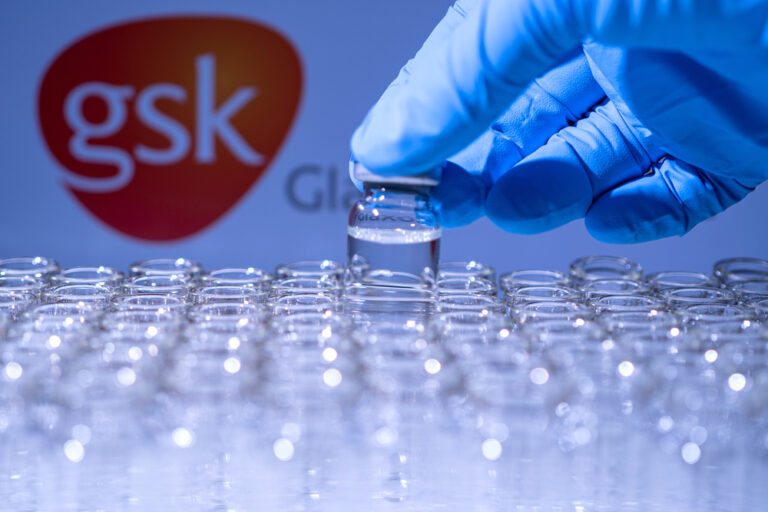
Genedrive achieves major milestone with NICE final guidance

The UK’s National Institute for Health and Care Excellence (NICE) has issued final guidance recommending the use of Genedrive’s CYP2C19 genotyping to guide clopidogrel treatment in patients who have suffered an Ischaemic Stroke (IS) or Transient Ischaemic Attack (TIA). NICE specifically recommends the Genedrive® CYP2C19-ID test as the preferred point-of-care testing solution.

Genedrive plc’s CYP2C19-ID test, which uses a non-invasive cheek swab, quickly identifies six genetic variants of the CYP2C19 gene. This information helps clinicians optimize treatment plans for stroke patients.

The NICE committee’s decision was based on a systematic review of clinical and economic impacts. They concluded that CYP2C19 genetic testing is both beneficial for patients with certain genetic variants and cost-effective compared to not testing.

With this recommendation and existing UKCA certification, Genedrive plc is now poised to commercialise its product in the UK and select Middle Eastern countries.

“We are delighted with this final guidance from NICE recommending implementation of CYP2C19 genotype-guided use of Clopidogrel in IS and TIA patients in the NHS to reduce risk of recurrent strokes, and recommendation of our CYP2C19 ID-kit as the point-of-care interventional platform of choice,” said James Cheek, CEO of genedrive plc.

“This represents a key milestone in our commercialisation plans for the product, and further solidifies our business strategy of leading provision of cost-effective solutions for pharmacogenetics in time critical emergency healthcare situations. We are proud to be at the forefront of the emergence of near-patient genetic testing in emergency healthcare to facilitate optimal personalised therapeutic choices and ultimately improve patient outcomes.”

Taylor Wimpey completions fall as headwinds persist

Taylor Wimpey has reported a decrease in completions and revenue for the first half of 2024, reflecting ongoing challenges in the housing market.

The impact of higher interest rates is all too evident in Taylor Wimpey’s numbers as falling sales continued in the first half of 2024.

In the first half of 2024, Taylor Wimpey’s group completions, including joint ventures, fell to 4,728 homes from 5,120 in the same period last year. This decline in completions contributed to a decrease in group operating profit, which fell to £182.3 million from £235.6 million in H1 2023.

The company noted £18.6 million of profit generated from land sales, compared to just £2.7 million in the previous year.

Despite significant headwinds, Taylor Wimpey reported a slight improvement in its net private sales rate, which increased to 0.75 in H1 2024 from 0.71 in H1 2023. It may be too early to call the data green shoots but it will be of some solace for investors.

Looking ahead, Taylor Wimpey remains cautiously optimistic. The company expects full-year UK completions, excluding joint ventures, to be towards the upper end of its previous guidance range of 9,500 to 10,000 homes. This positive outlook is supported by a robust order book, which stood at £2,102 million as of July 28, 2024, representing 7,667 homes.

“Looking to the second half, our performance to date means we now expect to deliver 2024 full year UK completions towards the upper end of our previous guidance range of 9,500 to 10,000 and Group operating profit in line with current market expectations,” said Jennie Daly, Chief Executive.

The company is focusing on building its order book to optimize value and position itself for growth from 2025, assuming supportive market conditions. Taylor Wimpey reports excellent visibility for 2025 completions, owning and controlling all necessary land, with most having detailed planning permission.

In the medium term, Taylor Wimpey is actively preparing for potential planning changes and developing high-quality planning applications. The company has approximately 30,000 applications in the planning process and additional applications ready if proposed changes to green belt regulations come into effect.

Despite the current challenges, Taylor Wimpey remains committed to shareholder returns announcing a 2024 interim dividend of 4.80 pence per share, slightly up from 4.79 pence per share in H1 2023, which will be paid in November.

Tekcapital portfolio company MicroSalt secures major Canadian supermarket placement

MicroSalt has secured a significant distribution agreement with Loblaws, one of Canada’s largest and most established supermarket chains.

Loblaws, a Canadian retail giant, operates an extensive network of over 2,400 stores across the country. This partnership provides MicroSalt with an opportunity to reach another vast customer base, adding to its growing number of global distribution channels.

For context, Loblaws food retail segment, which covers the supermarket business, reported revenues of over CAD$9.4bn (£5.2bn) in their most recent quarterly earnings.

Today’s agreement includes placing 2oz and 6oz MicroSalt saltshakers in Loblaws stores. The products are expected to hit shelves in September/October 2024.

This distribution deal with such a prominent retailer represents another major milestone for MicroSalt after listing in London earlier this year with potential exposure to millions of Canadian consumers.

In addition, to support and further expand its sales within the Canadian market, MicroSalt has also partnered with LeBeau Excel, a leading food broker specialising in the natural and organic industry.

“We are extremely excited about the placement of MicroSalt® shakers in Loblaws,” said Rick Guiney, CEO of MicroSalt.

“Loblaws is one of the largest supermarket chains in Canada and a prominent fixture in the Canadian food landscape. United Natural Foods will be the distribution partner to support the Loblaws placement. Additionally, we are enthusiastic to partner with LeBeau Excel to expand our business, across all customer channels in Canada.”

Tekcapital holds a 77% stake in Microsalt worth around £30m as of yesterday’s close.

Microsoft shares tank in after-hours trade despite beating headline earnings estimates

Microsoft share sank in the US after-market following the release of quarterly earnings that beat analyst consensus estimates but didn’t wow increasingly sceptical Wall Street traders.

Microsoft headline earnings came in better than expected, with revenue and EPS beating estimates. However, expectations were high going into the results, and shares fell in the after-market as investors reacted to disappointing cloud revenue that narrowly missed estimates. 

“For the quarter, Microsoft reported earnings per share of $2.95 on revenue of $64.7 billion,” said Amish Patel, Head of Equity Research at Charles Stanley.

“Wall Street was anticipating EPS of $2.94 on revenue of $64.5 billion, according to data compiled by Bloomberg. Microsoft reported EPS of $2.69 and revenue of $56.2 billion during the same period last year.

“Microsoft’s overall Cloud revenue came in at $36.8 billion, in line with expectations of $36.8 billion, but the company’s Intelligent Cloud revenue, which includes its Azure services, fell short, coming in at $28.5 billion versus expectations of $28.7 billion.”

Patel continued to explain that the market was focusing on the cloud business as an indicator of growth in Microsoft’s AI business and suggested patience is required for this area of the business to flourish. However, patience is in short supply after sharp declines in tech share of late.

“Shares are trading 6% lower as investors were hoping for an acceleration in cloud growth driven by AI investments. Ultimately, the payoff from AI investments will take time and we continue to believe Microsoft remains well placed to benefit from AI adoption,” Patel said.

The drop in shares represents elevated expectations for tech companies, signalling an earnings beat is not enough to satisfy investors who seemingly want to see tech smash earnings estimates.

FTSE 100 slips amid mixed corporate earnings, Diageo sinks

The FTSE 100 underperformed European peers in the early hours of trade on Tuesday but made a steady recovery after starting the session deep in the red.

Although investors are gearing up for a busy week of central bank action, a string of corporate updates yielding mixed results on Tuesday was the driving influence on shares on Tuesday

BP reported increased underlying replacement profit, Diageo sales and volumes sank, and Standard Chartered smashed analyst earnings estimates.

“With earnings season in full swing, there are several FTSE 100 names making big moves this morning on the back of their figures,” said Steve Clayton, head of equity funds, Hargreaves Lansdown.

“The headlines are that Diageo, Croda International and Sage Group are all heading south this morning after reporting results that left traders worrying about weak momentum in these stocks’ underlying revenues. On the leaderboard though, BP is up after hiking its quarterly dividend by 10%, whilst Standard Chartered released forecast-beating results and announced a further buy-back of stock.

The result was a 0.2% decline for the FTSE 100 at the time of writing.

Diageo

Diageo was the FTSE 100’s biggest detractor in terms of points on Tuesday, with the drinks giant slumping over 6% after confirming a net sales decline in the first half.

“A catastrophic session from Diageo served to drag down the FTSE 100 index,” said Russ Mould, investment director at AJ Bell.

Operating profits were higher during the period, but this did little to address concerns about the top line. Overall organic volumes were down 4% during the period.

“Diageo has gone from bad to worse,” Russ Mould said.

“It has reported an operating profit decline in four out of its five operating regions, two of them in substantial double-digit territory. The company can dress up the numbers all it wants, but it’s clear that something major has to change.

“Debra Crew will be fighting to keep her job as chief executive. If the board doesn’t do something, one can expect activist investors to circle Diageo and push for new leadership.”

Standard Chartered

There was a lot to like about Standard Chartered’s half-year report. Operating income was up 11% in the first half, and underlying profit before tax rose 21%. Shareholders are being rewarded with a bumper $1.5bn share buyback, which helped shares rise over 6% on Tuesday.

“We generated double-digit income growth, with positive momentum continuing into the second quarter, and with continued discipline in managing our expenses,” said Bill Winter, CEO of Standard Chartered.

“This led to a 20% growth in underlying profit before tax. Reflecting confidence in our performance and robust capital position, we are upgrading our guidance for income growth, which we now expect to be above 7% in 2024, and we are announcing our largest ever share buyback of $1.5bn.”

AIM movers: Jersey Oil and Gas tax uncertainty and Journeo upgrade

1

Shares in investment company Argo Group (LON: ARGO) jumped 50% to 6p following yesterday evening’s interim results announcement. Revenues more than tripled to $4.6m and pre-tax profit jumped from $100,000 to $2.5m. NAV was $7.3m at the end of June 2024.

Chemotherapy drug delivery technology developer CRISM Therapeutics (LON: CRTX) has won a service contract worth £230,000 with imphatec. This involves the formulation of synthetic hormones used to treat hormone deficiency illnesses. The work should be completed by the end of 2025. The share price is 18.5% higher at 16p.

Transport information and CCTV systems supplier Journeo (LON: JNEO) published a trading statement showing 17% higher interim revenues of £25.6m, while pre-tax profit jumped 54% to £2.8m. Net cash is £12.8m. Cavendish has raised its pre-tax profit estimate by 8% to £4.8m. Next year it is expected to increase to £5m. The share price increased by 12.5% to 256.5p.

Online gaming company Gaming Realms (LON: GMR) expects interim revenues to be m18% ahead at £13.5m and EBITDA should be 21% higher at £5.8m. Adding new partners has boosted income. Gaming Realms is on course to increase full year pre-tax profit from £5.4m to £8.8m. Net cash could double to £14m. The share price improved 4.84% to 39p.

FALLERS

North Sea-focused Jersey Oil and Gas (LON: JOG) could be hampered by the rise in the energy profits level to 38% and the main investment allowance of 29% will be removed from November. A reduction in capital allowances will be announced in the October Budget. The levy will be extended until 2030. The Great Buchan Area joint venture will be impacted. Jersey Oil and Gas has a full carry on much of the development spending of the project and there are potential milestone payments. However, the final investment decision could be hampered by the tax changes. The share price declined 16.1% to 73p.

FIH Group (LON: FIH) says the figures for the year to March 2024 will be in line with expectations of pre-tax profit of £3.5m, but there will be a shortfall this year. This is due to delays in tenders for the housing and construction business in the Falkland Islands. Zeus has withdrawn its estimates and valuation. The share price is 15.3% to 205p.

Promotional products services provider Altitude (LON: ALT) improved pre-tax profit by one-third to £1.2m in the year to March 2024. Zeus has increased its 2024-25 earnings forecast to 2.6p/share due to a lower than previously expected tax charge on pre-tax profit of £1.9m. That figure is the same as for 2023-24, where there was a tax credit. The share price dipped 10% to 40.5p.

Concrete levelling equipment supplier Somero Enterprises (LON: SOM) says poor weather conditions in North America and Australia have led to project delays. The second half should be stronger, but workforce reductions are underway. Cavendish has cut its 2024 pre-tax profit forecast by 13% to $27.6m and the dividend expectation has been slashed from 27.7 cents/share to 21.7 cents/share. There should still be cash of $27m at the end of 2024. The share price fell 8.57% to 320p.  

Creo Medical – First Half Trading Update Due Shortly Is Expected To Show Strong Positives 

Just over a year ago, 3rd August 2023, this £109m-capitalised group announced its First Half Trading Update, I am hoping that we will see it doing similarly within days. 

That could give private investors the chance to slip into a small position in the stock ahead of hoped-for positive news. 

Its shares, which were up to 50p at the end of 2023, are currently trading at only 30.25p. 

The Business 

The Chepstow-based Creo Medical (LON:CREO) is a medical device company focused on the development and commercialisation of minimally invasive electrosurgical devices, bringing advanced energy to endoscopy for pre-cancer and cancer patients.

Its declared mission is to improve patient outcomes by applying microwave and radiofrequency energy to surgical endoscopy. 

Procedures that previously took place in the operating room can now be undertaken in an endoscopy room, with material advantages in cost, time and patient outcomes. 

Using the group’s technology, initial health economic data has demonstrated that the NHS can save approximately £5,000 per procedure. 

Such Markets As 

It focuses on significant markets where it can bring products to market that serve poorly met needs.

Interventional gastroenterology – for the dissection, resection, ablation and haemostasis of diseased GI tissue. 

Interventional pulmonology – soft tissue Microwave ablation devices for ablation of tumours in a wide range of tissue types in the lung, stomach, oesophagus and colon. 

Surgery – its unique IP portfolio has a clear potential to meet needs in several additional lucrative markets in robotics and beyond. 

Urology – comprehensive line of Urodynamics equipment to treat conditions such as bladder cancer and incontinence. 

AGM Statement 

At the end of June, the group held its AGM at its offices in Chepstow, with the departing Chairman Charles Spicer stating that: 

The past 12 months have shown continued momentum in Creo’s journey towards becoming a mature, international medtech group. Using the financial resources provided by our March 2023 equity raise, we have continued to execute on all fronts of our strategy.  

This has included the launch of Speedboat UltraSlim, accelerated in the EU by 18 months, quickly being followed by the product being used in the US, APAC and Latin America, with exceptional clinician feedback. We have been delighted to see the investment in our Pioneer training programme continue to deliver a growing number of worldwide users, with a 119% increase over the course of 2023. 

The recent NHS Supply Chain data, which confirmed net cash savings of £687k from 130 Speedboat procedures at one NHS Trust, was a fantastic validation of the difference our technology can make to healthcare systems in addition to improving patient outcomes. We look forward to working alongside NHS Supply Chain as they promote the value proposition of Speedboat to Trusts around the country. 

The potential of Creo’s technology has also been demonstrated through our Kamaptive partnerships, as MicroBlate Flex was recently used to treat a cancerous lung nodule in the same sitting as a diagnosis performed with a robotic platform, in a world’s-first combined procedure at the Royal Brompton Hospital. 

The team has worked hard to keep disciplined control over costs, even as the business has continued to grow, which contributed to a reduced operating loss for the financial year ended 31 December 2023, and we continue to progress towards our goal of achieving cashflow break even in 2025.” 

The Equity And Significant Shareholders 

There are some 361.5m shares in issue. 

Larger holders include Canaccord Genuity (10.85%), M&G Investments (9.21%), Baillie Gifford (6.17%), Hargreaves Lansdown (4.95%), Amati Global Investors (4.70%), River Global Investors (4.42%), AXA Framlington Investment Managers (4.22%), Finance Wales Investments (3.98%), and Director Shareholdings (3.27%). 

Analyst Views 

Soo Romanoff and Jyoti Prakash, at Edison Investment Research, have estimates out for the current year to end-December, for revenues of £40.1m (£30.8m) helping to significantly reduce pre-tax losses to just £16.6m (£22.1m loss). 

For the coming year of 2025, they estimate £54.1m in sales and only a £4.8m loss. 

They conclude by noting that: 

“Robotics-assisted surgeries are widely regarded to be transformative for the healthcare system, given the ability for early cancer detection, greater surgical precision and shorter recovery times and we see this deal progression as an exciting opportunity for Creo to tap into this field.” 

Over at Cavendish Capital Markets, analyst Chris Donnellan stated that the group was at a significant inflection point in its development. 

His 2024 estimates are for £41.0m in revenues and only a £13.6m adjusted pre-tax loss. 

For 2025 he has £53.7m turnover and a £4.2m pre-tax loss. 

His Price Objective for Creo Medical’s shares is a significant 99p a share

In My View 

Just two months ago this group’s shares were trading at 36.50p, they are now only 30.25p – at which level risk-tolerant investors might do well taking a position now ahead of further positive news. 

Diageo shares plummet as sales and volumes decline

Diageo shares were sharply lower on Tuesday after the alcohol giant confirmed a poor year for sales in its preliminary results for the year ended 30th June.

Diageo has reported a 1.4% decline in net sales to $20.3 billion for the full-year period as sales in Latin America and the Caribbean region tanked. Poor sales translated to a 4% drop in organic volumes.

Despite these challenges, the company managed to boost its reported operating profit by 8.2%, with the operating profit margin expanding by 262 basis points. However, this did little to encourage investors and shares were down 8.5% at the time of writing on Tuesday.

The most significant factor contributing to Diageo’s struggles was a sharp 21.1% decline in sales within the Latin America and Caribbean (LAC) region. This precipitous drop in LAC overshadowed positive performance in other markets, resulting in an overall organic net sales decline of 0.6%. The company’s volume decreased by 3.5%, outweighing a 2.9 percentage point improvement in price and mix.

Excluding the LAC region, Diageo’s performance paints a different picture. Organic net sales outside LAC grew by 1.8%, driven by a robust 3.9 percentage point improvement in price and mix. This growth was partially offset by a 2.1% volume decline. Notably, while North America experienced a 2.5% decrease in organic net sales, this was more than compensated for by growth in Africa, Asia Pacific, and Europe.

“In what is perhaps a reality check from the pandemic boom for Diageo, they have posted their first yearly sales decline since 2020, which is in fact worse than analysts initially feared. A fancy bottle of whiskey for locked down consumers with a little extra cash in their pocket was the perfect treat at the time but now it seems that increased competition and price consciousness have hit Diageo’s bottom line,” said Adam Vettese, Market Analyst at eToro.

“The firm issued a profit warning due to inventory issues in the key Latin America region as well as loss of market share in the US. It is fair to say that times are tougher now, with consumers facing more pressure on their own finances and as such luxury drinks are one of the first casualties of the household budget. This is particularly so in regions such as Latin America, where income is generally lower and there are cheaper, local alternatives on offer.”

Despite the challenges, Diageo maintained or grew its market share in over 75% of its measured markets, including the crucial US market. The company also demonstrated financial resilience, with net cash flow from operating activities increasing by $0.5 billion to $4.1 billion and free cash flow rising by $0.4 billion to $2.6 billion.

In a show of confidence, Diageo increased its recommended full-year dividend by 5% to 103.48 cents per share.

Greggs’ mango iced drinks prove popular as menu innovation drives like-for-like sales

There’s no stopping Greggs and its array of reasonably priced baked goods, sandwiches and other on-the-go foods. 

Apart from the pandemic, Greggs’s sales growth has been consistently strong over the past decade, and the first half of 2024 was no exception.

Total first-half sales were 13.8% higher, driven by a combination of like-for-like same-store sales growth and the impact of 51 net new store openings.

Greggs shares were 3.80% higher at the time of writing.

The firm’s underlying pre-tax profit, excluding exceptional items, rose by 16.3% to £74.1 million. Underlying diluted earnings per share also showed a marked improvement, rising to 53.8p from 46.8p in the previous year.

“Greggs has showcased its strengths once more, as the UK’s favourite baker continues to deliver. A high bar’s been set over the past year or so, but results have beat expectations once again,” said Matt Britzman, senior equity analyst at Hargreaves Lansdown.

“The value offering that Greggs is so well known for has been holding it in good stead of late, and it was good to see that continue over the half with like-for-like sales well ahead of the industry average.”

In today’s update, Greggs pointed to menu innovation as a force for good when it came to boosting like-for-like sales. The roll out of mango and strawberry iced drinks across 500 stores and pizza meal deals spearheaded same store growth.

Greggs’ commitment to shareholder returns was evident in its announced interim dividend of 19.0 pence per share, representing an 18.8% increase from the previous year.

Looking to future effencies across the business, Greggs is making significant investments in its supply chain to support future growth. The redevelopment of its Birmingham distribution centre and the extension of its Amesbury facility are on track for completion in the second half of 2024. These improvements will create logistics capacity for an additional 300 shops. Furthermore, the company has begun construction of a new frozen manufacturing and logistics site in Derby, expected to be operational by late 2026.

BP profit grows as fuel margins increase, dividend increases 10%

Energy giant BP has increased its quarterly dividend by 10% and committed to additional share buybacks in the second half of the year.

Shareholder distributions will be in focus after profit growth grew marginally and cash generation jumped compared to the last quarter. BP has announced an underlying replacement cost (RC) profit of $2.8 billion for the second quarter of 2024, a slight increase from $2.7 billion in the previous quarter.

Stronger downstream fuel margins and lower taxation bolstered the company’s profitability amid lower oil prices. Although BP had areas of strength, gains were partially offset by significantly lower realised refining margins and an average gas marketing and trading result.

BP, like many other oil majors, has been through a period of adjustment as energy prices normalised after a prolonged elevation due to Russia’s invasion of Ukraine.

In the gas and low-carbon energy segment, BP reported an underlying RC profit before interest and tax of $1.4 billion. This represents a decrease from the previous quarter’s $1.7 billion, primarily due to average gas marketing and trading results. The absence of foreign exchange losses from the Egyptian pound devaluation and lower exploration write-offs partially mitigated this decline.

Oil production and operations maintained steady performance, with an underlying RC profit before interest and tax of $3.1 billion. Higher realisations were balanced by increased exploration write-offs, resulting in a figure identical to the previous quarter.

The customers and products segment saw mixed results. While the customers division improved by $0.4 billion due to stronger fuels margins and improved convenience store performance, the products division declined by $0.6 billion. This drop was attributed to significantly lower refining margins, particularly in middle distillates, and narrower North American heavy crude oil differentials.

Despite the underlying profit, BP reported a $0.1 billion loss for the quarter on a net basis. This was due to inventory holding losses and significant adjusting items, including a $1.5 billion charge related to asset impairments and onerous contract provisions. The ongoing review of the Gelsenkirchen refinery contributed to these adjustments.

“We generated strong operating cash flow* in the quarter, which helped reduce net debt* to $22.6 billion,” said Kate Thomson, BP’s CFO.

“Our decision to increase our dividend by 10%, and extend our buyback programme commitment to 4Q 2024, reflects the confidence we have in our performance and outlook for cash generation. We are maintaining a disciplined financial frame and remain committed to growing value and returns for bp.”