Helium One Global most traded share by Hargreaves Lansdown clients last week

Helium One Global was the most traded share by Hargreaves Lansdown last week.

The company has rocketed higher after announcing potential commercially viable helium encounters in their Tanzanian drilling operations.

HE1 is one of the best-performing shares of 2024, up 866% as of Wednesday’s closing price of 2.42p. 

The promise of further progress in Tanzania meant 5.43% of buy trades by HL clients last week were in HE1 shares. Helium One also accounted for 3.3% of sell trades.

More buy trades were placed by Hargreaves Lansdown clients in HE1 last week than Tesla and NVIDIA combined.

Yesterday, the company rallied after announcing a funding round to further develop its Rukwa project.

“The results that we have achieved from the Itumbula West-1 well, flowing helium to surface in such significant concentrations, has confirmed a globally unique helium producing provin,” said Lorna Blaisse, Chief Executive Officer.

Helium is used in a wide range of industrial, military and medical applications.

AIM movers: Redx Pharma sells KRAS rights and claim by former Versarien boss

5

Redx Pharma (LON: REDX) is selling global rights to the preclinical-stage KRAS (Kirsten rat sarcoma virus) inhibitor programme to Jazz Pharmaceuticals for an upfront payment of $10m and potential milestone payments of up to $870m. Redx Pharmaceuticals should have enough cash to get into 2025. The share price jumped 37.5% to 27.5p

Deltic Energy (LON: DELT) has farmed-out to Dana Petroleum a 25% interest in UK licence P2437, which contains the Selene exploration target. Deltic Energy will receive $500,000 in cash and will be fully carried for its 25% interest for the share of the up to $49m cost of drilling and testing planned by 50% interest holder Shell if it is a success. If the hole is dry, then the carry will be for up to $40m. The share price improved 14.2% to 30.25p.

Michael Covington has become Getech (LON: GTC) and acting chief executive Richard Bennett has been given the full-time role. Dr Stuart Paton is leaving the board after 12 years of service. Getech has confirmed that it is refocusing on the Globe geoscience platform. It does not mention its potential hydrogen production interests. The three executive directors have been issued a total of 6.45 million options exercisable at 8p/share. The share price has to average 24p for one month before the options vest. The share price rose 9.38% to 8.75p.

TV programmes producer Zinc Media (LON: ZIN) beat expectations with a one-third increase in 2023 revenues to £40m. Organic growth was 14%. Zinc Media is outperforming in a weak TV market. Zinc Media is still on course to move into profit in 2024. The share price increased 6.29% to 84.5p.

FALLERS

Verditek (LON: VDTK) has agreed terms to sell its solar business and become a shell. The buyers are the holders of secured convertible loan notes in return for the surrender of £528,340 loan notes and £50,000 in cash. The company will transfer the shareholder loan to the new company for nominal consideration. The bondholders are providing Verditek with a loan facility of up to €100,000 to fund the operating costs of the solar business. If the deal does not go ahead by the end of February Verditek will be running out of cash. A new management team is interested in joining Verditek and there are plans to raise £300,000. The share price slumped 25.9% to 0.11p, which is a new low.

A soaring share price made a fundraising too much to resist for Helium One Global (LON: HE1) and it has raised £4.7m at 1.5p, which is still a 650% premium to the share price prior to positive drilling news. This cash will be spent on further work on helium exploration in Tanzania. The share price dipped 17.8% to 1.775p.

Yesterday evening, Powerhouse Energy (LON: PHE) revealed that GetGo Recycling (now known as Onunda) has served a High Court claim, which relates to a European patent application by Powerhouse Energy. The patent process has been stopped until the claim is settled. The share price is 18.5% lower at 0.33p.

Former Versarien (LON: VRS) chief executive Neill Ricketts is making claims against the graphene technology company. A preliminary hearing will happen on 17 July. The share price fell 14% to 0.135p.

RiverFort Global Opportunities (LON: RGO) is benefitting from the rise in the share price of investee company Smarttech247 (LON: S247), which is one-fifth higher over the past five days at 24p. RiverFort Global Opportunities owns 6.7% of the cybersecurity company. The share price declined 14.1% to 0.305p.

FTSE 100 falls as supermarkets drag after Sainsbury’s strategy update

The FTSE 100 was alive with strategic reviews and M&A on Wednesday as Sainsbury’s and Barratt Developments unveiled bold new measures to enhance future shareholder returns.

Unfortunately for current shareholders, the measures were not taken well by the market, and in the absence of any major economic developments, the two companies dragged London’s leading index lower.

The FTSE 100 was down 0.4% at the time of writing on Wednesday.

Interest rate concerns and Chinese stock market intervention took a back seat on Wednesday with equity investors focused on two material announcements by Sainsbury’s and Barratt Developments.

Operating in a highly competitive market, Sainsbury’s has announced a growth strategy that targets higher grocery and Argos sales by investing in technology and their Nectar card scheme.

Sainsbury’s shares fell 3.8%, with investors choosing to focus on the cost of achieving their goals rather than the end result.

“Sainsbury’s has unveiled bold plans to make the company bigger in the future. There is a clear vision to get customers to spend more money, attract more people to its stores, and drive more traffic to Argos’ website, stores and supermarket concessions. At the same time, Sainsbury’s wants to be a more efficient business and have staff and customers rate it more highly.

“However, its growth plan is not something that is guaranteed to work its magic. It’s not hard to dream up such a wish list to improve the company’s fortunes as it is basic business sense. Achieving the goal is another matter and it will cost money – something the market typically hates. Sainsbury’s shares fell on the news, but interestingly so did Tesco and Marks & Spencer as they face new competitive threats,” said Russ Mould, investment director at AJ Bell.

Sainsbury’s update weighed on the FTSE 100’s retailers with Tesco and Marks & Spencer falling, but also JD Sports and B&M.

Barratt Developments

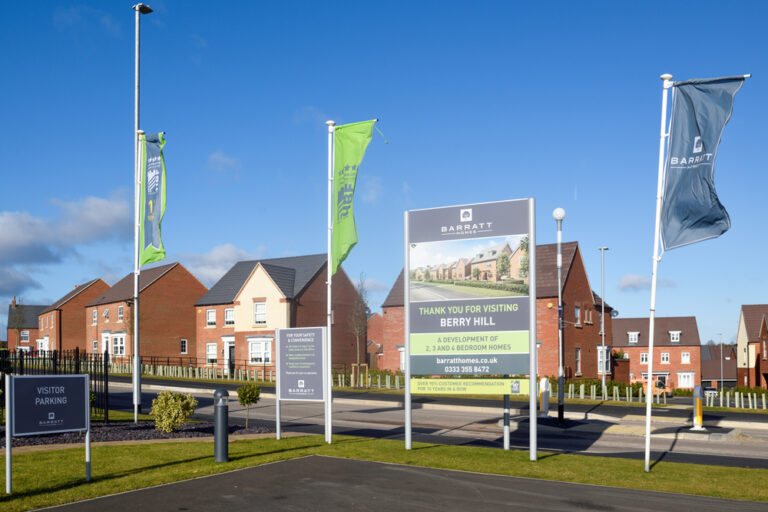
Barratt Developments announced the creation of a major new force in UK housebuilding on Wednesday with the all-share offer for Redrow. The new group’s revenue will be in the region of £7.5bn, making it a significant player in the housebuilding industry.

Both Barratt Developments and Redrow released half-year results alongside the merger news pointing to a sharp slowdown in completions and revenue for the pair.

“The economic winds have not been kind to the housebuilders and Barratt Developments and Redrow clearly believe they’ll be stronger together, giving the new combined company much bigger clout to capitalise on the structural need for housing in the UK,” said Susannah Streeter, head of money and markets, Hargreaves Lansdown.

“Redrow’s board of directors intend to unanimously recommend that shareholders vote in favour of the £2.52 billion deal, which would give them 32.8% of the combined group, with Barratt shareholders holding 67.2%. The new group will be renamed as Barratt Redrow, and the move is expected to produce around £90 million in savings in operating costs of the two companies annually by the end of the third year.”

Taylor Wimpey investors were unphased by the news, and the stock rose 0.9%. Persimmon dipped 0.3%.


Barratt Developments and Redrow to combine creating UK housebuilding powerhouse

Barratt and Redrow have agreed to an all-share merger, with Barratt acquiring Redrow to form a new UK housebuilding powerhouse.

Barratt Developments shares were down 7% at the time of writing while Redrow shares surged 13%.

Under the terms of the merger, Redrow shareholders will receive 1.44 new Barratt shares for each Redrow share they own. This values Redrow at approximately £2.5 billion based on recent share prices, a 27% premium to Redrow’s share price on 6th February.

Post-merger, Redrow shareholders will own about 32.8% of the combined company, with Barratt shareholders owning 67.2%.

“The move is a seismic shift for the sector, reflecting not only the challenges which housebuilders have more recently faced in terms of the economic backdrop, but also a move to shore up the capabilities of two major players, with the new ‘Barratt Redrow’ company having aggregate revenues of GBP7.45 billion,” said interactive investor’s Richard Hunter.

The boards believe the merger will create an ‘exceptional UK homebuilder’ with complementary brands and geographic footprints to accelerate housing delivery.

Barratt estimates pre-tax cost synergies of at least £90 million by the end of year 3 post-merger, achieved through procurement savings and streamlining of functions. One-off costs to achieve these savings are estimated at £73 million. The merger is expected to be accretive to adjusted EPS in the first year after completion.

The deal was released alongside Redrow and Barratt Developments half-year results, both of which showed a sharp slowdown in completions and revenue during the period.

Smurfit Kappa Group returns to growth in fourth quarter, shares rise

In many respects, 2023 is a year to forget for Smurfit Kappa. The group’s shares were in a classic downtrend through the last year with a series of lower highs as revenue and demand fell, culminating in full-year EBITDA and revenue falling 12%.

Full-year results released on Wednesday showed operating profit fell 16% to €1,403m and profit before tax sank 18% to €1,055m as the packaging company grappled with falling demand for packaging.

Smurfit Kappa’s fortunes are inextricably linked with consumer demand and slowing retail sales across major economies fed directly into their earnings.

However, there were some signs of positivity and Smurfit Kappa shares rose 4.5% on Wednesday.

Margins improved in the full year, and the company said it had returned to growth in the fourth quarter.

“The demand environment for the industry in 2023 was difficult primarily due to destocking and a lack of economic activity in certain sectors, particularly durable goods,” said Tony Smurfit, Group CEO.

“However, one trend in which we have seen strong acceleration, is an increasing demand for sustainable packaging solutions. While full year volumes for the Group were down 3.5%, we saw a progressive improvement in demand during the year, with a return to growth in the fourth quarter.”

Investors will be pleased that despite soggy full-year results, the company pushed ahead with a dividend increase.

“Whilst they will never compete for the most exciting sector award, packaging firm Smurfit Kappa rounded off a challenging year with a return to growth in Q4 while bumping up their final dividend by 10%. It was about time shareholders got some good news after the lukewarm reception to their acquisition of US counterpart WestRock. WestRock posted some lacklustre numbers last week, missing forecasts,” said Adam Vettese, analyst at eToro.

“Europe’s largest packaging manufacturer now faces the challenge of sustaining the increased demand to make up the overall shortfall in volumes experienced last year. If durable goods demand returns and customers increase their stock levels, then Smurift Kappa shares could kick on in 2024.”

Redx Pharma agrees sale of KRAS to Jazz Pharmaceuticals

Redx Pharma shares jumped on Wednesday after the group agreed on the disposal of their KRAS oncology inhibitor program.

Jazz Pharmaceuticals has signed an agreement to acquire Redx Pharma’s KRAS inhibitor program for $10 million upfront. Redx is eligible for up to $870 million in development, regulatory and commercial milestone payments.

Redx Pharma shares were 15% to the good at the time of writing.

The next milestone is IND clearance from the FDA.

Redx will receive tiered mid-single digit percentage royalties on any future net sales. As part of a separate collaboration agreement, Jazz will pay Redx to conduct research and preclinical development to complete IND-enabling studies for the KRAS inhibitors.

The deal includes rights to Redx’s G12D selective and pan-KRAS molecules. Jazz will take over all clinical development, regulatory, manufacturing and commercialization activities after IND-enabling studies.

“KRAS is a well-validated oncology target and there remains a high unmet need for innovation in this area based on challenges in developing molecules to target specific KRAS mutations. Redx has discovered a number of preclinical KRAS candidates and we plan to leverage our collective oncology development expertise to identify and advance the most promising molecules toward the clinic,” said Robert Iannone, M.D., M.S.C.E., executive vice president, global head of research and development of Jazz Pharmaceuticals.

“This transaction further expands our early-stage oncology pipeline, and we are excited to explore novel approaches to improving treatment options for cancer patients.”

Verditek shares fall on cash shell plans

Verditek shares fell on Wednesday as the company unveiled plans to become a cash shell by disposing of its trading assets after months of financial pressures.

Verditek has agreed to sell its solar business to a new company established by its secured convertible loan note holders for £528,340 in the form of the surrender of the loan notes and £50k in cash.

Verditek shares were down 22% at the time of writing.

This will make Verditek an AIM Rule 15 cash shell as it will no longer conduct its existing trading business or control its assets.

Verditek must complete a reverse takeover within 6 months or face being delisted from AIM. The company is in talks with a potential new management team to conduct a £300k fundraising and complete a reverse takeover within 6 months.

The deal is conditional on due diligence and shareholder approval. If it does not complete, Verditek may run out of cash by the 29 February 2024 target completion date and have to consider alternatives.

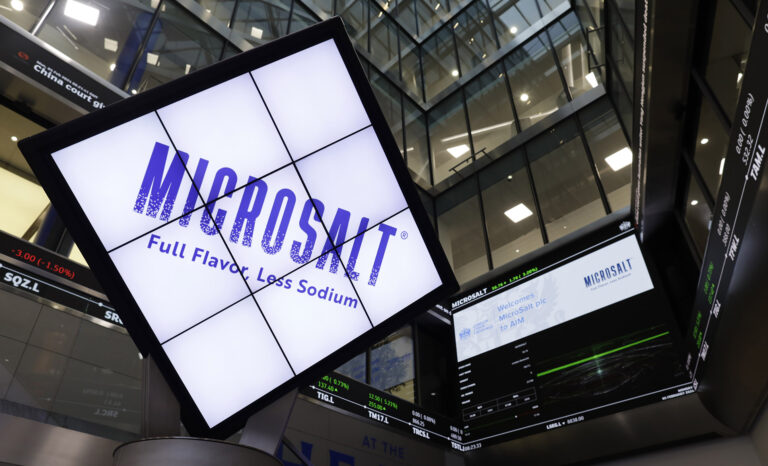
MicroSalt announces strategy objectives after storming London IPO

MicroSalt unveiled its strategy objectives on Tuesday after the low-sodium technology company completed a rip-roaring London IPO.

Shares have soared since listing in London at 43p last week, touching highs of 77p this morning before short-term profit takers booked gains.

MicroSalt outlined its strategy to focus on its B2B business, which it believes will drive near-term profitable growth. In 2024, MicroSalt plans to convert current customer trials into large-scale orders, expand sales of its current products into new product lines, and establish partnerships with new B2B customers to reformulate their offerings using MicroSalt’s sodium-reduction technology.

After securing commercial orders from two major customers – the Mexican division of a leading global food and beverage manufacturer and a national Fortune 500 supermarket chain – for use in salty snack offerings, MicroSalt sees a clear path to growing B2B sales volume.

“There is a real business to business opportunity to provide an ingredient that enables food manufacturers to reduce salt levels,” said Judith Batchelar OBE, Non-Executive Chair of MicroSalt.

MicroSalt is also in early discussions with three top UK grocery chains about using its technology in store-brand items, as well as with ready-meal suppliers and a fast food burger company.

To promote its products and technology, MicroSalt plans to exhibit at least 12 major food industry trade shows worldwide this year, including events in Frankfurt, Paris, Shanghai, Dubai, and Stockholm.

In addition to over 1,000 U.S. and Philippines retail outlets currently stocking MicroSalt shakers, the company aims to continue global expansion, making its B2C products available in more top retail stores and new markets.

To manage growing order volumes, MicroSalt will continuously evaluate and expand as needed its global network of third-party manufacturing, storage, and distribution partners. Long-term, the company may opt to bring some manufacturing in-house.

MicroSalt shares were changing hands at 64p at the time of writing.

Filtronic wins another major space contract

4

RF components and systems developer Filtronic (LON: FTC) has won another major contract and this has led to upgrades for the full year. Interims show modest growth in revenues and the order book points to be more significant growth in the second half. The share price jumped 15.7% to 29.5p

AIM-quoted Filtronic has won a £7.8m for ground station antenna amplifiers for a leading global supplier of LEO satellite communications equipment. This is the third order for Cerus32 solid state power amplifier modules and each one has been bigger than the previous one. There is also a development agreement for an E-band module.

That takes LEO-related space contract wins to £16m. There is also a £3.2m contract with the European Space Agency. There are plenty of other opportunities.

It is not just space contracts that are being won. Recently Filtronic gained a £2m defence contract as preferred partner of radar subsystems supplied by QinetiQ – a new client. That is phase 1 of the contract and revenues will be recognised in 20224-25 and 2025-26. Aerospace, critical communications and telecoms are other important markets.

In the six months to November 2023, revenues were 1% ahead at £8.5m. The cost base has been increased to cope with future growth, so there was a swing from profit to loss. Cash in the bank is £4.1m, helped by an advance payment.  

Progress was held back by difficulties sourcing components for some products, but this is no longer a concern. 5G rollouts are still not gaining the anticipated momentum.

There is enough production capacity for £25m of annual sales. Cash will continue to be generated to help fund any longer-term capital spending.

Cavendish has raised its full year revenues expectations from £20.5m to £23.5m and pre-tax profit estimate has more than trebled from £800,000 to £2.5m.

The orders won in recent month show that Filtronic has developed technology that is relevant to growth markets such as space and defence. The share price has risen sharply in recent months and is the highest it has been since 2018. The prospective multiple is 28. The current profit forecast for 2024-25 is £2.3m, but further contract wins would provide upside to this forecast.  

FTSE 100 surges higher on Chinese stock market intervention

The FTSE 100 surged higher on Tuesday with China-focused stocks doing most of the heavy lifting after the Chinese authorities stepped in to prop up their depressed equity markets.

London’s leading index was 0.55% higher at the time of writing, with names such as HSBC, Prudential and Antofagasta among the top risers.

BP was the top riser after following in Shell’s footsteps in announcing a considerable share buyback even though profits fell in the last year.

“The big story on the markets was the sharp rally in Chinese stocks after a state-backed initiative to stir up interest in equities,” said Russ Mould, investment director at AJ Bell.

“The Hang Seng advanced 4% and the SSE jumped 3.2%, some of the biggest one-day gains we’ve seen on the Chinese market in a long time. The Hang Seng Tech index did even better, soaring by 7%.

“A state-owned investment fund indicated it would continue to buy up shares in what looks like a concerted effort to breathe some new life back into Chinese equities after they fell out of favour. The securities regulator also pledged to encourage more long-term funds to buy shares and to encourage companies to buy back more of their own shares.”

The Miners are the most obvious beneficiaries of Chinese stimulus, and the sector posted respectable gains but didn’t run away with itself as the measures were focused on the stock markets rather than the economy. Antofagasta added 1.2% and Rio gained 0.3%. Glencore slipped 0.3% signalling slight disappointment China wasn’t doing more to support the underlying economy and demand for commodities.

On the other hand, HSBC and Prudential, who are more concerned with China’s financial system, gained 1.8% and 2.7%, respectively. HSBC, as the FTSE 100’s third largest company, would have added a significant number of points to the index.

BP was the FTSE 100’s top riser, jumping 5.8%, as the oil major revealed another share buyback that caught investor’s attention. Profits nearly halved as the firm readjusted to lower oil prices, and refining margins were hit.

“The priorities of BP’s new CEO Murray Auchincloss have been made clear. Although on appointment he pledged that BP’s strategy to transition from an international oil company to an integrated energy company was unchanged, the big share buy-back announcement shows the immediate focus is on boosting the share price and returning value to shareholders.

“BP also said that shareholders would get a further $3.5 billion in buybacks in the months to come, and more in 2025.

“This strategy is being pursued even though BP reported a sharp drop in underlying annual profit from $27.7 billion to $13.8 billion as oil and gas prices were lower and refining profit margins also weakened.”