FTSE 100 remains firmly lower after blowout Non Farm Payrolls report

The FTSE 100 was trading deep in red going into the weekend as concerns about interest rates sapped demand for equities.

Firmer oil prices increased interest rate tensions overnight, culminating in a softer start to European trade on Friday. Rates concerns were heightened after a blowout Non-Farm Payrolls pushed market expectations of the first US rate cut out to September from July.

Headline Non-Farm Payrolls increased by 303,000 versus expectations of 214,000. The number of jobs created is excellent news for the US economy but bad news for equity markets longing for a rate cut. The Unemployment rate fell to 3.8%, as expected.

US bond yields soared, and equities fell immediately after a headline jobs report that exceeded all Wall Street economist estimates.

The FTSE 100 started the session firmly lower and traded sideways, deep in the red, until the US Non-Farm Payroll release at 1.30pm.

“Storm clouds circled equity markets as investors started to fret about when interest rates would be cut given heightened inflationary pressures from oil hitting $90 a barrel and negative comments from a key figure,” said Russ Mould, investment director at AJ Bell before the jobs report was released.

The US jobs report did little to provide London’s leading index with any reprieve, and the FTSE 100 was trading down 0.8% at the time of writing.

The declines were broad, with only 4 of the FTSE 100’s constituents trading positively. Ocado was the top faller, down 7%, as the threat of higher interest rates hit technology sentiment.

Shell was one of the risers, adding just 0.5% as oil rose above $90 a barrel.

Housebuilders and UK property prices

The FTSE 100’s housebuilders were under pressure as UK property prices fell 1% in March from February. After five months of monthly gains, Halifax data showed a slowdown as mortgage rates remained elevated. Investors may be concerned that the UK housing market is not entirely out of the woods, with little indications of interest rate cuts in the immediate future.

“Affordability constraints continue to be a challenge for prospective buyers, while existing homeowners on cheaper fixed-term deals are yet to feel the full effect of higher interest rates. This means the housing market is still to fully adjust, with sellers likely to be pricing their properties accordingly,” said Kim Kinnaird, Director, Halifax Mortgages.

Persimmon fell 1.3%, and Taylor Wimpey was off by 1.5%.
Investing in fast-growing biotechnology companies with BB Biotech’s Dr Daniel Koller

The UK Investor Magazine was delighted to welcome Dr Daniel Koller, Head of the Investment Team at Bellevue Asset Management, the manager of Swiss-listed BB Biotech.

CHF2.5bn (£2.2bn) BB Biotech invests in companies in the fast growing market of biotechnology and is one of the world’s largest investors in this sector with 30 years of experience. 

The shares of BB Biotech are listed on the SIX Swiss Exchange and the Frankfurt Stock Exchange. Its investments are focused on listed companies that are developing and commercializing novel drugs that offer sound value for the healthcare system.

BB Biotech’s holdings include Alnylam, Argenx, Moderna, and Biohaven.

We discuss the main biotech investment themes Daniel and his team observe, as well as specific recent investments.

Daniel explains BB Biotech’s investment approach and how they balance valuations with securing exposure to significant discoveries and commercialisation.

We explore the impact of the Inflation Reduction Act on big pharma and the small-cap biotech sector.

AIM movers: Strong second half at RUA and Steppe Cement loses market share

1

A strong second half at medical device technology developer RUA Life Sciences (LON: RUA) means that full year revenues were £2.2m – the same as the previous year. Margins have improved and operating costs fell £200,000 to £3.4m. There is £4m in cash. An initial development contract worth £100,000 has been awarded by a multinational. The share price recovered 20.5% to 13.25p, which is the highest it has been since the fundraising at 11p/share at the end of November.

The Gelion (LON: GELN) share price continues to rise after yesterday’s announcement that the energy density testing of its lithium-sulphur battery technology shows that it far exceeds lithium-ion batteries. The 9.5 Ah pouch cell achieved an energy density of 395 Wh/kg, which 60% higher than lithium-ion batteries. This means that the batteries could be lighter and cheaper and made from more abundant materials, but there is some way to go to get to commercialisation. Gelion has cash of £7.5m. The share price is 13.5% higher at 29.5p, which is back above last November’s £4.4m fundraising price of 24p/share.

PCI-Pal (LON: PCIP) chief executive James Barham bought 26,820 shares at 56.5p/share and non-exec Simon Wilson acquired 30,000 shares at 58.8p each. The share price increased 3.57% to 58p.

FALLERS

Steppe Cement (LON: STCM) plans to return 1.5p/share after a capital reduction is agreed by shareholders. That did not offset the disappointing trading statement from the Kazakhstan cement supplier. First quarter revenues fell from $10.8m to $8.4m due to a combination of lower sales and reduced selling price. The market decreased by 12%, but Steppe Cements market share fell from 12.7% to 11.5%.  The share price declined 17.1% to 17p.

Xeros Technology (LON: XSG) announced a fundraising late on Thursday. There has been £4.5m raised at 1.5p/share and up to £1m more could be raised via a retail offer that closes on 19 April. This will strengthen the balance sheet and provide cash to finance current contracts and commercialise the laundry technologies developer. The first royalty income could be received in the second half of 2024. EBITDA breakeven could be achieved before the end of the year. The share price is 13.5% to 1.6p.

Empyrean Energy (LON: EME) non-executive director John Laycock acquired 3.1 million shares at 0.6362p/share. Even so, the share price slipped 7.69% to 0.6p.

Macquarie has converted £500,000 of convertible bonds into shares in SkinBioTherapeutics (LON: SBTX) at 6.592863p/share. The 7.58 million shares will be purchased by existing shareholders. That leaves £890,000 of convertibles. The conversion comes after a rise in the share price over the past fortnight and it fell back 9.3% to 9.75p.

Alliance Pharma (LON: APH) has delayed its 2023 results from 9 April to 23 April because of delays to the audit. The share price dipped 4.1% to 36.825p.

Tekcapital’s Guident expands autonomous vehicle safety partnership with Auve Tech

Tekcapital’s Guident has announced the expansion of its strategic partnership with Auve Tech, an Estonian autonomous transportation company, with the launch of Auve Tech’s flagship MiCa autonomous shuttle into the US market.

Guident will integrate its Remote Monitor and Control Center solution into the MiCa shuttle to enhance the MiCa’s safety features by adding human-in-the-loop connectivity to the fixed-route transportation technology.

“With MiCa now officially ‘landed’ in the US for market entry, we are glad to join forces with Guident. Together, we are committed to enhancing the safety and efficiency of our MiCa AV shuttles with their advanced remote monitoring and control software. Based on the success in Japan and Europe, we eagerly anticipate rapid deployment of our innovative combined solution in the US and worldwide,” Johannes Mossov, Board Member at AuVe Tech OÜ.

A MiCa shuttle has been received at Guident’s headquarters and the integration process is fully underway. The new partnership and technology will be showcased at the grand opening of Guident’s new headquarters in Boca Raton, Florida, later in April.

“Since establishing our strategic partnership, we have been thrilled to collaborate with the Auve Tech team on several projects. We are particularly excited to achieve a significant milestone with Auve Tech’s entry into the US market coupled with the integration of our advanced teleoperation technology,” said Harald Braun, Executive Chairman and CEO at Guident.

The MiCa shuttle is described as ‘the world’s most compact and flexible level 4 autonomous shuttle.’ This is significant because most other companies developing Level 4 autonomous vehicle technology, including Alphabet, Volvo, and GM, have valuations in excess of a billion dollars.

Where the Auve Tech and Guident partnership breaks new ground is the established human-in-the-loop safety solution that allows a real person to take control of an autonomous vehicle should danger be detected.

A General Motors incident in which one of the company’s Cruise autonomous taxis dragged a woman after a collision in San Fransico is the perfect example of the benefits of a human-in-the-loop autonomous vehicle safety solution, such as Guident’s Remote Monitor and Control Center.

The California Department of Motor Vehicles suspended Cruise’s taxi license after the incident.

In the Cruise case, if the vehicle had access to a remote operator, they would have been able to step in and take control of the vehicle, possibly minimising the severity of the incident.

FTSE 350 housebuilders fall after Halifax says UK house prices fell 1% in March

The Halifax House Price Index’s release contributed to a fall in FTSE 350 housebuilder shares on Friday after the building society said average UK house prices fell 1% in the month of March.

Taylor Wimpey dropped 1.7%, Persimmon fell 1.4%, Barratt Developments shed 1.3%, and Crest Nicholson was off by 2%.

Although March prices dropped by 1% month-on-month, average UK house prices were up 2% on the quarter.

“UK house prices grew in March on a quarterly basis, by +2.0%, with annual growth slowing to +0.3%, from 1.6% in February. Compared to last month, the price of a UK property fell -1.0% or £2,908 in cash terms, with the average property now costing £288,430,” said Kim Kinnaird, Director, Halifax Mortgages.

“That a monthly fall should occur following five consecutive months of growth is not entirely unexpected particularly in view of the reset the market has been going through since interest rates began to rise sharply in 2022. Despite this house prices have shown surprising resilience in the face of significantly higher borrowing costs.”

As Kinnaird mentioned, house prices have been steadily increasing for five months, and as seasoned investors will be fully aware, no market moves in a straight line. The blip in housing prices has spurred a bout of profit-taking in FTSE 350 housebuilders on Friday after the sector rallied as house prices bottomed out last year.

A quarterly gain is an encouraging sign for the housing market, but with mortgage rates remaining elevated and many homeowners still to move onto mortgages at the new higher rates, the UK property market may still face some pain in the coming year.

“Affordability constraints continue to be a challenge for prospective buyers, while existing homeowners on cheaper fixed-term deals are yet to feel the full effect of higher interest rates. This means the housing market is still to fully adjust, with sellers likely to be pricing their properties accordingly,” Kinnaird said.

“Financial markets have also become less optimistic about the degree and timing of Base Rate cuts, as core inflation proves stickier than generally expected. This has stalled the decline in mortgage rates that had helped to drive market activity around the turn of the year.”

FTSE 100 jumps on stronger commodities, Non-Farm Payrolls eyed

The FTSE 100 was on a firmer footing on Thursday as stronger commodity stocks helped propel the index higher ahead of tomorrow’s Non-Farm Payrolls report.

Anglo American was the FTSE 100’s top gainer, with a gain of 3.3% as the broader FTSE 100 index added 0.45% to 7,972. Antofagasta and Fresnillo were also among the top risers as commodity prices continued to march higher.

“The FTSE 100 ticked higher on Thursday as US markets enjoyed a better session overnight,” said AJ Bell investment director Russ Mould.

“Miners were in demand as commodities prices continued to surge – an inflationary development which might provoke some nervousness about the fate of long-awaited interest rate cuts.”

Elsewhere, Entain enjoyed a 3% gain after announcing another senior management change – the Chairman will step down as the company continues to seek a new permanent CEO.

Suggestions that interest rates could stay higher for longer helped support the FTSE 100’s banks, with a good showing from Barclays, Standard Chartered, and NatWest.

Non-Farm Payrolls & Interest Rates

As the session progresses, attention will shift to tomorrow’s Non-Farm Payrolls and the ramifications for interest rates. Comments by the Federal Reserve Chair on the timing of rate cuts yesterday will heighten anticipation.

“Federal Reserve chair Jerome Powell warned yesterday of a risk of having to delay cuts thanks to stubborn inflationary pressures, although there was enough to reassure investors that a rate cut is coming at some point this year,” Russ Mould said.

Tomorrow’s data may see a return of ‘good news is bad news’ for global equities. If the jobs number comes in much better than expected, it will dash hopes of an interest rate cut soon and sour investor sentiment.

The Federal Reserve will be increasingly aware of the US economy’s resilience and stubbornly higher inflation. Strong Non-Farm Payrolls will support the view that the US can withstand higher rates, reducing the need to cut them.

Given the elevated levels of global equities, this scenario will be a concern for traders. Even the FTSE 100 has flirted with record highs in the recent melt-up.

Powell’s comments yesterday suggesting they will continue to digest data could act to exacerbate any market moves in reaction to the jobs report – a repricing to reflect rate cuts much later in the year could be sharp.

“Jerome Powell once again said that there was no rush to cut interest rates, although he did signal a cut would be coming this year, but that this is wholly dependent on economic progress,” said Sophie Lund-Yates, lead equity analyst, Hargreaves Lansdown.

We have seen risk aversion ahead of tomorrow’s number in equities earlier in the week. Should the jobs report be weaker than expected, one would expect stocks to pop higher at 1.30pm tomorrow.

AIM movers: Gelion testing success and ex-dividends

0

Energy density testing of the Gelion (LON: GELN) lithium-sulphur battery technology shows that it far exceeds lithium-ion batteries. The 9.5 Ah pouch cell achieved an energy density of 395 Wh/kg, which 60% higher than lithium-ion batteries. This means that the batteries could be lighter and cheaper and made from more abundant materials, but there is some way to go to get to commercialisation. Gelion has cash of £7.5m. The share price is 50.8% higher at 23p. Last November’s fundraising was at 24p/share.

Diagnostic tests developer genedrive (LON: GDR) is still benefiting from NICE’s recommendation of the CYP2C19-ID test for genotype-guided clopidogrel treatment in the NHS. It is the preferred platform for UK point-of-care testing for the management of ischemic stroke and transient ischaemic attack patients. It is advised that these patients should have a genetic test before antiplatelet treatment. The share price rose a further 49% to 7.75p.

Strong second half trading at Cavendish Financial (LON: CAV) meant that full year pro forma revenues, following the merger of finnCap and Cenkos, grew from £50.5m to £54m. Private and public M&A activity was buoyant. There was cash of £20.8m at the end of March 2024. Annualised savings of £7m have been made with more to come. The share price increased 30.1% to 11.25p.

Shares in Xtract Resources (LON: XTR) continue to rise following yesterday’s announcement of an option and joint venture agreement with Oval Mining to earn up to 70% of the Silverking copper mine in Zambia. Spending $500,000 over 18 months will earn 51% and spending $1m will earn a further 19%. There is historical data suggesting copper mineralisation. The share price is 10% ahead today at 1.1p.

FALLERS

Cirata (LON: CRTA), formerly WANdisco, says 2023 bookings fell to $7.2m from $11.5m. The business is being rebuilt after a period of turmoil. Management expects bookings to be in a range of $13m and $15m. The cash cost base of the data analytics company could be reduced to $23m. The share price fell 28.1% to 43.225p, which is a new low.

Cancer treatments developer Faron Pharmaceuticals (LON: FARN) is raising €4.8m at €1.50/share to satisfy the covenant requirements of its debt and this should provide enough cash until June. More cash will need to be secured to complete the phase II study for bexmarilimab. Cash burn for the first half of 2024 is expected to be €2.5m, declining to €2m in the second half. The share price declined 13.3% to 130p.

Evgen Pharma (LON: EVG) raised £51,760 from a retail offer of up to £1m. The offer price of 1p/share was the same as the placing that raised £850,000. The share price slumped 11.8% to 0.75p, which is an all-time low. Chronos Therapeutics is being acquired for £900,000 in shares at 1.44p each, which means that it will no longer be a single asset company. The company is changing its name to TheraCryf.

Antimicrobial treatments developer Ondine Biomedical Inc (LON: OBI) is preparing to enter the intensive care unit market in Canada. One in every eight of these patients develops an infection in their stay. Daily nasal decolonisation with the company’s Steriwave treatment can help to prevent infections. The share price slipped 5.41% to 8.75p.

Ex-dividends

Alpha Group International (LON: ALPH) is paying a final dividend of 12.3p/share and the share price rose 5p to £19.05.

BP Marsh (LON: BPM) is paying a dividend of 2.68p/share and the share price slipped 2.5p to 496p.

Kitwave (LON: KITW) is paying a final dividend of 7.45p/share and the share price fell 5p to 356.5p.

Nexus Infrastructure (LON: NEXS) is paying a dividend of 2p/share and the share price declined 3p to 77.5p.

Pebble Group (LON: PEBB) is paying a final dividend of 1.2p/share and the share price is unchanged at 65p. Real Estate Investors (LON: RLE) is paying a dividend of 0.63p/share and the share price dived 1p to 32.5p.

Future shares jump on return to organic revenue growth

Go.Compare owner Future has announced a return to organic revenue growth in Q2 for the six months ended 31st March.

The expected revenue improvement from Q4 2023 has continued, driven by a strong performance from Go.Compare, B2B, and resilience in Magazines.

Future shares were 11% higher at the time of writing.

Future said growth in Go.Compare and B2B has been partially offset by a more challenging performance in affiliate products and digital advertising, where macroeconomic pressures and low visibility continue to impact the wider sector. The key website user numbers metric stabilised in Q2 but remained in a year-over-year decline. This is evident in its peers.

The group owns and operates websites and magazines including The Week, Marie Curie, PC Gamer, Tech Radar and Country Life.

Investors will be encouraged to see progress in the implementation of Future’s Growth Acceleration Strategy (GAS). In February, Future announced a reorganisation to accelerate the Growth Acceleration Strategy, creating three business units – B2C, Go.Compare, and B2B – to enhance the company’s offering to audiences and partners. This reorganisation aims to make the company more agile and less complex, enabling faster execution of the strategy to deliver improved growth.

The company’s “Hero” brands continue to outperform the wider portfolio, showing encouraging progress. Additionally, a stronger performance in US direct advertising, a key strategic initiative, has been driven by the continued focus on premiumisation of advertising inventory.

Future said they remain highly cash-generative, with strong cash conversion in the first half. As a result, Future is on track to deliver on expectations for FY 2024.

Cavendish shares soar as revenues jump after FinnCap and Cenkos merger

Cavendish shares soared on Thursday after the company revealed the synergies of the FinnCap and Cenkos merger in a trading statement highlighting a pick-up in deal activity and cost savings.

The mid-market investment bank’s revenues in H2 are expected to hit approximately £34.5m, a bumper 77% increase compared to the pro forma £19.5m in H1.

Cavendish anticipates statutory revenues of around £47.5m, a 44% increase from the previous year’s £32.9m. On a pro forma basis, full-year revenues are projected to reach approximately £54m, up from £50.5m in FY23.

The newly merged Cavendish team completed multiple deals across all business segments, helping to bolster the company’s balance sheet.

As of 31st March 2024, Cavendish’s cash position stood at approximately £20.8 million, a significant increase from £12.3 million at the half-year mark.

Investors will be delighted Cavendish said it has locked in annualised synergies of £7m from the merger between FinnCap and Cenkos and continues to realise additional cost savings.

Although Cavendish has demonstrated the benefits of the recent merger, the company noted that while the interest rate cycle appears to have peaked, conditions continue to impact demand for UK equities, and challenges remain for the sector.

However, Cavendish said it had buoyant pipelines in both private and public M&A during H2, and its capital markets and M&A pipelines remain strong.

Cavendish shares were 27% higher at the time of writing.

Premier Foods – 90% of UK households are buyers, with its shares looking tasty

We all know its products!

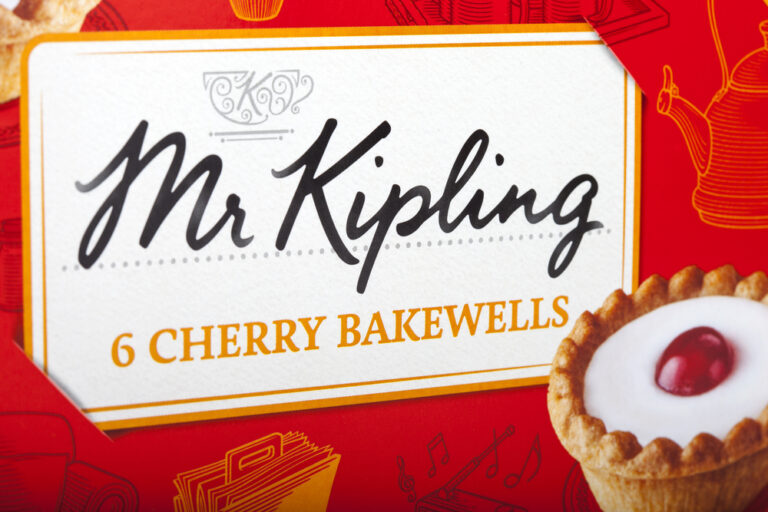
This food producer’s brands include Ambrosia, Angel Delight, Atora, Batchelors, Be-Ro, Bird’s, Bisto, FUEL10K, Homepride, Loyd Grossman, Marvel, McDougalls, Mr Kipling, OXO, Paxo, Plantastic, Saxa, Sharwoods, Smash, The Spice Tailor, and also a licence with Cadburys for cakes, home baking and ambient dessert products.

The group, which is the UK’s fourth largest such maker, proudly claims that some 90% of all UK households buy one or more of its products each year.

I don’t know about your household, but mine certainly has hundreds of this group’s products on our shelves during any one year.

And with such top name brands I would bet that it is similar in your home too.

In fact, the group’s iconic brands, feature in millions of homes every day. 

A Long Time Building

The creation of Bird’s, the oldest of Premier’s brands can be dated back to 1837.

Similar important timelines can be identified in 1908 with the invention of Bisto gravy, while in that year OXO sponsored the London Olympics.

In 1917 the Ambrosia creamery was set up in Devon, from which it helped to supply dried milk to troops in the First World War.

Other notable dates in the group’s history include: the 1967 creation of the Mr Kipling brand, which has remained the UK’s top cake brand since the late 1970’s; actress Lynda Bellingham first appeared as the OXO mum in 1983, staying for the next 15 years; and the group going public in 2004.

Today over 86% of the group’s total revenues come from its branded products.

Last year the group’s current brand portfolio helped it to generate over £1bn in sales, having grown at an average 5.3% in each of the last three years.

Furthermore, it has a portfolio of category leading brands, with market leadership in five categories: cooking sauces and accompaniments with 15% market share; 44% of flavourings and seasonings; 36% share in quick meals, snacks and soups; ambient cakes 19%; and 39% of the ambient desserts market.

The group today, which has over 4,000 employees, operates from 15 sites in the UK and operates a multi-format, multi-channel approach to serving a broad range of customers, including major UK supermarkets, discounters, e-commerce channels, convenience stores, wholesalers and foodservice operators.

The company claims that it aims ‘to create great tasting products that contribute to healthy and balanced diets, while committing to nurturing our people and our local communities, and going further in the pursuit of a healthier planet, in line with our Purpose of ‘Enriching Life Through Food’.’

Interesting Shareholders

With some 869m shares in issue, the largest holder is Nissin Foods Holdings, the Japanese-based but totally global noodles and snack pot business, with 24.27% of the equity.

Other large holders include Van Lanschot Kempen Investment Management (5.52%), Brandes Investment Partners (4.86%), M&G Investment Management (4.02%), JP Morgan Asset Management (3.64%), Dimensional Fund Advisors (3.63%), Southeastern Asset Management (3.54%), The Vanguard Group (3.04%), Paulson & Co (2.94%) and Fidelity Management & Research (2.40%).

Analyst Views

Taking a consensus average of six analysts that follow the group, they look for 177p for its shares, while 200p is the highest aim.

Taking a positive view of the recent statement that pension deficit contributions will have been suspended from the start of this month, analysts are suggesting that will save the group some £3m a year, thereby boosting its cashflows.

The analysts are now anticipating a ‘re-rating’ for the group’s shares.

Estimates for the year to end March 2024 range around £1,120m revenues (£979m), with adjusted pre-tax profits improving from £137.2m to £152.5m, lifting earnings to 12.9p (12.6p) and boosting the dividend to 1.7p (1.4p) per share.

For the current year estimates are out for £1,170m sales, £160.5m profits, 13.75p earnings and a 2.10p dividend per share.

My View – a FOMO stock?

We will have to wait to see what the last year’s results will actually look like, which should happen in about six weeks’ time (16th May).

However, the recent ‘reprieve’ on the pension deficit payments gives the group quite an important boost.

It also could help to promote the attractions of the group to any potential bidders, including Nissin.

The shares, which are now trading at around the 147p level, help to value the group at a healthy, but attractive £1.29bn.

Could a bid at around the 180p level set the ‘cat amongst the predatorial pigeons’ – who knows, but methinks it is best to be in than miss out.