Gold and oil prices gain on Middle East conflict escalation

Oil and gold prices rose on Tuesday as the Israeli-Hamas war showed signs of escalation with flare-ups across the region, including Saudi Arabia.

Brent crude oil price is +0.91% at the time of writing, while WTI crude is up by 0.86%. Natural gas price is up by 1.22% in the Tuesday morning trade. 

Gold flirted with $2,000 and is once again behaving like a safe haven asset during the ongoing Middle East crisis, David Morrison, Senior Market Analyst at Trade Nation, explained. 

Gold had been trading at around $1,830 the day before Hamas launched an attack on Israel 7th October. Since then, gold has steadily ticked higher as investors pile into the safe haven.

According to David Morrison, “for now, investors are spurning US government debt as the ultimate go-to safe haven, as they worry about the increased supply of bonds, federal debt and the loss of the Federal Reserve as a strong buyer.”

Oil consolidation

In the context of the ongoing Israel-Hamas conflict, the WTI price has consolidated at around $83 after trading near $90 in the early days of the war.

The conflict is yet to materially disrupt the oil supply in the region and the initial bid in oil has diminished through October.

“But prices could shoot higher if there should be an escalation which threatens supply”, David Morrison warns.

AIM movers: Real Good Food recovery and Velocys cash problem

0

Real Good Food (LON: RGD) says first half revenues were 2% ahead at £16.1m, although volumes fell by 10%. October revenues appear set to be 6% higher. The cake decorations supplier has significantly reduced its loss due to higher margins. A shortage of cash has held back growth, but the company could be profitable for the full year. Talks continue concerning the extension of the loan agreement with Hilco Private Capital. Interim results will be published in December. The share price recovered 50% to 1.8p.

Ondine Biomedical Inc (LON: OBI) customer Alberta Health Services has expanded the use of Steriwave photodisinfection to reduce surgical site infections in orthopaedic surgery. These infections can cost more than C$100,000/case. There is a one-third increase in the share price to 14p.

Sunrise Resources (LON: SRES) says a review of chemical analyses from surface mineralisation has identified anomalously high levels of gallium in high-grade zinc samples – up to 69ppm gallium – at the Reese Ridge project in Nevada. Gallium is used in semiconductors and solar panels and 80% is produced in China, which has restricted exports. A follow-up exploration programme is planned. The share price rose 15.4% to 0.075p.

Kromek (LON: KMK) has secured three orders worth more than $1m, including one from a new customer. They are in nuclear security and bio-security. This helps to underpin the current forecasts. The share price improved 8.9% to 4.9p.

FALLERS

Velocys (LON: VLS) is the worst performer today because the conditions for the $15m strategic investment from Carbon Direct have not been met. To receive this cash the sustainable fuel developer needs to raise $40m, including $8m already raised, and management is still trying to secure investors. The $15m cash injection is no longer binding. Velocys needs more cash before the end of the year. There is a significant market opportunity in sustainable aircraft fuel, but Velocys is in a weak position when discussing additional funding and the share price slumped 69.6% to 0.306p.

Kore Potash (LON: KP2) chief executive Brad Sampson has resigned, and the chairman will take on the role until the financing proposal for the Kola potash project is received. Kore Potash has raised $2.5m at 0.38p/share. That includes $750,000 invested by the chairman. This will be used for the development of the Kola potash project. The share price slipped 27.3% to 0.4p.

Vast Resources (LON: VAST) is in discussions with Mercuria and Alpha for extensions to the repayment of debt, while the company waits for the proceeds of a past claim. The current repayment date is 30 November. There was $6.4m used in operations last year with a further $1.87m outflow from investment. The share price fell 13.5% to 0.16p.

Technology businesses developer Frontier IP (LON: FIPP) moved into loss last year because of realised and unrealised losses on its portfolio against a large gain in the previous year. The value of the portfolio fell 17% to £33m, although there were net disposals of nearly £5m. There was a £3.25m cash outflow from operations offset by disposals, leaving £4.6m in cash at the end of June 2023. The share price dipped 10.8% to 41.5p.

BP shares sink as profit misses estimates, lower gas earnings weigh

BP shares sank in early trade on Tuesday after the oil major announced slowing profit that missed analyst estimates.

Earlier in October, we published a premium article explaining BP offers little value above 550p. We argued that the move higher in BP due to Saudi Arabian and Russian supply lacked conviction, and the BP share price was vulnerable to a pullback.

We also voiced concerns about the energy pricing mix and how this could impact BP’s earnings.

Today’s results revealed a punishing reduction in Q3 2023 profit that missed estimates. Underlying replacement cost profit was $3.3bn in Q3 2023 as revenue slipped to $54bn from $57bn a year ago.

BP shares were down 4.1% at the time of writing on Tuesday.

The main culprit in BP’s falling revenue and profit was weaker gas prices and trading activities. Lower oil prices also weighed on profit as oil refining margins fell.

BP is not alone in the oil sector in missing estimates; Chevron and Exxon recently released earnings weaker than analyst forecasts.

However, market sentiment is clearly turning against BP – a $1.5 billion share buyback did little to offset the shareholder disappointment around lower-than-expected earnings.

BP maintained its dividend at 7.27 cents per share.

With oil prices failing to maintain strength despite heightened geopolitical risks, the outlook for BP is increasingly uncertain, which is reflected in BP’s share price action today.

Earnings season and the outlook for UK & US stocks with Fiona Cincotta

The UK Investor Magazine was delighted to be joined by Fiona Cincotta, Senior Market Analyst at City Index, for a deep dive into the latest UK and US earnings season.

Fiona provides insight into the ongoing earnings season and frames recent updates in the context of the underlying economy. Fiona discusses the strength of earnings so far and performance versus analyst expectations.

After recent drops in major US indices, we explore what the rest of the year could hold for US stocks, as well as UK equity markets.

The ‘Magnificent 7’ US Tech stocks with exposure to AI were a core driver of global stocks in the first and second quarters of 2023, we look at how these technology companies may perform going into the close of 2023 and implications for broader indices.

Fiona discusses Q3 UK banking results and how they reflect the health of the underlying UK economy and wider sentiment.

We finish by running through potential scenarios for central banks, currencies and the global economy.

Lok’nStore discount too attractive to ignore

Self-storage sites operator Lok’nStore (LON: LOK) continues to increase its NAV despite the effect of higher interest rates. That reflects the new openings and higher prices. Momentum is being maintained and there should be a greater increase this year.
NAV was 1% ahead at 986p/share at the end of July 2023. Occupancy in stores operating for more than three years is 80.6%, while pricing has risen by 6.8%. There were also increases in the value of newly launched sites.
The lack of supply of self-storage outlets means that there is potential to continue to increase prices, while there is a decel...

FTSE 100 higher ahead of busy week for earnings and central bank action

The FTSE 100 was higher on Monday as investors geared up for a busy week of central bank action and further earnings from the world’s biggest companies.

The FTSE 100 was 0.78% higher at 7,348 at the time of writing.

“European equity indices pressed ahead at the start of the new trading week as investors slowly regain their appetite for riskier investments following last week’s tough spell for stocks,” said Russ Mould, investment director at AJ Bell.

“The FTSE 100 advanced 0.9% to 7,356 as investors flocked to the technology, consumer, industrials, utilities and basic materials sectors. Airtel Africa took the top slot on the blue-chip risers, up nearly 7% thanks to reporting strong customer growth.”

Later in the week, the Bank of England is widely expected to keep rates on hold on Thursday as UK economic data worsens, despite inflation remaining significantly above their 2% target.

Also on Thursday, the FTSE 100’s largest company by market cap, Shell, is scheduled to report earnings during a volatile period for energy prices. BP will issue its third quarter results tomorrow.

The two oil majors account for a substantial proportion of the FTSE 100 and have the power to move London’s leading index.

US interest rates & Apple

In the US, the Federal Reserve will release its interest rate decision on Wednesday. Economists expect the Fed to keep rates on hold.

Apple, the world’s largest company by market cap, will report earnings on Thursday, marking the end of earnings season for major technology companies.

Technology companies have reported mixed earnings in recent weeks, culminating in the NASDAQ entering correction territory last week.

HSBC

The release of HSBC’s Q3 results rounded off the latest batch of earnings updates from FTSE 100 banks on Monday. Unlike their FTSE 100 peers, HSBC announced a fresh wave of share buybacks, which were the highlight of the £117m market cap bank’s release.

HSBC shares were down 0.6% at the time of writing – the decline may have been materially larger if it wasn’t for the $3bn buyback.

“A larger than expected share buyback seems to be doing a lot of the heavy lifting for HSBC today – making up for some less than positive details in its third quarter results,” Russ Mould said.

“What may sober up any investors drunk on a $3 billion handout is the higher-than-expected cost growth now expected for 2023. Management had made keeping a tight rein on any outgoings a key part of their strategy, so to fall down on this point does some damage to their credibility.

“Given part of the bloated costs relates to higher performance-related pay, HSBC could be exposed to some political or even regulatory blowback.

“For now, HSBC, whose horizons go far beyond the UK, is seen in a much better light by the market than its rivals and it is notable to see it sticking with its return on equity targets for 2023 and 2024.”

Cadence Minerals shares soar on Amapa iron ore project progress

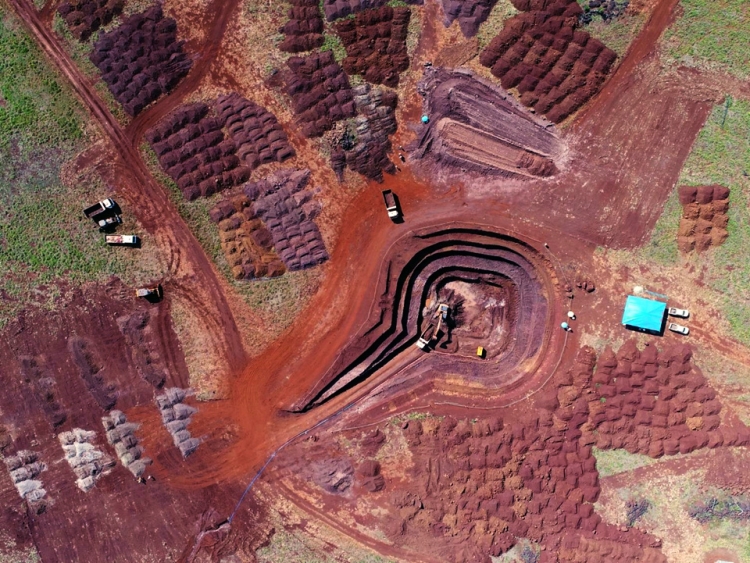
Cadence Minerals has announced a major development for their investment in the Amapa iron project, which lays down a path to restarting production at the project once owned by Anglo American.

Cadence Minerals has signed a memorandum of understanding (MOU) with a Chinese engineering firm to conduct a feasibility study and potentially finance and construct the Amapa Iron Ore Project in Brazil.

The MOU is with Sinoma Tianjin Cement Industry Design & Research Institute Co., a subsidiary of Sinoma International Engineering Co. It comes after ongoing talks between Cadence’s joint venture Pedra Branca Alliance, Amapa operator DEV Mineração and Sinoma to advance the $500 million project.

Cadence Minerals shares were 63% higher at the time of writing on Monday.

Under the non-binding agreement, Sinoma will submit a proposal to complete a definitive feasibility study for rebooting the idled Amapa mine and processing facilities. If approved, the firm would then provide a fixed-price engineering, procurement and construction contract and arrange financing from Chinese institutions.

Progress on the MOU could pave the way for the construction of the former Anglo American project to resume. Cadence has invested $12.1 million to date, increasing its stake in Amapa to 32.6%.

Additional details include:

  • Cadence’s Amapa investment vehicle is Pedra Branca Alliance, a joint venture with Indo Sino Pty Ltd
  • Amapa operator DEV Mineração owns the project and is Cadence’s Brazilian partner
  • Sinoma would act as general contractor if appointed after feasibility study
  • Sinoma is discussing potential financing with SinoSure export credit agency and China Development Bank
  • Parties will develop a roadmap to advance feasibility study, financing and EPC contract

The MOU marks a significant step forward in efforts to revive the Amapa iron ore mine, which has potential to produce millions of tonnes per year. Cadence and its partners will be working closely with Sinoma as the project enters this critical development phase.

AIM movers: Cadence Minerals progressing Amapa iron project and Base Resources to end production at Kwale

0

Cadence Minerals (LON: KDNC) says that the 36.2%-owned joint venture that owns the Amapa iron ore project in Brazil has signed a memorandum of understanding with Sinoma Tianjin Cement Industry Design, which will provide a final proposal to complete a definitive feasibility study for the project and then submit a fixed price contract to construct the project. It will also attempt to obtain the financing required. The share price jumped 59.8% to 7.75p, but this is only back to the level in September. It has still declined by nearly one-third this year.

Machine learning developer Insig AI (LON: INSG) has launched the Transparency and Disclosure Index, which shows how well a company is doing with its level of disclosure. It should help to simplify corporate reporting, so it focuses on the important information. The share price improved by on-fifth to 21p.

Eyewear company Inspecs (LON: SPEC) improved revenues by 5% to £159.1m in the nine months to September 2023. Net debt has fallen by £6.4m to £21.2m. The new factory in Vietnam will be completed in the first half of 2024. The share price increased 8.57% to 76p.

Solid State (LON: SOLI) has sparked another upgrade after its first half trading statement. Security and defence demand has pushed up organic growth and Custom Power made a full contribution. Interim pre-tax profit will be at least £7m. Cavendish upgraded full year pre-tax profit by £600,000 to £12.5m and net debt is likely to be lower than expected at £4m. The share price rose 6.88% to 1165p.  

FALLERS

Mineral sands company Base Resources (LON: BSE) says mining will end at Kwale in December 2024. There is insufficient resource development potential to extend the mine life. The share price slumped 24.3% to 6.625p.

Graphene technology developer Versarien (LON: VRS) are still marketing non-core businesses and the amount that will be received is uncertain. Discussions continue with potential customers in the leisure and construction sectors. The share price decreased a further 18.8% to 0.61p – just above the recent low.

Powerhouse Energy (LON: PHE) is deferring development of the Longford project in Ireland. It will assess the position with Hydrogen Utopia (LON: HUI). The Powerhouse Energy share price slipped 17.3% to 0.31p.

Quantum Blockchain Technologies (LON: QBT) has raised £2m from a placing at 1.5p/share, compared with the current price of 1.525p, down 15.3%. The cash will be spent on research and development. This will enable development of cloud service infrastructure in North America for the SaaS-based bitcoin mining market. Revenues could come from fees for each mining rig and/or a share of additional mined bitcoins.

Neometals (LON: NMT) has decided not to progress with vanadium tailings retreatment project in Finland because of difficulty in financing. The price of vanadium has been falling in recent months. Neometals will concentrate on licensing its vanadium recovery process. There was cash of A$14.2m at the end of the first quarter. The share price fell 11.4% to 15.5p.

HSBC announces $3bn buyback in mixed Q3 update

Although HSBC’s Q3 earnings missed analysts’ estimates on Monday, the FTSE 100 heavyweight’s update made for good reading with the bank committing to a fresh $3bn buyback.

The share buyback helped lift HSBC shares marginally to 602p as the prospect of cash being returned to shareholders offset mixed earnings and revenue.

“A larger than expected share buyback seems to be doing a lot of the heavy lifting for HSBC today – making up for some less than positive details in its third quarter results,” said Russ Mould, investment director at AJ Bell.

HSBC’s profit before tax rose by $4.5bn to $7.7bn in Q3 supported by higher interest rates, however, the comparison is to Q3 2022 when HSBC recorded a one-off $2.3bn impairment on French retail banking operations, enhancing the most recent quarter’s comparables.

That said, HSBC’s operations produced a 40% jump in revenue to $16.2bn as group net interest margins increased to 1.70%.

The strength of HSBC’s business has allowed them to announce a fresh $3bn buyback – the only FTSE 100 bank to do so in the latest round of earnings updates.

“The UK’s largest listed bank is showing off its capital strength with a fresh $3bn buyback despite missing expectations. There’s some noise to look through in these results, largely the massive impairment charge taken in the comparable period last year, which is why the year-on-year profit growth levels are quite so extreme. Under the hood, costs were a little higher than expected and there’s a question mark on how they’ll evolve over 2024. But apart from that, performance was broadly where markets thought it would be,” said Matt Britzman, equity analyst at Hargreaves Lansdown.

“After seeing Standard Chartered take an unexpected impairment last week relating to its China assets, credit losses were under a microscope. At $1.1bn, the charge for expected credit losses was in line with expectations, with $500m relating to Chinese commercial real estate assets. There’s still a cloud of uncertainty hovering over the market, but investors will be happy to see no nasty surprises.”

“There wasn’t much in these results to upset the apple cart and the fresh buy-back is testament to a strong capital position. HSBC is the only major UK-listed bank to still be up year-to-date after Standard Chartered left the club last week. Yet the valuation still looks downbeat, paving the way for some impressive investor returns.”

Can Persimmon shares regain FTSE 100 prowess at the next reshuffle?

Persimmon had been one of the best FTSE 100 performers over the past decade before being removed from London's leading index at the most recent reshuffle.
Their demotion reflected a slowing UK housing market and concerns about the immediate outlook for mortgage rates and house prices.
Looking at the current rankings of FTSE 350 stocks, the Persimmon share price has some work to do to reenter the FTSE 100. We look at the likelihood of Persimmon staging a rally and winning back its place in the index.
Whether Persimmon can regain coveted inclusion in the UK's premier index will depend heavily o...