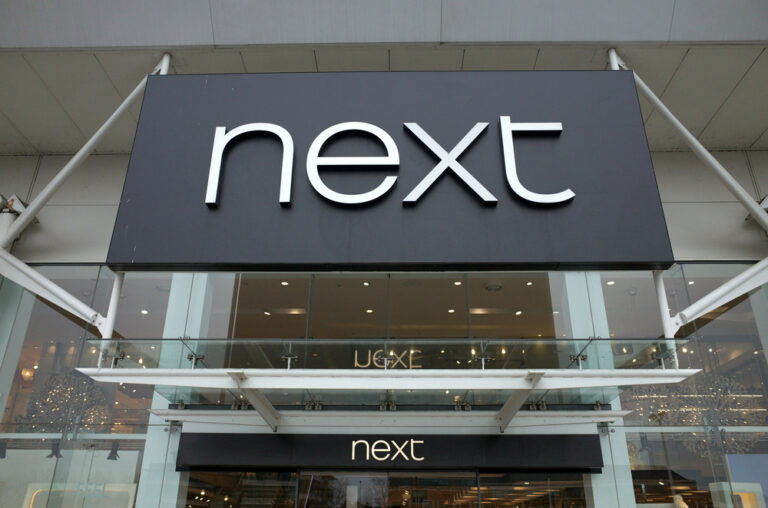
Next lifts profit guidance after strong second quarter

Next is the gift that keeps on giving. Not only did the retailer successfully navigate the pandemic without too much disruption to revenue or profits, it has taken the cost-of-living crisis in its stride.

Next’s Full-price sales rose 6.9% in the second quarter compared to the same period last year. Strong performance in the last quarter has given Next’s board the confidence to increase full-year profit before tax guidance by £10m to £845m. A small increase, but an increase nonetheless.

With interest rates set to increase even further, there are concerns the UK consumer will curtail discretionary spending which will impact Next’s sales, so any increased profit guidance will be welcomed with open arms. 

Next have set out guidance for a 0.5% sales increase in the second half compared to last year to total a 1.8% increase in sales for the full year. 

Next have a history of underpromising and overdelivering and today’s guidance certainly provides the opportunity for Next to beat their own expectations later in the year. 

Any improvement in consumer sentiment or cost of living pressures could see Next smash these forecasts. Indeed, analysts at Third Bridge feel these pressures could soon ease.

“Our experts are optimistic about the outlook of Next and other mid-market retailers heading into autumn as inflation eases. Manufacturing and freight costs are coming down rapidly compared to last year,” said Alex Smith, Global Sector Lead at Third Bridge.

“Next has benefited from several big players like Debenhams exiting the market and the decision of John Lewis and House of Fraser to close stores. Next is focusing on larger stores, which can offer more choices to customers and are more cost-efficient to run.”

“One of the challenges for Next’s online business is that customers may be overwhelmed by the choices. Nevertheless, our experts see opportunities for Next’s online brand.” 

Next shares were 0.2% higher at the time of writing.

With the Bank of England set to hike the base rate further, what’s in store for the GBP?

For much of 2022, the GBP faced a myriad of political and economic challenges as it navigated a steady churn of political and economic turmoil that dented investor confidence in the currency.

These challenges were further compounded by macroeconomic headwinds. With the wider global economy grappling with a war in Europe, surging inflation, and an energy crisis, any form of growth was hard to come by for the GBP.

The situation worsened during September’s mini budget. As the markets were spooked by Liz Truss’s unfunded tax cuts, the GBP experienced a sharp decline to record lows ($1.0856) against the USD, marking its worst month in nearly four decades. As a result, the GBP finished the year as one of the weakest-performing currencies among the G10 nations.

However, a small ray of hope appeared with the arrival of Rishi Sunak and Jeremy Hunt, who were brought in to rebuild the economy and stabilise Westminster. This sense of stability enabled the GBP to gradually recover. It currently stands at $1.28 against the USD, making it one of the strongest-performing currencies since December 2022.

Despite this progress, the outlook for the GBP remains uncertain. Persistent core inflation has defied earlier projections, and there are indications of faltering economic growth, resulting in a recent shift in market expectations for the currency.

Changing expectations for the GBP

At the beginning of this year, analysts and economists generally agreed that the Bank of England’s interest rate hiking cycle, which had dominated much of the discourse around the GBP in 2022, would act as a cooling force on the economy.

Therefore, with the UK steering clear of a recession in the final quarter of 2022, market forecasts suggest that the Bank of England’s monetary tightening measures were nearing an end, especially because the economy experienced surprisingly robust growth in January. Bolstered by this positive sentiment, the markets adjusted their growth projections for the UK, aligning them with those of other major economies, thus enhancing the outlook for the GBP throughout the remainder of 2023.

However, contrary to projections, inflation failed to subside as anticipated. With core inflation remaining stubborn at 6.9%, it is now evident that further rate hikes are required. As a result, market pricing in interest rate markets now point towards further – if less drastic – hikes, with the base rate expected to peak at 5.75% by the end of 2023.

Whats in store for the GBP?

According to conventional wisdom surrounding currency performance and interest rate expectations, when a central bank appears inclined to further raise its base rate, the local currency typically enjoys upward momentum due to increased foreign investment demand. Given the expectations of the Bank of England’s intention to hike its base rate in response to escalating core inflation, one could reasonably anticipate a positive outlook for the GBP. Mutch of these expectations have all been fully priced in now as higher rates have been expected for some time.

Emerging signs in recent weeks indicate that the UK economy might be heading towards a period of stagflation – or, perhaps even more concerning, a potential recession which means the GBP looks like to remain pressured in the near to medium term. The primary reason behind this is that the markets believe the Bank of England will need to continue raising the base rate before inflation falls to more acceptable levels. However, such a consistent and rapid series of rate hikes could prove highly destructive to the purse strings of many UK businesses and consumers, especially those with mortgages.

Certainly, with the cost of borrowing rising further, businesses will face higher expenses for investments, expansions, and essential operational activities, while homeowners will see their spending power being reduced even further. With less money circulating around the economy, further rate hikes will be extremely prohibitive for UK economic growth.

For investors, therefore, the GBP’s risk factor is that any gains that currency has made this year will quickly be lost to a mass sell-off on fears that the UK will enter a stagflationary or recessionary period. If the BoE indicates that the base rate will rise as high as the markets are already expecting, such a situation would be increasingly likely.

Investors should look to the bond markets

In terms of tracking the currency in the months ahead, investors should look to bonds; indeed, early signs of economic turmoil frequently first emerge in the debt securities markets.

As an illustration, during the announcement of Liz Truss’s disastrous mini-budget in September 2022, the UK gilt markets experienced a dramatic crash, losing a staggering £1.2 trillion (28%) in value. This plunge in the gilt markets drove bond yields to nearly 4.5%, reaching their highest point since the middle of the previous financial crash in October 2008, and underscoring the reliability of the bond markets as an indicator of the economy’s future direction.

This is important; in the past few weeks, the gilt markets have experienced comparable price declines, and ten-year yields have surpassed the levels seen in October 2022. This surge in yields suggests that the markets anticipate more turbulence on the horizon for the UK economy. As recessionary and stagflation fears intensify, it is likely that investors will begin to sell off the GBP, leading to a decline in the currency’s price.

In summary, the future of the GBP remains uncertain due to the ongoing economic climate. The combination of rising inflation and the possibility of additional interest rate hikes has created a complex environment for investors to navigate. Therefore, keeping a close eye on bond markets and diligently monitoring economic indicators will be of utmost importance in navigating the dynamic landscape surrounding the GBP in the months ahead.

High-Risk Investment Warning: CFDs are complex instruments and come with a high risk of losing money rapidly due to leverage. 76% of retail investor accounts lose money when trading CFDs with this provider. You should consider whether you understand how CFDs work and whether you can afford to take the high risk of losing your money. For more information, please refer to HYCM’s Risk Disclosure.     

*Any opinions made in this material are personal to the person expressing the opinion and do not reflect the opinion of HYCM. This material is considered a marketing communication and should not be construed as containing, investment advice or an investment recommendation or, an offer of or solicitation for any transactions in financial instruments. Past performance is not a guarantee of or prediction of future performance. HYCM does not take into account your personal investment objectives or financial situation. HYCM makes no representation and assumes no liability as to the accuracy or completeness of the information provided, nor any loss arising from any investment based on a recommendation, forecast or other information supplied by an employee of HYCM, a third party or otherwise.

FTSE 100 sinks after US credit rating downgraded by Fitch, ConvaTec jumps

Global equities were knocked down a peg on Wednesday after Fitch downgraded the US credit rating from AAA to AA+, citing concerns about governance and fiscal health.

Fitch’s downgrade reflects the United States’ ability to pay back its debt, and the mere suggestion the fiscal health of the world’s largest economy was deteriorating was enough to send stocks into free fall.

The probability of the US actually defaulting on their debt is minuscule.

Nonetheless, the FTSE 100 was down over 1.8% in early trade before recovering some losses to trade 0.9% weaker.

“The rating downgrade of the United States reflects the expected fiscal deterioration over the next three years, a high and growing general government debt burden, and the erosion of governance,” credit rating agency Fitch said in a statement.

The US credit rating was last downgraded in 2011 by S&P, and markets reacted similarly with sharp declines in stocks before a steady recovery.

“There is a saying that when the US sneezes, the rest of the world catches a cold. That is certainly true with how the US government’s credit rating downgrade has troubled markets globally,” said Laith Khalaf, head of investment analysis at AJ Bell.

“Ratings agency Fitch lowered the rating from the top level of AAA to AA+ amid concerns about the country’s finances and its debt burden. In effect, this is saying the US is now higher risk than previously thought. The news took markets by surprise, sending Asian and European indices down by approximately 1%.

“When the debt of the world’s largest economy is seen as lower quality, it will naturally trouble investors and make them rethink their portfolios. It also might surprise some people given how the US economy is proving to be more resilient than expected.”

FTSE 100 movers

ConvaTec was the FTSE 100’s top riser after releasing a sterling set of half-year results. Reported operating profit jumped 41% to $123.4m, while ConvaTec recorded a $10m increase in adjusted EBITDA to $262m.

Karim Bitar, Chief Executive Officer of ConvaTec, commented:

“This performance demonstrates the momentum Convatec is building – revenue growth is accelerating and we are expanding our operating margin, despite ongoing investments to drive future growth and the challenging inflationary back drop. Given the strength of performance and the encouraging outlook, particularly in AWC, we are increasing our guidance for the full year.”

ConvaTec was 7% higher at the time of writing.

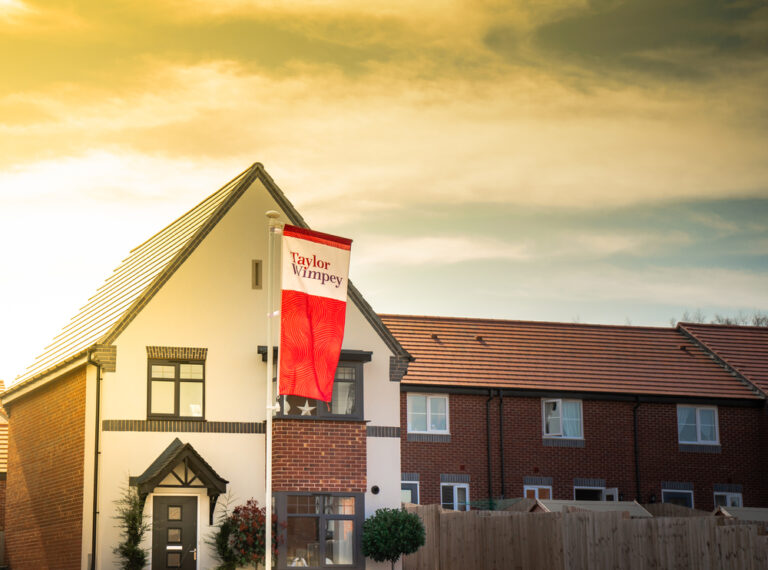
Taylor Wimpey shook off the doom and gloom of yesterday’s UK house price data as their shares ground out a 2% gain. Taylor Wimpey’s revenue fell 21% in the first half of the year but remained steadfast in their shareholder returns with a 10% increase to the dividend. Completions were slightly above management’s forecasts, and guidance for the full year was edged up.

Endeavour Mining was the FTSE 100’s biggest loser after the gold producer reported lower production in the six months ending June 2023 compared to the same period last year. Endeavour Mining shares were down 5.3% at 1.54 pm on Wednesday.

Shore upgrades Marks & Spencer

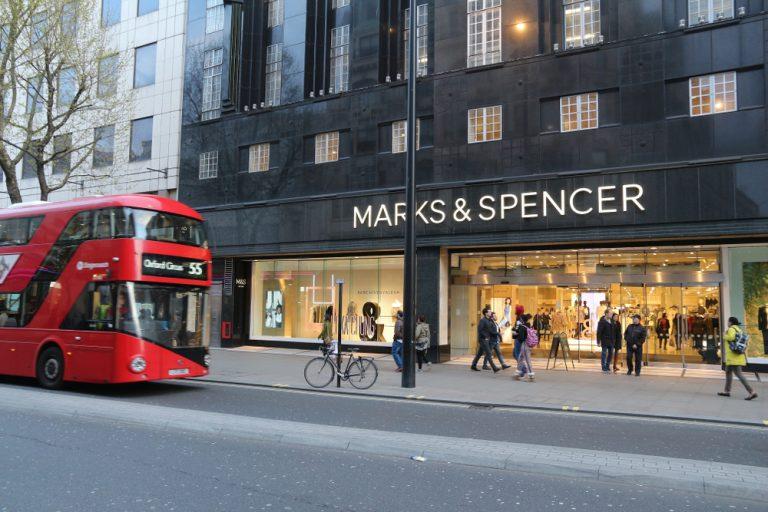
Shore Capital has upgraded its profit forecast for Marks & Spencer (LON: MKS) by 6%. This reflects the view of the broker concerning progress despite the poor weather in July and a further possible interest rate rise. The high street retailer has fallen out of the FTSE 100 index but could return in the near future if the positive trading trends continue.
Mark & Spencer is four months into its current financial year. The optimism that came from the positive 2022-23 figures published in May is continuing.
Full-price clothing sales have been strong, and Marks & Spencer has not had a s...

AIM movers: Blancco Technology bid and Deltex Medical slumps on return from suspension

0

Francisco Partners II is making a recommended cash offer for e-waste and data erasure company Blancco Technology Group (LON: BLTG). The bid is 223p/share and the share price jumped 22.4% to 219p. The share price has not been as high as the bid for 18 months. Blancco management believe the help of a backer with cash to invest and experience of growing technology companies will help to expand the business.

CyanConnode (LON: CYAN) has won a contract for 300,000 mesh communication modules for smart meters in India. Deliveries should commence by December. This is part of the strategic framework agreement with IntelliSmart Infrastructure, taking the total orders generated from this deal to 900,000. This could help CyanConnode move into profit in the year to March 2024. The share price is 10% higher at 15.125p.

Oxford BioDynamics (LON: OBD) has raised £5.6m via a placing and subscription at 11p/share. A PrimaryBid offer remains open. The share price rose 8% to 11.45p and that is higher than at the start of the week but not much above the all-time low. The cash will finance investment in marketing for EpiSwitch, particularly the prostate screening version.

Alien Metals (LON: UFO) says it has investigated the potential for direct ship ore at the Malina tenement in Western Australia. The Hancock ridge H has provided rock chip samples of greater than 60% and this continues into the tenement. This could significantly increase the resource. The share price increased 5.88% to 0.36p.

FALLERS

Deltex Medical Group (LON: DEMG) returned from suspension and fell 82.5% to a new low of 0.21p. The blood circulation monitoring devices developer raised £1.9m at 0.2p/share. The focus is on creating recurring revenues and marketing the new monitor. There will also be cost cutting to reduce the cash outflow.

Supercapacitor supplier Cap-XX (LON: CPX) has been hit by shipping delays and it expects 2022-23 revenues to decline by 29% to £2.1m. The share price slumped 17.1% to 1.45p, which follows a recent recovery in the share price.

Shares in Evgen Pharma (LON: EVG) declined 12.5% to 2.8p because Juvenescence may terminate the patent and know-how licence agreement for Sulforadex sulforaphane                                                                                                                                           stabilisation technology. FinnCap had previously estimated that the partnership was worth £5m. The £190,000 upfront payment is non-refundable. Evgen has enough cash until the fourth quarter of next year.

Second quarter production from Bushveld Minerals (LON: BMN) fell from the previous quarter, but it is 9% ahead in the first six months of 2023. Unplanned maintenance hit production at Vametco. Vanchem delayed the use of higher-grade ore until July, which will boost production. 1,784mt of vanadium was produced and destocking meant that 2,096mt was sold in the period. Full year production guidance has been cut from 4.2mt-4.5mt to 3.7mt-3.9mt. The vanadium price has fallen in the past quarter. The share price is 11.5% lower at 2.3p.

Blancco Technology Group agrees 223p takeover by Francisco Partners Funds

Francisco Partners Funds and Blancco have agreed on the terms of an all-cash offer for Blancco at 223p, valuing the entire issued share capital at approximately £175 million.

Blancco Technology Group shares were 22% higher at 219p at the time of writing.

The offer represents a premium of 24.6% to Blancco’s closing share price yesterday, 25.9% to the one-month volume-weighted average price, and 32.9% to the three-month volume-weighted average price.

Blancco said the board believes the offer provides shareholders the opportunity to realise the value of their holdings in cash at a level that recognises the company’s future growth potential.

Francisco Partners were attracted to Blancco’s market positioning, customer base and the possibility of further growth.

Taylor Wimpey shares edge higher as dividend increased

Taylor Wimpey was one of the few FTSE 100 gainers on Wednesday morning as the company announced it would increase its dividend despite falling revenues.

However, the increased dividend was one of the few bright spots in an otherwise downbeat half-year report.

The well-documented deterioration in the UK housing market was starting to play out in Taylor Wimpey’s results. Revenue fell 21% in the first half of 2023 as completions fell to 5,082 from 6,790 in the same period last year.

Taylor Wimpey did say completions were slightly ahead of their expectations and now forecast full-year completions between 10,000 and 10,500 – another small win for investors.

Taylor Wimpey shares were 1.88% higher at the time of writing, while the FTSE 100 dumped around 1.8%.

“Taylor Wimpey has followed recent trends and reported a 26% drop in completions and 21% fall in revenue. This comes as average sales rates have also depleted,” said Sophie Lund-Yates, lead equity analyst at Hargreaves Lansdown.

“The substantial challenges and apprehension surrounding buyers with mortgage affordability are having a tangible impact on the builders, and Taylor Wimpey is no exception.

“Recent Nationwide data has shown that house prices have fallen at the fastest rate since the financial crisis, highlighting the extent of the pain. Taylor Wimpey’s pricing seems to be holding firm for now, but the scope of demand weakness will determine how long that’s the case. With the worst of the financial pain from higher interest rates yet to fully feed through to households, this will definitely be something to watch.”

The big concern for investors will be the ability to continue dividend payments if the housing market slows further. Judging by Taylor Wimpey’s cash position, their policy of paying out 7.5% of net assets has ample space to run before dividends become threatened.

AIM new admission: Metals One pins hopes on Scandinavian battery metals projects

Metals One has acquired the Black Schist project in Finland from AIM-quoted Bluejay Mining and another company with an 80% interest in the Brownfield Rana project in Norway. These projects could supply metals for batteries for electric vehicles in the local European markets.
Management wants to take advantage of the expected surge in demand for battery metals as electric vehicle sales build up. Each electric vehicle is estimated to require 35kg of nickel. A shortfall of nickel supply is anticipated in the next decade.
Although the shares opened at 6p, they ended the first day at 4.5p. There we...

FTSE 100 dips as attention shifts to poor US and China manufacturing data

The FTSE 100 closed negative territory on Tuesday as investor attention shifted to the United States and China as the manufacturing sectors in both countries slowed.

ISM US manufacturing data slowed more than expected in July reviving fears about a possible US recession. Meanwhile, investors in natural resource companies grew tired of China’s lack of action on stimulus.

China has been hinting at unleashing a wave of stimulus which is yet to materialise. A fourth month of declines in manufacturing activity had some hoping China would announce firm steps to boost the economy. China instead made unconvincing comments they were considering a range of measures.

The FTSE 100’s natural resource companies have enjoyed recent support from China stimulus hopes, but this waned on Tuesday.

The US manufacturing sector was also showing signs of weakness as ISM Manufacturing data for July missed expectations with a reading of 46.4 versus estimates of 46.8. A reading below 50 signifies contraction.

US stocks fell in the immediate reaction to the ISM release, and already weak European stocks jumped on the tailcoats and closed the session in the red.

The FTSE 100 closed down 0.4% at 7,666.

BP

BP had started the day higher after announcing a 10% dividend increase and a $1.5bn share buyback. However, the stock fell in line with natural resources as disappointment about China’s stimulus took hold.

“BP has been unable to escape the heavy blow to profits dealt by lower commodity prices this earnings season, and investors will be disappointed by today’s earnings miss. As a result, BP has unashamedly pushed shareholder returns to the top of its priority list, and has scope to continue raising the dividend over the rest of the year even if oil prices come under further pressure. It was pleasing to see this come without a cut to guidance on capital investment,” said Derren Nathan, head of equity analysis at Hargreaves Lansdown.

There are significant projects in the pipeline both in economically attractive oil fields, such as phase 2 of the Mad dog project in the Gulf of Mexico, and entry into the European offshore wind market. BP needs to keep the pace of investment high if it wants to sustain growth in shareholder returns, and develop resilience against oil price volatility over the longer term.”

HSBC

HSBC was among the top risers after releasing rising profits in the first half due to higher interest rates and the reversal of an impairment charge related to French operations.

“HSBC’s results got the thumbs-up from investors thanks to bumper profits and news of another $2 billion share buyback, having already completed one this year,” said Laith Khalaf, head of investment analysis at AJ Bell.

Horizontal Logistics and improving Direct-to-Consumer commerce with WeDeliver

The UK Investor Magazine was delighted to welcome Sahiba Patni, Co-Founder of WeDeliver, to explore their horizontal logistics business which is providing a convenience and delivery service across London.

Visit the WeDeliver website and download the app.

Sahiba explains the opportunity for WeDeliver and their investors to provide everyday convenience solutions across London. WeDeliver is not simply a delivery app but one that allows users to arrange everyday tasks through one of their operatives. WeDeliver also acts as a platform for local businesses to arrange the delivery of their goods to homes and other businesses.

Sahiba provides an overview of their current crowdfunding campaign on Seedrs and outlines their future growth plan.

Find out more about the WeDeliver Seedrs campaign here.