Sylvania Platinum boosts dividend policy

1

Sylvania Platinum (LON: SLP) has updated its dividend policy and it intends to pay 40% of free cash flow. The latest interim is 3p a share and Liberum forecasts a total 2022-23 dividend of 9p a share, increasing to 14p a share next year – although it may not be maintained at that level.  

The tailings processor and minerals explorer, which has six platinum group metal processing plants in the Bushveld complex in South Africa, can afford this because it has $123.9m in cash. That could increase to $152m by June 2023. Last year $25.6m was paid in dividends.

First half production of platinum group metals increased to 38,471 ounces. This offset lower selling prices. Recovery levels improved to 56.5%. Investment in new plants is paying off and more investment is planned. The full year expectations are for production of between 70,000 ounces and 72,000 ounces.

Interim revenues were 16% ahead at $79.9m and net profit was one-third higher at $32.6m. The cash cost declined by 16% to $742/ounce. That is much lower than rival producers.

Exploration

Sylvania Platinum is reinvesting some of its cash in exploration. The most far advanced project is Volspruit, which has gold, copper and nickel. There could be an open cast mine.

There are plans to update the mineral resource estimate. The current estimate does not include the rhodium and other metals. Management will have to decide whether to spin off or the asset of find a partner.

There could also be mineral resource estimates for the Aurora and Hacra exploration projects.

Further tailings projects could be added to the portfolio. It could take 18 months or more for these projects to obtain permissions and get up and running.

The share price rose 5.2% to 105p, which provides a forecast dividend yield of 8.6% and that could rise to 13.3% next year. The dividend is not necessarily going to be consistent, because it will depend on metals prices and production levels, but it should continue to provide an attractive income for shareholders.

F3 Uranium shares soar on bumper uranium mineralisation encounter at the JR Zone

F3 Uranium shares were soaring on Tuesday after the uranium project generator and exploration company announced their widest ever mineralisation at the JR Zone at the Patterson Lake North (PLN).

The PLN project in the uranium-rich Athabasca Basin region is under going a 20-hole winter drill programme and today’s results are resulst from the latest four holes.

Drill hole PLN23-050 encountered 21.0m interval, including 3.19m of composite radioactivity with >10,000 cps and a peak of 57,100 cps.

F3 Uranium shares soared 16% on the news.

“The technical team is delighted to announce scintillometer results of step out hole PLN23-050 on line 045S where mineralization was encountered over a 21.0m interval within the A1 main shear zone, including the high grade core,” said Raymond Ashley, Vice President Exploration.

“We are continuing with disciplined step out drilling and growing the JR Zone further along strike to the south, which has now been defined over a total length of 75 meters to section line 060S where PLS23-052 intersected high grade mineralization with up to 53,600 cps. Although PLS23-051 on section line 00SN tested the MSZ closer to the Athabasca Unconformity and did encounter radioactivity, we anticipate focusing the remaining winter program on basement hosted mineralization. The JR Zone continues to impress with high grade intercepts as we define it along strike while also building some width with infill drill holes.”

FTSE 100 dips as markets weigh global growth and interest rates

With the fanfare attached to the breach of 8,000 fading into the rear view mirror, the FTSE 100 is failing to break much higher than the key psychological 8K level, which could open the doors to further selling.

UK equity bulls may start to become concerned if the FTSE 100 fails to establish a sustained presence above 8,000 in the short term. Technical resistance in the 8,010 – 8,020 region is a hurdle that must be overcome soon to avoid investors booking a greater amount of recent profits and sending the FTSE 100 back to 7,900.

The FTSE 100 dipped on Tuesday morning as market focus honed in on global growth and the precarious situation equities find themselves in.

“A tale of shrinking economic activity is still unfolding in countries across the world, adding fresh nervousness to investor sentiment which is already wavering over worries about the path of interest rates,” said Susannah Streeter, head of money and markets, Hargreaves Lansdown.

Having staged a monumental rally from the lows of 2022, equity investors now have to weigh the strength of the global economy and the trajectory of interest rates.

There is an argument equities have already priced in an interest rate ‘pivot’ to lower, and eventually no, rate hikes. This has shifted attention to growth and how central banks will react to economic data.

The reality is, central banks won’t reduce interest rates until economies show signs of pain. And that’s bad for stocks.

Some commentators are talking of a ‘soft-landing’ in growth in the US, but this is very hard to achieve in practise.

HSBC

HSBC demonstrated the benefits of the recovery in China with a doubling in fourth quarter profits. HSBC noted an improvement the Chinese real estate sector as its said pre tax profits increased to $2.5bn from $5.2bn in the fourth quarter.

HSBC also hinted at a special dividend on the completion of the sale of HSBC Canada. Shares were 3.8% higher at the time of writing, helping to offset losses elsewhere in the index.

Cyclical shares such as the miners and housebuilders highlighted investors concerns about growth with Anglo American, Glencore and Persimmon among the top fallers.

AIM movers: UK Oil & Gas discovery valued and Versarien focuses

0

UK Oil & Gas (LON: UKOG) says that RPS Energy estimates the NPV10 value of its Loxley gas project in Surrey at £124m. The share price jumped 25.6% to 0.076p. The Loxley-1 appraisal programme is planned for 2024 should de-risk the project. Gas production could commence in 2026. However, the valuation is based on a December 2022 gas price of £1.86/therm and there is no guarantee it will be this high when production starts.

Strong interim figures from data erasure and IT disposal services provider Blancco Technology Group (LON: BLTG) pushed up the shares 15% to 187.5p. Revenues grew 22% to £24m, or 16% on a constant currency basis, despite flat sales in the mobile division. Underlying pre-tax profit improved from £3.87m to £5.03m. Increasing regulation on data privacy and IT disposal provide a positive long-term outlook.

ZOO Digital (LON: ZOO) has signed up a second major Hollywood studio to its cloud-based ZOOstudio ERP service offering subtitling, dubbing and other video services. ZOOstudio will be embedded in the client’s own internal technology platform. Tougher markets in the US mean that film studios and streaming platforms are seeking to grow in international markets, thereby increasing demand for the services offered by ZOO Digital. The share price is 13.7% higher at 186.5p.

Scancell Holdings (LON: SCLP) has completed the monotherapy arm of the ModiFY phase I/II trial for the Moditope oncology vaccine platform. Modi-1 is safe and well tolerated. Seven out of 14 patients have disease that is stable, while one has made a partial response to treatment. A checkpoint inhibitor combination arm to the trial will be initiated. The share price rose 9.72% to 19.75p.

Graphite technology developer Versarien (LON: VRS) reported a loss of £8.3m in the 18 months to September 2022. Cash was £1.4m, although £1.85m gross was subsequently raised at 10p a share last December. The 18-month cash outflow from operations was £3.68m. Versarien is focusing on opportunities in textiles and construction, while the mature tooling businesses are no longer core. The share price fell 15.5% to 5.625p.

Cambria Africa (LON: CMB) has fallen a further 9.23% to 0.295p following yesterday’s announcement that trading in the shares will be suspended on 1 March because the accounts will not be published. Disposals are being negotiated. NAV was 1.16 cents a share at the end of February 2022.

Housebuilder Springfield Properties (LON: SPR) has been hit by economic uncertainty and cost inflation with pre-tax profit edging up from £6.4m to £6.6m on revenues increasing from £87.3m to £161.9m due to acquisitions. The ending of private rental housing construction due to rent controls in Scotland and losses on affordable housing will further hamper the second half, as will weak housing sales due to a lack of consumer confidence. There are signs of improving purchasing numbers, but there is still likely to be a decline in full year pre-tax profit from £20.8m to £17m. Net debt is £73.7m, but land sales and operating cash generation will help to reduce this in the medium-term. The share price slipped 6.25% to 82.5p.

Smith & Nephew buoyed by underlying sales growth

Smith & Nephew shares surged on Tuesday after the medical technology company said fourth quarter sales rose 6.8% on an underlying basis.

Their sports medicine and wound management business units performed particularly well and accounted for a large proportion of the top line underlying growth.

The Ear, Nose and Throat unit (ENT) unit enjoyed the highest growth in percentage terms in the fourth quarter, rising 17% to $41m.

Before the impact of foreign exchange, full year sales grew 4.8% but reported revenue including negative FX headwinds rose 0.1% to $5,215m.

Nonetheless the underlying strength buoyed shares with Smith & Nephew gaining over 6%.

“Smith & Nephew’s struggles to return to profit growth continue, with already downgraded margin guidance for 2022 effectively being pushed out another year as inflation continues to bite,” said Derren Nathan, head of equity research  at Hargreaves Lansdown.

“However, an uptick in top line growth at the end of 2022 across all divisions is encouraging. Despite ongoing downward pressure on pricing from the previously highlighted procurement policy in China, work to fix the Orthopaedics division, Smith & Nephew’s largest, is starting to bear fruit.”  

“Smith and Nephew continues to innovate and this is its biggest weapon for targeting higher market share. In Orthopaedics we see its cementless knee systems and work in robotic surgery as core differentiators.”

HSBC shares rise as profit doubles in Q4, special dividend considered

HSBC profit more than doubled from $2.5bn to $5.2bn in the fourth quarter 2022 as a strong rebound in their Asian business helped support earnings.

For the 2022 full year, profit before tax dipped $1.4bn to $17.5bn with a $2.4bn impairment of their French banking business responsible for the loss.

Despite stringent economic restrictions in China due to coronavirus, a strong end to the year helped HSBC’s Asian profit before tax grow to $13.7bn in 2022 from $12.2bn a year prior. Their European unit recorded a loss before tax of $415m.

The company noted more favourable conditions in the Chinese property market which bodes well for HSBC’s earning growth next year.

Having earned $32.6bn Net Interest Income in 2022, the bank said they expect generate $36bn in 2023. This upbeat assertion clearly won the confidence of investors and HSBC shares rose 2.5% to 636p in early trade on Tuesday.

HSBC said they would pay a 23 cent final dividend to total 32 cent for the 2022 full year. The company also alluded to the possibility of a special dividend once the sale of HSBC Canada is completed.

“The numbers themselves are strong compared to market expectations but the market was hoping for a little more good news in the outlook statement, so the shares are down by around 1% this morning,” said Steve Clayton, head of equity funds, Hargreaves Lansdown.

“The business is performing well, but much depends on the group maintaining robust cost controls. That means more branch closures in the UK this year, with another 130 set to close. But for shareholders, that intention to pay out half of earnings suggests an ongoing yield from HSBC shares of perhaps as much as 7% this year and next, with that extra USD21c special dividend on top. 

“HSBC represents one of the most direct routes of investing into the reopening of the Chinese economy. Whilst that remains on track, we would expect to see continuing encouraging trading news coming from the bank.”

Springfield Properties – Scotland’s only quoted housebuilder awaits market recovery while its shares look cheap

The Springfield Properties (LON:SPR) group is one of the largest homebuilders in Scotland, constructing high quality homes from the highlands to the Scottish Borders. 

The year to end May 2022 saw a record year with 1,242 completions.

However, since last summer times have been somewhat challenging for the company.

From its shares hitting 155p last April, by the middle of last month they had more than halved to just 71p.

The company, which delivers private and affordable housing, issued its first half year Trading Update in mid-December as a prelude to the latest Interims that have just been reported.

That update noted that despite a strong order book and sustained demand as it started the 2023 financial year to end May, the subsequent rise in the general economic pressures and higher interest rates had slowed its reservations down considerably.

Despite expectations of some £350m of revenues for the year, it is expecting that the 2024 year will see a 10% easing.

The six months to end November 2022 reported an 85% rise in first-half revenues to £161.9m, while its adjusted pre-tax profit was 3% higher at £6.6m (£6.4m), leaving earnings 8% lower at 4.68p (5.09p) per share.

CEO Innes Smith stated that:

“This has been a challenging period for the housebuilding industry with significant headwinds having a combined effect, which largely offset the excellent growth that we achieved in private housing. The UK government’s mini-budget in September reduced the confidence of homebuyers and the cost of mortgages increased significantly.

We have taken decisive action in response to these conditions. We’ve paused entering new long-term affordable housing contracts and reduced our fixed cost base. We’ve made a strategic land sale on good terms; reduced land buying activity; and are approaching new site openings with caution. We are also encouraged by the signs that market conditions are improving.

While it is too early to call a recovery, the green shoots we are experiencing and which are being seen across the industry, through increased reservations and visitor levels, are encouraging.”

Analyst’s Opinion – Target Price of 129p

Analyst Greg Poulton, at the group’s brokers Singer Capital Markets, is impressed by the strong land bank and rates the shares as a Buy, looking for 129p against the current 88p.

His estimates for this year to end May are for £340.0m (£257.1m) revenues and £17.0m (£20.8m) adjusted pre-tax profits, with 11.3p (15.3p) earnings and paying a 3.00p (6.20p) dividend per share.

For the 2024 year his figures are £291.7m sales, £20.0m profits, 12.4p earnings and a 5.00p dividend.

Alastair Stewart at Progressive Equity Research is looking for £339.5m sales this year, similarly a £17.0m profit showing 11.4p earnings and a 3.10p dividend.

For the coming year he has pencilled in £291.0m revenues, £20.2m profits, 12.5p earnings and a 5.10p per share dividend.

He too respects Springfield’s land bank, giving it a platform for recovery as well as for short-term land sales.

Conclusion – Scotland’s only quoted housebuilder deserves a premium rating

This £104m group’s shares, at the current 88p, yield a very attractive 5.2%, while they trade on less than 7 times prospective earnings.

A rise back up over 110p could easily occur in 2023.

Finsbury Food Group – higher prices drive revenues while volumes are broadly flat

Go into any food retailer in the UK and it is a fair bet that it is selling products baked by the Finsbury Food Group (LON:FIF).

The bread for your morning toast, ready for butter-spreading or egg-dipping. The candle-filled centrepiece for a memorable celebration. The buns, muffins and other treats that turn teatime into quality time – that is what this group is all about.

And remember it is ‘hot cross buns time’ soon!

A good interim showing

In the group’s first half to the end of December 2022 it increased its sales impressively, up 14.7% at £190.9m, leading to expectations of another £210m in the current six months to end June.

The pre-tax profits at the half-way were £6.1m (5.7m), while earnings were 3.7p (3.2p) and the interim dividend was 0.87p (0.83p) per share.

CEO John Duffy stated that:

“Finsbury has once again delivered a robust performance in the first half to December 2022. We have seen a stable performance in UK retail, ongoing recovery in UK foodservice and continued growth in our Overseas division all despite the challenges of continued significant input cost inflation and falling consumer confidence. 

Looking ahead, we expect to continue to navigate a challenging macro environment as inflationary pressures look set to persist with the short-term outlook remaining difficult to predict. However, Finsbury is now a nimble and adaptable group and I am confident that we remain well placed to continue successfully executing on our strategy.”

The Business – 98 years old

It is one of the leading speciality bakers in the UK, with a product range taking in large premium and celebration cakes, small snacking bites and slices, rolls, muffins, morning pastries, gluten free breads, cakes and morning goods. 

This group supplies to the major multiple retail grocers, ‘out of home eating’ venue operators and other foodservice providers.

It has bakery division sites in East Kilbride, Salisbury, Hamilton, Manchester, Cardiff, Sheffield and Pontypool.

There is also an 85% owned operation in Poland through which it supplies and distributes its own and also third-party products.

At the end of last month, it acquired the Coatbridge, Scotland-based Lees Foods company in an earnings-accretive £5.7m cash deal. 

Two main market segments

In the Bread and Morning Goods market, the company bakes and supplies artisan and speciality bread, buns and rolls, hot-cross buns, muffins, doughnuts, and much more, both pre-packed or for in-store bakeries. 

In the Cake sector the group is renowned for its celebration cakes, round cakes, cake bites, cake bars and seasonal cakes, before adding the Lees Foods range of meringues, teacakes and snowballs.

Analyst Opinion – worth 135p a share

Estimates by analyst Alex Chatterton at Panmure Gordon suggest sales to end June this year of £399.1m, with adjusted pre-tax profits of £16.1m, generating 11.0p in earnings and paying out a 2.6p dividend per share.

For the coming year his figures are going for revenues of £425.7m, while profits could rise to £17.6m, with 11.3p earnings and a 2.6p dividend.

Chatterton has already raised his Target Price twice in 2023, from 127p, to 130p and recently up to 135p a share.

Conclusion – a takeover possibility

This leader in its various markets has in the last year been implementing efficiency improvements which should prove beneficial.

It has a resilient business model and its shares at 99p are on a significantly undervalued rating, while offering a big upside, especially if it succumbs to a takeover.

Marechale Capital gains from takeover of Future Biogas

3

AIM-quoted corporate finance adviser Marechale Capital (LON: MAC) has made a gain on its stake in biogas plants developer and operator Future Biogas Group after it was acquired by 3i Infrastructure (LON: 3IN).

The shares were acquired in 2010-11 for £11,600 after Marechale Capital provided advice. The total amount received was £218,000. However, this is below book value. Pro forma net cash is £417,000.

Listed investment company 3i Infrastructurehas raised £100m via a placing and set aside £28m to acquire Future Biogas. It will combine it with Infinis, an electricity generator from landfill gas, which acquired former AIM company Alkane Energy in 2018. Infinis is also developing battery storage projects.

Future Biogas previously attempted to join AIM, but there was not an appetite for the business when it tried to raise cash. Future Biogas planned to move from developing projects and selling them on to retaining ownership of some of the plants it develops.

In the year to May 2022, revenues fell from £15.8m to £13.8m. Future Biogas had 11 contracts at that time and the average contract length was 11.6 years. The pre-tax profit reduced from £249,000 to £17,000, even after a £205,000 disposal gain. There were additional costs related to the attempted flotation. Capitalised development costs were £1.17m during the period. There was £4.1m in cash at the end of May 2022.

Better prospects for Samarkand

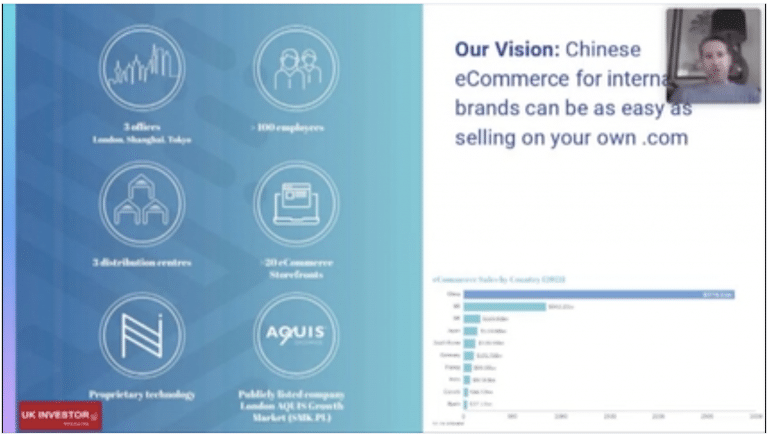
Things are looking up for Aquis-quoted Samarkand (LON: SMK) since the easing of Covid restrictions in China. Although there was a short-term rise in infections, consumer confidence is improving since Chinese New Year. Samarkand could be profitable in the next financial year.

Savings have increased sharply over three years and there is pent up demand. The Chinese government is keen to boost consumption. Partner brands using the company’s Nomad software platform are planning for growth this year and more premium beauty brands have been added.

Samarkand’s own brands are trading well. Napiers beauty and skincare products have been launched in China. Probio7 and fertility brand Zita West are growing.

This year’s figures are likely to be in line with expectations with a full year loss of £4.1m forecast, following a £2.18m loss in the first half. The Samarkand share price fell 2.5p to 42.5p. The March 2021 placing price was 115p.