BCC downgrades British growth forecast for next three years

0
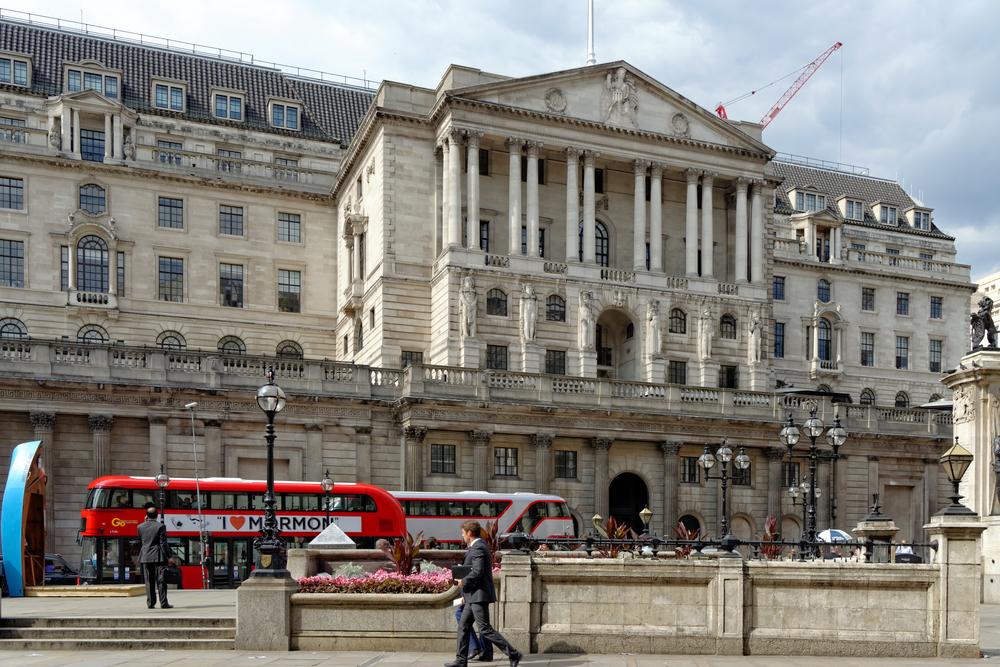
The British growth forecast was downgraded on Wednesday by the British Chambers of Commerce, who now expect the economy to grow more slowly than expected over the next three years. Weaker trade and manufacturing data led to the revision, and the BCC now expect the economy to grow by 2.4 percent in 2015, rather than the 2.6 percent previously estimated. Growth will then increase to 2.5 percent in 2016 and 2017, also slightly slower than the original 2.7 percent estimate. John Longworth, director general of the British Chambers of Commerce, said in a statement that the economy had been “hit badly by falling global prospects”, and that “our persistently weak trade performance and current account balance are impacting our overall growth.” Third quarter growth was lower than expected, which contributed to the BCC’s decision. The UK grew by 0.5% between July and September, 0.2 percent slower than the second quarter. The BCC also stated that is expected interest rates to stay at their six year low 0.5 percent for the foreseeable future, rising in the third quarter of next year.
09/12/2015
 

Manufacturing drops in October, industrial output remains constant

0
British manufacturing dropped by 0.4 percent in October, according to official figures from the Office for National Statistics, giving little sign that the sector will be driving forward Britain’s economy for the rest of the year. The shock fall was compared to a 0.9 percent increase in September, and 0.1 percent lower than the same time last year. Analysts had expected either stagnation or a modest increase. However, industrial output increased 0.1 percent on the month and is up on the year by 1.7 percent. Britain was the fastest-growing advanced economy in the world last year, but some surveys for this year expect a moderate economic downturn. Industrial production remains at around 9 percent below its 2008 peak, with manufacturing output also lagging around 6.1 percent. This data will no doubt be taken into account by the Bank of England when deciding whether to raise interest rates at their meeting alter this month.
08/12/2015

Fastjet shares fall 11 percent as Tanzania elections take toll on demand

Budget airline Fastjet (LON:FJET) is trading down nearly 12 percent this morning, after passengers numbers were hit by a prolonged presidential election in Tanzania and November’s severe weather. The airline carried 62,843 passengers in November 2015 with a load factor for the month of 60%, down 3% on the month before. The company cited a lack of demand from Tanzania as a reason for the disappointing figures; the country is yet to appoint a Cabinet nearly six weeks after election, which has driven down government and civil service demand and affected the travel sector throughout the country. Fastjet’s punctuality was also slightly lower in November, with only 84% of Fastjet Tanzania flights arriving on time. However, this was countered by 100% of their Zimbabwe flights arriving on time, in the first month since the route’s launch. Fastjet’s CEO Ed Winter said: “Whilst we remain mindful of the temporary reduction in demand in Tanzania, we expect that this will improve in the New Year when the political environment stabilises. Our “one day anniversary sale” on 30 November produced some excellent results, filling many seats into early 2016. “We are delighted that fastjet Zimbabwe has been well received in its first month of operation. Passenger feedback has been positive and we look forward to expanding that network.” Fastjet has continued to expand at a rapid pace, launching a new route between Dar es Salaam, Johannesburg and Zanzibar in November. The company have a 52 week range of between 51.12 and 155 pence per share, and is currently trading at the lower end of that at 51.47 after falling 11.26 percent.

EU may propose agreement by February – but not on immigration

0
European Council president Donald Tusk has announced that a new agreement with the UK may be possible by February – but it may not contain all of Cameron’s terms relating to welfare and immigration. Tusk said in a letter to David Cameron: “We have made good progress,” adding that “we … have to overcome the substantial political differences that we still have on the issue of social benefits and free movement.” “We should be able to prepare a concrete proposal to be finally adopted in February.” Tusk will chair the first detailed talks on Britain’s demands next week, between the British prime minister and all his 27 peers, and he appears confident an agreement on Cameron’s main points will be reached. However, Cameron’s demands concerning welfare and immigration present the trickiest task: “There is presently no consensus on the request that people coming to Britain from the EU must live there and contribute for four years before they qualify for in-work benefits or social housing,” Tusk said. Many European leaders see this as illegal discrimination and denying a fundamental freedom to EU citizens. Anti-EU campaigners have used Tusk’s letter to argue that, should an agreement be reached, it will contain only minor changes designed to placate Britain. However, pro-EU campaigners published a report yesterday stating that a ‘Brexit’ would have a real negative impact on the UK, causing the economy to shrink and threatening the Northern Ireland peace process. The first chapter of the report says that “the initial shock would be huge and the consequences unclear. Several factors would make this an exceptionally serious crisis.” David Cameron sent his four demands to Donald Tusk last month, signalling the beginning of a negotiation process for a new British-EU agreement. An in-out referendum on the subject must be held in 2017.
08/12/2015
 

Gold falls to six year low

Gold has had a rough year, falling over 18% since January 2015. It continued to trade lower on Monday, on the back of the continued strength of the dollar. According to Carsten Menke, a commodities research analyst at Julius Baer, the stronger dollar has been affecting the price of gold by driving prices down amid a lack of fresh news for gold since Friday. Currently down by 0.32% at $1,083.45 a troy ounce, analysts have predicted that it could continue to fall to below $1,000 a troy ounce in the coming months, increasing the pressure on gold miners. In November, the gold spot price fell $74 to $1,064 (£705.78), the fastest drop seen since 2013. Precious metal platinum was also down on Monday morning, at £876.30, whilst silver was up by 0.15% at $14.58 an ounce.    

National Front leads France’s regional polls

0
France’s far-right political party, National Front, made history on Sunday by coming first in six out of thirteen regions. Gaining the highest score for the anti-immigration and anti-Europe party, Marine Le Pen, the party leader described the result as “magnificent”. This was a crucial time for the party, who were keen to see the public political opinion following the November 13 terrorist attacks. Whilst the French political party has been previously associated with Anti-Semitism, Le Pen has hoped to “detoxify” the party’s image to make it more mainstream. Professor of French politics at Aston University said, “These results are a shock but they shouldn’t be a surprise.” The French presidency elections are set to run in 2017, where Le Pen considers her party’s victory as the “foundation stone” the election. Previously, the centre-right opposition and governing Socialist party have worked together to block the FN.  


Renewable Energy: What does is mean for the economy?

With climate change dominating the headlines following the Paris climate talks, it seems that energy sources are a primary concern of many governments. It would be assumed that this fresh wave of concern for climate change should lead to an increased role of renewable energy technologies in the UK’s energy use, however evidence has shown that green technologies have been suffering. Trading at 15-22% lower than last year, renewable technologies have taken a hit following the falling price of oil. Investment analyst, Boris Valentinov said; “Since by and large, producing clean energy is more expensive than oil, the lower the price of oil, the less economically viable clean energy becomes as an alternative. The fortunes of clean-energy companies are closely tied to what happens with oil.” Whilst in the short term oil and gas might be seen as cheaper options, what will a greater investment in green technologies mean for the economy? Two main reasons that renewable energy technologies offer an economic advantage are; 1. They are labour intensive. They tend to create more jobs per pound invested than the conventional electricity generation technologies 2. They use primarily indigenous resources. This means that most of the energy investment can be kept at home. “Investment in locally available renewable energy generates more jobs, greater earnings, and higher output … than a continued reliance on imported fossil fuels. Economic impacts are maximized when an indigenous resource or technology can replace an imported fuel at a reasonable price and when a large percentage of inputs can be purchased in the state.” says the Wisconsin Energy Bureau. With these factors in mind, it seems that renewable energy sources will not only benefit our carbon footprint, but will also have positive impacts for the UK’s economy. Perhaps why YouGov has shown that almost 9 in 10 people in the UK want a higher dependence on clean domestic energy.  
Safiya Bashir 07/12/2015
     

Total: “Price of oil will continue to fall in 2016”

1

French energy giant Total stated this morning that it expects the price of oil to remain low for the next year, as supply continues to grow faster than demand.

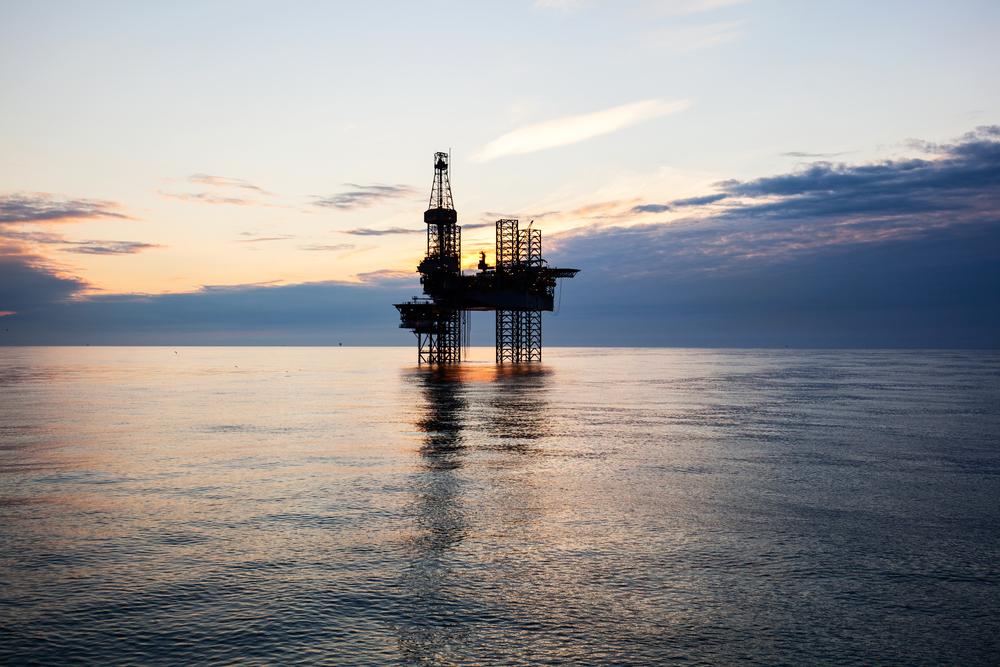
The price of Brent crude has fallen more than 60 percent over the last year, standing at around $43 a barrel; some of the lowest prices in the last ten years. US light crude is trading below $40 a barrel. Total CEO Patrick Pouyanne confirmed that he “doesn’t anticipate a recovery in 2016”, and expects supply to continue to outstrip demand. US shale oil has flooded the market over the last 18 months leading to over supply issues which, combined which economic crises in both China and Europe, has pushed down prices. To add to the problem, the Organization of the Petroleum Exporting Countries (OPEC) ended its meeting this morning without announcing any plans to curb output and lower production, meaning the supply problem will continue. There was no reference to an output ceiling, which could exacerbate the problem when Western sanctions are lifted against Iran and their oil hits the market. A stronger dollar also made it more expensive to hold crude positions. Crude oil is currently down 2.7 percent at $39.97 a barrel, with Brent down 1.95 percent at $43 a barrel.
07/12/2015

Will this year see a Santa Rally?

Although occasionally dismissed as a ‘myth’ amongst analysts, a Santa Rally is a statistically visible rise in stock prices over the month of December in the run up to Christmas. Whilst the reasons for this increase in stocks are not exactly known, the head of investing at Axa Wealth, Adrian Lowcock suggests; “It is probably down to mixture of reasons, including fund managers repositioning their portfolios ahead of the year end or goodwill associated with the festive season putting professional investors in a positive mood.” The effects of the Santa Rally aren’t unnoticed within the FTSE 100, with December being an average four times more profitable than the average months across the markets. So what patterns in the market do the Santa Ralley leave? The growth in returns doesn’t see a slow and steady growth throughout November and December. Instead, the last two years have seen the markets drop in points during the first half of December, following a significant rise from approximately the 15th throughout the rest of the month, sometimes into January. Considering the FTSE 100 stock market over the past ten years, there has been an average growth between 15th December – 1st January of 160.29 points, with the smallest growth being +19 points in 2007. This rally hasn’t always positively impacted the markets. The blue-chip index fell by 2.3pc in December 2014; the first December fall in the FTSE 100 for 12 years. This is compared to the most successful year seen by the Santa Rally in 1987, where the markets saw a rise of 8.4pc. Whilst Santa Rallies have been seen to regularly occur and cause growth in the market, it is not encouraged to make wholesale changes just to take advantage of short-term trends, which is often considered costly.
Safiya Bashir on 07/12/2015 
   

Bankers’ Bonuses set to drop after a tough year

0
Despite the chancellor George Osborn referring to the EU’s cap on bank bonuses “counter-productive”, bankers for London investment bankers still look on course to fall on average by 9% from last year. This cut in bonuses is likely to be a result of a reduced number of IPOs as well as a where banks have had to compensate due to the payment of misconduct fines. Alice Leguay, from Emolument, has said; “With ever more restricted bonus pools, it may be that doughnuts (zero bonuses) become more commonplace, as banks limit substantial bonus payments to key outperforming staff they simply cannot afford to lose,” Following cuts, how much are London’s bankers expected to receive in bonuses? Emolument estimates that a managing director in equities can expect to get a bonus of £361,000, whilst directors across the investment bank should get £114,000-151,000, with Deutsche Bank’s John Cryan admitting bankers get paid too much for what they do. General secretary of the TUC, Frances O’Grady said; “With most workers still earning less than they did before the recession, few tears will be shed for bankers who find their six-figure annual bonus is a few pounds less than last year. We need the economic recovery to be far more fairly shared amongst all workers in 2016.” Bonuses aren’t set to drop everywhere; equities staff and traders are expected to see a rise of between 2-3%