Networking technology company Ethernity Networks (LON: ENET) completed a $1.3m contract with a US defence customer and continued to generate product enhancement revenues during 2025. There has been $200,000 recognised this year and up to $1m more could be generated. There could also be an additional licence agreement with the customer. The share price recovered 22.2% to 0.0033p.
Telematics services provider Quartix (LON: QTX) increased annualised recurring revenues by 14% to £37m by the end of 2025. Pre-tax profit was one-third higher at £8.7m and the dividend has been raised from 4.5p/share to 10p/share. The comparatives have been restated following a change in recognising costs. A pre-tax profit of £10.1m is forecast for 2026. The share price increased 15.1% to 244p.
Electrical connectors and accessories supplier Volex (LON: VLX) is continuing its strong momentum thanks to data centre investment enabling the doubling of revenues in this sub-sector. Volex was able to supply clients when other companies had supply issues. Other sectors are trading at similar levels to the previous year. Investec has increased its full year pre-tax profit forecast to $93.4m. Volex is considering a move back to the Main Market from AIM. It made the switch in 2018 when market capitalisation was £72.4m and it has increased to around twelve times that level. The share price, up 8.18% to 469.5p, is nearly back to the level in 2021.
Ian McDonough, executive chair of video editing software developer Blackbird (LON: BIRD), has bought 2.56 million shares at 1.932p each, taking his stake to 3.26%. The share price is 7.89% higher at 2.05p.
FALLERS
Chemotherapy drugs delivery developer CRISM Therapeutics (LON: CRTX) says US-based contract manufacturer ProMed Pharma has manufactured the first clinical batch of ChemoSeed and this will be used in the phase 2 clinical trial of irinotecan-ChemoSeed in glioblastoma. The share price slipped 13.7% to 11p.
Seascape Energy Asia (LON: SEA) has raised £4.2m at 70p/share, while a retail offer could raise up to £840,000. The oil and gas explorer and producer will invest the cash in its assets in Malaysia, including securing a farm-out for the Temaris PSC. There is production potential of more than 20,000 barrels of oil equivalent per day by 2028. The share price declined 8.23% to 72.5p.
FORGENT (LON: FORG), formerly Eqtec, has implemented savings that will halve recurring operating costs compared with the 2024 financial year. The share price is 1.49% lower at 0.033p.
Synthetic binders developer Aptamer (LON: APTA) is raising up to £3.75m via a placing and retail offer at 0.6p/share. The cash will be used for developing an in vivo liver fibrosis delivery vehicle, building an AI‑enabled Optimer® discovery engine focused on undeliverable and undruggable targets and extending manufacturing capacity. In the six months to December 2025, revenues rose 27% to £828,000 and there was a cash outflow from operations of £1.21m. Cash was £1.5m at the end of 2025. The share price fell 3.85% to 0.625p.
UK inflation remained steady at 3% in February as food prices eased, providing consumers with some respite amid the cost-of-living crisis.
Although this data covers the period before the US and Israel attacked Iran, it does provide insight into the underlying drivers of inflation that could persist in the months ahead.
“UK inflation held at 3% in February, pointing to some stabilisation in headline prices, but underlying pressures remain,” said Lale Akoner, global market analyst at eToro.
“Core and services inflation both came in slightly above expectations, suggesting domestic price dynamics are still sticky. While easing food and transport costs offered some relief to households, the broader cost-of-living squeeze persists, especially with energy prices now rising again.”
Steady food prices in February will have been welcomed, but they have no bearing on what comes next for interest rates and the Bank of England, which now has a dramatically different backdrop to assess after oil surged above $100 due to the war in the Middle East.
“It’s a tricky one for the Bank of England or markets to read this inflation print. Global markets have shifted significantly in recent weeks due to the Iran war, with today’s announcement yet to reflect the full impact of the conflict on the wider economy,” said Neil Wilson, Investor Content Strategist at Saxo.
“Markets will have paid closer attention to the worrying PMI reports from this week that showed the steepest rise in input costs for firms since 2022; combined with growth stalling. Despite the market reacting aggressively to reprice front end rates, the BoE won’t be hiking into a temporary inflation spike.”
ASOS has reported a sharp improvement in profitability in the first half of its financial year, with adjusted EBITDA rising roughly 50% year-on-year despite headwinds from US tariffs.
The online fashion retailer said gross merchandise value fell 9% over the six months to 1 March 2026, but there have been signs of improvement, with GMV increasing by 4 percentage points between the fourth quarter of 2025 and the first quarter of 2026, and by a further 2 percentage points in the second quarter.
The UK, its biggest market, outperformed the group with GMV down just 5% in the first half.
But the top line isn’t really the main story here. It’s how well ASOS has got its house in order to ensure it doesn’t squander any sales stability.
Encouragingly, margins continued to strengthen, with adjusted gross margin rising 330 basis points to 48.5%, helped by the rollout of its newer commercial and flexible fulfilment models.
Returns rates dropped by around 160 basis points after the company took steps to improve product transparency for customers and cut off customers who persistently made returns.
There were encouraging signs on customer acquisition too, with new customers across its four core markets growing 2% year-on-year.
Womenswear saw a roughly ten percentage point swing in its growth rate compared with the second half of last year, with categories like outerwear, evening dresses, and tops all delivering GMV growth.
Cost discipline remained tight, with fixed costs cut by more than 10% and supply chain costs improving a further 150 basis points, largely through warehouse efficiencies and renegotiated UK distribution contracts.
ASOS reiterated its full-year guidance of EBITDA between £150m and £180m, gross margin improvement of at least 100 basis points to 48-50%, and broadly neutral free cash flow. The company expects GMV trends to keep improving through the year.
Crest Nicholson said it has seen a sustained pickup in sales since mid-January, shaking off the weak trading conditions that dogged the second half of last year.
In a short and sweet trading update released ahead of its AGM today, the mid-cap housebuilder said its open-market sales rate, excluding bulk deals, hit 0.64 per outlet per week over the 10 weeks to 20 March, up from 0.61 per outlet per week across the whole of the last financial year.
The improvement in the sales rate contrasts with that of peer Bellway, whose sales rate fell over a similar period.
The group acknowledged the broader macroeconomic uncertainty of recent weeks but said it has yet to see any material impact on trading, adding that it remains “alert to the potential risks.” Full-year guidance remains unchanged.
It is now a year since Crest Nicholson unveiled Project Elevate, its strategic pivot from volume housebuilder to mid-premium, customer-focused developer. The company said strong progress has been made, with a further land disposal completed this financial year as it continues to reshape its land bank. A divisional restructuring announced in November has also been wrapped up.
Crest Nicholson shares have lost more than 80% of their value since hitting a peak of around 600p in 2017 but were 10% higher on Wednesday.
Malaysia-based mobile payments company MobilityOne (LON: MBO) says that Technology & Telecommunication Acquisition Corporation has had its prospectus approved by the SEC in the US. This brings nearer the completion of the proposed joint venture with the company. The share price jumped 45.8% to 8.75p.
Membrane-free electrolyser developer Clean Power Hydrogen (LON: CPH2) has entered a non‑binding Memorandum of Understanding with Siemens. This could help to further develop and optimise the company’s technology and provide backing for commercialisation. The share price improved 9.09% to 6p.
Employee benefits and insurance provider Personal Group Holdings (LON: PGH) increased the dividend by 41% to 23.3p/share on the back of a 23% rise in pre-tax profit to £8.4m. Revenues were 11% higher at £48.4m and annualised recurring revenues are £48.6m. Cash was £29m at the end of 2025. Canaccord Genuity forecasts 2026 pre-tax profit of £10.2m, but earnings will grow more slowly because of a higher tax charge. The share price increased 9.93% to 332p.
Recruitment firm Staffline (LON: STAF) reported 2025 figures slightly better than guidance. Pre-tax profit improved from £5.2m to £7.4m. Net cash was £1.5m at the end of 2025 and a share buyback has been launched, which will help earnings. A further improvement in pre-tax profit to £9.2m is forecast for this year. The share price rose 7.6% to 43.9p.
Sustainable detergent additives supplier Itaconix (LON: ITX) is making good progress towards breaking even. Revenues jumped from $6.5m to $10.5m in 2025 and there is capacity for this to increase to more than $25m. The loss was reduced from $1.8m to $1.1m with a $1.2m cash outflow from operated activities. European revenues doubled and new business in North America will flow through into revenues in 2026 and particularly 2027. There is more than $4m in cash in the bank, which is more than enough to get to cash flow positive. Cash generation could build up rapidly from 2027 onwards. The share price is 3.14% higher at 115p, having been 119p earlier in the morning.
FALLERS
Shares in spirits brands owner Distil (LON: DIS) have halved to 0.045p following a trading statement outlining poor fourth quarter trading. Full year revenues will be well below expectations. Stock levels in the trade were higher than expected. Sales by the UK distributor are 51% ahead in the first two months of this year, but consumer spending remains depressed. Marketing spending has been agreed with retailers. The US launch of Blavod black vodka has been delayed due it still awaiting tax approval from the authorities.
The Mission Group (LON: TMG) revenues fell by one-fifth to £68.8m, although continuing operations revenues were only 8% lower. Pre-tax profit on continuing operations slid 39% to £3m. The marketing services provider has net debt of £9m. Annualised cost savings will benefit this year. The share price slipped 22.2% to 14p.
Video games developer everplay (LON: EVPL) grew pre-tax profit 12% to £48.5m on flat revenues after the exit from low margin business. The total dividend has increased from 2.7p/share to 2.9p/share. Cash was £51.9m at the end of 2025. The company has made a good start to 2026, but there will be a greater second half weighting to profit. The share price fell 10.4% to 232p.
Market research services provider YouGov (LON: YOU) reported profit that was lower than anticipated because of investment in the Shopper division. Pre-tax profit fell 30% to £16.8m on a 2% rise in revenues. Full year operating profit guidance is £52m-£56m – £24m was made in the first half. The share price is 12.5% lower at 152.3p.
Hercules (LON: HERC) says that its results for the year to September will not be ready and trading in the shares will be suspended on 1 April. The share price is down a further 9.46% to 33.5p.
The FTSE 100 fluctuated between positive and negative territory on Tuesday as investors tried to make sense of the messaging around the Middle East conflict.
It was a much quieter affair on Tuesday after London’s leading index surged 300 points in minutes on Monday. But trading remained choppy, with the FTSE 100 giving up around 80 points from peak to trough in the early stages of trade before recovering.
The FTSE 100 was 0.1% higher at the time of writing as investors tried to make sense of conflicting information from the US and Iran about supposed peace talks.
“According to President Donald Trump, preliminary truce talks have begun with Iran. According to Iran, he’s living in la-la-land and the talks never happened,” said Emma Wall, Chief Investment Strategist, Hargreaves Lansdown.
“But the markets love hope, and the prospect of a ceasefire was enough to push Brent crude oil down 11% yesterday to below $100 a barrel for the first time in weeks. But the Iran denial, and a report that the UAE and Saudi Arabia are considering entering the war, has sent oil back up to $103.”
The rise in oil inevitably caused some nervousness among investors and interest rate-sensitive sectors.
Housebuilders were down again on Tuesday as oil prices remained above $100, with some analysts predicting rate hikes this year – something the UK property market could do without.
An uncertain outlook issued by Bellway on Tuesday didn’t help their cause, and Barratt Developments, Persimmon, and Berkeley Group Holdings all fell between 1% and 1.5%.
Antofagasta was the FTSE 100’s biggest faller, down 2%, as investors moved away from cyclical sectors, including miners.
Kingfisher gave up early gains despite the B&Q owner posting reasonable revenue growth and delivering on its strategic goals.
“It looks like we’re in another wave of ‘do it for me’ in terms of home improvements as B&Q owner Kingfisher reports a surge in sales to tradespeople,” said Dan Coatsworth, head of markets at AJ Bell.
“A lot of people can’t be bothered with spending their evenings and weekends painting the house or fixing a fence. It’s a lot simpler to get a tradesperson to do the work, and those experts must source the materials from somewhere.”
“B&Q has been pushing hard on the trade channel in recent years, and its efforts are now paying off. Tradespeople want to be able to go to a store, find what they need quickly, and not pay through the nose for goods as that cost is passed onto the end-customer.”
ConvaTec was the FTSE 100’s top riser, adding 2.4%.
Analysis for informational purposes only. Capital at risk.
The AI Funding Test: Alibaba and Tencent are both ramping AI investment, but their ability to fund the transition differs materially. Tencent’s capex‑to‑core‑profit ratio stays comfortably below 50%. Alibaba’s ratio has spiked above 100%, temporarily driving free cash flow negative in mid‑2025.
Contrasting Core Engines: The divergence traces back to their core businesses. Tencent’s cash flow is underpinned by a resilient, countercyclical online gaming franchise that grew 21% in 4Q25. Alibaba is still rebuilding e‑commerce margins after recent price wars, leaving it more exposed to capex stress.
Agentic AI and Capital Trade‑offs: Both firms are embedding agentic AI (eg. OpenClaw‑style agents) into WeChat and Taobao to accelerate monetisation and improve AI ROI. To fund the AI cycle, Tencent is rebalancing capital away from share repurchases toward capex, and Alibaba is facing a similar capital‑allocation dilemma.
The Central Question on AI Investment
Investors often view Tencent and Alibaba as two sides of the same coin—both dominant and pivoting to AI, and with the same challenges: rising capex and margin pressure.
Yet their latest financial results reveal a different situation.
They are both ramping up AI investment.
The key question is whether they can fund the cycle from operating cash flow or will need to draw on reserves and raise leverage.
Their ability to fund the AI cycle from operations differs materially.
The gap sits in their core businesses, gaming versus e-commerce, which determines how they are paying for this transition.
Distinct AI Strategies
Tencent and Alibaba adopt two distinct AI strategies.
Tencent was historically prudent on AI, prioritising using AI to enhance existing products. That delivered margin improvement but raised questions about long-term competitiveness. It is now shifting to a more proactive strategy, focusing on foundation models, the Yuanbao AI chatbot, Weixin AI, and productivity agents.
Alibaba has been more aggressive. It is open-sourcing Qwen to drive developer adoption and cloud usage and embedding agentic experiences across its payment and commerce ecosystem.
That strategic difference flows directly into their capex profiles and cash flow burden.
The Capex Test
Tencent’s 2025 total capex was RMB 79bn, of which RMB 18bn was AI. AI capex could rise toward RMB 40bn in 2026, pushing total capex above RMB 100bn (capex/revenue ~13–14%).
Alibaba’s 2025 capex was ~RMB 120bn, and its 2026 capex could exceed RMB 150bn (capex/revenue ~13–14%).
Source: The companies, AP
The capex/revenue ratios are converging. The cash flow behind them is not.
The Cash Flow Burden
Alibaba’s free cash flow has been consistently lower than Tencent’s and turned negative in 2Q25–3Q25, suggesting difficulty covering rising capex from core operations.
Furthermore, Alibaba’s capex-to-core profit ratio has exceeded 100% in recent quarters. Tencent’s has stayed below 50%.
Tencent, on the other hand, benefits from materially higher profit margins, converting revenue to operating cash more effectively.
Source: The companies, AP
Balance‑sheet Cushion
On a positive note, both companies retain sizable balance sheets to support AI investment. Their net cash and equity investments cover roughly 3–4x projected annual capex (or 1–2x if counting only immediately deployable cash).
Source: The companies, AP
Core Engines: Gaming vs. E-Commerce
These distinct cash flow realities stem from their core businesses.
Online gaming—resilient
Online gaming remains a bright spot and a defensive segment in the China internet market.
Tencent’s online gaming reported a 21% revenue growth in 4Q25. Domestic revenue experienced 15% YoY growth, significantly outperforming NetEase’s 3.4% gaming revenue growth, implying ongoing market share gains. International gaming revenue reported strong 32% growth and accounted for 36% of total gaming revenue.
Why gaming cash flows are well protected
Market concentration: Tencent and NetEase dominate; the rest of the market is fragmented among smaller developers.
Entry barriers: Regulatory approvals and long development cycles limit new competition.
Social network effects: WeChat’s social graph keeps players engaged because their social network is embedded in the platform.
Countercyclical demand: Gaming often substitutes for costlier leisure activities during downturns, supporting spend even in weak consumer environments.
Source: The company, AP
E-commerce—margin still under pressure
Alibaba’s e-commerce grew 6.0% in 4Q25 amid soft consumer sentiment. Quick commerce was the standout—56.0% revenue growth, now 13% of total e-commerce revenue.
Government pressure is easing the competition, and margins are recovering sequentially. Taobao/Tmall’s operating margin recovered to 22% in Q4 2025, up from 8% the prior quarter but still well below the 40%+ level before the price war.
Source: The company, APSource: The companies, AP
The AI Agentic Upside
AI cloud is the strategic focus for both companies, and the near-term monetisation argument is the same: agentic AI applications.
Alibaba Cloud grew 36.0% in 4Q25, with AI-related products delivering triple-digit growth for the tenth consecutive quarter. The company targets to achieve USD100bn Cloud and AI revenue by 2030, roughly 5x of current levels.
Tencent was a deliberate late mover — it deployed AI internally first before selling externally — and is now accelerating. External cloud revenue should rise from 2026.
Agentic AI, such as OpenClaw, could be a near-term “killer app”.
Compared with costly model training, integrating agentic applications into existing ecosystems (WeChat, Taobao) should offer faster monetisation via token consumption and platform-level services.
Agentic sessions consume tokens at 10–50x the rate of basic chat, turning users into recurring cloud revenue. Tencent has 1.4 billion WeChat users as distribution.
Alibaba has Qwen connected to Alipay, Taobao, and Ele.me — a complete commerce loop. A user can ask Qwen to find, pay for, and arrange delivery without leaving the app. Meituan has no equivalent closed loop and could face disintermediation risk.
Capital Allocation Trade‑offs
Chinese internet companies increased buybacks over the past two years, driven by depressed valuations and limited post-COVID investment opportunities.
AI is changing that priority.
Tencent has confirmed it will scale back repurchases to fund the capex cycle while maintaining its dividend. Other incumbents generally face a similar dilemma and might follow suit.
Cutting buybacks shifts the shareholder base. Yield-focused investors might exit due to lower shareholders’ return. Growth-oriented investors might enter at different valuation levels. That transition creates near-term volatility separate from the fundamentals.
This article is a “periodical publication” for information only and is not investment advice or a solicitation to buy or sell securities. This article does not constitute a “personal recommendation” or “investment advice” under UK FCA regulations. Investing in equities involves significant risk. The author holds NO position in the securities mentioned. There is no warranty as to completeness or correctness. Please do your own due diligence or consult a licensed financial adviser. Please read the Full Disclaimer before acting on any information. Images created with the assistance of Gemini AI.
Kingfisher posted a solid set of full-year results for the 12 months to 31 January 2026, with adjusted pre-tax profit rising 6% to £560m on the back of volume-led like-for-like sales growth of 1.4%.
Today’s figures demonstrated progress toward the group’s goals to transform the business by opening digital channels and focusing more on trade.
Trade sales now account for 30% of group revenue, up from 27% a year earlier, while e-commerce penetration hit 21% and marketplace GMV surged 58% to £518m.
Kingfisher results are all the more commendable given the challenging backdrop for consumers, especially in the UK, where the unemployment rate is rising, and GDP growth is grinding to a halt.
Garry White, Chief Investment Commentator at Charles Stanley, said: “It has been a challenging few years, but B&Q‑owner Kingfisher today delivered a solid full‑year earnings report showing robust profit growth and steady operational momentum. Adjusted pre‑tax profits came in ahead of guidance, and the group announced a further £300m share buyback. Management can be rightly pleased with these results.”
The UK was the standout, with B&Q and Screwfix both delivering LFL growth above 3%, helped by trade and e-commerce initiatives, favourable spring weather and some benefit from Homebase store closures.
“While group sales grew modestly by 1.3%, gross margins expanded a healthy 80 basis points to 38.1%, driving a 6% rise in adjusted pre-tax profit to £560m. B&Q and Screwfix delivered strong UK like-for-like growth, boosted by trade and digital channels which continue to gain significant penetration,” said Adam Vettese, market analyst for eToro.
“Continental Europe remains tougher, with France and Poland feeling the pinch of subdued consumer demand and big-ticket weakness, but disciplined cost control and inventory management have more than offset these headwinds.”
Kingfisher is guiding for adjusted PBT of £565m to £625m in the current year with free cash flow expected between £450m and £510m. Modest progress, but should be seen as a win in the current environment.
Distil, the AIM-listed owner of RedLeg Spiced Rum and Blackwoods Gin, has issued a trading update warning that full-year revenue to 31 March 2026 will be materially below market expectations, with losses set to be larger than forecast.
The real issue is that slowing sales has created, as the board described, an immediate short-term funding need, and it is now exploring options to address it.
Investors never want to hear about a funding need, and shares sank 60% on Tuesday.
The group said anticipated Q4 revenues are significantly below forecast, compounding softer trading throughout the year.
The main problem is higher-than-expected stock levels sitting with third-party distributors globally, which has disrupted purchase phasing even as end-consumer sales have improved.
There are some bright spots at the brand level. UK distributor sales to customers rose 51% year on year in the first two months of 2026, while RedLeg consumer sales in grocery outpaced the wider market over Christmas, climbing 36% against a spirits category that fell 5.2% in the 12 weeks to 3 January.
But the broader backdrop remains tough. Successive duty increases since August 2023 have added at least 50p per bottle, at a time when consumers are tightening their belts.
Elsewhere, the planned US launch of Blavod black vodka has been delayed by a hold-up with the Craft Beverage Modernization Act submission, though the distributor expects to resolve this in Q1 of the next financial year.
Increased promotional activity has been agreed with major grocery accounts for Q1, and the company is reviewing its distributor arrangements and route-to-market, with further news expected shortly.
Distil previously announced that unaudited third-quarter revenues fell 26% year on year to £173k, with volumes into distributors down 39%, although consumer-level volumes rose 36% over the same period.
This level of revenue is difficult to support a listed entity, and investors will fear what value they will be left with after the funding is completed.
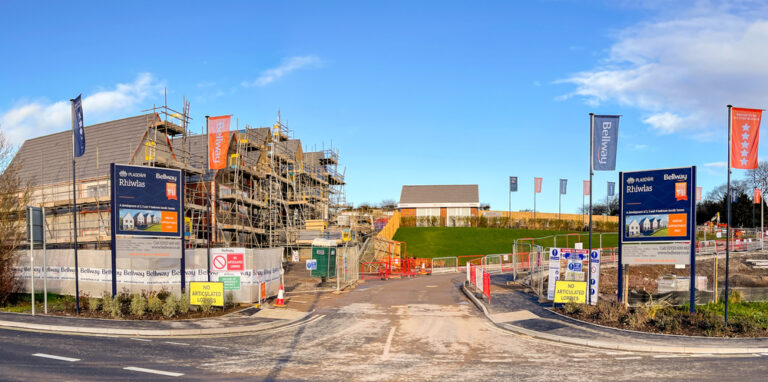
Bellway shares slipped on Tuesday after a relatively robust interim update was overshadowed by a slowdown in post-period trading activity.
The housebuilder completed 4,702 homes in the six months to 31 January 2026, up 2.7% on the same period last year. The average selling price rose to £322,180 from £310,581.
As a result, underlying operating profit edged up 1.5% to £159m, though margins slipped slightly to 10.5% from 11%. The housebuilder flagged £10.7m in costs associated with legacy building-safety remediation work, which is a theme across most housebuilders currently.
The interim dividend was lifted to 23p per share from 21p, and the group’s £150m buyback programme, launched last October, has already seen around £64m of shares repurchased. Bellway expects full-year dividend cover of 2.5 times.
The balance sheet remains in decent shape, with modest net debt of £72m after returning £105.3m to shareholders through dividends and buybacks.
Operationally, private reservation rates held broadly steady, and Bellway retained its five-star homebuilder status for the tenth year running. The group also opened its new timber frame facility, Bellway Home Space, which has begun supplying frames for completions later this year.
But recent trading has shown signs of a slowdown.
In the six weeks since 1 February, the private reservation rate, including bulk sales, was 0.70 per outlet per week, down slightly from 0.76 in the comparable period last year. Excluding bulk sales, however, the rate was exactly in line with the prior year at 0.66. The forward order book stood at 5,311 homes worth £1.55bn as at 13 March, compared with 5,582 homes valued at £1.58bn a year earlier.
Despite the slowdown, Bellway has upgraded its full-year volume guidance to 9,300-9,500 homes, up from 8,749 completed last year. The average selling price is now expected to be around £325,000, above previous guidance of £320,000.
Full-year underlying operating profit is expected in the range of £320m to £330m, with margins anticipated to hold around first-half levels.
Bellway shares were down 6% at the time of writing on Tuesday.