Sondrel has raised £17.5m after expenses to finance the employment of additional engineers and further development of its own IP. There are also plans to accelerate sales around the world and in the US in particular. Around two-thirds of last year’s revenues were from the UK.
The cash will also provide working capital for the customer supply management contracts. There will be £2.5m used to repay debt.
According to management, there are currently more than £300m of revenue opportunities for designing semiconductors for clients. If selected and the design finalised, Sondrel can expect to supply...
Aquis weekly movers: Bumper harvest for Chapel Down
Chapel Down Group (LON: CDGP) had a bumper grape crop in terms of quality and yield. Chapel Down has 750 acres of vines and the harvest was more than 2,000 tonnes, up from 1,400 tonnes last year, with a particularly good crop for sparkling wines. The English sparkling wine market grew by 29% in 2021More than two million bottles of many types of wine can be made from the harvest. A further 38 acres of vines were planted this year with 118 acres planned. More land is being sought. Management wants to double the size of the business by 2026. The share price rose by 10% to 27.5p.
Phoenix Asset Management Partners has taken a 16.5% stake in Silverwood Brands (LON: SLWD) and the shares were 21.4% ahead at 85p.
Hydrogen Utopia International (LON: HUI) has secured a convertible loan facility with Conrad Griffiths, owner of 9.45% of the company. The €650,000 facility is interest free until the beginning of 2023 when the annual interest charge is 5%. The repayment date is 31 December 2025. The conversion price is 20p – based on the exchange rate of €1.14/£. The share price improved by 8.62% to 7.875p.
Chris Akers has upped his stake in Quetzal Capital (LON: QTZ) from 22% to 23.4%. Investee company Tap Global has added GBPT stablecoin to its cryptocurrency trading platform. The share price edged up 1.75% to 2.9p.
Trading recommenced in Vulcan Industries (LON: VULC) on Monday following the publication of its accounts for the year to March 2022 and the announcement of the proposed acquisition of Peregrine X, which has developed diagnostic technology with an initial market in oil well-head analysis. There are currently no revenues. The initial consideration will be £1m of zero-coupon convertible loan notes with a further four tranches of £1m depending on progress. The total number of loan notes would be converted int a 46.2% stake in the company. The seller will also receive 500 million warrants exercisable at 1p a share. They will also receive 70% of post-tax earnings generated by Peregrine up until 2,000 tests have been contracted and 200 delivered. This deal marks a move away from the engineering sector. The share price rose 1.75% to 0.87p.
Harry Hyman has increased his stake in Oberon Investments Group (LON: OBE) from 3.08% to 4.15%. Aimee McCusker has joined the company from WH Ireland as director of IR/sales. The shares are 1.35% higher at 3.75p.
==========
Fallers
Broker VSA Capital (LON: VSA) shares fell 37.1% to 11p on the back of three individual trades at 13.5p, 12p and 10p a share. There were 200 shares sold at 12p each and the other sales were worth a total of £5,100.
Property investor Ace Liberty & Stone (LON: ALSP) launched an open offer to raise £4.56m at 25p a share. The share price fell 25.8% to 47.5p. The open offer closes on 14 November and enables existing shareholders to finance the strategy to buy additional properties. Management believes that economic uncertainty will provide opportunities to acquire high yielding properties.
SulNOx Group (LON: SNOX) has signed up South Africa-based bus company Lowveld Bus Service, which will use SulNOxEco fuel conditioner in its fleet of more than 170 buses. The share price slipped 8.06% to 14.25p.
Valereum (LON: VLRM) was asked by Aquis Stock Exchange to clarify what happened when it changed its corporate adviser. Peterhouse resigned on 13 October and the company was already talking to its replacement First Sentinel. Approval is still awaited concerning the Gibraltar Stock Exchange purchase. The shares fell 7.55% to 12.25p.
Invinity Energy Systems (LON: IES) has secured a sales contract for a 10MWh VS3 flow battery system for a solar microgrid in southern California. This deal was mentioned in the previous week and some of the gains were lost this week with the share price dipping 6.56% to 28.5p.
Goodbody Health Ltd (LON: GDBY) has signed an agreement with Allied Pharmacies that will add 17 clinics to its network offering diagnostic testing and adds services such as ear wax micro suction. The share price decreased by 5.56% to 8.5p.
Ace Liberty & Stone launches open offer
Property investor Ace Liberty & Stone (LON: ALSP) has launched an open offer to raise £4.56m at 25p a share, which is a 60% discount to the previous market price of the Aquis Stock Exchange-quoted company. However, the share price fell 25.8% to 47.5p, valuing the company at £27.9m.
The open offer closes on 14 November and enables existing shareholders to finance the strategy to buy additional properties. The directors intend to take advantage of being able to apply for more shares than the entitlement by applying for double the number of shares they are entitled to under the open offer.
Ace Liberty & Stone has had a low level of defaults in the past couple of years and sold four properties to reduce debt. The new facility has a higher loan-to-value ratio than previously so there are available funds from the facility as well as the open offer cash.
Management believes that economic uncertainty will provide opportunities to acquire high yielding properties.
Ace Liberty and Stone increased pre-tax profit by 49% to £2.07m in the year to April 2022. Net assets were 6% higher at £34m. Net debt was reduced from £54.8m to £44.6m. A dividend of 3.4p a share cost £2m.
The large discount to the market price is designed to attract further investment from shareholders, although the open offer will be dilutive in the short-term.
FTSE 100 falls with sterling as UK retail sales disappoint
The FTSE 100 was set to finish the week on the back foot after Uk retail sales disappointed markets and hit consumer facing stocks. The prospect of next week’s Tory leadership contest also subdued the bulls on Friday.
JD Sport and Frasers Group sank while the housebuilders looked to retest their recent lows. UK retail sales fell 1.4% in September suggesting the UK economy was facing ever greater pressures from the cost of living crisis.
The charts of housebuilder share prices in particular do not make for pleasant reading. Persimmon is down 57% year to date, Barratt Developments off 53% and Taylor Wimpey 50%.
Autotrader was the FTSE 100’s biggest casualty, down 6% to 487p after analysts at Credit Suisse cut their price target to 418p, rating them underweight.
Although there were losses on Friday, the selling was seemingly contained with the FTSE 100 finding support around 6,900.
Given the week we’ve had in UK politics, the FTSE 100 has been remarkably range bound, rarely deviating from a 100 point range between 6,900-7,000.
This is largely down to weakness in the pound that again fell against the dollar on Friday after government borrowing figures rose and investors fretted about next week’s leadership contest.
“Given the unprecedented events involving British politics in recent weeks, investors are hoping for less volatility and more stability in both the government and on the markets,” said Russ Mould, investment director at AJ Bell.
However, Mould warned we were not yet out of the woods and Truss’s departure could prove to simply be another twist the never ending saga in Westminster.
“Even though there is some sense of peace in the markets now, this could all change next week when we have a clearer idea of who is in the running for Number 10 and how each candidate might reshape the country’s policies to avoid economic shocks,” said Mould
GBP/USD was trading down 0.9% at 1.1137 after hitting lows of 1.1060 earlier in the session.
Tekcapital’s ‘public venture capital’ strategic approach to commercial opportunities and value creation
Tekcapital, the university technology focused investment company, has provided insight into their strategy of raising capital through IPOs as ‘public venture capital’ to compliment the pursuit of commercial opportunities for their portfolio companies.
Tekcapital have successfully floated AIM-listed Belluscura, and recently Innovative Eyewear on the NASDAQ, proving their prowess in securing capital, despite adverse market conditions.
Each of Tekcapital’s portfolio companies is the product of intensive evaluation of university technology by a network of scientific advisors monitoring over 250 universities.
Tekcapital have selected technologies that have the potential to help a broad range of people and established companies with world class management. Tekcapital’s technologies include autonomous vehicles, smart eyewear, foodtech and healthtech.
The investment company has the view the each one of their companies has the potential to become a $1 billion company and Tekcapital have the benefit of being intimately involved with the early stages of their portfolio companies.
In an environment typified by companies staying private for longer, the Tekcapital team has a clear strategy to take companies to market, not only to raise growth capital, but to also improve commercial opportunities.
“Capitalising on an intellectual property moat coupled with rapidly developing market traction is a strong case for exploring a public venture capital trajectory to solidify a first mover advantage,” says Dr. Clifford Gross, CEO of Tekcapital.
This was demonstrated with Innovative Eyewear’s partnership with global lifestyle brand Nautica. Innovative Eyewear has licensed the Nautica brand globally for smart eyewear.
Such agreements may have been possible if the company was private, but being a listed company raises the profile of the agreement and will play a part in future distribution agreements.
A public listing will also help attract talent to TEK’s portfolio companies. Innovative Eyewear have secured key sales and marketing executive hires since listing and signals their intent to drive rapid growth.
Portfolio Company Transparency
Pursuing a public listing also produces great levels of transparency for investors. Tekcapital’s investors have a clearer view of progress at their portfolio companies than those operating similar technologies privately.
By making this level of transparency possible earlier in a companies lifecycle builds a robust picture of the companies growth trajectory and will provide solid comparables as the companies grow.
Belluscura’s progress was evident in a 34% increase in this year’s first half revenues. Investors may have been hoping for greater sales of Belluscura’s portable oxygen units, but the growth was robust and figures were available for the market to scrutinise.
Tekcapital are listing early stage companies which will face the same pressures a private company would, but with the benefits of being able to attract a wider investor base as their portfolio companies grow.
Upcoming Tekcaptial IPOs
Recent interviews with Dr. Clifford Gross alluded to a potential IPO of MicroSalt in the coming months. This particular IPO will be highly anticipated following MircoSalt’s plethora of commercial updates.
The Tekcapital CEO said a MicroSalt IPO could come as soon as Q1 2023 which would be yet another validation of their strategy.

BP shares will provide a strong yield, but here’s why buying should be delayed
BP shares could be considered by investors seeking stability in times of volatility. The higher price of oil due to the conflict in Ukraine has provided support for the BP share price so far in 2022 and their 3.8% yield is attractive.
In a week Jeremy Hunt’s effort to steady the UK political ship was quickly scuttled by the departure of Liz Truss, investors may be seeking strong dividend payers such as BP to see them through any economic downturn.
However, those eyeing BP should take note of recent price action and why it may be beneficial to hold off buying BP in the very short-term.
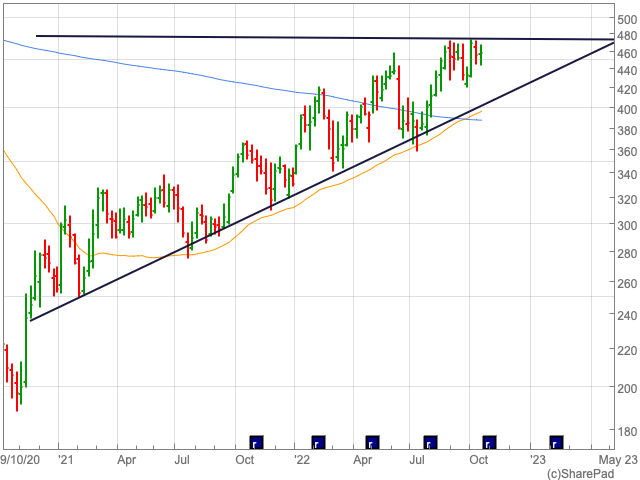
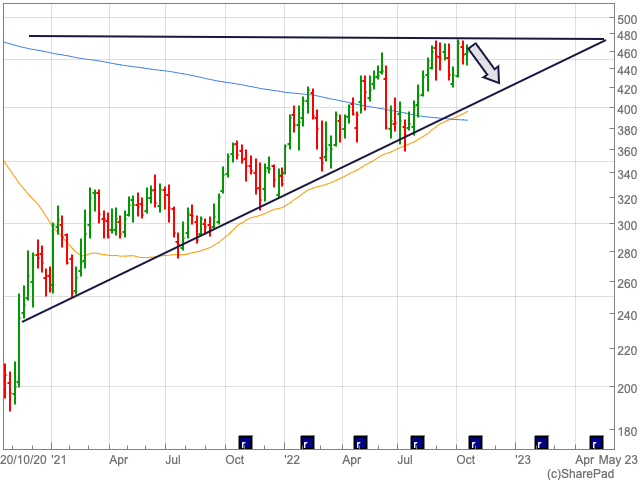
Reason for caution comes from BP share price’s ascending triangle technical formation that is yet to confirm a breakout.

An ascending triangle formation is typically a bullish technical formation, however, this is only when the price breaks out and trades above levels of resistance.
BP shares currently have a strong level of resistance at 470p at which it has failed a number of times in the last time.
This would suggests in the short term – failing any new fundamental developments – the share price is likely to drift back down to the trend line commenced in November.

This would suggest the 430p-420p level will be retested before long. A bounce from these levels may provide a buying opportunity.
An alternative scenario would be a break above 470p. Should shares break through resistance at this level is would open the door to 500p. However, a move above 470p wouldn’t automatically confirm a bullish break out. BP shares would have to retest prior resistance at 470p and confirm this as a new support.
BP Fundamentals
Oil prices have driven BP shares since Russia’s invasion of Ukraine and gyrations in global energy markets will continue to impact BP. Oil prices have retreated markedly from highs above $100 which will be reflected in BP third quarter results due to be released 1st November.
Shell have recently said they were experiencing declining refining margins due to lower oil price. Expect BP to also see lower margins as a result of falling oil prices.
However, OPEC are determined to maintain a higher oil prices and the ongoing battle between OPEC+ and President Biden will likely provide support for oil prices, and therefore BP shares.
Brokers are reasonably positive on the BP share price with Bank of America increasing their price target to 550p and Citigroup 440p from 400p. Both have a neutral rating on BP shares.
Are Lloyds shares a buy after Liz Truss’s resignation?
Lloyds shares have suffered tremendously from the political debacle that’s gripped Westminster during Liz Truss’s tenure.
UK banks including Lloyds have been exposed to soaring mortgage rates and the threat of a slowing economy hurting their customer’s finances.
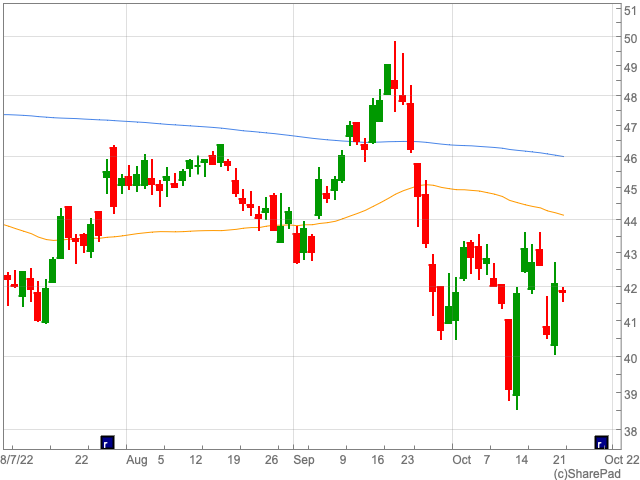
In September, Lloyds share price had been approaching the 50p level for the first time since April as investors positioned for higher interests and the benefits to banking Net Interest Margins.
However, the steady rally in Lloyds shares faced a rude awakening 23rd September when Kwasi Kwarteng dropped the mini-budget bomb shell on the UK economy.
UK Gilt yields soared, the pound crashed and the Lloyds share price sank to 40p.
Market turmoil and political chaos ensued, culminating in the resignation of Liz Truss yesterday. The market staged a minor relief rally shortly after the PM’s resignation with UK bank shares jumping.
Lloyds shares outlook
Investors may do well to proceed with caution over the coming days and weeks.
The problems caused by Liz Truss’s chaotic leadership will not disappear nearly as quickly as Truss did from her resignation speech.

Long term damage has been done to the UK’s reputation and markets have built a risk premium into UK assets that will take time to diminish.
We are yet to see the real impact of higher mortgage rates and there are big concerns around the health of the UK economy.
Lloyds will see the benefit of higher rates, but are also likely to set aside provisions for bad debts in their next update.
This will hurt Lloyds profits. The perception of how hard Lloyds profit may be hit will dictate trade in the short term. Today’s retail sales reading suggests Lloyds consumers are feeling the pinch.
The medium term outlook for Lloyds share price going into 2023 is largely dependant on the immediate actions of the next prime minister.
Support for consumers with energy bills could reduce Lloyds’ provisions for bad debts. However, interest rates are set to rise and we’ll unlikely see any let up mortgage rates before we see deterioration in the housing market.
This will be a double edged sword for UK banks – they will earn more from their mortgage book but defaults will rise.
The uncertainty around Lloyds share price has been reflected by Barclay’s analysts downgrading Lloyds price target to 50p from 55p with an equalweight rating. JP Morgan has 56p target and overweight rating.
With the Lloyds share price at 41p, there is attractive potential upside to these price targets, and much of the negativity discussed above will have largely been priced in.
Braveheart Investment increases Autins stake
AIM-quoted investment company Braveheart Investment (LON: BRH) has increased its stake in loss-making thermal insulation material manufacturer Autins Group (LON: AUTG) following the latter’s disappointing trading statement and related share price slump.
Braveheart Investment spent £161,000 buying 2.3 million AIM-quoted Autins shares at 7p each, taking its stake to 12.9%. The Autins share price had fallen from 14p to 8p after the trading statement and it has fallen by 61.9% this year.
Braveheart originally acquired 1.1 million shares at a cost of £224,140 and then bought a further 3.65 million shares for £803,750 – average price of 22.02p a share.
Braveheart Investment Autins placing that raised £3m at 20p a share that diluted the Braveheart Investment stake to 8.7%. That provide to be a wise decision.
The Braveheart Investment share price is unchanged at 8.2p a share. It recently increased its stake in AIM-quoted architect Aukett Swanke (LON: AUK) to 19.4%.
Autins
Autins management said second half sales were on a par with those in the first half., which is worse than expected. The fourth quarter was weak because of production disruption at a major customer. Automotive customers are finding it difficult to secure electronic components and therefore other suppliers are hit by delays.
Autins core market is acoustic and thermal insulation for the automotive sector – with a focus towards the luxury end of the market. There are operations in the UK, Sweden and Germany. It is building up sales to other sectors, but it is still dependent on automotive and its production schedules.
Higher costs have put pressure on gross margins at Autins. Management hopes to reduce the loss in the short-term through operational efficiencies. Net debt was £2.4m at the end of September 2022.