Persimmon, UK Inflation, and Power Metal Resources with Alan Green

UK Inflation hit 10.1% in July as soaring energy and food prices dragged the headline inflation figure to the highest levels for 40 years. We discuss how inflation is taking its toll on households and whether the new UK Prime Minister can do anything to bring it under control, given UK inflation is among the highest of the G7.

Persimmon results can be viewed as a comprehensive indicator of the health of the UK economy and we question what falling completions mean as average selling prices rise. We look at the Persimmon yield and how their cash generation can support this yield going forward.

Power Metal Resources soared 45% yesterday after the announcement of favourable findings at their Molopo Farms Complex Project in Botswana. Alan outlines what investors can look forward to in the near future.

We finish by exploring the offering AQUIS provides for investors and exciting growth companies following the announcement Hargreaves Lansdown would provide electronic trading for the APEX segment of the AQUIS Stock Exchange.

Nightcap secures growth funding from HSBC

This morning Sarah Willingham’s expanding cocktail bar group Nightcap (LON:NGHT) has announced that after a very competitive process it has secured a very useful £10m debt refinancing with HSBC.

The facility is a bundling of its various loans totalling £5.5m across its businesses, together with a £4.5m capital expenditure facility for the Group’s additional sites as Nightcap extends its new openings programme across London and major UK cities.

Nightcap is a leading hospitality group in the UK offering unique, premium experiences for Millennial and Gen Z customers at affordable prices.

 The Group incorporates The Cocktail Club, The Adventure Bar Group and Barrio Familia. Nightcap’s executive team is led by prominent hospitality entrepreneur and investor, Sarah Willingham, and boasts a market leading operational and corporate finance track record. 

To date, the Nightcap operates across 31 sites in the UK including London, Birmingham, Exeter, Reading and Cardiff, while another 3 are in the process of refurbishment.

The company also has another 22 sites in various stages of negotiation.

Sarah Willingham, CEO, stated that:

“When we listed Nightcap on AIM and embarked on a company and new site acquisition programme last year, we knew that we would want to consolidate our debt facilities with the right banking partner.

“We have taken our time and at the end of a very competitive process we are delighted to have successfully agreed our Group refinancing. We are over the moon to be partnering with HSBC, who have proven themselves as long-term supporters of our sector. 

“Throughout the process the HSBC team showed an appreciation for our team and performance and a deep understanding of the unique opportunity we are capturing with Nightcap.

“The £10m debt facility will support our growth plans for the coming years as we make good on our mission for Nightcap to become the UK’s leading cocktail bar group.”

The group’s shares, which have been up to 24p within the last year, have been down to 13.50p and are now trading at 14.75p at which level they offer very good upside prospects.

Persimmon remains upbeat despite falling completions

The number of homes Persimmon completed in the first half of 2022 fell to 6,652 from 7,406 in the same period a year ago and revenue fell to £1.69bn from £1.84bn.

Despite completions falling, Persimmon were able to achieve a higher new home average selling price of £245,597 and remained positive on the rest of 2022.

“We continue to expect our volume delivery to be significantly higher in the second half of the year,” said Dean Finch, Persimmon Chief Executive.

As highlighted by the higher average selling prices, Persimmon’s fall in revenue was capped by a strong housing market that maintained prices, even as volumes fell. Indeed, Persimmon managed to increased New housing gross margins to 31%, up from 30.9%, in the face of rising prices and labour costs in the UK economy.

“House prices have proved remarkably robust since the pandemic began, buoyed by pent-up savings and cheap mortgages. Persimmon has gushed cash in this environment and is returning record amounts of it to shareholders,” said Charlie Huggins, Head of Equities at Wealth Club.

However, Huggins suggested that the favourable conditions may be coming to an end as economic conditions begin to soften and house prices dip.

“Persimmon is performing strongly in areas it directly controls. It has one of the best land banks in the industry and has taken steps to improve the quality of its homes and customer service. But, make no mistake – the biggest reason for Persimmon’s success is high house prices, and the general strength of the housing market.”

“That is something over which it has no control, and it could be about to change.”

Persimmon shares were broadly flat, down 0.2% at 1,845p at the time of writing.

UK Inflation hits 40-year high rising more than expected in July

UK Inflation rose to a 40-year high of 10.1% in July as prices continued to surge across key components and put further pressure on the health of the UK economy.

In contrast to the latest set of US inflation data, UK inflation beat analyst estimates of 9.8% suggesting inflation could rise further in the months to come as economists struggle to model the impact of rising energy bills and food prices.

“UK headline CPI inflation surprised on the upside and rose 10.1% year-on-year (consensus: 9.8%), compared to 9.4% in June. The CPI monthly increase was +0.6% (consensus: +0.4%), compared to +0.8% in June,” said Rob Clarry, Investment Strategist at Evelyn Partners.

The rise in prices was driven by energy prices, but with core CPI inflation, which excludes energy, alcohol and tobacco rising 6.2%, it highlights a broad increase in prices.

Rising inflation continues to attack consumers from all angles and shows no signs of easing off anytime soon,” said Les Cameron, Savings Expert at M&G Wealth.

There will be growing criticism of the UK government’s lack of action around rising prices as UK inflation soars above rates of other major developed economies.

“The ONS data indicates that inflation rose more sharply in the UK than other G7 nations like France, Germany, Italy and the US,” said Susannah Streeter, senior investment and markets analyst, Hargreaves Lansdown.

Power Metal Resources shares surge on ‘significant’ nickel discovery in Botswana

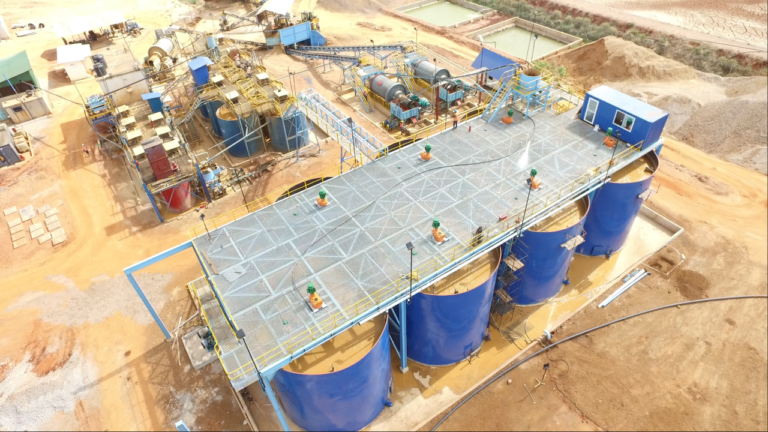
Power Metal Resources shares jumped on Tuesday after positive findings from their drilling campaign at the Molopo Farms Complex Project in Botswana. The project is targeting nickel-copper-platinum group elements and today’s announcement confirmed the presence of a large shallow dipping magnetic conductor, which importantly, was mineralised.

The significance of the nickel-sulphide mineralisation findings in the K1-6 drill hole are highlighted below:

7.0m @ 0.443% Ni from 445m, including 0.6m @ 1.69% Ni, 0.55g/t Pt & 0.14g/t Au from 446.7m downhole.1 This is within a broader mineralised interval from 294.7m (when pentlandite was first logged – assay result of 6606ppm Ni from 294.7 – 295.28m) to the end of the hole at 597.8m (minor sulphides logged – assay result 2852ppm Ni from 597.0 – 597.8m).

Power Metal Resources CEO, Paul Johnson spoke at the UK Investor Magazine Summer Investor Evening 30th June and gave his thoughts on the junior resource sector, emphasising how he felt it could be nearing a bottom. With a 45% jump in Power Metal Resources on Tuesday to add to gains over the last month, it at least proved to be the bottom for the company he heads up.

“Today’s exploration news is, in my view, potentially one of the more significant the Company has released in its 3-year history as Power Metal,” said Paul Johnson of today’s results.

“We have confirmed that drillhole K1-6 at Molopo Farms, drilled during the 2020/2021 programme, intersected the edge of a very large-scale and strong magnetic conductor. Significantly, drillhole K1-6 highlighted that the edge of the magnetic conductor was mineralised, with widespread nickel sulphides demonstrated from assay testing and follow up petrological analysis.”

Power Metal Resources presentation at the UK Investor Magazine Summer Investor Evening June 30th 2022

“As a result of the findings, multiple drillholes planned for the 2022 programme will target the centre of the magnetic conductor where we believe there is the potential for a more strongly mineralised system where the conductive response is considerably stronger and larger.”

With more drill holes planned in the future, investors may receive additional positive news from the junior explorer before long.

FTSE 100 gains as miners rise on strong BHP results

The FTSE 100 the benefits of its strong weighting towards commodities once more on Tuesday as strong results from BHP buoyed the miners.

BHP revealed record profits in 2021 as EBITDA jumped to $40.6 billion and attributable profits soared to 173%. However, it was not so much the ignited confidence in markets, rather their outlook on China and their demand for commodities in 2023.

“Despite China’s fragility, commodity giant BHP Billiton sees it as the more reliable source of revenue ahead, while other advanced economies face more of a struggle amid rising inflationary pressures,” said Susannah Streeter, senior investment and markets analyst Hargreaves Lansdown.

As Streeter notes, advanced economies are facing difficulties due to rising prices and the FTSE 100 demonstrated again that it is not a representation of the UK economy as it rose 0.5% in mid afternoon trading on Thursday.

This was after data showed UK wages fell 3% and job vacancies declined for two years, raising concerns the cost of living crisis was starting to feed through to the job market.

“The FTSE 100 enjoyed steady gains despite continuing signs of economic turmoil in the UK,” says AJ Bell financial analyst Danni Hewson.

“In a sign of the weaker backdrop, the number of job vacancies fell for the first time in two years, although it is not a clear picture, with serious issues filling roles in certain sectors.

“This makes life difficult for the Bank of England as it looks to bring down rampant inflation without inflicting too much pain on businesses and households.”

Housebuilders and Financials

The pain Hewson mentions was evident in domestically facing FTSE 100 stocks such as housebuilders and financial. Rightmove again fell after warning of a slowing housing market yesterday and Taylor Wimpey, Persimmon and Barratt tracked them to the downside.

Oil rebound

Oil prices had been in downward spiral in recent days as concerns over global growth took Brent back beneath $100. A reprieve in selling helped oil major BP and Shell support the index and further offset concerns in domestic stocks.

What investors look for when investing in a business

Entrepreneurs who have presided over successful businesses tend to possess a multiplicity of talents and capabilities. Some may have scientific aptitudes that take them into specialist markets (such as biotech or engineering), while others may be drawn to more creative pursuits such as video production or music technology. But whatever the business path they’ve chosen to furrow, they all share one characteristic in common: they have a unique ability to convert an idea into a product or service that makes money.

One crucial ability in this is a capacity to spot opportunities when they arise in the market – that ramifying web of interconnected businesses and consumers (and government regulations) that all enterprises have to compete and succeed within. To seize such an opportunity profitably, many businesses, large and small, often discover that they need more capital than they currently have at their disposal – to expand, to meet a perceived demand, and to generate more profit.

This is the point where entrepreneurs often turn to investors, keenly aware that stasis isn’t an option in the business world: evolve and grow or gradually perish are the two tough choices before them. So, how do businesses persuade hard-headed investors that pouring financial resources into their firm will result in a tidy return on investment? 

Here are some of the fundamental essentials that all businesses in search of investment must have in place if they’re to secure that goal.

Watertight data

Sound data, properly ordered, provides potential investors with a key ‘persuader’: the data reveals a trail of previous results for the business. Without data to anchor a request for investment, investors simply won’t be swayed by mere talk and ideas. Data shows investors that the entrepreneur before them is someone who gets things done and such evidence of a prior track record is crucial to adding substance to a new idea. They will be more inclined to agree that a business can work at scale if it can demonstrate that it’s already working admirably at a smaller size.

It’s also imperative that a business has everything in order at the ground-level if it truly wants to pique the interest of a potential investor. Ensuring the legalities are adhered to – documents and payroll included – is essential for any business seeking investment. Being able to prove to an investor that the business holds, or has distributed, accurate and legally compliant documents, including a P45 and P60 to each of its employees, could be crucial in creating trust with an interested third-party. Of course, there are several more important factors to take into consideration, but these are some of the fundamentals that will not be overlooked by an investor.

However, for newbie entrepreneurs and startup businesses, a robust business plan can help to make up for a yet-to-be achieved data trail. Let’s consider that next.

A solid business plan

If there isn’t a track record to guide investors, a meticulously assembled business plan demonstrates another real quality that they will consider parting with their cash for: a disciplined, hard-headed mind showing clear thinking through of a proposal to make money. As a general rule, it won’t be sufficient alone to convince investors to pour funds into a business, but a business without one stands zero chance of attracting investment. 

Data informs a sound business plan, so to be viable, it must include data that supports an entrepreneur’s targeting of a particular market. Financial projections must be backed with hard numbers in a viable plan, along with data justifying proposed sales channels and analysis of the competition for a planned product or service. It should also include a realistic timeline for returns on the investment and an overview of potential obstacles (as well as proposals for overcoming them).

A vital tip: place all the key data in summary form in an executive summary – investors simply don’t have time to wade through a 60-page plan.

Company talent

Investors are acutely aware that businesses planning to scale will require the talent to guide that process skilfully – not so easy at a time when skills shortages threaten to stifle growth in some sectors. They will want to know about a company’s talent, especially as reflected in its management team – the people who will be executing the business plan and bringing it to fruition. Possessing demonstrable expertise and skill in a firm’s key players will play a significant part in persuading investors to favour a company.

The bottom line

Investors are not charities – they invest in order to make money, and the key task of an applicant is to convince them sufficiently that they will deliver precisely that. In other words, a great deal of serious preparation goes into the making of a successful pitch. 

Hard data; a rock-solid, thoroughly researched and data-based business plan; a demonstrably skilled talent team who can show how, when and on what the money will be spent; and, finally, a compelling story to bring it all to life are the indispensable ingredients of a successful bid for investment. 

None of the above will guarantee a successful bid for investment, but failures to have any of them firmly in place will almost certainly guarantee a refusal.

Watches of Switzerland benefits from showroom reopenings

Watches of Switzerland recorded strong revenue growth of 31% on a reported basis in the 13 weeks to 31st July as the reopening of showrooms absorbed pent up demand for luxury watches.

Watches of Switzerland revenue jumped to £391 million in the period versus £297 million in the same period a year prior.

Luxury watch sales made up 87% of their sales a rose 32% to £342 million.

Analysts underscored the benefits of luxury businesses during economic downturns and their customers who remain largely unperturbed by the the cost of living crisis.

“The rich are still spending money despite the rising cost of living, judging by Watches of Switzerland’s latest update,” said AJ Bell financial analyst Danni Hewson.

“Rising energy and food prices matter to lower income individuals because the extra costs are, in many cases, absorbing all the money previously left over on pay day. Yet for affluent people, inflation won’t massively change their lifestyle and so luxury goods continue to sell well.”

“Watches of Switzerland’s US sales have doubled year-on-year in its most recent quarter, suggesting that inflationary pressures are being shrugged off by its clientele.”

“The company seems very upbeat, rolling out more showrooms or upgrading existing ones, and it is making good progress with its expansion into Continental Europe.”

The Watches of Switzerland CEO pointed to momentum across the business and highlighted the benefits of investing in the experiences of visiting their stores.

“The first quarter continued with strong momentum throughout, and we carry this positive momentum into the second quarter. Despite the well-publicised concerns about the macro-environment, demand for our products remains robust with client registration of interest lists continuing to extend,” said Brian Duffy, Chief Executive Officer, Watches of Switzerland.

“The luxury watch market is dynamic with exciting developments on new products and marketing across a broad range of brands.”

“Within a large, diffuse and growing market, we are benefitting from our distinctive business model – namely our investment in leading store design, the strength of our brand partnerships, our international scale, our bold marketing campaigns, our advanced systems technology, and our dedication to client experience.”

Tribal margins hit by tough software implementation

0

Education software and services provider Tribal Group (LON: TRB) continues to add to its annualised recurring revenues through additional deployments of its cloud-based software. Short-term profitability is being held back by a difficult implementation, but the longer-term outlook is positive.  

The main part of the business is student information systems (SIS), which provide higher and further education establishments with the ability to manage and engage with students. This generates revenues from licence fees, implementation and support. An increasing amount of revenues are coming from cloud-based software. This division already has a large market share in the UK and is seeking to expand in Asia. Education services is the smaller part of the business, and it provides quality assurance and benchmarking services to the education sector.

Figures

In the six months to June 2022, revenues were 8% higher at £42.4m. Annualised recurring revenues are running at £53.7m. New product launches and the problems with the contract with Nanyang Technology University (NTU) in Singapore hampered group margins. Underlying pre-tax profit fell from £7.9m to £5.7m. That figure excludes £1.27m of restructuring and transformation costs.

There was a cash outflow from operations due to the timing of implementations, although cash generation is always better in the second half. The amortisation charge was £1m, while capitalised development costs were £5.59m.

The growth in SIS revenues was mainly due to the newer software, plus related implementation revenues. The NTU implementation is much larger and broader than normal implementations and it will continue to hamper margins into next year.

Education services improved its interim revenues from £6.8m to £6.9m and there was an improvement in margins due to the contract mix and remote delivery.

Future

House broker Singer forecasts an improvement in revenues from £81.1m to £85m this year, but a decline in pre-tax profit from £14m to £13m with higher margins expected in the second half. Net debt of £1.4m is forecast for the end of the year as cash generated from operations is ploughed into software development. A dividend of 1.3p a share is forecast.

The move to cloud-based software and expansion in Asia provides long-term potential for Tribal, although it will take time to show through in profit.  The share price has fallen 5.5p to 81.5p, which means that the 2022 prospective multiple is 16.   

Aim movers: Tremor International downgrade and RUA near to clinical trial design agreement with FDA

0

Programmatic advertising services provider Tremor International (LON: TRMR) is the worst performer of the day. The share price has fallen 18.3% to 357.2p. That is less than 50% of the price when Tremor joined Nasdaq one year ago. Second quarter revenues declined, and operating profit was 27% lower at $15.5m. The six months revenues are slightly ahead but operating profit is lower. Share issues have led to a much sharper decline in earnings per share. Advertisers such as car manufacturers have been postponing spending because of a shortage of supply. There has also been a focus on lower margin business. finnCap has lowered its 2022 earnings forecast from 71.6 cents a share to 64.9 cents a share and it expects a decline in revenues and profit compared with 2021.

Even though broker Singer says 2022-23 revenues and profit are on track, space management software provider Smartspace Software (LON: SMRT) shares have declined 10.8% to 41.5p. Interim revenues are expected to be 46% ahead at £3.6m and annual recurring revenues are 32% higher at £5.2m. However, a change in the way that annual recurring revenues are calculated means that they will be lower than previously forecast at the end of the year. Net cash was £2m at the end of July 2022. A full year loss of £2m is forecast.

The Edenville Energy (LON: EDL) share price has fallen 10.8% to 12.25p after the announcement of a 12-month production agreement with Brahma Energies for the Rukwa coal project in Tanzania. All the coal produced will be sold to local buyers introduced by Brahma. Edenville will get $10/ tonne of coal sold at $35/tonne and 60% of revenues above that selling price. A minimum of 4,000 tonnes of washed coal will initially be produced each month and that could rise to 6,000 tonnes if plant improvements are carried out. Rukwa should be cash flow positive after two months.

Shares in RUA Life Sciences (LON: RUA) have been on a downward trajectory since the end of last year. Today they have bounced back 16.9% to 41.5p following the biostable polymer vascular grafts and heart valves developer’s AGM statement. IP licencing and contract manufacturing operations are trading more strongly than expected and revenues have grown by 50% in the first four months of the financial year. RUA is close to agreeing a clinical trial design for vascular grafts with the FDA.  

Ascent Resources (LON: AST) has continued its recent rise following yesterday’s announcement that it is commencing arbitration proceedings against the government of Slovenia, whose policies it claims destroyed the value of its investments in the country and stopped it producing gas. The claim is for €500m in damages, although Ascent Resources’ lawyers would get a significant chunk of any settlement. The share price is 12.2% higher at 6p. That is a 57.9% increase in the past week.

Invinity Energy Systems (LON: IES) has signed a memorandum of understanding with US Vanadium to create a US-based 50/50 joint venture to build and sell vanadium flow batteries. Arkansas-based US Vanadium produces high-purity vanadium pentoxide and electrolyte for vanadium flow batteries. There was a 9% increase in the share price to 42.5p.

Product life cycle management software supplier Sopheon (LON: SPE) has secured a five-year contract with the US Navy worth $11.2m. This is for a range of submarine programmes. Sopheon gained certification as a supplier during June. The share price rose 4.8% to 550p.