AIM movers: Afentra returns from suspension and Dekel Agri-Vision crop decline

1

Africa-focused oil and gas company Afentra (LON: AET) has returned from suspension following the publication of the admission document covering the proposed acquisition of interests in the producing Block 3/05 and the exploration Block 23 in Angola from Sonangol. The initial cost is $80.5m, with up to $50m of contingent consideration for the Block 23 interest. The acquisition cost is equivalent to $3.60/barrel – based on proved and probable reserves. In the first half of 2022, the net production from Block 3/05 was 4,700 barrels per day and it could generate $36m of cash a year at an oil price of $75/barrel. Trading in the shares had been suspended since 8 October. The share price jumped 66% to 24.25p.

Customer engagement technology provider Pelatro (LON: PTRO) has won a contract with a Middle East telecoms company with an initial value of $1m paid over three years. This means that Pelatro has visible revenues of $8m for 2022 compared with forecast revenues of $9m. The share price rose 7.95% to 23.75p.

At its AGM semiconductor designer CML Microsystems (LON: CML) revealed that trading is ahead of the same period last year. New products are set to be released later this year, but they won’t make a significant contribution until next year. A planning application has been filed for the development of excess land at the 28-acre headquarters in Essex. The share price is 4.22% higher at 420p.

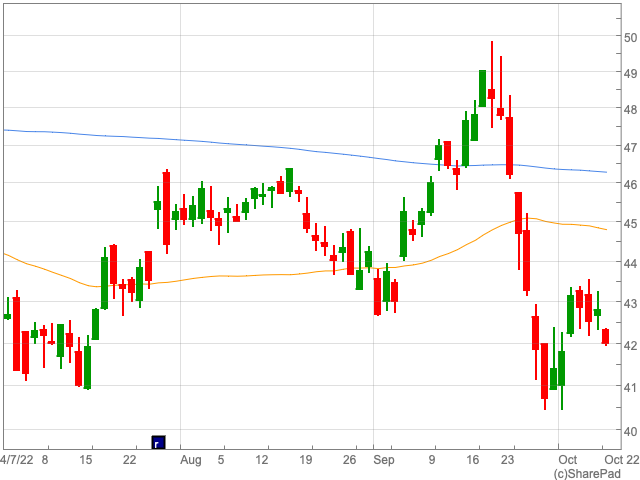
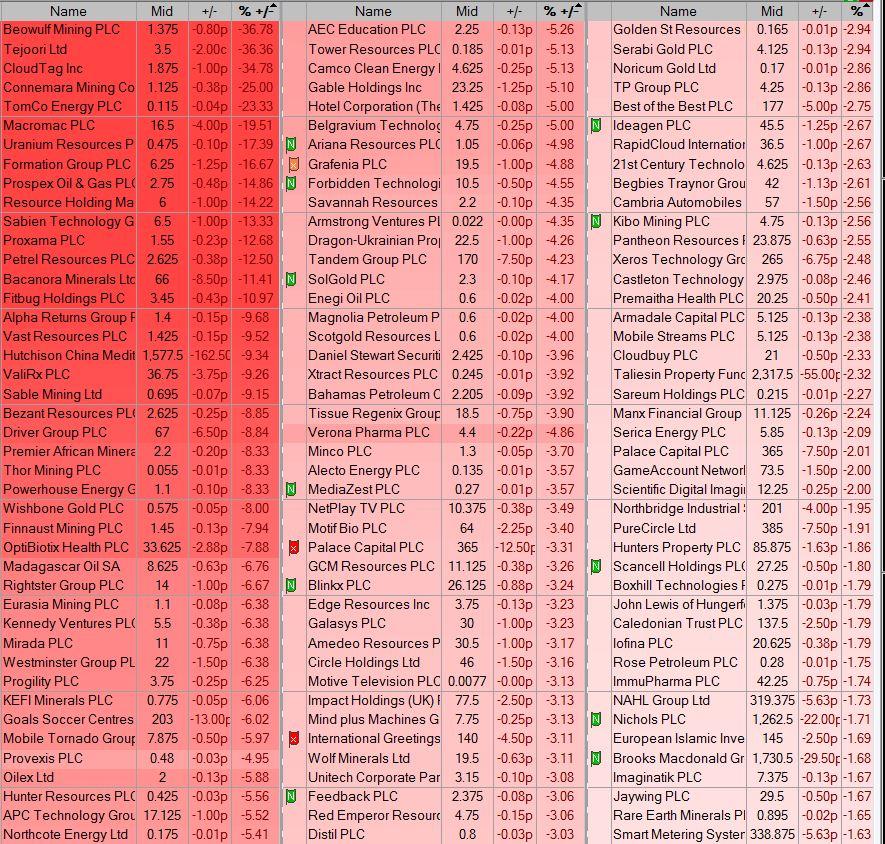
Palm oil and cashews producer Dekel Agri-Vision (LON: DKL) reported a 47% decline in oil palm fruit production in July and crude palm oil production was 46% lower. Production in August is also expected to be poor. This means that Dekel Agri-Vision is not able to take full advantage of high palm oil prices. The cashew project should still start generating cash in the fourth quarter. The shares are the worst performers on the day with a 11.8% decline to 3p.  

A proposed $10m (£5.8m) placing 0.5189p a share by 88 Energy Ltd (LON: 88E) knocked the share price. Although it has recovered from its low it is still down 8% to 0.575p. A further £2.8m could be raised if there is demand. The cash will help to fund preparations for drilling of a well at Icewine in 2023 and finance new ventures. A maiden, independently certified prospective resource estimate of 1.03 billion barrels of oil (unrisked) has been announced for Icewine East, where 88 Energy Ltd has a 75% working interest.

Digital media company Digitalbox (LON: DBOX) reported a strong first half with revenues 40% higher at £1.9m and an increase in net cash to £2.4m. This is before the completion of the acquisition of the assets of TVGuide.co.uk. However, management is concerned about advertising levels in the second half. Digitalbox can still achieve full year expectations, though. The share price has fallen 2.08% to 11.75p, having been lower earlier on in the day.

TUI, OnTheBeach, and Vacation Vengeance with Alan Green

Alan Green joins the UK Investor Magazine for a seasonal Podcast focusing on the global travel industry and two UK-listed travel stocks.

Supply chain issues have crippled the UK’s travel industry in busy periods this year and we make an attempt at extrapolating travel industry woes across the wider economy.

We start with looking at TUI’s results and the impact of higher costs and their ongoing problems with high overheads. Our questions focus on their model and whether they are suited to increasingly digital holiday maker.

OnTheBeach is one such digital travel company. We look forward to their next set of results and outline the key metrics investors should keep an eye on.

We conclude with an update on ECR Minerals and the raft of recent updates from the explorer.

Musk sells £5.7bn in Tesla shares to shore up Twitter legal battle

0

Elon Musk has reportedly sold £5.7 billion worth of shares in Tesla in a bid to shore up his funds if he loses his legal battle against Twitter.

In the event the SpaceX tycoon loses the case, he would be forced to carry out his initial agreement to buy the social media platform.

Musk struck a $44 billion deal to purchase Twitter in July this year, however he soon walked away on claims that the company was untruthful concerning the number of bot and spam accounts on the site.

Twitter has since launched a lawsuit against Musk for attempting to walk away from the deal, with a trial scheduled to take place in Delaware in October 2022.

“Tesla shareholders may well be seething at Elon Musk’s latest share sale, no doubt arguing they didn’t sign up to such erratic behaviour. To be fair, they have every right to be furious,” said AJ Bell financial analyst Danni Hewson.

“Musk may argue it is better to have the readies at hand in case he needs to cough up for Twitter. If he were to lose the legal battle with Twitter and not have funds available to pay the bill, the market would assume he would then have to sell Tesla shares and the stock could plummet.”

“However, whether he sold now or down the line, the whole episode is still very annoying to Tesla investors. Shareholder would expect the value of their investment to be influenced by sales of electric vehicles and battery storage systems, not the fortunes of an entirely separate company.”

The Tesla founder currently has $30 billion in his own money linked to the deal, with over $7 billion of his funds supplied by a selection of backers including Binance, the largest global crypto exchange, and Oracle founder Larry Ellison.

Since the start of this year, Musk sold approximately $8.5 billion in Tesla shares in April, and said he had no extra sales upcoming. However, he sold 7.9 million shares between 5 August and 9 August, and currently owns 155 million Tesla shares, representing a little under 15% of the electric car group.

“In the (hopefully unlikely) event that Twitter forces this deal to close *and* some equity partners don’t come through, it is important to avoid an emergency sale of Tesla stock,” said Musk in a tweet.

The tycoon has sold approximately $32 billion in Tesla shares under 12 months, however he said he would buy Tesla stock again if the Twitter deal does not go through.

“You could argue that Musk might buy back the Tesla shares if he doesn’t have to shell out for Twitter, but whatever happens it is another black mark against the entrepreneur,” said Hewson.

Royal Mail to strike in August and September as pay negotiations crumble

1

Royal Mail workers are set to strike on 26 August, 31 August, 8 September and 9 September in a protest against employee salaries after pay negotiations between executives and postal workers crumbled.

Approximately 115,000 Royal Mail staff will be walking as part of a massive wave of industrial action organised by the Communication Workers Union (CWU), marking the largest strike of the summer so far.

“After more than three months of talks, the CWU have failed to engage in any meaningful discussion on the changes we need to modernise, or to come up with alternative ideas,” said Royal Mail operations director Ricky McAulay.

“The CWU rejected our offer worth up to 5.5% for CWU grade colleagues, the biggest increase we have offered for many years.”

The pay rise is supposedly made up of a 2% pay rise backdated to 1 April 2022, and an additional 3.5% increase linked to a selection of terms and conditions, alongside an “above and beyond” bonus.

The CWU said Royal Mail failed to offer a 5.5% pay rise, and instead approved a 2% increase without staff agreement.

The Union further claimed Royal Mail had offered an additional 1.5% pay rise “based on signed away our terms and conditions.”

Inflation has soared in recent months to a 40-year high of 9.4%, and is currently on track to reach 13% in October this year.

The spiking cost of living has seen many sectors struck by a real terms pay cut, leaving workers struggling to cope with soaring prices and fighting to scrape together savings as a difficult winter looms on the horizon.

Royal Mail “Materially loss-making” in FY 2022-2023

The Royal Mail argued a real terms pay rise is out of its budget due to heavy company losses of £1 million per day.

Royal Mail issued a statement today confirming that if the strike went ahead, the group would be “materially loss making” in FY 2022-2023.

“In a business that is currently losing £1 million pounds a day, we can only fund this offer by agreeing the changes that will pay for it,” said Royal Mail.

“The CWU rejected [our] offer, worth up to 5.5%, which would add around £230 million to Royal Mail annual people costs at a time when the business is already loss making – in the Q1 trading update published on 20 July, Royal Mail announced it was losing a million pounds a day and the proposed pay deal adds more than half a million pounds a day to that figure.”

“This can only be paid for with meaningful business change. The CWU has balloted its members on pay, which returned a majority in favour of industrial action.”

Impact of current market conditions on the future of VC with SuperSeed

The UK Investor Magazine was delighted to welcome SuperSeed VC to the Podcast for a comprehensive discussion around venture capital, key trends and the impact of any economic downturn on private tech companies.

We were joined by SuperSeed Managing Partner, Mads Jensen, and Partner, Dan Bowyer.

SuperSeed focus on revenue generating tech companies driven by strong founders. We explore what went wrong in many VC deals during the pandemic and how SuperSeed avoided them. Mads highlights the importance of positive cashflows during leaner times and points to the favourable VC valuations achievable during economic downturns.

We do, however, touch on the economic conditions and slight improvements that mean we could be moving towards the beginning of the end of economic strife. This raises the question of a lag in public in private markets and we talk to how investors can navigate this.

Mads and Dan explore the key attributes they look for in companies as well as the key tech trends they are monitoring.

Find out more about about SuperSeed on their website here.

Explore SuperSeed’s partnership with Seedrs here.

TUI misses return to profit on €75m travel disruption costs

1

TUI shares slid 1.4% to 141.3p in early morning trading on Wednesday, following a pre-tax loss of €27 million in Q3 2022 from a loss of €669.8 million in Q3 2021.

However, TUI reported a revenue growth to €4.4 billion in Q3 2022 against €649.7 year-on-year, linked to rising travel and tourism activity following the pandemic.

The travel company mentioned an operating profit of €48 million from a significant loss the last year.

“TUI has had what can only be described as a strong third quarter – crucially, forward bookings for the final dregs of the summer season are looking well placed,” said Hargreaves Lansdown equity analyst Sophie Lund-Yates.

“The drains on cash when you have both planes and hotels to fill are enormous, so this about-change couldn’t have come fast enough for the group.”

However, TUI reported additional costs of €75 million on the back of flight disruption caused by wider aviation sector chaos.

“The bottom line has hit some further turbulence thanks to hefty costs associated with airport disruption, but there’s little the group can do about wider aviation industry labour shortages,” said Lund-Yates.

TUI confirmed its summer was on-track to meet capacity close to pre-Covid levels.

However, the company noted a net debt of €3.3 billion, providing a substantial hurdle to tackle in the coming year.

“The group’s hauling around an eye-watering debt pile when looked at in comparison to earnings, and bringing that down is a priority,” said Lund-Yates.

“Looking ahead, TUI needs to be careful it gets the balance right between addressing liquidity risk while spending enough to keep its competitive edge.”

“A lot of holiday makers aren’t especially brand-loyal and simply want the best deal – a fickle client base in the current cost-of-living environment makes market-share growth potentially difficult.”

Nightcap – Trading Update declares that the challenging macro environment has resulted in more sites being available on very attractive terms

Sarah Willingham is an ambitious and very hospitable lady – she wants to offer drinks across the country.

She was one of the Dragon’s Den entrepreneurs and is a serial investor. 

But, more importantly, she is the Chief Executive of the Nightcap (LON:NGHT) group, which last week announced a Trading Update for the year to 3 July.

Defined strategy

Her aim is to build up the UK’s leading bar group and, with such determination and ability, she is progressing at quite a pace.

The company owns and operates a number of brands, taking in the London Cocktail Club, the Adventure Bar group, and Barrio Familia, each with various venue names.

The group, which floated on AIM in January last year in a £4m fund raising, valuing it at £13.5m, has already seen quite an advance in its strategy, through a number of acquisitions and new openings.

Removal of Russian Vodka

In a very canny and nationalistic move in early March this year, Nightcap removed Russian Vodka from all of its then 27 venues, then replacing Ukrainian Vodka across its entire estate.

Trading Update 

The year to 3 July has seen the group expand significantly, it is now up to an estate of 34 venues across the country, following the launch of its Nightcap Bar Academy and the Bristol opening of its Tonight Josephine brand.

It has not only been building up organically by way of a number of new openings, but also through a number of very sensible and strategic acquisitions.

It currently has another 22 premises under offer or in legal negotiations for all of its various brands.

It is a massive pointer to the expanding group’s scalability, which helps to get better margins but also gains a very useful supply edge.

That shows through from the Update with a good fourth quarter’s trading.

Group revenues for the year are expected to rise to £35.9m, comparing very well with the figure of just £6.0m in 2021, but that was when it was suffering from Covid closures.

As for its adjusted EBITDA for the year it is expected to come up to market expectations and that is despite restricted trade over the very important Christmas period and suffering from the recent transport strikes.

Group cash was £6.1m, with bank debt of £5.5m of which £0.9m is due to be repaid during the current trading year to July 2023.

The Group has strengthened its focus on offering good times and good value to its resilient Millennial customer base.

It is also backed by an unparalleled property pipeline giving it confidence in its management’s decision to continue to invest in growth during FY2023.

So, what does Sarah say?

Sarah Willingham, CEO, stated that:

“We are absolutely delighted with these results. Nightcap is going from strength to strength and I am so proud of the business that we are building. Finishing the year with 31 sites, with a number of openings to follow and a significant new site pipeline is a great achievement. Despite recent transport strikes and significant Covid-19 interruptions during the important 2021 Christmas period we have managed to deliver against our expectations thanks to our wonderful teams and loyal customers.

“Strong growth delivered by exceptional people with a real desire to continue to build a leading business in the bar sector in the UK, is setting us up well for another year of significant growth as we continue to bring on board and open more new sites in prime locations across the country.

“We always thought we would have a short window to sign and open the best sites across the UK when we were admitted to AIM last year, but the challenging macro environment has resulted in more sites being available on very attractive terms and with a simple to replicate business model across four distinctive brands, all led by motivated and engaged managements teams, serving a customer base with continued high disposable income, we feel confident about the year ahead despite the economic pressures facing the UK today. 

“We are well placed to mitigate inflationary rises as we grow and increase our buying power and we will continue to throw the best parties offering exceptional quality and value, ensuring that our lovely customers can still enjoy their great nights out.”

Market expectations

For the current year to end June 2023 analyst Matt Butlin at Allenby Capital, the group’s broker, had pencilled in £54.39m revenues, £5.27m profits and 2.53p of earnings per share.

For the 2023/2024 year the estimates are for £70.8m revenues, £7.53m profits and 3.40p of earnings per share.

Reaction to the Update

The shares have yet to react to the positive Trading Update, but they will do so in due course.

They touched 35.5p in April last year but have since been down to 13.65p in mid-March this year.

Now at 14.5p that puts the shares of this £29m market capitalised hospitality group out on an estimated current year 5.73 times ratio.

But for the coming year they trade on a mere 4.26 times price-to-earnings ratio.

That makes them look highly attractive and capable of at least a 50% rise within the year and, even then, they would look cheap.

Thank you Sarah – we will drink to that – cheers.

Prudential profits fall on market volatility as Asia lockdowns impact margins

0

Prudential shares fell 1% to 978.6p in early morning trading on Wednesday, after the insurance giant reported a 90% tumble in IFRS post-tax profit from continuing operations to $106 million in HY1 2022 against $1 billion the last year.

The Asia-focused insurer attributed its post-tax profit drop to high market volatility, resulting in lower equity levels, rising government bond yields and widening corporate bond spreads.

Prudential also mentioned a 5% slide in new business from continuing operations to $1 billion from $1.1 billion, with the benefit of higher APE sales offset by higher interest rates, lower Hong Kong sales, where margins have traditionally been higher, and an increase in bancassurance sales.

However, the group confirmed a 12% growth in operating free surplus generated from continuing operations to $1.2 billion compared to $1.1 billion.

Prudential noted an 8% climb in adjusted operating profit from continuing operations to $1.6 billion against $1.5 billion in the previous year, driven by a 6% rise in life and asset management operating profit and a 32% decline in central costs.

FY 2022 guidance

The insurance firm said its major markets were starting to regain stability, however it warned operating conditions would remain challenging over FY 2022.

Prudential confirmed it had sufficient financial resilience to continue its business operations across Asia and Africa.

“Our resilient operational performance demonstrates the strength of our well positioned and well diversified franchise across the Asia region, driven by our multi-channel, digitally enhanced distribution platform,” said Prudential CEO Mark FitzPatrick.

Dividend

The group recommended a HY1 2022 dividend of 5.7c, equating to one-third of Prudential’s FY 2021 payout of 17.2c.

Zotefoams continues recovery

Investors reacted positively to better than expected interim figures from foams manufacturer Zotefoams (LON: ZTF) with volumes and revenues growing. This led to an upgrade of pre-tax profit forecasts.
Price increases and an additional 4% of volume meant that interim revenues were 23% ahead at £59m. There was also help from currency movements. Polyolefin foam sales increased by 26%, although this division was held back by limited availability of certain additives for higher margin products. High performance foam sales were 21% higher, with strong growth in footwear, and the main profit improvem...

US President Biden signs CHIPS & Science Act in effort to boost US semiconductor production

0

US President Joe Biden signed the CHIPS and Science Act into law on Tuesday, providing $52 billion in funding for the country’s semiconductor manufacturing industry in an effort to boost national production.

The Act is set to unlock $280 billion in funding to enhance US technology and manufacturing, as the country seeks to build its sector to compete against China.

The CHIPS and Science Act marked a rare occasion of bipartisan cooperation, with Democrats and Republicans throwing their hats into the ring to support US tech production.

The US has seen its slice of the semiconductor pie shrink dramatically over recent decades, with manufacturing capacity falling from 37% to 12%, according to the Semiconductor Industry Association.

Meanwhile, an estimated 75% of global production capacity is based in Asia.

The funding is set to be spread across five years, starting with $19 billion this year and $5 billion earmarked for 2026.

Biden confirmed the bill had also reserved $200 billion in funding for national security and intelligence sectors, including quantum computing and artificial intelligence.

“Today I’m signing into law the CHIPS and Science Act. A once in a generation investment in America itself. A law that the American people can be proud of,” said Biden.