Polarean Imaging operational loss widens to $6.6m on product launch costs

0

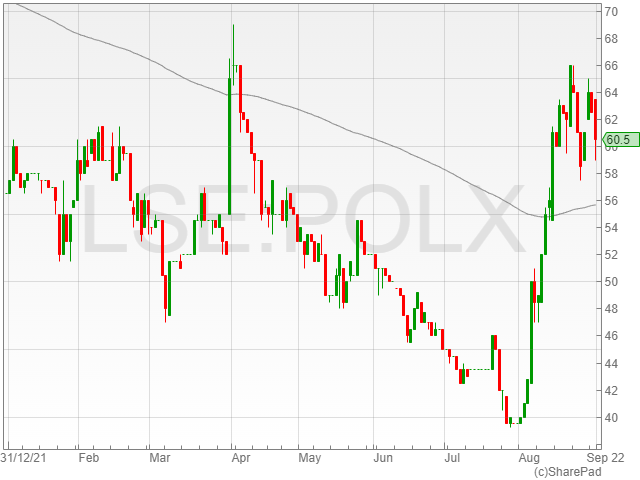
Polarean Imaging shares dropped 2.6% to 60.8p in late morning trading on Wednesday, after the firm announced a gross profit decrease to $294,840 in HY1 2022 from $298,689 in the previous year.

The company reported a revenue growth to $834,087 against $621,874, as a result of its polariser systems sales to McMaster University in Ontario, Canada and the Cincinnati Children’s Medical Centre.

Polarean Imaging confirmed a rise in administrative expenses to $1.4 million from $1.2 million due to infrastructure building expenses to support the launch of its product, along with a cost of sales climb to $539,247 compared to $323,185.

The firm highlighted a loss from operations climb to $6.6 million from $5.2 million last year, and a loss on ordinary activities before tax of $6.9 million against $4.8 million.
Operating expenses rose to $7 million against $5.5 million on the back of higher regulatory costs to support the resubmission of its New Drug Application (NDA) for the firm’s drug-device combination.

The group mentioned net cash of $22.7 million as of 30 June 2022, which Polarean Imaging said could finance the company into 2024 “based on strategic decisions.”

Polarean Imaging noted a basic and fully diluted loss per share of 3.3c from 2.6c year-on-year.

“During the first half of this year, we have focused on the approval process of our NDA, and addressing the findings related to the CRL. The FDA processes are proceeding with question and answer and other interactions with the FDA as we approach our goal action date of 30 September 2022,” said Polarean Imaging CEO Richard Hullihen.

“We have also made appropriate progress on our commercialisation planning activities, which include medical engagement of pulmonology and radiology thought-leaders at scientific conferences, profiling of our target top-tier academic institutions, and reimbursement code investigation and applications.”

“We are excited to welcome our latest new researchers and sites, while renewing the capabilities of existing users, which continue to increase clinical research momentum.”
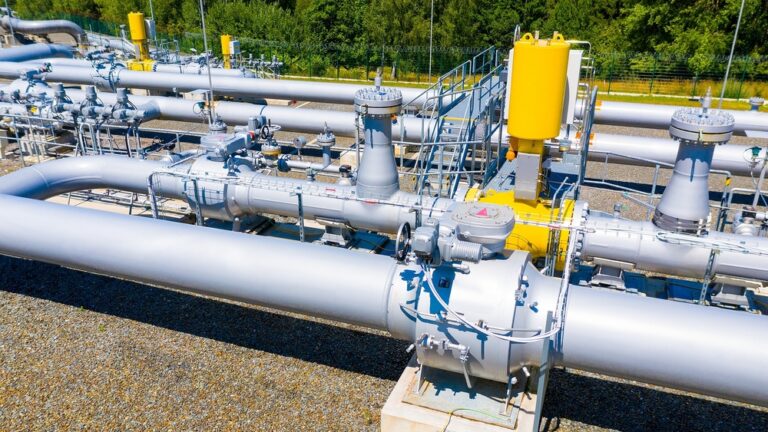

Russia shuts down Nord Stream 1 pipeline to Germany, energy crisis deepens

Russian energy firm Gazprom shut down the Nord Stream 1 pipeline on Wednesday for unscheduled “maintenance work” on the Trent 60 gas compressor unit operating on the critical supply route to Germany.

Gas supply to Europe is scheduled for suspension until 2 September, temporarily crippling the continent’s efforts to stockpile energy supplies in advance of winter.

Gazprom reported gas transmission would resume on 2 September at a rate of 33 million cubic metres per day, provided “no further malfunctions are identified.”

The Nord Stream 1 pipeline was previously closed down for 10 days in July for repairs, however the current shutdown was announced with less than two weeks’ notice, sending Europe into an energy crisis spiral.

Russia previously cut Nord Stream 1 to 40% capacity in June and 20% in July, citing maintenance complications and sanctions apparently barring the installation of necessary equipment.

Gas prices have spiked by 400% as countries rush to stockpile supplies in fears Russia will cut off its flow entirely as the continent heads into a deepening cost of living crisis.

Cake Box shares plummet after ‘challenging economic and trading environment’ warning

The value of Cake Box Holdings shares nearly halved on Wednesday following a warning the company was facing a ‘challenging economic and trading environment’ that would squeeze margins.

The high levels of inflation seems to have claimed another victim in the operator of 220 outlets egg-free cake outlets across the UK.

The group said they were attempting to offset input cost increases by raising prices but said full year earnings would be below market expectations.

Despite the challenges of the immediate outlook, Cake Box maintained they had a strong balance sheet to see them through a period of softer economic conditions with a cash balance £6.7m, prior to paying the proposed dividend of £2.0m in September.

The company said they were looking to the future with a number of new outlet openings in the pipeline.

Castillo Copper shares gain on BHA project contractor confirmations

0

Castillo Copper shares gained 8.4% to 0.89p in early morning trading on Wednesday, after the mining group announced the appointment of two contractors for its inaugural drilling campaign at the BHA project’s east zone in Q4.

The company confirmed the appointment of AllState Drilling, who will perform the campaign which comprises one diamond core and 17 RC drill-holes for 2,100 metres, with depths between 100 metres to 160 metres.

Castillo Copper also noted the addition of FieldCrew, who previously performed work at the NWQ Copper project in Queensland, Australia. FieldCrew will manage the day-to-day concerns of the drilling campaign.

Meanwhile, Castillo Copper reported Australia secured preferred status for the supply of critical minerals to the US’s electric vehicles battery program.

The mining group said it wanted to deepen its knowledge of the East Zone’s Rare Earth Elements (RRE) potential at the Sisters Prospect and Iron Blow targets.

The Sisters Prospect’s two planned RC drill-holes will be analysed for copper-cobalt gold and REEs, and the Iron Blow operation will have its additional drill-core samples tested to determine if there are further extensions to known mineralisation, following the prior discovery of REEs.

“The Board is delighted to have secured AllState and FieldCrew as key contractors for the upcoming drilling campaign. Notably, AllState is a highly reputable drilling group, while FieldCrew has done considerable fieldwork across the BHA and NWQ Copper Projects,” said Castillo Copper managing director Dr Dennis Jensen.

“In addition, with sentiment currently positive towards REEs, the Board is interested in boosting its understanding of the potential across The Sisters and Iron Blow Projects.”

Alien Metals shares jump on Anglo American agreement

Alien Metals shares surged on Wednesday after the metals explorer announced an agreement with global mining giant Anglo American related to the Hancock Iron Ore Project in Western Australia.

Alien Metals, through its wholly-owned subsidiary Iron Ore Company of Australia, has signed an agreement for 100% of the offtake from the Hancock project and $15 million funding.

Alien Metals will have access to a $10 million advance payment facility and upto $5 million in vessel payments for the first 12 months.

Anglo American will receive an agreed royalty for the 24 months as part of the deal that includes conditions such as a $5 million equity raise being used for Hancock and the approval of permits and licenses.

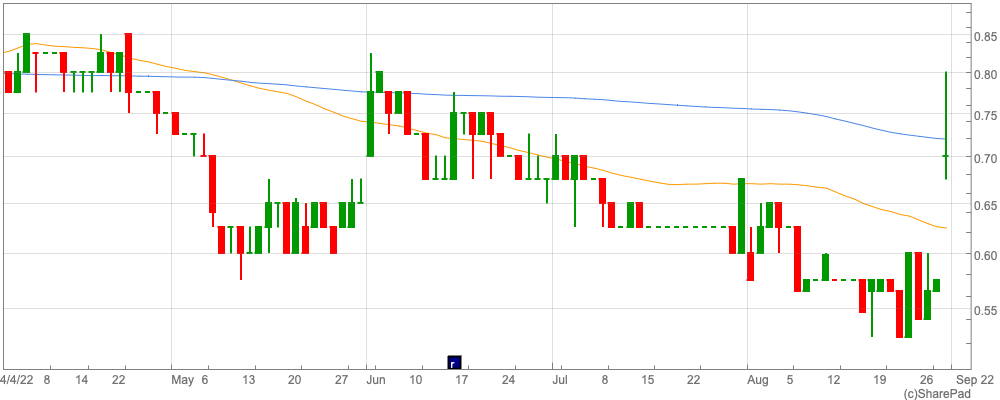
Today’s announcement is major endorsement of the Hancock project and the development work by the Alien Metals team. Alien Metals shares traded as high as 0.80p, before falling back.

“We are really pleased to have signed this Mandate Letter with a leading, global mining company of Anglo American’s stature,” said Bill Brodie Good, CEO of Alien Metals.

“The Mandate Letter provides a pathway to negotiate and agree the potential development debt funding, and a 100% offtake solution. This Mandate Letter supports our near-term production aspirations and, unlike conventional debt finance, the potential bespoke funding with offtake provides alignment between the parties for the pursuit of scale across multiple assets with a world class counterparty.

“The Board is continuing to assess development plans at Hancock which may reduce the initial capex requirement outlined in the October 2021 Scoping Study and will advise once this process is complete.”

Alien Metals operates the Hancock Project in a diverse portfolio of global mining assets which includes Mexican Silver projects and PGM asset in Australia.

Serabi Gold shares fall as HY1 revenues and profits slide

0

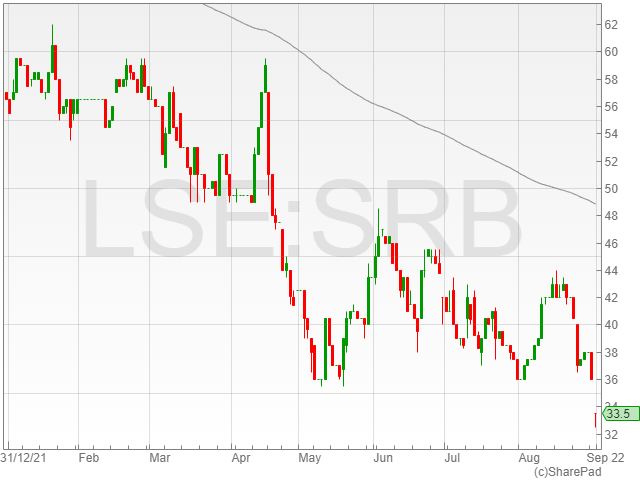
Serabi Gold shares fell 7.2% to 33.4p in early morning trading on Wednesday after the gold mining company announced a revenue decrease to $31 million in HY1 2022 from $32 million the last year.

Serabi Gold confirmed a problematic Q1 2022, with a net cash outflow of $2.5 million driven by lower production across the financial term. Production picked up by 19% in Q2, however profits and revenue still suffered a significant blow.

The firm reported a rising cost of sales to $23 million compared to $18 million.

Serabi Gold highlighted an EBITDA fall to $5 million against $11 million, alongside a drop in operating profit before finance and tax to $2 million from $8 million in the previous year.

The commodities group noted a pre-tax profit slide to $2 million compared to $6 million.

Serabi Gold mentioned a basic EPS decline to 2.74c from 9.06c.

The company pointed out cash and cash equivalents of $9.8 million at 30 June 2022 against $12.2 million at 31 December 2021, along with net assets of $84.1 million from $79.8 million.

“Compared with the same six-month period in 2021, we have incurred a 46 per cent increase in spending on underground drilling to grow the mineral resource inventory and build long term mining plans, a 48 per cent increase in power costs which includes diesel for generators and grid supplied electricity as well as increased costs of reagents and other consumables across both the mining and processing activities,” said Serabi Gold in a statement.

“As well as the continued investment in underground drilling to grow the mineral resource at Palito, we have continued to update the mining fleet with an additional US$1.5 million spent on capital equipment in the second quarter compared with less than $400,000 in the same period of 2021 and we continue to progress the mine development at Coringa. This capital programme together with the underground drilling activities are the platform for building the future production growth and complement the continued potential presented by the regional exploration that is attracting external interest.”

“The cash position remains strong, with cash held at 30 June 2022 of US$9.8 million with a further US$1.9 million received shortly after the month end for a sale of copper/gold concentrate following a small delay to sailing schedules.”

BBGI Global Infrastructure S.A. NAV rises 6.7% on inflation-linked equity cash flows

0

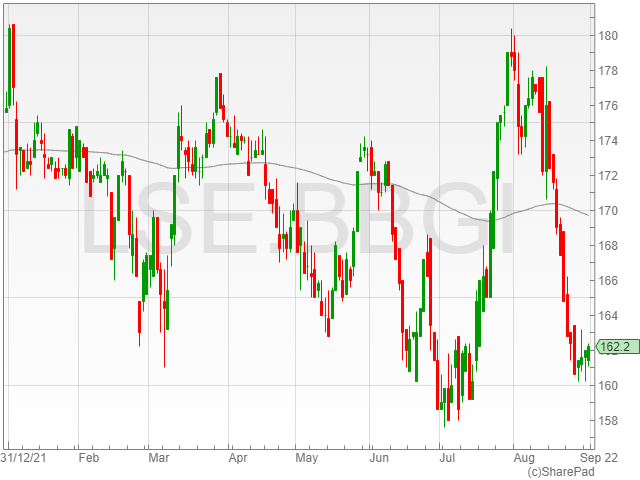
BBGI Global Infrastructure S.A. shares climbed 0.5% to 162.4p in early morning trading on Wednesday, following an investment basis NAV rise of 6.7% year-on-year to £1 billion in HY1 2022.

The firm mentioned its equity cash flows were positively linked to inflation, resulting in its NAV increase.

The global infrastructure investment group confirmed a 6.5% NAV per share growth to 149.8pps compared to 140.7pps the year before.

BBGI Global Infrastructure S.A. reported a 7.48pps target dividend for FY 2022, 7.63pps for FY 2023 and a 7.78pps target dividend for FY 2024.

The company announced a 2.03 times cash dividend cover against 1.31 times in FY 2021.

BBGI Global Infrastructure Group S.A. noted a Total Shareholder Return since IPO of 150.3%, representing 9.1% on a compound annual basis.

“I am pleased to report that BBGI has delivered an exceptionally strong operational performance for the first half of 2022. This performance reflects the low-risk investment strategy that the Company has followed since IPO in 2011. Our cash dividend cover of 2.03x supports the Company’s target dividend of 7.48 pps for 2022, and reaffirmed target dividend of 7.63pps for 2023 and of 7.78pps for 2024,” said BBGI Global Infrastructure S.A. non-executive chair Sarah Whitney.

“Over the period to 30 June 2022, the Company’s high quality inflation-linked cash flows led to a total increase in NAV of £47 million, representing a 4.7 per cent uplift, and highlights the portfolio’s genuine high-quality inflation-linkage. This contributed to a NAV per share increase of 6.5 per cent or 9.1 pence in the reporting period.”

“Despite this challenging macroeconomic backdrop, given the AAA and AA-rated countries in which we invest and the fundamentals of our investment proposition, we have confidence in our resilient and defensive strategy. In an uncertain world, I am reassured by our ability to continue to deliver long-term value to our stakeholders.”

Braemar Shipping Services: Finals Full Steam Ahead

raemar (LSE: BMS), after reporting strong trading with its delayed Finals to  End Feb, the price improved to 334p.  Its Revenue increased 21% to £101m with   a spectacular 209% recovery in profits to £13.9m and the EPS of 27.95p gives a P/E of  12x with a  2.7% yield. BMS is the smallest of the few listed Shipbrokers, and it operates from 19 countries   The new team is focusing on its core shipbroking and corporate finance business so have disposed of non-core activities, such as the Engineering Division and loss-making businesses have been clo...

CentralNic continues impressive growth

Strong trading momentum continues at domain name and online marketing services provider CentralNic (LON: CNIC) and existing forecasts could be upgraded again later in the year if growth continues at current levels. A further boost to earnings is expected from a refinancing of the company’s bonds.
The growth is coming from the online marketing division where revenues jumped from $96.4m to $257.8m, although gross margin declined so there was a lower percentage increase in gross profit – although it did still more than double. There are no signs of a slow down. The domain name distribution and se...

40,000 BT and Openreach workers join wave of UK strike action

0

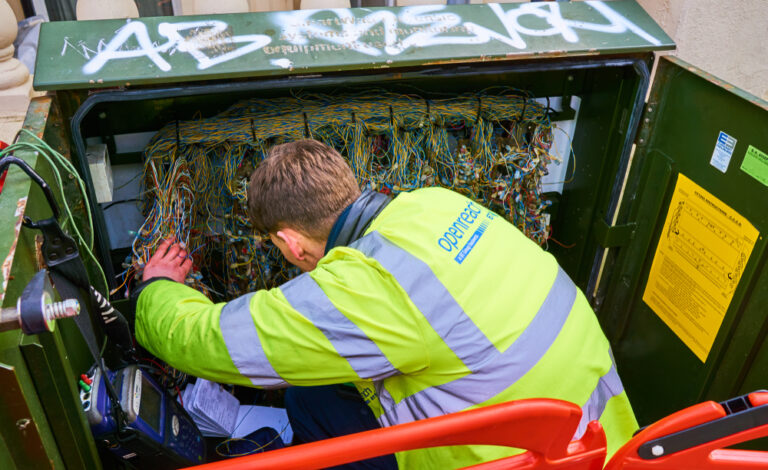
BT and Openreach staff kicked off the latest strike in the recent wave of industrial action sweeping the UK as the cost of living crisis bites.

The Communication Workers Union (CWU) confirmed over 40,000 of its members would be taking strike action over Tuesday and Wednesday.

BT and Openreach workers will be striking for the first time in 35 years to protest insufficient salary increases.

The action coincides with the CWU’s Royal Mail strike, which is scheduled to start on 31 August with 115,000 members participating.

The industrial action joins a massive movement of sectors across the UK demanding higher pay to keep pace with inflation, which currently sits at 10.1% and is expected to rise to 13% in autumn this year.

BT Group said it offered a 5% pay rise, which rose as high as 8% for the lowest paid employees and represented the most significant pay increase in 20 years.

However, the CWU commented its members deserved a salary increase to match inflation and avoid a real term pay cut.

The organisation pointed out that BT CEO Philip Jansen received a 32% pay rise last year to £3.5 million, making 86 times the average BT worker salary.

“Our members worked tirelessly to keep the company going and keep the company connected throughout the pandemic,” said a CWU spokesperson.

“Without our BT and Openreach members, there would have been no home working revolution. They deserve a proper pay rise, and that’s what we’re fighting for.”

A BT spokesperson commented earlier in August: “We know that our colleagues are dealing with the impacts of high inflation and, although we’re disappointed, we respect their decision to strike.”

“We have made the best pay award we could and we are in constant discussions with the CWU to find a way forward from here. In the meantime, we will continue to work to minimise any disruption and keep our customers and the country connected.”