AIM movers: Libertine powertrain deal and Tlou Energy investigated by Australian authorities

0

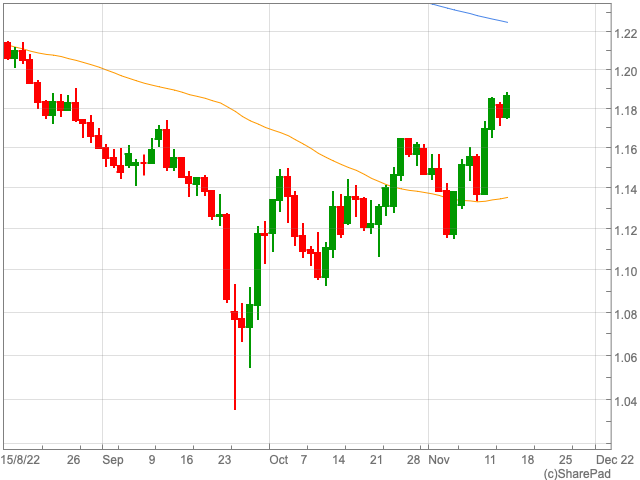
Libertine Holdings (LON: LIB) has entered a memorandum of understanding with Ashok Leyland, which will access the AIM company’s vehicle powertrain technology for its commercial vehicles and buses. The Libertine intelliGEN platform can use renewable fuels and Libertine will provide engineering services and that will help in the development of linear generators. Ashok Leyland could then licence the technology from Libertine if it proved successful. The share price rose 17.1% to 24p. Libertine joined AIM on 23 December 2021 via a placing at 20p a share.

Bayford & Co has increased its stake in Fulcrum Utility Services (LON: FCRM) from 26.7% to 29.1%. The shares were acquired for 4.8p each. At the beginning of the year, a placing and open offer raised £21.2m at 12p a share. This sparked a 37.5% jump in the share price to 6.6p.

Data and machine learning company Insig AI (LON: INSG) recovered 18.6% to 25.5p following its full year figures, but it is still well below the 67p reversal fundraising share price. There was a loss of £4.15m on revenues of £1.7m in the year to March 2022. Progress has been slow, but management believes that it can secure a number of contracts before the end of October. There could be an annual run rate of recurring revenues of £4m before the end of March 2023.

Coal mine gas and solar company Tlou Energy (LON: TLOU) is being investigated by the Australian Securities & Investments Commission (ASIC) about statements it has made in announcements on 16 February 2021 and 20 October 2021. The first announcement relates to Tlou’s claim to be progressing towards a carbon neutral power project in Botswana, while the other was a presentation on the same subject (Hydrogen Strategy (tlouenergy.com)). There is no indication of the claims that are in dispute. The share price has slumped by 16.7% to 1.5p. As well as AIM and the ASX, Tlou Energy is listed on the Botswana Stock Exchange.

Phoenix Global Resources (LON: PGR) says main shareholder Mercuria Energy acquired a further 223.7 million shares via its offer to minority shareholders at 7.5p a share. The AIM quotation will be cancelled on 15 September. The share price dropped 15.6% to 5.51p.

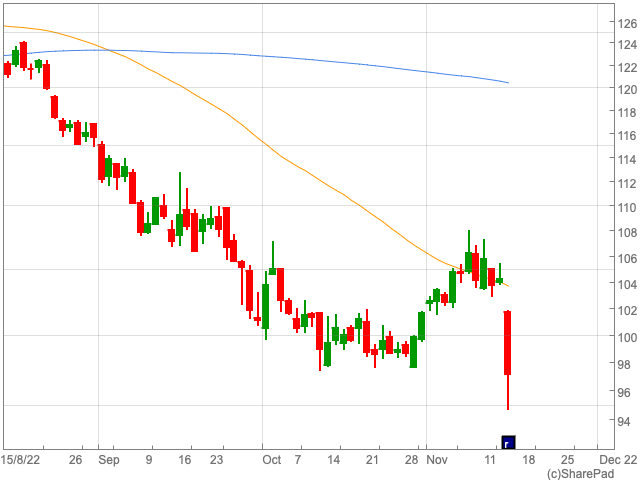
First half trading at litigation financer Manolete Partners (LON: MANO) has lost a case and it is reducing the valuations of its other cases. Manolete has spent £637,000 on the case and it applied for permission to appeal. On its own, the case was expected to generate a pre-tax profit of £2.3m and combined with write-downs Manolete is anticipating a £5m interim loss. That will mainly be a non-cash adjustment. The share price dived 15.5% to 213.5p.

Cenkos Securities (LON: CNKS) continues to decline following yesterday’s figures showing underlying interim profit falling from £2.9m to £1.9m due to reduced market activity. There was a further 11.8% decline to 45p.

Online musical instruments supplier Gear4Music (LON: G4M) is still finding trading tough. It has disappointed more than once in the past year and management is cautious about trading in the second quarter. The first quarter to June 2022 was relatively good and showed growth over the same period last year, However, spending in July and August was weaker than expected even if the hot weather is taken into account. September is showing signs of improvement. This has led to a lowering of guidance with pre-tax profit expected to slump from £5m to £1.1m with a possible recovery to £3.3m next year. The share price fell 11.3% to 117.5p and it has fallen by 83.7% this year.

Postal and train worker strikes postponed as country mourns Queen Elizabeth

0

Strike action has been postponed across the UK following Queen Elizabeth’s death on Thursday. Scheduled strikes, including postal workers and train staff walkouts, were reportedly suspended as the country entered a time of mourning.

Unions representatives for Royal Mail employees commented the strike had been cancelled “out of respect for her service to the country and her family.”

Meanwhile, scheduled walkouts by RMT rail workers on 15 and 17 September were also suspended, alongside the train drivers’ union Aslef’s planned strike on 15 September.

The TSSA rail union joined the cancellation of industrial action to respect to the Queen and the official period of mourning across the country.

According to the Rail Delivery Group, train timetables would remain normal due to the cancelled industrial action.

A representative for the Rail Delivery Group, which represents train operators, added it welcomed the RMT’s move to cancel the strikes while the UK collectively grieved.

“The whole railway family is united in sending our condolences to the Royal Family,” said the RMT in a statement.

The Communication Workers Union (CWU), which represented the Royal Mail in their strike action, cancelled further walkouts on Friday.

“Following the very sad news of the passing of the Queen, and out of respect for her service to the country and her family, the union has decided to call off tomorrow’s planned strike action,” said CWU general secretary Dave Ward.

Amur Minerals advances Kun-Manie disposal, seeks fresh acquisition opportunities

0

Amur Minerals shares dipped 1.5% to 1.3p in early morning trading on Friday, after the mining firm reported the intended disposal of its Kun-Manie subsidiary to Russian company Bering Metals.

The deal is set to complete as a cash shell in line with Rule 15 of the AIM rules. Following its receipt of the $35 million consideration, Amur Minerals will pay a 1.8p per share dividend to shareholders within 90 days of finalisation.

The board reportedly seeks to acquire another company, which will acquire shareholder approval, and which it will need to complete within six months of its Kun-Manie disposal or be re-admitted to AIM as an investing company.

Failing that, Amur Minerals shares will be suspended from trading on AIM, after six months of which the company’s shares will be cancelled.

“The board, in considering the company’s future strategy, it will seek to identify opportunities offering the potential to deliver value creation and returns to shareholders over the medium to long-term in the form of capital and/or dividends,” said non-executive chairman Robert Schafer said in statement.

Amur Minerals confirmed cash reserves of $5.3 million from $6.7 million at the start of 2022. The group remains debt free, and received £300,000 from the issue of share capital upon the execution of warrants.

The company highlighted administration expenses for HY1 2022 of $1.7 million against $1.1 million the last year, linked to a rise in legal fees related to its Kun-Manie disposal and claim against the group.

Meanwhile, Amur Minerals noted a currency translation loss of $8.5 million against $400,000 due to the strengthening of the Russian rouble to the US dollar.

The mining group mentioned $300,000 in expenditure on exploration compared to $400,000.

London Security operating profits fall to £10.9m as company absorbs inflationary pressures

0

London Security shares fell 13.3% to 2,730p in early morning trading on Friday, on the back of an operating profit decrease to £10.9 million in HY1 2022 from £12.3 million the year before.

The firm attributed its sliding profits to inflationary pressures linked to the Ukraine war and recovery from the Covid-19 pandemic, sparking price increases.

London Security said it passed some costs onto its customers while absorbing the rest, resulting in its operating profit drop.

The company noted the impact of adverse business confidence, marked by a “reduced willingness to invest by our customers.”

The group reported revenues of £88.6 million compared to £82.7 million the last year.

London Security also noted cash of £35.3 million at 30 June 2022, representing a decline of £400,000 from its cash balance of £35.7 million at 31 December 2021.

The company drew attention to its five-year multi-currency facility, entered in 2023 and scheduled to end in 2023, comprised of £3.15 million and €8.40 million.

London Security confirmed it capped interest rates at 1.5% SONIA on the Sterling loan and 0.25% EURIBOR on the Euro loan from the facility, to limit the firm’s exposure to rising interest rates.

The group highlighted its acquisition of four companies on the continent across HY1 2022, along with expansion further into Germany, Austria and the UK through its acquisition of service contracts to be integrated into its present subsidiaries.

London Security reiterated its strategy to grow via acquisition, with acquisitions currently sought throughout Europe at the upper end of the price spectrum in a move to procure strong returns.

The company noted a healthy balance sheet, strong cash reserves and a decent previous track record of cash production, positioning it to weather the macroeconomic storm and manage economic decline.

London Security paid a final FY 2021 dividend to shareholders of 42p on 8 July 2022.

Computacenter shares fall on HY1 profit drop to £107.8m

0

Computacenter shares were down 8.7% to 2,47.4p in early morning trading on Friday, after the group announced a drop in pre-tax profits to £107.8 million in HY1 2022 compared to £115.2 million HY1 2021.

The company said it remained on track to deliver its management expectations for profit growth in FY 2022, however.

Computacenter reported revenues of £2.8 billion against £2.4 billion, alongside Technology Sourcing revenues of £2 billion from £1.7 billion and Services revenue of £752.5 million against £706.1 million in the previous year.

The technology firm mentioned a gross invoiced income of £3.9 billion compared to £3.2 billion, with £3.2 billion in Technology Sourcing gross invoiced income.

Computacenter confirmed an EPS of 67.3p against 70.7p year-on-year.

“As we have predicted and announced on multiple occasions, profitability for Computacenter was down in the first half of 2022 compared to the same period last year, however, we remain on track to deliver our stated expectations of profit growth for the year as a whole,” said Computacenter CEO Mike Norris.

The group noted cash and cash equivalents of £193.5 million compared to £158.5 million, with adjusted net funds of £159.3 million from £121.8 million, net funds of £12.1 million against a net debt of £29.4 million and net cash inflow from operating activities of £8.1 million from £1.5 million.

“With the exception of networking products where difficulties still remain, supply chain challenges have eased materially in the last 3 months. However, our customers have become extremely sensitive about supply chain shortages, and as such require us to hold more inventory, impacting our balance sheet,” said Norris.

“In almost all cases there is a guaranteed sale on the inventory items. The continuing strength of our balance sheet gives us a significant competitive advantage in being able to support our customers’ requirements in this manner. How this will unravel as customers get used to the freeing up of supply remains to be seen.”

“While the pandemic has accelerated new ways of working the major effects of Covid-19 are firmly behind us and we believe current market conditions are the new normal. Our customers commitment to investment in technology feels extremely robust despite well publicised and difficult economic conditions around the world. This gives us confidence for 2023 and beyond.”

Computacenter hiked its dividend to 22.1p in HY1 2022 compared to 16.9p the last year.

ASOS sales weaken in August on inflationary concerns

0

ASOS shares gained 1.6% to 689.5p in early morning trading on Friday, after the fashion group reported trading in line with management expectations in its pre-close trading update.

However, the business confirmed weaker than expected sales in August following strong growth across June and July due to the cost of living crisis and inflationary concerns.

ASOS confirmed profit expected at the bottom end of company guidance, with a 2% constant currency sales rise and net debt at £150 million.

The retailer said it remained cautious on its consumer spending projections, however it continued to make strategic progress and manage the company for the current macroeconomic environment.

ASOS is scheduled to announce its FY 2022 results on 12 August 2022.

Best of the Best international tie-up

0

Online competitions organiser Best of the Best (LON: BOTB) is linking up with Globe Invest Ltd to grow international income. Globe Invest will also buy a 29.9% stake from the directors and related parties at 400p a share.

Globe Invest is the family office of Teddy Sagi the founder of gaming technology firm Playtech (LON: PTEC) and owner of Camden Market.

AIM-quoted Best of the Best, which organisers competitions for luxury cars and other prizes, intends to enter a licensing and distribution agreements and a marketing collaboration agreement with Globe Invest, which has affiliates involved in content, software and digital marketing. Globe Invest will licence the Best of the Best business model outside of the UK. Before it became an online business, Best of the Best did operate in airports outside of the UK, including Copenhagen and Dublin.

The marketing agreement will allow Globe Invest to promote Best of the Best content in the UK on a non-exclusive basis. There would be a revenue share or a cost per acquisition model.

Chief executive William Hindmarch will reduce his stake from 32.06% to 11.86% and commercial director Rupert Garton cut his from 9.06% to 3.35%.

Globe Invest will be able to appoint two directors to the board. The management team is likely to be expanded to broaden the expertise. The Best of the Best share price fell 5p to 440p before the announcement of the deal.

US markets open lower on Powell’s hawkish Cato Institute speech

0

US markets opened lower after US Federal Reserve chair Jerome Powell delivered a hawkish speech at the Cato Institute conference on Thursday.

The NASDAQ fell 0.2% to 11,757.7, the Dow Jones dropped 0.3% to 31,461.4 and the S&P 500 slid 0.2% to 3,968.8.

Powell confirmed the Fed was “strongly committed” to controlling inflation, however he noted belief it would be possible to wrestle inflation back to its 2% target without bringing the “very high social costs” emblematic of Paul Volcker’s fight against inflation in the early 1980s, which triggered a recession and saw unemployment soar above 10%.

US inflation currently stands at 8.5%, falling from 9.1% the previous month. Some analysts hoped the positive data would give the Fed cause to slow down its aggressive rate hikes.

However, Powell warned at the Jackson Hole convention last month that a single month of positive data was insufficient to dissuade the institution from its hawkish stance.

A “goldilocks” jobs report also served to encourage Powell’s conviction to hike rates, citing a tight labour market as a driver behind high inflation. The US nonfarm payroll report for August revealed 315,000 new jobs added to the economy against analyst expectations of 300,000.

ECB hikes interest rates 0.75% as economic outlook darkens

0

The European Central Bank (ECB) hiked interest rates a whopping 0.75% at its meeting on Thursday in a bid to dampen soaring inflation across Europe.

The ECB warned of higher interest rates to come in its next several meetings as it worked to reign in demand and prevent further persistent upward movement in inflation.

The Bank cited Eurostat’s flash estimate for inflation to hit 9.1% in August as a result of spiking energy and food costs, demand pressures across some sectors due to economic reopening and supply bottlenecks.

The ECB estimated significantly revised inflation expectations of 8.1% in 2022, 5.5% in 2023 and 2.3% in 2024.

Euro area economic growth is projected to stagnate later in 2022 and into Q1 2023, with energy prices and reduced purchasing power of consumer incomes driving the slowdown.

“The ECB has raised rates by an unprecedented 0.75% in response to the recent surge in inflation, ratcheting up the pace of policy tightening as both the Fed and BOE have done in recent months,” said Kingswood strategist Rupert Thompson.

“It is very much prioritising getting inflation back under control even as the economy looks headed into recession later this year.”

“This move can only add to the pressure on the Bank of England to follow suit with a 0.75% rise next week, particularly with the news today of the Government’s large scale intervention to cap household and business energy bills.”

Meanwhile, the ECB reported expected economic growth of 3.1% in 2022, 0.9% in 2023 and 1.9% in 2024.

The Bank also highlighted the lasting impact of the Covid-19 pandemic, which remained a risk to the smooth transition of ECB monetary policy.

European markets were trading down after the interest rates move. The German DAX was down 1.4% to 12,729.4, the French CAC fell 0.8% to 6,056.3 and the Italian FTSE MIB slid 1% to 21,268.1 in early afternoon trading on Thursday.

Liz Truss caps household energy prices at £2,500 per year

0

Liz Truss has promised to cap the average household energy bill at £2,500 per year until 2024 in her energy relief plan announced today.

The proposal will see the average household save £1,000 compared to the previously scheduled price cap rise of 80% to £3,548 this October.

Under the new plan, businesses will receive equivalent support for the coming six months, after which continued support will be provided with a focus on vulnerable industries.

Analysts expect the energy relief plan to reduce inflation by up to 5% from its previously estimated figure.

“HM Government is acting to protect British households from the spiralling costs of energy. The Energy Price Guarantee (EPG) which will give people certainty with their bills,” said business secretary Jacob Rees-Mogg in a written ministerial statement.

“The EPG will apply from 1 October and will discount the unit cost for gas and electricity use. This guarantee, which includes the temporary suspension of green levies, means that from the 1st October a typical household will pay no more than £2500 per year for each of the next two years.”

“This will save the typical household £1000 a year. It comes in addition to the £400 Energy Bill Support Scheme.”

Labour advocates for windfall tax

However, Truss was met with criticism by Labour leader Keir Starmer for her refusal to introduce a windfall tax on energy companies.

Starmer said borrowing would increase due to the decision, and cited the £170 billion in windfall profits set to be accumulated by energy firms over the next two years.

“Every pound the government refuses to raise in windfall taxes … is a pound of extra borrowing. It’s that simple,” said Starmer.

Hargreaves Lansdown senior personal finance analyst Sarah Coles added: “The decision not to add more windfall taxes for energy companies is a controversial one. There will be plenty of taxpayers who feel they will be shouldering the burden of paying for this help alone, when the energy companies have broader shoulders.”

“Truss believes that this tax would put companies off investing in the UK – and investing in renewable energy that will provide part of the long-term solution to the problem. If that investment isn’t forthcoming, it remains to be seen whether this belief will still hold sway.”

Household borrowing to rise

Analysts warned household borrowing would rise dramatically in the coming year without further intervention from the government, with winter still set to bring a storm of misery for many across the UK.

“[One] in five people are borrowing more than they did this time last year, and anyone who has coped with rising prices by going into debt will eventually hit the wall – where their repayments are unaffordable or they exhaust their credit limit. For these people, a freeze at this level isn’t enough to protect them from a looming crisis,” said Coles.

“When pushed on whether there would be additional help for those who need it most, Liz Truss referred back to the lump sum cost-of-living payments coming this autumn and winter. However, these helicopter payments won’t necessarily go as far as the government hopes.”

“Citizens Advice said that after the first payment in July, the demand for food bank vouchers fell for just three weeks before returning to previous levels. People have been running up debts and putting off vital purchases, so it’s not necessarily enough to offset the higher cost of energy.”

A lower price cap is welcome news, however the policy doesn’t go far enough to cover the most vulnerable in the country by a long shot.

“For those people at the sharpest end of price increase, today’s announcement will be a huge disappointment. They needed a broader package of measures, providing meaningful support for the most vulnerable. Without it, a freeze will simply slow the pace at which things get much, much worse,” said Coles.