musicMagpie revenue falls on disc media and books, consumer tech sales grow

0

musicMagpie confirmed a total revenue of £71.3 million in HY2 2022, representing a small decline from £72.8 million year-on-year, with its consumer technology products sector revenue up 15.9% to £46 million compared to £39.7 million and its disc media and book sales down 23.6% to £25.3 million against £33.1 million.

The technology upcycling firm highlighted resilient revenue performance despite economic headwinds which impacted the consumer sector, with continued momentum in the company’s rental subscription service.

The company said its sales last year benefited from higher levels of online shopping from consumers over the pandemic lockdown.

musicMagpie highlighted an adjusted EBITDA of £2.6 million for HY1 2022 compared to £6.2 million in the last year.

The group commented that its annual growth in outright consumer technology product sales had been intentionally tempered by the promotion of its contracted monthly subscription service as opposed to outright purchase.

musicMagpie mentioned this area of its business was expected to earn higher revenue and EBITDA over the life of a device, as opposed to a one-off sale, underpinned by contracted recurring revenue and cash flow stream which is set to become more visible in the company’s medium-term performance.

The group stated it had taken a sustainable and disciplined approach to growth in its subscriber base, with active paying subscribers now at 24,000 from 7,500 on 31 May 2021.

musicMagpie commented that the current macroeconomic volatility was impacting its business along with the majority of other companies, however the board said it was confident of achieving its FY 2022 expectations.

The pre-owned technology company said it anticipated a stronger HY2 performance from rising contributions from growing rental subscribers and projected sales growth from the recent expansion of its ‘marketplace’ channels such as Back Market, on which it launched this year.

“The economic environment facing consumers is increasingly tough and the issues of affordability and cash-flow constraints are being felt by many,” said musicMagpie CEO Steve Oliver.

“Against that backdrop, our twin proposition of giving people a way to recycle their tech products for cash, as well as our ability to sell or rent refurbished, lower cost consumer technology products, becomes increasingly attractive.”

“Whilst recognising we are in the early stages of our second half, our sales channel expansion has started well and we are confident about our short term growth and remain excited about our medium-term prospects.” 

Sovereign Metals announces Kasiya to be one of world’s largest and lowest-cost rutile producers

Sovereign Metals reported an update on its globally-significant Kasiya rutile project based in Malawi on Thursday, announcing that its expanded scoping study based on its April mineral resource estimate (MRE) confirmed that Kasiya would be one of the world’s largest and lowest cost producers of natural rutile and natural graphite, with a carbon footprint significantly lower than present alternatives.

Sovereign Metals added that the project would also substantially contribute to the economic and social development of Malawi.

The company highlighted a major increase in post-tax NPV by 79% to $1.5 billion and a 101% surge in EBITDA to $323 million from its initial scoping study in 2021, with 10% lower operating costs at $320 per tonne produced for a relatively small increase in capex of 12% to $372 million to first production.

The mining firm also mentioned a life of mine revenue increase of 92% to $12,038 million.

Sovereign Metals confirmed a steady state production of 265,000 in rutile and 170,000 tones in graphite from a 25-year mine life, with significant cost reductions on the back of existing infrastructure.

The group further noted high margins alongside its low operating costs, as well as extremely favourable market fundamentals due to the high demand for rutile and natural graphite in the US and EU based on high economic importance and supply risk.

“The Expanded Scoping Study demonstrates Kasiya is a Tier 1 minerals project being the largest natural rutile resource and one of the largest graphite resources in the world,” said Sovereign Metals managing director Dr. Julian Stephens.

“Both minerals are classified on the Critical Minerals lists of the US and EU and rutile is in extreme market supply deficit. In light of these factors, Kasiya is seen as a highly strategic project with the potential to be a major supplier in both rutile and graphite markets.”

“The future development of the Kasiya Rutile Project will bring substantial benefits to Malawi in terms of GDP, royalties, taxes, employment and training, local business opportunities and community development.”

AIM movers: Rockhopper Exploration, Zambeef, Wynnstay Properties, GB Group

0

Oil and gas explorer Rockhopper Exploration (LON: RKH) announced a £5.75m placing and subscription at 7p a unit (one share and of a warrant exercisable at 9p a share) after the market closed last night. This will provide working capital up until June 2023. There will also be an open offer at the same price that could raise a further £4.1m that will extend the life of the working capital. The Sea Lion project in the Falkland Islands is the main focus of Rockhopper. The share price fell 0.66p to 7.3p.

The Africa-based food producer Zambeef (LON: ZAM) share price rose 0.625p to 7.5p following its interim results and the announcement of a $100m investment strategy. Interim revenues increased from $102.5m to $148.1m, while pre-tax profit trebled to $10.4m. Zambeef plans to invest $100 million in operations over three to five years. This investment should double row cropping capacity at Zambeef Mpongwe Farm and improve production efficiency. However, the first $10m will be funded from cash flow but the debt funding for this investment has not yet been secured.

Property investor Wynnstay Properties (LON: WSP) is one of the companies that has been on AIM for the longest time, and it has a consistent track record. Good results and plans to gain shareholder agreement to buy back shares has added 75p to the share price taking it to 735p. NAV increased by 19% to 1090p a share. That means the shares are trading at a 33% discount to net assets. The total dividend was raised from 21p a share to 22.5p a share.

Identification services provider GB Group (LON: GBG) reported annual figures in line with expectations, but it is cautious about the outlook for this year. The share price has declined by 80.7p to 408.7p. Underlying pre-tax profit edged up from £56.7m to £57.1m. There are strong first half comparisons, but Peel Hunt has maintained its 2022-23 pre-tax profit forecast at £69.4m, but that means flat earnings of 20.3p a share. Numis has been appointed as nominated adviser and as joint broker with Barclays.

Disappointing trading statements from Boohoo (LON: BOO) and ASOS (LON: ASC) has hit other online-focused fashion retailers. Sosandar (LON: SOS) has fallen by 1.5p to 20.5p, while Quiz (LON: QUIZ) has slumped 1.365p to 10.385p.

The share price of subsea cable protection services provider Tekmar Group (LON: TGP) is falling for the fourth day in a row since it said it was seeking a strategic partner or buyer. It has fallen from 39p to 10.875p so far this week.

FTSE 100 dives with global equites after interest rate hikes

3

The FTSE 100 fell 2.6% to 7,081.1 in early afternoon trading on Thursday following the Bank of England’s decision to hike interest rates 0.25% to 1.25% at its meeting today, and a revised inflation estimate of 11% in Q4 2022.

European markets dropped a day after the ECB’s emergency meeting, with the German DAX dropping 2.5% to 13,137.3, the French CAC down 1.7% to 5,921.9 and the Italian FTSE MIB sliding 2.3% to 21,935.8.

Despite staging a rally last night, US stocks resumed their declines on Thursday as the US Federal Reserve’s long-predicted 0.75% rates hike to between 1.5% and 1.7% ignited fears of a recession in the US.

The prospect of further interest rate hikes both in the UK and US to help fight inflation comes just as economic indicators start to show signs of weakness.

The Bank of England held back from the sharper rise seen in the US after already moved rates higher at prior meetings, and in an effort to avoid the risk of plunging the economy into recession.

‘’Inflation risks being a slow poison for the economy, so the Bank of England is trying to take an antidote now by raising interest rates. However, it can only take a small dose at a time given the ailing nature of the economy. So, it’s stuck with a 0.25% rate increase to 1.25%, with more hikes to follow,” said Susannah Streeter, senior investment and markets analyst, Hargreaves Lansdown.

“It’s not following the prescription written by the US Federal Reserve of the more potent medicine of a steeper hike due to fears a deep recession could follow.”

Housebuilders fall

Housing stocks took a nosedive as higher interest rates finally looked set to clamp their jaws around the gravity-defying housing market.

“Higher interest rates should also eventually serve to cool the housing market, as the impact gradually feeds through into mortgage affordability,” said Mould.

Taylor Wimpey shares dipped 3.8% to 122.5p, Berkeley Group holdings dropped by 4.1% to 3,964p, Barratt Developments slid 2.8% to 485.6p and Persimmon plummeted to a sharp fall 10% to 1,974.5p.

The trading session was also unkind to retail stocks, as the interest rates hike combined with higher inflation projections sent fashion shares tumbling, with JD Sports Fashion decreasing 7.4% to 103.1p and Next sliding 5.4% to 5,716p.

Halma shares fell 4.8% to 1,894p despite record revenue of £1.5 billion and record profits of £304 million in FY 2022.

However, the company might have suffered a blow on the back news that CEO Andrew Williams had resigned from the position after 18 years, with CFO Marc Ronchetti set to replace him from 1 April 2023.

“Marc is an outstanding leader and I look forward to working with him to ensure a smooth handover,” said Williams.

Ronchetti added: “I am delighted to have been selected as Halma’s next Group Chief Executive. I am excited by the opportunity to lead such a fantastic and talented team, and to continue Halma’s long track record of creating value through our Sustainable Growth Model.”

Meanwhile, the price of oil continued to fall as a result of higher US Fed rates, with the benchmark Brent Crude at $117 per barrel.

Oil giants felt the cold blast of the rates hikes, as Shell shares dropped 4.8% to 2,162.2p and BP shares slid 4.5% to 407.8p.

Best of the Best cash return

0

Competitions organiser Best of the Best (BOTB) is the best performer of the day on the back of better than forecast figures and a 66.7p a share return of capital via a tender offer. The share price jumped 86p to 480p, although that is still well below last year’s high of 3400p.

In the year to April 2022, the pre-tax profit fell from £14.1m, for what was an unusually strong year due to Covid restrictions, to £5.1m. To put this into perspective, in January the forecast 2021-22 pre-tax profit was cut from £6m to £4.5m, having been reduced from £16m the previous August. In May the forecast was edged up to £4.7m.

Net cash was £10.8m at the end of April 2022 and there is a 6p a share final dividend on top of the tender offer. The total cash cost of these is £6.84m.

It appears Best of the Best could be returning to a steady growth path. There is a database of more than 1.8 million customers and management is seeking new ways to exploit this opportunity.

A pre-tax profit of £5.5m is forecast for 2022-23 and net cash is expected to be £9m at the end of April 2023. The shares are trading on nine times prospective earnings and the forecast yield is 1.4%.

Bank of England hikes interest rates to 1.25% after US Fed’s 0.75% rise

0

The Bank of England announced its decision to hike interest rates by 0.25% to 1.25% at its meeting today, hot on the heels of the US Federal Reserve’s announcement yesterday that it would be raising rates by 0.75% to between 1.5% to 1.75%.

The move came as no shock to the markets, which have been pricing in this prediction since the institution’s last rate hike to 1% in May.

“The market saw this one coming. Even before the rate rise, UK banks had a skip in their step earlier in the week,” said Freetrade analyst Gemma Boothroyd.

“After all, they’re the ones primed to benefit here … Mortgage lenders will raise rates, making buying a home more expensive.”

“That’s bad news for Britons looking to get a leg up on the property ladder, but good news for the banks’ coffers.”

The rates hike follows weaker than expected GDP in May, with a startling contraction of 0.3% on the back of declining Test and Trace activity, with the Bank of England noting an expected 0.3% dip in Q2 overall.

The decision was voted for by a majority of six against two, with the members in the minority advocating for a more aggressive advance of 0.5% instead in a bid to stamp out surging inflation.

“The Bank of England is playing a game of slowly, slowly catchy inflation, rather than the shock and awe tactics being employed across the Atlantic,” said AJ Bell head of investment analysis Laith Khalaf.

“Despite the UK starting to tighten monetary policy first, interest rates are now higher in the US.”

“Markets will no doubt seize on this as a sign the Bank of England has bottled it, but an incremental strategy allows the rate setting committee to observe more data as it comes in, and fine tune its approach as circumstances dictate.”

Inflation Concerns

The rates climb is set to prove a rather soft blow to the UK’s soaring inflation, which hit a record-breaking level of 9% last month.

The Bank of England predominantly pinned the blame for spiking inflation on soaring prices in global energy as a result of the Ukraine war, and climbing prices across other tradable goods linked to the Covid-19 pandemic, which served as a heavy disruption to supply chains.

“No-one should labour under the misapprehension that interest rate rises are going to do anything about eye-watering levels of inflation in the short term,” said Khalaf.

“Our inflationary problem is being driven by a supply shock to energy markets stemming from the conflict in Ukraine, and the ensuing sanctions, and no number of interest rate rises will solve that problem.”

“What the Bank is trying to do is head off second order inflationary effects becoming ingrained in the system and taking on a life of their own.”

However, domestic factors also contributed to the CPI increase, including a tight labour market and the pricing strategies of firms.

“There are currently 1.3 million job vacancies in the economy, and extremely low levels of unemployment. The result is a clamour for staff in some industries, which has resulted in an 8% jump in private sector wages in the last year,” said Khalaf.

“While businesses may have an eye on the increasing cost of servicing their debt, for many their more pressing concern is having enough staff to open the doors and keep the tills ringing.”

“The Bank may find that the huge dislocation in the labour market means that pressing down hard on the brakes has a more limited effect on wage increases than desired.”

The Bank of England also updated its estimate for peak 2022 inflation, with a revision to 11% inflation in Q4 rather than 10% as a result of higher projected household prices linked to a prospective large rise in the Ofgem price cap.

JLEN Environmental increases NAV by 25%

JLEN Environmental Assets Group Ltd (LON: JLEN) has increased its NAV in the year to March 2022 and this year cash generation will benefit from higher energy prices.

At the end of March 2021, NAV was reduced from 97.5p a share to 92.2p a share. Higher energy prices and well-timed investments have help to boost NAV to 115.3p a share by the end of March 2022. JLEN has maintained its annualised total shareholder return at 7.4%.

In the year to March 2022, there was £46.2m of cash generated from operations. The total dividend for the year is 6.8p a share, which was covered 1.1 times. JLEN is targeting a 7.14p a share dividend for 2022-23. This year’s estimated dividend could be covered 1.5 times. The policy is to steadily increase the dividend rather than raise it significantly in a single year that benefits from shorter-term economic conditions.

Assets

During the year three new assets were acquired and two French wind assets sold for €5.9m. There are 37 investments in six subsectors. JLEN’s assets generated 1,314GWh of energy, up from 977GWh the previous year.

Anaerobic digestion remains the largest contributor, generating 508GWh. The newer waste and bioenergy portfolio generated 363GWh and accounted for most of the increase in total energy generated – mainly due to the Cramlington biomass CHP plant acquired from administrators. That means it has pushed wind generation into third place.

The French wind generation assets were sold in January, so that is a small part of the reason why wind energy generation fell from 432GWh to 359GWh. Lower than expected wind levels was the main reason and this can fluctuate significantly from year to year.

The battery storage asset will not be up and running until next year. New investment areas being considered include waste to fuels, energy efficiency and low carbon transport.

Cash

In January, JLEN raised £66.1m at 101p a share. Gearing is 24% and there is scope to fund more investments with debt at that level. The revolving credit facility is £170m and it expires in May 2024. There was £53.6m was drawn at the end of March 2022.

The higher asset base means that in the coming years debt facilities could be increased without moving to an uncomfortably high gearing figure. More cash will be generated from assets and that will provide further funds.

The share price has risen by 16% to 121.5p since the beginning of 2022. The forecast yield is 5.9%.

DIGEST: topical themes from Dunedin Income Growth

When are defensive sectors not defensive?

Ben Ritchie, Samantha Brownlee and Rebecca Maclean, Investment Managers, Dunedin Income Growth Investment Trust PLC

Stock markets have been volatile since the start of the year, with the Ukraine crisis and interest rate rises combining to unnerve investors. At Dunedin Income Growth Investment Trust (DIGIT), we were already cautious in our positioning, and these developments do little to make us shift our views. However, we also need to be careful that our defensive companies are truly defensive. 

For some time, defensive stocks have been traditional industries such as healthcare, where demand does not vary with the economic cycle. However, in this recent period, energy has also proved defensive as oil prices have risen due to geopolitical uncertainty. Equally, it is harder to argue that technology is as cyclical a sector as it once was. For many companies, technology is a crucial part of how they service clients, how they create efficient operations and how they manage their costs. 

Against this backdrop, this sector-based view on defensive assets is less useful than it has been in the past. In reality, resilience comes from the characteristics of individual companies rather than their sector classification. Companies within the same sector can have very different demand drivers. 

In our view, ‘defensiveness’ comes down to a company’s competitive differentiation and sustainability. Companies need pricing power, a strong economic moat and barriers to entry (such as its relationships with its customers). A strong balance sheet is also important. Some of these will be in traditional sectors such as healthcare – AstraZeneca, for example, has patents to protect its revenue streams and its demand does not vary significantly through the cycle. However, we can find these characteristics in other sectors as well.  

More recently this has meant adding to companies such as RELX, the information and data publishing business which sits within the media sector, but is a very defensive business in our view. It has a large subscription-based revenue stream that is diverse and recurring. Its service is critical to its users, which translates into tremendous visibility and strong cash flows. This has funded consistent growth in RELX’s dividend alongside generous buybacks with surplus cash. 

A crisis for ESG? 

The recent market volatility has seen many so-called ‘sin’ sectors perform better, including traditional fossil fuel and defence companies. This has led to some suggestion that fund managers re-think their adherence to ESG (environmental, social and governance) metrics when making investment decisions. 

The weight placed on ESG considerations depends on the investor’s time horizon: if it is less than a year, the company’s performance is much less relevant, only whether the stock is mispriced. However, if an investor wants to own a company through the ups and downs of the cycle, it is vital to consider how it manages its ESG risks. 

Recently, there has been strong performance from companies with a weak ESG focus. It is inevitable that there will be times when certain companies do well, but these same companies still face some considerable risks, both in terms of environmental policy, and over social and governance issues. This could exert a drag on returns. For example, defence companies are doing well today, but in the longer term they may have challenges in terms of pricing long term supply contracts effectively, handling government interference and managing bribery and corruption risk, quite aside from the moral implications of their products.

If anything, the developments in Russia and Ukraine highlight the importance of incorporating ESG considerations into investment decision-making. In the short-term the crisis has been good for companies that sell hydrocarbons, but in the longer-term it will accelerate the shift towards renewables and low carbon energy in a way that policy focused on climate change has not yet delivered. 

If we look at social elements, the change in attitudes has been remarkable. The pressure on corporates to do the right thing has never been greater and many have pulled out of Russia wholesale. Showing the importance of “doing business in the right way” to ensure support from key stakeholders and customers. It has shown also the more old-fashioned importance of doing business with the right people in the right places and managing the essential governance risks effectively.

Effective engagement

While many of the ‘sin’ sector stocks remain off-limits to us, given the range of exclusions we have on the DIGIT portfolio, there will be some companies where the ESG score is middling and where we believe we can make a real difference to a company’s performance. This is where our engagement programme comes in.  

We meet corporate management frequently. Discussions on ESG factors are integrated into those meetings. These factors have become intertwined with the day to day running of businesses in all sectors and are crucial to the risks and opportunities they face. We also have regular dedicated meetings with board members on governance – including remuneration, board structure, senior non-executive appointments, plus voting at AGMs. 

There is a layer of engagement beyond this, where we look to drive certain outcomes in companies and improve the way they’re run. For our priority engagement list, we set out a clear process showing those companies what they need to do to improve. We work with ESG specialists internally to set those priorities and help companies respond. 

One recent engagement was with Total Energies, a company where the transition to a lower carbon future is critical. We engaged with the company, along with third parties such as Climate Action 100, to ensure progress to limiting global warming to 1.5 degrees. The fabric of the company and its ESG footprint are intertwined and it’s one of the few global energy companies whose efforts on decarbonisation enable us to own it in the portfolio. 

The health of the corporate sector

Volatile stock markets belie a relatively positive picture from the corporate sector. Earnings expectations have been moving higher. In their first quarter reports, companies continue to report a tricky environment, but say they are managing it well by putting up prices and managing costs.

There is still a positive annualisation effect from Covid in 2021, particularly for some of our consumer-facing companies which last year were dealing with markets that were locked down. Companies in the DIGIT portfolio are generally navigating the environment successfully and we have had few negative surprises from this quarter’s earnings season. This gives us confidence in the resilience of future dividends and earnings from the portfolio companies today. 

Companies selected for illustrative purposes only to demonstrate the investment management style described herein and not as an investment recommendation or indication of future performance.

Important information:

Risk factors you should consider prior to investing

  • The value of investments, and the income from them, can go down as well as up and investors may get back less than the amount invested. 
  • Past performance is not a guide to future results. 
  • Investment in the Company may not be appropriate for investors who plan to withdraw their money within 5 years.
  • The Company may borrow to finance further investment (gearing). The use of gearing is likely to lead to volatility in the Net Asset Value (NAV) meaning that any movement in the value of the company’s assets will result in a magnified movement in the NAV. 
  • The Company may accumulate investment positions which represent more than normal trading volumes which may make it difficult to realise investments and may lead to volatility in the market price of the Company’s shares. 
  • The Company may charge expenses to capital which may erode the capital value of the investment. 
  • Derivatives may be used, subject to restrictions set out for the Company, in order to manage risk and generate income. The market in derivatives can be volatile and there is a higher than average risk of loss. 
  • There is no guarantee that the market price of the Company’s shares will fully reflect their underlying Net Asset Value. 
  • As with all stock exchange investments the value of the Company’s shares purchased will immediately fall by the difference between the buying and selling prices, the bid-offer spread. If trading volumes fall, the bid-offer spread can widen. 
  • Certain trusts may seek to invest in higher yielding securities such as bonds, which are subject to credit risk, market price risk and interest rate risk. Unlike income from a single bond, the level of income from an investment trust is not fixed and may fluctuate.
  • Yields are estimated figures and may fluctuate, there are no guarantees that future dividends will match or exceed historic dividends and certain investors may be subject to further tax on dividends.

Other important information:

Issued by Aberdeen Asset Managers Limited, registered in Scotland (No. 108419), 10 Queen’s Terrace, Aberdeen AB10 1XL. Authorised and regulated by the Financial Conduct Authority in the UK. An investment trust should be considered only as part of a balanced portfolio.

Find out more at www.dunedinincomegrowth.co.uk or by registering for updates. You can also follow us on social media: Twitter and LinkedIn


GB-170522-175069-1

Alien Metals confirms DSO grade iron ore at Hancock project

Alien Metals announced the completion of its metallurgical test work which produced an initial flow sheet of crushing and screening for its Hancock iron ore.

The metallurgical test work reportedly confirmed the Hancock product was of Direct Shipping Ore (DSO) grade, with Pilbara Fines product confirmed at a grade of 62.7% iron from the initial bulk sample from its Ridge C resource.

Alien Metals added that the product had very low impurities, consistent with excellent quality product including silica content at less than 4.1%, aluminium content at less than 2.7% and phosphorus content at less than 0.1%.

The test work also indicated a potential for a Lump yield which is capable of commanding a premium price over the fines above 62% iron.

The mining group said marketing samples had been prepared and were being dispatched to potential customers in a precursor to potential offtake agreements for their own internal testing.

“These results from the initial bulk sample on Ridge C are another significant positive step in the progress of the Hancock project further confirming the excellent quality of the product as well as providing a simple initial process flow sheet showing only simple crushing and screening is required prior to shipping, a key element in keeping Capex and Opex to a minimum thus minimising environmental and energy usages once in production,” said Alien Metals CEO and technical director Bill Brodie Good.

“Returning higher than 62% Fe with associated low grade deleterious materials from a 2.5 ton bulk sample provides even more confidence in the overall quality and grade of the resource at C and only spurs us on to maintain the development of the project.”

“With the DSO Grade Iron Ore price moving back up, the quality of this product continuing to be proven and the remaining large potential for more discoveries on the tenement we are looking forward to the future of this project.”

Alien Metals said it was motivated to advance its Hancock project by the recent rise of iron ore to $145 per ton at 62% Fines spot price, linked to better demand prospect in metals due to easing Covid-19 restrictions and stimulus for demand from China.

FY 2021 financial update

Alien Metals reported $13 million in total assets by the end of the year, with $6.4 million in cash reserves.

However, the mining group confirmed widened losses as it invested in its Hancock project and its new prospects in west Australia. Alien Metals mentioned an operating loss of $2.3 million from a loss of $1.2 million in 2020 linked to its acceleration of work at Hancock, which produced a maiden JORC resource.

The company mentioned total liabilities of $800,000 from $300,000 the last year.

Alien Metals commented that a share placing in November 2021 had secured it a strong funding position to progress its operations and examine future opportunities for portfolio expansion in acquisitions.

It currently has a solid portfolio of advanced exploration assets in western Australia and Mexico, and reported progress at its key Elizabeth Hill, Donovan 2 and Hamersley projects.

ASOS shares tumble on lowered profit guidance as customers return clothing in bulk

0

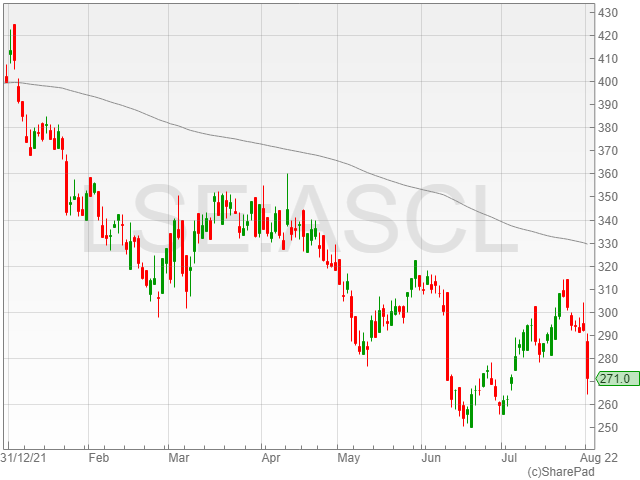
ASOS shares tumbled 27.1% to 844.6p in late morning trading on Thursday, after the fast fashion brand reported a lowered pre-tax profit guidance of £20 million to £60 million for FY 2022.

The company highlighted a UK sales climb of 4% to £983.4 million in Q3 2022, excluding Russian operations and the effect of exchange rates.

Sales in the UK experienced a boost on the back of higher demand for occasion wear driven by holidays, weddings and events, although purchases were slightly offset by an increase in return rates due to rising cost of living pressures.

“Expectations were relatively low for online retailer ASOS, and the group confirmed the market’s fears this morning with a profit warning for the full year,” said Hargreaves Lansdown equity analyst Laura Hoy.

“With return rates ballooning, the group’s expecting to lean on promotional activity in order to clear its warehouses. The news wasn’t a complete shock, management warned that this may be coming down the pipeline at the half year.”

ASOS confirmed a 21% growth in US sales to £141.9 million against £117.5 million, as a result of support from Topshop brands, targeted promotional activity and rising demand for occasion fashion.

Meanwhile, EU sales dipped 5% to £294 million compared to £310 million as return rates climbed above pre-pandemic levels, and sales in the rest of the world fell 20% to £115.7 million from £144.3 million except for Australia, which returned to growth as delivery propositions improved and Premier was reactivated.

ASOS highlighted a 69% increase in Topshop brands, with 350 new style drops per week and increased speed to market.

The firm reported continued progress on its Nordstrom partnership, with the launch of ASOS Design in 11 stores across the US and an expanded collection released on Nordstrom.com.

The group also mentioned the launch of a trial partnership with clothing resale business Thrift+, alongside the launch of its second circular design collection.

ASOS commented it expected sales between 4% to 7% as a result of increased market volatility and a higher returns rate, and a net debt in the range of £75 million to £125 million linked to lower profit and higher inventory levels.

“The question now is how long until shopping trends return to normal. Retail’s been arguably one of the last sectors to feel the pinch of inflation as consumers continue their post-covid wardrobe refresh,” said Hoy.

“Plus with holidays and events finally on the agenda again, there’s still a need for occasion wear. But these demand drivers are getting flimsier.”

“ASOS is one of the first retailers to warn on shifting customer behaviour, but it’s unlikely to be the last.”