Made Tech revenue spikes 120% on organic growth and contract acquisitions

0

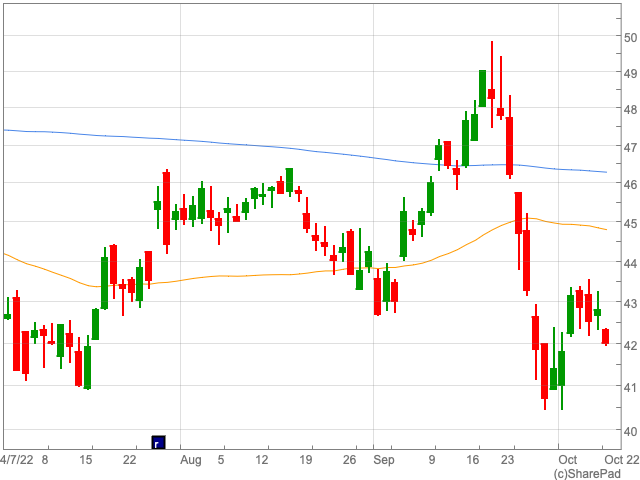
Made Tech shares climbed 7% to 34.8p in late morning trading on Friday after the firm announced a 120% spike in revenue to £29.3 million against £13.3 million in its trading update for FY 2022.

The company reported an adjusted EBITDA surge of 618% to £2.6 million from a loss of £500,000 the last year, alongside a gross profit margin maintained at 38% year-on-year.

Made Tech confirmed sales bookings rising 115% to a total of £51.1 million against £23.8 million over the financial period.

The company highlighted strong organic growth and a slew of new contracts, including government deals such as its first major two-year contract with NHS Digital at a value of £19 million.

The group said it was well-positioned to capitalise on the growing digital transformation market, with a robust pipeline and record sales bookings for the year going forward.

“FY22 was a very significant year for Made Tech, one in which we delivered exceptionally high levels of organic growth,” said Made Tech CEO Rory MacDonald.

“We navigated the well-documented macro recruitment challenges to double our headcount year on year and maintain our gross margin.”

“We have made a strong start to FY23 and look forward to updating our stakeholders on the Group’s progress, when we announce the FY22 results in September.”

Kinovo shares soar on 35% revenue growth and doubled EBITDA

0

Kinovo shares soared 29.6% to 33.7p in late morning trading on Friday after the group announced a 35% revenue growth to £53.3 million compared to £34.9 million in FY 2022.

The company reported a 102% adjusted EBITDA spike to £4.2 million against £2.1 million the year before, alongside an underlying operating profit from continuing operating surge of 95% to £4.1 million from £2.1 million.

Kinovo swung to a pre-tax profit of £2.8 million compared to a loss of £371,000 the previous year, as a result of the uplift in performance from continuing operations.

Kinovo noted adjusted cash conversion from continuing operations of 223% with £9.4 million in cash generated.

Meanwhile, the firm highlighted a net debt reduction to £340,000 against £2.7 million the last year.

Kinovo confirmed an adjusted EPS of 5.3p from 2.7p year-on-year.

“While the last year has been challenging for Kinovo, we are delighted with the performance of the underlying business,” said Kinovo CEO David Bullen.

“Revenues increased by 35% and adjusted EBITDA more than doubled, a direct result of the repositioning announced last year to focus on three key areas: regulation, regeneration and renewables.”

“This streamlining of operations has allowed the underlying business to prioritise what it does best and flourish. Coupled with the significant investment in our people, upskilling of employees and bringing in additional expertise, Kinovo is well positioned to negotiate this difficult macro-economic environment.”

Kinovo did not declare a dividend for FY 2022 as the company decided to focus on reducing net debt instead. It said it would resume dividend payments “as soon as financial conditions allow.”

Retail sales drop 1.2% in three months to July as cost of living crisis bites

0

Retail sales fell 1.2% across the three months to July as the cost of living crisis continued to bite across the UK.

Sales rose 0.3% in July after a 0.2% drop in June, with levels 2.3% above pre-Covid volumes but down over the last year overall, according to the Office of National Statistics (ONS).

“People can only spend a pound once and that pound isn’t buying what it used to. Whilst sales did pick up slightly in July compared to the previous month, taken as a whole the last three months has been tough for retailers,” said AJ Bell financial analyst Danni Hewson.

Purchasing power falls

Although sales rose, the amount consumers bought dropped year-on-year, with families purchasing fewer items with far less buying power as inflation soared to 10.1% in July.

“The story is writ large when you compare the same quarter a year ago. Whilst the amount of stuff people are buying is down by almost 5% compared to 2021, the amount they’re paying for that stuff is up by 5.5% – so that implies price growth of 10.4% – slightly above current CPI,” said Hewson.

Meanwhile, non-store retailing including online sales increased 4.8% in July, as summer sales promotions drew higher customer numbers.

“Consumers are being forced to cut back, spending less on the essentials, putting off big ticket purchases and hunting out bargains wherever they can find them,” said Hewson.

“Retailers chasing sales are having to work hard and it’s no accident that non store retailers have enjoyed growth in July, a month that’s been dominated by online sales and special offers.”

Summer fails to spark sales surge

Food store sales climbed 0.1% across July, however the uptick came in below the typical surge anticipated in summer, when customers tend to break out the barbeque and enjoy the sunshine.

Vehicle sales slid 0.9% on the back of reduced travelling, possibly on the back of the UK heatwave reducing demand for travel.

“Whilst food sales have been resilient, we’d normally expect the past heatwave to have sent people scurrying to load up on extra drinks and nibbles, firing up BBQ’s and piling up picnic blankets. Perhaps it was simply too hot to socialise,” said Hewson.

“It was certainly too hot for many people to jump behind the wheel of their cars. But a fall in fuel sales will also have been impacted by the continued rise in prices at the pump with an average litre of petrol and diesel up another 5.5p compared to what people were struggling to pay the previous month.”

Consumer confidence hits ‘rock bottom’

The report added non-store sales volumes fell 0.7% linked to decreases in other non-food stores at a 1.5% drop, alongside a 1.2% slide in clothing stores.

“Consumer confidence is rock bottom. The long hot summer is in its dying days and as nights draw in the sums become even more difficult. GFK’s consumer confidence index has dropped to the lowest point since records began almost 50 years ago,” said Hewson.

“Many people are struggling and they’re looking at the headlines and their terrified of what’s to come. They’ve stopped subscriptions, switched brands and dipped into any savings they might have had.”

“Things have been tough and they’re just going to get tougher, and retailers know that’s going to hit their bottom lines hard. The golden quarter is likely to lose something of its shine this year and that’s worrying to a sector that had been hoping for a post-covid boom.”

Power Metal Resources believes the sector could be on the verge of a dramatic change in fortune

In a year of widespread market volatility, mining stocks have proved a useful haven for many retail investors.

But while the commodities rush has revived the fortunes of established players, many juniors are still waiting for take off – with most share prices down YTD.

Yet for one CEO of an AIM-listed company, the case for investing in junior miners has rarely been stronger.

As a former non-executive director of Greatland Gold and now CEO of Power Metal (LON: POW), Paul Johnson believes the sector could be on the verge of a dramatic change in fortune.

With major miners narrowing their exploration pipelines in recent years, he says, it is juniors like Power Metal who will play a vital role in helping the world meet future metals demand.

For many industry-watchers, it’s a familiar story – with boardroom pressures and ESG concerns raising the stakes (at least for major miners) when it comes to mineral exploration.

Tougher investor expectations have played a role too: with industry experts saying that backers now expect a 15 per cent rate of return.

For Johnson, the situation has strengthened the case for collaboration between majors and juniors – with the latter being much better placed to take on the risk of new exploration.

Listed on AIM since 2012, Power Metal currently has active projects in Australia, Botswana, Canada, Tanzania and the US.

One of their flagship projects includes Pilot Mountain, located in mining friendly Nevada, where recent work established a large tungsten Mineral Resource Estimate with significant silver, copper and zinc credits.

Despite tungsten being classified as a strategic mineral, the US currently has no domestic production, leaving it dependent on Chinese supplies.

The company is also exploring for uranium in Canada’s Athabasca Basin and (via an external investment) in Australia’s mineral-rich Northern Territory.

Like others, Johnson remains bullish on uranium, pointing to the fact that three of the world’s largest electricity markets (including France and the UK) are looking to expand their nuclear power outputs.

Power Metal’s recent commodity report cites industry estimates that current production of uranium accounts for less than three-quarters of the demand from existing nuclear reactors.

With the World Nuclear Association estimating that demand could rise an additional 80 per cent by 2040, Johnson predicts the market will quickly become even tighter.

Should its exploration prove successful, the company will look to capture the value for shareholders by spinning out projects via an IPO or selling the rights to a larger player.

It is this strategic outlook, alongside a varied exploration profile, that Johnson hopes will make Power Metal a tempting prospect for investors.

Apax Global Alpha NAV return falls in HY1

0

Apax Global Alpha shares fell 0.6% to 187p in early morning trading on Friday after the group announced a total adjusted NAV slide to €1.4 billion against €1.5 billion in the last year.

The firm noted weak public equity markets affected the valuation of its publicly listed holdings, which reflect residual stakes in previously IPO’d companies.

Apax Global Alpha reported £1.2 billion adjusted NAV, alongside a £2.44 adjusted NAV per share in HY1.

The company highlighted a private equity portfolio Total Return of negative 5.7% across the HY1 2022 period.

Meanwhile, Apax Global Alpha mentioned a total NAV return of negative 3.5% over the financial term.

“In an environment of volatile markets and macro conditions impacted by inflationary pressures and geopolitical risks, the established Apax Funds’ strategy of “mining the hidden gems” has continued to deliver,” said Apax Global Alpha COO Ralf Gruss.

“As a result, AGA’s portfolio remains well positioned in the currently challenging market environment and to take advantage of opportunities for further value creation for shareholders.”

Apax Global Alpha recommended a dividend of 6p per share for HY1 2022.

Greatland Gold retains 30% Haverion ownership as Newcrest rejects additional 5% stake

0

Greatland Gold shares fell 5.9% to 10.2p in early morning trading on Friday, after the mining company reported it had retained 30% ownership of the Haverion project following Newcrest’s decision to not buy an additional 5% interest in the joint-venture at the agreed price of $60 million.

Greatland Gold said it believed the decision would deliver “substantial” medium to long term value to the firm.

The company previously offered Newcrest a 5% stake for $85 million, which would have apparently produced a “financially compelling” outcome for Greatland shareholders.

The outcome reportedly concludes Newcrest’s joint-venture process for the 5% stake option.

“We are simply delighted that Greatland will retain its 30% interest in Havieron. This was the best possible outcome for the Company and its shareholders which delivers substantial medium to long term value,” said Greatland Gold managing director Shaun Day.

“Greatland had previously offered Newcrest significantly higher value to acquire a 5% stake from Newcrest which, in the opinion of the directors, still presented a financially compelling outcome to Greatland shareholders. Accordingly, today’s outcome is tremendous, particularly in the context of the ongoing potential of Havieron.”

“This outcome also concludes the JV process for Newcrest’s 5% option and aligns both Joint Venture parties to focus on developing Havieron and work towards first production without the distraction of the process. We respect the Newcrest decision, which as a global major with over 35-years of experience in the Paterson, is an excellent joint venture partner and provides Havieron the benefit of leveraging the existing infrastructure just down the road at Telfer.”

Newcrest updated mineral resource

Newcrest also released an updated mineral resource for Haverion, within 1% of the total gold metal content and within 3% total copper metal content of Greatland’s previously updated mineral resource.

“We welcome Newcrest’s update to the Havieron JORC resource today, which delivers around a 51% increase on their previous update. This update, with a December 2021 drill cut-off, is within around 1% for total gold metal content of Greatland’s independent update released on 3 March 2022,” said Day.

“This validation is a great credit to the quality of our technical team and their ability to deliver within compressed timeframes.”

Meanwhile, Greatland Gold added its drill programme at Haverion was “progressing at pace” with up to seven drill rigs in operation, as it continues to expand high grade extensions to the mineralisation in the Eastern Breccia, South East Crescent Zone and Northern Breccia.

Joules shares tumble as fashion company expects ‘significant loss’ in HY1

0

Joules shares tumbled 35.1% to 28.5p in early morning trading on Friday after the fashion group announced notably softened trading, with a “significant loss” expected in HY1 2022.

Warm weather impacted the retailer’s core categories, including demand for outerwear, rainwear, knitwear and wellies, alongside the loss of customer demand linked to the cost of living crisis.

Joules reported an 8% year-on-year drop in retail sales across the last 11 weeks.

The company highlighted a 10% growth in wholesale trading across FY 2022, despite US port delays.

However, Joules confirmed its gardening segment suffered lower trading due to the wider slowdown in the home and garden market.

Meanwhile, retail margins in the year-to-date slid 6% on the back of fewer full-price items on sale as the company utilised discount items to engage higher customer levels.

Joules said it expected partial recovery in the coming months as full-price autumn and winter clothing sales enter the trading landscape.

The fashion group reported an anticipated FY 2022 pre-tax loss “significantly below” current market expectations.

Next potential stake

Joules added it was still in discussions with FTSE 100 fashion giant Next concerning the adoption of its Total Platform services to support its long-term growth plans and a potential equity investment.

The firm caveated that there was “no certainty that these discussions will lead to any agreement.”

Joules said it would release further information on the possible partnership if and when available.

DP Poland fundraising

0

Poland-based pizza stores operator DP Poland (LON: DPP) is raising £4.8m through placing and subscriptions at 8p a share. This month the share price has by around one-third to 8.85p.

Luxembourg-based family office investment company M&M Holdings is subscribing £2.6m for 31.875 million shares.

DP Poland raised £3m at 8p a share last November. DP Poland already has shareholder permission to issue the shares so no general meeting will be required.

The cash will be used to finance the growth of the chain in Poland. This could be through opening new stores of via bolt-on acquisitions. The store roll-out in Poland and the recently acquired Croatia franchise will be accelerated by at least four stores. Marketing spending will also be increased. The Dominium by Domino’s brand is being discontinued.

Newly opened stores in Poland are trading strongly. Prices have been increased to offset higher costs, which are also being held back by greater buying power. Tourist numbers are still below previous levels. A third store was opened in Croatia in June.

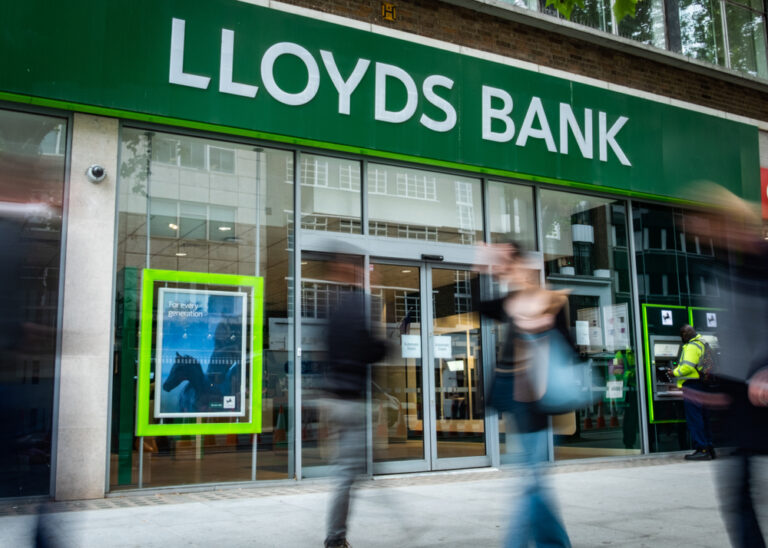
Lloyds shares: is now a wise time to buy?

0

Lloyds shares are never absent from the blue chip spotlight, however the collective market magnifying glass has intensified this week on the release of the latest UK inflation data, which revealed the economy had hit the dreaded double-digits at 10.1% nationwide inflation.

Interest rates are currently at 1.75% and set to rise further, if the speed of UK inflation is anything to go by. While higher interest rates mean higher returns on loans for Lloyds, it also means a slowing housing market, spelling a potential stumbling block for the UK’s biggest mortgage lender.

Meanwhile, sky high inflation means Lloyds has had to set aside some finance to absorb the impact of bad debts as the cost of living bites and credit card borrowing hits surging heights.

However, Lloyds currently has a net interest margin of 2.66% and a projected net interest margin of over 2.8% in FY 2022, reflecting positive news for Lloyds share price as higher interest income bolsters the bank’s income statement.

Lloyds shares

Lloyds shares have fallen 4.5% year-to-date, highlighting a potentially attractive opportunity to snap up a household favourite share.

The banking giant offers an attractive yield of 4.4% and a strong dividend cover of 3.9, giving investors adequate confidence in Lloyds’ ability to pay out its dividend even factoring in potential market shocks.

On that point, the bank has an enviable CET1 ratio of 14.7%, signalling adequate security in case of a huge market crash.

However, Lloyds has a current PE ratio of 5.9 and a forward PE ratio of 6.4, suggesting analysts expect a drop in earnings in the coming months as the cost of living squeeze hits consumer pockets, and consequently Lloyds’ profit margins. Fewer houses bought, more loans defaulted on, and potential trouble for the company ahead.

Regardless, Lloyds shares have benefited from the bank’s strong results, alongside its generous share buyback schedule, including its £2 billion buyback launched on February 2022. Lloyds had completed £1.3 billion in share buybacks by 30 June this year.

The coming times ahead are unlikely to be comfortable for most companies going forward, and with a recession looming on the horizon, stocks big and small are set to take a hit.

Lloyds shares appear to be in a decent position to manage the market turbulence, however, and still look like a solid income choice for the close of summer.

US initial jobless claims fall to 250,000 as labour market remains tight

0

US initial jobless claims fell by 2,000 to reach 250,000 in the last week as the American labour market remained tight, marking the first dip in three weeks.

The figures from the previous week were revised down by 10,000 to 252,000 from a prior estimate of 262,000.

The US Labour Department confirmed a four-week moving average of 246,750, representing a decline of 2,750 from the last week’s revised average, while the previous week’s average was revised down by 2,500 to 249,500 against 252,000.