Challenger Energy kicks off work at Trinidad & Tobago projects

Challenger Energy shares were down 12.2% to 0.1p in late afternoon trading on Tuesday, after the group released its work update for its assets across Trinidad and Tobago and Suriname for the balance of 2022 and preparatory work for 2023.

The company said its main focus was to deliver near-term production growth in volumes sufficient to offset natural reservoir decline and to hit approximately 550 to 600 barrels of oil per day (bopd) for its average production rate by the end of 2022, which would enable the firm to operate on a cashflow positive basis assuming prevailing oil prices.

Challenger Energy announced a slate of specific projects for its work programme across its Trinidadian assets, including recompletions of 10 to 15 existing wells with work targeted for each of its Gourdron, Inniss-Trinity and Bonasse fields scheduled to be completed by October 2022, following its successful recompletion program from March to April 2022.

The company are also set to reactivate 10 to 12 wells currently not in production, and kick off a schedule of intensive, continuous swabbing across all company fields in a move to reduce significant levels of fluid in the wellbore which have prevented wells from flowing.

The energy group mentioned the purchase of essential equipment, including a swabbing rig, vacuum tankers and additional production-related items, alongside upgrades and refurbishments to equipment and facilities throughout its assets in an effort to increase operational efficiency and bring in production delivery, cashflow improvements and cost savings.

“Over the past six months, we have worked hard to redefine Challenger Energy’s operations around a simple strategic focus: to build cashflow from our production base in Trinidad, and to reach a point where as a group we operate on a cashflow positive basis,” said Challenger Energy CEO Eytan Uliel.

“In the process we have re-evaluated every single aspect of the Trinidad operations, to see how best we can clear legacy items, drive efficiencies, and deploy precious capital in the most effective, production-growth oriented manner. The work program for the balance of 2022 reflects the outcome of this work.”

2023 drilling program

Challenger Energy highlighted nine potential new well opportunities across its Trinidadian portfolio which it was eyeing in support of a 2023 drilling programme, with the aim of hitting its longer-term production target of 1,000 bopd.

The group mentioned it would also be considering an appropriate funding strategy for the wells, in a bid to reduce the capital burden and risk to the firm of drilling activities, including risk-sharing opportunities with contractors and partners.

Challenger Energy also noted its application for an extension of the initial period for undertaking an extended well test in the Weg Naar Zee field in Suriname, recognising delays linked to the Covid-19 pandemic, and is set to facilitate a technical reassessment of the drilling strategy for the project.

It is currently considering the applicability of horizontal drilling and a steam injection enhance oil recovery programme, in a bid to improve recoverability and enhance project economics.

If its application is successful, drilling is expected to occur in 2023. The company is also considering potential partnership opportunities for the licence.

Challenger Energy added that its work program for the balance of 2022 is set to include a single waterflood pattern at the Goudron field, a potential steam injection at the Weg Naar Zee project in Suriname, along with additional waterfloods at the Goudron field, which is under consideration for 2023, and a proposed C02 injection enhanced oil recovery programme for the Inniss-Trinity field, which is currently under technical review for a potential start in 2023.

Amur Minerals Corporation reports Kun-Maine TEO project completion

1

Amur Minerals Corporation shares declined 6% to 0.8p in late morning trading on Tuesday, following the completion of its TEO project for its Kun-Maine copper sulphide project in the Russian Far East.

The company said its TEO Project was complied by Oreoll LLC and GKZ Russian Federation certified experts across all project disciplines, and confirmed that the GKZ expert commission gave the green light to a 19 year open pit operation design, with revenue generation derived from two saleable concentrates, which would allow for the recovery of payable values for copper and nickel.

Amur Minerals added that minor payable amounts for gold, palladium and platinum would also be recovered in the operations.

The mining firm noted that the design parameters would maximise revenue generation for the Russia Federation based on fully loaded tax and royalty schemes, with the total net present value deliverable to the Federation projected at approximately $628 million.

It also commented that its approach did not optimise the financial return to the operator of the project, which would be addressed during the mine planning stage, its final requirement.

Amur Minerals confirmed that the life of mine cutoff grade was stated at 0.2% nickel with an annual nominal production rate of 12.4 million ore tonnes selected.

The life of mine capital costs were projected at $1.9 billion, along with $1.1 billion for preproduction and construction costs, $698 million for sustaining expenses and $85 million in working capital.

According to the mining group, operating costs per tonne are currently estimated to be $42.3, including expenses linked to ore and waste mining, depreciation and royalties.

Its life of mine combined payable metals from the two concentrates are set to total 627,000 tonnes of nickel, 177,000 tonnes of copper, 1.5 tonnes of gold, 3.3 tonnes of platinum and 2.5 tonnes in palladium.

The company highlighted that nickel and copper account for 95% of the revenue from the two intermediate nickel and copper concentrate products.

“The TEO Project feasibility study results generated by the GKZ expert commission indicates the Kun-Manie operation should be scaled up to as much as 12.4 million ore tonnes per year for a 19 year open pit operation. This is a more than doubling of the previously anticipated capacity of 6.0 million ore tonnes per year,” said Amur Minerals CEO Robin Young.

Amur Minerals also noted the ongoing geopolitical upheaval in Russia, and mentioned that sources of funding would be scarce, particularly as Western companies had withdrawn from Russia as a result of the heavy conflict.

“The Company also notes that the present geopolitical situation related to the Russian Federation will impact the Company’s ability to develop Kun-Manie due to sanctions and restrictions implemented by the Federation.” 

“Sources for capital funding will likely be limited and western companies are no longer considering investment within Russia.”

BowLeven shares spike on potential partnership with Perenco at Etinde permit

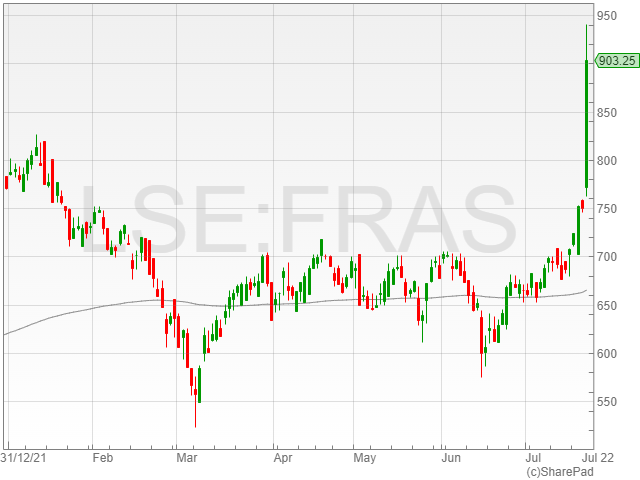
BowLeven shares spiked 86% to 4.6p in late morning trading on Tuesday after the group reported a conditional agreement for Perenco to become its partner and operator at the Cameroon Etinde permit.

The company announced that it had been told by Etinde joint venture operator New Age Limited that it had signed a definitive conditional agreement with a subsidiary of Perenco S.A. to transfer the entirety of New Age’s participating interests in the permit to the firm, alongside its operatorship of the project.

BowLeven confirmed that the transaction would be subject to a slate of approvals, including customary regulatory approvals by the Cameroon government and the approval of the Etinde joint venture partners.

The terms of the conditional agreement reportedly stipulate that BowLeven and LUKOIL have a 30 day right of pre-emption over New Age’s interest.

BowLeven will also still be entitled to a final investment decision payment of $25 million from its Etinde joint venture partners, which would include Perenco on the completion of the transaction.

“The prospect of Perenco becoming our partner and operator at the Etinde permit is very positive news,” said BowLeven CEO Eli Chahin.

“We believe that Perenco’s proven Cameroon oil and gas developments and substantial experience provide an opportunity to accelerate our efforts to secure FID and the associated USD25m payment to Bowleven.”

“We look forward to engaging with Perenco and we will update shareholders in relation to Etinde developments in due course.”

National Express estimates £2.7bn FY 2022 revenue

0

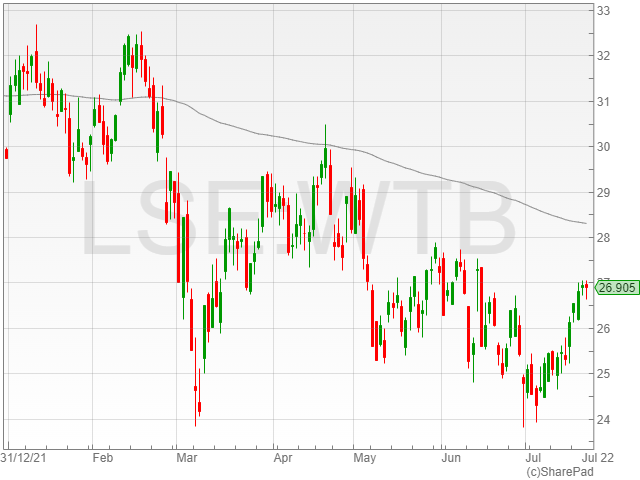
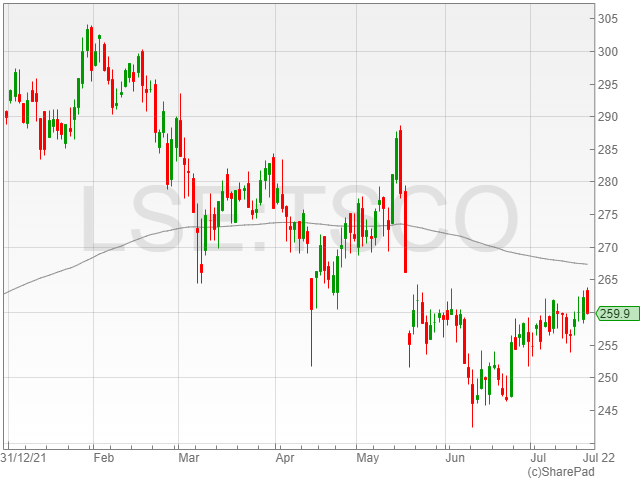
National Express shares were down 4.3% to 258.8p in early morning trading on Tuesday, after the travel group reported its latest trading statement, with an expected FY 2022 revenue of £2.7 billion.

UK revenue is set to trend in line with expectations, with bus patronage at 85% of pre-Covid-19 levels and coach recovery progressing at a quicker rate than expected, along with airport volumes at two-thirds of pre-pandemic levels.

National Express mentioned that German Rail revenue is almost four times pre-coronavirus rates, driven by new contracts, and North American shuttle revenue has exceeded 90% of 2019 levels on returns to office working environments.

However, the group has faced challenges on its school bus sector, with 10% of contracted routes not running due to industry-wide driver shortages.

National Express reiterated its medium-term guidance of delivering at least £1 billion in revenue growth from 2022-2027, with an average profit margin of 9% and recovery to pre-Covid-19 margins of approximately 10% later in the term.

The growth is projected to drive significantly more than £100 million in EBIT increases over the same period.

The travel firm said it expected recovery in profitability to lag its revenue recovery, resulting in margins initially below its 2022-2027 average, however it estimated a 2022 margin of approximately 7%.

National Express confirmed an estimated £1.25 billion in free cash flow between 2022 and 2027 with cash conversion rising to approximately 80%, and cash conversion in 2022 expected to hit close to 2019 levels.

The company added that it expected to reinstate its dividend in its FY 2022 results.

LXi REIT EPS falls 6.7%, portfolio value grows 64.6% as group eyes merger proposal

0

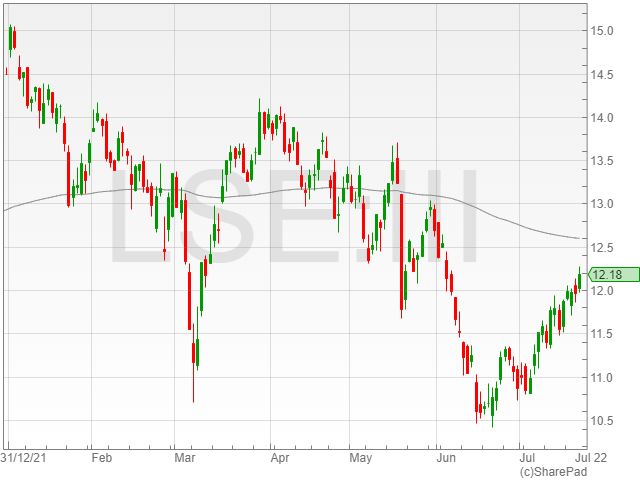
LXi REIT shares were down 0.2% to 144.9p in early morning trading on Tuesday following a reported 6.7% fall in EPS to 7p in FY 2022 compared to 7.5p in FY 2021.

LXi REIT confirmed a 33.3% increase in operating profit before fair value changes to £49.2 million from £36.9 million, along with a climb in rental income of 36.7% to £58.5 million compared to £42.8 million in the previous year.

The company announced a total NAV return growth of 12.6% to 18.2% against 5.6%, alongside an EPRA NTA per share climb of 13.4% to 142.6p from 125.7p the year before as a result of like-for-like portfolio value growth and the value acquired at purchase on new acquisitions.

LXi REIT mentioned a total shareholder return uptick of 1.6% to 23.3% compared to 21.7% and a portfolio value rise of 64.6% to £1.5 billion from £938.4 million in the previous year on the back of a 10.5% like-for-like rise, broadly spread across the trust’s sub-sectors including a 10.2% uptick in food stores and essentials, a 10.4% increase in pubs and a 9.2% climb in drive-thru coffee.

The firm noted a loan to value dip of 1% to 22% against 23%, and a total expense ratio increase of 10 basis points to 1% compared to 0.9% year-on-year.

“This has been another transformational year for the Group, delivering increased scale and diversification, with £354m of new equity raised and fully invested, as well as a strong financial performance with an 18.2% total NAV return. I thank our shareholders for their continued support in the year,” said LXi REIT chairman Cyrus Ardalan.

“Geopolitical uncertainty, as well as the cost of living crisis and inflation, have meant that global markets remain volatile and interest rates continue to rise but I am comforted by the defensive and robust platform that the Group enjoys through its diversified long-let assets, high quality tenant operators and inflation-linked rents.”

The REIT announced several acquisitions and disposals, including the completion on an Asda food store in Birmingham with a 22-year unexpired lease term and five yearly fixed uplifts of 3% per year compounded, alongside exchanged contracts to forward fund an M&S grocery store in Scotland with a total funding commitment of £5.7 million.

The company confirmed it was eyeing a proposed merger with Secure Income REIT, which is conditional on shareholder approval, and is scheduled for a vote at the shareholder general meeting on 22 June 2022.

“My fellow Directors and I believe that the proposed merger with Secure Income REIT plc brings together two complementary long, inflation-linked portfolios whilst maintaining the conservative and highly attractive investment case that our shareholders have benefitted from since IPO as well as the defensive scale that will support the Group in navigating the existing uncertainty,” said Ardalan.

LXi REIT announced a dividend per share growth of 8.1% to 6p compared to 5.5p the last year for FY 2022.

Shell vs BP: Which oil giant offers better value?

0

Shell and BP are currently enjoying the highest oil prices in years, with Brent Crude currently trading at slightly under $120 per barrel. China has reopened after its several weeks of Covid-19 lockdown, leading to a boost in demand, and the war in Russia continues to put a strain on oil reserves, despite the recent decision by OPEC to boost output.

Shell and BP have both withdrawn from Russia and suffered hits to their cash reserves, and the recent windfall tax reveal is set to alleviate some cost of living pressure from struggling UK families with a slight dent in both companies’ soaring profits.

The double-barrelled blow of their exit from Russia and the windfall tax might muddy the waters for investors who may be interested in the prospects for both companies going forward, so what is the complete story?

Financial Results

BP reported a loss of $20.4 billion in Q1 2022 on its withdrawal from its 19.75% stake in Russian energy group Rosneft, striking a considerable blow to the company’s financial statement.

However, high levels of oil and gas trading boosted its underlying replacement cost profit to $6.2 billion from $4.1 billion last year.

The firm paid out a dividend of 5.4c per ordinary share, which was flat against its Q4 2021 payment.

Shell saw $3.8 billion in post-tax charges linked to its phased withdrawal from Russian operations, including its involvement in Sakhalin-2 and the Nord Stream 2 projects.

Shell reported Q1 2022 adjusted earnings of $9.1 billion against $6.3 billion quarter-on-quarter, with higher oil prices and lower operating expenses and tax contributing to its growth.

The company also paid out a dividend of 25c per share from 24c per share in Q4 2021.

Windfall Tax

The windfall tax label caused a rather intense storm to rain down on Chancellor Rishi Sunak when the term was being discussed in earlier months, so the solution to crippling energy costs was instead called a “targeted profit levy.”

The tax set a 25% rate on top of the 40% which Shell and BP are supposed to pay each year, with a sunset clause for the tax to be withdrawn either when oil prices return to their previous lower levels or by 2025.

This would likely have set off a chain reaction of panic in the stocks the second it was released; however, there is a caveat, in the form of an intense “super-deduction” investment relief of 80%.

Sunak added an incentive for companies to drill for oil locally in a move to make up for the loss of Russian reserves, and jacked up the tax relief for every £1 invested in the UK from 46p to 91p.

Unsurprisingly, this allowance meant that the stock market hardly noted the “targeted profit levy”, and it’s not likely to cause any sort of major detriment to the profits for BP or Shell anytime in the near future.

Valuations

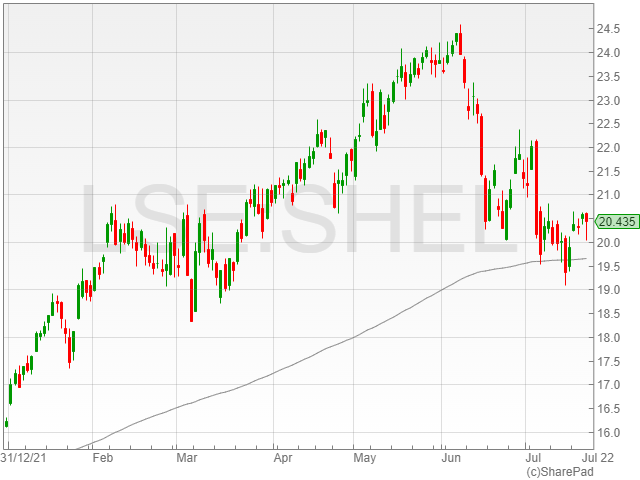
The BP share price has risen 33.1% year-to-date, as the price rose higher on swelling oil values.

The stock has a respectable dividend cover of 3, which is set to leave it more than capable of paying out its dividend despite conditions of market volatility.

Meanwhile, the shares have a strong dividend yield of 4%, marking them out as a high-paying investment.

BP boasts a PE ratio of 8.5, alongside a forward PE ratio of 4.9, indicating decent growth over the coming months as the price of oil looks set to climb and demand primed to spike as production increases on the back of countries reopening after Covid-19 and cold weather primed to send demand through the roof as winter months approach.

The Shell share price has soared year-to-date, with a 48.3% spike over the period.

The company has a weaker dividend cover than its competitor, with a cover of 2.3 and a dividend yield of 3%.

Meanwhile, Shell has a PE ratio of 14.5 and a forward PE ratio of 6, suggesting some impressive earnings growth over the coming period.

At current historical PE multiples, BP is currently offering better value than Shell, and will pay investors a higher dividend. However, Shell’s exposure to cleaner gas supplies may mean they are able to deliver greater shareholder returns as the planet’s energy demands evolve.

Rutherford Health runs out of cash

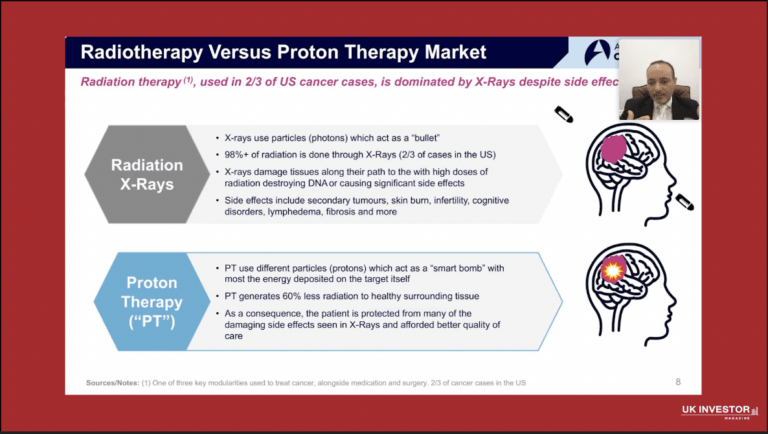
Former Aquis-quoted proton beam therapy provider Rutherford Health (LON: RUTH) is being placed in liquidation after more than £240m was invested in the business. The four oncology therapy centres are likely to be closed.
There was a lack of patients during the Covid pandemic, and a huge cost base did not help. Cash outflows meant that a regular cash injection was required.
Rutherford Health was backed by Woodford Investment Management, who invested a significant amount of the money spent on the business. Schroder UK Public Private Trust (LON: SUPP) bought the remaining Woodford stake at the en...

Why companies left AIM in May 2022

There was a limited number of departures and new admissions on AIM during May. There was one new admission and three cancellations. In February there were more new admissions than cancellations, but in the subsequent three months cancellation numbers have been much higher than new entrants.
=====
18 May 2022
Lekoil Ltd
Nigeria-focused oil company Lekoil Ltd (LON: LEK) made the switch from AIM to Aquis. Trading in the shares was suspended at 0.95p on 30 September 2021. Although the shares have been admitted to Aquis they will continue to be suspended until the latest audited accounts are publis...

Rockwood Strategic acquires Titon stake

Rockwood Strategic (LON: RKW) has acquired a 8.75% stake in window ventilators and parts manufacturer Titon Holdings (LON: TON). Rockwood Strategic’s focus is companies valued at less than £250m with potential for unlocking value.
The stake was acquired on 30 May when the share price was 81p. It has subsequently risen to 86p. Part of the stake appears to have come from the MI Sterling Select Companies Fund which has sold all its shareholding.
Rockwood Strategic was previously known as Gresham House Strategic and was gong to be wound up after Gresham House was dropped as investment manager. Gre...

Bens Creek commences HVB delivery to Integrity Coal Sales

0

Bens Creek shares were flat at 90p in early afternoon trading on Monday following the company’s reported delivery of High Vol B (HVB) product to offtake partner Integrity Coal Sales, after transport commenced on 1 June via railroad.

Bens Creek had built up an inventory of clean coal which it started delivering at approximately 11,000 tonnes per train load from its 3.2 mile rail spur connecting to the Norfolk Southern Railway system, which transports the coal to Norfolk, Virginia.

The move comes on the back of the group’s supply of Run of Mine coal by truck, which it used while it finished the remediation of its wash plant and railway spur line.

The company noted that additional rail deliveries of its HVB product at a similar quantum were expected over the coming weeks.

“The arrival of the first railway cars is a significant milestone, as it affirms the full remediation of the Bens Creek project, from the commencement of both High Wall Mining (HWM) and Underground Mining, the processing of the coal through the wash plant, the buildup of inventory and delivery via a “fast flood” rail load out system onto Norfolk Southern railcars on our remediated 3.2 mile rail spur,” said Bens Creek CEO Adam Wilson.

“Whilst we were some weeks behind our originally planned schedule of railroad deliveries, we are very pleased now to be fully functional and we remain on track to meet our obligations to our offtake partner, Integrity, for the supply of HVB coal, as previously announced.”

Loan Facility

Bens Creek also confirmed an update on its existing loan facility with major shareholder MBU Capital Group Limited.

The firm pointed out its initial loan facility of up to £10 million in October 2021, on admission of Bens Creek’s ordinary shares to AIM trading, with £2.3 million drawn down by the company at admission.

The loan facility is set to remain in place to support the company’s ongoing working capital requirements, however the terms of the MBU loan facility have reportedly been varied.

The group commented that the conversion price had been increased, with any additional amounts drawn down under the loan facility from 7 April 2022 increased to 60p instead of 15p per share.

Bens Creek said £7.3 million had been drawn down by the company as of 5 June 2022, of which £5 million was capable of conversion at 60p per share, and the firm added that it had cash balances in excess of £5 million.

“With the necessary buildup of Inventory (circa 30,000 tons of clean and 5,000 tons of ROM, equating to circa $12m of revenue), ahead of the first train arriving, the board of directors increased the conversion price on its pre agreed £10m facility with MBU for any subsequent drawdowns post the date of Admission to 60p from 15p per share, to reduce the potential dilution to shareholders, should the loan be converted rather than repaid,” said Wilson.

“Because of the buildup of inventory, management felt it was prudent to draw down on the facility to maintain a strong surplus cash balance, whilst we waited for the delayed train to arrive from Norfolk Southern.”