BBGI Global Infrastructure shares were up 0.8% to 165.3p in early afternoon trading on Monday following the group’s reported acquisition of a 49% equity interest in limited partnership Via Solutions Nord GmbH & Co. KG.
The interest is based in Germany, and is the project company for the A7 motorway private partnership between Hamburg and Bordesholm.
BBGI confirmed that the asset was availability-based, according to the company’s investment policy. The group currently has a 99% operational investment portfolio, with all investments availability-based and supported by public sector-backed contracted revenues.
The firm added that its portfolio assets are supported with inflation-protection characteristics which are paid as long as the assets are available for use.
“We are delighted to announce the acquisition of this high-quality, availability-based infrastructure investment,” said BBGI co-CEO Frank Schramm.
“Our strategy is to remain disciplined and selective in our approach to acquisition opportunities by only investing in availability-based assets that also align with our ESG principles, and not in higher risk infrastructure asset classes.”
BBGI noted that the purchase price was confidential, however the investment was expected to rank in the group’s top six to ten investments.
The firm is set to fund the investment through its £230 million corporate revolving credit facility and existing cash resources.
BBGI said availability payments would be received from the Federal Republic of Germany, represented by DEGES and rated AAA/Aaa by S&P and Moody’s, respectively.
The project reportedly includes expansions and upgrades to critical sections of the A7 motorway and consists of the efforts involved in the 65 kilometre widening from four to six lanes of a part of the motorway between Bordesholm and Hamburg.
The project includes 11 interchanges, six parking facilities, four rest areas, 79 civil engineering structures, 100,000 metres squared in noise barriers and a 550 metre noise enclosure tunnel.
Construction was reportedly completed in December 2019 and the concession is scheduled to run until 2044.
The A7 motorway is set to join the company’s existing German assets, including Burg Prison, 4 Schools in Frankfurt, Rodenkirchen Comprehensive School, Fürst-Wrede Military Base, P1 Schools in Cologne and the Unna Administration Centre.
“Our 56th availability-based infrastructure investment is our first road project in Germany and a great addition to our existing six projects in the country, further strengthening our Continental Europe exposure,” said BBGI co-CEO Duncan Ball.
Vodafone Group gave a 9.8% stake to Emirates Telecommunications Group for $4.4bn over the weekend which sent Vodafone shares to rise 1.6% to 119.7p on Monday.
Emirates Telecommunications Group’S subsidiary Atlas 2022 Holdings bought 2.8bn Vodafone shares for around $4.4bn while praising both the brand and the quality of its business.
Vodafone Group appealed to e&, formerly known as Etisalat, as it was on the search for a company with significant exposure in new markets to where e& aims to expand.
The purchase of Vodafone Group’s stake makes Emirates Telecom the largest single stakeholder of the UK telecommunication group. However, e& did say it has no intention of making an offer for the takeover of Vodafone.
The telecom sector was compared to be “as dull as dishwater” according to Russ Mould, Investment Director, AJ Bell, as there was no excitement.
However, Vodafone made moves such as disposing portions of its assets known as Vantage Towers, Euskaltel which was acquired by Masmovil which raised investor enthusiasm.
Not too soon before e&’s purchase, Cevian Capital took a large portion of Vodafone in the attempt to raise shareholder return through selling parts of its operations and consolidating its position in key markets according to Mould.
Mould also added, “Furthermore, there has been chatter that Vodafone was in talks to merge its UK operations with competitor Three UK.”
Vodafone was almost saturated in mature markets due to regulations and pressure from competition driving its prices down.
Nick Read, Chief Executive Officer of the Vodafone Group has been struggling to simplify the group’s portfolio to support higher returns for its shareholders. Since Nick Read signed on in 2018, the shares have fallen 20% and the group’s net debt has reached $46.1bn.
Vodafone is welcoming e& with open arms as the group said its long-term strategic plans “continue to make good progress.” E& stated its full support of the company’s current business strategy and its board and existing management team.
E& mentioned that it “does not seek board representation” and instils confidence in Vodafone to “unlock value from its organic business activity and other potential strategic transactions.”
Hatem Dowidar, CEO of Etisalat, said, “We see this investment as a good opportunity for e& and its shareholders as it will allow us to enhance and develop our international portfolio, in line with our strategic ambition”.
The FTSE 250 was up 0.2% to 19,961.6 and the AIM was down 0.2% to 953.5 after signs of an economic slowdown in China due to Covid-19 lockdowns started to hit sectors across international markets.
The rising cost of living also contributed to sliding retail stocks, and investors kept a concerned eye on former indulgences which consumers have been gradually paring back on as 7% inflation continues to bite.
“Big ticket items are the first things consumers will delay when the going gets tough [and] the cost of energy, food, drink and more is racing ahead,” said AJ Bell investment director Russ Mould.
“Households will have to make their current [expensive products] last a bit longer, and the same applies to other expensive purchases such as electronic goods unless they’re broken and desperately need replacing.”
Plus500 shares gained 4.1% to 1,574p after the company reported strong trading into Q2 2022, and consequently raised its expected FY 2022 EBITDA and revenue expectations.
Diploma shares dropped 4.9% despite the firm announcing a 23% surge in revenue to £448.5 million compared to £365.2 million and an adjusted operating profit growth of 24% to £82.5 million from £66.6 million in its HY 2022 results.
The company reported an unchanged outlook with an estimated 20% revenue growth and resilience in the face of macroeconomic volatility due to its increasing revenue diversification, value-added model and strong balance sheet.
Vast Resources shares were up 53.6% to 1.2p following the company’s repayment of outstanding bonds owed to Atlas Special Opportunities related to the Bond Issuance Deed from 24 October 2019.
Vast also confirmed a debt repayment of $1 million to Mercuria Energy which was linked to tranche A of a prepayment agreement from 21 March 2018. The miner also took the opportunity to raise £3.2 million through a placing.
Synairgen shares gained 47.7% to 39.4p as a result of the group’s Phase 3 SPRINTER trial, which suggested that patients on its SNG001 treatment had a reduced risk in the relative progression to severe disease or death within 35 days. Comments suggest SNG001 is effective in high-risk patients and provides welcome positivity in Synairgen’ treatment.
Synairgen presented its research at the American Thoratic Society (ATS) 2022 conference on Monday.
“The improvement in standard of care for COVID-19 means that most patients are currently discharged fairly rapidly from hospital; however, this further analysis shows that some patients struggle in their battle with the virus and show signs of respiratory compromise, with faster breathing rates and lower oxygen saturations, despite being on oxygen,” said SPRINTER trial chief investigator Tom Wilkinson.
“For these higher-risk patients, there remains an urgent need for new treatment options, and this analysis suggests that SNG001 could be a potentially efficacious treatment option for them.”
Wishbone Gold shares rose 11.2% to 10.8p after the group signed the drilling contract for its Northern Queensland-based Wishbone 2 Cold-Copper project.
The company reported that the maiden drill program would consist of 2,000 metres of reverse circulation holes to test for surface gold and copper anomalies at depth, and search for continuous underground structures.
Woodbois shares were up 10.6% to 5.2p as a result of the the firm’s new partnership with World Forest ID, which is set to enhance the traceability and identification of timber originating from the group’s forest concessions in Gabon.
RWS Holdings shares fell 18.2% to 361.7p after Baring Private Equity Asia Fund declined to make a takeover offer for the technology-enabled language services group.
Baring Private Equity Asia said its decision did not reflect its perception of RWS Holdings as a business.
Meanwhile, analysts took note of the cheerful tone with which RWS Holdings replied to the report.
“RWS couldn’t be happier judging by the tone of its response to the news. It has a plan to grow and seemingly would rather do this on its own than as part of a private equity empire,” said AJ Bell investment director Russ Mould.
“The board of RWS believes the company has a strong future based on its clearly defined strategy…The company is focused on the actions and investments which support this strategy and its five year accelerated growth plan,” the company said in a statement.
Empire Metals shares dropped 15.3% to 1.3p after the company announced the results of its exploration update for its Eclipse Gold Project, including confirmed gold mineralisation and an extension in strike length of 300 metres to over 500 metres from the previously reported extent of mineralisation discovered along the Eclipse shear.
Operations were suspended immediately in the underground mining area where the accident occurred, meanwhile work progressed in all other working areas. The company commented that it did not expect the incident to affect production levels.
“We truly regret this incident, and we offer our sincere condolences to the family of the deceased. The safety of our employees and contractor employees at our operations is a top priority for Chaarat,” said Chaarat Gold Holdings CEO Mike Fraser.
“We are working through an internal and external investigation and will identify further measures to prevent such incidents from occurring, and to protect the health of our employees and contracted companies’ employees.”
FTSE 100 was largely flat on Monday trading as gains from telecom and mining shares helped lift the index which was being dragged by drops in Experian and some retailing stocks.
China’s lockdowns have driven slowing growth this quarter and raised investors concerns about the health of the world’s second largest economy. China reported that retail sales fell by 11.1% in April followed by a 2.9% drop in industrial production and a rise in the unemployment rate from 5.8% to 6.1%.
The rippling effect of the slowdown in the economy is expected to extend to 2023 with a growth forecast of 2.3% in the EU, a decrease from 2.8% earlier.
The European Commission stressed the rising energy prices and expects inflation to hit 6.9% in this quarter and average around 6.1% in 2022 which is almost double of 3.5% which was predicted in the Winter 2022 interim Forecast.
Even though inflation is the cause behind rising commodity prices, the price of Brent crude fell 0.6% to $111 a barrel on Monday.
However, Shell and BP shares were still trading up 0.5% and 0.3% to 2,314p and 416p respectively.
FTSE 100 Risers
Telecom Stocks
Telecom shares gained with news of UAE’s e& invested in Vodafone, extending the surge in shares across other FTSE 100 telecom companies.
Vodafone Group shares rose 2.3% to 120.5p following the announcement of Emirates Telecommunications Group buying 9.8% of Vodafone’s shareholdings.
Russ Mould, Investment Director, AJ Bell, said, “Now Abu Dhabi telecoms group e& has taken a big slice of Vodafone.”
“This comes hot on the heels of talk that activist investor Cevian Capital has also taken a big stake with a view to getting Vodafone to sell some operations, consolidate its position in key markets, return more cash to shareholders and bring more telecoms experience onto the board. Furthermore, there has been chatter that Vodafone was in talks to merge its UK operations with competitor Three UK.”
Telecom peers, BT and Airtel Africa shares gained 1% to 183p and 2.3% to 140.8p, respectively, as investors flocked to telecom stocks.
Mining stocks lifted the FTSE 100 on Monday with Fresnillo, Glencore, Antofagasta and Anglo American shares trading up 3.4%, 2.5%, 2.2% and 1.4%.
Charles Luke, Investment Manager, Murray Income Trust PLC
Companies with the strongest operational performance are likely to see the greatest long-term appreciation in their share price
There are an increasing number of companies with a notable gap between the movement of share prices and the underlying performance of the company
This creates opportunities for active investors in high quality companies
“In the short run, the market is a voting machine but in the long run it is a weighing machine” – Benjamin Graham, pioneer of value investing
This is an unusual moment in markets. Investors are troubled by the impact of a potentially toxic combination of geopolitical tensions, rising energy and food costs and a weakening consumer. Economic data is unquestionably weaker. However, the corporate sector continues to defy gloomy expectations and, in many cases, any panic seems unfounded.
The philosophy of Murray Income Trust is that those companies that can grow their earnings and their dividends are likely to be long-term winners – and these companies are most likely to be high quality businesses. This is far more important than buying cheap companies, but if an investor can buy a company with strong operational performance that is also on a compelling valuation, they should give themselves the best chance for long-term capital growth.
With that in mind, we are always on the look-out for companies where there is a notable gap between the movement of share prices and the underlying performance of the company. This is often where the best opportunities arise for active managers. Today, we see plenty of companies reporting strong earnings figures, giving optimistic forward guidance, but where the share prices have been hit hard anyway.
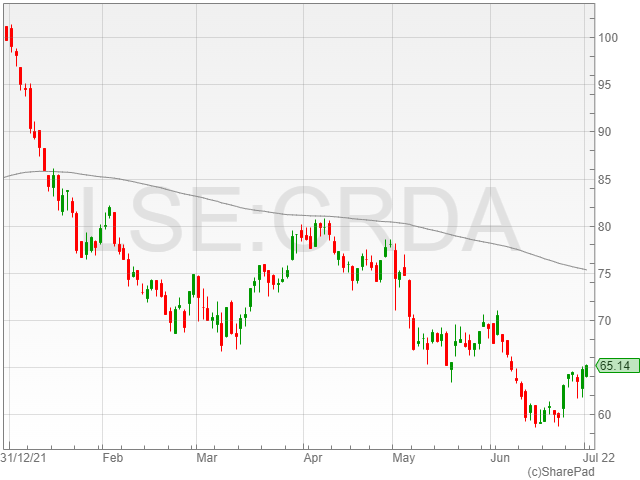
One example where the forward guidance issued does not reflect the gloom implied by the falls in the share price might be Dechra Pharmaceuticals. This is a veterinary pharmaceutical business that saw its share price fall over 20% in the first quarter of the year. However, at the same time, its most recent update to the market showed expectations of future earnings have risen and the company has issued an upbeat outlook for the year ahead, in spite of the well-flagged headwinds to economic growth.
Other companies have reported a strong start to the year, but have seen their share prices hit hard: Croda International, for example, or car distributor Inchcape. In reality, the fortunes of these companies have relatively little to do with the UK economy and far more to do with structural growth factors. Croda International, for example, makes specialty chemical products and is supported by the resilience of its end-markets including pharmaceuticals, personal care and agriculture, while outsourcing by original equipment manufacturers is likely to underpin Inchcape’s earnings. Even companies that look more vulnerable to a consumer slowdown, such as Howden Joinery, have reported good results and buoyant trade.
This is not unusual. Investors will often panic first and ask questions later. They are understandably nervous about the flagging economic recovery and the impact of inflation on consumer confidence. However, amid this wobble in confidence, they are misreading the likely impact on certain companies. As the climate becomes clearer, they are likely to become more discerning in their appraisal of the corporate landscape.
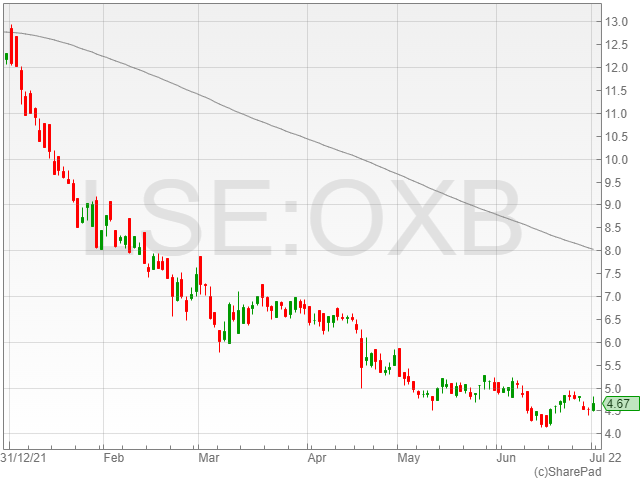
For the Murray Income portfolio, it means that we are not moving out of many of the companies in the portfolio. Their operational performance has been strong and we are willing to look through short-term share price movements. It also means that some of the high quality, long-term growth companies that we like have come down to more favourable valuations. We’ve recently bought Experian, for example, Oxford Instruments and the London Stock Exchange.
To be clear, this is not about buying companies simply because they are cheap. While there are plenty of companies that look cheap using a discounted cash flow model, these models tell an investor little about the sustainability of growth that can be expected into the future. There has been a rotation in markets away from higher quality stocks in preference for ‘value’ stocks. Certainly, a changing interest rate environment might favour cheaper stocks, but we don’t want to base our long-term strategy on the direction of monetary policy or inflation.
At Murray Income, we are looking through this market turbulence. Experience tells us that over the long-term, companies that grow their earnings will see their share price rise. We are looking hard at what companies are telling us about their prospects and focusing on quality – this is our touchstone for generating attractive long-term returns.
Companies selected for illustrative purposes only to demonstrate the investment management style described herein and not as an investment recommendation or indication of future performance.
Important information
Risk factors you should consider prior to investing:
The value of investments, and the income from them, can go down as well as up and investors may get back less than the amount invested.
Past performance is not a guide to future results.
Investment in the Company may not be appropriate for investors who plan to withdraw their money within 5 years.
The Company may borrow to finance further investment (gearing). The use of gearing is likely to lead to volatility in the Net Asset Value (NAV) meaning that any movement in the value of the company’s assets will result in a magnified movement in the NAV.
The Company may accumulate investment positions which represent more than normal trading volumes which may make it difficult to realise investments and may lead to volatility in the market price of the Company’s shares.
The Company may charge expenses to capital which may erode the capital value of the investment.
Derivatives may be used, subject to restrictions set out for the Company, in order to manage risk and generate income. The market in derivatives can be volatile and there is a higher than average risk of loss.
There is no guarantee that the market price of the Company’s shares will fully reflect their underlying Net Asset Value.
As with all stock exchange investments the value of the Company’s shares purchased will immediately fall by the difference between the buying and selling prices, the bid-offer spread. If trading volumes fall, the bid-offer spread can widen.
Certain trusts may seek to invest in higher yielding securities such as bonds, which are subject to credit risk, market price risk and interest rate risk. Unlike income from a single bond, the level of income from an investment trust is not fixed and may fluctuate.
Yields are estimated figures and may fluctuate, there are no guarantees that future dividends will match or exceed historic dividends and certain investors may be subject to further tax on dividends.
Other important information:
Issued by Aberdeen Asset Managers Limited, registered in Scotland (No. 108419), 10 Queen’s Terrace, Aberdeen AB10 1XL. Authorised and regulated by the Financial Conduct Authority in the UK. An investment trust should be considered only as part of a balanced portfolio. Under no circumstances should this information be considered as an offer or solicitation to deal in investments.
Diversified Energy shares increased 0.2% to 120.5p following the company’s Q1 2022 trading statement, which reported a 6% rise in dividend payouts to 4.2c per share year-on-year.
The energy firm commented that it had an exit rate production of 136 mdoedp, with an average Q1 2022 production of 134 mboepd inclusive of temporary weather-related impacts.
Diversified Energy noted a realised 48% cash margin and a 70% unhedged cash margin, with an increase in realised prices slightly offsetting elevated price-linked variable expenses.
The group also confirmed a 2.2x net debt and hedged adjusted EBITDA leverage ratio on 31 March 2022 pro forma for recent acquisitions.
Diversified Energy further highlighted a liquidity of $350 million.
The firm noted its acquisitions of Central Region producing assets in East Texas, which added scale to operations, alongside the acquisition of Central Region midstream and processing facility assets, which complemented vertical integration to raise cash margins through higher pricing and lower expenses.
The company also acquired a second Appalachian well plugging company, expanding its capacity by 33% with two added crews, bringing the group’s total number to eight.
“Following our four Central Region acquisitions in the second half of 2021, I’m pleased with the progress we are making to integrate and optimise these assets while adding to their scale and vertical integration to reduce costs,” said Diversified Energy CEO Rusty Hutson.
“Mindful of cash flow and cash operating margins, we also added to our hedge positions to capture value from the higher forward commodity price curve.”
Sirius Real Estate has agreed to sell a part of Bizspace Business Park in Camberwell, London, for £16m, the group said on Monday in an announcement.
Sirius Real Estate stated the sale of the asset in London for £16m representing a NIY of 2%. The deal is expected to reach the finish line in July 2022.
Sirius purchased the asset as part of its portfolio in November 2021 when it acquired BizSpace, the UK’s biggest provider of regional light industrial, workshop, studio, and out-of-town office units.
The sale price is 94 % higher than the value of BizSpace at the point of Sirius’ takeover.
Following a number of asset management strategies supplied through the BizSpace platform, the multi-tenanted business park, which includes about 34,700 sqft of industrial and office space, is 91% utilized.
Sirius Real Estate
Sirius Real Estate is listed on the FTSE250 and identifies as a leading operator of business parks providing conventional space and flexible workspace in both Germany and the UK.
The group’s strategy revolves around buying business parks at attractive yields and shaping them into a space that appeal to the local market with an aim to provide returns to shareholders through rental income and cost recoveries.
The group decides to either refinance or dispose of sites previously acquired to support its growing portfolio.
BizSpace
Sirius Real Estate acquired the “provider of regional flexible workspace in the UK,” BizSpace, in November 2021 as an opportunity to enter through a one-step acquisition of an established platform to offer “light industrial, workshop, studio and out of town office units”
The sale of the asset on Monday just supports the company’s strategy of buying and disposing to keep financing future investments for the company’s overall growth which may be the reason behind why Sirius Real Estate shares were trading up 2.2% to 116.5p.
Andrew Coombs, Chief Executive Officer, Sirius Real Estate, said, “This disposal is further proof of the latent value in the BizSpace portfolio we acquired late last year, the price being significantly ahead of last September’s valuation on which our purchase was based, and the attractive sale follows our recent announcement that we had since improved like-for-like rental income across the portfolio by 7.5%.”
“The sale will allow us to invest in new opportunities for BizSpace in the UK as we continue to build our acquisition pipeline. Bringing together the Sirius and BizSpace platforms, with a strengthened management team at BizSpace, is already delivering strong results and operational synergies that will enhance our UK portfolio.”
Bank of England governor Andrew Bailey is set to be hauled over the coals by cabinet ministers today over his approach to tackling spiking inflation rates of 7% and the Bank’s alleged failures to keep inflation within the institution’s 2% goal.
Bailey will appear before the Treasury select committee later today. Meanwhile, Cabinet Ministers have reportedly been up in arms over the Bank’s failures in recent times, with one Tory MP commenting to the Telegraph that the government was “questioning its independence.”
Business Secretary Kwasi Kwarteng said on Sunday that he was concerned that inflation had run so far beyond the Bank’s target level.
“When the Bank of England became independent in 1997, they had an inflation target of 2%,” Kwarteng commented to Sky News Sunday programme reporter Sophy Ridge.
“Inflation is running into almost double digits now. That is an issue, clearly.”
Kwarteng caveated that given the heavy situational combination of Brexit, Covid-19 and the war in Ukraine, Bailey was making the best out of a terrible time in his tenure.
“All of these things mean that it is a very difficult time and I think [Bailey] is doing a reasonable job. But it is true to say that 2% is part of their mandate and they have to keep it to 2%.”
The surging cost of living has been a rising concern in the government, as the energy price cap added £700 to household energy bills and food inflation saw consumers abandon higher-end grocery stores for lower prices in discounter chains as analysts warned that cheap food in Britain was in the past.
Labour has been calling on the Tory party to impose a windfall tax on oil giants including BP and Shell, who reported bumper profits on the back of soaring oil prices while consumers around the UK struggled to pay their heating bills.
Shadow Climate Change Secretary Ed Miliband heaped criticism onto the administration for its reluctance to consider a windfall tax, and called its hesitation “frankly obscene.”
Chancellor Rishi Sunak has not yet declined the consideration outright, however Kwarteng has been vocal about his opposition to the suggested measure.
“What you are taxing is investment in jobs, you are taxing investment in wealth creation, you are taxing investment in new technologies,” said Kwarteng.
“And that is what we want to see, we want to see more investment. We don’t want to see taxes that essentially act against any incentive to invest.”
The country will have to wait for Sunak’s Summer Statement to see if the Chancellor provides more breathing room for Britons than his meagre Spring Statement offerings in March, however consumers are currently bracing for a chilling year as the cold snap of double-digit inflation in October is already sending shivers down the UK’s collective spine.
Greencoat UK Wind announced the agreement with Global Infrastructure Partners for the acquisition of a net 12.5% stake in Hornsea 1 offshore wind farm for a total cash consideration of roughly £400m on Monday
Greencoat UK Wind is a leading renewable infrastructure fund listed on the FTSE250 which invests in UK wind farms.
The group announced the deal made with Global Infrastructure Partners to buy a net 12.5% stake in Hornsea 1 offshore wind farm for £400m including cash and working capital is expected to complete in Q3 2022.
Greencoat UK Wind expects to fund the purchase through cash flow and its revolving credit facility.
Hornsea 1 Offshore Wind Farm
Hornsea 1 is the world’s biggest offshore wind farm, located in the North Sea 80 miles off the coast of Yorkshire.
The offshore wind farm is the world’s first offshore wind farm to reach 1GW, with 174 Siemens 7MW turbines and a grid export capacity of 1,200MW.
Hornsea 1 started full commercial production in December 2019, with a high load factor and a 15-year CFD at £175.25/MWh.
Orsted owns 50% of Hornsea 1 and GIP owns the remaining 50%, with GIP’s stake being backed by £2.9bn in limited recourse loans.
Greencoat UK Wind’s pro-rata portion of this limited recourse debt is £0.7bn, giving the group’s net 12.5% ownership a total enterprise value of £1.1bn.
Hornsea 1 offshore wind farm’s operation, maintenance, and administration will be continued by Orsted.
Shonaid Jemmett-Page, Chairman, Greencoat UK Wind commented, “As the leading independent UK wind farm owner, we are pleased to announce our investment into the world’s largest offshore wind farm. Hornsea 1 has a high load factor and high CFD price which complements our subsidy free investments.”
“This transaction, once completed, will add another high quality operating asset to our portfolio and increase our net generating capacity to over 1.6GW.”
“We continue to see an attractive pipeline of projects, both onshore and offshore, and given the size and scale that the Company has attained over recent years, we remain strongly positioned to deliver more value-accretive acquisitions and extend our track record of strong shareholder returns,” added the Chairman.
The shares of Greencoat UK Wind fell 0.2% to 154.7p on Monday following the news of the acquistion.
LondonMetric Property announced the sale of 4 long income and leisure assets in separate transactions for £34.2m, reflecting a blended NIY of 4.1%, on Monday.
The sale price of the 4 assets combined represents a 25bps of yield compression as the price has appreciated 35% from LondonMetric’s 30 September 2021 book value.
The 4 properties used to generate £1.5m in rent each year out of which £1.2m was LondonMetric’s share. The assets had a WAULT of 18 years and the sale notes a blended ungeared IRR of 25%.
LondonMetric Assets Sold
Metric Income Plus is LondonMetric’s joint venture with Universities Superannuation Scheme which has sold a 32,000sqft food shop in Ashford, Middlesex. Lidl just negotiated a new 25-year lease on the space that was formerly used by Hitchcock & King.
A 34,000 sq ft refurbished NNN Retail asset in Cardiff was just re-let to Sofology and Tapi with an 8-year WAULT.
A pub in Greenwich that was previously acquired as part of the Savills IM portfolio acquisition in December 2021 by LondonMetric has been leased to Spirit Group for another 22 years.
Euro Garages was granted a 30-year WAULT on a petrol filling station and convenience store in Rushden.
Universities Superannuation Scheme, created in 1974 as the major pension scheme for universities and other higher education institutions in the UK, is one of the largest private pension schemes in the UK, with total fund assets of roughly £82bn as of 31 March 2021.
Andrew Jones, Chief Executive Officer, LondonMetric, stated, “We have seen significant interest from the investment market for our long income assets, which has prompted us to dispose of these assets.”
“Strong and long let assets have seen material yield compression over the last six months, and we will continue to respond to various approaches. “