4imprint Group shares soar as dividend hiked 167%

0

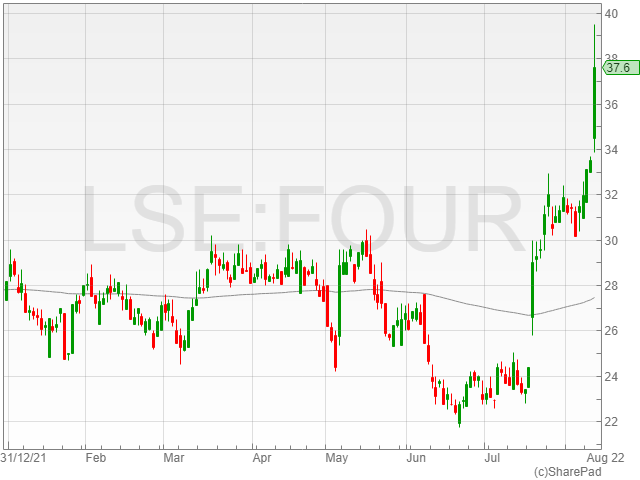
4imprint Group shares soared 11.9% to 3,750p in late afternoon trading on Wednesday, after the promotional products company announced a 58% surge in revenue to $515.5 million in HY1 2022 against $326.8 million the year before.

The Group reported an operating profit spike of 1,122% to $43.9 million compared to $3.6 million, along with a pre-tax profit growth of 1,122% to $43.9 million from $3.3 million.

4imprint Group enjoyed record customer demand over the period, with 886,000 total orders processed, 146,000 new customers acquired, and strong continued momentum in July 2022.

4imprint Group confirmed a 27% climb in cash to $67.1 million against $52.8 million.

The company noted a basic EPS rise of 1,204% to 118.9c from 9.1c.

“The Board remains very confident in the Group’s strategy, the strength and resilience of its business model and its competitive position. This confidence is expressed in our expectation of reaching our long-held revenue target of $1bn during the 2022 financial year,” said 4imprint Group chairman Paul Moody.

“At the same time, the Board is cognisant of continuing uncertainty in the form of geo-political and broad economic factors that could potentially slow down the Group’s performance during the remainder of 2022.”

“Trading momentum in the first few weeks of the second half of 2022 has remained encouraging.”

4imprint Group recommended a 167% dividend hike to 40c per share compared to 15c the last year.

Beyond the noise: dealing with complex markets

Bruce Stout, Martin Connaghan and Samantha Fitzpatrick, Investment Managers, Murray International Trust PLC

  • The unpredictable markets since the start of the year have forced a reappraisal of some recent investment themes
  • Labels such as value, growth or quality are inadequate for investment decision-making
  • Diversification and a focus on real assets are likely to be important in an environment of high inflation and rising interest rates. 

Markets have been unpredictable since the start of the year. For investors, it has forced a harsh reappraisal of some of the investment themes of the past few years: extended valuations of technology stocks being a prime example. It has also forced investors to look again at previously unfashionable metrics such as cash flow, balance sheet strength and dividends. We believe that it should remind investors of some neglected investment disciplines.

The Ronseal test

Amongst the general market turbulence since the start of the year, investors have discerned three main themes: a weakness for ‘quality’ companies, the strength of ‘value’ and the difficulty of investing in emerging markets. As a quality-focused trust, focused on dividend growth and with almost half of our portfolio directly invested in emerging markets, this should not have been an ideal market. However, the performance of Murray International Trust has held up very well year to date, relative to the broader Investment Trust Sector and most importantly, in absolute terms. 

We say this not to blow our own trumpet, but to point out the inadequacy of assigning labels when making investment decisions. Too many funds have seen mission creep as growth stocks have prevailed. We would suggest that the only real metric for shareholders is whether an investment trust manager delivers on their promises – the Ronseal test. Our commitment is to grow income and capital above the rate of inflation from a portfolio of fifty stocks. Our investors should judge us on that objective alone. 

Dividends: helpful but not a panacea

An allocation to dividend stocks can look like the right approach when the economic environment gets tougher. The association between dividend stocks and ‘safety’ is strong. If companies have the cash flow to pay dividends, it often suggests capital discipline and economic strength. Equally, in an environment of high inflation, tangible income today is better than hoped-for earnings tomorrow. 

However, it is not a panacea.  In a recession, earnings go down. Where earnings go, dividends will sometimes follow. Sheltering in income trusts is not a solution in itself. Investors need to be sure their fund manager is paying attention to the sustainability of dividends in the long-term. 

Interest rates are not rising universally

Investors are right to be concerned about the impact of rising interest rates. However, it is worth noting that rates are not rising across the world. They may be going up in the US and Europe, but Asian and emerging market central banks have already moved. Brazilian rates, for example, are at 13.2%, which is almost certainly at or near their peak. They are already through the most painful stage in the cycle and there are signs that central banks may now start to reverse direction. 

There has been a prevailing view that if US rates go up, emerging markets suffer. This is not necessarily true. Emerging markets are only just emerging from the pandemic and have plenty of recovery ahead of them. We see a lot of pent-up demand, particularly in the relatively unleveraged consumer sector 

Murray International continues to have around 40-45% exposure directly in emerging markets. We see stronger and more resilient consumption demand there than in the developed world, where household formation is static and household budgets are more sensitive to rising interest rates. Equally, emerging markets have seen valuations fall significantly, creating opportunities. 

The importance of diversification

This particular investment cycle has seen passive funds become concentrated in a handful of technology stocks. This means any selling pressure is exaggerated. A strongly diversified strategy is vitally important in an environment where there are lot of intangibles. This is a difficult environment and the problems could grind on longer than many currently expect. For the 50 stocks in our portfolio, we strive to ensure that their economic fortunes are relatively uncorrelated with each other. They are being driven by their own business and their destiny is in their own hands. 

Focus on real assets

A notable theme running through Murray International is real assets. This is not property in London and New York, but tangible areas such as a pipelines in Canada, an airport in Mexico or a telecoms network in Indonesia. In many cases this installed capacity is increasingly valuable because planning restrictions mean it is very difficult to build more. 

Our telecoms holding in Indonesia, for example, has spent the last five to ten years putting money in the ground, building a high-quality digital network that can deliver data across the country. In the developing world, penetration of digital services is far lower and consumers don’t have the same debt levels. This gives a stronger runway of growth. 

Be wary of concept stocks 

The current environment of rising rates and high inflation is precarious for some of the technology stocks in developed markets. They may be great companies, but margins could be squeezed because they are operating in very competitive industries. The food delivery business is a good example: with wages and fuel costs rising, its margins are weakening. Some companies have negative cash flow because they are investing for growth. If the banks get twitchy and cut off financing, these companies could go wrong quite quickly. 

This environment should revive some investment disciplines that have been lost in the loose money era following the global financial crisis. Investors haven’t been analysing cash flow because they haven’t had to, inflation has been low and credit readily available. However, this is a luxury they can no longer afford. 

Important information:

Risk factors you should consider prior to investing:

  • The value of investments, and the income from them, can go down as well as up and investors may get back less than the amount invested. 
  • Past performance is not a guide to future results. 
  • Investment in the Company may not be appropriate for investors who plan to withdraw their money within 5 years. 
  • The Company may borrow to finance further investment (gearing). The use of gearing is likely to lead to volatility in the Net Asset Value (NAV) meaning that any movement in the value of the company’s assets will result in a magnified movement in the NAV. 
  • The Company may accumulate investment positions which represent more than normal trading volumes which may make it difficult to realise investments and may lead to volatility in the market price of the Company’s shares. 
  • The Company may charge expenses to capital which may erode the capital value of the investment. 
  • Movements in exchange rates will impact on both the level of income received and the capital value of your investment. 
  • There is no guarantee that the market price of the Company’s shares will fully reflect their underlying Net Asset Value. 
  • As with all stock exchange investments the value of the Company’s shares purchased will immediately fall by the difference between the buying and selling prices, the bid-offer spread. If trading volumes fall, the bid-offer spread can widen. 
  • With funds investing in bonds there is a risk that interest rate fluctuations could affect the capital value of investments. Where long term interest rates rise, the capital value of shares is likely to fall, and vice versa. In addition to the interest rate risk, bond investments are also exposed to credit risk reflecting the ability of the borrower (i.e. bond issuer) to meet its obligations (i.e. pay the interest on a bond and return the capital on the redemption date). The risk of this happening is usually higher with bonds classified as ‘subinvestment grade’. These may produce a higher level of income but at a higher risk than investments in ‘investment grade’ bonds. In turn, this may have an adverse impact on funds that invest in such bonds. 
  • Yields are estimated figures and may fluctuate, there are no guarantees that future dividends will match or exceed historic dividends and certain investors may be subject to further tax on dividends. 
  • The Company invests in emerging markets which tend to be more volatile than mature markets and the value of your investment could move sharply up or down.

 Other important information:

Issued by Aberdeen Asset Managers Limited which is authorised and regulated by the Financial Conduct Authority in the United Kingdom. Registered Office: 10 Queen’s Terrace, Aberdeen AB10 1XL. Registered in Scotland No. 108419. 

Find out more at www.murray-intl.co.uk or by registering for updates. You can also follow us on social media: Twitter and LinkedIn

Aviva shares fly on sparkling results, dividend hiked 40% & share buyback proposed

0

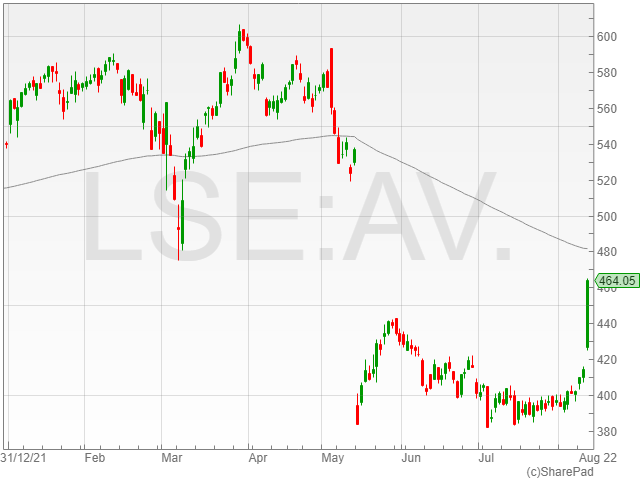
Aviva shares flew 11.8% to 463.5p in late afternoon trading on Wednesday, after the insurance company reported a 14% growth in operating profit to £829 million in HY1 2022 compared to £725 million the year before.

The group announced a 46% rise in solvency II OFG to £538 million from £369 million, along with a 27% Solvency II pro forma cover ratio climb to 213% against 186% year-on-year.

Aviva noted a 2.4% increase in general insurance COR to 94% from 91.6%.

“Sales are up, operating profit is higher, our financial position is stronger. This has been an excellent six months for Aviva,” said Aviva CEO Amanda Blanc.

“Trading has been encouraging across all our major businesses in insurance, wealth and retirement. Even so, we are very conscious of the pressures currently facing many of our customers, especially the more vulnerable.”

“In response we have launched new, low cost, insurance products, and we are increasing the range and amount of support we provide to communities, businesses and our own people during this challenging time.”

Dividend and proposed share buyback

The firm hiked its dividend 40% to 10.3p compared to 7.3p the last year, and announced a proposed share buyback programme in its FY 2022 results, pending market and regulatory approval.

“Delivering for our shareholders is at the core of our strategy. Our liquidity and capital position is extremely healthy and we are declaring an interim dividend of 10.3p, in line with our full year 2022 dividend guidance of c.31.0p,” said Blanc.

“We are increasingly confident in Aviva’s prospects and anticipate commencing additional returns of capital to shareholders with our 2022 full year results.”

US inflation falls to 8.5% on lower gas prices

1

US inflation dropped to 8.5% in July from its previous figure of 9.1%, in some desperately needed good news in the gloomy market landscape.

Inflation came in below the 8.7% analyst consensus as gas prices fell across the Atlantic, dragging inflation down, albeit still within a decades-long high.

The gas index fell 7.7% last month, offsetting a 1.1% price rise in food and 0.5% price growth in shelter, while the energy index decreased 4.6%. However, the index for electricity climbed.

The Bureau of Labour Statistics reported all items except for food and energy rose 5.9% year-on-year.

Meanwhile, the energy index spiked 32.9% over the last 12 months, while food saw the largest increase since May 1979 at 41.6%.

US Federal Reserve interest rates

The news sent markets into a wave of celebration as investors looked to a more optimistic US Fed rates hike in light of the positive inflation figures.

The FTSE 100 gained 0.1% to 7,497.2, while the Dow Jones increased 1.5% to 33,295.5, the NASDAQ climbed 2.2% to 12,776.3 and the S&P 500 rose 1.7% to 4,194.2.

“The key question that markets have been grappling with over the last month is whether the Fed will deviate from its current tightening plans ─ the so called ‘Fed pivot’. Falling commodity prices, deteriorating consumer confidence, and slowing growth could tempt the Fed to take its foot off the gas in upcoming meetings,” said Evelyn Partners wealth manager Rob Clarry.

However, Clarry cautioned investors that the Federal Reserve’s decision was unlikely to be swayed by today’s inflation figures.

“[In] our view, the main factors influencing the Fed are the labour market and inflation itself. The US labour market remains tight, which points towards continued inflationary pressures. More importantly, headline CPI remains elevated and, despite today’s fall, remains a long way from target.”

“Meanwhile, the Fed has reiterated that it’s committed to restoring price stability ‘unconditionally.’ These factors point towards the Fed continuing with its plans to further increase interest rates through 2022.”

“More substantial falls in inflation and a softer labour market will probably be required before we get any signs of the Fed changing course.”

FTSE 100 jumps with US stocks after better US inflation data

0

The FTSE 100 extended gains on Wednesday after key CPI US inflation data came in lower than expected and eased concerns over soaring prices.

US July Core Consumer prices rose 0.3% month-on-month versus an estimated 0.5% and headline year-on-year CPI rose 8.5% against 8.7% expectations.

S&P 500 futures gained 0.74% to 4,195 and NASDAQ futures surged 2.5% ,while the FTSE 100 rose 0.3%.

A lower than expected inflation reading will raise questions about the ferocity of future interest hikes and ease the pressure on households.

Aviva

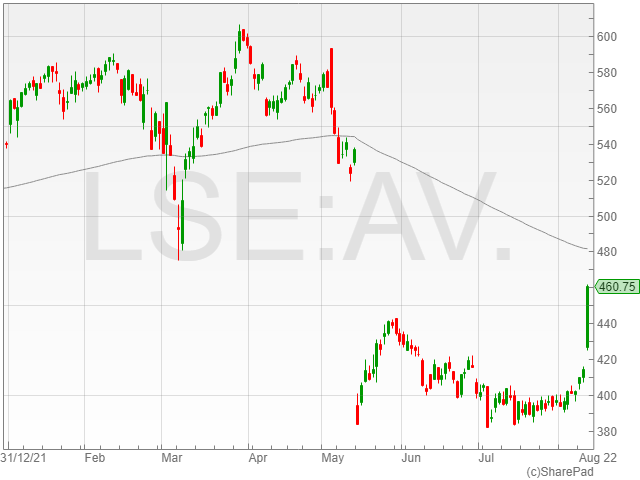
Aviva shares rose 10.9% to 459.5p after the company announced a 14% growth in adjusted operating profit to £829 million against £725 million in HY1 2022.

The firm also mentioned a 7.3% climb in General Insurance gross written premiums to £4.6 billion compared to £4.7 billion.

The insurance group noted a widened IFRS loss to £633 million from £198 million, however it said the loss was linked to adverse market movements, and did not impact capital or cash remittances.

Aviva commented it was on track to meet its FY 2022 goals, and declared a dividend of 10.3p per share, marking a 40% rise year-on-year.

The company added it was considering a share buyback in its FY 2022 results, pending regulatory and market approval.

Admiral

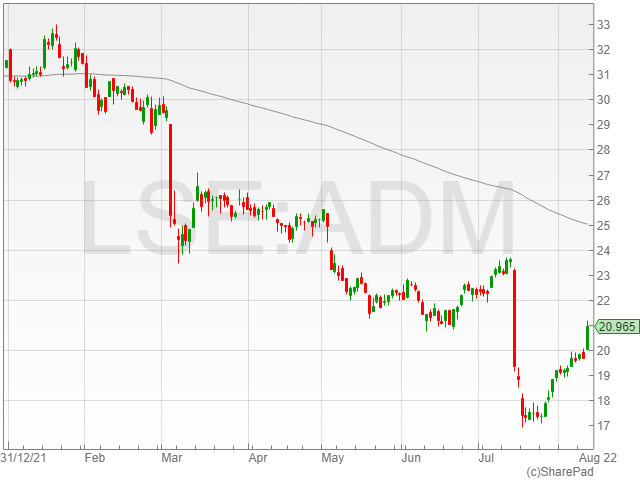
Admiral shares spiked 7.9% to 2,124 despite a 48% fall in operating profit to £251.3 million in HY1 2022 compared to £482.2 million the previous year.

The insurance group’s net revenue dropped 9% to £720 million from £790 the last year, with its tumbling results linked to higher inflation and a volatile market environment.

“A big drop in profits is unusual for Admiral but comes as no surprise if you’ve already seen recent warnings from fellow insurers Sabre and Direct Line,” said Hewson.

“Claims inflation has caused significant headaches in the motor insurance industry, fueled by used car prices shooting up, higher repair costs, fixes taking longer to complete and wages going up.”

However, Admiral announced a 60p per share dividend, alongside a 45p special dividend from the sale of its Penguin Portals comparison business.

RS Group

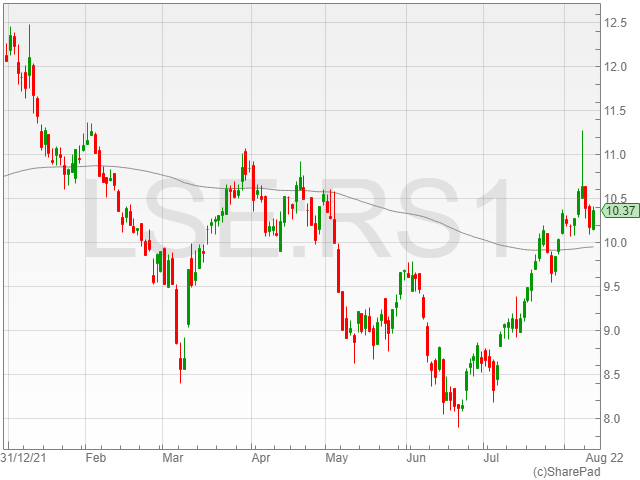
RS Group shares gained 1.9% to 1,037p after the group confirmed its intended acquisition of Mexican industrial and automation products distributor Risoul y Cia SA de CV.

The company is set to acquire the distributor for a cash consideration of $275 million on a cash-free and debt-free basis.

“We are excited about deepening our presence in Mexico and having a strong platform to expand into Latin America, a region we can see benefiting from nearshoring owing to de-globalisation and a greater focus on improving sustainability through reducing distances products travel,” said RS Group in a statement.

Hostelworld

0

Online travel agent Hostelworld (LON: HSW) recovered strongly in the first half of 2022 and bookings are getting back to pre-Covid levels. Hostelworld is moving towards sustained profitability and the profit will rise rapidly once the group passes breakeven.

In the six months to June 2022, revenues were €28m and the reported pre-tax loss was €14.7m. The comparatives are relatively meaningless because of the Covid restrictions in force during the first half of 2021. All regions are recovering with central America most far advanced and already ahead of booking levels in 2019.

There was a small cash inflow from operating activities. Capitalised development costs increased from €756,000 to €2.26m. Net debt was €6.5m at the end of June 2022.

Hostelworld generates revenues by taking a 15% commission on a booking, which is the same as the deposit. There were 16,300 hostels that produced at least one booking in the period, down 8% on 2019. There were 2.1 million net bookings in the first half.

Deferred revenues increased by €5.4m because of holidays booked that are yet to be taken with customers using the free cancellation policy option. This will unwind in the second half. That was part of the reason that marketing costs increased as a percentage of revenues. These costs have already been expensed.

Once a customer is gained then they can be highly valuable and generate additional revenues without the marketing costs. This will help to reduce the marketing costs as a percentage of revenues from 70% to nearer 50%, which is still higher than previously.

The sharp recovery in bookings is an indication of customer loyalty. Investment in social media should help to retain more customers.

Recovery

Operating costs are lower than in 2019 and holding these down will mean that more of the additional revenues after marketing costs will fall through to profit.

The momentum has continued into the second half and Hostelworld has been EBITDA positive in June and July. There will still be a full year loss, though.

The share price has dipped 4.6% to 89.5p, although it is still 30% higher than at the start of the year.

Numis forecasts a 2023 pre-tax profit of €5.4m, which is lower than some other forecasts, and that could double the following year. That would put the shares on a prospective 2024 multiple of 13. On this basis, profit would be rising much faster than revenues, indicating the operational gearing and potential for further profit growth.

Admiral shares surge despite 48% profits decline as dividend cheers investors

0

Admiral shares surged 6.2% to 2,091p in late morning trading, despite a 48% pre-tax profit decline to £251.3 million in HY1 2022 against £482.2 million in HY1 2021.

The insurance firm’s net revenue fell 9% to £720 million compared to £790 million, and its EPS dropped 50% to 67p from 132.9p the last year linked to higher inflation and a volatile market environment.

“A big drop in profits is unusual for Admiral but comes as no surprise if you’ve already seen recent warnings from fellow insurers Sabre and Direct Line,” said AJ Bell financial analyst Danni Hewson.

“Claims inflation has caused significant headaches in the motor insurance industry, fueled by used car prices shooting up, higher repair costs, fixes taking longer to complete and wages going up.”

Meanwhile, Admiral reported a 6% growth in group turnover to £1.8 billion against £1.7 billion.

The company mentioned a 14% rise in customers to 9.1 million from 8 million, with a 12% climb in UK insurance customers to 6.9 million against 6.2 million and a 13% increase in international insurance customers to 1.9 million compared to 1.7 million the year before.

Dividend

Admiral confirmed a 48% reduction in HY1 dividend per share to 60p against 115p year-on-year, however the insurance group announced a 45p special dividend from the sale of Penguin Portals comparison business.

“The Board has declared an interim dividend of 60.0 pence per share, made up of a normal dividend of 44.2 pence and a special dividend of 15.8 pence per share. The payment represents 90% of earnings per share for the first half,” said Admiral CEO Milena Mondini de Focatiis.

“The Board has also declared a further special dividend of 45.0 pence per share reflecting the final payment of the phased return to shareholders of the proceeds from the sale of the Penguin Portals comparison businesses. This payment, along with the previous two payments of 46.0 pence per share, brings the total amount returned to shareholders to just over £400 million.”

“The total interim dividend, including the further special dividend is 105.0 pence per share, made of a normal dividend of 44.2 pence per share and a special dividend of 60.8 pence per share.”

AIM movers: Afentra returns from suspension and Dekel Agri-Vision crop decline

1

Africa-focused oil and gas company Afentra (LON: AET) has returned from suspension following the publication of the admission document covering the proposed acquisition of interests in the producing Block 3/05 and the exploration Block 23 in Angola from Sonangol. The initial cost is $80.5m, with up to $50m of contingent consideration for the Block 23 interest. The acquisition cost is equivalent to $3.60/barrel – based on proved and probable reserves. In the first half of 2022, the net production from Block 3/05 was 4,700 barrels per day and it could generate $36m of cash a year at an oil price of $75/barrel. Trading in the shares had been suspended since 8 October. The share price jumped 66% to 24.25p.

Customer engagement technology provider Pelatro (LON: PTRO) has won a contract with a Middle East telecoms company with an initial value of $1m paid over three years. This means that Pelatro has visible revenues of $8m for 2022 compared with forecast revenues of $9m. The share price rose 7.95% to 23.75p.

At its AGM semiconductor designer CML Microsystems (LON: CML) revealed that trading is ahead of the same period last year. New products are set to be released later this year, but they won’t make a significant contribution until next year. A planning application has been filed for the development of excess land at the 28-acre headquarters in Essex. The share price is 4.22% higher at 420p.

Palm oil and cashews producer Dekel Agri-Vision (LON: DKL) reported a 47% decline in oil palm fruit production in July and crude palm oil production was 46% lower. Production in August is also expected to be poor. This means that Dekel Agri-Vision is not able to take full advantage of high palm oil prices. The cashew project should still start generating cash in the fourth quarter. The shares are the worst performers on the day with a 11.8% decline to 3p.  

A proposed $10m (£5.8m) placing 0.5189p a share by 88 Energy Ltd (LON: 88E) knocked the share price. Although it has recovered from its low it is still down 8% to 0.575p. A further £2.8m could be raised if there is demand. The cash will help to fund preparations for drilling of a well at Icewine in 2023 and finance new ventures. A maiden, independently certified prospective resource estimate of 1.03 billion barrels of oil (unrisked) has been announced for Icewine East, where 88 Energy Ltd has a 75% working interest.

Digital media company Digitalbox (LON: DBOX) reported a strong first half with revenues 40% higher at £1.9m and an increase in net cash to £2.4m. This is before the completion of the acquisition of the assets of TVGuide.co.uk. However, management is concerned about advertising levels in the second half. Digitalbox can still achieve full year expectations, though. The share price has fallen 2.08% to 11.75p, having been lower earlier on in the day.

TUI, OnTheBeach, and Vacation Vengeance with Alan Green

Alan Green joins the UK Investor Magazine for a seasonal Podcast focusing on the global travel industry and two UK-listed travel stocks.

Supply chain issues have crippled the UK’s travel industry in busy periods this year and we make an attempt at extrapolating travel industry woes across the wider economy.

We start with looking at TUI’s results and the impact of higher costs and their ongoing problems with high overheads. Our questions focus on their model and whether they are suited to increasingly digital holiday maker.

OnTheBeach is one such digital travel company. We look forward to their next set of results and outline the key metrics investors should keep an eye on.

We conclude with an update on ECR Minerals and the raft of recent updates from the explorer.

Musk sells £5.7bn in Tesla shares to shore up Twitter legal battle

0

Elon Musk has reportedly sold £5.7 billion worth of shares in Tesla in a bid to shore up his funds if he loses his legal battle against Twitter.

In the event the SpaceX tycoon loses the case, he would be forced to carry out his initial agreement to buy the social media platform.

Musk struck a $44 billion deal to purchase Twitter in July this year, however he soon walked away on claims that the company was untruthful concerning the number of bot and spam accounts on the site.

Twitter has since launched a lawsuit against Musk for attempting to walk away from the deal, with a trial scheduled to take place in Delaware in October 2022.

“Tesla shareholders may well be seething at Elon Musk’s latest share sale, no doubt arguing they didn’t sign up to such erratic behaviour. To be fair, they have every right to be furious,” said AJ Bell financial analyst Danni Hewson.

“Musk may argue it is better to have the readies at hand in case he needs to cough up for Twitter. If he were to lose the legal battle with Twitter and not have funds available to pay the bill, the market would assume he would then have to sell Tesla shares and the stock could plummet.”

“However, whether he sold now or down the line, the whole episode is still very annoying to Tesla investors. Shareholder would expect the value of their investment to be influenced by sales of electric vehicles and battery storage systems, not the fortunes of an entirely separate company.”

The Tesla founder currently has $30 billion in his own money linked to the deal, with over $7 billion of his funds supplied by a selection of backers including Binance, the largest global crypto exchange, and Oracle founder Larry Ellison.

Since the start of this year, Musk sold approximately $8.5 billion in Tesla shares in April, and said he had no extra sales upcoming. However, he sold 7.9 million shares between 5 August and 9 August, and currently owns 155 million Tesla shares, representing a little under 15% of the electric car group.

“In the (hopefully unlikely) event that Twitter forces this deal to close *and* some equity partners don’t come through, it is important to avoid an emergency sale of Tesla stock,” said Musk in a tweet.

The tycoon has sold approximately $32 billion in Tesla shares under 12 months, however he said he would buy Tesla stock again if the Twitter deal does not go through.

“You could argue that Musk might buy back the Tesla shares if he doesn’t have to shell out for Twitter, but whatever happens it is another black mark against the entrepreneur,” said Hewson.