How far could the FTSE 100 fall?

The FTSE 100 is currently down 3.6% so far in 2022 and although the losses of the last month will be hard to stomach, those with a UK Blue Chip oriented portfolio will have fared better than those with a more global approach. 

The strong weighting towards commodities has meant that the FTSE 100 has provided relative safety compared to overseas markets, especially the United States.

With such a strong weighting in highly valued technology shares, the S&P 500 is down 23% this year and the Tech-focused Nasdaq has shed 32%.

Indeed, the FTSE 100 is being seen a defensive play due to the exposure to miners, oil giants and pharmaceutical companies.

However, the FTSE’s outperformance doesn’t mean London’s leading index has been immune, or will be immune, to global monetary policy tightening with a backdrop of a cost of living crisis caused by soaring inflation. 

How far could the FTSE 100 fall?

With equity markets in freefall this week, investors will be questioning just how far can the FTSE 100 fall? The basis of the question will depend on a combination of economic outlook, and both technical and fundamental analysis. 

The economic outlook would suggest we have some way to go. Investor sentiment is souring with numerous predictions of recession and a Federal Reserve that seems intent on making sure the US gets there. A US recession will have global implications.

The Bank of England has been criticised for moving to slowly by not raising rates sharply enough to fight inflation, but they are walking a tightrope with deteriorating economic conditions caused by high prices on one side, and a recession induced by higher interest rates on the other.  

The situation is similar in Europe while China is fighting COVID with economic lockdowns hampering global growth.

Company Earnings

How much of the bad economic news is already priced into market will become pronounced in the upcoming round of earnings from global companies. 

The first signs of stress are visible in lay offs by US companies. US tech companies have been letting workers go at an alarming rate in recent months with Coinbase shedding 18% of their work force and Tesla cutting 10% of workers. 

The problem is very different in the UK in that companies can’t secure the people they need. This is increasing wages and denting margins, adding to pressure from rising prices and supply chain disruption.

This was highlighted just this morning by Tesco CEO Ken Murphy as he said “we are seeing some early indications of changing customer behaviour as a result of the inflationary environment.  Customers are facing unprecedented increases in the cost of living.”

How much is priced in?

Investors are quick to price negativity into markets and there is a school of thought that any upcoming economic contraction is already priced into stocks.

In addition, the FTSE 100 is dominated by commodity companies that are doing rather well in the current climate. BP and Shell posted bumper profits recently and the dynamics of oil and gas markets means the two are currently enjoying very favourable refining margins. 

So while investors are dumping housebuilding shares for fear of a slowing UK economy and housing market caused by higher rates, London’s largest companies by capitalisation are likely set to produce significant profits in the coming months.

Shell’s market capitalisation is 8x the combined valuation of the FTSE 100’s house builders which will more the offset any downside in the UK housing market.

UK banks are also a major beneficiary of higher rates and will enjoy higher net interest margins.

As demonstrated in these examples, the FTSE 100 is not a representation of the UK economy, and the fundamentals for a large proportion of FTSE 100 companies will navigate any economic downturn just fine. 

The FTSE 100’s inverse relationship with the pound will also provide support as GBP/USD trades near the lows of 2020.

Nonetheless, should general investor sentiment continue to worsen, we will likely see further short term downside in shares. This is where FTSE 100 technical analysis will come into play as equity prices are dictated by psychology and historical price action. 

FTSE 100 key levels

The key levels to note are the major psychological level of 7,000. Should this be broken, traders will be eyeing 2022 lows around 6,800.
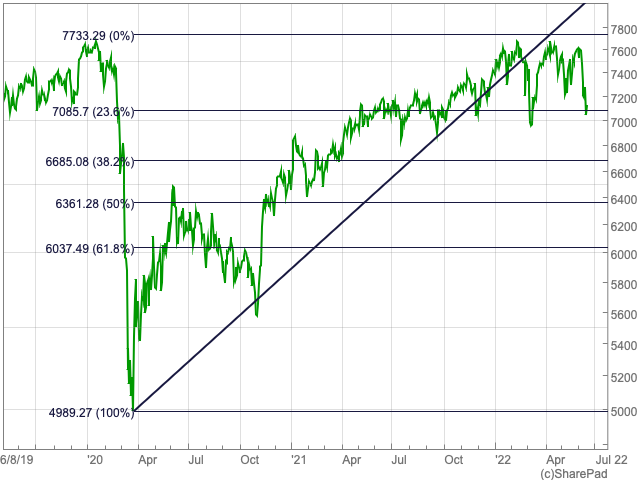
If we see a break of 6,800 the next major level is 6,685 and the 38.2% Fibonacci Retracement from the rally that began in 2020 after the COVID selloff. After this, bears will look for 6,361 then the next major psychological level of 6,000.

It is important to remember that markets can, and very often will , move a lot further than you think they will.


Future shares fly on completed acquisition of Who What Wear, trading on track

0

Future shares were up 6.5% to 1,653p in early afternoon trading on Friday following its completed acquisition of US women’s lifestyle publisher Who What Wear.

The group commented that the acquisition strengthened its position in the Women’s leading lifestyle vertical and provided the company with a larger scale and reach in North America to push its audience monetisation.

Future highlighted that Who What Wear would benefit from its proprietary technology stack and operating model to drive the platform effect.

The firm added that it had seen an encouraging start to HY2 2022 trading, which was supported by an anticipated return to audience growth as Covid-19 comparators were fully lapped and it showcased the resilience of its diversified business model.

“Media group Future pleasantly surprised the market by saying everything was going well with trading, triggering a big jump in the share price,” said AJ Bell investment director Russ Mould.

“The stock had previously been weak as investors feared its business model – making commission from product sales that originated from its online content – would suffer if consumers were cutting back on spending.”

Future noted that it continued to benefit from the effect of its diversified audiences and revenue streams, alongside its operating leverage, strong cash conversion and steady balance sheet. The group said it was on track to hit its FY 2022 financial guidance.

“I’m delighted that we have completed the acquisition of Who What Wear, which enhances our leadership position in the Women’s vertical, and delivers further scale and reach in North America, as we aim to reach 1 in 2 users online in the US,” said Future CEO Zillah Byng-Thorne.

“We continue to see positive momentum in trading with audiences back to growth. We remain confident our diversified strategy will continue to deliver and remain on track for another strong full-year of profitable growth.”

M&C Saatchi board withdraws bid recommendation

0

A sharp fall in the Next Fifteen Communications (LON:NFC) share price over the past month has led to the M&C Saatchi (LON: SAA) board withdrawing its recommendation of the bid by the marketing services company.

Next Fifteen is offering 0.1637 of one of its shares and 40p in cash for each Saatchi share. At a Next Fifteen share price of 1266p, the bid was valued at 247.2p a share.

Since then, the Next Fifteen share price has dropped to 892p and that values the bid at 186p a share.

The board is also still rejecting the rival bid by AdvancedAdvT (LON: ADVT), who along with its boss Vin Murria owns 22.3%. It is offering 2.53 of its shares for each M&C Saatchi share or 2.043 of its shares plus 40p for each share.

At 78p, this values the alternative bids by AdvancedAdvT at 197p a share and 199p a share respectively. If NAV of 96.4p a share is used, then the values are 243.9p a share and 236.9p a share.

AdvancedAdvT says that it will not increase its bid. Vin Murria will seek to be reappointed to the M&C Saatchi board if neither bid is successful.

Reaction

Next Fifteen says that it is disappointed that the recommendation has been withdrawn but it points out that the M&C Saatchi management still believes that the combination of the businesses makes strategic commercial sense.

Even though, the share price has fallen, M&C Saatchi shareholders would still own the same percentage of he enlarged group.

Next Fifteen has called a general meeting so that it can gain shareholder approval for the issue of shares required for the bid. This is held on 19 August, which is the same day as the M&C Saatchi meeting to vote on the takeover offer.

The acceptance date for the AdvancedAdvT bid is 13 August.

As 75% of the share capital is required for the bid it will be difficult for Next Fifteen to achieve that target. That means that M&C Saatchi is likely to remain independent unless another bid comes along.

Glencore operating profits estimated to hit $3.2bn

0

Glencore shares were up 2.3% to 475p in late morning trading on Friday after the mining giant announced that its operating profit for its trading division was set to exceed $3.2 billion, hitting the top end of its FY 2022 guidance.

The revised profit expectations were sparked by surging prices on the back of supply disruptions, with the price of products such as thermal coal spiking as market volatility sends costs through the roof.

Glencore added that it had revised its thermal coal benchmark from $32.8 per tonne to between $82 to $86 for the financial year.

The mining firm said its expected its average FOC thermal cost unit for HY1 to hit $75 to $78 per tonnes from $59.3 as a result of inflationary pressures linked to soaring diesel and electricity costs.

Glencore mentioned it expected more normal market conditions in HY2 2022.

Tesco fights to stay ahead of Aldi as UK sales fall 1.5% year-on-year

4

Tesco shares slid 0.4% to 248.6p in early morning trading on Friday after the supermarket announced a 1.5% fall in like-for-like UK sales for Q1 2022-2023 in its latest trading update.

The Big 4 grocer further mention that sales in the Republic of Ireland dropped 2.4% to £612 million year-on-year.

Tesco reported an overall group retail sales growth of 2% since the last year, however, on the strength of its Booker and central Europe sectors.

The supermarket confirmed a Booker sales rise of 19.4% to £2.1 billion, with catering sales up 57.4% on the addition of 13,000 new customers, and a retail like-for-like sales increase of 2.3%.

Meanwhile, sales in central Europe grew 9% to £976 million, with continued growth in market share across all three regions of 0.4% and the completion of 17 malls and one retail park driving proceeds of £200 million as mentioned in April 2022.

Tesco bank sales were up 38.8% due to the acquisition of Tesco Underwriting, alongside a recovery in card sales and travel money.

Aldi gains ground

Tesco announced a market share growth of 0.37% in the UK, with outperformance on value and volume, and raised its overall distribution of Aldi Price Match and Low Everyday Prices products by 19% since Q1 2021-2022.

However, the supermarket has lost 0.5% of its market share in the year-to-date, which seems to be getting picked up by discounters including Aldi, which has gained 1.3% market share since the start of the year.

“Aldi Price Match will become even more important as long as customers are forced into real discount mode… it’s clear that keeping its ranges wide and its prices low has to be the strategy now,” said Freetrade senior analyst Dan Lane.

“But that’s far easier said than done, and that changing customer behaviour is also revealing which tills they’re flocking to.”

“Make no mistake, inflation-induced belt tightening will have a few more households heading to a German discounter. All of the big four have bled market share this year while the challenger grocers have gained, this could only be the start too.”

Tesco CEO Ken Murphy added: “Whilst the market environment remains incredibly challenging, our laser focus on value, as well as the daily dedication and hard work of our colleagues, has helped us to outperform the market.” 

“Our material and ongoing investment in the powerful combination of Aldi Price Match, Low Everyday Prices and Clubcard Prices is removing the need for customers to shop elsewhere.”

“Although difficult to separate from the significant impact of lapping last year’s lockdowns, we are seeing some early indications of changing customer behaviour as a result of the inflationary environment.” 

Inflation bites

Murphy noted the impact of rising inflation, which is set to hit 11% in October, commenting: “Customers are facing unprecedented increases in the cost of living and it is therefore even more important that we work with our supplier partners to mitigate as much inflation as possible.”

The additional 15% surge predicted for food prices this summer has also served to put customers on edge, with Tesco scrambling to keep consumers in stores.

“Tesco is attempting to be the last of the big UK supermarkets to pass on inflation costs to customers as it looks to gain market share and use its scale to manage costs. It is also expanding the number of lines in its successful Aldi price match campaign,” said Third Bridge retail research lead analyst Alex Smith.

“Tesco’s market leadership gives it more bargaining power to negotiate down prices with suppliers. However, its relatively limited product range and fragile reputation means it can’t push negotiations too far.”

The retailer added that its outlook for profits and cash remained unchanged at the current time.

Octopus Renewables Infrastructure Trust fixes revenues on climbing energy prices

0

Octopus Renewables Infrastructure Trust shares rose 1% to 107.1p in early morning trading on Friday, after the firm announced that its NAV per 1p ordinary share was 104p on 31 March 2022.

The company reported that it had fixed pricing on a significant portion of short term output as a result of higher prices in power over the last few months, with approximately 62% of revenues to be received by its current portfolio of assets in the two-year term to 31 March 2024 now fixed.

Octopus Renewable Infrastructure Trust confirmed that 54% of revenues to be received in the ten years to 32 March 2032 were now inflation-linked.

In addition, inflation forecasts for 2022 and 2023, and power price forwards for 2022 to 2025 have climbed across the markets where the group’s portfolio of assets is based since the close of Q1 2022.

The firm highlighted that its NAV per ordinary share was calculated based on recent UK inflation consensus forecasts from the treasury, inflation forecasts published by the European Commission, fixed prices entered into since 31 March 2022 on the group’s Finnish assets, the average power market forward prices since the start of June this year, and the application of an increased discount to forward prices of 20% to 30%.

Acquisitions and ongoing projects

Octopus Renewable Infrastructure Trust announced its acquisition of the 68MW ready-to-build solar PV project Breach Solar Farm in Cambridgeshire from AGR Renewables for approximately £50 million in acquisition and estimated construction expenses.

The acquisition will also grant the company the right to construct a battery storage project which is scheduled to be built later this year, with a capacity of 50MW to 100MW.

Octopus Renewables Infrastructure Trust further acquired a 50% stake in a 12MW to 24MW ready-to-build battery storage project in Bedfordshire from Gridsource.

The transaction will be completed alongside another Octopus-managed fund and is expected to close by Q3 2022 once the lease agreement for the project site comes into effect.

The group reported a consideration of £4 million in acquisition and future construction costs.

The energy trust entered into an agreement to acquire a 7.7% stake in the Lincs Offshore Wind Farm in late April 2022, which is operated and managed Danish energy company and wind farm developer Ørsted.

Octopus Renewables Infrastructure Trust added that construction on its onshore wind farms in France, Poland and the UK were currently on track, with seven of eight turbines installed at its 24MW project in Cerisou, France. The project is scheduled for commissioning in Q3 2022.

In addition, all 12 turbines at its 39.6MW Kuslin, west Poland site have been installed, with commissioning expected in the coming weeks.

The firm said the foundation works for its 50MW wind farm in Cumberhead, Scotland had commenced, with five of 12 bases poured so far and turbine installations scheduled to begin in early autumn.

Electricity generation is reportedly set for Q4 2022 and full commercial operations are planned for Q1 2023.

“We are pleased to announce a number of developments today, including investments into ready-to build solar PV and battery projects and an update on our construction projects,” said Octopus Renewables Infrastructure Trust chairman Phil Austin.

“Our Investment Manager continues to deliver both on asset management and pipeline, actively managing our revenue streams and inflation linkage, allowing us to provide the market with new renewable generation capacity and enabling our shareholders to benefit from a diversified portfolio of impactful investments.”

musicMagpie revenue falls on disc media and books, consumer tech sales grow

0

musicMagpie confirmed a total revenue of £71.3 million in HY2 2022, representing a small decline from £72.8 million year-on-year, with its consumer technology products sector revenue up 15.9% to £46 million compared to £39.7 million and its disc media and book sales down 23.6% to £25.3 million against £33.1 million.

The technology upcycling firm highlighted resilient revenue performance despite economic headwinds which impacted the consumer sector, with continued momentum in the company’s rental subscription service.

The company said its sales last year benefited from higher levels of online shopping from consumers over the pandemic lockdown.

musicMagpie highlighted an adjusted EBITDA of £2.6 million for HY1 2022 compared to £6.2 million in the last year.

The group commented that its annual growth in outright consumer technology product sales had been intentionally tempered by the promotion of its contracted monthly subscription service as opposed to outright purchase.

musicMagpie mentioned this area of its business was expected to earn higher revenue and EBITDA over the life of a device, as opposed to a one-off sale, underpinned by contracted recurring revenue and cash flow stream which is set to become more visible in the company’s medium-term performance.

The group stated it had taken a sustainable and disciplined approach to growth in its subscriber base, with active paying subscribers now at 24,000 from 7,500 on 31 May 2021.

musicMagpie commented that the current macroeconomic volatility was impacting its business along with the majority of other companies, however the board said it was confident of achieving its FY 2022 expectations.

The pre-owned technology company said it anticipated a stronger HY2 performance from rising contributions from growing rental subscribers and projected sales growth from the recent expansion of its ‘marketplace’ channels such as Back Market, on which it launched this year.

“The economic environment facing consumers is increasingly tough and the issues of affordability and cash-flow constraints are being felt by many,” said musicMagpie CEO Steve Oliver.

“Against that backdrop, our twin proposition of giving people a way to recycle their tech products for cash, as well as our ability to sell or rent refurbished, lower cost consumer technology products, becomes increasingly attractive.”

“Whilst recognising we are in the early stages of our second half, our sales channel expansion has started well and we are confident about our short term growth and remain excited about our medium-term prospects.” 

Sovereign Metals announces Kasiya to be one of world’s largest and lowest-cost rutile producers

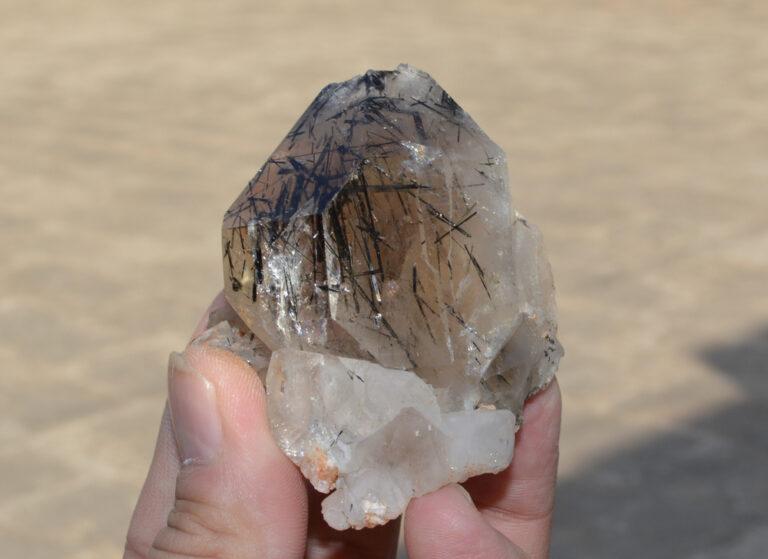
Sovereign Metals reported an update on its globally-significant Kasiya rutile project based in Malawi on Thursday, announcing that its expanded scoping study based on its April mineral resource estimate (MRE) confirmed that Kasiya would be one of the world’s largest and lowest cost producers of natural rutile and natural graphite, with a carbon footprint significantly lower than present alternatives.

Sovereign Metals added that the project would also substantially contribute to the economic and social development of Malawi.

The company highlighted a major increase in post-tax NPV by 79% to $1.5 billion and a 101% surge in EBITDA to $323 million from its initial scoping study in 2021, with 10% lower operating costs at $320 per tonne produced for a relatively small increase in capex of 12% to $372 million to first production.

The mining firm also mentioned a life of mine revenue increase of 92% to $12,038 million.

Sovereign Metals confirmed a steady state production of 265,000 in rutile and 170,000 tones in graphite from a 25-year mine life, with significant cost reductions on the back of existing infrastructure.

The group further noted high margins alongside its low operating costs, as well as extremely favourable market fundamentals due to the high demand for rutile and natural graphite in the US and EU based on high economic importance and supply risk.

“The Expanded Scoping Study demonstrates Kasiya is a Tier 1 minerals project being the largest natural rutile resource and one of the largest graphite resources in the world,” said Sovereign Metals managing director Dr. Julian Stephens.

“Both minerals are classified on the Critical Minerals lists of the US and EU and rutile is in extreme market supply deficit. In light of these factors, Kasiya is seen as a highly strategic project with the potential to be a major supplier in both rutile and graphite markets.”

“The future development of the Kasiya Rutile Project will bring substantial benefits to Malawi in terms of GDP, royalties, taxes, employment and training, local business opportunities and community development.”

AIM movers: Rockhopper Exploration, Zambeef, Wynnstay Properties, GB Group

0

Oil and gas explorer Rockhopper Exploration (LON: RKH) announced a £5.75m placing and subscription at 7p a unit (one share and of a warrant exercisable at 9p a share) after the market closed last night. This will provide working capital up until June 2023. There will also be an open offer at the same price that could raise a further £4.1m that will extend the life of the working capital. The Sea Lion project in the Falkland Islands is the main focus of Rockhopper. The share price fell 0.66p to 7.3p.

The Africa-based food producer Zambeef (LON: ZAM) share price rose 0.625p to 7.5p following its interim results and the announcement of a $100m investment strategy. Interim revenues increased from $102.5m to $148.1m, while pre-tax profit trebled to $10.4m. Zambeef plans to invest $100 million in operations over three to five years. This investment should double row cropping capacity at Zambeef Mpongwe Farm and improve production efficiency. However, the first $10m will be funded from cash flow but the debt funding for this investment has not yet been secured.

Property investor Wynnstay Properties (LON: WSP) is one of the companies that has been on AIM for the longest time, and it has a consistent track record. Good results and plans to gain shareholder agreement to buy back shares has added 75p to the share price taking it to 735p. NAV increased by 19% to 1090p a share. That means the shares are trading at a 33% discount to net assets. The total dividend was raised from 21p a share to 22.5p a share.

Identification services provider GB Group (LON: GBG) reported annual figures in line with expectations, but it is cautious about the outlook for this year. The share price has declined by 80.7p to 408.7p. Underlying pre-tax profit edged up from £56.7m to £57.1m. There are strong first half comparisons, but Peel Hunt has maintained its 2022-23 pre-tax profit forecast at £69.4m, but that means flat earnings of 20.3p a share. Numis has been appointed as nominated adviser and as joint broker with Barclays.

Disappointing trading statements from Boohoo (LON: BOO) and ASOS (LON: ASC) has hit other online-focused fashion retailers. Sosandar (LON: SOS) has fallen by 1.5p to 20.5p, while Quiz (LON: QUIZ) has slumped 1.365p to 10.385p.

The share price of subsea cable protection services provider Tekmar Group (LON: TGP) is falling for the fourth day in a row since it said it was seeking a strategic partner or buyer. It has fallen from 39p to 10.875p so far this week.

FTSE 100 dives with global equites after interest rate hikes

3

The FTSE 100 fell 2.6% to 7,081.1 in early afternoon trading on Thursday following the Bank of England’s decision to hike interest rates 0.25% to 1.25% at its meeting today, and a revised inflation estimate of 11% in Q4 2022.

European markets dropped a day after the ECB’s emergency meeting, with the German DAX dropping 2.5% to 13,137.3, the French CAC down 1.7% to 5,921.9 and the Italian FTSE MIB sliding 2.3% to 21,935.8.

Despite staging a rally last night, US stocks resumed their declines on Thursday as the US Federal Reserve’s long-predicted 0.75% rates hike to between 1.5% and 1.7% ignited fears of a recession in the US.

The prospect of further interest rate hikes both in the UK and US to help fight inflation comes just as economic indicators start to show signs of weakness.

The Bank of England held back from the sharper rise seen in the US after already moved rates higher at prior meetings, and in an effort to avoid the risk of plunging the economy into recession.

‘’Inflation risks being a slow poison for the economy, so the Bank of England is trying to take an antidote now by raising interest rates. However, it can only take a small dose at a time given the ailing nature of the economy. So, it’s stuck with a 0.25% rate increase to 1.25%, with more hikes to follow,” said Susannah Streeter, senior investment and markets analyst, Hargreaves Lansdown.

“It’s not following the prescription written by the US Federal Reserve of the more potent medicine of a steeper hike due to fears a deep recession could follow.”

Housebuilders fall

Housing stocks took a nosedive as higher interest rates finally looked set to clamp their jaws around the gravity-defying housing market.

“Higher interest rates should also eventually serve to cool the housing market, as the impact gradually feeds through into mortgage affordability,” said Mould.

Taylor Wimpey shares dipped 3.8% to 122.5p, Berkeley Group holdings dropped by 4.1% to 3,964p, Barratt Developments slid 2.8% to 485.6p and Persimmon plummeted to a sharp fall 10% to 1,974.5p.

The trading session was also unkind to retail stocks, as the interest rates hike combined with higher inflation projections sent fashion shares tumbling, with JD Sports Fashion decreasing 7.4% to 103.1p and Next sliding 5.4% to 5,716p.

Halma shares fell 4.8% to 1,894p despite record revenue of £1.5 billion and record profits of £304 million in FY 2022.

However, the company might have suffered a blow on the back news that CEO Andrew Williams had resigned from the position after 18 years, with CFO Marc Ronchetti set to replace him from 1 April 2023.

“Marc is an outstanding leader and I look forward to working with him to ensure a smooth handover,” said Williams.

Ronchetti added: “I am delighted to have been selected as Halma’s next Group Chief Executive. I am excited by the opportunity to lead such a fantastic and talented team, and to continue Halma’s long track record of creating value through our Sustainable Growth Model.”

Meanwhile, the price of oil continued to fall as a result of higher US Fed rates, with the benchmark Brent Crude at $117 per barrel.

Oil giants felt the cold blast of the rates hikes, as Shell shares dropped 4.8% to 2,162.2p and BP shares slid 4.5% to 407.8p.