UK economy shrank by 0.1% in March

0

The UK economy shrank by 0.1% in March, according to the latest report from the Office of National Statistics (ONS) reported today.

The ONS confirmed that GDP fell by 0.1% in March after no growth in February, revised down from 0.1% growth, however the economy grew by 0.8% overall in Q1 2022.

“The UK economy has now recovered to its pre-pandemic level, but momentum seems to be ebbing away, and recessionary forces are gathering. GDP came in at 0.8% for the first quarter of the year, a little below forecasts,” said AJ Bell head of investments analysis Laith Khalaf.

“What is more concerning is that almost all of the growth was registered in January, and March actually saw a 0.1% fall in GDP.”

The ONS said services fell by 0.2% month-on-month and was the central contributor to the fall in GDP last month, reflecting a significant 15.1% decline in the wholesale and retail trade, repair of motor vehicles and motorcycles sector.

The report also highlighted a 0.2% slide in production, which was slightly offset by a 1.7% growth in construction.

Consumer-facing services output fell by 1.8%, following a 0.5% growth in February, with a 0.2% growth in non-consumer facing services after a 0.1% fall month-on-month.

“Household expenditure was still positive in the first quarter, as consumers took advantage of new found freedoms to go out and spend money in shops, restaurants and hotels,” said Khalaf.

“But that was really the calm before the storm, as higher energy prices and taxes kicked in from April.”

“The retail and wholesale trade saw itself going backwards in the first quarter, with new car sales still struggling as a result of global supply issues.”

The ONS confirmed that monthly GDP was now 1.2% above its pre-Covid-19 level, while services was now 1.5% over its February 2020 level and construction had grown 3.7% since before the coronavirus.

Production declined 1.6% past its pre-Covid-19 rate, while consumer-facing services saw a 6.8% slide and all other services were 3.6% higher than their pre-February 2020 levels.

Analysts warned that the UK seems set on the road to inflation, with 2023 anticipated to bring unwelcome harsher times for the national economy.

“On top of higher energy prices and taxes, the UK economy now also has to deal with rising interest rates, which will serve to further dampen activity. Recession risk is therefore elevated, and while growth is still expected this year, 2023 looks like it will be more challenging economically,” said Khalaf.

“The markets are already looking forward to next year with some trepidation, which explains why we have seen significant falls in the pound and the FTSE 250 since the start of the year.”

The Central Bank of England recently hiked interest rates 0.25% to 1%, with experts projecting a rise to 1.25% at the next Bank meeting this summer. However, it has proven a fine balancing act for the institution to relieve a certain degree of inflationary pressure in the economy without sending the UK into a full-blown recessionary tilt.

“The central bank is raising rates to try to take some of the steam out of the labour market, to prevent an inflationary wage spiral, but clearly there is a risk the rate setting committee pushes too hard,” said Khalaf.

“Controlling the economy through tightening monetary policy is a bit like trying to move a brick with a piece of elastic. It’s hard to apply precisely the right amount of force and avoid the brick hitting you square in the face.”
Rolls Royce expects growth in Civil Aerospace

0

Rolls Royce (RR) stated that its trading has been in line with expectations since the start of 2022 and said there is no change in its guidance for the rest of the year, in a trading update on Thursday.

Rolls Royce forecasts “positive momentum” in its FY22 performance regardless of the constraints and “macroeconomic uncertainties”, as the group said it is ready for the expected growth in its end markets.

The group addressed supply chain disruptions and said it is under control as Rolls Royce has sourcing agreements and hedging policies in place to limit volatility in raw material inflation and allows for “near-term protection”. The group added that it upped its inventory to reduce the impact of the disruption.

In its Civil Aerospace segment, Rolls Royce noted a 42% increase in its large engine long term service agreement flying hours compared to Q1 2021.

Pandemic restrictions have eased allowing for travel to commence after an almost 2-year pause, however, flights to China have been operating at a lower rate as the pandemic led to another lockdown. Business Aviation’s flying hours for the group remained robust.

The group expects footfall in its shops and deliveries of original equipment associated with installed and spare engines to rise in 2022.

Rolls Royce announced a deal with Qantas for 12 Airbus A350-1000s to support Qantas’ long-haul Project Sunrise initiative which will be powered by RR’s Trent XWB-97 engines. The group added that Qantas also promised to ink a TotalCare service agreement for the engines that will operate the 12 planes.

Rolls Royce’s Defence segment reported a robust order backlog which will help in revenue growth which in turn will allow mitigation of risks associated with inflation and supply chain disruptions. However, it reiterated that its operating margins will be lower than 2021 owing to more investments toward contract wins in its Defence segment.

The group’s long term growth forecast for Defence is supported by the rise in defence budgets for governments.

Order intakes in Power Systems for the first quarter have been quite solid across the board, notably in the power generation and defence end sectors.

The first engines for power generating, construction, and industrial uses have been licenced for operation using sustainable fuels, and hydrogen engines are being developed said, Rolls Royce.

Rolls-Royce Electrical and Rolls-Royce SMR, it is New Market businesses, that keep making headway, backed by Rolls-Royce and third-party investments. 

The multi-year UK Generic Design Assessment process for the SMR design has begun, and the UK Government’s recent commitment to nuclear energy works in favour of Rolls Royce.

It conducted successful flight testing of a hybrid-electric demonstrator aircraft driven by a parallel-hybrid propulsion system at Rolls-Royce Electrical, in collaboration with aircraft producer Tecnam and engine maker Rotax.

Rolls Royce’s disposal programme is aimed to pay off debt and has a target of gaining £2bn, which they are confident they will gain from the total proceeds of the sale of ITP Aero. The sale of ITP Aero is expected to reach fruition in H1 2022 subject to regulatory approvals.

Tomorrow, May 13th, RR will hold a site visit at the Civil Aerospace facilities in Derby where visitors can have a tour and ask questions during its presentation.

The group will outline its main Civil Aerospace value drivers, showcase the operational side of the business, as well as provide a broader understanding of how the changes they have made have improved the adaptability of the business, positioning it to boost earnings and deliver long-term sustainable growth.

Rolls Royce’s medium-term forecast for Civil Aerospace will be presented, based on the decisions it has taken to strengthen cost efficiency and productivity, as well as the prevailing presumed recovery in demand, which is subject to risks given the current market and macroeconomic conditions.

Civil Aerospace’s underlying revenue is expected to expand at a low double-digit percentage compound annual growth rate starting in 2021, with an operating margin in the high single digits and trade cash flow comfortably exceeding operating profit, according to the group.

Rolls Royce will publish half-year results in August 2022.

Laura Hoy, Equity Analyst, Hargreaves Lansdown said, “Rolls Royce hasn’t been able to catch a break over the past few years, but we’re finally starting to see green shoots amid a budding recovery.”

“The Defense business continues to be a beacon of strength, and although it comes at the expense of near-term profits, it’s the right move to continue investing in future growth. Progress in New Business is also reassuring and the UK government’s commitment to nuclear energy should mean there are some new contracts up for grabs on the horizon.”

“The biggest thing on our minds is cash flow, which management still expects to be in the black by year-end. This is a key turning point for Rolls, which has seen its debt pile balloon as billions walk out the door to keep operations turning over.”

“The £2bn sale of ITP Aero will help get this under control, but ultimately we’ll need to see a business capable of standing on its own two legs before popping the champagne.”

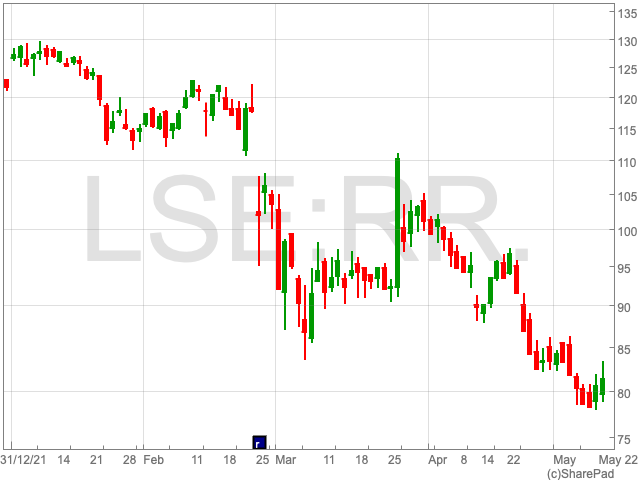
Rolls Royce shares gained 1% to 81.35p after the group announced its positive outlook for 2022.

Hargreaves Lansdown shares plummet on £36.7m revenue slide

0

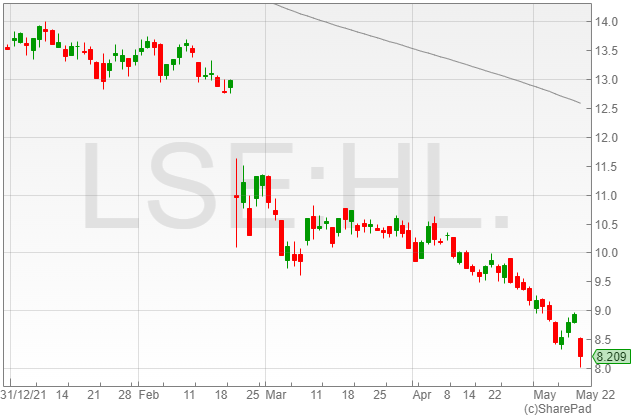
Hargreaves Lansdown shares plummeted 9.2% after the group reported a revenue decrease to £196.5 million against £233.2 million in the four months to 30 April year-on-year, in line with management expectations.

The firm saw a dramatic fall in net new clients to 42,000 compared to 126,000 on 30 April 2021, with a net new business decline to £2.5 billion against £4.6 billion in the four months to 30 April 2021.

The group said increased investor confidence on the back of the vaccine rollout grew customer inflows in 2021, with the investment of excess cash saved during lockdown boosting investment levels, in contrast to the current turbulent market environment.

Hargreaves Lansdown confirmed a total number of 1.7 million active clients from 1.6 million the last year, alongside 90,000 new clients a 92.4% client retention rate year-to-date.

The company also reported a slight decline in net closing assets under administration to £132.3 billion from £132.9 billion year-on-year.

“We are off to an encouraging start on the strategic initiatives we set out at our Capital Markets Day, which will build our capability to innovate and scale and enable us to take advantage of the growth in the wealth management sector,” said Hargreaves Lansdown CEO Chris Hill.

“Our initial focus is on driving efficiency and cost savings in our operations whilst ensuring we maintain the market leading service our clients expect from us particularly in these current uncertain times.”

Hargreaves Lansdown attributed its disappointing slate of results to the geopolitical uncertainty and unforeseen macro-economic environment, which reportedly dented investor confidence and shook up markets over the recent months.

“The challenging backdrop driven by unprecedented macro-economic and geo-political events has impacted markets and investor confidence, in turn leading to moderated flows and asset levels with net new business of £2.5 billion in this period,” said Hill.

However, Hargreaves Lansdown added that its tax year end campaign “Switch your money on” brought an extra £1.8 billion of inflows, including £600 million in the first five days of April.

The firm reported a record number of 747,000 clients contributing their ISAs and pensions into the company.

“We saw a significant step up in flows in March and April from our tax year end campaign which focused on the benefits of long-term saving and investing, with £1.8 billion of tax wrapped inflows leading to a record 747,000 clients contributing to their ISAs and pensions this tax year,” said Hill.

Compass Group shares spike on 279.8% operating profit growth

0

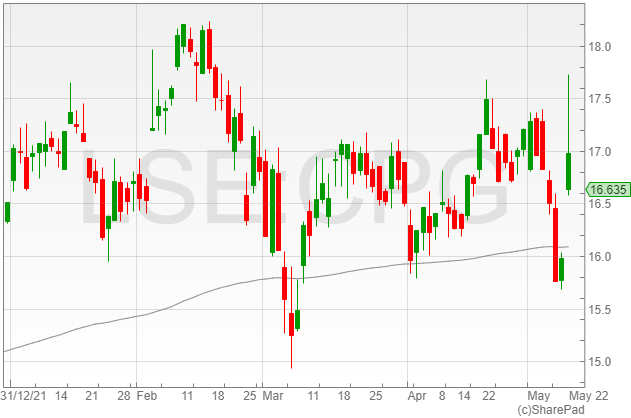
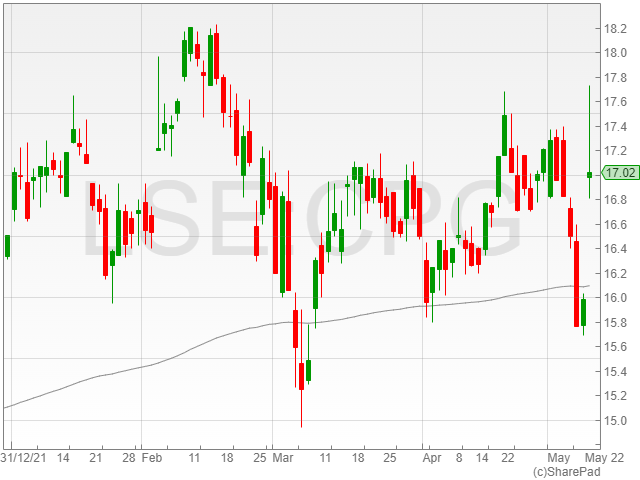
Compass Group shares spiked 7.9% to 1,703.5p in late morning trading on Wednesday, following a reported 279.8% growth in operating profit to £638 million compared to £168 million year-on-year in its HY2022 results.

The company confirmed a revenue uptick of 36.3% to £11.5 billion from £8.4 billion in HY2021, as a result of strong growth across all sectors, with high recovery rates in Business & Industry and Education.

The firm drew attention to its record new business wins of £2.5 billion over the year, with its highest-ever client retention rate at 95.8%.

“Revenue’s been boosted by new business, totalling around £2.5bn over the last 12 months, which means there’s room for things to settle comfortably ahead of pre-pandemic levels should legacy volumes get closer to a full recovery,” said Hargreaves Lansdown equity analyst Matt Britzman.

“Changing behaviours with respect to working from home mean there’ll likely be some dilution of previous volumes, but there’s still room to squeeze more from the recovery.”

Compass Group highlighted an operating margin growth of 350 basis points to 5.5% against 2%, alongside an EPS surge of 376.8% to 26.7p compared to 5.6p, and a resumed interim dividend payment of 9.4p after dividends were suspended by the company in 2021.

The group reported an operating cash flow increase of 17.8% to £663 million from £563 million the previous year.

Furthermore, the company reported a £500 million share buyback programme, scheduled for the calendar year.

The Compass Group confirmed a positive outlook for FY2022 with a raise in revenue forecast from 20%-25% to approximately 30%, and a FY2022 underlying operating margin over 6%, closing the year at around 7%.

The company said its strategy for the future included capitalising on market growth opportunities in first time outsourcing, strengthening its advantage in vending, digital solutions and ESG, and utilising its resilient business model to mitigate heightened inflation.

“We continue to recover strongly from the pandemic and have achieved the important milestone of revenue exceeding our pre-COVID level on a run rate basis. We have seen a notable improvement in Business & Industry and Education as employees return to the office and students to in-person learning,” said Compass Group CEO Dominic Blakemore.

“Net new business growth has been excellent, particularly in North America and Europe where we have mobilised a significant number of recent wins and benefited from our highest ever client retention rate.”

“Looking further ahead, we remain excited about the significant structural growth opportunities globally, leading to the potential for revenue and profit growth above historical rates, returning margin to pre-pandemic levels and rewarding shareholders with further returns.”

Small & Midcap Roundup: Tui, Marshalls, Trafalgar Property, Ilika

1

Mid and Small cap momentum continued from Tuesday with the FTSE 250 and AIM trading up 0.8% to 19,548 and 952, respectively, as investors continued to buy into the heavily over-sold indices.

CLS Holdings shares rose 7.3% to 206.5p as the REIT announced that it will maintain a progressive dividend policy, with a dividend cover of 1.2x to 1.6x EPRA earnings compared to 1.5x to 2x.

Watches of Switzerland shares gained 6% to 908p as momentum continues from Monday when the group announced that trading in the final quarter was in line with expectations and Goldman Sachs raised its rating from ‘neutral’ to ‘buy’ whilst upgrading its price target from 1,265p to 1,330p.

TP ICAP shares were up 4.6% to 119p following the company’s announcement of a 15% rise in total revenue from £483m to £556m due to growth in Global Broking and Energy & Commodities.

Global Broking generated revenue of £332m, up 3.5%, as a result of increased market volatility and robust performance in Rates, Credit and FX & Money Markets said TP ICAP.

TP ICAP reported a 5.9% rise in revenue to £107m in the Energy & Commodities segment as growth in the US in Oil and Power & Gas counterbalanced lower volumes in Europe.

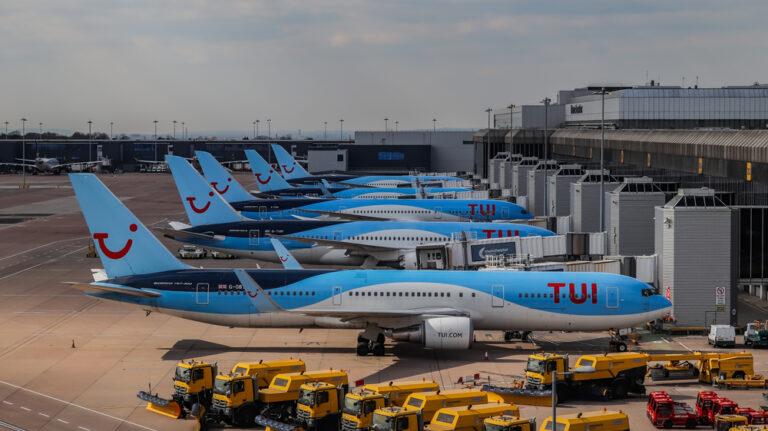
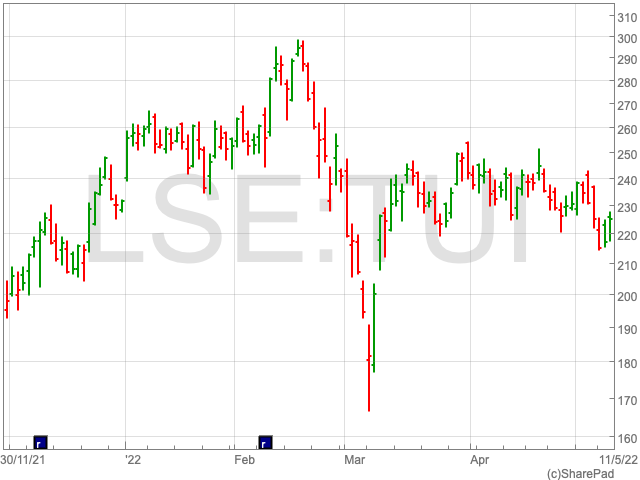
TUI shares rose 4.3% to 226.5p as the travel agent said it expects to return to “significantly positive” underlying EBIT in 2022 as the travel industry recovers.

Tui reported a pretax loss of €871m in H1 2022, which was reduced by half from €1.54bn in 2021.

“The big problem with TUI and many other travel companies is that they have large debts to pay down and costs are going up. So, while demand is picking up, getting their finances into better shape might take even longer,” said Russ Mould, Investment Director, AJ Bell.

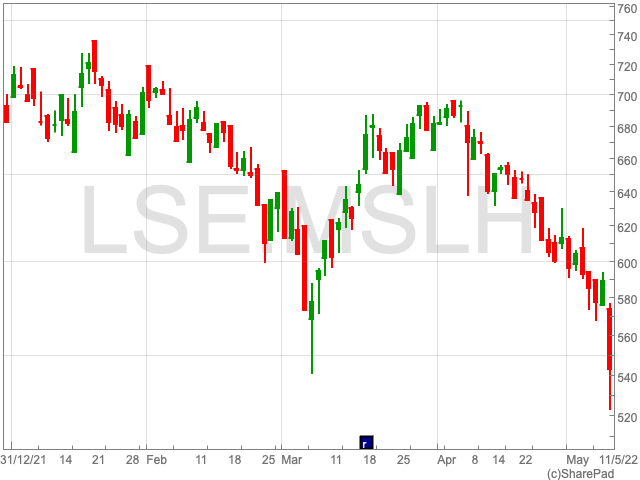
Marshalls shares sunk 8.3% to 540p after the group announced that it took out a new four-year term loan of £210m to help fund the acquisition of Marley. Marshall’s also entered into a new RCF of £160m which will mature in 4 years to support future investments.

However, Marshalls did report a 7% rise in group revenue to £201m in 2022 as sales increased by 5% due to the implementation of price increases in 2022. The group also said that the order book is healthy due to strong customer demand, however, installer capacity faced a decline as a result of more holidays being taken in 2022.

LXi REIT shares dropped 5% to 135p as the property investor agreed to buy a Secure Income REIT using a share exchange offer for 53% ownership. The merger will ensure that Secure Income shareholders receive 3.32 new LXi shares. LXi also stated that a partial cash alternative will also be offered amounting to £385m.

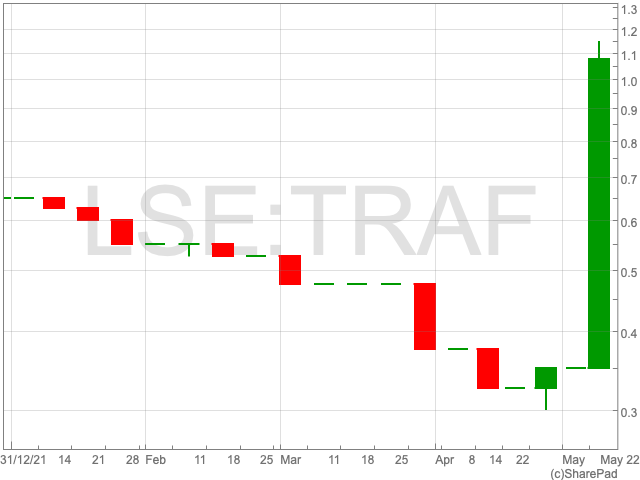
Trafalgar Property Group shares skyrocketed 215% to 1.1p after the group announced the appointment of Dr Paul Francis Challinor as an Executive Director which will take place immediately.

Dr Challinor is an early-stage pioneer and executive manager who specialises in the construction and management of indoor hydroponic vertical farming facilities. His appointment is a “key step in the development of Trafalgar’s long-planned hydroponic division” said Paul Treadaway, Managing Director of Trafalgar Properties Group.

DeepMatter Group shares soared 42% to 0.14p following the software company’s announcement of signing a second multi-year licensing and collaboration agreement with Standigm, which is a drug discovery company, based in South Korea. DeepMatter said the agreement is expected to generate £280,000 in revenue.

Sunrise Resources shares increased 11% to 0.15p after the group announced its application to the California Department of Transport for the conditional approval of CS natural pozzolan to be used in California State infrastructure projects.

IQE shares rose 10% to 31.5p once the group revealed the world’s first commercially available 200mm VCSEL epiwafer which will help expand the market for IQE.

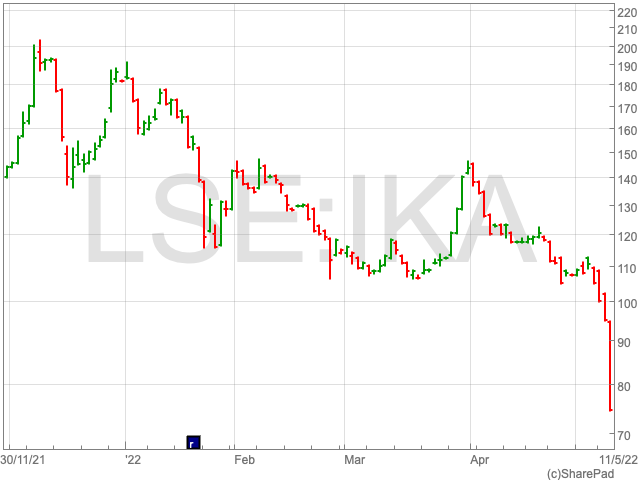
Ilika shares plummeted 21.6% to 74.5p despite the group stating that trading for 2022 in matching management forecasts. The group also said that it expects revenue of £0.5 compared to £2.3m in 2022.

However, on a positive note, Ilika thinks EBITDA loss will narrow from £2.3m to £7m in 2022 and noted a cash and cash equivalence of £23.4m compared to £9.7m in its trading update.

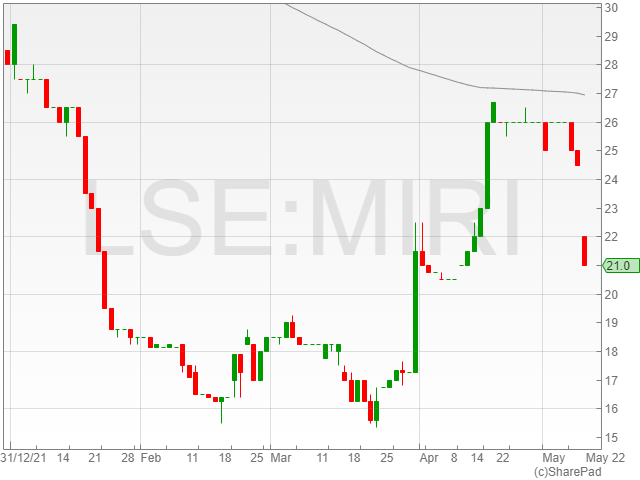
Mirriad, the in-content advertising company, saw its shares lose 17.3% to 20.3p following its trading update where the group reported a decline in revenue from £2.2m to £2m and an increase in operating loss from £9.1m to £12m due to the impact of the pandemic and investment in its growth strategy.

FTSE 100 rises on positive corporate results and strong commodities

0

The FTSE 100 gained on Wednesday following a shock to the energy market after Russia suspended its gas flow to Europe through Ukraine earlier today, which saw the price of Brent crude rise to $105 per barrel.

The supply loss sent scarcity fears surging across the market, with Shell shares rising 1.6% to 2,270p and BP shares climbing 2.2% to 414.1p on the back of rising oil prices.

The Compass Group enjoyed a shares spike of 7.8% to 1,701p, following a revenue surge of 36% to £11.5 billion from £8.4 billion and the announcement of a £500 million share buyback scheme.

“We continue to recover strongly from the pandemic and have achieved the important milestone of revenue exceeding our pre-Covid level on a run rate basis,” said Compass Group CEO Dominic Blakemore.

Analysts noted the positive results from the group, highlighting the company’s streamlined business model’s impact on its success.

“In addition to a £500m buyback and raised revenue guidance the positive news comes in the form of margin guidance, which remains unchanged despite inflationary pressures – that should see the group exit the year with underlying operating margin around 7%,” said Hargreaves Lansdown equity analyst Matt Britzman.

“It’s a nod to the group’s streamlined business in which each additional customer adds more to the bottom line.”

Commodities firms enjoyed a rise in the prices of gold, silver, copper and platinum, which increased 0.7%, 2.4%, 1.8% and 2.2%, respectively.

Rio Tinto shares gained 3.5% to 5,350p and Glencore shares increased 3.3% to 470.5p.

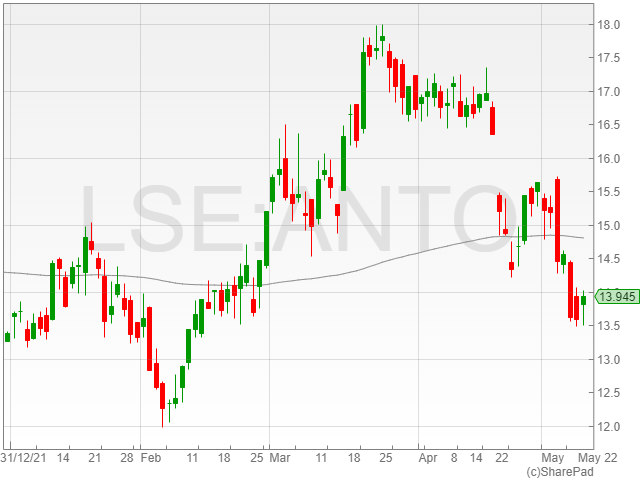
Antofagasta shares rose 3% to 1,400p after the mining group announced the pricing of $500 million in senior unsecured notes due 2032 at 5.6%, which the company confirmed would be used for debt repayment.

The firm said it expected the settlement and issue of the notes to take place on 13 May.

Airtel Africa shares fell 5.9% to 131.8p despite a 20.6% revenue surge and strong growth across all regions.

“We have delivered strong double-digit growth in revenues across all our regions and all our key services, with improving margins driven by strong cost control, and expanding cash generation which is enabling us to continue to invest in our network and services and expand our distribution, as well as strengthening our balance sheet and increasing our returns to shareholders,” said Airtel Africa CEO Segun Ogunsanya.

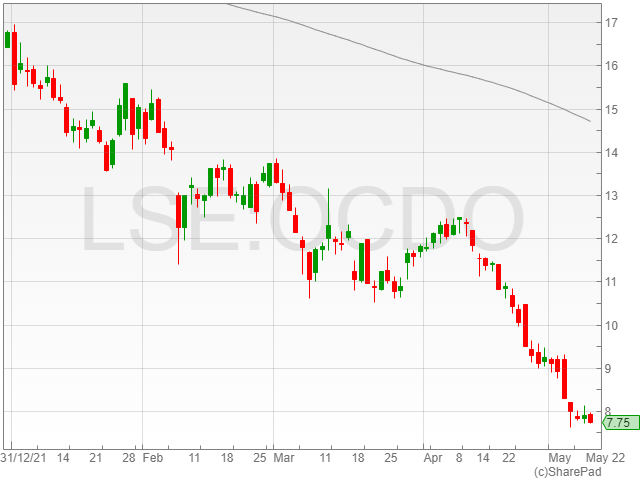
Ocado Group shares fell 2.1% after Ocado Technology CEO bought 11,063 Ocado Group shares at 9,930p, representing a value of £87,731.

Horizonte Minerals’ Araguaia nickel project construction on track

Horizonte Minerals has awarded the earthworks contract for the Araguaia nickel mine in Brazil, marking an important milestone for construction at the project.

The contract was awarded to Copa Construção S.A. and covers ‘process plant and supporting infrastructure’ at Araguaia.

We are delighted to welcome Copa as a key partner for the construction of our Araguaia Project. With Copa’s strong track record of successfully delivering infrastructure projects across the country, signing this contract enables us to commence construction at the beginning of the dry season this quarter as planned,” said CEO of Horizonte, Jeremy Martin.

The construction of the Araguaia nickel mine is expected to take 24-months and Horizonte will now work towards awarding contracts for the civil works, a powerline and electromechanical construction.

Over a projected 28-year mine life, Araguaia is set to produce 900,000 tonnes of dry ore feed per year to produce 52,000 tonnes of ferronickel, equating to 14,500 tonnes of contained nickel.

Horizonte Minerals shares gained 1.5% to 6.95p following the construction update today.

ITV, Compass Group and Vela Technologies with Alan Green

Alan Green joins the Podcast for our weekly instalment of UK equities and the key market themes driving investor returns.

In this period of equity volatility we question whether now is the time to be buying the dips, or selling the highs. This of course is a short-term trading strategy but can benefit longer-term investors with entry points.

ITV has produced a sold set of results which saw all business units enjoy an increase in revenue with the ITV Studios business posting a 23% jump in revenue in Q1.

Compass Group unveiled at £500m buy back sending shares 8% higher on Wednesday after it said the reopening of sporting venues and trends in catering outsourcing boosted sales. We look at their valuation and whether a lot of the good news is already priced.

Vela Technologies is an investment company with a portfolio of listed and unlisted technology shares. Holdings include Mode and WeShop and is awaiting a number of liquidity events in their unlisted holdings that could provide a catalyst for a re-rating of the shares. Vela is currently trading at a deep discount to the NAV of their holdings.

1.5m households predicted to struggle under rising inflation

0

An estimated 1.5 million UK households are predicted to struggle with energy and food bills higher than their disposable income from 2022-2023, according to a report from the National Institute of Economic and Social Research (NIESR).

The institute pointed out the pressure rising prices and higher taxes placed on consumer budgets, with the highest levels of difficulty projected to hit London and Scotland.

The think tank further commented that the combined impact of Brexit, Covid-19 and the war in Ukraine’s shock to the energy market would drag GDP to levels of 3.5% growth in 2022, declining in Q3 and Q4, with a 0.8% rise in 2023 and an uptick of 0.9% in 2024.

NIESR estimated that GDP would return to 1.5% by 2026, marking slow rates of growth even by recent historical standards.

The organisation also confirmed projections of CPI climbing to 7.8% in 2022, with a peak at 8.3% in Q4 2022 and an RPI inflation at 14.4% in the same period, representing the highest level since 1980.

The group said it expected real incomes to decline by 2.4% this year, along with an uptick in unemployment to 5.1%.

However, NIESR commented that it anticipated private consumption growth of 4.7% on the back of the £200 billion in estimated household savings accumulated over the Covid-19 pandemic, smoothing spending patterns and ensuring consumption rates declined by less than income.

The institute called for Chancellor Rishi Sunak to facilitate an emergency support package to soften the income shock blow, and recommended a universal credit boost of £25 per week between May and October 2022, which would cost approximately £1.3 billion.

The organisation further advocated for an additional £2.8 billion to 11.3 million lower-income households, representing a one-off cash sum of £250 per household for 2022-2023.

NIESR also criticised the Spring Statement for its failure to support regional regeneration as Covid-19 restrictions eased and society re-emerged from the pandemic, and said the disappointment in fiscal policy highlighted the need to rethink the government’s economic policy.

Mirriad Advertising shares fall on widened £12m operating loss

0

Mirriad Advertising shares dropped 18.3% to 20p in late morning trading on Wednesday, following a widened operation loss to £12 million in its 2021 final results against a £9.1 million loss in 2020.

Mirriad Advertising confirmed broadly flat revenue year-on-year of £2 million compared to £2.2 million the previous year, with a 182% US revenue increase to £884,000 as a result of sales resource investments.

The marketing firm highlighted an increased EBITDA loss to £11.6 million compared to £8.6 million in 2020, as a result of rising operating costs due to an increase in underlying staff numbers from 106 to 130 and a slight fall in gross margin.

The company confirmed a cash position of £24.5 million in net cash against £35.4 million in 2020, alongside net assets on 31 December 2021 of £24.9 million compared to £35.3 million in tracking cash holding.

The advertising group said its current trading and outlook was in line with market expectations, and highlighted strong momentum in the US with plans to grow in Europe and rework its partnership with Tencent in China, prioritising a divergence from a minimum revenue guarantee model.

“Looking at 2022, Mirriad expects to capitalise on the significant opportunities in the North American market and our launch into the programmatic realm. We will also continue to nurture strong existing relationships in Europe and manage the move away from a minimum revenue guarantee model with Tencent in China,” said Mirriad Advertising CEO Stephen Beringer.

“The clear gains in impact and reach we can deliver, all whilst consistently being found to be viewers’ preferred format, are hugely significant in the context of increasing challenges for traditional ad formats.”

The firm added that it expected to announce new board members to enhance its existing team and drive the upcoming phase of its business growth in 2022.

“I am pleased with our progress in building the number and breadth of leading supply partners working with Mirriad. This sits alongside the fact we have significantly increased active relationships and campaigns run on the demand side with blue chip advertisers and the largest agency groups in the world,” said Beringer.

“Our strategy remains very focused on driving adoption and integrating with the media buying ecosystem to make the inventory accessible to the entire market and to automate the transactions programmatically. As we build out against our key pillars, using our agreed KPIs as benchmarks, we will establish Mirriad as a standard and achieve scale.”