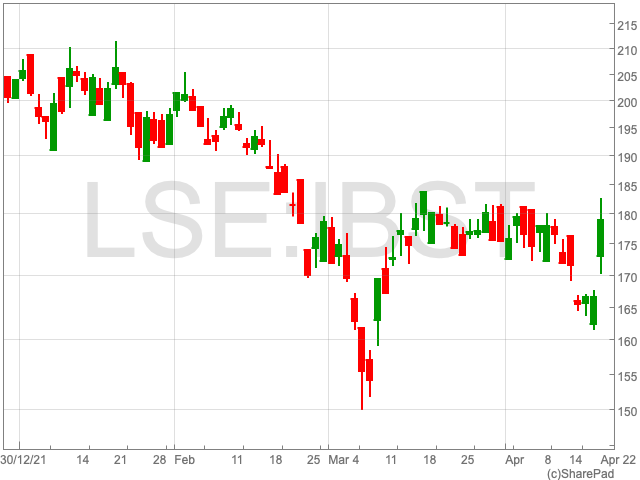
Ibstock released full-year results for 2021 in March 2022 which were reportedly strong. The momentum from those results has carried on to the Q1 trading update on Thursday for the group.
Ibstock noted in all of its end markets, demand is still strong. The group’s clay plant network is working well, with production volumes slightly ahead of its estimates and a full recovery of input cost inflation thanks to its innovative marketing approach.
Despite some ongoing supply chain problems, the Concrete division performed in line with expectations due to solid operational execution for Ibstock.
Ibstock saw significant input cost inflation, which continued to characterise the operating environment, particularly in energy, freight, carbon, and materials. In the case of energy, the company’s hedging technique has helped it to stay afloat in the face of rising prices.
Ibstock has now covered nearly all of its power needs for the first half of the year, over 75% of its requirements for the second half, and more than a third of its requirements for 2023.
Ibstock is dedicated to take the steps necessary to safeguard and maintain margins in the future.
“Brickmaker Ibstock is plagued by soaring input costs and ballooning energy bills, but the group appears to be coping well,” said Laura Hoy, Equity Analyst, Hargreaves Lansdown.
“A focus on increasing capacity and efficiency at its factories has allowed it to jump on booming post-pandemic demand. Rising raw material costs have passed on to consumers and energy hedges have offered some protection.”
“You can’t fault Ibstock’s deft management through an increasingly thorny environment. It’s no mean feat to beat expectations despite these challenges.”
The group’s growth plans are moving well, with the Atlas, Aldridge, and Nostell capital investment projects all on track, and Ibstock Futures has made significant progress in integrating the recently acquired glass-reinforced concrete (GRC) assets into its operations.
Ibstock outlined a defined route for growth and value formation over the following five years, based on a combination of investment within its core business and diverse growth possibilities, supported by a set of medium-term financial targets, at the time of its 2021 results announcement in March 2022.
Ibstock stated its intention to launch a share buyback programme of up to £30m as part of its rigorous approach to capital allocation and with estimated group leverage below the target range on Thursday.
The capital return is in addition to the £100m in committed growth investments, and the group expects strong financial capacity to sustain more growth investment and additional shareholder returns in the medium term beyond this repurchase programme.
Hoy added, “Efforts to shore up the balance sheet are also paying off—the group’s £30m buyback is evidence. This is in addition to investment in the group’s growth initiatives, including growth in Ibstock Futures, its sustainable construction arm.”
“This part of the business holds a great deal of promise in our eyes, and we look forward to seeing how its latest addition of glass reinforced concrete assets will fit into the existing business.”
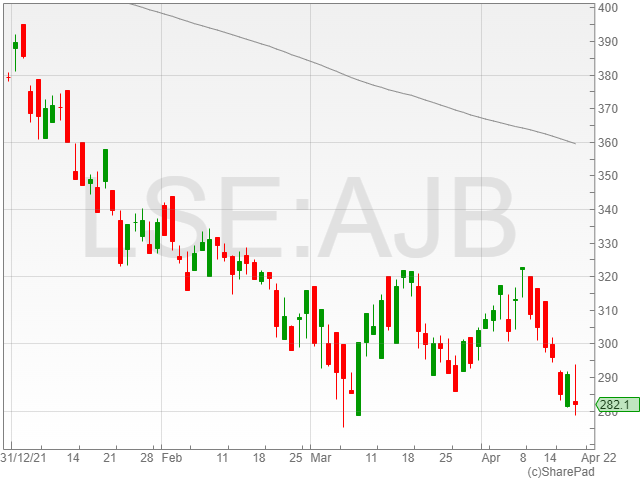
AJ Bell shares were down 3.5% to 280.7p in early morning trading on Thursday after the company reported slowing rates of investor activity in Q1 as markets dipped and the impact of the pandemic began to fade.
The investing group said that the Q2 term in 2021 was comparatively stronger as a result of consumers investing excess savings built up over the Covid-19 lockdown period.
However, the upheaval caused by surging inflation and increased market uncertainty left the firm with a weaker Q2 in 2022 as investors became less risk-happy in light of Russia’s war in Ukraine and the skyrocketing cost of living.
AJ Bell still reported decent numbers, with a total customer increase of 21% to 418,309 over the past year and a 5% uptick in Q2, bringing in total net inflows of £1.5 billion over the period.
The group pointed out that the FTSE All-Share index fell by 0.5% and the MSCI World Index fell by 5.5% during the poorly-performing term.
The investment platform noted additional highlights, with over 75% of new accounts listed as tax-advantaged pensions or ISAs, and a customer retention rate at 95%.
AJ Bell reported a slight fall in gross inflows to £2.7 billion compared to £2.8 billion in Q2 2021, and a net inflows drop to £1.6 billion against £1.8 billion.
The group confirmed a et inflows decline to £223 million over Q2 2022 compared to £311 million in Q2 2021.
“Although our D2C customers invested slightly less via our platform than in the comparative period as they assess the impact of the rising cost of living, net inflows to our advised platform remained on par with last year, which was a strong comparative. Net platform inflows of £1.6 billion is an encouraging result given the uncertain market backdrop,” said AJ Bell CEO Andy Bell.
“Our first five multi-asset funds recently passed their fifth anniversary, an important performance milestone particularly for advisers. Performance of all five funds was in the top 30% when compared against their peer groups, with four being in the top quintile.”
“Since launching these funds in 2017 we have shared the benefits of our increasing scale with customers, reducing the Ongoing Charges Figure from 50bps to 31bps during that time.”
The company also announced the launch of its new Dodl by AJ Bell investing app, which is set to expand the platform’s offerings to DIY investors with all the central tax wrappers and a streamlined investment range to help consumers pick funds and shares for their portfolios.
“This week we launched a new investing app called Dodl by AJ Bell which expands our offering to DIY investors. With an annual charge of just 0.15% and no commission for buying or selling investments, Dodl is a low-cost proposition perfectly suited to individuals who want an easy way to invest for their future,” said Bell.
“We believe it will be particularly attractive to the 8.6m adults in the UK who hold more than £10,000 of investible assets in cash, especially in the current climate of rising inflation where cash savings are being eroded in real terms due to the low interest rates available.”
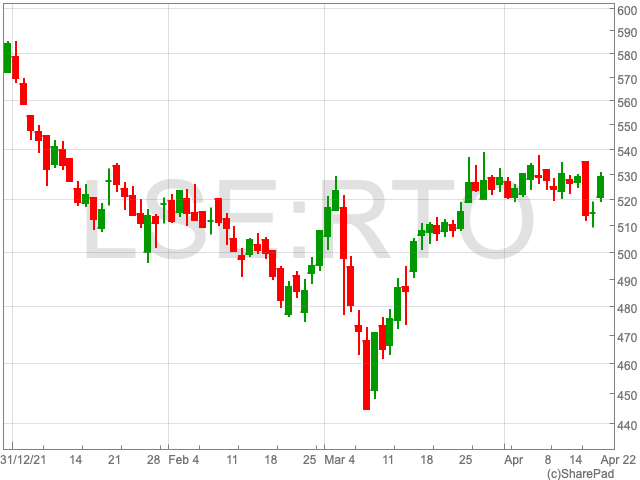
In Rentokil’s Growth and Emerging markets, ongoing revenue increased by 10.9% and 13.6%, respectively.
North America Pest Management, is Rentokil’s largest pest control company and has continued to grow at a healthy pace. The company [North America Pest Management] is increasing organic revenue by over 5% as it is driven by increased revenue from both residential and commercial customers.
Despite the ongoing impact of the pandemic in a number of countries, Hygiene & Wellbeing expanded organically by 12.9% which indicated growth in all areas, including Asia for Rentokil.
Trading conditions in Rentokil’s France Workwear division improved further in Q1 2022, resulting in 14.7% organic growth.
Rentokil’s group ongoing revenue increased by 12.3%, excluding disinfection, with 8.0% organic growth and 4.3% through acquisitions. The group’s organic growth was -2.0% including disinfection.
Rentokil expects robust disinfection revenues of £95.3m in H1 2022, as the group disclosed in its preliminary findings in March.
Rentokil forecasts its disinfection revenues to be in the range of £10m to £20m for the full year of 2022, compared to £116m last year.
In Q1, Rentokil faced inflationary increases in its cost base, such as labour, fuel, consumables, and paper. The group has continued to successfully minimise the impact of these on margins by annual price increases (APIs).
In the first quarter, total price increases completely offset input cost inflation, and Rentokil remained confident that it will be able to continue to use APIs to combat rising pricing throughout the year.
The group’s customer retention was strong in the first quarter, at 85.3%, which was consistent with the full year of 2021.
Colleague retention on a rolling 12-month basis was similar, with service colleague retention at 81.8%, equivalent to the full year of 2021, and sales colleague retention at 83.5% which increased marginally from 2021 for Rentokil.
In Q1, Rentokil acquired 11 firms in Chile, Colombia, Hong Kong, Poland, Malaysia, New Zealand, and the United States, with total annualised revenues of £20m in the year before the purchases.
The company said it will continue to build on the strength of its M&A pipeline in both Pest Control and Hygiene & Wellbeing. Rentokil remainS confident in its target expenditure of roughly £250m for 2022 on M&A.
Rentokil said the appropriate waiting period under the Hart-Scott-Rodino Antitrust Improvements Act of 1976 expired on March 15, completing the antitrust proceedings in the United States.
Rentokil added that obtaining shareholder approval from the company and Terminix, as well as the registration of the company ADSs with the US SEC and their listing on the NYSE, are all prerequisites that must be met.
Both parties are on track to complete the transaction in the second half of 2022, with a target completion date at the end of the third quarter which is owed to solid work on the remaining requirements.
As a consequence of organic growth and revenue flow through from our M&A programme in 2021, the business is operating well and in line with our expectations.
Despite record disinfection revenues in H1 and persistent macroeconomic uncertainties, Rentokil continues to expect the group to make good operational and financial improvements in the second half of 2022.
Rentokil has no activities or exposure in Russia or Ukraine, and has been unaffected by the conflict there.
During the quarter, Rentokil donated £100,000 to UNICEF from the Rentokil Initial Cares charity fund, which is assisting children and families displaced across Ukraine and neighbouring countries with crucial services including as water and sanitation, vaccination, and healthcare.
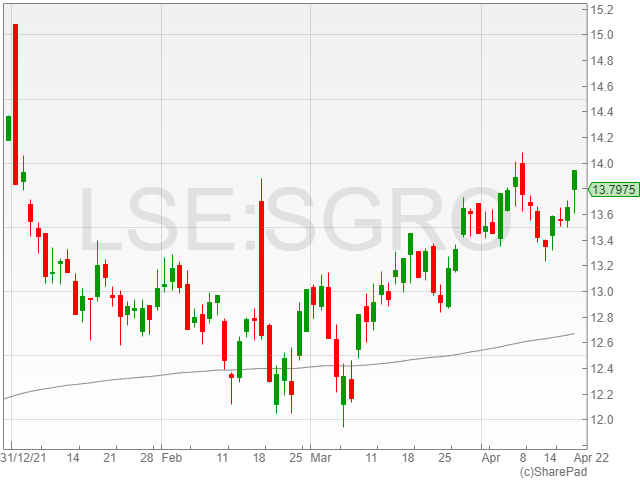
Segro shares were up 0.5% to 1,373.5p in early morning trading on Thursday, following a £7 million boost over Q1 2022 in total headline rent to £25 million from £18 million in Q1 2021.
The properties firm reported a fall in vacancy rate to 3.3% from 4.4%, and a rise in uplift on rent reviews and renewals to 23% from 12%.
However the company’s customer retention rate dipped slightly to 79% from 82% over the same term last year.
Segro commented that its capital investment continued to focus on asset development and acquisition with future growth potential, alongside its aim to source assets with short-term income and development opportunities to extend the firm’s development pipeline.
“Our business has had a strong start to the year with continued demand from a broad range of customers enabling us to capture further rental growth through rent reviews and the re-letting of space,” said Segro CEO David Sleath.
“We have significantly increased our largely pre-let development pipeline and have secured future opportunities for growth in some of our most supply-constrained urban markets through the acquisition of land, as well as income-producing assets with medium-term redevelopment potential.”
The company reported a development capex rise to £151 million in Q1 2022 from £143 million in the same period last year, and an acquisitions cost of £175 million against £37 million.
Segro further noted 1.4 million square metres of space which is currently under development, representing £108 million in new rent prospects.
The group also mentioned a net debt of £4.4 billion against £4.2 billion in Q1 2021, with its issuance of €1.15 billion in Green bonds over Q1 2022 at a blended coupon of 1.5% helping to strengthen the firm’s balance sheet and keep to a low average cost of debt.
“There have been no direct effects of the invasion on our business, however it has added to construction supply chain and inflationary pressures and we are working closely with our construction partners so as to minimise the impact on our development programme,” said Sleath.
“At the same time, we expect these pressures will further tighten the supply-demand imbalance for industrial assets and place further upward pressure on rents across our portfolio.”
“The industrial sector continues to benefit from highly supportive and long-term structural tailwinds, which are leading to sustained strong occupier and investor demand, despite the challenges that the world is facing. We are alert to ongoing geopolitical and macro-economic risks but remain confident in the outlook for our business in 2022 and beyond.”
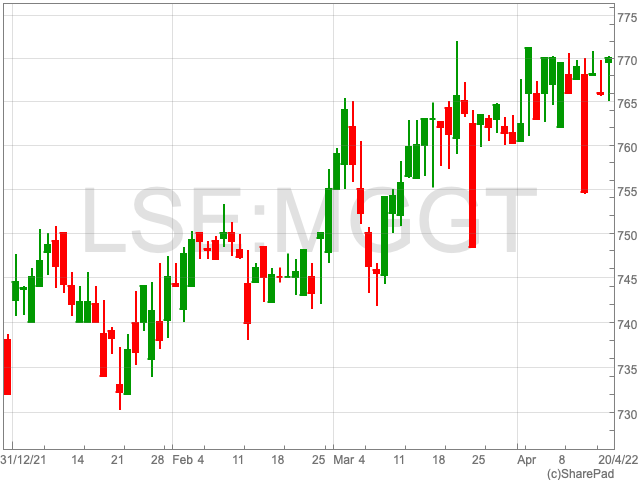
Aerospace, defence and energy company, Meggitt announced a trading update for the first quarter of 2022, where the company noted a 116% rise in civil orders on Thursday.
Meggitt recorded original equipment up 54% and aftermarket up 176%, including a good performance from braking systems across large, regional, and business aircraft in Q1 2022.
The group’s civil order intake in the quarter was up 116%, highlighting the civil segment’s recovery but still weak compared to Q1 2021.
Meggitt noted a book-to-bill ratio of 1.38x near the end of the quarter, which was higher than 1.02x at the end of 2021.
On an organic basis, Meggitt’s group revenue increased 5% in the first quarter of 2022 compared to Q1 2021, indicating the upward trajectory in civil aircraft and growth in energy. However, group revenue remained 23% below pre-pandemic times.
Meggitt’s revenue increased by 25% in civil aerospace, with original equipment and aftermarket revenue increasing by 11% and 37%, respectively.
The regional jet revenue increased by 65%, while big and business jet income increased by 40% and 13%, respectively, in the civil aftermarket for Meggitt.
The effects of inventory destocking and weaker orders from the US Defense Logistics Agency in the aftermarket contributed to a 16% drop in defence income compared to Q1 2021 for the group.
Meggitt’s energy revenue increased by 27%, with its Heatric division seeing particularly strong growth.
Meggitt said the European Commission approved Parker-proposed Hannifin’s acquisition on April 11, 2022, subject to full compliance with Parker’s undertakings, including the disposal of Parker’s Aircraft Wheel and Brake division. The deal is still on track to close in the third quarter of 2022.
Outlook
Meggitt is not offering financial guidance for 2022, as previously stated since the group is in an offer phase under the UK Takeover Code and is unable to comment on projected performance in comparison to any analyst projections that may be available.
Credit Suisse Group expects to see losses in the first quarter of 2022 as a result of increased legal provisions, slower commercial activity, and the consequences of Russia’s invasion of Ukraine announced the Swiss bank on Wednesday.
The bank is still recovering from billions in losses in 2021, which led to a top-level management shake-up, and it is facing new compliance and risk-related investigations.
Provisions for a variety of previously announced legal matters, many of which date back more than a decade, will climb by over 600m Swiss francs to total around 700m francs, according to Credit Suisse.
Last month, a Bermuda court found that Georgia’s former prime minister and his family were owed “substantially in excess of $500 million” in damages from Credit Suisse’s local life insurance unit owing to fraud.
The impact of Russia’s invasion of Ukraine would have a negative impact on results of 200m francs in negative revenue and reserves for credit losses.
According to Credit Suisse, the first-quarter results will include previously disclosed losses of roughly 350m francs related to a drop in the value of its 8.6% stake in Allfunds Group.
It stated that weaker business activity and a decrease in capital market issuances had harmed the underlying earnings.
These losses would be somewhat offset by a recovery of roughly 170m francs in reserves for claims against the bankrupt investment fund Archegos, as well as real estate gains of around 160m francs, according to the company.
In earnings due on April 27, it said the group “would expect to report a loss as a consequence of this increase in reserves,” without being more specific.
Credit Suisse shares fell 1.7% to CHF 7.17 after forecasting losses in Q1 2022.
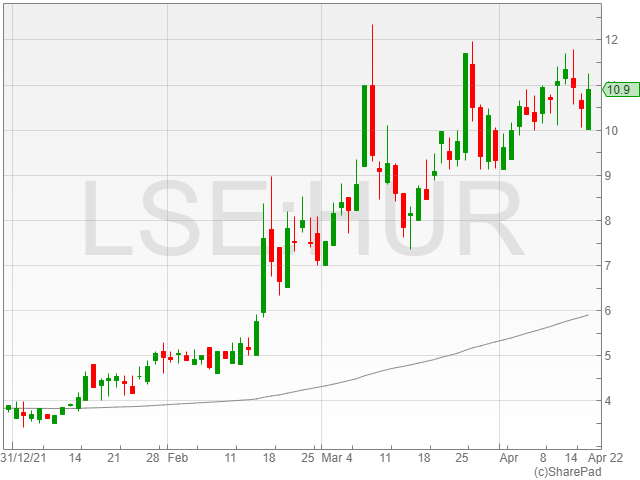
Hurricane Energy shares were up 3.2% to 10.8p in early afternoon trading on Wednesday after the company released the latest update for its Lancaster field operations from March, highlighting a free cash balance of $106 million compared to $71 million at the close of February.
Hurricane Energy said that its Lancaster operation was producing 9,150 barrels of oil per day from its P6 well alone, with an associated water cut of 43%.
The group’s 28th cargo of Lancaster oil was lifted on 22 March and totalled 524,000 barrels.
According to the company, the cargo was priced by reference to the average of the past five days of the dated Brent crude quotes for March at $116 per barrel, with the net revenue reportedly coming in at $60.5 million and the next shipment scheduled for departure in late May this year.
The firm noted a net movement of $9.4 million from free cash into restricted funds, following the energy firm’s agreement of the Aoka Mizu FPSO Bareboat Charter extension on 25 March.
Hurricane Energy mentioned that $78.5 million in Convertible Bonds remained outstanding, and are due in July this year.
The group commented that net free cash provides a helpful measure of liquidity once it has settled its immediate creditors and accruals, alongside recovering amounts due and accrued from joint operation activities and outstanding amounts from crude oil sales.
Hurricane Energy confirmed that the net free cash does not take into account future liabilities which the firm has committed to, but have not yet been accrued, meaning that not all of the net free cash will be available for repayment of the leftover outstanding Convertible Bonds once they reach maturity in July.
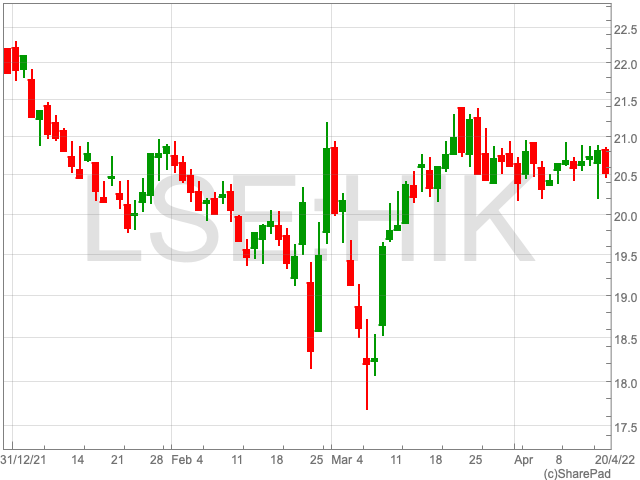
Hikma Pharmaceuticals, a multinational pharmaceutical company, announced on Wednesday that it has received preliminary approval from the US Federal Trade Commission (FTC).
The company will now work to complete its previously announced acquisition of Custopharm from Water Street Healthcare Partners on September 27, 2021.
The parties have now received all necessary regulatory approvals to complete the deal. Hikma will make another announcement after the transaction is completed.
Tesco has long been one of the UK’s stalwart institutions, and has remained at the top of the food chain as one of the country’s “Big 4” grocers, alongside Asda, Sainsbury’s and Morrisons.
However, despite Tesco’s sparkling financial results for the last year, the supermarket warned shareholders of its widened profit guidance for the coming year as Russia’s invasion of Ukraine, the rising energy price cap and the spiking rate of inflation lead to a cost of living crunch which risks driving customers out of Tesco, and into the aisles of its discount competitors.
Tesco Financial Results
Tesco enjoyed shining financial results in its report for 2021-2022, with a profit of £176 million after a loss of £175 million in the previous year, along with a revenue of £922 million against a top line of £735 million the year before.
The supermarket also noted a 2.5% increase in Group sales to £54.7 billion against £53.4 billion in 2020-2021.
Russia’s war in Ukraine has sent the UK economy into a tailspin, with goods and services including oil, food and housing all caught in the chaotic fallout. This has been reflected in the Tesco share price which is down 9% so far in 2022.
The UK energy price cap also rose 54%, tacking on an average of £700 to the energy bills of British households and adding to the burden of climbing food prices which left consumers between the stomach-churning options of heating or eating in the middle of a cold spring snap.
Inflation hit a rate of 7% in March 2022, the highest level since records began in the 1990s, and the pain is only set to get worse with a peak of over 8% inflation in the dead of winter this year.
The Group has warned that a variety of factors including post-lockdown customer activity and cost inflation would contribute to its widened profit guidance, along with the supermarket’s significant investment to retain its market price position.
The surging cost of living might just create the ideal opportunity for its lower-priced competitors to step in and dull the burnished glow from Tesco’s shares.
Discounter Diversion
Grocery inflation reached a peak of 5.2% in March, according to data from Kantar, which saw customer levels at discount stores surge.
Longstanding discount giants including Lidl and Aldi reaped the benefits of tighter belts on customers, with Lidl earning a 6.4% market share and Aldi soaring to an 8.6% slice of the supermarket pie, less than a mere 1% from Big 4 player Morrisons.
“More and more we’re going to see consumers and retailers take action to manage the growing cost of grocery baskets,” said Kantar head of retail and consumer insight Fraser McKevitt.
The fact that this trend can already be spotted before the full impact of rising inflation has hit consumer wallets bodes poorly for the grocery giants across the UK.
The recent downturn in household budgets has trimmed customer spending down to its bare bones, and is eating into the basic necessities of living.
Tesco Shares Valuation
The grocer’s current price-to-earnings ratio is 12.3, with a forward price-to-earnings ratio of 12.6, which indicates that the group is projected to produce tepid profit growth moving into 2022-2023.
The predicted growth hardly leaves room for bounding optimism over the company’s prospects, and with fairly good reason in light of the surging cost of living in recent times.
One would think the Tesco share price is set to struggle this year as the company fights to maintain, let alone grow, its customer base.
Shell shares have enjoyed solid gains over the past 12 months with macro-economic pressures providing an ideal environment for earnings growth.
Since February 2022, sanctions and bans on Russian oil supply along have provided energy stocks with higher oil prices and expectations of higher earnings. This was a welcome relief to oil firms after the pandemics latest strain, Omicron, resulted in lockdowns across the globe and halts in production hurting oil prices, and in turn hurting Shell.
However, the oil and gas company’s shares have gained 31% year-to-date as curbs on oil imports from the world’s second-largest exporter, Russia, caused inflationary pressures which boosted the price of oil across the globe.
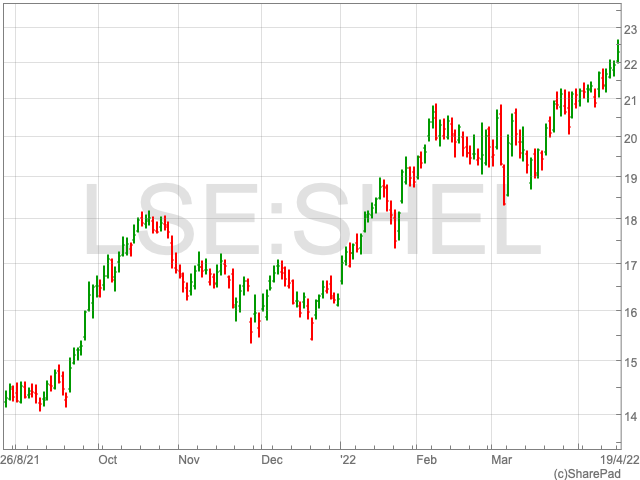
Shell has the largest market capitalisation on the FTSE 100 with a market cap of £168bn as of Tuesday. The Shell share price six month low was 1,556p in late November 2021. However, since then the Shell shares have consistently produced respectable gains.
Shell Recent History
September
Before September 2021, Shell shares were moving with relative steadiness. However, a series of events have helped boost the Shell share price higher over the last 6 months.
The facility in Rotterdam was amongst the largest of its type in Europe and was located at Shell Energy & Chemicals Park Rotterdam, formerly known as the Pernis refinery.
The facility is capable of producing 820,000 tonnes per year of sustainable aviation fuel and diesel from waste, where aviation fuel is expected to produce more than half the output capacity of the facility.
West Delta-143 is a transfer station for production from Shell’s assets in the Mars corridor in the Mississippi Canyon area of the Gulf of Mexico to onshore crude terminals.
During the same period, Shell announced the sale of its assets in the Permian Basin of the US to rival ConocoPhillips for $9.5bn. The proceeds from the sale would be used towards a $7bn payout to shareholders and strengthen its finances which gave the shares of the company a boost.
Amongst disposals, the company’s subsidiaries also completed the sale of upstream assets from Shell Egypt NV and Shell Austria GmbH in Egypt’s the Western Desert to Capricorn Egypt and subsidiaries of Cheiron Petroleum for 50% each.
Overall, in September, despite losses created through hurricane damage in the US, the company’s disposal of assets helped the group’s overall share price performance, and stock kicked off what would be a sustained uptrend.
October
October disclosed Q3 results for the company which included the damages caused by Hurricane Ida on the group’s assets in the Gulf of Mexico. The damages amounted to £400m and were expected to hurt Shell’s earnings in Q3 2021.
Shell expected the Upstream segment to take the biggest hit, with adjusted earnings to fall by $200m-$300m. Production in the Upstream segment is expected to see a 4.7% decline to 2m- 2.1m barrels of oil equivalent per day (BPD) in the third quarter.
The group expects Oil Products to be lowered by $50m-$100m and Chemicals to take a $100m hit.
In mid-October, Brent Crude reached $84 a barrel for the first time in 3 years lifting oil stocks including Shell.
Shell released its Q3 results in late October where the company reported a loss attributable to shareholders of $447m compared to a profit of $489m in 2020 due to pressure from activist investors.
The oil and gas company saw a decline of 200,000 BPD from Q2 2021 to 3.1m BPD in the third quarter. However, Shell pledged additional returns to shareholders following the sale of its Permian Basin assets amounting to $7bn which restored investor faith in the shares.
November
Shell shares were steady through the first couple of weeks in November despite the company announcing the re-commencement of operations at its Maras and Ursa platforms in the US Gulf of Mexico and had started exporting oil and gas through the West Delta-143 A facility.
The company also announced that 100% of the Shell-operated output in the Gulf of Mexico will resume online before expectations once Mars and Ursa are producing optimally.
Around mid-November, Shell announced that it plans to simplify its share structure and change its name to Shell PLC from Royal Dutch Shell. Instead of the ‘A’ and ‘B’ share structure, the company planned for a conventional single share structure to allow for an ‘acceleration in distributions by way of share buybacks, reduce the risk for shareholders, and let the company manage its portfolio with greater flexibility’.
Shell shares began to rise again from the start of December 2021 with its first announcement for the month being the completion of the sale of its assets in Permian to ConocoPhillips for $9.5bn in cash.
The company commenced the first tranche of share buybacks following the sale of its Permian business, coming up to $1.5bn right after the sale was completed which were later cancelled. This buyback is part of the $7bn shareholder distributions pledged by the company in September.
Plans to move to London for the corporation were set around mid-December followed by the company announcing the acquisition of Savion.
Amongst other expansion strategies, the company faced contract renewals and extensions around late December with companies such as Smart Metering Systems. The company also signed an agreement with the government of Oman for gas production at the Saih Rawl field.
In December, the company also pulled out of its plan to develop the Cambo oilfield in the North Sea near the Shetland Isles due to criticism from activists leading to investors becoming worried. However, the company does rethink this move later on in 2022.
Adding to news that may upset investors, a South African court banned Shell from conducting energy exploration using seismic waves of a touristic stretch of coastline.
Year to Date
The start of 2022 was still dealing with the pandemic which hurt manufacturers worldwide as lockdowns were implemented to curb the widespread Omircon variant along with supply issues impacting oil prices.
Adding to the debacle of 2022 was the Russian invasion of Ukraine which played the largest role in the volatility that Shell shares have seen this year.
Shell began the year with a confirmation on continuing the share buyback programme “at pace”, despite seeing a slight hit on oil products demand due to the Omicron variant.
During the end of January, Shell started operations of its first hydrogen electrolyser in China through its joint venture with Zhangjiakou City Transport Construction Investment Holding Group. The group ended the month by finally unifying its shares.
The second month of 2022 saw the start of the war and Shell reported its Q4 2021 results along with its final report.
Shell had a $29.8bn pretax profit in 2020, compared to a $267bn loss in a Covid-affected 2020. Pretax earnings increased from $1.2bn to $16.3bn in the fourth quarter.
The company’s adjusted earnings in Q4 increased to $6.4bn, up from $393m in 2020. Shell’s Integrated Gas division drove the increase, which was up 55% from $4.1 in the previous quarter. Adjusted earnings for the year surpassed the market consensus of $18bn, up dramatically from $4.9bn in 2020.
Average liquid prices rose to $77.75 a barrel in Q4, up from $68.04 a barrel in Q3, boosting the Integrated Gas, Renewables & Energy Solutions unit.
Shell also increased its annual dividend by 37%, from $0.6530 per share in 2020 to $0.8935 per share in 2021. The company’s Q1 2022 dividend will be increased to $0.25 per share, up from $0.24 in Q4 2021.
Meanwhile, Q4 output was a bit of a mixed bag. Production of integrated gas declined to 927,000 BPD in the fourth quarter, down from 938,000 in Q3. The first quarter of 2022 is expected to produce between 760,000 and 820,000 BPD.
Upstream output increased by a quarter to 2.16m BPD, up from 2.08m Q3 figures. The range for the first quarter is between 2m and 2.2m.
Following Russia’s invasion of Ukraine, Shell said that it will withdraw its joint ventures with Russian energy major PJSC Gazprom, as well as its involvement with the Nord Stream 2 pipeline project.
Shell will sell its 28% ownership in the Sakhalin-II liquefied natural gas facility, its 50% stake in Salym Petroleum Development NV, and its 50% stake in the Gydan energy venture, among other things.
The Salym JV is focused on the development of the Salym fields in western Siberia’s Khanty Mansiysk Autonomous District, while Gydan is a joint venture between Gazprom and Shell for the exploration and development of a block in northwestern Siberia’s Gydan peninsula.
Shell was also one of five energy companies that agreed to offer funding and guarantees for up to 10% of the estimated cost of Nord Stream 2.
Shell had announced that it will stop buying Russian crude on the spot market and close its service stations, aviation fuels, and lubricants activities in Russia.x
Following the invasion of Ukraine, the UK business also apologised for purchasing a cargo of Russian oil which gave hope to ethical investors.
In early January, Shell and Iberdrola SA’s ScottishPower joint venture won multiple bids to develop 5 gigawatts of floating wind power in Scotland as part of Crown Estate Scotland’s ScotWind Leasing bidding process.
In late January, Shell sold its 50% interest in Deer Park Refining Partnership for $596m, in a combination of debt and cash.
At the end of March, the company began production at subsea development PowerNap which is located in the US Gulf of Mexico. The development is expected to produce 20,000 BPD at its peak. The company also obtained an extension to its license on the Cambo oilfields from the UK government.
Shell Share Price Valuation
Shell has a market capitalization of £168bn and its shares have gained 31% YTD.
In the last 6 months, Shell shares have increased 25% with the stock seeing a 2% rise to 2,232p on Tuesday.
Shell has a forward P/E of 6x with a trailing P/E of 14.2x and a ROCE of 8.6x.
The company has a dividend yield of 3.1x and a cover of 2.3x which may mean better dividends for investors in the future can be expected.
Shell’s Outlook
Shell is well spread across the globe to withstand Russia’s sanctions and the problems it caused for the company.
With the Shell share price on the rise since the start of 2022, it’s easy to think that investors who are yet to buy Shell have missed the boat. However, with the booming commodities market and possibility of higher dividends in the future, investors may have scope for decent returns in the near future with an allocation to Shell shares.