Bunzl sees revenue climb 13% in Q1

0

Bunzl is a specialist international distribution and services group that recorded a 13.2% rise in revenue on Wednesday when the company announced its Q1 2022 results.

The distribution and services group noted the group’s revenue rose 13.2% at constant exchange rates and 12.5% at real exchange rates in Q1 2022 as a result of its ‘diversified and resilient business model’.

At constant currency rates, underlying revenue growth was 11.0%, primarily due to inflation, with a 1.7% revenue decline due to fewer trading days than Q1 2021. At constant exchange rates, acquisitions contributed another 3.2% to growth.

The 11% underlying revenue growth for Bunzl was led by strong momentum in the base business, which provided 17% growth and benefited greatly from inflation.

The predicted drop in sales from the top eight Covid-19 related products, which reduced underlying revenue by 6% due to product deflation compared to Q1 2021, somewhat mitigated the momentum gained from inflation.

Inflation remained notably supportive of our businesses in North America, while inflation and the recovery of the base business drove extremely good growth in the UK, Ireland and Continental Europe compared to the preceding year.

Bunzl’s Outlook for 2022

The group’s recommendations have not changed.

In 2022, the group expects moderate revenue growth at constant currency rates, driven by the impact of recent acquisitions and supported by a slight increase in organic sales.

The further improvement of the core business is projected to be slightly offset by sales of Covid-19-related items returning to normal.

In addition, the company forecasts its operating margin to be slightly higher in 2022 than in previous years.
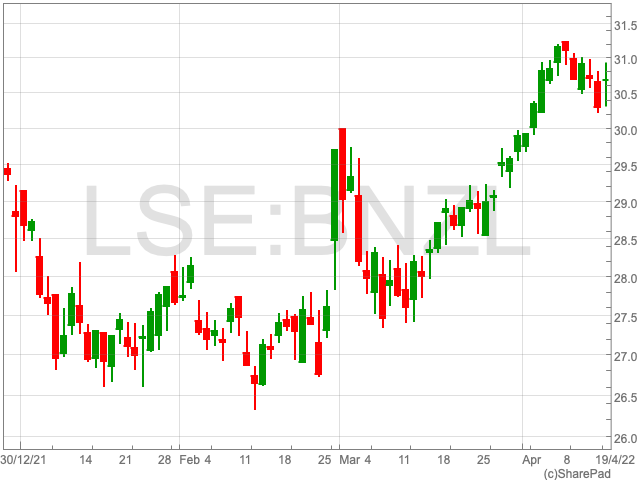
Bunzl YTD Share Movement

“Our entrepreneurial teams have continued to deliver good growth through a combination of passing on substantial inflation and volume growth, supported by recovering markets and with our performance over the last two years further strengthening our competitive position,” said Frank van Zanten, Chief Executive Officer, Bunzl.

“Our diversified portfolio remains a key determinant of the strength and resilience of our performance.  We continue to focus on delivering our long-term strategic objectives that will drive further compounding growth. Our acquisition pipeline is active and supported by our strong balance sheet.”

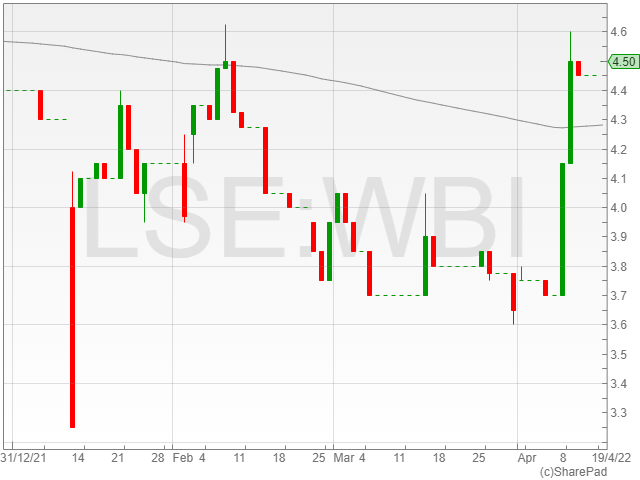
Bunzl shares gained 0.26% to 3,075p after the company reported its Q1 results on Wednesday.

Velocys advances sustainable fuels tech

0

Velocys, a sustainable fuels technology business, signed a deal with a European renewable fuels developer on Tuesday to provide preliminary engineering services for a project that is still in the planning stages.

While the revenue for this stage of the project is negligible and the project’s progression to material revenues is yet to be determined, the agreement expands the company’s customer base and demonstrates Velocys’ ability to move its pipeline of potential global customers toward commercial contracts.

While the deal would generate little money, Velocys claims it will “extend” its customer base. This is also in line with Andy Bensley’s goals for the company’s business development division.

British Airways (BA) has agreed to extend the UK Altalto project Joint Development Agreement and the Option Agreement for BA to buy 50% of Altalto Ltd by one year, until March 31, 2023.

The original option was signed on May 12, 2020, and it was extended for the first time on March 30, 2021.

Velocys provides a technology solution to its customers that enables the commercial-scale synthesis of sustainable synthetic fuels from a variety of waste sources, including municipal, commercial, and forestry waste.

The only commercially accessible alternative to fossil aircraft fuels is sustainable aviation fuel or SAF.

President Biden recently emphasised the necessity of sustainable synthetic fuels derived from bio-based feedstocks as part of the US aviation decarbonisation plan.

Increased demand for Velocys technology to ramp up commercial-scale production of sustainable synthetic fuels to speed the global clean energy transition and boost host country fuel independence is growing the company’s customer pipeline.

Velocys

Velocys is a startup that develops sustainable fuels technology and is traded on the London Stock Exchange’s AIM market with “VLS.L” as the ticker symbol.

For 18 years, the company has developed and demonstrated its Fischer-Tropsch technique, which allows for the synthesis of drop-in fuels from a variety of waste sources.

The group is actively working on initiatives in the United States and the United Kingdom to develop fuels that reduce greenhouse gas emissions in aviation and transportation.

Velocys’ revenue derives from licencing its technology and providing technical and project services to its reactors and catalysts based on its unique expertise.

The company focuses on providing end-to-end technology solutions to partners, site owners, and third-party developers globally.

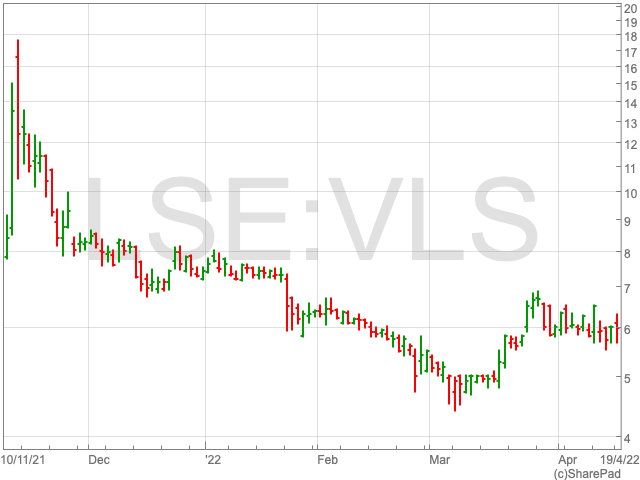
Velocys’ shares were trading down 0.25% to 6p in late afternoon trade on Tuesday.

Kainos Group shares fall despite strong balance sheet and products pipeline

0

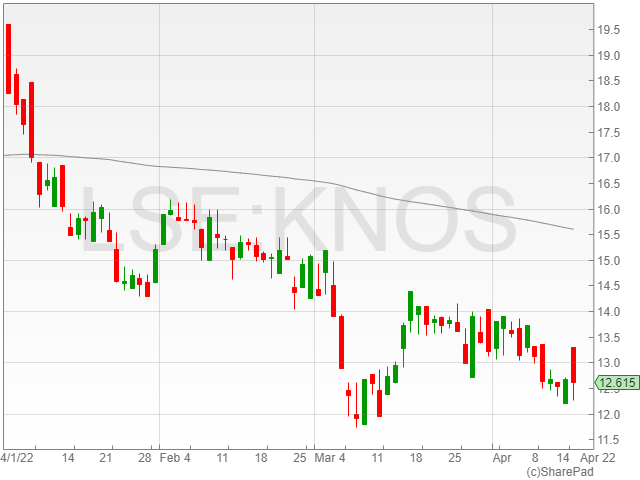
Kainos Group shares were down 0.3% to 1,263p in late afternoon trading on Tuesday, despite the company’s strong products pipeline and balance sheet in its latest trading statement.

The group confirmed that its board expected revenue and adjusted profit to fall in line with current projections, and that its international engagements have grown in scale with positive progress across Europe and Canada.

Kainos also said that its Digital Services team continued to deliver high-end transformation programmes to newly acquired and existing clients in the Public, Healthcare and Commercial sectors, driven by strong market demand in the UK.

The company’s Workday Practice platform has reportedly benefited from the expertise of new employees gained through the acquisitions of Cloudator, Une Consulting, Blackline Group and Planalyse.

Kainos added that its Smart Product Suite for Workday has also maintained a promising growth trajectory over the last year of operation.

Kainos has further seen an influx of new clients to its Smart Audit platform since its launch in August last year.

The group currently employs 2,692 people in over 20 counties, representing a rise of 33% year-on-year in company employment.

The company said that it is well-positioned for growth heading into 2022, and remains confident in its strategy for the coming year.

Empyrean Energy raises Jade Prospect chances to 65%

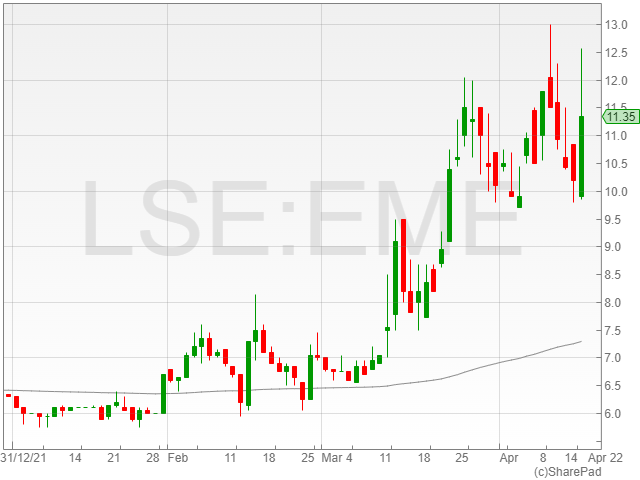
Empyrean Energy shares were up 13.7% to 11.6p in late afternoon trading on Tuesday following reports of elevated methane levels from its Jade Prospect in China, indicating the presence of light oil.

Empyrean Energy subsequently updated its internal Geological Chance of Success to 65% from 41%, with a 47% rise from 35% for its Topaz prospect.

The company confirmed that higher values of methane ranging from 4190ppm to 15440ppm were recorded in the pre-drill interpreted “gas cloud” zone between 1550 metres to 1800 metres measurement difference.

The oil and gas exploration group commented that the results validated its pre-drill interpretation of seismic data encompassing the presence of gas clouds over the Jade prospect, alongside the firm’s Topaz prospect.

Empyrean Energy said that any oil discovered would likely be light oil in the 38-41 API range, in line with discoveries from nearby projects.

The Jade prospect was spudded after its 2 April drilling date was delayed due to bad weather and volatile sea wave conditions on 10 April, however the drilling programme is now reportedly on schedule to deliver results to shareholders on the company’s timeframe.

“The first technical objective of the Jade well has now been drilled,” said Empyrean Energy CEO Tom Kelly in a statement.

“The validation of “gas clouds” through the presence of elevated methane levels in exactly the depth zone we interpreted on the excellent quality seismic data proves that the gas clouds exist and supports the Company’s pre-drill interpretation that the methane is probably coming from light oil in the anticipated reservoir section.”

“This is a major box now ticked, if we are to make a light oil discovery at Jade. The comparisons to nearby CNOOC discovery wells look very compelling. Drilling operations continue to run smoothly and safely, with progress to date right on schedule”.

Rockhopper secures Sea Lion project loan from Navitas

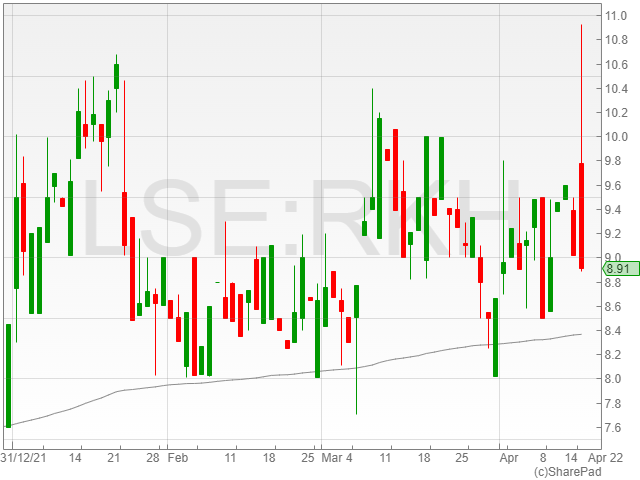
Rockhopper shares fell 4.1% to 9p in early afternoon trading on Tuesday, after the company agreed to assist Navitas’ entry into the North Falkland Basin.

Rockhopper and Navitas are set to partner in the Basin and develop a joint technical and financial deal to facilitate the development of the Sea Lion project to hit first oil on a lower cost, alongside an expedited basis post sanction.

The agreement will see Rockhopper take on 35% of the jointly-held North Falkland Basin petroleum licenses, with Navitas securing 65% through its acquisition of Harbour Energy’s Premier Oil Exploration and Production Limited company.

Navitas has reportedly agreed to loan Rockhopper a sufficient sum of cash to fund the majority of the expenses linked to phase one of the Sea Lion project from Transaction Completion (TC) to Final Investment Decision (FID), with an 8% rate of interest per year, excluding certain expenses such as license costs.

The company confirmed that it would also provide Rockhopper with an interest-free loan to fund two-thirds of Rockhopper’s share of the Sea Lion phase one development costs, pending a positive FID.

Rockhopper said that funds drawn under the loans provided by Navitas would be repaid from 85% of Rockhopper’s working interest share of free cash flow.

The agreement stipulates that failure to acquire a positive FID within five years of the transaction leaves Rockhopper with the option to remove Navitas from the Falklands Island petroleum licenses by repaying the pre-FID loan.

However, if material progress has been made towards a positive FID, the parties can choose to extend the term for an additional 12 months, followed by a final extension of six months to provide extra time to secure the FID.

Navitas confirmed that it would become an operator of the Sea Lion project upon a successful completion.

“We are delighted to have signed definitive documentation to bring Navitas into the North Falkland Basin,” said Rockhopper CEO Samuel Moody.

“Subject to regulatory consents, we believe this marks the start of a new exciting chapter for the Falklands, and for the Sea Lion project in particular. Navitas’ US$1 billion Shenandoah financing in 2021 proved their ability to fund challenging offshore oil and gas developments.”

“Given this, coupled with a more positive oil price environment, we are very excited to have them as new partners and look forward to pushing ahead with Sea Lion, a world class resource.”

Woodbois announce 22% Q1 revenue jump and board updates

0

Woodbois shares were up 0.4% to 4.4p in early afternoon trading on Tuesday after the company reported a 22% jump in Q1 revenue to $5.6 million against $4.6 million in Q1 2021.

The group further noted a gross profit margin rise of 23% from 20% last year, alongside a cash balance of $2.6 million.

Woodbois celebrated its best quarter for volume of product shipped since before the Covid-19 pandemic and highlighted a 24% increase in sawmill production and a 13% climb in veneer production year-on-year.

The company commented that it aimed to grow its exports to the United States and Europe over 2022, with an expected increase in scale and profitability as the group worked out the hurdles in its shipping and production operations.

“The business is now beginning to reap the rewards from the significant investment in capital and human resources over recent periods,” said Woodbois CEO Paul Dolan.

“The operational performance in Q1 continues the growth set out in our 2021 results, which were released on 1st April 2022.”

“Absent any further material disruption to the shipping routes and container availability we plan to deliver strong quarter-on-quarter growth throughout the remainder of the year.”

Board Reorganisation

Woodbois announced several changes to its management, including the reintroduction of executive chair Paul Dolan as Chief Executive Officer.

Former Chief Executive Officer Federico Tonetti has reportedly been confirmed to leave the firm soon, and non-executive director Graeme Thomson has been appointed as non-executive chair.

“We needed to amend our senior team in order to ensure enhanced and dedicated focus at our key assets in Gabon so as to better deliver our expansion plans,” said Dolan.

The company also highlighted the introduction of Olivier Normand in the newly created role of Gabon Country Chief Operating Officer, who will reportedly be overseeing enhanced processes, oversight and daily functions at the Operation under the supervision of Gabon Operations head Hadi Ghossein.

Gateley secures revolving credit facility for £30m

0

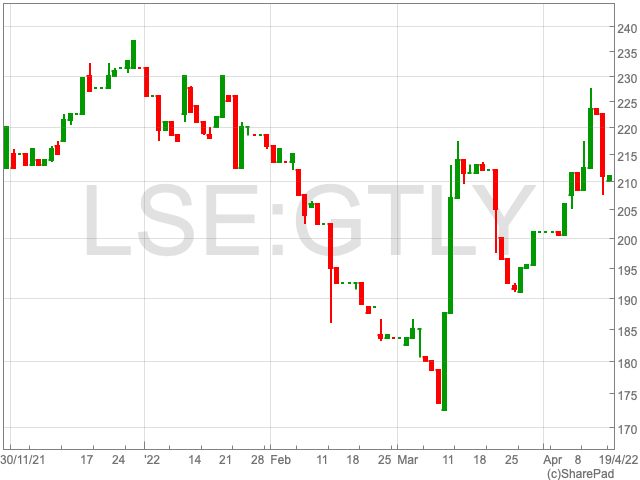
Gateley, a legal and professional services firm, announced on Tuesday that it has reached an agreement with the Bank of Scotland and HSBC UK for a new revolving credit facility amounting to £30m.

Gateley’s new revolving credit facility provides £30 million in committed funding between the Bank of Scotland and HSBC UK until April 2025.

The dual bank club replaces the group’s previous £8m overdraft arrangements with Bank of Scotland and HSBC UK, giving it more flexibility to fund future growth and acquisitions.

The loan has an interest rate that is 1.95% higher than the SONIA reference rate.

“We are delighted to have agreed this new £30m facility with our long-term supportive banking partners of Bank of Scotland and HSBC UK. The facility will provide us with additional headroom to continue with our stated strategy to grow organically and through acquisitions,” said Rod Waldie, Gateley CEO.

“We continue to position ourselves to invest in and grow our Platforms to provide an increasing breadth of services to our clients.”

“The aggregation of complementary legal and consultancy services on our four market-facing Platforms of Corporate, Business Services, People and Property continues to differentiate Gateley, strengthen our appeal to clients and enhance our resilience.”

Invinity Receives 3 ISO Certifications

0

Leading global manufacturer of utility-grade energy storage, Invinity Energy Systems received 3 certifications from International Organization for Standardization (ISO) on Tuesday morning.

Following an exhaustive audit process conducted by top global assurance provider SAI-Global, Invinity Energy Systems has been certified as complying with ISO standards for Quality Management (ISO 9001), Environmental Management (ISO 14001), and Health & Safety Management (ISO 45001).

Invinity is now one of just three flow battery manufacturers in the world to hold all three certifications at the same time, confirming the company’s position as a leading producer of utility-grade solutions to the stationary energy storage industry.

International Organization for Standardization

The International Organization for Standardization (ISO) is a significant benchmark institution in the world.

The ISO creates standards to ensure the quality, safety, and efficiency of products, services, and systems. These standards are widely recognised as the gold standard for operational excellence among major industrial companies throughout the world.

Individual criteria to which Invinity has now been certified are critical to the company’s operations.

ISO 9001 specifies the requirements for a company’s quality management system (QMS) and is founded on fundamental quality management principles such as a strong customer focus, senior management involvement and accountability, process orientation, and continuous improvement.

ISO 9001 standards and processes will enable Invinity to provide consistently high-quality products and services to its clients.

An Environmental Management System (EMS) is defined by ISO 14001 as a systematic framework for measuring, managing, and minimising the immediate and long-term environmental impacts of an organization’s goods and operations.

Completing this certification will ensure Invinity’s customers and partners that the company honours its environmental commitments and operates with the least amount of environmental effect feasible.

ISO 45001 is a global standard for occupational health and safety that aims to manage and reduce any health and safety risks linked with Invinity’s activities for all stakeholders. 

ISO 45001 standards, when used in conjunction with regional, national, and industry-specific workplace safety rules, will help Invinity formalise procedures to proactively improve health and safety performance, provide a safe and healthy workplace, and reduce the risk of causing irreversible harm to employees or the company as a whole.

These three certifications demonstrate Invinity’s commitment to not just producing a high-quality product, but also to being a leading supplier in the stationary energy storage sector.

Compliance with these three standards, according to the firm, will speed up Invinity’s commercial development by demonstrating to new customers that Invinity conforms to the highest operational excellence standards without the need for time-consuming and costly due diligence.

Finally, adhering to these ISO standards will aid Invinity’s expansion by laying the solid foundations required to expand and scale the company’s business in a ‘sustainable, responsible, and transparent way’.

Invinity

Invinity was formed in April 2020 by the combination of two industry leaders in the flow battery sector, redT energy plc and Avalon Battery Corporation.

Invinity is active in all major global energy storage markets and has operations all over the world, with over 25 MWh of systems implemented to date across more than 40 sites in 15 countries.

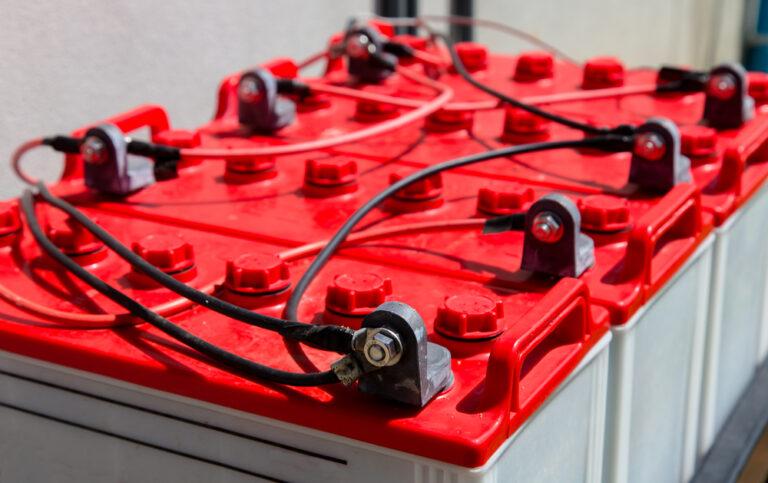
Flow batteries are made by Invinity Energy Systems for large-scale, high-throughput energy storage needs in business, industry, and electrical networks.

Factory-built flow batteries from Invinity run continuously for over 25 years with minimal degradation, making them ideal for the most demanding applications in renewable energy production.

Energy storage systems based on Invinity’s batteries are safe, dependable, and cost-effective, with capacities ranging from under 250 kilowatt-hours to tens of megawatt-hours.

Larry Zulch, Chief Executive Officer, Invinity said, “As Invinity commercialises our long-duration vanadium flow batteries, our focus must progress from simply developing leading technology to superb execution across the entire organisation.”

“We undertook the ISO process determined to meet the highest standards; by obtaining certification in these three major areas, we have demonstrated our ability to achieve them. This is a tremendous accomplishment by our team and I am very proud of the work they have done.”

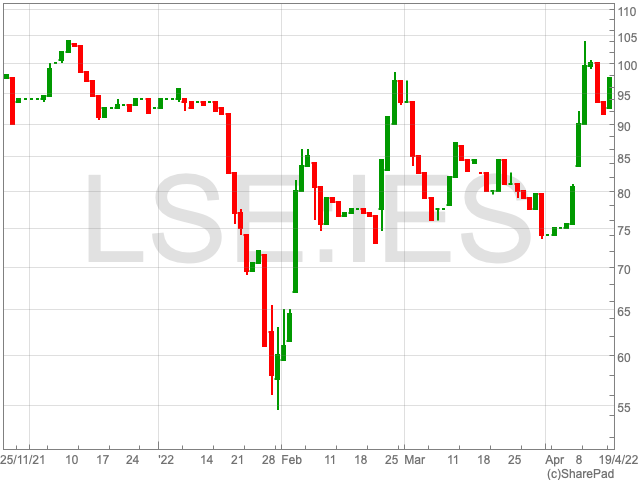
Invinity Energy Systems’ shares gained 7% to 97.5p following the announcement of multiple ISO certifications being awarded to the company.

Commercial property: the post-pandemic landscape

Will Fulton and Kerri Hunter, Investment Managers, UK Commercial Property REIT

  • After a tough pandemic, commercial property recovered significantly in 2021
  • Industrials led the way, while segments of the retail and office markets remained weak
  • The outlook for individual sectors within commercial property is diverging with asset selection increasingly important

Commercial property was one of the success stories of 2021, as investors returned to the sector in search of inflation-adjusted income and diversification. However, performance was polarised between sectors and individual assets. The need for discernment characterises the market in 2022 and beyond as the outlook for different sub-segments of commercial property, and more particularly the characteristics of specific assets, diverges. 

Over the past 12 months, industrial and logistics property has continued to thrive, driven by strong rental growth and high demand, again producing the best performance with total returns of 36%; in contrast the poorest area of the market, shopping centres, achieved a total return of -5%. In general, investors favoured higher quality assets, with the exception of the industrial sector where secondary assets performed well.

Retail warehousing was also a stand-out in 2021. This marks a break with its recent past and shows that the right retail assets still have a place in a commercial property portfolio. In general, those assets linked to discount retailers and with supermarkets performed best over the year. UK Commercial Property REIT focused its attention on additions in areas it has seen  growth including student accommodation, retail warehousing, and selective industrial with value-add opportunities. 

What lies ahead?

More recently, in the early months of 2022, the market has started to become less polarised. We have seen industrial property deliver strong returns, but the gap with the rest of the market is far smaller. The yield compression that has characterised the industrial market in recent years is slowing and from here, we believe returns will be driven by rental growth. 

Elsewhere, the picture is more complex. Polarisation of prospective returns within each sub-sector of the asset class is apparent – within offices, within retail, and so forth.

The office sector is interesting. Overall, the outlook for the sector is weak as it adjusts to an environment of agile working. It is still not clear the type of office life that will emerge, but it will certainly be different and businesses will need to change their office footprint. However, there is a notable gap between prime office spaces, with demand, and secondary, where demand is limited. 

Sustainability credentials are important across all commercial property, but particularly so in the office market, where tenants are increasingly demanding wellness facilities and a low carbon footprint, alongside the usual attributes of a strong location, access to local amenities and proximity to public transport. Offices with these characteristics are in short supply with good rental prospects. 

There are also selected growth areas that have been weak, but should see an improvement; for example certain leisure assets and hotels with strong fundamentals. 

Today’s portfolio

The UK Commercial Property REIT portfolio has benefited from a high weighting to industrial and logistics assets. From here we see a convergence of sector returns where stock picking will become increasingly important. 

For example, we are looking at properties where we can reconfigure assets to source potential returns. A recent purchase of an office close to Park Royal in London, one of Europe’s most prized industrial/distribution locations, offers us the opportunity to redevelop the site to industrial after taking a good income yield from the existing asset. This was a more compelling opportunity than buying expensive industrial assets in the same area. 

We are also interested in building a higher weighting in operational assets, such as hotels, following our two student accommodation development funding projects in Exeter and Edinburgh due to complete later this year. 

Within retail, the Trust’s focus is on discount and food anchored retail warehousing. Our most recent purchase in retail was a 140,000 square foot retail park close to the Trafford Centre in Manchester with a range of convenience retailers as tenants. 

Our portfolio remains focused on those areas showing structural growth, or where the strategic management of assets can aim to improve returns. We believe the Company’s well-let portfolio of scale, heavily weighted towards performing sectors, and with share liquidity, should have a broad reaching appeal with potential for future earnings growth.  

Important information

Risk factors you should consider prior to investing:

  • The value of investments and the income from them can go down as well as up and investors may get back less than the amount invested. 
  • Past performance is not a guide to future returns. 
  • The value of property and property-related assets is inherently subjective due to the individual nature of each property. As a result, valuations are subject to substantial uncertainty. There is no assurance that the valuations of Properties will correspond exactly with the actual sale price even where such sales occur shortly after the relevant valuation date. 
  • Prospective investors should be aware that, whilst the use of borrowings should enhance the net asset value of the Ordinary Shares where the value of the Company’s underlying assets is rising, it will have the opposite effect where the underlying asset value is falling. In addition, in the event that the rental income of the falls for whatever reason, including tenant defaults, the use of borrowings will increase the impact of such fall on the net revenue of the Company and, accordingly, will have an adverse effect on the Company’s ability to pay dividends to Shareholders. 
  • The performance of the Company would be adversely affected by a downturn in the property market in terms of market value or a weakening of rental yields. In the event of default by a tenant, or during any other void period, the Company will suffer a rental shortfall and incur additional expenses until the property is re-let. These expenses could include legal and surveying costs in re-letting, maintenance costs, insurance costs, rates and marketing costs.
  • Returns from an investment in property depend largely upon the amount of rental income generated from the property and the expenses incurred in the development or redevelopment and management of the property, as well as upon changes in its market value.
  • Any change to the laws and regulations relating to the UK commercial property market may have an adverse effect on the market value of the Property Portfolio and/or the rental income of the Property Portfolio.
  • Where there are lease expiries within the Property Portfolio, there is a risk that a significant proportion of leases may be re-let at rental values lower than those prevailing under the current leases, or that void periods may be experienced on a significant proportion of the Property Portfolio.
  • The Company may undertake development (including redevelopment) of property or invest in property that requires refurbishment prior to renting the property. The risks of development or refurbishment include, but are not limited to, delays in timely completion of the project, cost overruns, poor quality workmanship, and inability to rent or inability to rent at a rental level sufficient to generate profits.
  • The Company may face significant competition from UK or other foreign property companies or funds. Competition in the property market may lead to prices for existing properties or land for development being driven up through competing bids by potential purchasers. 
  • Accordingly, the existence of such competition may have a material adverse impact on the Company’s ability to acquire properties or development land at satisfactory prices.
  • As the owner of UK commercial property, the Company is subject to environmental regulations that can impose liability for cleaning up contaminated land, watercourses or groundwater on the person causing or knowingly permitting the contamination. If the Company owns or acquires contaminated land, it could also be liable to third parties for harm caused to them or their property as a result of the contamination. If the Company is found to be in violation of environmental regulations, it could face reputational damage, regulatory compliance penalties, reduced letting income and reduced asset valuation, which could have a material adverse effect on the Company’s business, financial condition, results of operations, future prospects and/or the price of the Shares.

Other important information:

Issued by Aberdeen Asset Managers Limited which is authorised and regulated by the Financial Conduct Authority in the United Kingdom. Registered Office: 10 Queen’s Terrace, Aberdeen AB10 1XL. Registered in Scotland No. 108419. An investment trust should be considered only as part of a balanced portfolio. Under no circumstances should this information be considered as an offer or solicitation to deal in investments.

Find out more at www.ukcpreit.com and register for updates  here. You can also follow us on social media here: Twitter and LinkedIn.

GB-290322-168383-1 

Small & Mid-Cap Roundup: Spectris, JTC, Empyrean, Sensyne

0

The FTSE 250 was down 0.6% to 20,986.8 and the AIM was down 0.4% to 1,055.2 on Tuesday as the breakdown of Russia-Ukraine peace talks and the spiking cost of living dampened investor optimism heading after the easter break.

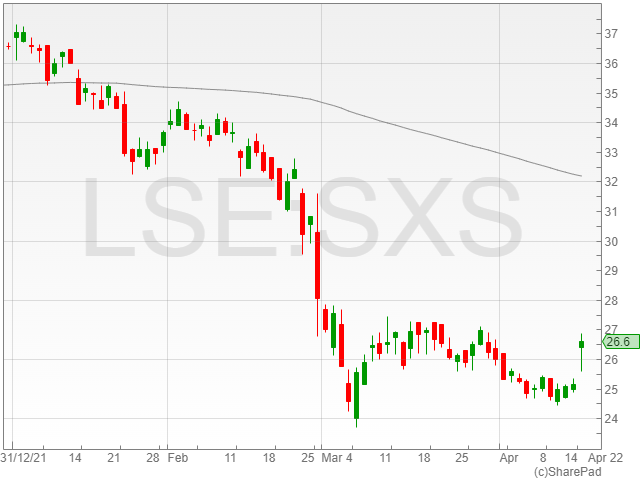
Spectris shares increased 5.5% to 26,540p after the company reported its divestment of Omega Engineering to Arcline Investment Management, along with its upcoming £300 million share buyback scheme.

“Today’s announcement is yet a further example of our approach to optimising our assets and successfully divesting businesses at multiples higher than the group as a whole,” said Spectris CEO Andrew Heath.

“This disposal, in conjunction with the share buyback programme, delivers clear value for shareholders, whilst also allowing us to take advantage of new growth opportunities for our core businesses, in line with our purpose.”

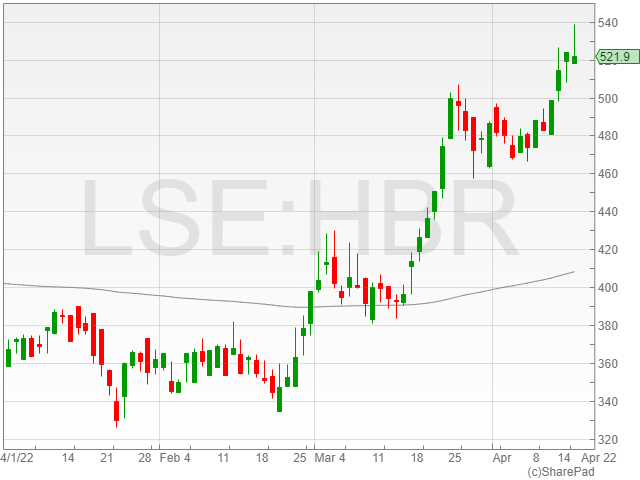
Harbour Energy shares rose 0.9% to 524.5p after the company reported its exit from the North Falkland Basin, with Navitas scheduled to buy all the shares in Harbour’s indirectly held subsidiary POEPL, via which Harbour holds its rights in the North Falkland Licenses.

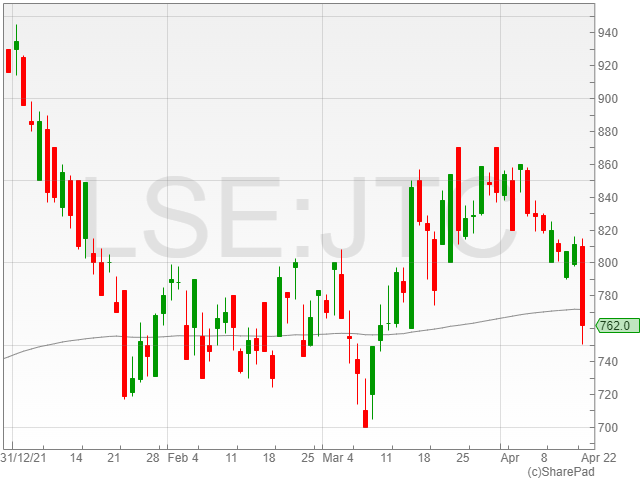
JTC shares saw a decline of 6.4% to 758p following the group’s 57.2% drop in operating profits to £9 million compared to £21 million last year.

However, the company noted a pre-tax profits hike of 147.2% to £27.8 million against £11.2 million year-on-year.

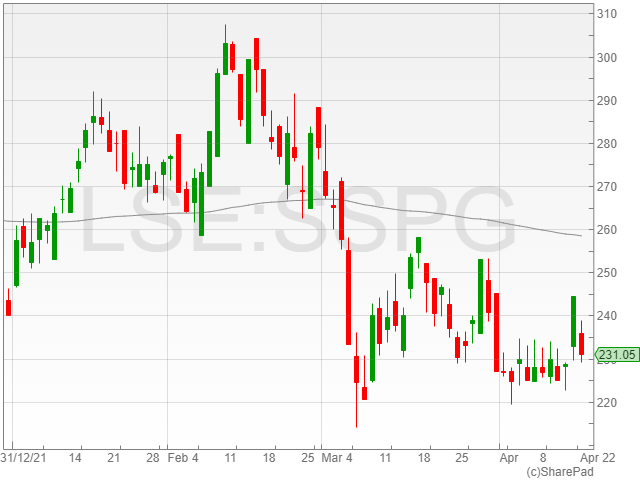
The SSP Group fell 5.9% to 230p after Deutsche Bank reduced the stock to a hold from a buy recommendation and cut the firm’s price target to 265p from 333p.

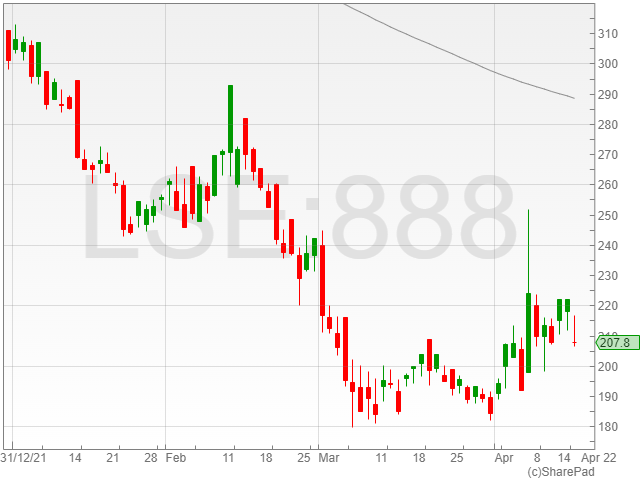
888 shares dipped 3.7% to 210p following Berenberg’s ‘buy’ recommendation, with a price target cut to 500p compared to 545p.

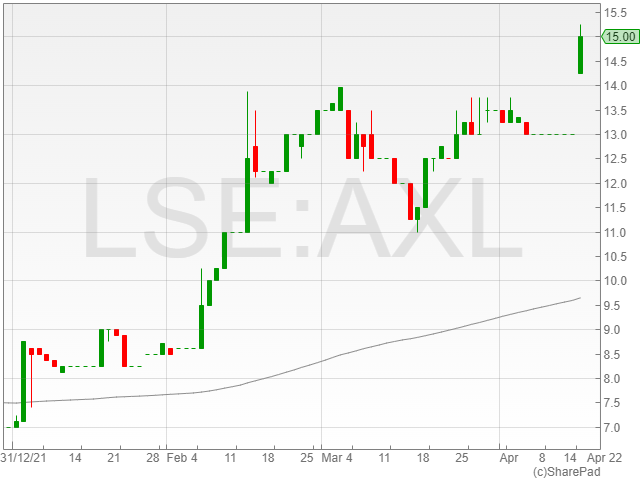
Arrow Exploration Group shares increased 15.3% to 15p after the company reported positive results from its RCE-2 Well, following its spudding on 2 April and its total drilled depth of 9,674 ft from 14 April.

The RCE-2 Well’s casing was finished on 18 April and cementing has been scheduled for 20 April, followed by a production testing programme.

“From the data we have, several of the pay zones are attractive and like the RCE-1 well, we believe more than one pay zone will be productive,” said Arrow Exploration CEO Marshall Abbott.

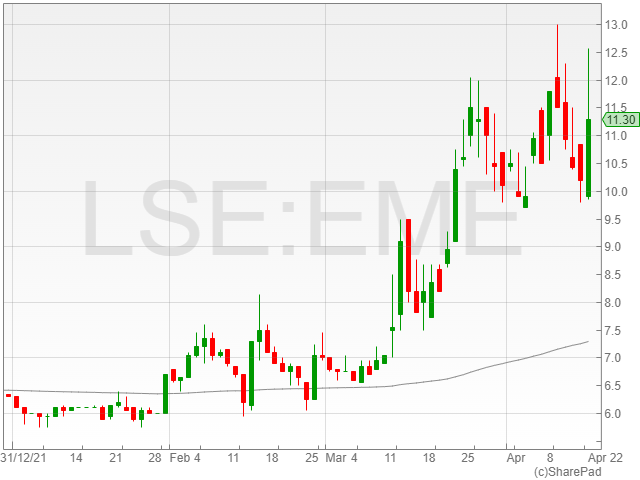
Empyrean Energy shares rose 10.5% to 11.2p after the firm announced elevated methane levels in its Jade drilling update, supporting the company’s prediction of light oil in the Chinese prospect.

“Drilling operations continue to run smoothly and safely, with progress to date right on schedule,” said Empyrean Energy CEO Tom Kelly.

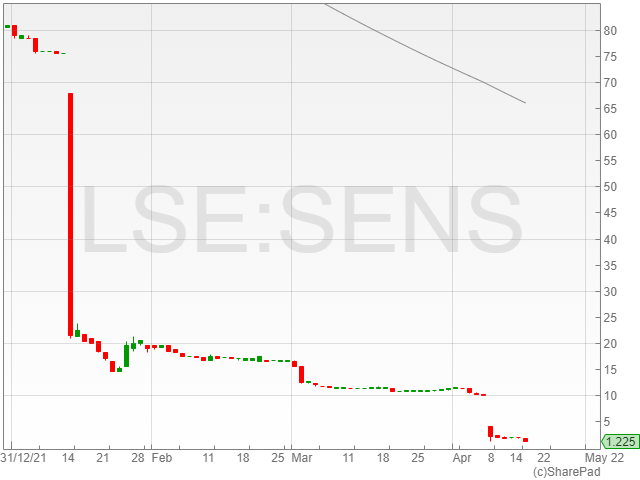
Sensyne Health shares plummeted following the firm’s proposed delisting from the AIM junior market, pending approval from shareholders at its general meeting on 20 May.

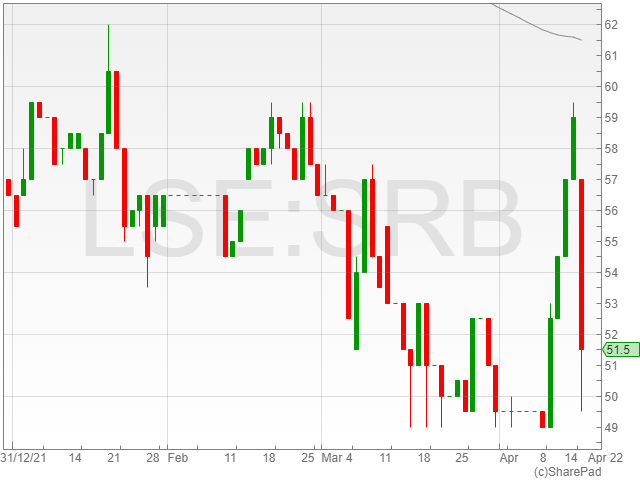
Serabi Gold dropped 13.5% to 51p after its 13% decline in gold production over the first quarter to 7,062 ounces from 8,087 ounces year-on-year had a reported knock-on effect on its full-year production guidance.

“At Palito, the first-quarter production results have been disappointing with 7,062 ounces produced, and while March was a significantly better month with improved grades and production, it was not possible to recover earlier shortfalls in planned production,” said Serabi Gold CEO Mike Hodgson.

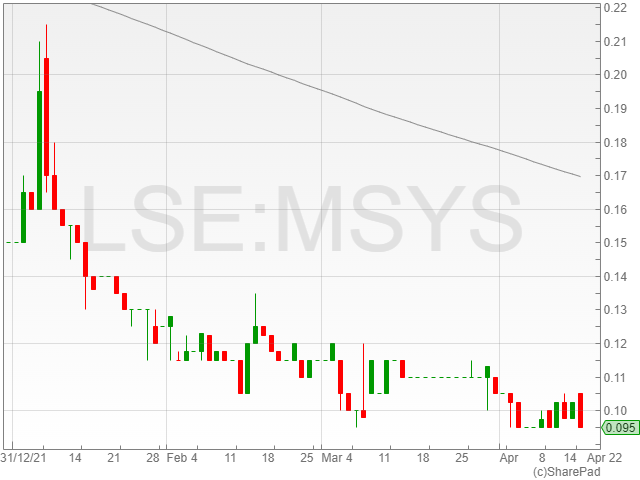
Microsaic Systems shares dropped 7.3% to 0.09p following the company’s announcement of a manufacturing services framework and initial contract with Innovenn UK Limited worth £400,000.

The agreement will reportedly see Microsaic refine and miniaturise existing monitoring technology for environmental and human health diagnostics.

“Microsaic’s business model has been transitioned to offer additional services which leverage the considerable depth and breadth of technical design, engineering and delivery expertise within its team,” said Microsaic acting executive chairman Gerard Brandon.

“By offering the skillsets that created the smallest compact mass spectrometer in the world, partner customers such as DeepVerge can outsource their engineering development of existing and new monitoring equipment and concentrate on growing their business.”