AIM movers: Redmoor drilling success for Strategic Minerals and Helium One Global terminates investment agreement

0

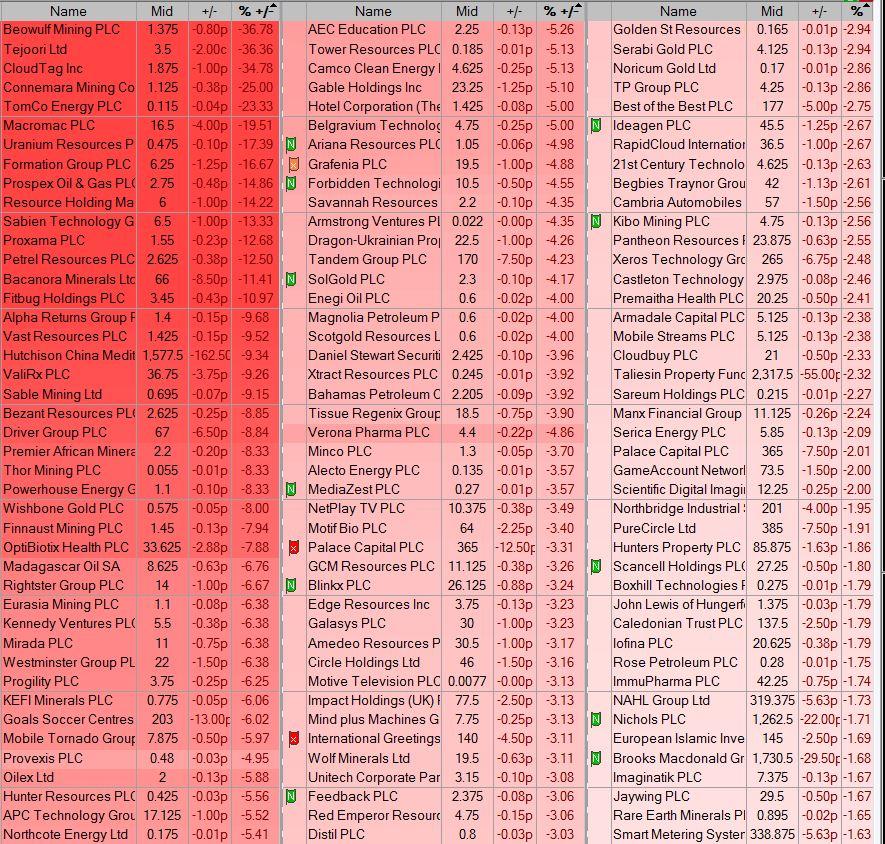
Positive drilling results for the Redmoor tungsten tin copper project have pushed up the share price of Strategic Minerals (LON: SML) by 45.3% to 0.69p. The drilling results confirm multiple zones of high-grade tungsten mineralisation at the project in Cornwall. These results are from one borehole. This suggests that Redmoor could be the highest-grade undeveloped tungsten deposit. There are also positive results for copper. The tin assays are still being reviewed. Drilling continues. Zeus has a 1.9p/share fair value for Strategic Minerals.

Kefi Gold and Copper (LON: KEFI) expects the signing of the agreement for $240m of debt capital for the Tulu Kapi gold project this week. Project equity capital funding is advancing. The share price increased 22.6% to 1.4775p.

Helium One Global (LON: HE1) is terminating the £10m investment agreement arranged by Marex Financial. A further £3.5m of the investment will be converted at 0.218p/share, taking the total converted to £7.875m. The rest of the investment will be repaid plus a 12% termination payment, making the total cash outflow £2.38m. The Galactica helium joint venture project in Colorado in the US is progressing, and first helium and CO2 production should be in December with full capacity reached during the first half of 2026. The share price improved 13.3% to 0.425p.

Ampeak Energy (LON: AMP) and joint venture partner Econergy International have received planning permission from Newport City Council for the Afon Wysg 2 250MW battery storage project at the Uskmouth Sustainable Energy Park. This is the third battery project at the site. Financial close for the project is expected in 2027. The Ampeak Energy share price is 8.51% higher at 2.55p.

Data analysis software provider Cirata (LON: CRTA) has gained its largest ever contract. It is a $3.1m, three-year data integration software contract with a US insurer. There was a previous one yea product agreement. There will be a trading update on 16 October. The share price rose 11.2% to 20.55p.

FALLERS

Helix Exploration (LON: HEX) is ready to start production at the Rudyard helium project in Montana and it could commence in November after the final components arrive. There are discussions about offtake agreements. The share price fell 6.86% to 24p.

Premier African Minerals (LON: PREM) is consolidating ten shares into one new share when trading begins on Tuesday. The pre-consolidation share price dipped 5% to 0.019p.

Delays in securing contracts have slowed progress at location data management software provider 1Spatial (LON: SPA), but recurring revenues continue to grow. Interim revenues were 9% higher with recurring revenues rising by one-fifth to 61% of total revenues. SaaS revenues from traffic management planning software 1Streetworks quadrupled and that was before the latest UK Power Networks contract gain worth £1m over 15 months. Cash generation is improving and getting nearer to covering capitalised development costs. Net debt is £2.5m. Australia was the only laggard, and this may possibly be sold to help finance further product development and growth in the core markets. Cavendish forecasts flat full year pre-tax profit of £1.4m. The share price declined 2.75% to 53p.


YouGov: pollster group’s shares at 284.50p offer good upside, 2025 Final Results due tomorrow

Last week the shares of YouGov (LON:YOU) closed weaker at 284.50p, which is 33% down over the last year. 
However, I now ask whether the fall has been overdone? 
Tomorrow morning sees the pollster group, which claims to have one of the world’s largest research networks, reporting its Final Results for the year to end-July. 
I do expect a certain positivity to be shown by its re-shaped Management for the current year and going forward. 
Which could be enough to rekindle interest in the group’s shares, that on the basis of broker estimates look cheap to me. 
The Business...

AstraZeneca strikes deal with US to lower drug prices

AstraZeneca has announced an agreement with the Trump administration to dramatically reduce prescription medicine costs for American patients while preserving the country’s position as a global biopharmaceutical leader.

The deal should draw a line under uncertainties about whether AstraZeneca will be hit by US tariffs, which could disrupt sales in its largest market.

AstraZeneca shares were 0.4% higher at the time of writing on Monday. Shares are 15% higher in October.

The British-Swedish pharmaceutical company’s chief executive, Pascal Soriot, joined President Donald Trump at the White House to confirm the firm had voluntarily met all four requests outlined in the President’s letter from 31st July.

The deal centres on equalising medicine prices for American patients with those available in other wealthy nations.

Under the agreement, AstraZeneca will offer direct-to-consumer sales to eligible patients with chronic disease prescriptions at discounts of up to 80% off list prices. Patients will be able to purchase medicines at reduced cash prices through the TrumpRx.gov direct purchasing platform.

The deal follows AstraZeneca’s recently announced $50 billion investment in US medicines manufacturing and research and development over the next five years, made under pressure from the US President.

Trump had previously threatened tariffs of up to 100% on imported drugs.

AstraZeneca has framed the US investment in the context of its target to reach $80 billion in total revenue by 2030. Half of this revenue is expected to come from the American market alone.

“Every year AstraZeneca treats millions of Americans living with cancer and chronic diseases and, as a result of today’s agreement, many patients will access life-changing medicines at lower prices,” said Pascal Soriot, Chief Executive Officer, AstraZeneca.

“This new approach also helps safeguard America’s pioneering role as a global powerhouse in innovation and developing the next generation of medicines. It is now essential other wealthy countries step up their contribution to fund innovation.”

Serica Energy to acquire stake in North Sea’s largest gas producing field

Serica Energy has agreed to acquire BP’s entire stake in two North Sea licences containing the Culzean gas condensate field – the largest producing gas field in the North Sea.

The company has a stated strategy of growing through the acquisition of mid-to-late life assets and today’s announcement follows the recent acquisition of Prax Upstream Limited from Prax Exploration & Production Plc.

The latest acquisition would give Serica a 32% non-operated working interest in Culzean’s P111 licence and the adjacent P2544 exploration licence.

Net 2P reserves attributable to the stake are estimated at roughly 33 million barrels of oil equivalent as of 1 January 2025. Production costs are said to be $10.70 per barrel.

“Should this transaction complete, it would deliver a step-change for Serica, adding material production and cash flows from the largest producing gas field in the UK,” said Chris Cox, Serica’s CEO.

“Culzean is a world-class asset, delivering gas from a modern platform with exceptionally high uptime and low emissions.”

Culzean, operated by TotalEnergies, is currently the largest single producing gas field in UK waters. Under joint operating agreement rules, TotalEnergies (which holds 49.99%) and NEO NEXT (18.01%) now have 30 days to decide whether to exercise pre-emption rights and acquire BP’s stake themselves on the same terms.

The upfront consideration will $232 million in cash, which could be adjusted for working capital and offset by interim post-tax cashflows between September and completion, expected around year-end. Two further contingent payments could also become due: one tied to exploration success and production from the P2544 licence, another linked to potential changes in the UK’s ring-fence tax regime.

The Culzean field was discovered in 2008 and began production in 2019. BP’s share produced around 25,500 barrels of oil equivalent per day in the first half of 2025, operating at 98% efficiency.

S&U set for recovery

Car finance and property bridging loans provider S&U (LON: SUS) appears to have reached the bottom of its revenues in the latest figures and it should recover from here despite the continued uncertainty about the outcome of any compensation decisions by the FCA. The property loans business continues to grow at an impressive rate.
In the six months to July 2025, revenues fell from £60.4m to £51.8m, but pre-tax profit recovered from £12.8m to £15.6m. The latest dividend was raised from 30p/share to 35p/share.
Net debt is £180m. Funding facilities are £280m, leaving plenty of scope for expans...

AIM weekly movers: WH Ireland considers options

2

WH Ireland (LON: WHI) shares rebounded 213% to 1.25p after it confirmed shareholders rejected the sale of the wealth management business and the proposed departure from AIM. Two non-executive directors are resigning from the board in January. There is sufficient capital to continue trading despite being loss making. Shareholders will be consulted about the future of the company.   

David Nugent has increased his stake in Genedrive (LON: GDR) from 10.1% to 15.1%. He is unhappy with the recent fundraising. The general meeting to approve the share issue is on 15 October. The estate of William Black has cut its stake to 1.92%. The share price recovered 69.4% to 0.398p.

Synthetic binders developer Aptamer (LON: APTA) has secured a £360,000 development contract with a top 3 global pharmaceutical company. The fee-for-service contract is to develop Optimer binders as targeted radiopharmaceuticals. Aptamer retains the rights for licensing. This takes work secured for this financial year to £1.03m. Last year’s revenues were £1.2m. The sales pipeline is worth £3.4m. The full year results are on 14 October. The share price is 44.8% higher at 1.05p.

Copper gold explorer Bezant Resources (LON: BZT) says investee company Blackstone Minerals has gained regulatory approval in the Philippines for a two-year extension to the Mankayan copper gold project work programme. The drill rig has been mobilised. The share price rose 39.2% to 0.11p.

FALLERS

First Development Resources (LON: FDR) says deteriorating conditions at the base of the Canning Basin sedimentary sequence at the Wallal project mean that the drill hole could not reach the planned depth of 1,220 metres. Drilling has ceased and the next step is being assessed. The share price slumped 58.3% to 3.65p.

Sareum Holdings (LON: SAR) has discontinued its 16-week GLP preclinical toxicology study for SDC-1801 following safety issues. The study was supposed to be a precursor to a phase 2 clinical development programme focused on psoriasis. However, the issues observed were predominantly in the control group, so it is unlikely it is due to SDC-1801 and Sareum plans to restart the study, and it can be completed within cash resources. The share price declined 39.2% to 15.5p.

Oracle Power (LON: ORCP) has booked a drill rig for the Northern Zone gold project. The plan is to grow the size of the mineralised area. The drilling will start in less than three weeks. The share price slipped 30.4% to 0.04p.

A Delhi court has denied Mercantile Port and Logistics (LON: MPL) interim relief relating to the cancellation of its agreement with the lending consortium. The company has appealed to a higher court. The share price fell 27% to 0.675p.

Aquis weekly movers: All Things Considered buys US merchandise business

Valereum (LON: VLRM) raised £600,000 at 5p/share. Chairman James Bannon and chief executive Gary Cottle contributed £225,000 each and they will each receive 2.5 million warrants exercisable at 50p each and 2.5 million warrants exercisable at 100p each. Tokenisation marketplace VLRM Markets has generated $135,000 in revenues in four months to September 2025. The share price jumped 86.3% to 4.75p.

Shepherd Neame (LON: SHEP) executive director Jonathan Neame has bought 4,000 shares at 520p each. The share price increased 8.54% to 540p.

Igraine (LON: KING) has reduced its stake in Oscillate (LON: MUSH) from 5.05% to less than 3%. The Oscillate share price rose 2.74% to 0.375p. The Igraine share price improved 7.69% to 0.35p.  

Global Connectivity (LON: GCON) has raised £200,000 at 1.5p/share. The share price rose 4.55% to 1.15p.

Music management and services provider All Things Considered (LON: ATC) is paying an initial $520,000 for certain assets of Control Industry Inc, which owns a merchandise management business. Client relationships include Diana Ross and Billy Joel. The total payment could be $760,000 depending on revenues over the coming nine months. This business fits with the existing Sandbag subsidiary and its boss will take over sales and marketing in the US for the group. The share price edged up 3.57% to 145p.

FALLERS

B HODL (LON: HODL) has taken its Bitcoin holding to 136 at a total cost of £11.5m.  The share price declined 11.4% to 12.625p.

The Smarter Web Company (LON: SWC) has raised £2.56m at 102p/share via subscription and £9.68m from a placing at 100p/share. The share price is 9.76% lower at 12.625p.

Wishbone Gold (LON: WSBN) has expanded the drilling programme at the Red Setter Gold Dome project. The share price decreased 3.85% to 1.25p.

WH Ireland (LON: WHI) shareholders have voted against the sale of its wealth management division to Oberon Investments (LON: OBE). The two companies are assessing options. The share price slipped 2.41% to 4.05p.

Diagnostics firm EDX Medical (LON: EDX) has started marketing of the TC100 testicular cancer testing service. The blood test has shown 100% efficacy. The share price is down 2.22% to 11p.

AIM movers: Genedrive stake increase and WH Ireland continues to fall

6

David Nugent has increased his stake in Genedrive (LON: GDR) from 10.1% to 12.2%. The share price recovered 18.3% to 0.42p.

Following shareholder feedback Union Jack Oil (LON: UJO) has decided to offer bonus warrants to existing shareholders as well as the subscribers to the £2m fundraising at 5p/share. There will be one bonus warrant for every four shares held on 3 November. These warrants as well as the fundraise warrants are exercisable at 8p. The share price rose 5.15% to 5.1p.

AFC Energy (LON: AFC) says it has discussed the AGM resolution relating to the remuneration report with the largest shareholders. This is because, although it was passed, it only received 77.1% of votes. The board still believes that the remuneration report is in the best interests of the company. RBC Europe is no longer joint broker. The share price improved 2.02% to 9.855p.

FALLERS

WH Ireland (LON: WHI) shares have slipped a further 16.7% to 1.25p after it confirmed shareholders rejected the sale of the wealth management business and the proposed departure from AIM. Two non-executive directors are resigning from the board in January. There is sufficient capital to continue trading despite being loss making. Shareholders will be consulted about the future of the company.   

Tavira Financial has exercised 18.75 million broker warrants in Kefi Minerals (LON: KEFI) at 0.6p/share. The share price slipped 14.6% to 1.23p.

Dekel Agri-Vision (LON: DKL) is building up cashew production and it has reached 500 tonnes/month, and additional equipment installations could increase that to up to 10,000 tonnes/month. Palm oil production fell 49% in the third quarter, although prices rose by 24%. The share price fell 14.3% to 0.45p.

Sareum Holdings (LON: SAR) has discontinued its 16-week GLP preclinical toxicology study for SDC-1801 following safety issues. The study was supposed to be a precursor to a phase 2 clinical development programme focused on psoriasis. However, the issues observed were predominantly in the control group, so it is unlikely it is due to SDC-1801 and Sareum plans to restart the study, and it can be completed within cash resources. The share price slipped 13.3% to 17.25p.

Premier Miton (LON: PMI) assets under management slipped from £10.5bn to £10.3bn in the quarter to September 2025. Annualised cost savings of £2m, have been identified. Full year results will be published on 4 December. The share price declined 5.56% to 59.5p.

Odysse: Reinventing Ride-Hailing with an AI-Optimised, All-Electric Fleet 

Imagine a ride-hailing service that always arrives on time. It is clean, electric, and intelligently optimised.  

That’s Odysse: an AI-powered fleet-as-a-service model already transforming urban transport in London. By combining artificial intelligence with an all-electric fleet, Odysse is pioneering a fleet-as-a-service model designed to make urban transport smarter, cleaner, and more reliable. 

Their proposition is simple but bold: deploy electric vehicles where passenger demand is.  
 
This approach solves a major pain point for ride hailing customers by reducing their wait time and offering a more reliable service. It also reduces idling time, and increases earnings for drivers. For cities, reduction in idling time reduces congestion, and all electric service reduces emissions.

Now, Odysse is inviting investors to join its journey through a live crowdfunding campaign. Explore the campaign here: https://europe.republic.com/odysse 

The Challenge Ride-Hailing Faces 

London’s streets tell a familiar story: Commuters waiting, gazing at their smart phones, ride-hailing apps buzzing with trip requests and cancellations, and drivers sometimes idling at the wrong place, at the wrong time. The convenience that once defined ride-hailing has, in many ways, eroded. The challenge is systemic as ride hailing struggles to match supply with demand.  

Amid these cracks in the system, one start-up is rewriting the rulebook. 

Odysse’s Solution 

Odysse’s mission is clear: to build the most intelligent, all-electric ride-hailing fleet for urban transport, powered by AI, data analytics, and advanced operations. 
 
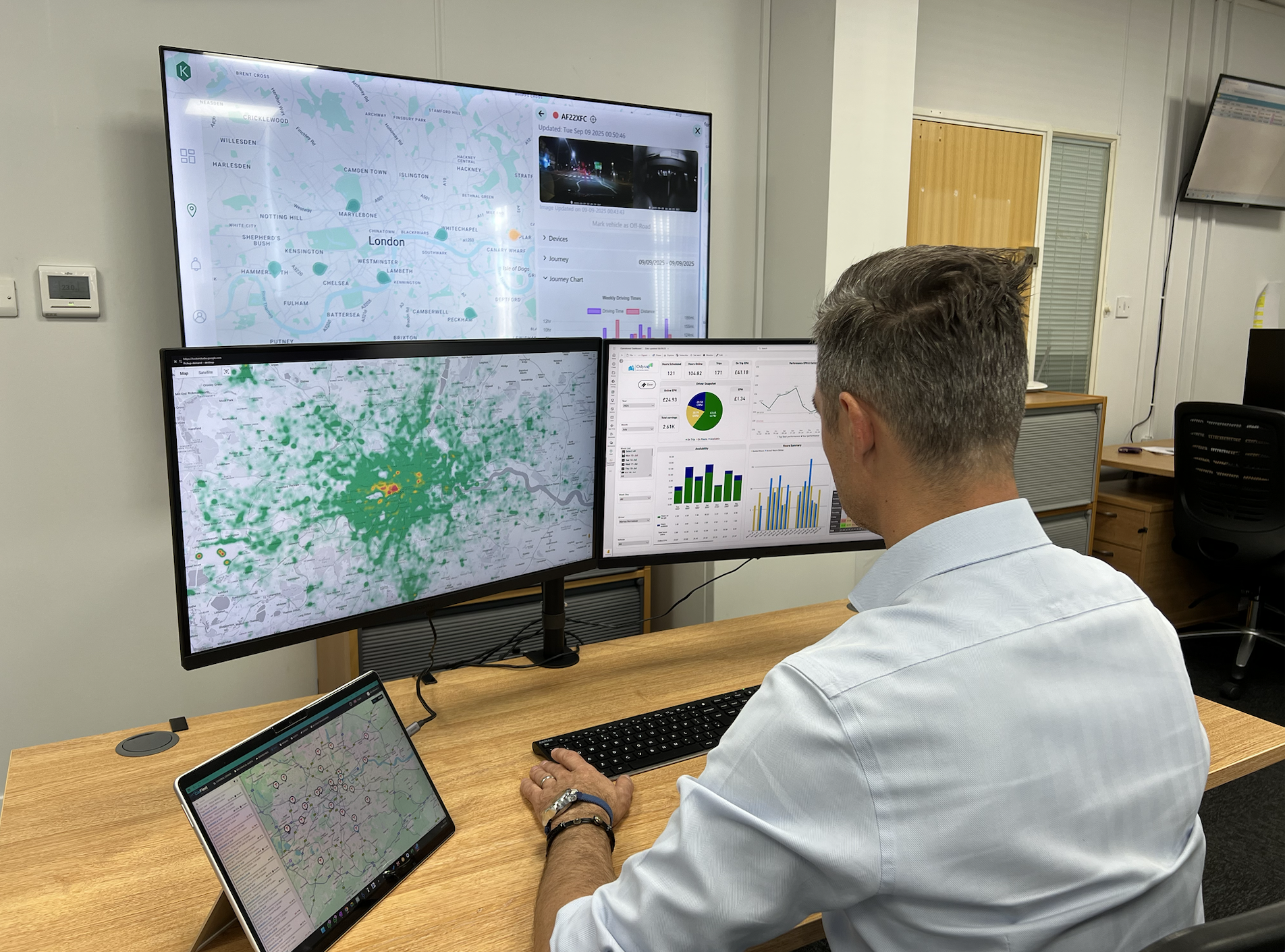
Their proprietary Intelligent Demand Response model uses machine learning to analyse rider demand and directs cars to the right place at the right time.  

“We’re proving that data-led fleet operations can make ride-hailing profitable, sustainable, and reliable — all at once,” says founder and CEO Anant Prakash. 

Intelligent Demand Response: From Data to Deployment 

Odysse operates on a continuous feedback loop analysing every pickup and drop-off. It is building systems where AI will detect demand clusters and predict surges across time and geography,  allowing fleet deployment to match real-world demand patterns. This analysis will uncover frequently used routes across different hours and days, enabling Odysse to proactively align fleet supply with both high-demand zones and priority travel corridors. 

Odysse doesn’t just produce insights, they operationalise insights.  

Data analytics is only the first part of what makes Odysse achieve sector leading utilisation.Operationalising insights is the second.

Driver shifts and vehicle deployments are pre-planned, to align with demand across the city. In simple terms, operations aim for vehicles being at the right place, at the right time. Drivers are being equipped to respond in real time, closing the gap between data and action. This bridge between analytics and execution is what sets the company apart from traditional ‘gig divers’ on ride-hailing platforms. 

The Market Opportunity 

London is one of the world’s largest markets in ride hailing. As the first EV fleet service for Bolt in the UK, Odysse is already tapping into the demand side of that opportunity and demonstrating traction. Looking ahead, Odysse has ambitious plans to scale 100x: from around 30 vehicles today to 3,000 by 2030, with revenues targeted at £100 million annually. With a proven model delivering top-tier utilisation today, Odysse’s next phase is pure scale. 

Why Investors are Getting Excited About Odysse 

  • c£1m annualised revenue (+500% YoY) 
  • 1m+ electric miles 
  • 5-year Bolt partnership 
  • £1.6m raised from VCs and corporates 

An investment in Odysse is EIS pre-approved, offering potential tax relief opportunities* for UK investors. 

This mix of proven traction, contracted revenue streams, and scalable technology makes Odysse a compelling investment opportunity. 

The Next Chapter of Urban Mobility 

The first wave of ride-hailing transformed how cities move. The next wave will make it smarter, cleaner, and more reliable. And that’s where Odysse comes in. By combining machine learning-optimised efficiency with an all-electric fleet, Odysse sits at the crossroads of two unstoppable trends: AI and sustainability

Odysse’s core strength in placing vehicles where they’re needed is an edge that will become even more critical in an autonomous future, where utilisation of self-driving cars will separate early winners from loss leaders in self-driving fleet operations. 

Backed by multi-year, high-value partnerships, proven revenues, and an ambitious growth path, Odysse is inviting investors to be part of its next phase. Odysse is already over 90% funded. Momentum is strong and space in the round is limited. Investors can join this next-generation mobility venture today at Republic Europe

* Please note that tax treatment is dependent on individual circumstance and subject to change. Odysse has completed advanced assurance for EIS and has issued compliance certificates  for EIS relating to subscriptions for eligible shares (EIS2) within the last 6 months. 

Investment risk warning: Don’t invest unless you’re prepared to lose all the money you invest. This is a high-risk investment and you are unlikely to be protected if something goes wrong. Take 2 mins to learn more 

FTSE 100 dips after touching record high

The FTSE 100 pulled back from record highs on Friday as precious metals miners and banks weighed on the index.

London’s leading index was fairly stable, and losses were minor compared to the recent run-up in stocks. The FTSE 100 was trading down 0.15% at the time of writing.

“The FTSE 100 was stuck in the mud as the rest of Europe ploughed ahead at the end of the trading week,” said Russ Mould, investment director at AJ Bell. 

“Strength in consumer stocks and utilities was offset by weakness in miners and healthcare.”

A slow session in London followed a fairly uninspiring close for US stocks that closed marginally lower overnight.

“Hardly major moves – the S&P 500 slipped nearly a third of a percent, while the Nasdaq was barely lower at –0.08% with Nvidia holding up the index with a gain of 1.83% after the US government gave approval to ship chips to the UAE, while Meta gained as it is considering creating a dedicated TV app,” said Saxo UK Investor Strategist, Neil Wilson.

Precious metals miners Fresnillo and Endeavour Mining suffered a rare bout of profit-taking as gold pulled back from record highs overnight.

“Gold steadied on Friday, consolidating after breaking above the USD 4,000 threshold for the first time earlier in the week,” said Joseph Dahrieh, Managing Principal at Tickmill.

“The metal remains on track for an eighth consecutive weekly gain, underpinned by expectations of further Federal Reserve rate cuts and lingering global uncertainties.

“Profit-taking and easing geopolitical tensions in the Middle East contributed to a pause in momentum. Israel ratified the first phase of a ceasefire deal with Hamas, which includes a partial military withdrawal from Gaza and the release of hostages within days, although sporadic airstrikes continued.”

Fresnillo lost 3.7%, and Endeavour was the FTSE 100 top faller, down 3.8%.

The housebuilders were marginally positive despite a dire warning from brickmaker Ibstock about slowing demand amid economic uncertainty. Barratt Redrow and Persimmon were both higher by around 0.3%.

The Ibstock CEO said, “headwinds are impacting momentum in our markets in the latter part of the year”. Ibstock shares were 8% weaker.

Sage Group was the top FTSE 100 riser as the stock broke out of a tight range held since early August.