UK house price growth slows but still hits record high

UK house prices hit a recorded high in January as the average UK house price rose to £276,759, according to data from Halifax.

However, the pace of growth slowed notably to 0.3% which was the lowest level of growth since June 2021.

“House price growth slowed somewhat at the start of the year, rising by just 0.3% in January, the smallest monthly increase since June 2021. This followed four consecutive months of gains above 1%, and with annual growth remaining at 9.7%, the average UK house price was little changed, edging up slightly to a new record high of £276,759. Overall prices remain around £24,500 up on this time last year, and £37,500 higher than two years ago,” said Russell Galley, Managing Director, Halifax.

“Following the peak activity of 2021, transaction volumes are returning to more normal levels. Affordability remains at historically low levels as house price rises continue to outstrip earnings growth. Despite record levels of first-time buyers stepping onto the ladder last year, younger generations still face significant barriers to home ownership as deposit requirements remain challenging.”

Regional growth

Despite overall growth slowing to a marginal 0.3%, there were still areas of the Uk enjoying bumper increases in the year to January.

Wales recorded 13.9% house price growth and was again the UK’s fastest growing region. Northern Ireland also recorded a strong 10% increase in prices while Scotland prices rose 8.9%/

London recorded a 4.5% increase – the highest in over a year – and the North West remained the strongest area in England gaining 12%.

Lack of supply

The jump in house prices can once again be attributed to a lack of supply with new instructions dropping 14% according to the latest RICS Residential Market Survey.

The number of mortgages approved in December rose 5% to 71,100.

New AIM admission: Hercules builds on float

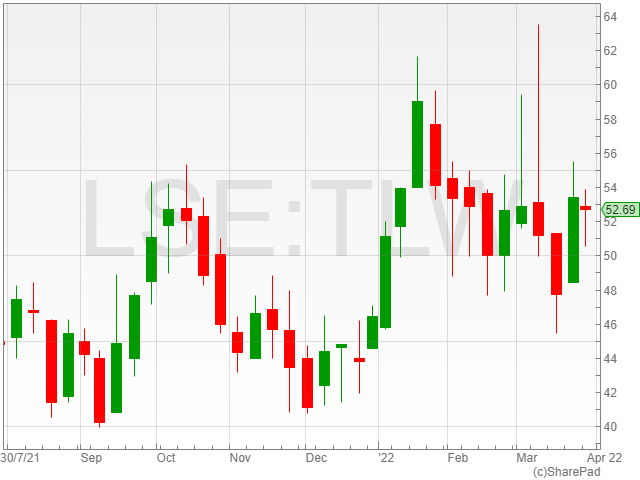
Hercules Site Services originally hoped to raise up to £5.5m of new money through a placing and PrimaryBid offer and ended up raising £4m. The existing shareholder also raised £4m. The tougher market probably held back the price and money raised. It is still in a good position to take advantage of opportunities
Demand for staff for infrastructure projects will be significant over the next few years and the company is in a good position to benefit. The expected organic growth could be supplemented by acquisitions.
The shares opened at 52.5p and ended the day at 53.5p. There were just over 60,00...

New Aquis admission: SuperSeed fund of funds investment

SuperSeed Capital Ltd raised £2m at 100p a share in order to invest in UK based seed technology companies alongside a related fund.
The share price ended the week at 70p (65p/75p). There were eight trades during the week and the first was for 1,000 shares at 90p each. A total of 36,000 shares were traded.
This is a large fall from the placing price. The NAV is 91.1p a share and directors can issue up to 50 million further shares at below NAV at the time of issue. They may not want to issue more shares at the current level, but the ability to issue shares lasts for five years. Observe progress....

FTSE 100 dips as markets brace for higher rates

The US added 467,000 jobs in January smashing analyst estimates and suggesting the US economy was bouncing back from an Omicron-induced slowdown at the end of 2021.

The Non-Farm Payrolls released on Friday far surpassed analyst estimates of 125,000 but was met with a mixed market reaction.

The FTSE 100 gave up all of Friday morning’s gains in the wake of announcement, while major US indices failed to benefit from a surging Amazon share price. The dollar rallied as GBP/USD erase yesterday’s gains to trade at 1.3514.

Although the reading showed the US economy was healthier than expected, it brings nearer the time the market will have the punch bowl of easy monetary removed by the Federal Reserve.

Economists and market watchers are now predicting the Fed could begin to raise US interest rates as soon as next month and kick of a global tightening cycle in earnest.

However, the market reaction – especially that of equities – suggests there is a concern such a move will damage the economy given the soaring rates of inflation and pressures on consumers.

The US jobs data comes a day after the tightening of conditions in UK economy in the form of an interest rate hike and 50% increase in the energy price cap. In addition, the Bank of England seem set to increase rates further in the coming months after 4 of the 9 members of the MPC voted for a 0.5% increase in rates as opposed to the 0.25% increase announced yesterday.

“Inflation concerns are looming ever larger with the cost of living squeeze intensifying as monetary policy tightening ramps up, and no let-up in soaring energy prices in sight,’ said Susannah Streeter, senior investment and markets analyst, Hargreaves Lansdown.

“With a more aggressive attitude coming from the Bank of England towards reining in inflation, it has set the tone for more anxiousness about the effect of sharply rising prices will have on consumer confidence and corporate resilience.”

Although the market impact has been limited thus far, a global tightening in monetary policy has the potential to destabilise the recovery if inflation continues to squeeze consumers pockets.

The FTSE 100 has eased slighting over the last two trading session and still remains positive on the year. But this masks investor repositioning in shares focused on the UK economy and health of consumer spending power.

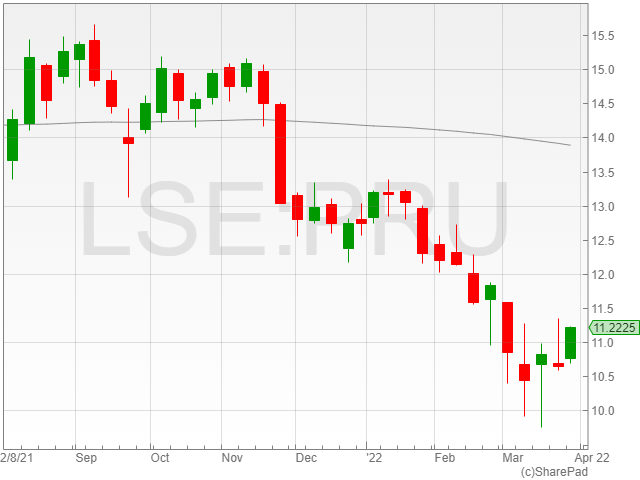
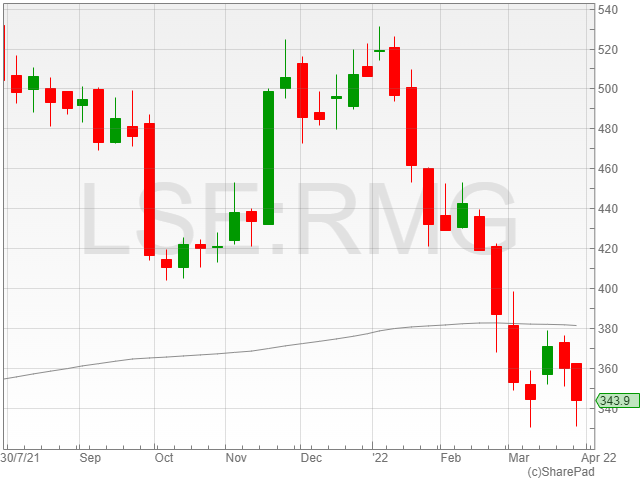
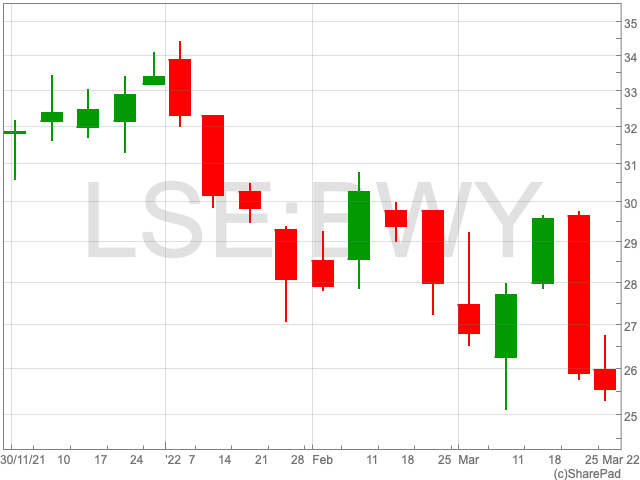
This is particularly evident in housebuilders with Taylor Wimpey, Barratts and Persimmon all down between 13%-16% so far in 2022.

Retailing shares are also suffering. JD Sports has given up 14% and Kingfisher is down 9%.

These moves have been recorded in a period where the FTSE 100 has carved out a 2% gain helped by overseas earners and commodity companies.

Vodafone is the FTSE 100 top performer in 2022 adding some 18%. Oil majors BP and Shell have contributed a significant number of points to the FTSE 100 this year with Shell gaining 16%.

Income has started a crowdfunding campaign on Seedrs to fuel re-imagining investing in loans

Sponsored by Income

Income has started a crowdfunding campaign on the Seedrs platform to allow investors to join in the equity raise and the value creation that is taking place in the alternative asset investments. Income is re-imagining investing in loans and fueling financial inclusion globally. The CEO and the team have extensive experience in Fintech and investments.

Income is the first alternative investing platform that offers secured investing in loans and other types of credit globally. We operate an independent investment platform at www.getincome.com and cater to the needs of both professional and retail investors. For retail investors, the primary focus is on making investments effortless and safer while investing similarly to institutions. 

Offering secured investments to loans with attractive yields allows investors to protect themselves from inflation and generate wealth. At the same time, global co-operation with socially responsible non-bank lenders results in better and cheaper access to credit for millions. This co-operation solves a genuine financial and social inclusion problem, especially in emerging markets. 

Income’s industry-defining security features include  “Buyback Obligation” and “Cashflow Buffer,” which protect investors when investing in loans. Every loan on the platform comes with Buyback Obligation, meaning non-bank lenders we co-operate with are obligated to buy back the loan from investors if the borrowers do not pay.

The cashflow buffer protects investors from defaults of the non-bank lenders, making investments on Income effectively collateralized, unlike on any other competing platform. 

To make investing in loans effortless for retail investors, we have recently launched our mobile app for iOS and Android with an intuitive user experience design. Through the app, the investors have manual and automated ways of investing, and they can also choose quick investment strategies to automate earning passive income.

Income will use the money raised in the current round to strengthen the team, enhance the product, and support the onboarding of more investors and non-bank lenders. 

On the product side, we have exciting plans, from launching a secondary market for loans to further simplifying the mobile app as per our identified vital principles.

Income has accomplished a lot in the past 10 months of operation, but we are still only at the start of the journey. The Seedrs campaign is an excellent way for inventors to participate in the future of alternative asset investing and promoting financial inclusion globally. 

Investing involves risks, including loss of capital, illiquidity, lack of dividends and dilution, and should be done only as part of a diversi ed portfolio. Please read the Risk Warnings before investing. Investments should only be made by investors who understand these risks. Tax treatment depends on individual circumstances and is subject to change in future. Seedrs does not make investment recommendations to you and any investment decision should be made on the basis of the full campaign. No communications from Seedrs, through email or any other medium, should be construed as an investment recommendation.

This article has been approved as financial promotion by Seedrs Limited which is authorised and regulated by the Financial Conduct Authority (No. 550317)

SberBank’s technology drive to become ‘Russia’s Amazon’

Amazon have posted a 9.4% increase in fourth quarter revenue to $137.4bn, and booked a $12bn gain from their stake in EV company Rivian.

Amazon started with selling books online and became the world’s largest company by providing everything from food delivery to films and it’s own web services.

Russian bank Sberbank now hopes to emulate this process by harnessing its brand and over 100 million customers in Russia to become a tech giant.

The Russian Bank committed to diversifying away from its traditional banking activities with the launch of a food delivery service which is now available to customers across Russia. The group now provides streaming services and provides in-home Internet of Things services.

Like Amazon and their stake in Rivian, the future of the automation industry is also receiving Sber’s attention and the launch of SberAutoTech in 2020 will focus on autonomous vehicles and smart transport infrastructure.

We recently met with Sber at Web Summit and their intent was clear. Their focus is on delivering innovative technology solutions to consumers that have the potential to rival global tech giants.

Sber’s drive to become a tech giant is evident in their willingness to invest in R&D which they have demonstrated through the establishment of an R&D centre in Berlin.

“The opening of our R&D center in Berlin underscores our commitment to creating the best technological products and services for our clients with the help of the best specialists in the world.” said David Rafalovsky, executive vice president, Sberbank; CTO, Sber; head of Technology.

“We invite developers, architects, and data scientists to work on the most relevant and innovative projects that will change the customer experience for over 100 million Sber Group customers.”

Sber are also in a position to harness the behaviours of a young demographic that have a high propensity to utilise technology and new services.

Sber count over 80% of Russia’s 14-21 year olds as clients and have moulded a workforce that is 60% Gen Y and Z.

Indeed, 54% of Sberbank’s customers are already digital only and have 73 million monthly active users on their digital banking services, further highlighting the readiness of their users to adopt technological solutions in their everyday lives outside of their finances.

The market has generally welcomed Sberbank’s transformation and shares rose significantly through 2021 before falling back as we closed in on 2022.

Investors will also be encouraged by an update in December that pointed to a tripling in non-financial revenue and Sber’s London-Listed ADRs could be one to keep an eye on if tensions with Ukraine ease.

Shaftesbury posts strong trading

0

Shaftesbury has announced strong trading in the four months ending 3 February – despite impact of Omicron.

The group’s debt fell from £748.5m to £740.5m whilst the group made investments of £18.5m.

Chief executive Brian Bickell said: “Robust occupier interest across all our uses and in each of our locations has continued throughout the period, our vacancy levels are trending lower towards pre-pandemic levels and rent collection rates continue to improve.”

“The unrivalled attractions and lasting appeal of the West End to both local and domestic audiences, together with our curated, differentiated and affordable locations, will underpin both our continuing post-lockdown revival and our long-term resilience and prospects in the months and years ahead,” he added.

Upper Crust sales dip

0

Sales are falling for SSP, the owner of Upper Crust.

In the last eight weeks, sales have fallen to 57% of pre-pandemic levels. In a previous trading update, sales were 66% of pre-pandemic levels.

The group commented: “The spread of the Omicron variant around the world and the subsequent government restrictions have inevitably had an impact on passenger numbers in many of our markets.”

“Recent weeks have been more encouraging, as government restrictions have been lifted in the UK and some Continental European markets, with sales now trending positively again, driven mainly by strengthening trading in the Rail sector as commuter travel returns,”

The group said that they plan to return to pre-pandemic profits and revenues by 2024.

Carnival continues to be hit by pandemic

0

Carnival has said that two ships will be leaving its fleet as it continues to be affected by the pandemic.

Carnival’s president Christine Duffy commented: “Our guests have remained passionate and supportive throughout the restart and 2022 gives us plenty of reasons for enthusiasm and excitement as we reach full operations in the US, prepare for our 50th birthday celebration, and await the arrival of Carnival Celebration this fall.”

“Our very loyal guests, our vibrant homeport strategy and our fleet of popular ships are strengths to our advantage as we adapt to changing opportunities and circumstances.”

As well as losing two shops, the group has also paused the sailing of two ships.

“We regret having to cancel our guests’ long-awaited vacations and appreciate their loyalty and understanding,” said the group in a statement.

FTSE 100 falls after interest rate hike and disappointing Meta results

The FTSE 100 fell on Thursday after the Bank of England raised rates and the market digested a terrible set of results from Meta.

The FTSE 100 was trading down by 0.35% at 7,555 shortly after midday trade in London after accelerating declines following the decision by the Bank of England to increase rates to 0.5%.

The Bank of England raised rates for the second month row having hiked rates for the first time since the beginning of the pandemic in December. As well as sending the FTSE 100 further into negative territory, the rate hike saw the pound rally against the dollar, before fading into the afternoon.

Although sterling traders may have benefited from the news, the decision to hike rates comes at a time UK households are facing a cost of living crisis with soaring energy bills, food inflation and tax increases.

“Policy makers at the Bank of England have poured another dash of cold water over the economy in a bid to stop it breaking out in even more of a sweat,” said Susannah Streeter, senior investment and markets analyst, Hargreaves Lansdown.

“This cooling attempt had largely been priced in by the financial markets given that inflation was running so hot, but some policy makers clearly felt a much bigger splash was needed to get try and get prices under control. Four members of the Monetary Policy Committee wanted rates to rise to 0.75%, a sign that inflation is fast turning from a niggling headache to a debilitating migraine.”

Sectors reliant on the health of the UK consumer suffered in the wake of the announcement with shares in housebuilders and retailers feeling the pinch.

The UK banks cheered the news with Lloyds and Barclays surging 2.5% and 2.4% respectively.

Meta

Markets started off the day with a negative tone after Facebook owner Meta crashed 25% as the social media giant missed earnings estimates.

“It’s tough for any firm to stay at the top: either customers get bored of you, the competition catches up or the regulator sticks in their nose and at Facebook it may just be a case of all three, as growth in daily average user stalls and revenue increases begin to slow,” said AJ Bell Investment Director Russ Mould. 

“Facebook may also be yet another firm whose business model is perfectly-adapted to helping people cope with the pandemic and lockdowns but may see fresh interest wane as commuters return to offices and consumers look to get out and about again.”

Meta was a significant drag on the tech-heavy NASDAQ which declined over 2% in the pre-market and revived fears over the technology sector denting market sentiment.

Investors again used the Scottish Mortgage Investment Trust as a proxy for sentiment around the US tech sector and sent their shares down 3.5%.