FTSE 100 recovers as retail sales grow 1.4%

0

The FTSE 100 closed at 7,387.8 on Friday, after the index recovered on a positive slate of results from the Office of National Statistics (ONS), which reported that UK retail sales grew 1.4% in April despite a crushing 9% rate of inflation.

Non-store and online retailers experienced a 3.7% surge as a result of stronger clothing sales, which might serve to assuage investor fears over retail group stocks, which have seen dramatic falls in light of inflation fears over the last few months.

“Clothing sales have been more resilient than expected, according to the new ONS data. Boohoo and ASOS both enjoyed a share price jump on the news as investors were taken aback by the sales trends,” said AJ Bell investment director Russ Mould.

“Recent months have seen shares decline in both companies as the market feared casual spending on tops, dresses and shirts would fall given that buying fewer non-essential clothes would be an easy way to save a bit of money now needed to pay for gas and electricity.”

The index appears to be one of the stronger markets to weather the economic storm, as the FTSE 100 was dragged back up from its gloomy Thursday depths.

“Investors may feel as if they’ve been soaked by a torrential shower given the state of the markets this year. Look closer and it’s clear that the FTSE 100 is the one with the best umbrella,” said Mould.

Royal Mail shares gained 3.8% to 311.5p after its shaky results on Thursday, which reported some positives, including a 0.6% rise in revenue to £12.7 billion compared to £12.6 billion the last year.

The company announced a doubled dividend payout, with a full-year payment of 20p per share against 10p year-on-year.

Meanwhile, investor moods were further lifted as Chinese measures to lift the struggling economy rolled in, with the Hang Seng rising 3% as China’s central bank announced a reduction in a key lending rate.

Insurance giant Prudential, which shifted its focus to Asia in 2021, benefited from the recovering Chinese market, with shares in the group closing 2.5% higher at 1,000p.

The rally in China also pulled a range of miners up the FTSE 100, with Croda closing 2.3% higher at 6,706p, Anglo American gaining 1.7% to 3,526p, Rio Tinto increasing 2% to 5,454p, Endeavor up 1.4% to 1,844p and Fresnillo rising 1.1% to 783p.

“Boring old commodity producers, utility providers and tobacco stocks have come to the UK market’s rescue, proving that successful investing is not all about backing the next big go-go growth stock,” said Mould.


Venture capital needs women for female-led businesses to thrive

Female representation in venture capital investment is crucial for female-led businesses to thrive, according to a recent report from Slip founder Tash Grossman.

The retail technology app CEO said increased female representation in the venture capital sector was the key to unlocking the potential of businesses started by women, and to narrowing the gap between male and female-founded companies.

The survey found that for every dollar invested in female-led start-ups, twice that amount of revenue was invested in male start-ups, which Grossman linked to a lack of women in venture capital positions.

According to the report, female business founders were three-times more likely to receive funding from venture capital companies headed by women. However, women currently make up a mere 13% of senior leadership roles in the industry, with many firms discovered to have zero women on their investment teams.

“Around the world, venture capital has always seemed like a ‘boys’ club’ and as we look to the future, investors need to show that they are willing to adapt if we are to encourage the creation of more female-founded businesses and reap the economic rewards of this,” said Grossman.

Grossman’s Slip app recently gained £750,000 in a fundraise supported by a slate of female investors, including Dr Pamela Walker, who pointed out the emerging body of research in support of the impact gender and racial diversity have as a major driver of financial performance in companies across the international spectrum.

“From my perspective as an investor, I believe everyone should have equal access to capital and diverse teams are able to think both critically and creatively with an instinct to align, decide, and act quickly which in turn helps them to become more successful,” said Walker.

“Diversification is a core tenet of investment. Having a diverse portfolio means targeting more diverse markets with a different lens and unlocking access to innovation.”

“Investors that pull this mindset through to funding will out-perform the rest.”

UK Oil & Gas BB-1z wins two-year planning extension

0

UK Oil & Gas shares were up 3.1% to 0.1p in early afternoon trading on Friday after the West Sussex County Council granted a two-year planning permission extension for the group’s Broadford Bridge-1z (BB-1z) Kimmeridge oil discovery.

The extension for the discovery, located in the company’s wholly owned licence PEDL234, reportedly passed with a majority vote of seven against two in favour of the motion.

UK Oil & Gas confirmed that the new date of the planning grant is scheduled to run out on 31 March 2024.

The energy firm commented that the additional two years would allow any information acquired from future Kimmeridge drilling at the company’s Loxley conventional gas and Horse Hill oil fields to be factored into the group’s upcoming Broadford Bridge plans.

The fossil fuels explorer also said it was still waiting for the final decision on its appeal against the Surrey County Council’s refused planning consent for the firm’s Loxley gas project.

The decision is currently under consideration by the Secretary of State for Levelling Up, Housing and Communities, with the decision reportedly due on 7 June 2022.

Meanwhile, in line with UK Oil & Gas’ green energy plans, the extension is also set to allow conceptual plans for the supply of heat energy from the project to a potential large-scale greenhouse end-user which is scheduled for further development.

The early-stage concept reportedly includes use of the operation’s drilling pad to accommodate a series of new stand-alone deep geothermal wells.

Technology Minerals sell 10% interest in US copper-cobalt projects

0

Technology Minerals shares were up 8.7% to 3.1p in late morning trading on Friday, following the company’s reported sale of an initial 10% interest in its registered claims in the group’s wholly-owned US copper-cobalt projects.

The battery metals firm said the interest in its Blackbird Creek Project and Empirium Project in Lemhi Country, Idaho had been sold to Canadian precious metals firm BlueBird Metals for a cash consideration of £900,000.

The Blackbird Creek operation is set within the 60km Idaho Cobalt Belt, which is categorised by stratiform/tabular copper-cobalt deposits, and is hosted in the Mesoproterozoic Belt Supergroup juxtaposed between later Proterozoic quartz monzonitic intrusions.

The group’s Emperium Project covers an estimated 55km in east-central Idaho and represents one of the largest land positions in the Idaho Cobalt Belt.

Technology Minerals confirmed that the sale agreement further included a proposed option for Bluebird Metals to acquire an additional 20% interest in the two projects for another cash consideration of £1.8 million.

The company mentioned that the option would be exercisable within a six-month period from the date of signature on the detailed Purchase Agreement linked to the proposed sale.

“We are delighted to complete the sale of a minority interest in our US cobalt/copper assets which is a strong endorsement of the potential of the Blackbird Creek and Emperium Projects,” said Technology Minerals CEO Alex Stanbury.

“The agreement validates our strategy of advancing our junior mining assets up the value curve to attract partners and unlock significant potential value that can be added to the Company’s portfolio.”

Lloyds shares and the looming spectre of inflation: What next for the banking group?

0

Llyods has long been an established giant of the banking industry, however as investors grow more cautious of gloomy 9% inflation and shrinking household budgets, what comes next on the horizon for the financial institution?

The Bank of England hiked interest rates 0.25% to 1% earlier in May, with experts predicting an additional rise to 1.25% at its next meeting in June, which would add value to Lloyd’s investments through higher net interest margins.

However, the recent surge in inflation to 9% is set to potentially see a significant decline in their customer’s financial health which could be exacerbated by more interest rate increases.

Lloyds’ share price has fallen 7.7% year-to-date, and with the prospect of rising macroeconomic complications, the share price could be set to drop lower in the coming months as inflationary pressures hits the banking sector.

However, it might be the right time to invest, as Lloyds has a record of bouncing back from economic disruption with strength.

The company beat management expectations in its Q1 2022 results with a profit of £1.6 billion, surging ahead following the Covid-19 pandemic downturn.

Lloyds shares valuation

The banking giant currently has a PE ratio of 5.6, representing value when compared to peers, with HSBC Holdings at 8.6, NatWest at 8.8 and Standard Chartered at 9.8.

Lloyds pays an attractive 4.6% dividend and has a robust dividend cover of 3.9, indicating that the company’s payouts are set to remain covered despite the looming inflationary pressure.

Lloyds shares may dip in the short-term, however the banking mainstay is in strong financial health for future growth.

Retail sales grow 1.4% in April as inflation spikes to 9%

0

Retail sales grew 1.4% in April despite the crushing weight of 9% inflation, as UK consumers spent on alcohol and clothing in the countdown to the summer season, according to the latest report from the Office of National Statistics (ONS).

“The unexpected upturn in retail sales could be viewed as a positive sign that the consumer isn’t as bruised as other data suggests,” said AJ Bell financial analyst Danni Hewson.

Food sales rose 2.8% as a result of increased spending on luxury items including tobacco and alcohol, with supermarket food sales remaining flat.

“But digging into April’s figures the big uptick in food and drink spend in supermarkets might indicate that people are choosing their kitchen tables over pubs and restaurants as they look to save money,” said Hewson. 

“Whilst food spend has been largely unchanged, which suggests people are still being cautious, spend on alcohol and tobacco has soared.” 

“Life’s little luxuries, the things that help us get by when times are tough, will have to come in under budget as those budgets are tested.”

Meanwhile, online and non-store retailers saw a 3.7% surge in light of stronger clothing sales.

“Summer 2022 will still be a time for postponed events and much anticipated holidays. After a couple of years where only the top half was visible to most of the world people are updating their wardrobes,” continued Hewson.

Online retail sales accounted for approximately 27% of total UK retail sales, representing an uptick from 25.9% in March and marking a significant rise from pre-pandemic levels of 19.9% in February 2020.

Vehicle fuel sales saw an uptick of 1.4% following a 4.2% fall the previous month, as consumers adjusted to the shock of spiking petrol prices.

The ONS commented that non-food store sales volumes dropped by 0.6% on the back of a decline in other non-food stores, which fell 3.3% alongside a 0.5% slide in household good stores, such as furniture outlets.

“When you look at other non-food retail, that has dropped back. People can only spend a pound once and when that pound is worth significantly less than a year ago people have to make choices,” said Hewson.

“DIY projects are being parked; home improvements slipped to the back of the queue as people prioritise the way they look over their living spaces.”

The unexpected increase in retail sales has been caveated with a note of caution, as the trend for the past three months has actually been in decline, alongside the latest consumer confidence survey, which indicates that despite the retail sales jump, the big picture is bleak.

“If you look at the last three months as a whole, the trend is a downward one and when you add in the latest consumer confidence survey by GFK, optimism seems a bit out of place,” said Hewson.

“Consumers are terrified about how they’ll weather the next few months, every month they are finding that their personal financial situation is deteriorating and most believe the worst is still to come.”

Meanwhile, Target’s shocking 25% stock sink earlier in the week served as a warning across the Atlantic that customers have already started paring back on former staples in their shopping cart in a move to save cash, as inflationary pressures loom in the macroeconomic sphere.

“Retailers are already feeling the pinch and outlooks from a number of big American names over the last week have sent shockwaves through global financial markets,” said Hewson.

“Big ticket items will gather dust on shelves and shoppers will become increasingly cut-throat when it comes to value.”

The ONS report might have given retailers cause for relief, however the odds are stacked against them as the summer months peel away to autumn and inflation hits a projected high of 10% in October.

The cold snap of the cost of living is already eating into consumer wallets.

“It’s all about priorities. This month people have prioritised preparing for future good times, next month they might have to save any spare cash to actually pay for those good times,” said Hewson. 

“Retailers know they’re in hot water and can do little to turn down the heat.”

Close Brothers Group reports £8.8bn banking loan book

0

Close Brothers Group shares increased 2% to 1,093p in early morning trading on Friday, after the company reported a Banking loan book growth of 1.8% to £8.8 in correspondence to a 3.7% rise year-to-date.

The banking firm attributed its positive results to strong new business volumes in Commercial and Motor Finance, with resumed trading in Property linked to increased drawdowns from the group’s pipeline.

Close Brothers said its Close Brothers Asset Management (CBAM) assets fell as a result of negative market movements, with a slide to £15.4 billion against £15.8 billion and a decline in total client assets to £16.7 billion from £17.2 billion on 31 January 2022.

However, the group’s Winterflood sector saw an improvement in trading over the term, with a reported single loss day despite incredible market volatility.

The company highlighted its CBAM year-to-date annualised net inflows of 5% against 8% in HY1 2022, along with a strong pipeline of new business in progress.

Close Brothers noted a CET1 ratio of 14.9% on 30 April 2022, compared to 15.1% on 31 January 2022.

Meanwhile, the company confirmed an annualised year-to-date net interest margin of 7.8% against 7.9% in HY1 2022, which reportedly reflected the group’s continued focus on pricing discipline and a reduction in its cost of funds.

Additionally, Close Brothers commented that it expected the impact of interest rates floors of 1% in certain businesses to gradually drop away on the back of recent rises in interest rates, with the firm expecting no further impact from the floors once the UK base rates exceeds 1%.

The banking group caveated its results with a warning that the impact of the deteriorating economic condition was starting to encroach on its business, with its year-to-date bad debt ratio rising marginally to 1.2%, reflecting higher IFRS 9 provisions to account for a cautious outlook linked to external performance.

“Even at a time when consumer confidence is hitting 40-year lows, Close Brothers is running a highly profitable lending business, with high levels of capital reserves,” said Hargreaves Lansdown fund manager Steve Clayton.

“The bad debt provision has edged up, but aside from an already known issue in their former litigation lending business, now in run-down, bad debts remain incredibly low at just 0.5%.”

“The group’s strong margins make it an excellent cash generator, which has allowed them to grow the dividend significantly over time. This year we expect the group to pay out 66p per share, which is the same level that the group paid in 2019 before the pandemic. At that level, the shares will be yielding an attractive 6.1%, covered almost 2x.”

Close Brothers added that its Internal Ratings Based (IRB) application had received confirmation from the Prudential Regulation Authority (PRA) and was transitioned to Phase 2 during the period.

The institution said its outlook maintained a backdrop of inflationary pressure and macroeconomic uncertainty, however Close Brothers commented that its strong financial position and business model left the company in a decent position to support its clients and grow its sectors.

“We have performed well in the quarter, with continued good momentum across our lending businesses and robust demand in our core markets,” said Close Brothers CEO Adrian Sainsbury.

“We continue to support our customers and clients and maintain our strategic discipline against a backdrop of rising inflation and heightened uncertainty.”

“We are confident that our proven and resilient business model will allow us to continue delivering on our long-term track record of growth and profitability.”

Knights share prices recovers as chief executive invests £1m

Regional legal firm consolidator Knights (LON: KGH) reassured investors that there has been no further deterioration in trading since a profit warning in March. The chief executive invested £1m and other directors have also bought shares following the statement.
That has helped the share price recover by nearly one-third to 125p, although it is still well below the level it was before the disappointing trading statement. That is less than eight times forecast earnings and the prospective yield is 2.7%.
In the year to April 2022, underlying pre-tax profit should be at least £18.1 million, down ...

IDOX expects 7% revenue growth to £33m

0

IDOX shares increased 0.6% to 62.8p in early afternoon trading on Thursday, following an expected revenue growth of 7% to £33 million reported in its HY1 2022 trading upate.

The software company announced an anticipated adjusted EBITDA uptick of 8% to £11 million, alongside a net debt reduction of over 50% to £4 million from £8.1 million on 31 October 2021.

IDOX confirmed that its robust performance was currently in line with executive expectations, with a selection of operational highlights driving its positive growth.

The group commented that its order intake increased 7% year-on-year, with a strong pipeline underpinning its confidence over the medium term.

The firm also mentioned a series of contract wins and extensions with increased average tenure across its Public Sector Software and Engineering Information Management sectors.

IDOX further reported the successful integration of its 2021 acquisitions and the continued upscaling of its Pune, India centre of excellence to boost efficiency, capability and knowledge-sharing.

“Following the disposal of the Content businesses in 2021 Idox entered 2022 as a focused software and related services business. As a result of the focus on our core strengths and attention to operational excellence, we have delivered another solid financial performance for the first half of our financial year,” said IDOX CEO David Meaden.

“Idox benefits from an extensive customer base, a healthy orderbook, and a strong pipeline. In addition, we continue to explore a number of attractive M&A opportunities and maintain a strong balance sheet to execute upon the ‘fly’ phase of our journey.”

“Whilst we continue to be cognisant of ongoing challenges in the wider macro environment, we remain focused on, and are on track to deliver on our plans for the remainder of 2022.”

IDOX is reportedly scheduled to announce its HY1 2022 full results on Wednesday 15 June 2022.

Fever Tree trading reaches pre-pandemic levels

0

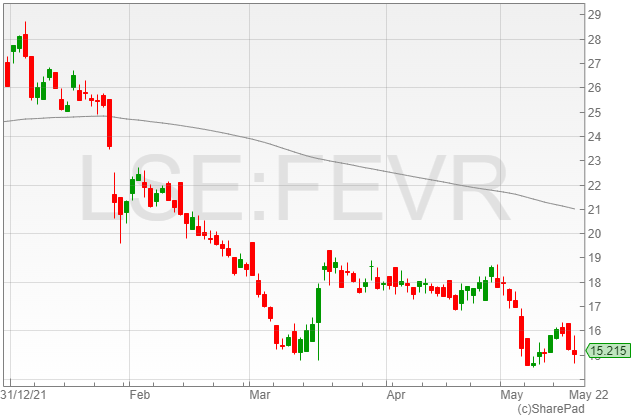
Fever Tree shares were up 0.3% to 1,528p in early afternoon trading on Thursday, following a reported 150% surge in off-trade sales compared to 2019 levels and strong momentum across its on-trade sales in its trading update.

The drinks firm announced that trading was in-line with expectations laid out in March, with US, Europe and international markets enjoying pre-pandemic rates of momentum.

The company highlighted several recent launches, including its limited-edition Passionfruit & Lime Tonic in the UK, which boosted off-trade sales, along with its Sparkling Pink Grapefruit Soda in on-trade sales across the UK and European markets, on the back of a positive reception in the US.

Fever Tree commented that its innovation pipeline remained strong, with a series of new product launches scheduled for the coming 18 months.

The drinks group added that it was scaling down its shipping costs and delays with the operation of its West Coast bottling line in the US, alongside its East Coast line, which is ramping up production over HY1 2022 and is set to add further flexibility to Fever Tree’s network once fully operational.

“One of the main issues called out for rising costs is shipping to the US, it’s a key growth area for the group so servicing that demand is essential,” said Hargreaves Lansdown equity analyst Matt Britzman.

“Positive steps are underway to bottle directly in the US and therefore avoid a lot of freight costs, that partnership with a local bottling company is well underway and ramping up production this year.”

The company said the addition of its two bottling lines would also reduce the carbon emissions associated with its supply chain.

The firm highlighted an expected FY 2022 revenue in the range of £355 million to £365 million and an EBITDA between £63 million to £66 million.

“Management described trading so far as ‘solid’ and it’s certainly nice to see the group on track for guidance, but we must not forget that was downgraded in March which was met with a nasty market reaction,” said Britzman.

“The main issue this year, is that little to none of the 16% forecast rise in revenue is expected to drop into cash profits and whilst that’s hardly unusual, given the wider macro conditions meaning costs are rising for pretty much everyone, some of Fevertree’s operations should be getting more efficient.”

Fever Tree cautioned that it faced an industry-wide backdrop of inflationary pressures and logistics complications, most critically related to US shipping.

The drinks producer said its short-term remained uncertain, however the acceleration of its East-Coast bottling line would serve to mitigate some of the pressure from cost inflation.

“There are some positives for the longer-term investment case, growth outside of the saturated UK market looks promising and increased demand for premium alcohol and mixers looks to be stickier than first anticipated,” said Britzman.

“However, when investors are expected to pay 36 times earnings for a slice of the pie, in today’s world, those margins need to start moving in the right direction”