BT shares dips as revenue fall in disappointing quarter

BT shares fell on Thursday after the company released Q3 earnings and said it saw revenue falling by 2% in the full year.

BT said their underlying revenue fell 3% to £15.7bn in the first nine months of the year.

The group said their revenue fell due to decline in their legacy BT voice product and lower postpaid mobile revenue.

The Openreach business unit saw a 4% increase in revenue, whilst all other units saw declines. The Global business unit saw the biggest decline in revenue falling 11%.

BT shares were down over 4% by midday in London trade.

“BT has had a good quarter with encouraging market share performance, and we continued to make significant improvements in customer service, although revenue from our enterprise divisions was softer than we expected,” commented BT CEO, Philip Jansen.

“We had another record-breaking quarter on our full fibre build and a pleasing 37% increase in FTTP connections following the launch of Openreach’s wholesale pricing offer. Our 5G build is also on track and now covers over 40% of the UK population with independently verified network leadership.”

Despite a strong market share, analysts pointed to the companies traditional businesses as a cause for disappointment .

“BT is making tracks to improve its content position, which in today’s climate is no bad thing. That said, there’s an argument that sport is a lot more sheltered from changing media habits than other mediums, so while BT can’t rest on its laurels, it has a bit more breathing room. BT Sport is a genuine asset,” said Sophie Lund-Yates, equity analyst at Hargreaves Lansdown.

“It’s disappointing to see other areas of the business looking less bright as Covid disruption and supply issues continue. The telecoms giant is weighed down by a number of legacy products that have been falling out of favour for a while. The issue with being an internet or phone service provider is that the main differentiator on product, is price. That’s a tough place to be.”

Cranswick delivers “strong quarter”

0

Cranswick has been hit by labour and supply chain, however, the group has benefitted from more in-home dining amid the pandemic.

The pork sector is facing issues as the number of pigs is exceeding demand.

The group said in a trading update: “Given the magnitude of this industry issue, we continue to lobby the government for sector support to help alleviate the backlog, including the reinstatement of Chinese export licences and addressing the acute shortage of skilled butchers.”

Adam Couch, the chief executive, said: “We have delivered another strong quarter of growth during which we have supported our customers by delivering excellent service levels to ensure full availability of our products.

“Our outlook for the current year is unchanged and we have a solid platform from which to continue Cranswick’s successful long-term development.”

Virgin Wines hit by Omicron disruption

0

Omicron disruption has forced Virgin Wines to lower profit and revenue guidance for the year ending in June 2022.

The group also experienced labour shortages in the run-up to Christmas, causing them to see a £800,000 fall in sales.

“Like many businesses, we experienced several operational challenges in the Period due to well-publicised, external, macroeconomic factors including labour market shortages caused by the emergence of the Omicron Covid-19 variant, staff absences due to illness/self-isolation, freight disruption and inflationary pressures,” said Virgin Wines.

In the six months ended 31 December, the group reported a 55% increase in revenues.

Chief executive Jay Wright said: “This performance continues to reflect the strength of our award-winning consumer propositions, the ongoing loyalty of our existing customers, the quality of our wines and our growing reputation for outstanding customer service.”

“Despite current headwinds we look forward to the future with optimism,” he added.

Compass expects growth in revenues for FY2022

0

Compass has said that its guidance remains unchanged for 2022.

Revenue grew by 38.6% in the three months ending 31 December for the foodservice multinational group thanks to growth in all regions.

Revenues are expected to increase by 20-25% this year while underlying operating margin is expected to be at 6-7%.

The group said: “We are encouraged by the strong start to the year, excellent new business wins and continued strong client retention,”

“However, we are mindful of some impact from the Omicron variant in the second quarter, with Business and Industry clients delay their return to work, some Sport and Leisure events being postponed and Education facilities extending their remote learning.”

Cadence Minerals raises £4.1m to fund Amapa Iron Ore investment

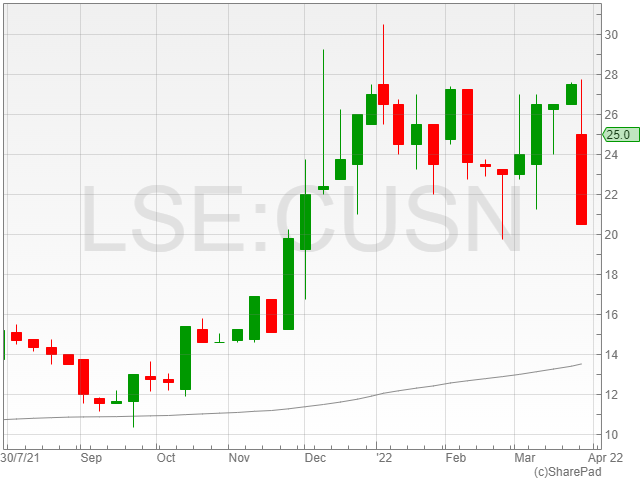
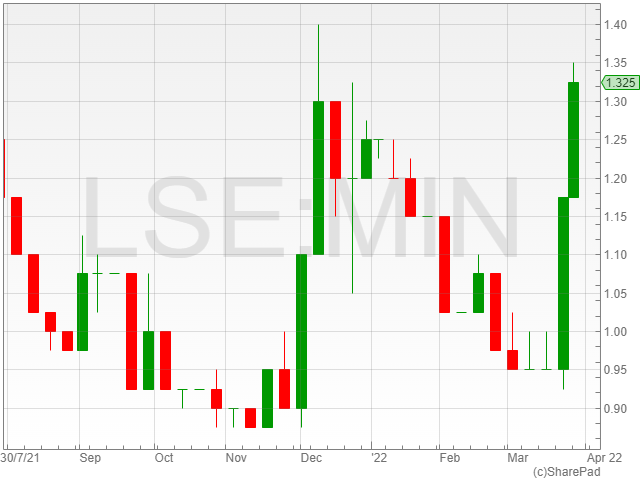
Cadence Minerals has raised £4.1m by the way of a placing to fund the first tranche of their investment into the Amapa Iron Ore project in Brazil.

The offer was met with strong demand and was heavily oversubscribed. The placing price of 20.5p represents a discount of 17.1% to the closing price of 24.75p on 1st February 2022. The placing was taken up by both private and institutional investors.

The placing follows the landmark restructuring agreement with banks in December that cleared the way for Cadence Minerals to proceed with an investment into a joint venture that will own the Amapa asset. Cadence Minerals will invest $6 million over two stages to acquire a 27% interest in the project.

Taking into consideration long-term holders of Cadence Minerals shares, the company will also run an open offer to existing shareholders so they invest on the same terms as those that invested through the placing.

The Amapa Iron Ore project was valued at $462m in 2012 by Anglo American and in 2012 the mine produced 6.1mt of iron ore concentrate.

New standard Listing: Hiro Metaverse SPAC

Hiro Metaverse Acquisitions 1 is a SPAC seeking acquisitions in video games, esports and other related areas. Unsurprisingly, it has used the word Metaverse in its name in order to attract attention. It will be interesting to see just how high tech the acquisition will be.
Sponsor Hiro Capital will be involved in finding a suitable target. It has investments in companies in these areas. They include game-based cycling fitness platform Zwift, which runs an academy road programme offering the chance for the winners to get pro-cycling contracts. The latest winners are Maud Oudeman who is joining ...

Quartix Technologies achieves the London Stock Exchange’s Green Economy Mark

Quartix Technologies, the leading vehicle tracking provider, has received the the London Stock Exchange’s Green Economy Mark which celebrates those companies driving growth in the green economy.

The London Stock Exchange recognises companies that generate at least 50% of their total annual revenue from products and services from low carbon activities with their Green Economy Mark.

Quartix provides vehicle tracking solutions that assist businesses globally in managing and supporting remote workforces, while reducing fuel spend, carbon emissions and vehicle maintenance costs. Quartix services are currently used by over 20,000 businesses worldwide, helping the company generate £25.6m revenue for the year to 31st December 2021.

“Fleet businesses have sustainability targets to meet and investors are increasingly focused on growing the proportion of their investments that support green industries. We are delighted to receive the Green Economy Mark and to be recognised as a top green business to invest in,” said Emily Rees, Chief Financial Officer at Quartix.

Julia Hoggett, CEO of the London Stock Exchange, added: “Congratulations to Quartix on receiving the Green Economy Mark, which recognises companies that derive more than 50% of their revenues from green products and services. Companies that qualify for the Mark play an important role in the global green economy and the shift towards low-carbon business models: they are key to accelerating the transition to a more sustainable economy.”

FTSE 100 approaches pre-pandemic highs as tech stocks bounce back

The FTSE 100 traded within touching distance of the highest levels since the beginning of the pandemic on Wednesday as a rally in US tech shares helped lift investor sentiment.

The FTSE 100 trade briefly above 7,600 on Wednesday morning before easing back. The FTSE 100 recorded the highest closing level since the start of the pandemic of 7,611 in mid January.

“The rebound in US shares continued again last night, helping to lift investor confidence and that’s spread across Asia and Europe on Wednesday with another day of markets pushing ahead,” said Russ Mould, investment director at AJ Bell.

“While we’re still some way off reclaiming all the territory lost at the start of the year, the fact that equity markets have stabilised shows that investors still have an appetite for risk, and they are now sifting through the wreckage to see if there are any bargains to be had.”

Vodafone was one of the FTSE 100 top risers after they posted a 4.3% increase in revenue in their third quarter. Vodafone also hinted at the potential for further acquisitions by saying their was scope for ‘proactive portfolio actions’.

“Speculation surrounding a deal with Three and a fresh tie up in Italy is set to intensify with this update, given Vodafone has reiterated its commitment to ‘proactive portfolio actions’ to try and keep shareholders happier,” said Susannah Streeter, senior investment and markets analyst, Hargreaves Lansdown.

“There is some relief that Omicron has not disrupted lucrative roaming fees too badly, with the company posting a 2.7% growth in service revenue. The fact the company is on track for the full year is also reassuring, and the door seems wide open to future deals.”

Ocado was the FTSE 100’s top riser after the company’s shares received an upgrade from analysts at Credit Suisse.

Vodafone, takeovers, and Amur Minerals with Alan Green

The UK Investor Magazine Podcast is joined by Alan Green for a discussion around UK equities and the most pressing themes in global markets. 

The FTSE 100 has quickly recovered losses caused by Ukraine tensions and interest rate concerns to trade within touching distance of pre-pandemic highs. 

We look at Vodafone and their Q3 earnings which saw a 4.3% increase in revenue, and also explore speculation around a potential takeover of Three by Vodafone.

With a number of high profile M&A deals bubbling away, we review the latest from the potential acquisition of GSK’s consumer business by Unilever, and the $69 billion takeover of Activision by Microsoft. 

Amur Minerals shares surged last week on press speculation around the takeover of their assets which could value them at £100 million. We take a look at their wholly-owned subsidiary, Irosta Trading Limited, which is the subject of the speculation. 

Irosta Trading Limited owns the Copper Sulfide Kun-Manie Project and the attractiveness of the asset given the soaring demand for battery metals.

Staying with the theme of battery metals, we discuss the latest from Cadence Minerals and their portfolio of Lithium assets. 

Cadence Minerals will present at the UK Investor Magazine Metals & Mining Conference.

Register here

Google revenues beat expectations

0

For the three months ending 31 December, Google revenues jumped 32% to $75.3bn – these beat expectations of estimates of $71.652bn. Profits for the period hit $20.6bn.

The group reported better than expected profits, causing shares to increase 7% in after-hours trading.

Advertising revenues increased from $46.2bn to $61.2bn. The company generates more revenue from internet ads than any other group.

“Our deep investment in AI technologies continues to drive extraordinary and helpful experiences for people and businesses, across our most important products,” said Sundar Pichai, chief executive officer of Alphabet and Google.