Smiths Group announces slate of executive appointments

0

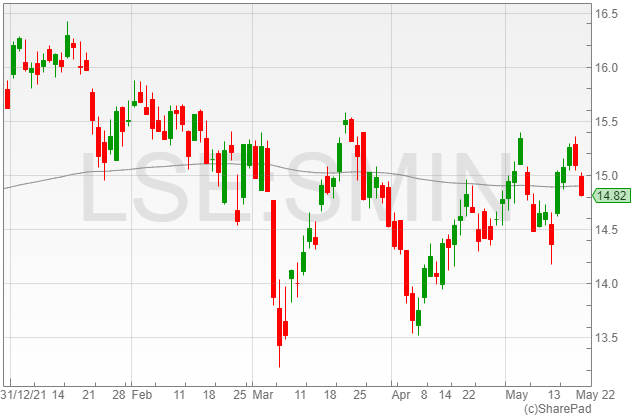
Smiths Group shares were down 1.5% to 1,414.5 in early morning trading on Thursday, following the firm’s announcement of several new executive appointments.

The engineering company confirmed its appointment of Clare Scherrer as Chief Financial Officer, who has been an advisor to the firm for seven years and is scheduled to replace John Shipsey from 29 April.

She previously spent 25 years at Goldman Sachs, where she worked as partner for over 10 years and was most recently the Co-Head of the Global Industries Business.

Her experience covers a broad range of industrial industries, with specialised interest in the technology sectors, including energy, safety, security and aerospace.

Smiths has also hired Bernard Cicut as President of John Crane, who will take over the position from Jean Vernet on 18 April.

Cicut joined the company from his previous role at 3M as President of the business’s $4.5 billion Personal Safety Division, where he led increased growth and a four-fold increase in global respirator supply during the Covid-19 pandemic.

The group announced Vera Kirikova as Chief People Officer, who is set to replace Sheena Mackay from April 18.

Kirikova joined the company from her prior position at Rio Tinto, where she worked as Chief People Officer between 2016 to 2021, following her 22 year employment at Schlumberger in a variety of senior leadership roles.

Smith also announced that Group Head of Strategy is officially set to become an Executive Committee role, with present Group Head Diana Houghton consequently promoted to the Committee from April.

Houghton has been in the role since 2019 and joined the company in 2013, with her contributions playing a key role in developing the firm’s growth strategy over the past few years.

“On behalf of the Board I would like to thank John, Jean and Sheena for their significant contributions to Smiths over the years and wish them continued success in the future,” said Smiths Group CEO Paul Keel.

“At our Capital Markets Event in November, we laid out a plan to accelerate growth at Smiths and deliver on our significant potential.”

“We’re now seeing multiple examples of this such as the earlier than expected close of the Medical Sale, ramp-up in new product activity, and first half results which delivered 3.4% organic revenue growth. Today’s announcement further builds on our momentum.”

Oil demand cushioned by China’s lockdown says IEA

Oil prices have been skyrocketing with geopolitical tensions on the rise. Countries have come together to combat the hikes in oil prices due to high global demand. China’s lockdown aids this movement as the halt in production across its industrial sector slows down the country’s demand for oil, according to the International Energy Agency.

China is a major importer of oil and metal to support its industrial sector. With the rise in Covid-19 cases, China has entered into a tight lockdown to combat the pandemic from spreading.

With the country under lockdown, the industrial sector is at a halt resulting in lower demand for oil during times of distress due to the havoc caused by the ban on Russian oil according to the IEA.

The IEA said in its monthly report on world oil markets that Russia’s output would fall by 1.5m barrels per day (BPD) in April, increasing to 3m BPD in May, as consumers either voluntarily stop buying Russian supplies or scale back due to uncertainty over sanctions.

Given Russia’s position as the world’s second-largest oil producer, the prediction suggests that up to 3% of global supply might be lost by the middle of spring.

The IEA said there was unlikely to be a “sharp deficit” in global oil markets because of several variables that offset the impact of lost Russian supplies.

The most recent example is China’s installation of “stringent” anti-Covid regulations, in which China has placed all 26m residents in Shanghai under house arrest.

Weaker-than-expected demand in OECD countries which is a collection of primarily developed countries has contributed to the drop in global demand for oil, according to the IEA.

As a result, the organisation reduced its global oil demand forecast by 260,000 BPD from last month’s estimate, predicting that the global market will require an average of 99.4m BPD in 2022.

Due to the general global economic upswing from 2021, which was more heavily impacted by Covid limitations around the world, the number is still up 1.9m BPD from 2021.

Oil prices have soared to near-record highs as a result of this recovery, as well as market uncertainty induced by Russia’s invasion of Ukraine.

The consequent increase in fuel prices has been felt by motorists in nations such as the United States and the United Kingdom, where gasoline and diesel prices have reached new all-time highs, resulting in a growing cost-of-living crisis.

The IEA’s revised lower prediction should allay fears about oil prices, especially now that the outlook for oil output has improved.

In March, global supply grew by 450,000 BPD to 99.1m BPD, aided by an increase in output from countries outside of the Opec cartel of oil-producing nations.

Opec members Saudi Arabia and Iran committed to a 400,000 BPD increase, although not to the extent that big oil consumers like the United States and India had wanted.

Member countries of the IEA have also consented to a coordinated release of 120m barrels of emergency reserves to assist the cut in oil prices, with the price of Brent crude falling by $10 to $104.

During the early days of Russia’s invasion of Ukraine, the price almost reached $120, and analysts predicted it would soon surpass the all-time high of $147.50, set in 2008.

The IEA reports, on the other hand, have contributed to a long-term pattern of declining reserves, with inventory falling for 14 months in a row.

In February, inventories were 740m barrels lower than they were at the end of 2020, with OECD countries accounting for 70% of the reduction.

The oil price dropped 0.6% to $108 a barrel on Thursday as demand eases with China’s lockdown and supply increases with support from nations with oil.

discoverIE Group earnings to deliver above expectations

0

discoverIE Group shares enjoyed a rise of 2.8% to 782p in early morning trading on Thursday, following reports that the company expected its underlying earnings for continuing operations result to deliver above management expectations.

The electronics firm’s group orders remained ahead of its sales with a 36% year-on-year organic growth and a 32% two-year growth driven by strong demand across the company’s target markets.

The group delivered 17% year-on-year sales growth alongside a 13% two-year growth.

The company grew its sales for the past two months 20% year-on-year and 22% over two years, despite ongoing supply chain challenges including semiconductor shortages which caused disruption in two of its 20 businesses.

discoverIE Group highlighted its agility in navigating Covid-19-linked challenged and noted that its exposure to Ukraine remained minimal, with the Russian invasion causing few disruptions its business operations.

The company also celebrated its A rating from the MSCI ESG Research group in recognition of discoverIE Group’s environmental and social governance, along with its strategic focus on sustainable technologies such as renewable energy.

The firm commented that it was well-funded with strong liquidity and a reliable cash flow, alongside additional capital from the sale of its Acal BFi distribution business providing it with significant capacity for future acquisitions and steady pipeline of opportunities for the group to expand.

The discoverIE Group said that the company currently looks well-positioned to make progress on its key priorities going into 2022, with a record order book and “sustainable growth” markets across Europe, North America and Asia.

Primary Health Properties acquires Chiswick Medical Centre for £34.5m

0

Healthcare facility investor, Primary Health Properties announced that it acquired Chiswick Medical Centre in London for £34.5m on Thursday.

Primary Health Properties has completed the purchase of the Chiswick Medical Centre in London for £34.5m and the property is fully leased to HCA International Ltd for just under 20 years, with five annual compounded RPI led rent reviews.

The Chiswick Medical Centre has undergone a comprehensive tenant-led fit-out to establish a unique diagnostic and private healthcare centre with some of London’s most advanced medical technology.

The hospital offers a variety of services and specialised teams in neurology, cardiology, orthopaedics, urology, and gastroenterology, as well as women’s healthcare and a children’s unit.

Primary Health Properties’ portfolio will grow to 524 assets, 20 of which are in Ireland, with a committed rent roll of slightly under £143 million as a result of this transaction with Chiswick Medical Centre.

Harry Hyman, Chief Executive Officer, Primary Health Properties, stated, “We are delighted to have acquired this state-of-the-art diagnostic centre in London, let to an excellent covenant which provides a wide range of services which alongside the NHS is assisting with tackling the significant backlog of referrals following COVID-19.”  

“We have a strong pipeline of opportunities in the UK and Ireland and are well positioned to continue to grow our portfolio and to support the healthcare systems in these markets through the provision of modern, primary care infrastructure.”

Primary Health Properties’ shares rose 0.2% to 150p after the announcement of the completed acquisition of Chiswick Medical Centre in early morning trade on Thursday.

National Grid projects above-average profits for FY2022

0

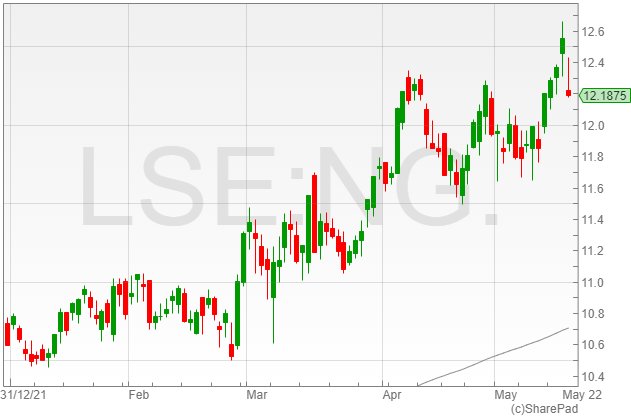
National Grid shares were flat at 1,183p in early morning trading on Thursday, after the group projected moderately above-expected profit returns in its pre-close trading update ahead of its financial results for the last year.

The company confirmed that its New England, New York and National Grid Ventures business units were on track to deliver underlying operating profits in line with management guidance.

However, the firm anticipated a boost in underlying profit in its UK Electricity Distribution business units, with rising inflation driving projected profits above expectations.

The National Grid added that it expects to take on a 25% underlying effective tax rate due to an additional tax charge of approximately £100 million, reflecting the impact in its income statement of deferred tax reversing at a higher rate in future company statements.

The company projected its average expected underlying effective tax rate at a reduced level of 23% for FY 2023.

The group mentioned that it currently expects its 2022 earnings per share to deliver slightly above management guidance.

The National Grid also highlighted a selection of sales and acquisitions across its financial year, including its acquisition of Western Power Distribution on 14 June 2021.

The company confirmed that the contribution from its acquisition had been included in its financial results for the year.

The group noted that it continued to hold its UK Gas Transmission and legacy Metering businesses as discontinued operations since the sale of a majority stake in National Grid Gas on 27 March 2022, and will reportedly continue to hold the entities until the transaction closes later this year.

The National Grid also listed the ongoing sales of its Rhode Island business to PPL, with the transaction projected to close in the first quarter of the firm’s FY 2023.

The company is set to report the asset under its New England business unit until the agreement closes.

The National Grid added that it was currently working with the UK Government to manage a smooth transition as part of the administration’s plan to create a Future System Operator to shoulder the existing Electricity System Operator roles, alongside the longer-term aspects of the Gas System Operator.

The company confirmed that the transition is scheduled for completion by 2024.

Petropavlovsk’s shares fall 20% on Gazprombank update

0

The Russian gold miner, Petropavlovsk has updated investors on its relations with Gazprombank and its corporate options earlier on Thursday which led shares to sink 20% to 2.3p.

The Petropavlovsk Board of Directors announced an additional update on the implications for the group of Gazprombank’s (GPB) entry on the UK Sanctions List and its designation for an asset freeze under the Russia Regulations 2019.

Concerning the Regulations, the company is aware of reports of potential Russian legislation that would make refusing to interact with counterparties based on the Regulations a criminal offence.

If such legislation is passed, the Board may not be able to verify that its Russian subsidiaries follow the rules.

As previously stated, the firm and Bank GPB have a $200m committed term loan and $86.7m in revolving credit facilities (RCFs) made available by GPB to several of the company’s Russian subsidiaries.

On 25 March 2022, a $560,000 interest payment was due under the term loan, which the firm was and is still forbidden from performing under the Regulations.

Furthermore, the rouble equivalent of $9.5m became repayable under the RCFs on  28 March 2022 but was not paid as a result of the Regulations.

GPB will operate as an off-taker of 100% of the group’s gold production, as previously indicated, as a condition of the RCFs and the term loan.

The group’s status under the Regulations prevents it from selling gold to GPB in the future.

The mining company is still looking into selling its gold, also looking for other potential buyers, pending permission from GPB.

Furthermore, the price at which the Russian Central Bank acquires gold, thus limiting the prices given by commercial buyers, is set daily at levels that are generally lower than the London fixing ($1,660/oz as of 13 April 2022), potentially affecting the group’s free cash flow.

Outside of Russia, the group’s cash reserves are low. In Russia, there are legal constraints on the firm’s ability to move money out of the country.

The Board is aware that an interest payment of approximately $12.36m is due on 14 May 2022 in correlation with the $500m 8.125% guaranteed notes 2022 issued by Petropavlovsk 2016 Limited, of which $304m is still outstanding and that the notes are set to mature in November 2022. 

The Board believes that refinancing the notes will be extremely difficult under the current conditions.

Payments on the notes and the guaranteed convertible 8.25% bonds due 2024 were issued by Petropavlovsk 2010 Limited, who is the guarantor for the payments.

AlixPartners UK has been recruited by the group to help the Board as it considers its alternatives and determines the best course of action for all stakeholders, including shareholders and creditors.

The sale of the company’s whole interest in its functioning subsidiaries as soon as practically possible is one of these choices.

It is currently unclear what, if any, return shareholders including holders of bonds and notes may receive as a result of this process.

Halma acquires Deep Trekker for £36m

0

The tech company focusing on safety equipment, Halma announced the acquisition of Deep Trekker for roughly £36m on Thursday.

Deep Trekker is a market-leading manufacturer of remotely driven underwater robots used for inspection, surveying, analysis, and maintenance, with headquarters in Ontario, Canada.

Aquaculture, renewable energy, and ocean science and research are among the markets it services.

Deep Trekker will be paid cash and debt-free cash consideration of around £36m, which will be funded from Halma’s current facilities.

Deep Trekker’s unaudited revenue for the year ended 31 December 2021 was over £12m, with a return on sales that were higher than Halma’s planned range of 18-22%.

The group’s Environmental & Analysis department will house Deep Trekker post the acquisition.

“Deep Trekker is an exciting addition to Halma, which is highly aligned with our purpose, both in terms of helping to ensure a cleaner environment, and in improving the safety of underwater inspections,” said Andrew Williams, Group Chief Executive Officer, Halma.

“It offers new opportunities for growth in a number of markets, driven by increasing health, safety and environmental regulation, and global efforts to address climate change, waste and pollution.”

Halma shares gained 1% to 2,472p after the acquisition of Deep Trekker was announced in early morning trade on Thursday.

Small & Mid Cap Roundup: Oxford Instruments, Dr Martens, ImmuPharma, Amur Minerals

0

UK small and mid caps suffered on Wednesday as the market digested the latest round of inflation figures pointing to rising prices and increased pressures on households.

Oxford Instruments

Oxford Instruments shares enjoyed a 7.3% rise to 22,275p after the company announced revenue and operating profit projections marginally ahead of management expectations, alongside a positive outlook for 2022.

The firm attributed its positive results to good progress in the second half of the financial year, reportedly driven by strong order growth supported by resilient end markets.

Derwent London shares increased 2.2% to 31,890p after JP Morgan raised the stock to overweight from neutral, with a price target of 4,200p compared to its previous price of 3,600p.

PZ Cussons shares rose 2.3% to 205.2p following the group’s report of continued improvement in revenue, with an 8.5% like-for-like revenue growth in the third quarter.

“We are focusing on building our Must Win Brands, driving executional excellence, dramatically reducing complexity and transforming our functional capabilities,” said PZ Cussons CEO Jonathan Myers.

Dr Martens shares dropped 7.6% to 221.4p after Barclays cut the company’s price target to 360p from 480p.

Hammerson suffered a loss of 4% to 30.8p following JP Morgan’s recommendation to lower the shares to underweight from neutral, with a price target of 29p down from 40p.

Liontrust Asset Management shares fell 3.5% to 12,400p following the company’s release of its annual financial results, which reported a slowdown in growth due to supply chain issues, macro-economic factors and high dealer sales.

ImmuPharma shares spiked 40.1% to 7.9p following positive data from the group’s Lupuzor/P140 pharmacokinetic study as part of its optimised international Phase three trial of Lupzor in lupus patients, which revealed that the study successfully met key endpoints required by the US Food and Drug Administration (FDA).

“This positive PK data now clears the path for commencement of all clinical studies within the P140 platform,” said a spokesperson for the company.

“In addition to lupus, there is a planned Phase 2a/3 pivotal trial in chronic inflammatory demyelinating polyneuropathy.”

Shearwater Group shares were up 26.9% to 139p after the company won a new contract with a potential value of up to £21 million with an unidentified leading telecommunications and media firm.

Empire Metals shares increased 21.3% to 1.8p following the group’s completed acquisition of the Pitfield Copper-Gold Project.

Amur Minerals Corp shares dropped 12.6% to 1.5p after the company was slightly impacted by the latest wave of anti-Russian sanctions, which saw its lead legal representation in Moscow suspend their operations in Russia.

Amur Minerals confirmed that the sanctions have not affected its AO Kun-Manie mine in the far east of Russia, and that it is currently seeking alternative legal representation in the country.

Diversified Energy acquires ground-breaking emissions technology

0

Diversified Energy Company shares were down 2.6% to 115.4p in late afternoon trading on Wednesday, following the company’s acquisition of the Opgal EyeCGas 2.0.

The firm also reported the acquisition of the technology’s companion state-of-the-art emissions measurement devices, the EyeCSite Tablet software and the Semtech Hi-Flow 2 sampler.

The move comes as part of the group’s ongoing evaluation and deployment of new technologies to reach its stated emissions goals.

Diversified Energy commented that the acquisitions positioned the company as the first group in the US to deploy the technology in upstream natural gas operations.

The energy firm has already rolled out the new acquisitions across its operations based in Appalachia and the Central Region.

According to the company, the Opgal EyeCGas 2.0 uses an Optical Gas Imaging Camera and Artificial Intelligence software to quantify methane leaks, particularly emissions sourced from difficult to access breaches.

Diversified Energy added that the Semtech Hi-Flow 2 sampler uses Tunable Laser Absorption Spectroscopy to accurately measure fugitive methane emissions, with the specialised equipment to support additional validation of reported leak quantities.

The group mentioned that its previous generation of equipment only served to visually detect fugitive methane emissions. However, its new technology is reportedly capable of estimating the level of emissions in an environment.

“Our investment into advanced and innovative emissions measurement technology advances our efforts to reduce our methane emissions by 30% by 2026 from 2020 levels on the way to net-zero greenhouse gas emissions by 2040,” said Diversified Energy Company CEO Rusty Huston Jr.

“Adding this technology to the aerial surveillance and handheld detection devices we’ve placed in the hands of our skilled well tenders further enhances our ability to proactively detect, accurately measure and repair fugitive emissions across our asset base.” 

“Diversified remains committed to the continuous improvement of our environmental performance and to outpacing the expectations of our stakeholders.”

Darktrace shares tank despite projected $109.8m revenue

1

Darktrace shares plummeted 11.3% to 401.3p in late afternoon trading on Wednesday, despite a reported revenue of $109.8 million in the company’s latest trading update for Q3 2022.

The cybersecurity firm confirmed a year-on-year growth of 50.1%, with its current year-to-date revenue climbing to $302 million.

Darktrace brought in 359 new customers to its client base, with its its total number amounting to 6,890 and representing a year-on-year increase of more than 37%.

The technology group also highlighted its acquisition of surface attack management technology company Cybersprint for €47.5 million in March, contributing to the firm’s ambition to develop a continuous AI loop for addressing international cyber challenges.

“In March, we took a step closer to [our] goal when we completed our acquisition of Cybersprint and welcomed their outstanding attack surface management technology and talented team to Darktrace,” said Darktrace CEO Cathy Graham.

“Together, we are driven by innovation and committed to developing the world-class technologies, underpinned by our powerful Self-Learning AI, that are so critical to our customers remaining protected in a rapidly evolving threat landscape.”

The cybersecurity group said that its strong results had persuaded Darktrace to increase its FY 2022 guidance, with an estimated year-on-year growth of between 40% to 41.5% compared to the company’s previous guidance of 38.5% to 40%.

The firm added that it expected a FY 2022 year-on-year revenue growth between 45.5% to 47% against its previously anticipated 44.5% to 46.5% growth.

“In our third quarter, we sustained strong growth trends across our customer base, ARR and revenue, as well as maintaining the gains in churn and net ARR retention rates we made in the first half of the financial year,” said Graham.

“Year-to-date results and a continuing positive operating outlook have led us to again increase our FY 2022 expectations across all financial and customer measures.”