Two Inflation Winners, Bidstack and Upcoming Events with Alan Green

The UK Investor Magazine was kindly joined by our good friend Alan Green for a rundown of the key markets themes and discussion around a number of UK equities.

UK inflation has hit 6.2% and a cost of living crisis is in full swing with everyday items and fuels cost soaring. It is evident from the fallers on the FTSE 100 today there is some concern among investors in companies linked to the health of UK household finances.

We questions whether this a knee-jerk reaction, or the pressure of these companies share prices could persist.

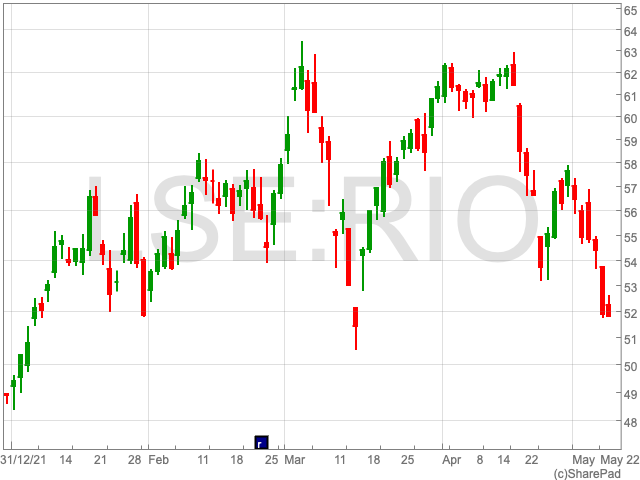
There is consideration paid to two shares we feel could be ‘inflation winners’. We have picked out two companies that are set to outperform the market in a period of higher inflation in Rio Tinto and Metrobank.

Bidstack has released a number of updates recently and we take a look at what this means for the company and access some of the strategic decisions made by the in-game native adverts provider.

Register for upcoming UK Investor Magazine Event here.

Surgical Innovation sees revenue grow 44% despite postponed elective surgeries

0

Surgical Innovation, the invasive surgery product providers, saw revenue grow 44% from £6.3m to £9.1m in 2021 due to sales recovery from the pandemic’s impact with fourth-quarter sales at par with pre-pandemic levels.

Surgical Innovation sales suffered from the constant impact of covid-19, which affected the demand for their products.

The revenues reported will be able to support the business needs for 2022, the company said.

Despite the Omicron variant affecting staff shortages to perform invasive surgeries, the firm said their revenues from January and February 2022 were roughly 40% higher than of 2021.

Adjusted EBITDA for the group bounced back to profits of £0.5m from a loss of £0.66m in 2020 as a result of the group controlling their operating expenses.

Surgical Innovation saw a decrease in adjusted operating loss before tax from £1.6m to £0.3m in 2021.

The company reported an adjusted EPS loss of 0.022p compared to 0.19p in 2020.

Surgical Innovation noted net cash excluding leases of £1.7m in 2021, compared to £3.1m in 2020.

Going forward, the company had restructured their debt financing to leave financial headroom of £4.06m instead of £5.78m in 2020 to create a ‘lower risk environment’.

Surgical Innovation is focused on gaining growth by increased product development and marketing investments.

‘Resposable’ Technology

Surgical Innovation develops ‘resposable’ products, which are reusable or part-disposable in an attempt to reduce both waste and costs associated with elective surgery.

During the pandemic, many elective surgeries were not a priority, resulting in a reduced number of surgeries performed.

Post the pandemic, postponed elective surgeries are increasing. During the second half of 2021, a 24% increase in elective surgeries from the first of half of the year was observed in the UK markets.

The company is in hopes of rolling out ‘resposable’ products to the UK market to meet the needs of the NHS’ sustainability targets.

Nigel Rogers, Chairman of Surgical Innovations, said, “the UK market continues to be strong and is trending ahead of pre-pandemic levels and, as patient waiting lists continue to rise, it is likely that this momentum will continue.”

“Demand in the European and the Rest of the World markets is steadily increasing but remains more muted.”

“However, both the US and APAC markets continue to grow significantly ahead of pre-pandemic levels.”

“In addition, we are committed to enhancing and expanding our product portfolio through new product launches, investing in sales and marketing to drive our sustainability messaging, and developing key partnerships, all of which will further support the expansion of revenue in 2022 and beyond.”  

Surgical Innovation shares surged 4.3% to 2.4p in early morning trade on Wednesday following optimism around the company’s 2022 outlook regarding recovery from the pandemic.

UK inflation soars to 30-year high of 6.2%

1

The Consumer Price Index (CPI) soared to a 30-year inflation high of 6.2% in February 2022, according to figures released by the Office of National Statistics (ONS).

The 6.2% spike beat initial projections of 5.9% and represented a 0.8% month-on-month climb ahead of the estimated 0.6% increase.

The retail price index hit 8.1% in line with earlier predictions with a 0.8% rise month-on-month.

The highest sector climbers included clothing, furniture, culture, recreation, household goods, food and drink.

Pensioners will be among the hardest hit by the skyrocketing inflation and will require urgent assistance from the government to survive the rising rates on basic food, energy and consumer services.

“The spike in rises is sharp and steep – it’s almost vertical,” said interactive investor head of pensions and savings Becky O’Connor.

“A generation has grown up having never experienced price rises like this and the pain is far from over.”

“Anyone on low, fixed incomes, such as pensioners, will be flung into poverty and debt struggles without further immediate help from the Government.”

“They can expect some help – whether it is enough remains to be seen.”

The slight uptick in consumer spending after the easing of restrictions around Omicron is set to decline on the back of rising costs in everything from takeout to gas, which will see consumer budgets take a massive hit as households feed rising energy and basic expense costs.

However, analysts have warned that the rising CPI has not taken into account the impact of Russia’s war in Ukraine.

“The worst is yet to come as the impact of Russia’s invasion of Ukraine is yet to be fully factored in,” said ZEVRA global head of fiduciary investments Toby Sturgeon.

“The Bank of England last week suggested inflation could reach 10% this Autumn which will certainly stretch household budgets.”

Investors should expect to brace for a difficult summer and a potentially chilling winter as prices look set to climb higher and higher going forward in 2022.

Saga hits devastating £6.7m loss over motor insurance claims

0

Saga saw shares fall 3.5% to 245p in early morning trading on Wednesday after the company released a devastating £6.7 million loss due to an increase in motor insurance claims.

The loss represented a 139% fall in profits against Saga’s £17.1 million profit in 2020.

The ‘over-50s’ products and services firm reported higher marketing costs and a rise in motor insurance claims as to the driving factors behind its loss.

Saga noted a £31.2 million decrease in net debt from £760.2 million to £729 million over 2021.

The group also reported an increased retention rate of 2.3% to 82.8%.

Saga suspended its dividend for 2021 and warned shareholders not to expect a payout until 2024 at the earliest.

“Over the last year, Saga has delivered a resilient performance, whilst laying the foundations for future growth,” said Saga CEO Euan Sutherland.

“The Insurance business delivered a robust performance with the second year of policy growth after several years in decline, whilst in travel, we resumed operations, secured positive cruise bookings for 2022/23 and began the restructure of our tour operations business.”

“Looking to the future, I am both confident and excited about the opportunities ahead of us as we emerge stronger from the pandemic than we went in, whilst remaining mindful of the current challenging external environment.”

Analysts focused on the mixed returns of Saga’s financial results and commented on the impact of its marketing strategy.

“Saga has rounded off the year with an underlying loss, which has disappointed the market alongside a lack of forward guidance,” said Hargreaves Lansdown equity analyst Sophie Lund-Yates.

“The money the group’s throwing at a brand refresh seems to be bearing some fruit, with customer retention levels moving in the right direction.”

“But before Saga can focus on the future too much, it needs to concentrate efforts on navigating through the current waters of uncertainty.’’

Plus500 report 25% drop in EBITDA

1

Plus500 saw its share price increase 0.4% to 1,473p in early morning trading on Monday, despite a reported 18% decline in revenue to $718.7 million against $872.5 million in 2020 and a 25% fall in EBITDA from $515.9 million to $387.1 million in 2021.

The company also saw a 33% loss in new customers with 196,336 new clients in 2021 compared to 294,728 in 2020.

Plus500’s active customers fell 6% to 407,374 against 434,296 in 2020.

However, the FinTech group hit the milestone of 22 million registered customers in 2021, alongside a series of new acquisitions, including futures commission merchant Cunningham Commodities and technology trading platform provider Cunningham Trading Systems.

The company further announced the acquisition of Japanese firm EZ Invest Securities on 21 March in its slate of news this week, which sets Plus500 up for entry into the Japanese financial instruments market.

The firm announced a $120 million dividend, representing a total dividend of $1.1 scheduled for distribution on 22 July 2022.

Plus500 noted the launch of proprietary share dealing platform ‘Plus500 Invest’ among its operational highlights, reporting a further roll-out for the project in 2022.

Plus500 said it currently expects sustainable medium to long term growth driven by the continued momentum of its underlying customer income.

“Plus500 delivered another excellent operational and financial performance in 2021 and we made significant progress with our strategic roadmap to develop our position as a leading global multi-asset fintech group,” said Plus500 CEO David Zruia.

“Our future growth will be delivered through continued development of our technology, particularly in relation to driving customer retention, successfully obtaining new operating licenses and launching new products.”

“These growth opportunities will be achieved by continued organic investments in our business and through additional acquisitions.”

Ultra Electronics records £1.3bn in orders

0

Ultra Electronics, the defence and security company, saw its order book jump 22% to £1.3bn in 2021 as a result of their One Ultra strategy to provide ‘interoperable solutions’ with an array of products including Sonobuoy and ORION radio.

Existing clients continued strong momentum in orders with the US Marines, US Army and US Navy committing $140m for ORION radio and $118m orders for US Sonobuoy under the ERAPSCO 5-year IDIQ contract.

The company also saw orders for the UK Ministry of Defence (MoD), which placed a £31m order for Sonobuoy and received an award of $23m for the MK54 lightweight torpedo array kits.

Amongst their awards, Ultra Electronics won a cyber award worth £65m for the UK MoD and a production award of $30m for the Next Generation Surface Search Radar programme.

Among their new clientele, the company received a £60m order for Integrated Anti-Submarine Warfare Defence Systems by the Indian Navy, a $14m contract with Tunisia and Romania to provide Integrated Command and Control systems and a $24m contract for Forensic Technology with Brazil.

Revenues increased by 4.2% to £850.7m on an organic revenue basis, with strong revenue growth of 6.3% and 5.5% in the Maritime segment and Intelligence & Communications segment.

Profit before tax plummeted 20.3% from £103.7m in 2020 to £82.7m as the sterling strengthened against the US dollar.

Offer from Advent Cobham Acquistions

In 2021, Ultra received an unexpected offer from Cobham Ultra Acquisitions Limited.

The acquisition was accepted by 99.86% of Ultra’s voting shareholders in October 2021. Except for HM Government’s, all the clearances have now been obtained.

Ultra and Cobham have been collaborating with the HM Government, including the Ministry of Defence, to guarantee that the UK’s national interests are taken into consideration as part of the proposed arrangement.

The acquisition will no longer be finalized in Q1 2022, as per the Board. Ultra’s Board is focused on working with Advent and Cobham and other parties involved to ensure that the acquisition is successful.

Ultra Electronics decreased dividends by 71.5% to 16.2p as opposed to 56.9p in 2020 due to agreements made with the Advent Cobham acquisition.

Simon Pryce, Chief Executive Officer, Ultra Electronics said, “2021 was another year of strategic, operational and financial progress for Ultra and was our fourth year of robust organic revenue growth.” 

“This was achieved despite pandemic driven operational and supply challenges and significant translational currency headwinds.”

“Effective execution of our ONE Ultra strategy is creating new opportunities, and we enter 2022 with another record £1.3bn order book. Our continuous improvement focus is uncovering additional improvement opportunities. “

“The Board remains committed to working with Advent/Cobham and HM Government to deliver a successful closing of the acquisition.”

Two funds to consider for Latin America’s future growth

Latin America has outperformed wider the Emerging Markets over the past year as the region’s equity join the recovery from the pandemic.

Some Latin American countries were slow to implement, or opted to avoid, lockdown restrictions meaning their economies lagged other emerging markets in the recovery from the pandemic, or had deeper economic impacts. The region is now rebounding from pandemic at a time many other markets have already priced in a recovery.

This has been reflected in the broad movements of Latin American equites that are now outpacing other regions. The MSCI Latin American Index was up 14.7% in the year to February 2022, where as the MSCI Emerging Markets index fell 10.4%.

In addition, Latin America equities are heavily weighted towards commodities which have staged a rally while technology shares have sunk.

Vale is the largest constituent in the MSCI Latin America with a 12% weighting whilst the largest companies in the MSCI Emerging Markets index included Tencent, Samsung and Alibaba.

The funds included here provide two options; one to gain exposure to the commodities rally, and another to harness broader consumer trends in the region.

Invesco Latin American

If you’re looking to invest in oil and mining in a market during current geopolitical conflict in Ukraine, then perhaps you might consider Invesco Latin America.

The fund broadly tracks the MSCI Latin American index with large holdings in commodity shares such a Vale and Petrobas. It is slightly underweight consumer staples.

Invesco Latin American Portfolio

Invesco Latin America aims to achieve capital growth by investing in Latin American companies and uses derivatives to minimise risk and generate additional profits. The £80.2 million fund provides a respectable yield of 2.5%.

Invesco Latin America has remained ahead of the benchmark with a 19% return over the last year compared to the IA Latin America return of 10.1% and has returned 20.2% to investors over the last three months against the benchmark of 19.3%.

Invesco Latin America is split between the major South American markets, with a 60.6% holding in Brazilian equities, 24.2% stake in Mexican equities and a 7% holding in Chilean equities.

The fund holds its remaining investments in 2.6% Peruvian equities, 1.8% in Money Market, 1.7% in American emerging equities and 1.6% in Canadian equities.

Invesco Latin America’s largest holding is a 9.9% investment in mining group Vale, which reported a gross profit of $6.6 billion in 2021 and followed some of their FTSE 100 mining peers in paying additional dividends after a strong year.

The fund also has a 9.8% stake in Petroleo Brasileiro, whose parent company Petrobas posted a gross profit of $24.4 billion in 2020 and a $1.3 billion dividend, alongside a 5.7% holding in Banco Bradesco with an operating income of R$4 billion and a 5.3% dividend yield in 2021.

Stewart Investors Latin America Fund

Stewart Investors Latin America Fund has the highest yield of 3.25% amongst 13 OEIC equity funds invested in Latin America, according to data compiled by Trustnet.

Stewart Investors Latin America Fund has lagged behind its benchmark, IA Latin America in performance. The fund has seen returns of -5.1% compared to IA Latin America with 2% over 5 years.

Over the last year, the benchmark index has generated returns of 10.1%, outperforming Stewart Investors Latin America Fund with a return of 3.7%.

The recent underperformance of the Stewart Investors Latin America Fund can be attributed the high weighting towards consumer staples that have been left behind in a rally in commodities.

The commodities rally drove the MSCI Latin American index sharply higher but attention may now shift to those consumer companies included in the fund and see Stewart Investors Latin America Fund outperform.

Stewart Investors Latin America Portfolio

As well as deviating heavily from the benchmark on sector allocation, Stewart Investors Latin America Fund has decided to look further a field than the largest LATAM economies with 28.2% holdings in Brazil, 27.7% in Chile and 23.9% in Mexico. The MSCI Latin America has a 62% weighting towards Brazil.

The OEIC focuses heavily on consumer staples of 38.9%, a weight of 19.3% in financial shares and 12.2% in industrial stocks.

The top holdings in the fund include Quinenco S.A. with 8.7%, Fomento Economico Mexicano SAB de CV Sponsored ADR Class B at 8% and Compania de las Cervecerias Unidas (CCU) contributing 6.6%.

Chile-based investment company, Quinenco S.A reported a net income of £582m in 2021 as a result of strong performance in shipping investments.

Compania de las Cervecerias Unidas (CCU) is a beverage producer in Chile with a dividend cover of 689x and ROCE of 15.9x.

Amongst other assets that Stewart Investors Latin America Fund invests is, Porto Seguro S.A., a Brazilian insurance company with £3.2bn in revenues during 2021, growing £300m from 2020. The company had a dividend yield of 5.7% in 2020.

London mid-caps rise while the AIM dips despite a number of positive updates

The FTSE 250 rose on Tuesday tracking gains in the FTSE 100 towards pre-conflict highs while the AIM dipped as several big fallers dragged the index, despite a number of promising updates from companies in the small cap index.

National Express were among the top risers as shares rose 3.8% to 232p as a potential bidding war continued drive their shares higher as the board considers the future of the group that looks set to join forces with Stagecoach.

Softcat shares increased 6.2% to 1,825p with a 33% in revenues from £577m to £770.9m due to improvements in hardware, software and services, despite supply chain issues caused by the pandemic.

AIM Risers

Sovereign Metals shares flew 9.9% to 30.5p following the announcement of a drastic decrease in the carbon footprint when producing titanium through natural rutile, a mineral they found in abundance in their Kasiya project.

4D Pharma shares rose 9.6% to 44p after the drug manufacturer received FDA approval for the treatment of Parkinson’s Disease through the application of two live biotherapeutics, MRx0005 and MRx0029.

Alliance Pharma shares were trading up 0.63% to 112p following the announcement of a 39% increase in pre-tax profits due to increased e-commerce activity.

The Pebble Group, a tech product provider, saw shares jump 22% to 110p as revenues increased from £82.4m to £115.1m in 2021 as a result of increased client acquisition. The Brand Addition segment saw a rise of 41% in revenues to £102m in 2021 making it the largest contributor to the group’s income.

Beowulf Mining shares soared 23% to 14.5p following the company’s announcement of increasing ownership in Vardar from 49.4% to 51.4% through an additional investment of £200,000.

AIM Fallers

MusicMagpie took a dive of 16% to 52.5p as its downwards spiral continued. Shares are now trading down 68.4% year to date after its released mildly disappointing results due to increased competition and a slowdown in expected growth.

“In theory MusicMagpie should do well from a tougher consumer environment as people look to realise cash from the unwanted tech sitting in drawers and shoppers are more prepared to buy second hand as a belt tightening exercise,” said AJ Bell investments director Russ Mould shortly after they reported earlier this year.

Knights Group Holdings plummeted 47.5% to 191.5p after its trading statement on Tuesday which reported a slowdown in business and return to the office as a result of Omicron, alongside a “softening in business confidence” across the firm.

The Diurnal Group fell 43.2% to 43.2p after its drug Efmody was met with rejection for automatic reimbursement from NHS Scotland, and reports that the drug will not meet near-term sales goals and require further funding from the company’s resources to progress the drug into resubmission for the Scottish Medicines Consortium (SMC).

FTSE 100 approaches pre-conflict highs as Kingfisher sinks

The FTSE 100 continued its rally to pre-Ukraine conflict levels as the index remained steady at a 0.5% increase to 7,484 in late morning trading on Tuesday.

Analysts noted that the FTSE 100 was now only slightly down on the year and cited the impact of rising commodities and the FTSE 100’s average yield as an attractive factor in an inflationary environment.

“The FTSE 100 extended its recent strong run and is now not too far off the levels it reached before the Russian invasion of Ukraine and only marginally lower year-to-date,” said AJ Bell Investment Director Russ Mould.

“It has substantial commodities exposure, a decent yield which appeals in an inflationary environment and more discounted valuations than seen in other global markets.”

JD Sports

JD Sports’ shares jumped 3.5% to 154p after the positive response to Nike’s third quarter results. The sports fashion company who supplies Nike apparel have been heavily hit this year with concerns around their sales due to pressure on household spending.

“Shares in Nike found some air in afterhours trading overnight after a solid set of third quarter numbers,” said Mould.

“Impressively the sportswear giant managed to boost margins despite the supply chain issues it continues to face.”

Financials

Financial shares rose on Tuesday on the expectations the Federals Reserve would again raise rates to help fight inflation.

Susannah Streeter, Senior Investment and Markets Analyst, Hargreaves Lansdown said, “caught between a rock and a hard place, the Federal Reserve sees little option but to try and chip away inflation with even bigger interest rate hikes this year, if price pressures keep mounting.”

Prudential and HSBC shares were trading up 3.3%, follwed by Natwest, Standard Charter and Lloyd’s shares gaining 3.1%, 2.9% and 2.2% respectively.

Kingfisher

The top fallers were led by Kingfisher with a decrease of 5.1% to 276.4p on Tuesday following the release of its annual results and concerns the company’s profits could decline as consumers leave their homes for the outside world once again.

“Kingfisher benefited from people looking to do up their homes during the pandemic, however the world has since moved on and, despite management reporting a strong start to the current year, there has to be a risk that the company’s moment in the sun has passed,” said AJ Bell investment director Russ Mould.

Kingfisher generated revenue of £13.1bn, an increase of 6% from 2020 results. However, the company noted a net cash outflow of £237m as opposed to a cash inflow of £881m in 2020.

Auto Trader Group fell 3.4% to 652.8p as it announced the £200 million acquisition of Autorama.

Kape Technologies revenue jumps 89% as subscriber numbers increase

0

Kape Technologies reported an 89% increase in revenue to $230.7 million compared to $122.2 million in 2020, representing a 20.7% increase on a proforma basis.

The company announced an operating profit of $38.1 million compared to $10.7 million in 2020.

Kape Technologies noted a proforma EBITDA of $78 million against $39 million in 2020.

However, the company reported a decline in post-tax profit at $23.3 million against $28.8 million.

Kape Technologies announced its acquisition of ExpressVPN for $925.8 million among its operational highlights, which has been the company’s largest acquisition to date.

The company also acquired digital platform Webselenese for $155.1 million in 2021, which provided Kape with a large market for consumer digital privacy and security, with a reported 100 million readers.

Kape Technologies noted a 161% increase in subscriber base to 6.5 million against 2.5 million in 2020, with a retention rate of 81%.

The company declared no dividend for 2021 and 2020 for shareholders.

Kape Technologies has a PE ratio of 41.9 and a forward PE ratio of 22.5, indicating analyst expectations of a rise in revenue in 2022.

The technology firm’s outlook for 2022 is projected at revenues between $610-624 million alongside an adjusted EBITDA between $166-172 million.

The group’s focus over 2022 will reportedly centre on ExpressVPN’s integration into the company.

“We are immensely proud of our progress in 2021, having delivered both a record financial performance and completed the most ambitious acquisition programme in our history,” said Kape Technologies CEO Ido Erlichman.

“In 2021, we achieved record customer growth, providing further evidence that our products remain both compelling and highly innovative, and, more importantly, our customers continue to utilise our services for many years.”

“Pleasingly, we have carried this positive momentum into 2022 and remain extremely positive about Kape’s prospects.”

Kape Technologies saw its share price dip 4.3% in early morning trading on Tuesday.