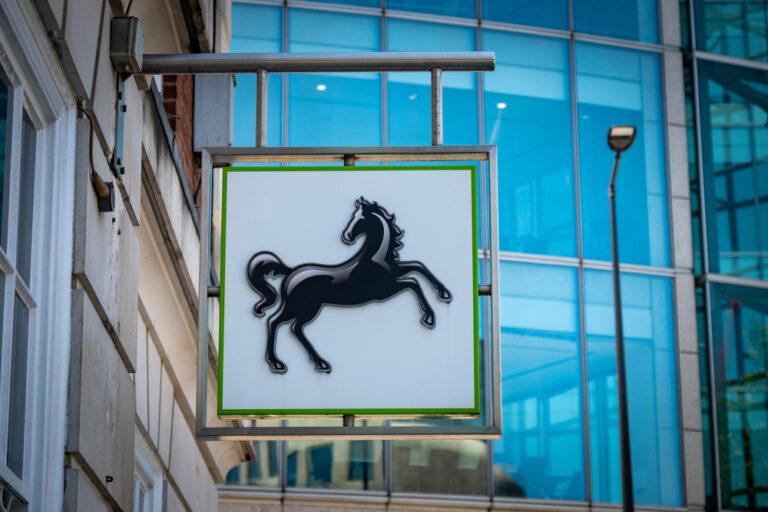
Where next for Ocado shares?

2

Ocado shares are taking a dive with concerns the recovery from the pandemic will dent demand for the grocery delivery service.

Ocado shares have sunk 44% over the last year. On Thursday, Ocado shares again dropped sharply after company reduced their forecasted revenue growth from the mid teens to 10%.

In their latest results, Ocado stated their average basket size has reduced by 15% to £124 like for like. As consumers return to physical retail shopping, their spending online is falling, which is a big problem for Ocado’s service.

This of course isn’t anything new; Ocado has been suffering ever since people gained more freedom after the first lockdown.

Their latest results reflect this, and so does the Ocado share price.

“For the most part it’s been pretty tough going for Ocado since the heady days in September 2020 when it reached all-time highs of close to £30 per share,” said Russ Mould, Investment Director, AJ Bell.

“Back then it had been a beneficiary of lockdown and the enforced need to do grocery shopping online.”

“However, that excitement gave way to mounting disappointment as the company failed to sign up new clients, ironically blaming the pandemic restrictions which had helped act as a calling card for its services in the first place.”

Ocado’s Results

In their recent report, the company reported group revenue growth of 7.2% to £2.4bn with their retail division contributing £2.2bn in 2021.

Ocado also has provides technology solutions to companies in the UK and globally which had revenues of £710m and £66m in 2021.

However, the company’s expenses increased as distribution and administrative costs rose by 20% to £976m in 2021, contributing to the 48% hike in pre-tax loss to £219m.

Capital expenditure saw a rise from £525m to £680m in 2021 as the company continued to invest in technology for Ocado’s smart platform and new customer fulfilment centres.

The company’s costs have increased 12% associated with distribution to $536m in 2021. The order intake of Ocado is not rising at an equal pace with costs, leaving room for investor concern.

On Thursday, the joint venture between Ocado and Marks and Spencers raised concerns rising fuel costs could curtail spending on higher end groceries. Consumer spending is expected to reduce as clients migrate to more affordable options which is bad news for Ocado shares.

“UK-based Ocado Retail arm – now a joint venture with Marks & Spencer has been a success for both parties, the pressure on margins from rising inflation looks to be a growing issue and will not help Ocado at group level given the solutions business remains heavily loss-making,” said Russ Mould.

Ocado does not pay any dividend as the company hasn’t generate enough profit to warrant one, so it’s difficult to make an argument for holding and waiting for recovery given the soggy revenue outlook.

Expect further disappointment from the Ocado share price.

FTSE 100 broadly flat as oil price hits $107

The FTSE 100 traded in a range on Friday after negotiations between Russia and Ukraine appeared to fall apart, and further Russian attacks close to NATO borders hit sentiment.

The FTSE 100 was trading down around 0.5% shortly after midday on Friday after what had otherwise been a strong week for London’s leading index.

The price of Brent Crude increased to $107 per barrel as negotiations between Russia and Ukraine showed signs of falling apart, ramping up scarcity fears and sending the commodity beyond $100 once again.

FTSE 100 risers

The top risers included Polymetal, up 1.4% to 142.4p, after the announcement of four new non-executive directors to its board.

“Polymetal jumped 6.4% after filling the big gaps in its board of directors after the mass resignations on 7 March,” said AJ Bell investment director Russ Mould.

“The share price continues to be highly volatile with a clear risk that the business might have to consider delisting from the London Stock Exchange if serious Western investors are no longer willing to own the equity.”

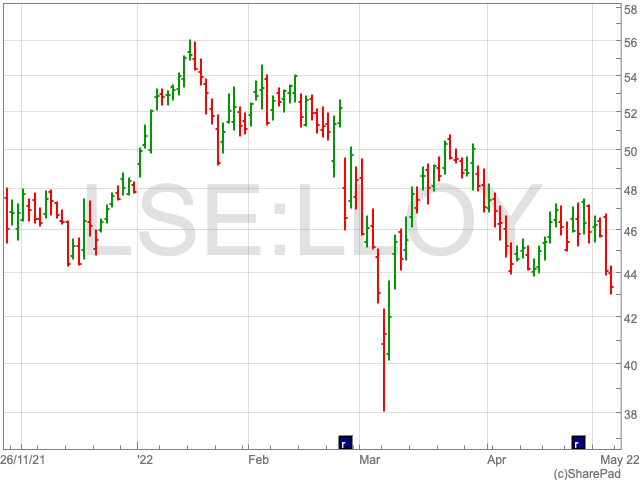
Lloyds was one of the first banks to increase mortgage rates after yesterdays interest rates hike and their shares have seen an uptick of 0.2% to 48p.

Barclays, Natwest, HSBC and Standard Charter shares were down 0.9%, 0.3%, 0.7% and 1.3% on Friday morning.

Pearson

Pearson shares were down heavily as optimism around a potential takeover by Apollo subsided.

“Pearson was the top faller on the FTSE 100 which doesn’t send a positive signal regarding current takeover talks. Private equity firm Apollo has already had two bids rejected but was still trying to come up with an offer that would win over the board and shareholders,” commented Mould.

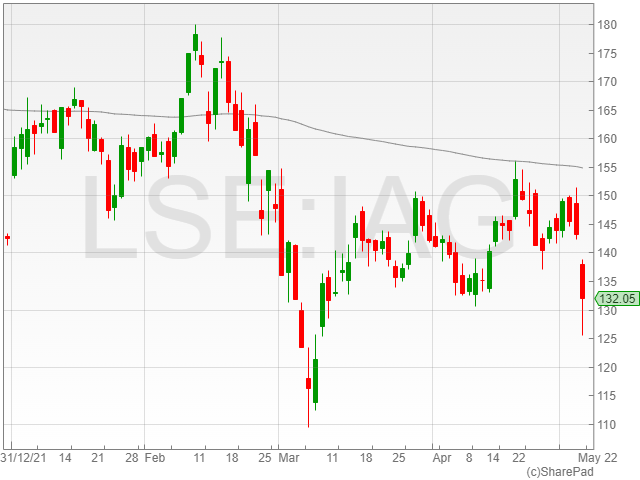
Travel related shares were heavily hit by rising oil prices, with Rolls Royce Holdings falling 3% to 91.1p and International Consolidated Airlines (IAG) decreasing 2.9% to 137.8p.

ITV shares declined 3.2% to 83.1p as investors watch the company prepare its ITVX project for launch into the highly competitive streaming entertainment market.

US House of Representatives supports removal of Russia and Belarus from “most favoured nation” trade status

0

The US House of Representatives voted 424-8 in favour of removing the “most favoured nation” trade status from Russia and Belarus.

The next step is to gain the US Senate’s approval. Simultaneously, several G7 democracies are showing similar efforts to strip the countries’ status from the World Trade Organisation (WTO).

Once this movement is accepted, the tariffs on Russia and Belarus products will face non-WTO rates. President Biden has announced his intention to charge higher tariffs on products from both Russia and Belarus.

In 2020, the largest imports from Russia not linked to oil and energy were palladium, rhodium, fertilisers, plywood and unwrought aluminium alloys, according data from the World Bank.

The US Senate identifies Putin as a war criminal and is focused on removing the trade status for Russia to enable total economic freeze out from the global economy.

With increased tensions across Ukraine, the international community is united in its efforts to stop the war.

Tritax Eurobox enters into a conditional agreement with Dietz Seller

1

Tritax Eurobox and Dietz Seller, a subsidiary of Dietz AG, have entered into a conditional agreement to acquire the assets of Dietz subsidiary in Dormagen, Germany.

Tritax Eurobox is a REIT which invests in ‘high-quality, prime logistics real estate’ across Europe.

Dormagen Proposal

The Dormagen asset will be acquired for €76.4m and the consideration of €76.4m is divided into a purchase price of around €38.7m for the majority stake of 89.9% in Dormagen SPV and approximately €12.9m for shareholder loans to the Dormagen SPV.

The Dormagen SPV will cover the development expenses, and the conditions of the offer are subject to shareholder approval due to the Dietz AG’s connections to the Listing Rules.

The freehold held asset being built by Dietz Aktiengesellschaft, the development partners of Dietz Seller will have a total gross internal area of roughly 36,437 m² comprised of three adjacent units. The three units are independent of one another and thus ideal for flexible leasing options.

The asset has an eighteen-month rental guarantee from the Dietz Seller, based on a monthly rate of €5.60 per m² for warehouse space.

Based on the rental guarantee earnings, the transaction price of €76.4m indicates a net initial yield of 3.3%. For warehouse space, market rental rates are likely to reach €6.00 per m² per month in this region.

Dormagen is an area with high demand and is located in one of the prime logistics areas of Germany, between Cologne and Düsseldorf. The area offers good connectivity to motorways such as the A1, A46 and A57.

ESG

The Dormagen proposal provides another chance for the Tritax Eurobox to accomplish several of its sustainability goals by redeveloping a brownfield property to satisfy the DGNB Gold Certificate.

Alina Iorgulescu, Assistant Fund Manager, Tritax EuroBox, commented, “We are delighted to be acquiring this asset, which is the eleventh German investment for Tritax EuroBox, bringing our total amount invested in the country to over €800 million.”

“This off-market acquisition gives us the ability to control the desired leasing profile of the scheme through capturing the rental growth evident in the market, and also allowing the company to introduce open market rent reviews into the lease, providing a mechanism to capture the expected future rental growth driven by the continued favourable imbalance in supply and demand in the German logistics market.”

Essentra operating profit surges as market share grows

1

Essentra saw its share price increase 0.7% in early morning trading on Friday after the company reported an adjusted operating profit increase of 46.5% to £83.9 million.

The essential components and solutions provider posted a revenue of £960 million compared to £897 million in 2020.

Essentra also reported a revenue increase of 8.4% on a like-for-like basis.

The company announced a pre-tax profit of £67 million compared to £47 million in 2020 and an adjusted basic earnings per share of 18.2 against 13.2 in 2020.

Essentra noted a dividend per share of 6p against 3.3p in 2020.

The group attributed its strong financial year to its favourable market position and the ability to gain market shares.

Essentra noted a successful navigation of Covid-19 supply chain disruptions while meeting accelerated demand, which increased its operating profits.

Looking forward, the company reported strong customer relationships and encouraging order book trends.

“2021 saw the start of a new and transformational chapter in Essentra’s journey; we have set out a clear direction for the Company to become a pure play Components business over time and announced strategic reviews of the Filters and Packaging divisions, thereby ensuring we create three strong stand-alone global businesses,” said Essentra CEO Paul Forman.

“I believe this next chapter will present even more positive opportunities for our businesses and our people.”

“Despite the challenges arising from the pandemic and supply chain headwinds, we have seen an improving revenue trend throughout the year, which has continued into the start of 2022 with all three global divisions well-positioned for growth with strong order books.”

Wetherspoons reports loss as COVID restrictions hit sales

1

Wetherspoons share price dipped 0.5% to 822p following the release of a £21.3 million pre-tax loss for its half-year 2021 financial results.

Despite the loss in 2021, the company says they are confident of a stronger future, if there are no more lockdowns.

The company reported a revenue of £807.4 million against £933 million in 2020, as well as an 11.8% decrease in like-for-like sales.

Wetherspoons reported an operating profit of £0.5 million and an earnings per share loss of 16p.

Like-for-like bar sales fell 12.7%, food sales decreased 11.1% and slot/fruit machine sales dropped 9.8%.

However, Wetherspoons reported a hotel room sales rise of 6.6%.

The bar chain blamed falling profits on Covid-19 restrictions and increased labour costs as a result of staff absences.

“Following a traumatic two years for many businesses and people, the ending of Covid restrictions has brought a return to more normal trading patterns in recent weeks,” said Wetherspoons chairman Tim Martin.

“Contrary to some reports, the company has a full complement of staff and is fully stocked, with some minor exceptions.”

“Draconian restrictions, which amount to a lockdown-by-stealth, are, of course, kryptonite for hospitality, travel, leisure and many other businesses.”

“The company is confident of a strong future if restrictions are avoided.”

“The readiness of the leaders of all the UK’s main political parties to resort to lockdowns, and extreme restrictions, which were not contemplated in the UK’s 2019 plans for pandemics, is the main threat to the future of the hospitality industry, but also to the economy.”

Wetherspoons have enjoyed improving trading conditions this year with the three-week period to 13th March 2022 seeing sales improve to only be 2.6% lower than in the same period in 2019.

Polymetal announces board of director appointments

1

Polymetal announced several new appointments to its board of non-executive directors on Friday morning.

The news follows the resignation of six independent board members from the Polymetal board on 7 March, following which, the company announced its intention to appoint new directors to the company.

The new appointments took effect on 17 March 2022 and brought the Polymetal board to seven members, five of which are currently non-executive.

The new directors include Janat Berdalina, a former managing partner and president of KPMG in Kazakhstan and Central Asia and Steven Dashevsky, CEO of UK management company D&P Advisors.

Polymetal has also hired Evgueni Konovalenko, managing director at Renaissance Capital, and Paul J. Ostling, former global executive partner and global COO at E&Y.

The news follows the announcement of Polymetal’s suspension from the FTSE 100, which is scheduled to take effect on 21 March 2022.

The move comes after the Russian invasion of Ukraine saw the company’s operations in Russia suspended and its shares take on an intensive volatility in the market.

Cenkos Securities sees 88% increase in profits

0

The independent institutional stockbroking firm, Cenkos Securities saw post-tax profits increase 88% from £1.8m to £3.4m in 2021 with the addition of 17 new clients.

The pre-tax profit increased by 75% to £4m in 2021 while revenue grew from £31.7m to £37.2m.

Cenkos completed 34 transactions which raised £1.2bn for their clients in 2021.

Cenkos’ total dividend is 4.25p including a final dividend of 3p in 2021 compare to a total dividend of 3.5p in 2020.

The company’s net assets and cash balance increased by £1.4m and £0.7m to £27m and £33.5m in 2021.

The firm’s net finance cost has seen an increase from £146,000 to £154,000 in 2021 mainly due to the interest income reducing to £17,000 from £30,000.

Cenkos Securities enjoyed a bumper trading period on the AIM, completing 34 IPOs and secondary fundraises, raising £1.2bn for clients.

Cenkos noted AIM had it’s strongest year since 2007 as £8.7bn was raised for companies through IPOs and secondary issues.

“I continue to firmly believe in AIM as the destination of choice for ambitious companies,” said Lisa Gordon, Chairman, Cenkos Securities.

“Cenkos can rightly claim a leading adviser position on AIM and we are committed to continuing to source and create high quality investment opportunities for the benefit of our clients, shareholders and employees.”

Since the beginning of 2022, the company has already completed 3 IPOS, 4 placings and 2 M&A transactions.

Julian Morse, Chief Executive Officer, Cenkos Securities said, “I am pleased to report that a continued focus on client service levels, recruiting and retaining quality talent and a disciplined approach to costs have enabled us to thrive during 2021.”

“In what remained unchartered social and economic times, these remained the foundation from which we supported our clients and colleagues to achieve their aims. ”

“We continue towards our objective of being the first-choice partner for growth to ambitious companies seeking equity capital.”

Cenkos Securities’ shares were flying 16% to 69p in early morning trade on Friday.

Everything you need to know about options trading

Options trading has often been seen as a technique best left to financial specialists, but in recent years, it has grown in popularity with traders, partly because it has the potential to add considerable flexibility to your investing plan when you take into account value, volatility and interest rates.

You’ll need to master the jargon before you begin. Understanding such technicalities as ‘strike price’ and the difference between ‘call’ and ‘put’ options is crucial to getting to grips with options trading. There is no doubt that options trading isn’t for everyone, but it can be a way to diversify your portfolio.

What are options

An option is a type of contract that makes it possible for you to purchase or sell an investment, such as a stock, or an exchange-traded fund (ETF). Each contract that you buy or sell has a pre-negotiated price along with an expiry date that determines the length of time that the pricing is valid.

Options trading introduction

So, what is options trading? You can trade options contracts in much the same way that you can purchase and sell stocks and bonds. Buying an option, on the other hand, does not provide you ownership in the firm since you have not acquired any shares.

Your contract does allow you the option to acquire the shares later, so you have the possibility to possess them if the conditions are met.

Options trading gives you additional investing versatility since it allows you to trade ETFs, indices and commodities in addition to the stocks and bonds you’d expect. Prices vary, and you can attempt to anticipate whether they will rise or fall in the same way that stock prices change. To maximize your earnings or reduce your chance of loss, you can purchase or sell your options at the time you judge to be the most appropriate. 

Types of options trading

There are two forms of trading options: Call and Put. Whether you want to purchase or sell determines whether you use a call or a put option.

You have the right to acquire shares at the strike price before the expiry date if you hold a call option. With a call option, the present owner of those shares is obligated to sell them to you in accordance with the terms of the option agreement.

A Put option means that you have the right to sell shares at the strike price by the expiry date. If you execute your put option, you must sell the shares and you will receive the strike price for each.

Why trade options?

Options, despite their image as a dangerous investment better left to the pros, may be beneficial to regular investors as well. Including options in your investment portfolio may provide a variety of strategic benefits.

They not only have the potential for bigger profits, but they may also protect you against losses.

Options usually entail a lower financial investment than purchasing an asset. That’s because you’re not paying full price for shares, but rather a lower price for the option to acquire them later.

If the market price falls, you will only lose the premium you paid to purchase the options, rather than losing a lot more money if you had purchased the shares directly. However, if the market price soars, you’ll be able to acquire the shares at the lower strike price. You may profit by exercising your options or selling your contract to another investor if this occurs. In either case, you can profit. 

How to start trading options

It’s pretty easy to get started with options trading, despite the fact that it seems sophisticated and may contain a broad range of strategic methods.

You’ll need a broker, and you should research costs and account minimums to choose one that fits your budget and investing style. Then it’s time to come up with an options trading strategy. Options trading methods, like other investments, are dependent on your own objectives and risk tolerance and may range from basic to sophisticated. Fortunately, there are many online guides to options trading that can help you to devise the right strategy tailored to your needs. 

Beware of the risk

Options trading, like other investments, has a level of risk. To earn money, you’ll need to be able to determine whether a stock’s price will climb or decrease, which might take a lot of study (and luck). As a result, you should never invest money that you can’t afford to lose in options. However, if you learn the ins and outs of how options trading works and locate a good broker, there is a lot of money to be made if you use the proper strategy at the appropriate time.

OptiBiotix spinning off ProBiotix Health on Aquis

OptiBiotix Health (LON: OPTI) plans to spin off its ProBiotix Health subsidiary on the Aquis Stock Exchange. ProBiotix develops probiotics for treating cardiovascular disease and is expected to join the market on 31 March. OptiBiotix will retain a stake and transfer other ProBiotix shares to its own shareholders.  
Peterhouse will be the corporate adviser. A pre-money valuation of £22.5m is anticipated.
The distribution of ProBiotix shares to OptiBiotix shareholders has an ex-dividend date of 24 March. The shareholders will receive 35%-37% of ProBiotix, but they will not be able to deal i...