Two funds to consider for Latin America’s future growth

Latin America has outperformed wider the Emerging Markets over the past year as the region’s equity join the recovery from the pandemic.

Some Latin American countries were slow to implement, or opted to avoid, lockdown restrictions meaning their economies lagged other emerging markets in the recovery from the pandemic, or had deeper economic impacts. The region is now rebounding from pandemic at a time many other markets have already priced in a recovery.

This has been reflected in the broad movements of Latin American equites that are now outpacing other regions. The MSCI Latin American Index was up 14.7% in the year to February 2022, where as the MSCI Emerging Markets index fell 10.4%.

In addition, Latin America equities are heavily weighted towards commodities which have staged a rally while technology shares have sunk.

Vale is the largest constituent in the MSCI Latin America with a 12% weighting whilst the largest companies in the MSCI Emerging Markets index included Tencent, Samsung and Alibaba.

The funds included here provide two options; one to gain exposure to the commodities rally, and another to harness broader consumer trends in the region.

Invesco Latin American

If you’re looking to invest in oil and mining in a market during current geopolitical conflict in Ukraine, then perhaps you might consider Invesco Latin America.

The fund broadly tracks the MSCI Latin American index with large holdings in commodity shares such a Vale and Petrobas. It is slightly underweight consumer staples.

Invesco Latin American Portfolio

Invesco Latin America aims to achieve capital growth by investing in Latin American companies and uses derivatives to minimise risk and generate additional profits. The £80.2 million fund provides a respectable yield of 2.5%.

Invesco Latin America has remained ahead of the benchmark with a 19% return over the last year compared to the IA Latin America return of 10.1% and has returned 20.2% to investors over the last three months against the benchmark of 19.3%.

Invesco Latin America is split between the major South American markets, with a 60.6% holding in Brazilian equities, 24.2% stake in Mexican equities and a 7% holding in Chilean equities.

The fund holds its remaining investments in 2.6% Peruvian equities, 1.8% in Money Market, 1.7% in American emerging equities and 1.6% in Canadian equities.

Invesco Latin America’s largest holding is a 9.9% investment in mining group Vale, which reported a gross profit of $6.6 billion in 2021 and followed some of their FTSE 100 mining peers in paying additional dividends after a strong year.

The fund also has a 9.8% stake in Petroleo Brasileiro, whose parent company Petrobas posted a gross profit of $24.4 billion in 2020 and a $1.3 billion dividend, alongside a 5.7% holding in Banco Bradesco with an operating income of R$4 billion and a 5.3% dividend yield in 2021.

Stewart Investors Latin America Fund

Stewart Investors Latin America Fund has the highest yield of 3.25% amongst 13 OEIC equity funds invested in Latin America, according to data compiled by Trustnet.

Stewart Investors Latin America Fund has lagged behind its benchmark, IA Latin America in performance. The fund has seen returns of -5.1% compared to IA Latin America with 2% over 5 years.

Over the last year, the benchmark index has generated returns of 10.1%, outperforming Stewart Investors Latin America Fund with a return of 3.7%.

The recent underperformance of the Stewart Investors Latin America Fund can be attributed the high weighting towards consumer staples that have been left behind in a rally in commodities.

The commodities rally drove the MSCI Latin American index sharply higher but attention may now shift to those consumer companies included in the fund and see Stewart Investors Latin America Fund outperform.

Stewart Investors Latin America Portfolio

As well as deviating heavily from the benchmark on sector allocation, Stewart Investors Latin America Fund has decided to look further a field than the largest LATAM economies with 28.2% holdings in Brazil, 27.7% in Chile and 23.9% in Mexico. The MSCI Latin America has a 62% weighting towards Brazil.

The OEIC focuses heavily on consumer staples of 38.9%, a weight of 19.3% in financial shares and 12.2% in industrial stocks.

The top holdings in the fund include Quinenco S.A. with 8.7%, Fomento Economico Mexicano SAB de CV Sponsored ADR Class B at 8% and Compania de las Cervecerias Unidas (CCU) contributing 6.6%.

Chile-based investment company, Quinenco S.A reported a net income of £582m in 2021 as a result of strong performance in shipping investments.

Compania de las Cervecerias Unidas (CCU) is a beverage producer in Chile with a dividend cover of 689x and ROCE of 15.9x.

Amongst other assets that Stewart Investors Latin America Fund invests is, Porto Seguro S.A., a Brazilian insurance company with £3.2bn in revenues during 2021, growing £300m from 2020. The company had a dividend yield of 5.7% in 2020.
London mid-caps rise while the AIM dips despite a number of positive updates

The FTSE 250 rose on Tuesday tracking gains in the FTSE 100 towards pre-conflict highs while the AIM dipped as several big fallers dragged the index, despite a number of promising updates from companies in the small cap index.

National Express were among the top risers as shares rose 3.8% to 232p as a potential bidding war continued drive their shares higher as the board considers the future of the group that looks set to join forces with Stagecoach.

Softcat shares increased 6.2% to 1,825p with a 33% in revenues from £577m to £770.9m due to improvements in hardware, software and services, despite supply chain issues caused by the pandemic.

AIM Risers

Sovereign Metals shares flew 9.9% to 30.5p following the announcement of a drastic decrease in the carbon footprint when producing titanium through natural rutile, a mineral they found in abundance in their Kasiya project.

4D Pharma shares rose 9.6% to 44p after the drug manufacturer received FDA approval for the treatment of Parkinson’s Disease through the application of two live biotherapeutics, MRx0005 and MRx0029.

Alliance Pharma shares were trading up 0.63% to 112p following the announcement of a 39% increase in pre-tax profits due to increased e-commerce activity.

The Pebble Group, a tech product provider, saw shares jump 22% to 110p as revenues increased from £82.4m to £115.1m in 2021 as a result of increased client acquisition. The Brand Addition segment saw a rise of 41% in revenues to £102m in 2021 making it the largest contributor to the group’s income.

Beowulf Mining shares soared 23% to 14.5p following the company’s announcement of increasing ownership in Vardar from 49.4% to 51.4% through an additional investment of £200,000.

AIM Fallers

MusicMagpie took a dive of 16% to 52.5p as its downwards spiral continued. Shares are now trading down 68.4% year to date after its released mildly disappointing results due to increased competition and a slowdown in expected growth.

“In theory MusicMagpie should do well from a tougher consumer environment as people look to realise cash from the unwanted tech sitting in drawers and shoppers are more prepared to buy second hand as a belt tightening exercise,” said AJ Bell investments director Russ Mould shortly after they reported earlier this year.

Knights Group Holdings plummeted 47.5% to 191.5p after its trading statement on Tuesday which reported a slowdown in business and return to the office as a result of Omicron, alongside a “softening in business confidence” across the firm.

The Diurnal Group fell 43.2% to 43.2p after its drug Efmody was met with rejection for automatic reimbursement from NHS Scotland, and reports that the drug will not meet near-term sales goals and require further funding from the company’s resources to progress the drug into resubmission for the Scottish Medicines Consortium (SMC).

FTSE 100 approaches pre-conflict highs as Kingfisher sinks

The FTSE 100 continued its rally to pre-Ukraine conflict levels as the index remained steady at a 0.5% increase to 7,484 in late morning trading on Tuesday.

Analysts noted that the FTSE 100 was now only slightly down on the year and cited the impact of rising commodities and the FTSE 100’s average yield as an attractive factor in an inflationary environment.

“The FTSE 100 extended its recent strong run and is now not too far off the levels it reached before the Russian invasion of Ukraine and only marginally lower year-to-date,” said AJ Bell Investment Director Russ Mould.

“It has substantial commodities exposure, a decent yield which appeals in an inflationary environment and more discounted valuations than seen in other global markets.”

JD Sports

JD Sports’ shares jumped 3.5% to 154p after the positive response to Nike’s third quarter results. The sports fashion company who supplies Nike apparel have been heavily hit this year with concerns around their sales due to pressure on household spending.

“Shares in Nike found some air in afterhours trading overnight after a solid set of third quarter numbers,” said Mould.

“Impressively the sportswear giant managed to boost margins despite the supply chain issues it continues to face.”

Financials

Financial shares rose on Tuesday on the expectations the Federals Reserve would again raise rates to help fight inflation.

Susannah Streeter, Senior Investment and Markets Analyst, Hargreaves Lansdown said, “caught between a rock and a hard place, the Federal Reserve sees little option but to try and chip away inflation with even bigger interest rate hikes this year, if price pressures keep mounting.”

Prudential and HSBC shares were trading up 3.3%, follwed by Natwest, Standard Charter and Lloyd’s shares gaining 3.1%, 2.9% and 2.2% respectively.

Kingfisher

The top fallers were led by Kingfisher with a decrease of 5.1% to 276.4p on Tuesday following the release of its annual results and concerns the company’s profits could decline as consumers leave their homes for the outside world once again.

“Kingfisher benefited from people looking to do up their homes during the pandemic, however the world has since moved on and, despite management reporting a strong start to the current year, there has to be a risk that the company’s moment in the sun has passed,” said AJ Bell investment director Russ Mould.

Kingfisher generated revenue of £13.1bn, an increase of 6% from 2020 results. However, the company noted a net cash outflow of £237m as opposed to a cash inflow of £881m in 2020.

Auto Trader Group fell 3.4% to 652.8p as it announced the £200 million acquisition of Autorama.

Kape Technologies revenue jumps 89% as subscriber numbers increase

0

Kape Technologies reported an 89% increase in revenue to $230.7 million compared to $122.2 million in 2020, representing a 20.7% increase on a proforma basis.

The company announced an operating profit of $38.1 million compared to $10.7 million in 2020.

Kape Technologies noted a proforma EBITDA of $78 million against $39 million in 2020.

However, the company reported a decline in post-tax profit at $23.3 million against $28.8 million.

Kape Technologies announced its acquisition of ExpressVPN for $925.8 million among its operational highlights, which has been the company’s largest acquisition to date.

The company also acquired digital platform Webselenese for $155.1 million in 2021, which provided Kape with a large market for consumer digital privacy and security, with a reported 100 million readers.

Kape Technologies noted a 161% increase in subscriber base to 6.5 million against 2.5 million in 2020, with a retention rate of 81%.

The company declared no dividend for 2021 and 2020 for shareholders.

Kape Technologies has a PE ratio of 41.9 and a forward PE ratio of 22.5, indicating analyst expectations of a rise in revenue in 2022.

The technology firm’s outlook for 2022 is projected at revenues between $610-624 million alongside an adjusted EBITDA between $166-172 million.

The group’s focus over 2022 will reportedly centre on ExpressVPN’s integration into the company.

“We are immensely proud of our progress in 2021, having delivered both a record financial performance and completed the most ambitious acquisition programme in our history,” said Kape Technologies CEO Ido Erlichman.

“In 2021, we achieved record customer growth, providing further evidence that our products remain both compelling and highly innovative, and, more importantly, our customers continue to utilise our services for many years.”

“Pleasingly, we have carried this positive momentum into 2022 and remain extremely positive about Kape’s prospects.”

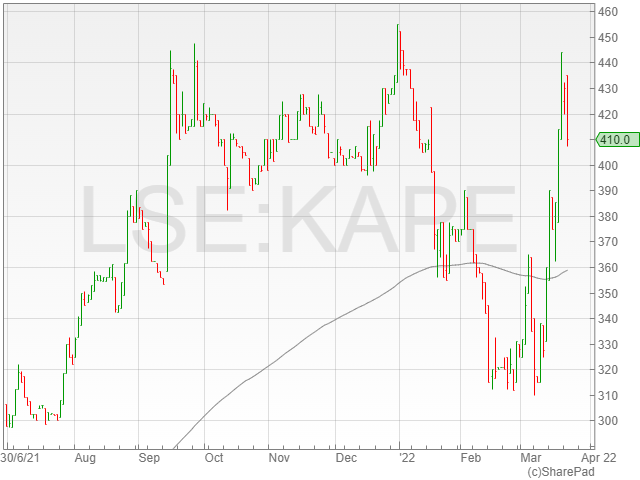
Kape Technologies saw its share price dip 4.3% in early morning trading on Tuesday.

Goldman Sachs first to trade crypto over the counter

0

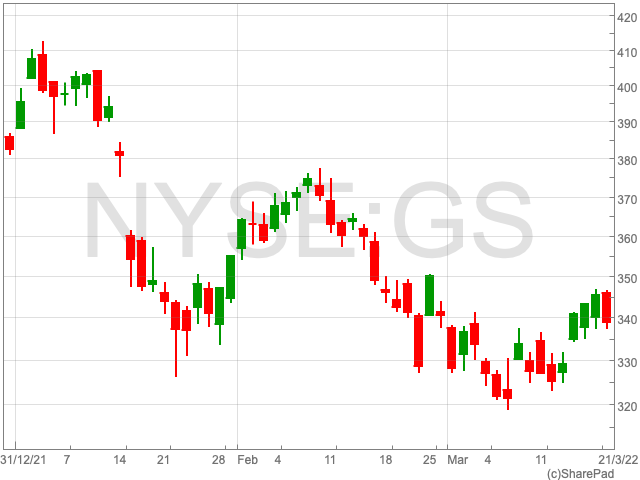
Goldman Sachs has conducted its first-ever over-the-counter (OTC) crypto options trade with Galaxy Digital, a digital asset finance company.

On Monday, CNBC reported on the press release issued by Galaxy Digital announcing the deal.

The transaction was represented as a Bitcoin non-deliverable option, which is a type of cash-settled cryptocurrency options trade, according to the statement.

The initiative is considered as a significant step forward in the development of crypto markets.

Max Minton, Asia Pacific head of digital assets, Goldman Sachs said, “we are pleased to have executed our first cash-settled crypto currency options trade with Galaxy.”

“This is an important development in our digital assets capabilities and for the broader evolution of the asset class.”

Goldman Sachs’ recent collaboration with Galaxy Digital is also an extension of the bank’s ongoing partnership with Galaxy to develop its crypto capabilities.

Galaxy provided liquidity support for the release of Goldman Sachs’ Bitcoin futures trading product to the Chicago Mercantile Exchange (CME), a derivatives market place in June 2021.

“We are pleased to continue to strengthen our relationship with Goldman and expect the transaction to open the door for other banks considering OTC as a conduit for trading digital assets,” said Damien Vanderwilt, Co-President and Head of Global Markets, Galaxy Digital.

Goldman Sachs’ Crypto Trading Timeline

CoinDesk revealed in March 2021 that Goldman Sachs relaunched its crypto trading desk after a three-year break due to increased demand from institutional clients.

In June, Galaxy announced that it would provide liquidity to Goldman Sachs for Bitcoin futures block trading on the Chicago Mercantile Exchange.

The SEC announced earlier this month that Goldman Sachs will be providing interested clients exposure to a Galaxy Ethereum fund.

Alliance Pharma sees pre-tax profit surge 39%

1

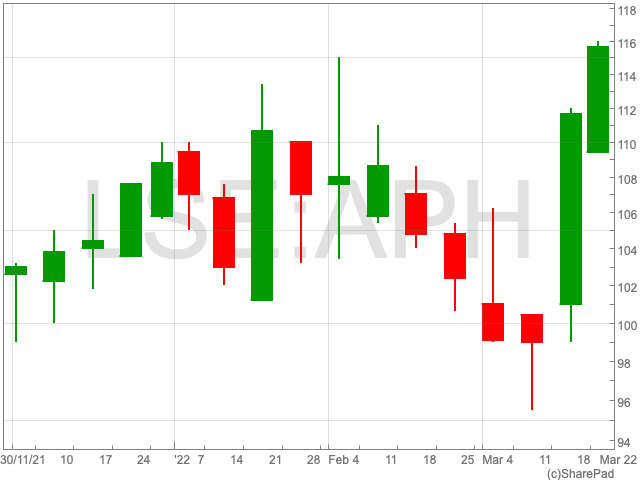
Alliance Pharma reported pre-tax profits increased by 39% from £13m to £18.2m in 2021 due to increased e-commerce activity.

The pharmaceutical company generated revenues of £169.6m, a 26% increase from revenues in 2020, as a result of growth in revenues from the consumer healthcare segment and prescription medicine.

Consumer healthcare saw a rise of 31% in revenues from £93m to £121.8m in 2021 with Kelo-Cote contributing £48.8m.

Amberen has fully integrated with Alliance since its acquisition and has generated £19.2m in revenues adding to consumer healthcare’s income.

Nizoral revenues dropped 2% from £21m to £20.6m due to manufacturing problems and reduced demand as a consequence of Covid-19.

Prescription medicine revenue grew 8% from £44.5m to £47.8m in 2021 as consumers return to their routines earlier disrupted by the pandemic.

Main contributors to the revenue generated under prescription medicine include Forceval, Hydromol, Flammazine and Opus range of stoma care products.

The group saw net debt reduce from £109.4m to £87m in 2021 with a free cash inflow of £30.2m.

The group engaged in a new ERP system which helped rebalance the balance sheet items and improved the ‘visibility across the business’.

Peter Butterfield, Chief Executive Officer, Alliance said, “I’m delighted with the strong operational and financial performance of the Group in 2021.”

“Our Consumer Healthcare business continued to perform well, with Kelo-cote enjoying another excellent year as we capitalised on the opportunities identified for the brand.”

“Group double-digit organic revenue growth was complemented by the acquisition of Amberen which, coupled with solid cost control, resulted in strong cash generation allowing us to reduce both net debt and leverage. “

Future growth is foreseen for the group with increased operating capabilities in the US.

The group will support organic growth in the consumer healthcare segment through innovation and development including a strategic brand plan for Nizoral.

In terms of ESG, Alliance Pharma has committed to being carbon-neutral in scope 1 and 2 emissions from 2021.

“2022 has got off to an encouraging start. We remain confident in our ability to further capitalise on identified organic growth opportunities within the business and to deliver financial performance in line with market expectations.”

“In addition, we continue to evaluate opportunities to selectively add complementary acquisitions to our Consumer Healthcare platform, taking advantage of our strong cash flow and reduced leverage,” commented Butterfield.

Alliance Pharma increased dividends by 5% to 1.69p in 2021.

Alliance Pharma shares gained 3.7% to 115.6p in Tuesday morning trade following the announcement of strong growth in revenue.

Sovereign Metals: Natural Titanium Rutile is significantly greener than rutile alternatives

0

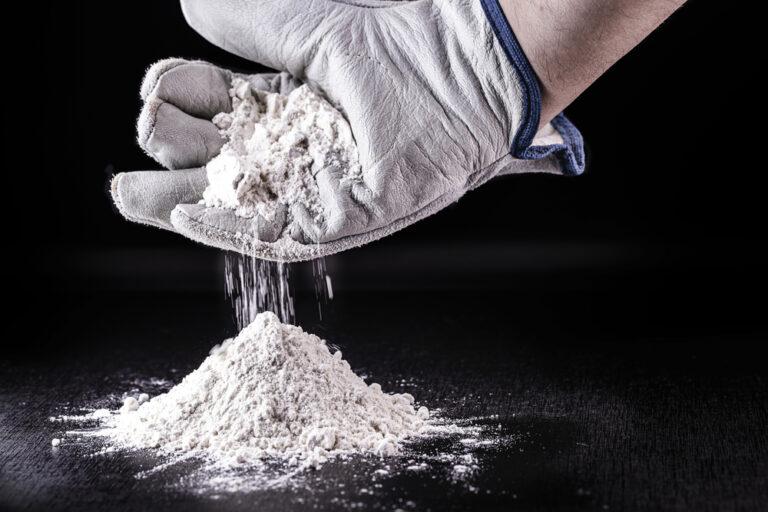
Natural rutile mined by Sovereign Metals will reduce carbon emissions by 20 to 33 times from the titanium pigment industry.

Sovereign Metals has found through a comprehensive life cycle assessment study (LCA) using the methods from the 2021 initial Kasiya Scoping Study, that the global warming potential is 0.1 tonnes CO2 for the mining of each tonne of natural rutile at its Kasiya Rutile Project in Malawi.

A global warming potential of 0.1 tonnes CO2 to produce one tonne of natural rutile from Kasiya is 20 to 33 times less than compared to the creation of titania slag and synthetic rutile.

The company found that total greenhouse gas emissions are reduced by 95% to 97% in mining natural rutile compared to ‘alternative titanium feedstocks’ created by a carbon-intensive process of upgrading ilmenite through energy usage.

The carbon footprint of paint made from Sovereign Metals’ natural rutile is estimated to be up to 35% lower than that of ilmenite-upgraded substitutes.

By using natural rutile from Kasiya as a titanium feedstock for the chloride pigment process, Scope 1, 2, and 3 greenhouse gas emissions would be greatly reduced.

Using natural rutile found in Kasiya as titanium metal feedstock could hold the key to manufacturing low-carbon products.

The lowest scope 3 emissions analysed by the LCA indicates that using Sovereign’s natural rutile to make titanium dioxide pigment in the EU has the least global warming potential compared to ilmenite-upgraded substitutes.

Sovereign Metals’ Chair of the ESG Committee, Nigel Jones commented, “Since its discovery, the Kasiya rutile project has been designed to help decarbonise the myriad of uses of titanium pigment in industrial and consumer products.”

“This LCA is another step towards providing a solution to an industry targeting material reduction in its global carbon footprint while wholly encompassing values of sustainability.”

Titanium Alternative’s Carbon Footprint

Natural rutile can generate 96% of TiO2 making it the purest form of titanium dioxide.

Other sources of TiO2 are created by titania slag and synthetic rutile.

Titania slag created by smelting ilmenite in electric furnaces in South Africa generates 85% TiO2.

Synthetic rutile produced from ilmenite using the Becher Process in Australia generates 88-95% TiO2.

Natural rutile concentrate from Kasiya has a global warming potential of 0.1 tonnes CO2 per tonne much lower than titania slag production in South Africa with a global warming potential of 2.0 tonnes CO2 per tonne.

Synthetic rutile production using the Becher process in Australia has a global warming potential of 3.3 tonnes of CO2 per tonne.

Julian Stephens, Managing Director, Sovereign Metals said, “the expanded study now highlights the significant reduction in greenhouse gas emissions the titanium pigment industry could achieve by utilising natural rutile produced at Kasiya.”

“This has direct economic benefits to end users in jurisdictions such as the EU, where industry pays for carbon dioxide emissions via the EU’s Emissions Trading System and the proposed Carbon Border Adjustment Mechanism.”

Sovereign Metals shares jumped 4.5% to 29p in early morning trade following the announcement of natural rutile being a greener process to generate titanium.

Softcat half-year results smash projections with 33% revenue increase

0

Softcat saw its shares increase 7.9% to 1,849.3p in early morning trading on Tuesday after the company released a 33% rise in revenue and a 12.4% increase in operating profit.

The IT firm reported revenue of £770.9 million compared to £577 million in 2020.

Softcat noted increased operating profits of £64.1 million against £57.1 million in 2020, alongside a gross profit of £150.2 million compared to £134.5 million in 2020.

The IT group attributed its successful results to strong growth across key income and profit measures.

Softcat reported that the income drivers have been broad-based, with progress across hardware, software and services, despite Covid-19 related supply chain issues.

The company reported a 12.4% increase to £30,200 in average gross profit per customer, alongside an increase in its customer base.

The company mentioned its operating profit for the half-year term had already exceeded company expectations, and Softcat reportedly predicts the following half-year to outperform preliminary projections into 2022.

Softcat currently has a PE ratio of 35.7 and a forward PE ratio of 35.3, indicating analyst expectations of company growth over the coming year.

“The Company continued to perform well across all areas of the business in the first half,” said Softcat CEO Graeme Watt.

“Transaction numbers grew strongly as we saw more customers emerge from the impacts of the pandemic, and this drove a 12.4% expansion in gross profit per customer.” 

“All customer segments made good progress which included an acceleration in our enterprise business.”

“Various industry data and commentary suggest the overall market has maintained a mid-single digit growth rate which indicates that we have continued to gain share.”

Marks & Spencers shares are ripe for a rebound

0

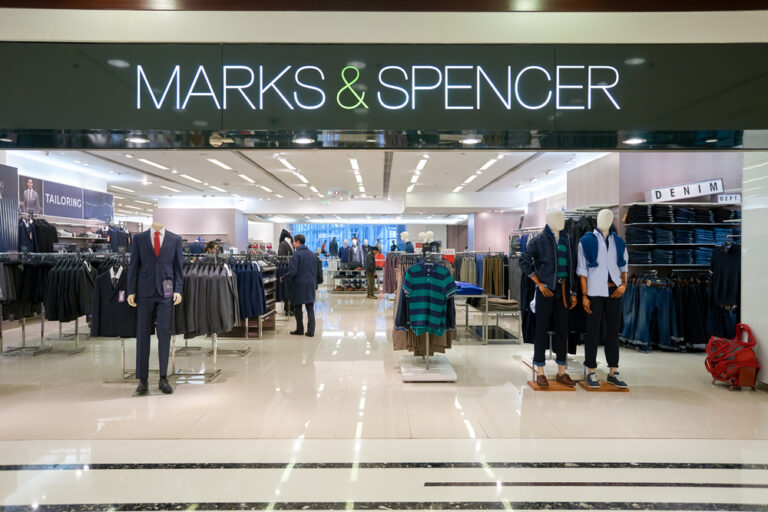
Marks & Spencers (LON:MKS), like many others, faced the consequences of the pandemic with higher restrictions and fiscally worried consumers and recorded a £17m pre tax loss in 2020.

However, M&S has since enjoyed a rebound in trading and has taken the opportunity to reshape the business and focus on online sales.

The company posted half-year reports last November in which they reported revenue growth of £1bn between 2021 and 2020.

The retail store saw a pre-tax profit of £269m compare to the loss of £17m in 2020. Operating profit for the group increased to £363m from £62m in 2020.

M&S Food sales grew by 10.4% in the half year which contributed to the strong operating profits. Their Christmas update suggests full year earnings could also reveal double digit growth in food.

However, the retailer continues to be dogged by a poor performing clothing business that drags on their overall profitability.

Marks & Spencer shares fell of a cliff following their update Christmas update as investors showed their disappointment around the minimal profit outlook increase.

Reshaping and Restructuring

The company underwent restructuring to curb the risks associated with the pandemic restrictions and improve efficiencies across the business. M&S focused on managing its working capital to create free cash flow and reduce net debt.

M&S saw a reduction in net debt from £3.8m to £3.2m in 2021.

The company’s strategy to increase growth in the business focussed on restructuring, improved product availability and creating strong trade partnerships.

The company opened 3 customer fulfilment centres with Ocado Retail which benefitted them by entering the online grocery market.

Improved Product Availability

Marks & Spencers’ Clothing and Home business helped operating profit with a 17.3% improvement in full-price sales. The company has grown its market share in both online and in-store channels with better-valued products. With improved products, the company has achieved higher retention rates among newer customers, thanks to the Sparks data and customisation programme.

The company had re-launched Jaeger, a digital brand, in October, which showed positive responses in the early stage from customers.

The company also received optimistic results from its store rotation program.

International trade has seen growth in online sales as well as in-store. The company managed to recover from the lockdown in markets like India along with restrictions on the EU border.

Over Christmas, Marks & Spencers reported growth in revenues across all segments, supporting the company’s statements regarding growth targets.

Going Forward

In their Christmas update M&S said their transformation strategy was well underway and pre-tax profit is expected to be £500m over 2022 FY.

The company has also seen a change in leadership to support the transformation.

Valuation

Marks and Spencer is trading at 7.7 times their earnings, the lowest amongst its peers, having sunk over 30% year-to-date.

A poor Christmas trading update, the resignation of their CEO and concerns around the Ocado joint venture have knocked shares.

With increasing fuel prices as a consequence of the war, the joint venture between Ocado and Marks & Spencers the profitability of the operation is at risk. Rising fuel prices are increasing overhead costs while consumers are moving back to retail shopping impacting the demand for online services.

Online has a been a focus for M&S and pressure on the Ocado joint venture will be a blow to the company.

However, with Marks & Spencer shares trading at such a low valuation, there is ample space to rebound back inline with their peers.

Premier Foods shares offer exceedingly good value compared to food producer peers

0

Premier Foods have not been immune to the volatility around the Ukraine crisis and shares dipped, only to be quickly bought into by investors targeting the reliable cashflows from their portfolio of household brands.

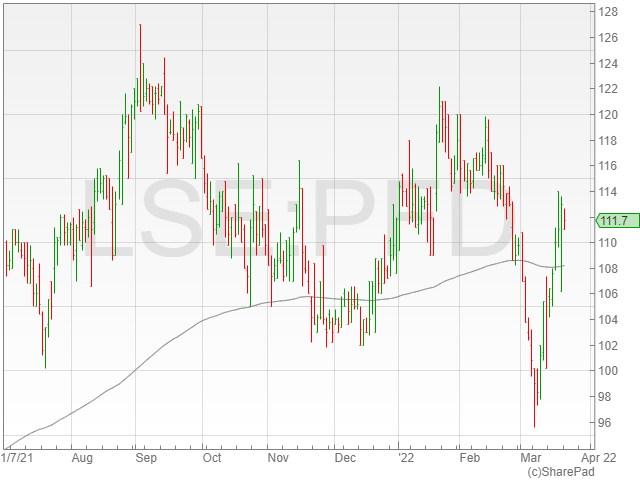
Trading at 111p, Premier Foods currently has a forward PE ratio of 9.7, meaning their shares are undervalued compared to peers given the positive outlook for the company.

The company’s current PE ratio is 10.3, indicating analysts are forecasting their earnings will rise in the coming financial year.

With Premier Foods shares declining from 52-week highs at 127p to trade at 111p, the company presents the best value of the food producer sector, on a price-to-earnings basis.

The FTSE 350 Food Producer sector has a mean Forward PE Earnings multiple of 15x suggesting Premier Foods shares would need to rise by 50% to trade in line with the sector average.

Premier Foods ‘Exceedingly Good’ Outlook

The group has suffered under the impact of Covid-19, with the food producer noting its H1 2022 6.1% decrease in branded revenue as a result of the lapping effect of pandemic-related volumes.

Premier Foods reported a decrease in revenue to £394.1 million against £421.5 million in its H1 results for 2022 and an adjusted pre-tax profit of £46.4 million compared to £47.7 million in 2020.

However, activity picked up in Q3 with Mr Kipling cakes recording their best ever Christmas trading period with group market share growing 90 basis points and sales for the period up 7% on two years ago.

Premier Foods to raised their outlook to an expected trading profit of £145 million and an adjusted pre-tax profit of £125 million for its FY 2022.

With a market cap of just £960m and the multiples outlined above, Premier Foods shares may be worth putting on a watchlist.