Cenkos Securities sees 88% increase in profits

0

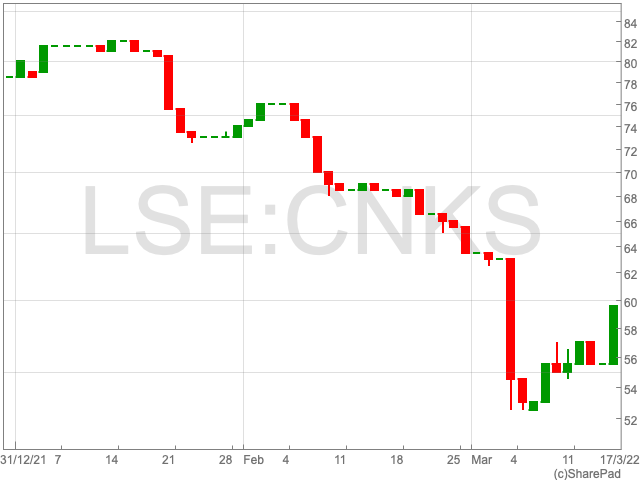
The independent institutional stockbroking firm, Cenkos Securities saw post-tax profits increase 88% from £1.8m to £3.4m in 2021 with the addition of 17 new clients.

The pre-tax profit increased by 75% to £4m in 2021 while revenue grew from £31.7m to £37.2m.

Cenkos completed 34 transactions which raised £1.2bn for their clients in 2021.

Cenkos’ total dividend is 4.25p including a final dividend of 3p in 2021 compare to a total dividend of 3.5p in 2020.

The company’s net assets and cash balance increased by £1.4m and £0.7m to £27m and £33.5m in 2021.

The firm’s net finance cost has seen an increase from £146,000 to £154,000 in 2021 mainly due to the interest income reducing to £17,000 from £30,000.

Cenkos Securities enjoyed a bumper trading period on the AIM, completing 34 IPOs and secondary fundraises, raising £1.2bn for clients.

Cenkos noted AIM had it’s strongest year since 2007 as £8.7bn was raised for companies through IPOs and secondary issues.

“I continue to firmly believe in AIM as the destination of choice for ambitious companies,” said Lisa Gordon, Chairman, Cenkos Securities.

“Cenkos can rightly claim a leading adviser position on AIM and we are committed to continuing to source and create high quality investment opportunities for the benefit of our clients, shareholders and employees.”

Since the beginning of 2022, the company has already completed 3 IPOS, 4 placings and 2 M&A transactions.

Julian Morse, Chief Executive Officer, Cenkos Securities said, “I am pleased to report that a continued focus on client service levels, recruiting and retaining quality talent and a disciplined approach to costs have enabled us to thrive during 2021.”

“In what remained unchartered social and economic times, these remained the foundation from which we supported our clients and colleagues to achieve their aims. ”

“We continue towards our objective of being the first-choice partner for growth to ambitious companies seeking equity capital.”

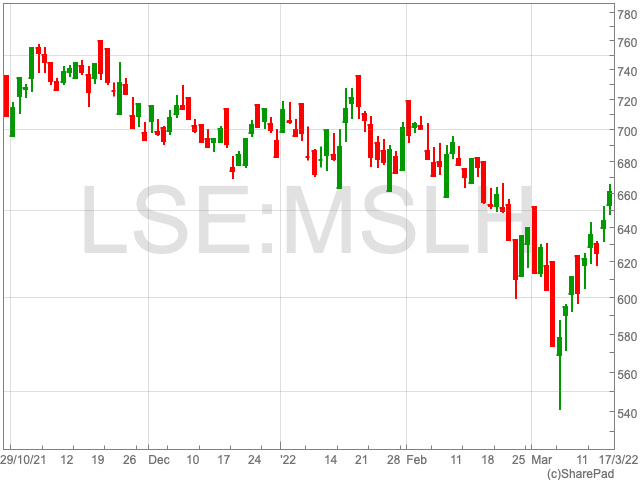
Cenkos Securities’ shares were flying 16% to 69p in early morning trade on Friday.

Everything you need to know about options trading

Options trading has often been seen as a technique best left to financial specialists, but in recent years, it has grown in popularity with traders, partly because it has the potential to add considerable flexibility to your investing plan when you take into account value, volatility and interest rates.

You’ll need to master the jargon before you begin. Understanding such technicalities as ‘strike price’ and the difference between ‘call’ and ‘put’ options is crucial to getting to grips with options trading. There is no doubt that options trading isn’t for everyone, but it can be a way to diversify your portfolio.

What are options

An option is a type of contract that makes it possible for you to purchase or sell an investment, such as a stock, or an exchange-traded fund (ETF). Each contract that you buy or sell has a pre-negotiated price along with an expiry date that determines the length of time that the pricing is valid.

Options trading introduction

So, what is options trading? You can trade options contracts in much the same way that you can purchase and sell stocks and bonds. Buying an option, on the other hand, does not provide you ownership in the firm since you have not acquired any shares.

Your contract does allow you the option to acquire the shares later, so you have the possibility to possess them if the conditions are met.

Options trading gives you additional investing versatility since it allows you to trade ETFs, indices and commodities in addition to the stocks and bonds you’d expect. Prices vary, and you can attempt to anticipate whether they will rise or fall in the same way that stock prices change. To maximize your earnings or reduce your chance of loss, you can purchase or sell your options at the time you judge to be the most appropriate. 

Types of options trading

There are two forms of trading options: Call and Put. Whether you want to purchase or sell determines whether you use a call or a put option.

You have the right to acquire shares at the strike price before the expiry date if you hold a call option. With a call option, the present owner of those shares is obligated to sell them to you in accordance with the terms of the option agreement.

A Put option means that you have the right to sell shares at the strike price by the expiry date. If you execute your put option, you must sell the shares and you will receive the strike price for each.

Why trade options?

Options, despite their image as a dangerous investment better left to the pros, may be beneficial to regular investors as well. Including options in your investment portfolio may provide a variety of strategic benefits.

They not only have the potential for bigger profits, but they may also protect you against losses.

Options usually entail a lower financial investment than purchasing an asset. That’s because you’re not paying full price for shares, but rather a lower price for the option to acquire them later.

If the market price falls, you will only lose the premium you paid to purchase the options, rather than losing a lot more money if you had purchased the shares directly. However, if the market price soars, you’ll be able to acquire the shares at the lower strike price. You may profit by exercising your options or selling your contract to another investor if this occurs. In either case, you can profit. 

How to start trading options

It’s pretty easy to get started with options trading, despite the fact that it seems sophisticated and may contain a broad range of strategic methods.

You’ll need a broker, and you should research costs and account minimums to choose one that fits your budget and investing style. Then it’s time to come up with an options trading strategy. Options trading methods, like other investments, are dependent on your own objectives and risk tolerance and may range from basic to sophisticated. Fortunately, there are many online guides to options trading that can help you to devise the right strategy tailored to your needs. 

Beware of the risk

Options trading, like other investments, has a level of risk. To earn money, you’ll need to be able to determine whether a stock’s price will climb or decrease, which might take a lot of study (and luck). As a result, you should never invest money that you can’t afford to lose in options. However, if you learn the ins and outs of how options trading works and locate a good broker, there is a lot of money to be made if you use the proper strategy at the appropriate time.


OptiBiotix spinning off ProBiotix Health on Aquis

OptiBiotix Health (LON: OPTI) plans to spin off its ProBiotix Health subsidiary on the Aquis Stock Exchange. ProBiotix develops probiotics for treating cardiovascular disease and is expected to join the market on 31 March. OptiBiotix will retain a stake and transfer other ProBiotix shares to its own shareholders.  
Peterhouse will be the corporate adviser. A pre-money valuation of £22.5m is anticipated.
The distribution of ProBiotix shares to OptiBiotix shareholders has an ex-dividend date of 24 March. The shareholders will receive 35%-37% of ProBiotix, but they will not be able to deal i...

Bank of England increases interest rates to 0.75%

0

The Bank of England has hiked interest rates to 0.75% at noon today, representing highest increase since March 2020.

The Bank of England’s announcement immediately caused share prices across major UK banks to drop, with Lloyds declining 1.6% to 47.7p, NatWest losing 4.6% to 10.3p and Barclays seeing a dip of 2.4% to 170.9p at the time of writing.

The move follows expert consensus that inflation is expected to rise to 8% in April 2022.

Analysts said that the rising interest rates have set UK households up for a year of uncertainty and slashed consumer budgets.

“UK consumers now face an annus horribilis, as rising borrowing costs will be compounded by higher food and energy bills, and tax rises to boot,” said AJ Bell head of investment analysis Laith Khalaf.

“Interest rates will mean savers getting a bit more return on cash held in the bank, but elevated inflation means they will actually be worse off.”

The Bank of England are scheduled to announce further increases in interest rates later in the year, with expectations of rates hitting the 2008 crash level of 1.75%.

“Markets expect four more increases this year on top of today’s, meaning that by Christmas 2022 we’ll have a base rate of 1.75%, if the expectations are to be believed,” said AJ Bell head of personal finance Laura Suter.

“At that level we’d be returning to the interest rates of 2008, around the time of the market crash.”

Khalaf added, “unless you want egg on your face, it’s best not to count your chickens before they’re hatched when it comes to monetary policy, but it looks pretty clear that central banks are intent on several further rate hikes as we move through 2022, to help stave off the real and present danger of sustained inflation.”

Hikma’s revenue grows 9% on strong performance

0

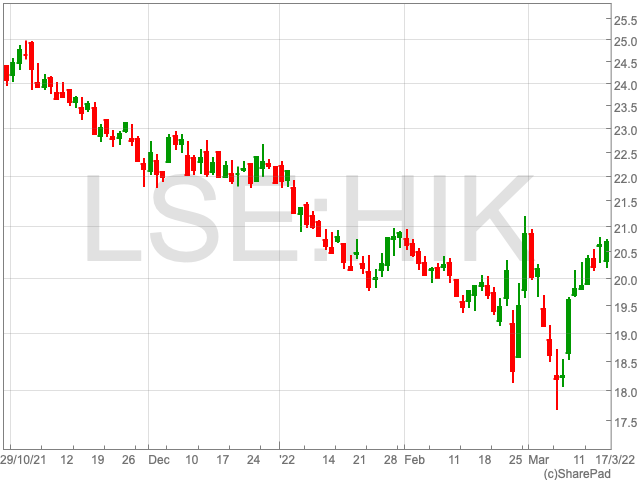
Hikma shares were trading down 0.3% at 2,055p despite a 9% increase in group revenues.

Hikma’s revenue grew from $2.3bn to $2.5bn in 2021 with strong performances in all three divisions of the pharmaceutical company.

Injectables contributed 41% to the group revenues with an amount of $1bn. The US consisted of $691m and the Middle-East and North-Africa (MENA) markets accounted for $180m of that amount.

Generics saw a revenue growth of 10% in the segment to $820bn. The growth mainly came from recently launched products such as Kloxxado and generic Advair Diskus.

The branded segment had an increase of 9% in revenue to $669m with strong performance coming from the MENA region with their chronic illness treatments.

R&D will continue to have a 6% investment taken from the revenues to continue growing their pipeline of products.

Hikma’s operating profit saw a 12% increase to $632m in 2021.

The group also saw a 38% increase to $638m in cashflow from operating activities.

The company has a net finance expense of $39m, up from $22m in 2020 due to refinancing costs and losses in interest income.

The group’s net debt has decreased by $185m to $420m in 2021.

The reported profit attributable to shareholders dropped 2% to $421m in 2021 whilst the core profit attributable to shareholders saw a 10% increase to $450m.

The group decided on 26p as a recommended final dividend in 2021, summing up to a total dividend of 40p.

Siggi Olafsson, Chief Executive Officer of Hikma, said, “Hikma delivered strong financial results in 2021, marking another successful year of solid growth and continued strategic momentum.”

“Our operational strength and high quality standards ensured our ability to provide customers with a consistent supply of essential medicines in a challenging environment.”

“Our Injectables business is now supplying US hospitals with sterile compounded pharmaceutical products, has expanded into Canada, and is set to grow further with the acquisition of Custopharm1 and our expansion into US biosimilars.”

“Our Generics business is bringing more complex and specialty products to market, launching Kloxxado and generic Advair Diskus in 2021, and with additional product launches planned for this year.”

“Our Branded business is delivering consistent growth, with an increased focus on medications to treat chronic illnesses.”

“We have an exciting platform that will drive continued growth and progress in the year ahead.”

FTSE 100 gains as Bank of England raises rates

The FTSE 100 gained on Thursday as the Bank of England raised rates and investors digested the latest comments from Russia that progress towards a ceasefire was ‘wrong’.

European shares had started the day on positive note after the Federal Reserve increased rates, leading to a rally in US stocks overnight.

The FTSE 100 eked out some gains Thursday morning after the US Federal Reserve moved to raise interest rates for the first time since 2018,” said Russ Mould, Investment Director, AJ Bell.

By the time the Bank of England announced a 0.25% rate hike to 0.75%, the FTSE 100 was trading comfortably higher 7,320, up 0.4%.

However, the pound fell as doubt was cast over the possibility of future rates hikes, despite a revised Bank of England 8% inflation target.

UK Banks

UK banking shares were marginally lower on Thursday before the Bank of England voted 8-1 to raise rates, but extended losses after the bank changed their language around further rate hikes this year.

In February the bank said it would be ‘likely’ they raised rates again – which they have done today – but they now say there ‘might be’ more rate hikes this year, casting doubt over the trajectory for UK rates.

This means UK banks could miss out on further benefits to their Net Interest Margins in absence of more rate hikes.

Lloyds, Barclays and Natwest shares were down over 2% at the time of writing and continuing their declines.

Ocado

The top fallers included the Ocado Group, declining 8% to 1,106.5p. During the height of Covid-19 Ocado was trading at almost 3,000p per share in September 2020.

The online retailer took a dent to its earnings after it failed to acquire new clients, alongside issues including its patent lawsuit with Norwegian Autostore and a robot fire in its South-East London property.

“The pressure on margins from rising inflation looks to be a growing issue and will not help Ocado at group level given the solutions business remains heavily loss-making,” said AJ Bell investment director Russ Mould.

Diageo rose 2.2% to 3,674.7p after JP Morgan upgraded the stock’s rating from hold to buy earlier today.

Scottish Mortgage Investment Trust continued its upward trajectory after the 7% rebound in the Hang Seng index today saw its major Asian holdings Tencent and Alibaba recover recent losses.

Commodities

Oil prices have once again exceeded the $100 mark to $102 earlier today as a result of the International Energy Agency stating that the sanctions imposed will lead to a loss of 3m barrels a day of Russian oil exports.

Shell and BP shares were up 1% in Thursday morning trade.

Russia on verge of default

0

Russia has lost access to their foreign currency reserves with increased sanctions on the country invading Ukraine resulting in fears of default.

Russia was supposed to pay $117m in coupon payments to investors of dollar-denominated bonds. However, international sanctions have locked most of the country’s foreign exchange reserves leaving Russia in a fix.

Russia said they have sent an order for the payment of $117m to Citibank and is awaiting to see if US authorities permit the payment.

From Russia’s perspective, they are not defaulting as they believe that they have means to meet the payment. Russia has suggested that the payments can be made in roubles if the order was not accepted.

As of today, the country has began their grace period of 30 days to meet the payments in dollars whilst still awaiting the verdict of whether a default has occurred.

Later today, an update regarding the payment reaching Citi will be released. If the country’s payment is not accepted, it will be their first foreign currency default since 1917.

Russia defaulted in rouble denominated bonds in 1998.

Marshalls’ adjusted pre-tax profit jumps 221%

0

Marshalls’ adjusted pre-tax profit flew 221% from £22.5m to £72.1m in 2021, and revenue climbed to £589.3m in 2021 from £469.5m as the landscape product specialist saw demand recover from the pandemic.

In the aftermath of the pandemic, project timelines, supply chain pressures and inflationary costs of input materials were mitigated by a proactive supply chain management initiative.

The group faced operating problems with the supply of raw materials and labour however still managed to report strong financials as they altered the prices by introducing flexibilities in labour and manufacturing practices to match the increase in costs.

Adjusted EBITDA had an increase of 86% to £107.1m in 2021 compared to £57.6m in 2020.

The groups St Ives project is in line with the plan and capital investments of £35m have been allocated to the projects coming in 2022. The capital expenditure however reduced from £30m to £21.9m in 2021.

Net debt declined from £75.6m to £41.1m as the company understood the importance of liquidity and remained discipline in their capital expenditure. Adjusted ROCE increased from 8.2% to 20.6% in 2021.

The groups total dividend is 14.3p including a proposed final dividend of 9.6p in 2021 compared to 4.3p in 2020 as a result of their progressive dividend policy.

Going forward, the company will keep health and safety as a priority in their operations, a practice they focused on during the pandemic.

Martyn Coffey, Chief Executive Officer, Marshalls, “trading remains strong and has continued to improve since the start of the year, notwithstanding ongoing supply chain challenges.”

“Our strong market positions, focused investment plans and established brand underpin the group’s business strategy. We remain confident that our strategy will continue to deliver profitable long ‑ term growth and that we will be able to mitigate raw material shortages and cost inflation through the effective management of our supply chain.”

“Given the strength of recent and current trading the board’s expectations for the current year are now ahead of its previous view.”

Marshalls share were trading up 1.8% to 655p in early morning trade on Thursday.

Making Private Equity Public with FTSE 250 Pantheon International PLC

The UK Investor Magazine Podcast was thrilled to welcome Helen Steers, senior manager of the FTSE 250 Investment Trust Pantheon International PLC, for an in-depth discussion of private equity and access for private investors.

Pantheon International is specialist £1.7bn market cap private equity Investment Trust that has produced 12.2% annualised NAV growth since 1987.

The fund focuses on private investments in technology and healthcare and has previously invested in companies including Spotify, Wayfair and OneSavings Bank.

Helen discusses how retail investors are able to gain exposure the private equity market, which is typically reserved for large institutions, through Pantheon International.

We also explore the biggest trends in private equity and how Pantheon International selects companies for inclusion in their portfolio.

Find out more on the Pantheon International website here.

Cineworld revenues soared 111% post covid recovery

0

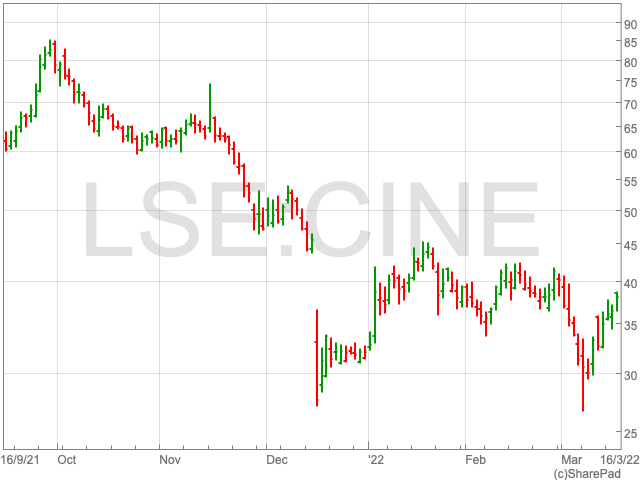
Cineworld shares were trading up 4.5% at 38p after the cinema operator reported a $1bn increase in group revenue.

The group’s revenue soared from $852m in 2020 to $1.8bn in 2021 despite location closures due to covid restrictions.

In 2021, box office sales contributed $955m followed by retail contributing $552m.

A substantial amount of $296m was received in revenue from other income which is mainly on-screen advertising and booking fees.

Pre-pandemic revenue was $4.3bn leaving the group in a position to rethink their strategy on how to recover from the consequences of lockdowns.

Covid-19 caused closures of public venues such as Cineworld and thus the results include impact of the restrictions between January to May 2021.

Group adjusted EBITDA was $454m in 2021 after a loss of $115m in 2020. The company restructured their labour policy, renegotiated contracts and controlled their expenses in an attempt to reduce their losses incurred by the pandemic.

Out-of-home entertainment saw an increase in demand with ease of restrictions after the pandemic resulting in Cineworld admissions increasing 75% to 95.3m in 2021.

Operating profits was $15m in 2021 as opposed to losses of $2.2bn were set in 2020.

A net reversal of impairment charges of $127m in 2021 was a big contributor to a swing in operating profits following charges of $1.3bn in 2020.

Cineworld’s net financing costs were $690m in 2021.

The company understands the importance of liquidity and thus raised $425m through convertible bonds. The United States CARES Act tax refund also returned $203m.

The groups net debt rose from $4.3bn to $4.8bn in 2021.

Cineworld disagrees with the C$1.2b award from Ontario Superior Court’s judgement and has submitted an appeal.

In 2020 the group paid interim dividends of $0.38, however final dividends will be declared after the group evaluates their cash balances post liabilities.

Mooky Greidinger, Chief Executive Officer, Cineworld Group said, “whilst our 2021 results still reflect the impacts of COVID-19, particularly at the start of the financial year, we are encouraged by the recent strong trading performance throughout the final quarter.”

“It is clear that our customers remain loyal and have missed the big screen experience as well as the sociability of watching a movie with others.”

“Our strong final quarter performance reflects the pent-up demand for affordable out-of-home entertainment and the record breaking film slate, including “Spider-Man: No Way Home”, which showcased the importance of cinematic releases.”

“The business is well positioned to execute its strategy and capitalise on the highly anticipated movie schedule, which includes Avatar, Top Gun Maverick, Jurassic World: Dominion, Minions: The Rise of Gru, Doctor Strange in the Multiverse of Madness, Thor: Love and Thunder, Black Panther: Wakanda Forever, Bullet Train, Spider-Man: Across the Spider-Verse, Pixar’s Lightyear, Fantastic Beast, Elvis and many more.”