Berkeley Group profit jumps as sales hit pre-pandemic levels

Berkeley Group have yet again produced a very respectable set of results with pre tax profits rising 26% in the six months to 31st Oct 21, when compared to the same period a year ago.

Berkeley’s pretax profit rose to £290.7m, up from £230.8m last year. The jump in profits was helped by increased sales with revenue surging 36% to £1,220.7m.

Berkeley Group specialise in high-end developments in London and the South East and are often seen as a bellwether for the health of the Uk property market.

Berkley Group accounts for around 10% of new homes in London and the South East and is now seeing sales reservations at pre-pandemic levels.

“Berkeley are sounding confident in these results and are allocating additional capital to their land buying efforts accordingly. The group’s ability to redevelop complex sites in and around the capital, taking land that others fear to touch and transforming it into premium properties is their key attraction for investors,” said Steve Clayton, manager of the HL Select UK Growth Shares fund.

The HL Select UK Growth Shares Fund holds shares in Berkeley Group Holdings so Clayton and the fund’s investors would have been pleased to see Berkeley shares up over 5% at 9am in London.

“Berkeley lock significant future margin into their development plans and so far, the cost pressures seen across the industry have not impacted upon the group. No surprise to see the shares reacting positively,” said Clayton.

“Historic investment into land acquisition, at times when others have been wary or unable to commit, has left the group with a clear growth runway ahead. Capital continues to be strictly managed, with the group choosing to invest in land currently, given the future returns it expects are high. The ongoing dividend to shareholders provides a useful yield, but really Berkeley Group is a growth vehicle, built around the predictable delivery of future developments at attractive margins. Supply of housing in the capital and South East remains tight and bond markets are signalling that no nasty surprises on interest rates are expected any time soon. That backdrop should give Berkeley plenty of potential in the years ahead.”

Conservatives joke about Christmas party held during lockdown

A video that was obtained by ITV News shows government staff joking about last year’s number 10 Christmas party held during the lockdown.

In the video, Boris Johnson’s press secretary Allegra Stratton is rehearsing a press conference in December last year after the government continued to insist no party took place.

At the time of the party, government restrictions stated that people should not be attending Christmas parties – and gatherings in London of over people indoors were banned. According to reports, around 40-50 people attended the government party.

Number 10 continues to insist that there was “no Christmas party. Covid rules have been followed at all times.”

Responding to the video, Labour MP David Lammy, said it was a “kick in the face” to nurses and doctors who spent the pandemic working in hospitals.

Labour leader Sir Keir Starmer commented: “People across the country followed the rules even when that meant being separated from their families, locked down and – tragically for many – unable to say goodbye to their loved ones.”

“They had a right to expect that the government was doing the same. To lie and to laugh about those lies is shameful.

“The prime minister now needs to come clean and apologise. It cannot be one rule for the Conservatives and another for everyone else.”

https://twitter.com/imacelebrity/status/1468329208749465606

New AIM admission: 4GLOBAL

4GLOBAL provides sports consultancy services to governments and other organisations, as well as subscription data products.  
Last year’s revenues show that consultancy revenues can be volatile. Subscription revenues are growing but the company had to cut R&D spending to report a profit.
Finance director Keith Sadler was a non-executive director of sports representation and marketing company TLA Worldwide, a past AIM embarrassment that released a profit warning after the market had closed for Christmas, and he remains a director of the renamed Hawkwing (LON: HNG), which moved to the s...

FTSE 100 rises on building optimism, miners surge

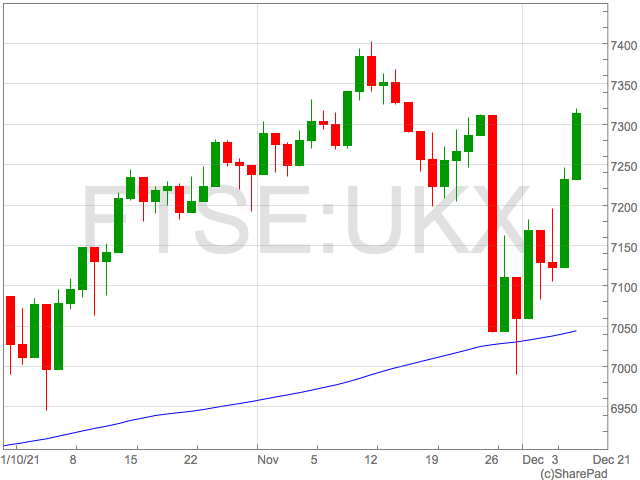
The FTSE 100 surged higher on Tuesday as optimism grew around the economic impact of the new COVID variant and investors continued to cheer China’s decision to cut their RRR rates.

China yesterday announced they would be cutting their Reserve Requirement Ratio by 0.5% which promises an injection of liquidity into the Chinese economy.

Miners were big beneficiaries of the news. Anglo American, Glencore, BHP, Rio Tinto and Antofagasta were all over 3% stronger. Anglo American was the FTSE 100’s top riser adding 5.1% at the time of writing.

Although the mining sector was a stand out performer, the gains were broad with 90 of the 100 stocks in the FTSE 100 higher at 11am on Tuesday.

AstraZeneca was the FTSE 100’s biggest faller, down 1.7%.

“The more positive market sentiment seen at the start of the week extended into Tuesday, supported by waning fears about the Omicron variant and robust Chinese trade data,” says AJ Bell investment director Russ Mould.

“Suggestions the new Covid strain might only trigger mild symptoms are prompting relief among investors and helping travel stocks take off – however given the typical gap between infection and hospitalisation with coronavirus it remains early days in our understanding of just how virulent Omicron is.”

“China import data hinted at a domestic recovery and export data, while lower, was still notably better than expected. The net result being that the FTSE 100 index is now back at the levels it traded at before the Omicron-driven sell-off.”

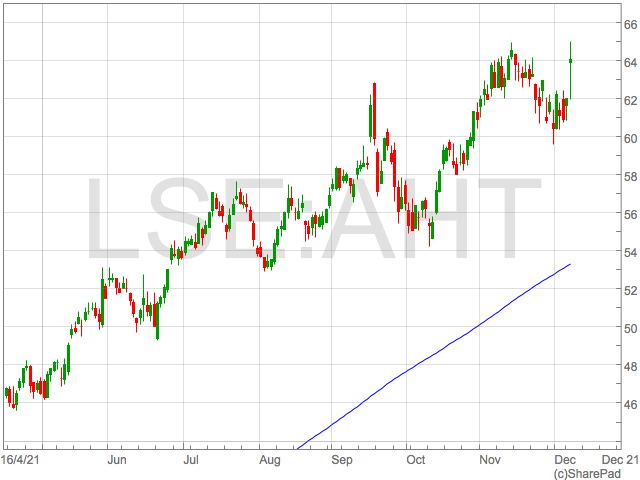
Ashtead was a significant gainer after the plant hire group posted a 20% increase in rental revenue.

“Ashtead’s heavy duty industrial rental equipment fell out of favour during the peak of the pandemic, which is why new results look so spritely in comparison. However it’s been achieved, knocking the lid off full year expectations is good going,” said Sophie Lund-Yates, equity analyst at Hargreaves Lansdown.

Ashtead has record half as revenue jumps 18%

Ashtead have enjoyed a 18% in revenue in their half year to 31st October as rental demand for their plant hire offering increased.

Rental Revenue increased 20% in the half year period and the group said they now expected earnings to be ahead of previous expectations.

“The Group’s strong performance continues with rental revenue up 20% for the half year over the prior year, but more importantly up 14% when compared with the first half of 2019/20, both at constant currency,” said Ashtead’s chief executive, Brendan Horgan.

Ashtead also added 58 locations across the United States by means of bolt-on acquisitions.

Analysts pointed to the return to normalisation as we move through the pandemic as a key driver to Ashtead’s performance.

“Ashtead’s heavy duty industrial rental equipment fell out of favour during the peak of the pandemic, which is why new results look so spritely in comparison. However it’s been achieved, knocking the lid off full year expectations is good going,” said Sophie Lund-Yates, equity analyst at Hargreaves Lansdown.

“As the world, and more specifically, industrial work, has started to resume, Ashtead stands to benefit. Plans to build out other revenue streams have merit, but for now, it’s still the traditional equipment rental business that’s bringing home the bacon.”

“The group’s enjoyed favourable market sentiment over the last few months, boosting the valuation in a big way. While the optimism can be understood, it shouldn’t be forgotten that Ashtead is an operationally leveraged business. As a cyclical company, its fortunes wax and wane with the wider economy too, so all-in, there could be some volatility if there are any unwelcome economic surprises.”

Notwithstanding any concerns about future economic uncertainties, investors would have been pleased to hear Ashtead increased their interim dividend by 28% to 12.5 cents.

Why China, why now?

China’s equity markets have grown into the second largest financial market in the world, after the US. This is a US$17 trillion market that is both deep and liquid. There are more than 5,000 Chinese companies listed onshore in mainland China and offshore, mostly in Hong Kong and the US, presenting vast opportunity.

Chinese markets are also becoming large and growing components of major global indices. For instance, Chinese equities now make up 33% of the MSCI Emerging Markets Index. If China A Shares (the shares of mainland China-based companies that trade on the two Chinese stock exchanges) were included fully (from the current 20%), this would push the overall weighting of Chinese equities to 53%.

A big driver of growth has been the Stock Connect programme, which was launched in 2014. This opened direct trading links connecting Shanghai and Shenzhen with Hong Kong, making A Shares more accessible to institutional investors outside the mainland. These days, any investor with a brokerage account in Hong Kong can invest in over 2,000 companies listed in Shenzhen and Shanghai. Two-way investor flows between mainland China and Hong Kong have flourished as a result.

Another draw is the low correlation of Chinese equities and other asset classes. In other words, A Shares provide a great opportunity to diversify portfolio risk and potentially enhance returns.

Investing in both the onshore and offshore markets offers an extensive range of opportunities across these markets. With the onshore market, investors gain greater exposure to unique sectors such as baijiu (a popular liquor), as well as the faster growing new economy ones like electric vehicles and batteries, specialist technology and niche industrial areas. As for the offshore market, investors gain more access to internet and e-commerce companies, along with investment opportunities in telecoms.

More broadly, China’s financial reforms continue to improve the accessibility and liquidity of the domestic market. With more international investors’ participation in the A-share market, it could shine a light on global best practice and help to raise governance standards of local companies over time.

Why now?

abrdn sees tremendous opportunity in China, and the portfolio is well positioned to capitalise on key areas of structural growth.

  • Aspiration: As incomes increase and living standards improve in China, rising affluence is leading to fast growth in premium, or higher value, goods and services in areas including cosmetics, travel and food and beverage. The consumer story is attractive because boosting domestic spending forms a central component of China’s reform agenda.
  • Digital: Growing integration amid the widespread adoption of technology means a bright future for plays on e-commerce, cybersecurity and data centres supporting cloud services.
  • Green: Policy makers globally are committing to a greener and lower carbon world and China is expected to have a transformational role to play. Investments in renewable energy, batteries, electric vehicles, related infrastructure, and environmental management all have a bright future. Grid parity will be game-changing.
  • Health: Rising disposable incomes are driving demand for healthcare products and services. The opportunity set is diverse. The proposed holdings include a leading hospital, contract research providers and an internet healthcare platform.
  • Wealth: Growing prosperity means structural growth for consumer finance, such as wealth management and insurance protection, as well as increasing investor participation on stock exchanges.

In China, standards of disclosure, reporting and access to management are increasingly moving towards international norms. Many Chinese companies are also moving up the quality curve steadily. China is already the leading global manufacturer of solar panels and wind turbines.

This quality aspect extends to the environment, social and governance (ESG) front as well. abrdn is finding that more and more Chinese companies are beginning to understand and appreciate the importance of, and value that can be created by, engaging with long-term investors and becoming more cognisant of ESG issues. Increasingly they are aware of their carbon footprint. They are realising that implementing sustainable practices can improve brand perception, customer loyalty and, ultimately, the share price. It can also help to guard against catastrophes that can have legal ramifications. abrdn is also engaging companies on social factors, such as how they interact with employees, vendors and society, explaining how supporting employee well-being can lead to a more productive workforce and help them to recruit and retain talent.

In all this, abrdn remains positive about the long-term prospects for Chinese equities and believes the private sector retains a critical role in ensuring that the Chinese economy continues to innovate and prosper and that China reaches its goal of being a moderately prosperous nation by 2035.

Important information

Risk factors you should consider prior to investing:

  • The value of investments and the income from them can go down as well as up and you may get back less than the amount invested.
  • Past performance is not a guide to future results.
  • Investment trusts are specialised investments and may not be appropriate for all investors.
  • There is no guarantee that the market price of a Trust’s shares will fully reflect its underlying Net Asset Value.
  • As with all stock exchange investments the value of the Trust shares purchased will immediately fall by the difference between the buying and selling prices, the bidoffer spread. If trading volumes fall, the bid-offer spread can widen.
  • Investment trusts can borrow money in order to enhance investment returns. This is known as ‘gearing’ or ‘leverage’. However, the use of gearing can result in share prices being more volatile and subject to sudden or large falls in value. Where permitted an investment trust may invest in other investment trusts that utilise gearing which will exaggerate market movements, both up and down.
  • Emerging markets or less developed countries may face more political, economic or structural challenges than developed countries. This may mean your money is at greater risk. 
  • Investing globally can bring additional returns and diversify risk. However, currency exchange rate fluctuations may have a positive or negative impact on the value of your investment. 
  • Specialist funds which invest in small markets or sectors of industry are likely to be more volatile than more diversified trusts. 

Other important information:

Issued by Aberdeen Asset Managers Limited which is authorised and regulated by the Financial Conduct Authority in the United Kingdom. Registered Office: 10 Queen’s Terrace, Aberdeen AB10 1XL. Registered in Scotland No. 108419. An investment trust should be considered only as part of a balanced portfolio. Under no circumstances should this information be considered as an offer or solicitation to deal in investments. Find out more at www.abrdnchina.co.uk or by registering for updates. You can also follow us on Twitter or LinkedIn.

GB-061021-158645-1

Average UK property value hits record high

New data from Halifax has found that the average cost of property in the UK has jumped to £272,992, which is a 15-year high.

The average house price in London is £521,129, which continues to be much more expensive than the rest of the UK.

Russell Galley, managing director of Halifax, commented: “This is the fifth straight month that average house prices have risen, with typical values up by almost £13,000 since June, and more than £20,000 since this time last year.”

“On a rolling quarterly basis the uptick in house prices was 3.4%, the strongest gain since the end of 2006, bringing the new average property price up to a record high of £272,992.”

“The performance of the market continues to be underpinned by a shortage of available properties, a strong labour market and keen competition amongst mortgage providers keeping rates close to historic lows.”

Guy Gittins, the chief executive of Chestertons commented on today’s figures and said: “We normally see a seasonal market slowdown towards the end of the year but, this November, witnessed a comparably active market instead. Our offices registered a 16% increase in sales vs October, which proves that buyer appetite remains strong.

“November’s strong buyer demand has reduced the supply of properties available for sale which, at the end of November, was 12% lower than the same time last year.

”As a result of demand outstripping supply, the market has seen a 30% drop in sellers willing to lower their asking prices. Looking ahead, we are still seeing plenty of unsatisfied buyer demand with enquiries up 12% from November last year,” 

Paragon Banking profits up 62%

0

Paragon Banking Group saw underlying profits jump 61.8% to £194.2m in the year to 30 September. This is up from the  £120m profit recorded for the same period a year earlier.

The group has announced a full year dividend of 26p, which increased from 14.4p last year.

Nigel Terrington, chief executive, said: “We have delivered an outstanding performance in 2021, which is testament to the strength of our operating model, the quality of our customer base and the capability and adaptability of our people.”

“Every lending business in the Group has this year made excellent progress, and at over £2.6 billion, aggregate new lending now comfortably exceeds pre-pandemic levels. 

“We have made huge strides on the funding side, growing retail deposits by 18.4% at attractive rates, and have delivered significant digital improvements as part of the Group’s cloud-based strategy,” he added.

“We enter 2022 with strong pipelines at near-record levels, improved margins and the capital to continue to invest in and grow our business, as well as deliver additional returns for shareholders via a new buyback programme and materially increasing our full year dividend,”

Supreme reports growth in revenues

0

Supreme has reported a 9% growth in revenue to £61.1m.

The maker of goods including vapes reported a surge in revenue growth by 192% for its sports nutrition and wellness goods, as it acquired nutrition brand Sci-MX earlier this year. Supreme also acquired Millions & Millions and Vendek.

 “The combination of Supreme’s extensive retail relationships combined with our high volume, great value product proposition continued to underpin our strong profit performance in the first six months of trading in the current financial year,” said Sandy Chadha, the chief executive.

“Our market-leading Vaping category, alongside our high growth Sports Nutrition & Wellness division, continue to outperform their respective markets – further demonstrating our ability to attract and maintain consumer demand.”

“The second half of the current financial year has started well and our established business model, alongside our diverse product portfolio, provides the Board with confidence in the Group delivering a good performance in the second half and beyond.”

New AIM admission: Ondine Biomedical returns to AIM

A decade after it was taken private by current chief executive Carolyn Cross, Ondine Biomedical Inc has returned to AIM. The previous AIM quotation was cancelled on 7 September 2011 and the TSX listing was also cancelled. The value of the deal was C$3.19m and the flotation value is more than 50 times that, although it does include new money.
Hospital acquired infections is an enormous potential market. Revenues are starting to accelerate as the company’s first product is being used in Canadian hospitals to reduce drug resistant infections, as well as at a meat processing plant. Nasal infection...