Director Dealings – A very small sign of Recovery
Newmark Security (LSE: NWT) Mkt Cap £4.46m
Roger Waddington only brought 500,000 shares at 0.8p a mere £4000 worth and fter the recent share consolidation of 50 into 1- the new in price is 40p. This takes his holding to 5m shares which is around 1% .
It seems a small amount but given the recent trading update it’s a wonder he brought at all.
Robert is a chartered accountant who has worked for many years in investment banking and has experience of the betting and gaming, property investment and engineering ...
FTSE 100 fails to touch pre-pandemic highs
The FTSE 100 fell on Friday as the UK’s leading index failed to continue a rally to the highest levels since the beginning of the pandemic.
Having closed at 7,384 on Thursday, the FTSE 100 was within touching distance of the key level of 7,403. However, the index fell on Friday with heavyweights including AstraZeneca, Shell and BP softening on Friday morning.
The FTSE 100 was trading at 7,349, down 34 points in mid-morning trade on Friday.
“The FTSE 100 is on the cusp of finally hitting its pre-pandemic levels, nearly two years after the global market crash of February 2020,” says Russ Mould, investment director at AJ Bell.
“This has been a long time coming and somewhat embarrassing for the UK’s market reputation because the Nasdaq Composite in the US managed to claw back all its Covid-related market losses in just a matter of months – by 2 June 2020 it was trading ahead of the pre-pandemic levels.”
“The magic number for the FTSE 100 to surpass is 7,403.92 which is the market closing price on Friday 21 February 2020. When the market opened the following Monday, it began a dramatic fall which saw the FTSE 100 slump 30% by 20 March 2020 to hit a post-covid trough of 5190.78.”
“While the rebound was initially impressive, by June the rally has lost its momentum and it wasn’t until the first Covid vaccines were announced last November that it started to motor again.”
“A key reason why the FTSE 100 has found it so hard to recover all the lost territory is the type of stocks that have the biggest influence on the index’s performance. The FTSE 100 is market-cap weighted so the largest companies really matter when it comes to how the index moves.”
AstraZeneca
AstraZeneca is one such FTSE 100 heavyweight and the largest share by market cap (£139 billion), making up a significant part of the index.
Astra shares were down some 4% early on Friday and by far the biggest drag on the index after the company released their Q3 update.
Astra saw revenue soar and said they would start to take profit from the vaccine, but margin pressures spooked investors.
“The acquisition of Alexion means Astra’s sales numbers have soared. But impairments, additional operating costs post acquisition, new drug launches and the fact the groups still makes no profit on vaccine sales all mean profit margins are down substantially,” said Nicholas Hyett, Equity Analyst at Hargreaves Lansdown.

Supply chain efficiencies through automation and data science with GXO Logistics
The UK Investor Magazine is joined by Gavin Williams, Managing Director UK & Ireland, GXO Logistics. The focus of this podcast is to explore supply chain efficiencies through automation and data science.
GXO Logistics is a world leader in contract logistics and supply chain management. To deliver increased efficiencies to their clients GXO have developed a modular approach to automation and Gavin explains specific applications being used in the supply chain today.
We discuss the current state of the supply chain, the factors causing supply chain issues and how long it may take for shortages to diminish. Thankfully Gavin is confident we’ll all be receiving our Christmas presents this year.
UK vacancies reach 2.7m
The number of vacancies in the UK has now reached 2.7m according to the Recruitment and Employment Confederation (REC).
The first week of November saw 221,000 new jobs posted, which is the fourth highest weekly number since the start of 2020.
Most jobs posted were for driving instructors and forklift truck drivers whilst there was a fall in construction roles.
“The latest job advert numbers show recruitment activity staying strong in the run-up to Christmas,” said Neil Carberry, chief executive.
“The general positive trend varies by region and sector, however. London has been affected more than other areas by the rise of hybrid working and its jobs market continues to grow at a slower pace than the rest of the UK.
“While roles in logistics and care are in high demand, the construction sector saw a drop-off last week as supply issues constrained the industry’s ability to work to capacity.
“It’s vital that, as the recovery continues, government put measures in place that will help companies invest with confidence, thereby increasing productivity and helping the economy to grow.
“That includes a revolution in the skills system, especially focused on helping those furthest from the labour market into work,” he added.
Alibaba sees record sales in China
Alibaba reported record sales amid the Singles Day shopping event.
The Chinese e-commerce group 540.3bn yuan (£63bn) spent by Chinese shoppers on the day that is similar to US Black Friday shopping.
Strong sales were in cosmetics, appliances and electronics. This is the first year that year-on-year growth failed to reach double digit growth.
Rui Ma from the Tech Buzz China explained: “It’s probably not that great if you consider the market is expected to grow at almost 12%. They’ve already tapped out this holiday to its extreme. This is already a big number so its hard to show growth,”
Alibaba shares were down 1%.
AstraZeneca revenues jump
AstraZeneca sales jumped 50% in the third quarter, whilst revenues were up 50% this quarter and 32% over the whole year.
The Covid-19 vaccine is now expected to become profitable. The group has sold 2.2 billion vaccines since the year started.
“AstraZeneca’s scientific leadership continues to provide strong revenue growth and exceptional pipeline delivery, with eight positive late-stage readouts across seven medicines since June, including our long acting antibody combination showing promise in both prevention and treatment of COVID-19,” said Pascal Soriot, the chief executive officer.
“The addition of Alexion furthers our commitment to bring transformative therapies to patients around the world, and I am proud of our colleagues’ ongoing dedication and focus.”
Following the results, shares in the group were down 2.62% (0913GMT).
“AstraZeneca’s earnings reflect an impressive quarter for big pharma, but a wealth of growth drivers sets this company apart,” said Sebastian Skeet, Senior Analyst for healthcare sector clients at Third Bridge.
“Q3 2021 has seen a number of the big pharma cohort beat analyst estimates and raise Q3 guidance. This morning AstraZeneca did neither, missing analyst EPS estimates and maintaining guidance, despite reporting higher than expected product sales growth, at 32% CER excluding the vaccine, and 15% growth in core EPS. On a reported basis, AstraZeneca posted a loss, although this was mainly driven by the necessary investments to support the burgeoning pipeline.”
“AstraZeneca’s top-line beat was impressive, and in the context of continued vaccine rollouts, booster doses and the impressive data from Merck’s and Pfizer’s antiviral pills, perhaps this points to a normalisation of the market environment.”
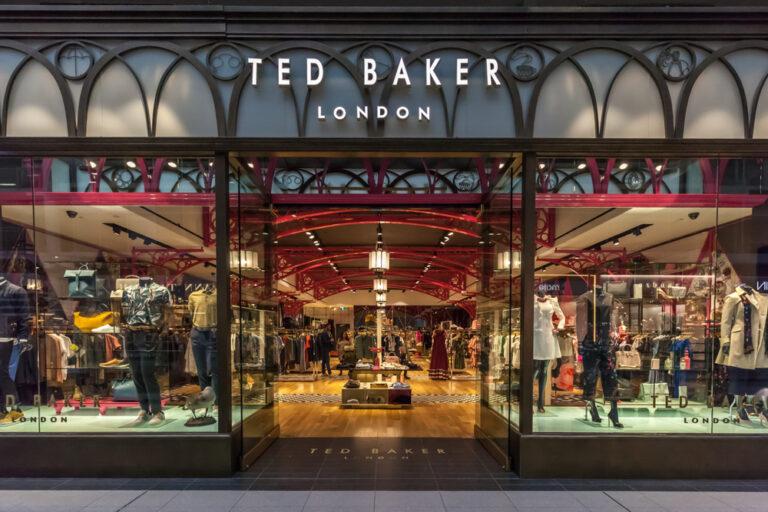
Ted Baker shares rise as they move back to profitability
Ted Baker shares rose on Thursday morning after the fashion brand slashed its loss for the 28 weeks to 14th August.
Reported loss before tax for the period was reduced to £25.3m, down from £86.4m in the same period a year prior.
“I’m pleased with the continued progress we’re making, as we return to revenue growth, and make big strides back towards profitability. The brand remains healthy, delivering a stronger full price mix alongside encouraging early reactions to the new collection,” commented Rachel Osborne, Chief Executive Officer on the results.
Ted Baker shares rose as high as 145.2p in early trade on Thursday, before falling back to remain over 2% higher.
Despite a torrid couple of years for the brand, cash remained positive with a net cash position of £12.4m.
“Ted Baker’s half year results showed the fashion retailer is clawing its way back towards profitability as it works to restore its image as a premium brand. With weddings back on the social calendar and offices reopening, people are willing to spend more on their clothes and as a result Ted saw losses narrow as margins improved,” said Laura Hoy, Equity Analyst at Hargreaves Lansdown.

“The headline figures dress up a concerning decline in eCommerce sales though. Heavy promotional activity last year meant online sales were booming, so the group was up against tough comparisons. And we commend the group’s commitment to backing away from discounting, which eroded the brand image. Still, a double-digit decline in online sales is troubling.”
“A big part of Ted’s transformation plans rests on improving the group’s digital presence and progress on this front has been sluggish with management pushing back the launch of its new online platform to early 2022. While easing pandemic restrictions means people can return to in-person shopping, it doesn’t mean they will. Losing ground in e-commerce is bad no matter how you slice it. The online shopping boom hasn’t showed any signs of slowing, and the we would’ve like to see the same from Ted’s eCommerce sales.”
Auto Trader reports record profits
Auto Trader has reported its highest ever profits and sales for a six month period as the group focused on digital offerings.
Revenues soared 82% to £215.4m whilst profits jumped 121% to £151.7m.
“Early in the pandemic we acted decisively to protect our people, customers, and business. As a result of these actions, we have emerged as a stronger business which can be seen in our results for the first half of this financial year,” said Nathan Coe, chief executive.
“The number of people using Auto Trader to buy their next car is at record levels, more retailers are choosing to partner with us, and our competitive position has strengthened.”
“This positions us well as we look to partner with retailers to bring more of the car buying journey online, which we believe will provide significant long term growth opportunities,” he added.
The group is expecting strong full-year results.
Taylor Wimpey on track for full-year expectations
Taylor Wimpey has said it is on track to meet full-year expectations.
The housebuilder said results were good thanks to a strong demand, which helped it to offset a shortage of drivers and global supply chain issues.
Pete Redfern, chief executive, said: “We are pleased with performance in the second half to date, and remain on track to deliver full year 2021 results in line with previous guidance. We have been building a strong forward order book for 2022 and continue to see good demand for our homes, supported by a positive market backdrop.
“Despite well-publicised industry supply chain pressures, we are managing our supply chain effectively and are benefiting from our scale and strong partner relationships. We continue to see house price inflation fully offsetting build cost inflation. Looking ahead, market conditions remain supportive, and with the benefit of our strong land position we are well placed to deliver against our medium term targets.”
The group’s profit outlook for the full-year will be around £820m and it expects to complete between 13,000-14,000 homes.
Rize launches new digital payments ETF
ETF provider Rise has announced the launch of a new ETF providing European investors with access to a basket of digital payment shares.
Their new ETF is designed to focus on companies enabling the digital economy with payments services as well as cryptocurrencies.
Rise recently announced they had reached $500 million in AUM having previously launched a selection of ETFs including the Rize Cybersecurity and Data Privacy ETF, Rize Medical Cannabis and Life Sciences ETF and Rize Environmental Impact 100 UCITS ETF.
“Our new investment strategy and ETF is a nod to the inevitability that financial services are succumbing to digitisation. In the past decade alone, a new and powerful economy for digital payments has emerged,” said Rahul Bhushan, Co-Founder and Director at Rize ETF.
“This economy offers speed, agility and convenience. It has also instilled a sensibility in us that payment transactions can happen seamlessly in the background as we hop in and out of Ubers.”
“COVID-19, too, has catalysed a cross-generational shift towards contactless payments and digital currencies. But we believe this to be just the start. In the years ahead, ecommerce growth, enthusiastic adoption of transparent payment experiences and alternative transaction modes are going to continue to drive non-cash momentum. We believe this will support valuations of today’s digital payments leaders. Importantly, we also believe that today’s institutional strangleholds on not just payments but also other banking services such as credit, savings, investments, insurance, etc… will get unravelled in the next decade. This will yield a new digital finance economy that is better connected, faster, built for the consumer and most importantly, both equitable and inclusive.”